
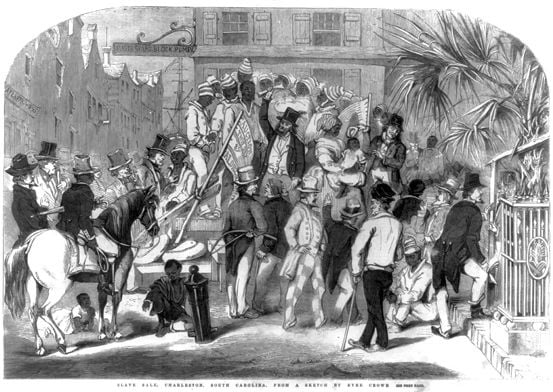
A woodcut of a slave sale in Charleston (postandcourier.com)
Google AI Overview
In the Old South, “slave rentals” were part of the “hiring out” system, a common and profitable economic practice in which enslavers leased out enslaved people to others for a fixed period
. This system expanded the reach of slavery beyond traditional plantation owners, involving a wide range of white people in the institution.
The process and economics of hiring out
- The transaction. Owners would rent out enslaved men, women, and children for a specific fee and period, typically for a year, though shorter terms were also common. The enslaver would receive payment, while the hirer gained temporary control over the enslaved person’s labor.
- Diverse hirers. People who did not own slaves, including farmers, urban businesses, widows, and artisans, frequently rented enslaved labor. Institutions like colleges and railroad companies also hired enslaved workers to fill positions.
- Motivations for owners. Renting out enslaved people was a key strategy for enslavers to generate income, especially for those with “excess” hands. The practice was a significant component of the domestic slave trade, particularly as prices for enslaved people fluctuated. In some cases, owners would even rent out pregnant or nursing women at nominal fees to avoid the expense of caring for “unproductive” workers.
- Advertisements. Hiring out was widely advertised in newspapers alongside notices for slaves for sale or for runaways. These advertisements helped connect owners with those in need of temporary labor.
Experiences of hired-out enslaved people
- Increased autonomy (and its limits). For some enslaved people, particularly skilled urban workers, the hiring-out system, especially a variation called “self-hire,” offered a limited form of independence. A self-hired slave might be able to find their own employer and housing, negotiate the terms of their labor, and manage a stipend for their living expenses.
- New vulnerabilities. Despite potential opportunities, the system placed enslaved people in a precarious position. When hired out, they were separated from their families and communities and had to endure new living and working conditions under a temporary master who had little investment in their long-term health. As a result, hired slaves were at increased risk of abuse and neglect.
- Expanded networks. Being hired out, particularly in urban settings, allowed enslaved people to develop wider social networks, learn new trades, and gain knowledge of the local landscape. This increased mobility also provided more opportunities for literacy and escape.
- Resistance. Enslaved workers resisted the hiring system in various ways. Sometimes, resistance was overt, as when enslaved people at South Carolina College went on “strike” to protest a decrease in their labor force. In other cases, they were able to negotiate with owners and hirers to influence the terms of their work.
Impact on the institution of slavery
- Reinforced slavery. The hiring-out system made slavery accessible to a wider demographic of white Americans who couldn’t afford to purchase enslaved people outright. By involving more people in the economics of human bondage, the system strengthened the institution’s foothold in Southern society and reduced class differences among white people.
- The paradox of autonomy. The system’s allowance of limited mobility and negotiation for some enslaved people created a paradox for slaveholders. While they benefited from the revenue, they also feared that the relative autonomy could undermine the strict controls of the system and encourage resistance or escape.
- Perpetuated after the Civil War. Following the Civil War, many of the exploitative practices of the hiring-out system were mirrored in the convict leasing system, where formerly enslaved and other Black individuals were leased out for labor as a form of punishment for crimes.
AI responses may include mistakes. Learn more