Entire UN Security Council Except US Says Gaza Famine ‘Man-Made’ as 10 More People Starve to Death

US Ambassador to the UN Dorothy Shea speaks

US Ambassador to the United Nations Dorothy Shea speaks on August 27, 2025. 

(Photo: US Mission to the United Nations/X)

While acknowledging that “hunger is a real issue in Gaza,” the US ambassador to the UN repeated a debunked claim that the world’s leading authority on starvation lowered its standards to declare a famine.

BRETT WILKINS

Aug 27, 2025 (CommonDreams.org)

Every member nation of the United Nations Security Council except the United States on Wednesday affirmed that Israel’s engineered famine in Gaza is “man-made” as 10 more Palestinians died of starvation amid what UN experts warned is a worsening crisis.

Fourteen of the 15 Security Council members issued a joint statement calling for an immediate Gaza ceasefire, release of all remaining hostages held by Hamas, and lifting of all Israeli restrictions on aid delivery into the embattled strip, where hundreds of Palestinians have died from starvation and hundreds of thousands more are starving.

“Famine in Gaza must be stopped immediately,” they said. “Time is of the essence. The humanitarian emergency must be addressed without delay and Israel must reverse course.”

“We express our profound alarm and distress at the IPC data on Gaza, published last Friday. It clearly and unequivocally confirms famine,” the statement said, referring to the Integrated Food Security Phase Classification’s declaration of Phase 5, or a famine “catastrophe,” in the strip.

“We trust the IPC’s work and methodology,” the 14 countries declared. “This is the first time famine has been officially confirmed in the Middle East region. Every day, more persons are dying as a result of malnutrition, many of them children.”

“This is a man-made crisis,” the statement stresses. “The use of starvation as a weapon of war is clearly prohibited under international humanitarian law.”

Israel, which is facing a genocide case at the UN’s International Court of Justice, denies the existence of famine in Gaza. Israeli Prime Minister Benjamin Netanyahu and former Defense Minister Yoav Gallant are wanted by the International Court of Justice for alleged war crimes and crimes against humanity, including murder and forced starvation.

The 14 countries issuing the joint statement are: Algeria, China, Denmark, France, Greece, Guyana, Pakistan, Panama, the Republic of Korea, the Russian Federation, Sierra Leone, Slovenia, Somalia, and the United Kingdom.

While acknowledging that “hunger is a real issue in Gaza and that there are significant humanitarian needs which must be met,” US Ambassador to the UN Dorothy Shea rejected the resolution and the IPC’s findings.

“We can only solve problems with credibility and integrity,” Shea told the Security Council. “Unfortunately, the recent report from the IPC doesn’t pass the test on either.”

Shea also repeated the debunked claim that the IPC’s “normal standards were changed for [the IPC famine] declaration.”

The Security Council’s affirmation that the Gaza famine is man-made mirrors the findings of food experts who have accused Israel of orchestrating a carefully planned campaign of mass starvation in the strip.

The UN Palestinian Rights Bureau and UN humanitarian officials also warned Wednesday that the famine in Gaza is “only getting worse.”

“Over half a million people currently face starvation, destitution, and death,” the humanitarian experts said. “By the end of September, that number could exceed 640,000.”

“Failure to act now will have irreversible consequences,” they added.

https://x.com/UN/status/1960810555243159968?ref_src=twsrc%5Etfw%7Ctwcamp%5Etweetembed%7Ctwterm%5E1960810555243159968%7Ctwgr%5E%7Ctwcon%5Es1_c10&ref_url=https%3A%2F%2Fwww.commondreams.org%2Fnews%2Fun-security-council-gaza-famine

Wednesday’s UN actions came as Israel intensified Operation Gideon’s Chariots 2, the campaign to conquer, occupy, and ethnically cleanse around 1 million Palestinians from Gaza, possibly into a reportedly proposed concentration camp that would be built over the ruins of the southern city of Rafah.

The Gaza Health Ministry (GHM) on Wednesday reported 10 more Palestinian deaths “due to famine and malnutrition” over the past 24 hours, including two children, bringing the number of famine victims to at least 313, 119 of them children.

All told, Israel’s 691-day assault and siege on Gaza has left at least 230,000 Palestinians dead, maimed, or missing, according to the GHM.

Our work is licensed under Creative Commons (CC BY-NC-ND 3.0). Feel free to republish and share widely.

BRETT WILKINS

Brett Wilkins is a staff writer for Common Dreams.

Full Bio >

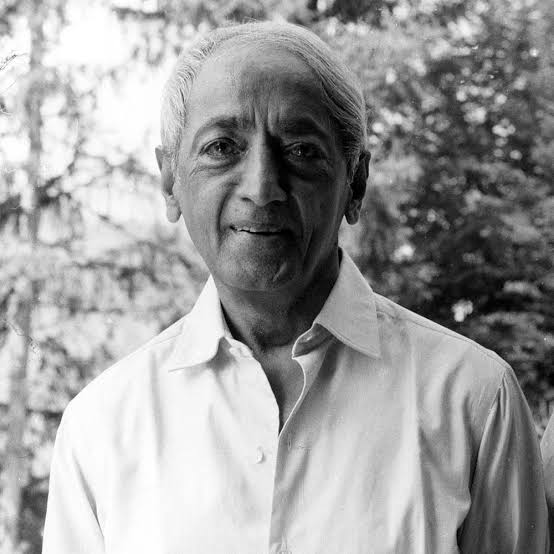
Krishnamurti on our individual souls

“Our brains are so conditioned through education, through religion, to think we are separate entities with separate souls and so on. We are not individuals at all.”

~ Krishnamurti.

Jiddu Krishnamurti (May 11, 1895 – February 17, 1986) was an Indian spiritual speaker and writer. Adopted by members of the Theosophical Society as a child because of his aura as perceived by Theosophic leader Charles Leadbetter, “without …

Source: Wikipedia

INFANTILE GRANDIOSITY AND THE IMAGE OF GOD

RON ROLHEISER, OMI

JULY 8, 1991 (ronrolheiser.com)

For nearly 200 years the intellectual world has not been kind to believers. Beginning with the Enlightenment, which debunked religious authority as a criterion for judgment, the intellectual world has to a large part propounded the idea that religion is false and that it impoverishes the human spirit.

For Nietzsche, religion was a blindness; for Feuerbach, an alienation of humanity from itself; for Marx, an opium for the masses; and for Freud, a psychic displacement. In each case, religion is something backward, a harmful naiveté, something that keeps humanity from being what it should be. In each case, too, there is the call to have the courage to move beyond religion.

Many great writers, artists, and scientists have, in the past 200 years, supported that general idea. In the popular mindset too there is present the idea, never far from the surface, that religion and churchgoing are a naiveté, a backwardness, a timidity that would not stand up to courageous scrutiny. The idea is that religion, in the end, is something that keeps people down and blocks them from being fully creative and from fully enjoying life. The church, with its dogmas and nuns, preaching poverty, chastity, and obedience – when what brings happiness is affluence, sex, and freedom!

Today the intellectual world is softening on that. Scientific circles, beginning with Einstein and running through Stephen Hawking, are much less arrogant and more open to the question of God. Great anthropologists, like Mircea Eliade and Victor Turner, are telling us that, to order our lives in a meaningful way, we must either believe in a God or in some myth that functionally does what religion does.

And the circles of psychology that follow Karl Jung are looking at the adult child of the enlightenment and suggesting that most of what is wrong with that child has to do with lack of proper religion. In their perspective, we are not born simple cameras with rationality and emotion. We are born driven beings, with savage propensities which make us, many times, anything but rational because we are hard-wired to certain archetypes (energy configurations, instinctual patterns, a collective unconscious) which fundamentally help shape how we think, feel, and judge, whether we are conscious of this or not. We are anything but neutral, urbane, sophisticates, acting out of a certain enlightened rationality.

Moreover, and this is key in their insight, at the center of these archetypes, as the source of them all, lies the sense that we are a god or goddess, a divine king or queen. The ultimate source of energy for every person is a sense of grandiosity. In Christianity, we’ve always known this. We are the Imago Deo, the image of God. This grandiosity, the Jungians now assure us, cannot be denied, outgrown, moved beyond by therapy, or even transformed. It can only be admitted to and creatively contained. For them, there are only two kinds of people in this world, those who admit their infantile grandiosity and those who don’t!

They go on to say that, in the end, the idea of the enlightenment and of Nietzsche, Feuerbach, Marx, and Freud, the idea that humanity is better off without God, is not only wrong, but dangerous. Unless our innate grandiosity is contained through some form of obedience to a god beyond the individual ego and through an agenda that is genuinely transpersonal, it leads to self-destruction (and often the destruction of others too). How? Because when we try to live with our grandiosity without a proper relationship to something beyond ourselves we inflate or go crazy – or both. So much for the essence of the enlightenment!

The history of secularity during the last 200 years, I submit, provides more than enough evidence for the hypothesis that the human person without God or without some god myth is a menace towards himself or herself and towards others. When one does not worship a God on a throne or the Christ child in the manger, he or she soon enough sets self upon that throne or highchair and demands worship. We either deal religiously or in some other ritual way with the image of God inside of us or, as is so prevalent today, we will be dealing with infantile grandiosity and the destructive and addictive behaviors and depressions that stem from it.

The concept of infantile grandiosity sheds light on many things, not the least of which are our pathological complexities – our neuroses, psychoses, grandiose longings, perpetual dissatisfaction, chronic depression, and our yearning to be, in the end, worshipped. It also explains why there is a clear and unalterable need in our lives for God, religion, and obedience.

The Aesthetic of Silence: Susan Sontag on Art as a Form of Spirituality and the Paradoxical Role of Silence in Creative Culture

By Maria Popova (themarginalian.org)

“The impulse to create begins — often terribly and fearfully — in a tunnel of silence,” Adrienne Rich asserted in her spectacular 1997 lecture Arts of the Possible. But it was exactly three decades earlier that another of humanity’s most incisive intellects made the finest — and timeliest today — case for the generative function of silence in a creative culture drowning in noise.

In The Aesthetics of Silence, the first essay from her altogether indispensable 1969 collection Styles of Radical Will (public library), Susan Sontag (January 16, 1933–December 28, 2004) examines how silence mediates the role of art as a form of spirituality in an increasingly secular culture.

Susan Sontag by Peter Hujar

Shortly after she wrote in her diary that “art is a form of consciousness” and shortly before Pablo Neruda penned his beautiful ode to silence and Paul Goodman — who shared a mutual admiration with Sontag — enumerated the nine kinds of silence, she writes:

Every era has to reinvent the project of “spirituality” for itself. (Spirituality = plans, terminologies, ideas of deportment aimed at resolving the painful structural contradictions inherent in the human situation, at the completion of human consciousness, at transcendence.)

In the modern era, one of the most active metaphors for the spiritual project is “art.” The activities of the painter, the musician, the poet, the dancer, once they were grouped together under that generic name (a relatively recent move), have proved a particularly adaptable site on which to stage the formal dramas besetting consciousness, each individual work of art being a more or less astute paradigm for regulating or reconciling these contradictions. Of course, the site needs continual refurbishing. Whatever goal is set for art eventually proves restrictive, matched against the widest goals of consciousness. Art, itself a form of mystification, endures a succession of crises of demystification; older artistic goals are assailed and, ostensibly, replaced; outworn maps of consciousness are redrawn.

But modern art, Sontag argues, is as much a form of consciousness as an answer to our longing for anti-consciousness, speaking to what she calls “the mind’s need or capacity for self-estrangement”:

Art is no longer understood as consciousness expressing and therefore, implicitly, affirming itself. Art is not consciousness per se, but rather its antidote — evolved from within consciousness itself.

As such, art usurps the role religion and mysticism previously held in human life — something to satisfy our “craving for the cloud of unknowing beyond knowledge and for the silence beyond speech.” The spiritual satiation that arises from this dialogue between art and anti-art, Sontag points out, necessitates the pursuit of silence. For the serious artist, silence becomes “a zone of meditation, preparation for spiritual ripening, an ordeal that ends in gaining the right to speak.”

In a counterpart to her later admonition that publicity is “a very destructive thing” for any artist, Sontag considers the zeal the artist must have in protecting that zone of silence — a notion of particular urgency in our age of tyrannical expectations regarding artists’ engagement with social media:

So far as he is serious, the artist is continually tempted to sever the dialogue he has with an audience. Silence is the furthest extension of that reluctance to communicate, that ambivalence about making contact with the audience… Silence is the artist’s ultimate other-worldly gesture: by silence, he frees himself from servile bondage to the world, which appears as patron, client, consumer, antagonist, arbiter, and distorter of his work.

Illustration by Maurice Sendak from Open House for Butterflies by Ruth Krauss

And yet, in a sentiment that calls to mind Kierkegaard’s astute observation that expressing contempt is still a demonstration of dependence, Sontag recognizes that the gesture of silence in abdication from society is still “a highly social gesture.” She writes:

An exemplary decision of this sort can be made only after the artist has demonstrated that he possesses genius and exercised that genius authoritatively. Once he has surpassed his peers by the standards which he acknowledges, his pride has only one place left to go. For, to be a victim of the craving for silence is to be, in still a further sense, superior to everyone else. It suggests that the artist has had the wit to ask more questions than other people, and that he possesses stronger nerves and higher standards of excellence.

Silence, then, is exercised not in the absolute but in degrees, mediating between art and anti-art, between consciousness and anti-consciousness:

The exemplary modern artist’s choice of silence is rarely carried to this point of final simplification, so that he becomes literally silent. More typically, he continues speaking, but in a manner that his audience can’t hear…

Modern art’s chronic habit of displeasing, provoking, or frustrating its audience can be regarded as a limited, vicarious participation in the ideal of silence which has been elevated as a major standard of “seriousness” in contemporary aesthetics.

But it is also a contradictory form of participation in the ideal of silence. It is contradictory not only because the artist continues making works of art, but also because the isolation of the work from its audience never lasts… Goethe accused Kleist of having written his plays for an “invisible theatre.” But eventually the invisible theatre becomes “visible.” The ugly and discordant and senseless become “beautiful.” The history of art is a sequence of successful transgressions.

[…]

Committed to the idea that the power of art is located in its power to negate, the ultimate weapon in the artist’s inconsistent war with his audience is to verge closer and closer to silence.

And yet, Sontag points out, silence is relational — while it may be the intention of the artist, it can never be the experience of the audience. (For a supreme example, we need not look further than John Cage, who even during his most forceful imposition of silence was in dynamic dialogue with the audience upon which silence was being imposed.)

Sontag, in fact, shined a sidewise gleam on this notion three years earlier in her masterwork Against Interpretation — for what is interpretation if not the act of filling the artist’s silence with the audience’s noise? She writes:

Silence doesn’t exist in a literal sense, however, as the experience of an audience. It would mean that the spectator was aware of no stimulus or that he was unable to make a response… As long as audiences, by definition, consist of sentient beings in a “situation,” it is impossible for them to have no response at all.

[…]

There is no neutral surface, no neutral discourse, no neutral theme, no neutral form. Something is neutral only with respect to something else — like an intention or an expectation. As a property of the work of art itself, silence can exist only in a cooked or non-literal sense. (Put otherwise: if a work exists at all, its silence is only one element in it.) Instead of raw or achieved silence, one finds various moves in the direction of an ever receding horizon of silence — moves which, by definition, can never be fully consummated.

Illustration by John Vernon Lord from a rare edition of Through the Looking-Glass and What Alice Found There.

She illustrates this with the classic scene from Lewis Carroll’s Through the Looking Glass, where Alice encounters a shop “full of all manner of curious things,” and yet whenever she looks closely at any one shelf, it appears “quite empty, though the others round it were crowded full as they could hold.” Silence, similarly, is relational rather than absolute:

“Silence” never ceases to imply its opposite and to depend on its presence: just as there can’t be “up” without “down” or “left” without “right,” so one must acknowledge a surrounding environment of sound or language in order to recognize silence…

A genuine emptiness, a pure silence is not feasible — either conceptually or in fact. If only because the artwork exists in a world furnished with many other things, the artist who creates silence or emptiness must produce something dialectical: a full void, an enriching emptiness, a resonating or eloquent silence. Silence remains, inescapably, a form of speech (in many instances, of complaint or indictment) and an element in a dialogue.

Silence, Sontag argues, is also a way of steering the attention. In a passage triply timely today, half a century of attention-mauling media later, she writes:

Art is a technique for focusing attention, for teaching skills of attention… Once the artist’s task seemed to be simply that of opening up new areas and objects of attention. That task is still acknowledged, but it has become problematic. The very faculty of attention has come into question, and been subjected to more rigorous standards…

Perhaps the quality of the attention one brings to bear on something will be better (less contaminated, less distracted), the less one is offered. Furnished with impoverished art, purged by silence, one might then be able to begin to transcend the frustrating selectivity of attention, with its inevitable distortions of experience. Ideally, one should be able to pay attention to everything.

Many years later, Sontag would advise aspiring writers to learn to “pay attention to the world” as the most important skill of storytelling. Silence, she argues here, invites us to pay selfless and unselfconscious attention to the world the artist is creating. In a sentiment that explains why there are no comments on Brain Pickings and captures today’s acute spiritual hunger for a space for unreactive contemplation amid a culture of reactive opinion-slinging, Sontag writes:

Contemplation, strictly speaking, entails self-forgetfulness on the part of the spectator: an object worthy of contemplation is one which, in effect, annihilates the perceiving subject… In principle, the audience may not even add its thought. All objects, rightly perceived, are already full.

[…]

The efficacious artwork leaves silence in its wake. Silence, administered by the artist, is part of a program of perceptual and cultural therapy, often on the model of shock therapy rather than of persuasion. Even if the artist’s medium is words, he can share in this task: language can be employed to check language, to express muteness… Art must mount a full-scale attack on language itself, by means of language and its surrogates, on behalf of the standard of silence.

Once again, Sontag’s extraordinary prescience shines its brilliant beam upon our time, across half a century of perfectly anticipated cultural shifts. Much like she presaged the downsides of the internet’s photo-fetishism in the 1970s and admonished against treating cultural material as “content” in the 1960s, she captures the entire ethos of our social media in 1967:

The art of our time is noisy with appeals for silence. A coquettish, even cheerful nihilism. One recognizes the imperative of silence, but goes on speaking anyway. Discovering that one has nothing to say, one seeks a way to say that.

The Aesthetics of Silence is an immeasurably rewarding read in its entirety, as is the remainder of Styles of Radical Will. Complement it with Sontag on love“aesthetic consumerism” and the violence of visual culturehow polarities imprison uswhy lists appeal to us, her diary meditations on art, and her advice to aspiring writers.

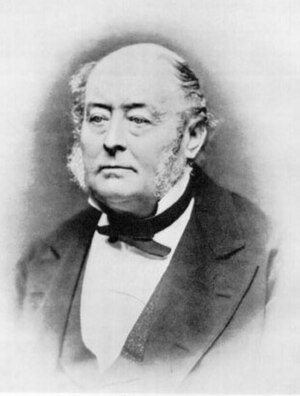
Johann Jakob Bachofen on the matriarchy

From Wikipedia, the free encyclopedia

J. J. Bachofen
J. J. Bachofen
Born22 December 1815
Basel, Switzerland
Died25 November 1887 (aged 71)
Basel, Switzerland
SpouseLouise Bachofen-Burckhardt
Scientific career
FieldsRoman lawanthropology

Johann Jakob Bachofen (22 December 1815 – 25 November 1887) was a Swiss antiquarianjuristphilologistanthropologist, and professor of Roman law at the University of Basel from 1841 to 1844.[1]

Bachofen is most often connected with his theories surrounding prehistoric matriarchy, or Das Mutterrecht, the title of his seminal 1861 book Mother Right: an investigation of the religious and juridical character of matriarchy in the Ancient World. Bachofen assembled documentation demonstrating that motherhood is the source of human society, religion, morality, and decorum. He postulated an archaic “mother-right” within the context of a primeval Matriarchal religion or Urreligion.

Bachofen became an important precursor of 20th-century theories of matriarchy, such as the Old European culture postulated by Marija Gimbutas from the 1950s, and the field of feminist theology and “matriarchal studies” in 1970s feminism.

Biography

Born into a wealthy Basel family active in the silk industry[2] and attended the service of the French Reformed Church in Basel.[3] After having attended the Gymnasium,[3] Bachofen studied in Basel and in Berlin[2] under August BoeckhKarl Ferdinand Ranke and Friedrich Carl von Savigny[4] as well as in Göttingen. After completing his doctorate in Basel, he studied for another two years in Paris, London and Cambridge. He was called to the Basel chair for Roman law in 1841. In 1842 he travelled to Rome accompanied by his father to, according to him, see his spiritual homeland with his own eyes.[2] Having returned to Basel, he was called to the appellate court and his next book on Roman law received the acclaim of the academics.[2] He would also become elected into the Grand Council of Basel.[2] He retired from his professorship in 1844, after in the local press it was suggested the wealth of his family would have helped him assume the job at the university.[5] In 1845 he also quit from the Grand Council.[5] As a judge he would stay for twenty-five years and resign after his marriage to Louise Bachofen-Burckhardt.[5] In 1848 he undertook a second journey to Rome in which he witnessed the Roman revolution, changed his research focus from the classical antiquity but the early antiquity.[6] In 1851–1852 he travelled to Greece, Magna Graecia, and Etruria.[6] He published most of his works as a private scholar.

Personal life

Tomb of the Bachofen family in the Wolfgottesacker. The statue was sculptured by Richard Kissling

His mother Valeria Merian Bachofen died in 1856 but he kept living in the same house as his father.[7] It was the same house which would become the seat of the Civil Register of Basel between 1962 and 1983 and part of the Antikenmuseum Basel und Sammlung Ludwig in the 1980s.[8] In 1865, he married the at the time twenty five-years old Louise Bachofen-Burckhardt from a noble family of Basel.[7] He would buy a house at the square before the Minster of Basel and a son was born.[7] Louise Bachofen Burckhardt would live in the house at the Minster Square after her husband would die in 1877.[9] Johann Jakob Bachofen is buried at the Wolfgottesacker cemetery in Basel.[10] The tomb was sculptured by Richard Kissling.[10]

Das Mutterrecht

This section does not cite any sources. Please help improve this section by adding citations to reliable sources. Unsourced material may be challenged and removed(September 2022) (Learn how and when to remove this message)

Bachofen’s 1861 Das Mutterrecht proposed four phases of cultural evolution which absorbed each other:

  1. Hetaerism: a wild nomadic ‘tellurian’ [= chthonic or earth-centered] phase, characterised by him as communistic and polyamorous, whose dominant deity he believed to have been an earthy proto Aphrodite.
  2. Das Mutterecht: a matriarchal ‘lunar’ phase based on agriculture, characterised by him by the emergence of chthonic mystery cults and law. Its dominant deity was an early Demeter.
  3. The Dionysian: a transitional phase when earlier traditions were masculinised as patriarchy began to emerge. Its dominant deity was the original Dionysos.
  4. The Apollonian: the patriarchal ‘solar’ phase, in which all trace of the Matriarchal and Dionysian past was eradicated and modern civilisation emerged.

Reception

Main article: Matriarchy

There was little initial reaction to Bachofen’s theory of cultural evolution, largely because of his impenetrable literary style, but eventually, along with furious criticism, the book inspired several generations of ethnologists, social philosophers, and even writers: Lewis Henry MorganFriedrich Engels, who drew on Bachofen for The Origin of the Family, Private Property and the StateThomas MannJane Ellen Harrison, who was inspired by Bachofen to devote her career to mythologyWalter BenjaminCarl JungErich FrommRobert GravesRainer Maria RilkeJoseph CampbellOtto GrossErich Neumann and opponents such as Julius Evola.[citation needed] In the 1930s his work was acclaimed by several prominent academics in the German speaking world.[11]

Because of his theoretical commitment to Marxist historiography, Friedrich Engels faulted Bachofen for regarding “religion as the main lever of the world’s history” and therefore considered it a “troublesome and not always profitable task to work your way through [his] big volume [i.e. Das Mutterrecht]”. Nevertheless, he credited Bachofen with inaugurating research into the history of the family.[12] He summarized Bachofen’s views as follows:[13]“(1) That originally man lived in a state of sexual promiscuity, to describe which Bachofen uses the mistaken term “hetaerism“;(2) that such promiscuity excludes any certainty of paternity, and that descent could therefore be reckoned only in the female line, according to mother-right, and that this was originally the case amongst all the peoples of antiquity;(3) that since women, as mothers, were the only parents of the younger generation that were known with certainty, they held a position of such high respect and honor that it became the foundation, in Bachofen’s conception, of a regular rule of women (gynaecocracy);(4) that the transition to monogamy, where the woman belonged to one man exclusively, involved a violation of a primitive religious law (that is, actually a violation of the traditional right of the other men to this woman), and that in order to expiate this violation or to purchase indulgence for it the woman had to surrender herself for a limited period.” (Friedrich Engels, 1891: see link below)

Emile Durkheim credited Bachofen with upsetting the “old conception” that the father must be “the essential element of the family”. Before Bachofen, Durkheim claims that “no one had dreamed that there could be a family organization of which the paternal authority was not the keystone”.[14]

In contrast to Engels and Durkheim, the American sociologist Carle Zimmerman criticized Bachofen’s work for initiating a research paradigm in sociology that “completely divorced” the study of the family from history, replacing the “constant struggle between familism and individualism” with “imagination”. He characterized Bachofen and the other members of this research paradigm, such as J.F. McLennanL.H. MorganE.A. Westermark, and others, as “evolutionary cultists” and considered them to have “destroyed history as a fundamental study in social science” during the late nineteenth and early twentieth centuries.[15]

As has been noted by Joseph Campbell in Occidental Mythology and others, Bachofen’s theories stand in radical opposition to the Aryan origin theories of religion, culture and society, and both Campbell and writers such as Evola have suggested that Bachofen’s theories only adequately explain the development of religion among the pre-Aryan cultures of the Mediterranean and the Levant, and possibly Southern Asia, but that a separate, patriarchal development existed among the Aryan tribes which conquered Europe and parts of Asia.[citation needed]

More at: https://en.wikipedia.org/wiki/Johann_Jakob_Bachofen

Free Will Astrology: Week of September 4, 2025

BY ROB BREZSNY | SEPTEMBER 2, 2025 (NewCity.com)

Photo: Tim Mossholder

ARIES (March 21-April 19): Austin Curtis was a prominent Black scientist whose work had spectacularly practical applications. Among his successes: He developed many new uses for peanut byproducts, including rubbing oils for pain relief. His work exploited the untapped potential of materials that others neglected or discarded. I urge you to adopt a similar strategy in the coming weeks, Aries: Be imaginative as you repurpose scraps and leftovers. Convert afterthoughts into useful assets. Breakthroughs could come from compost heaps, forgotten files or half-forgotten ideas. You have the power to find value where others see junk.

TAURUS (April 20-May 20): In Polynesian navigation, sailors read the subtle rise and fall of ocean swells to find islands and chart their course. They also observe birds, winds, stars and cloud formations. The technique is called wayfinding. I invite you to adopt your own version of that strategy, Taurus. Trust waves and weather rather than maps. Authorize your body to sense the future in ways that your brain can’t. Rely more fully on what you see and sense rather than what you think. Are you willing to dwell in the not-knowingness? Maybe go even further: Be excited about dwelling in the not-knowingness. Don’t get fixated on plotting the whole journey. Instead, assume that each day’s signs will bring you the information you need.

GEMINI (May 21-June 20): The umbrella thorn acacia is an African tree whose roots grow up to 115 feet deep to tap hidden water beneath the desert floor. Above ground, it may look like a scraggly cluster of green, but underground it is a masterpiece of reach and survival. I see you as having resemblances to this tree these days, Gemini. Others may only see your surface gestures and your visible productivity. But you know how deep your roots run and how far you are reaching to nourish yourself. Don’t underestimate the power of your attunement to your core. Draw all you need from that primal reservoir.

CANCER (June 21-July 22): To make a tabla drum sing, the artisan adds a black patch of iron filings and starch at the center of the drumhead. Called a syahi, it creates complex overtones and allows the musician to summon both pitch and rhythm from the same surface. Let’s imagine, Cancerian, that you will be like that drum in the coming weeks. A spot that superficially looks out of place may actually be what gives your life its music. Your unique resonance will come not in spite of your idiosyncratic pressure points, but because of them. So don’t aim for sterile perfection. Embrace the irregularity that sings.

LEO (July 23-Aug. 22): There’s a Zen motto: “Before enlightenment, chop wood, carry water. After enlightenment, chop wood, carry water.” I hope you apply that wisdom in the coming weeks, Leo. Your breakthrough moments of insight have come or will come soon. But your next move should not consist of being self-satisfied or inert. Instead, I hope you seek integration. Translate your innovations into your daily rhythm. Turn the happy accidents into enduring improvements. The progress that comes next won’t be as flashy or visible, but it’ll be just as crucial.

VIRGO (Aug. 23-Sept. 22): The Gross National Product (GNP) is a standard of economic success by which countries gauge their health. It reflects the world’s obsession with material wealth. But the Buddhist nation of Bhutan has a different accounting system: Gross National Happiness (GNH). It includes factors like the preservation of the environment, enrichment of the culture and quality of governance. Here’s an example of how Bhutan has raised its GNH. Its scenic beauty could generate a huge tourist industry. But strict limits have been placed on the number of foreign visitors, ensuring the land won’t be trampled and despoiled. I would love to see you take a similar GNH inventory, Virgo. Tally how well you have loved and been loved. Acknowledge your victories and awakenings. Celebrate the beauty of your life.

LIBRA (Sept. 23-Oct. 22): In Japanese haiku, poets may reference the lingering scent of flowers as a metaphor for a trace of something vivid that continues to be evocative after the event has passed. I suspect you understand this quite well right now. You are living in such an after-scent. A situation, encounter or vision seems to have ended, but its echo is inviting you to remain attentive. Here’s my advice: Keep basking in the reverberations. Let your understandings and feelings continue to evolve. Your assignment is to allow the original experience to complete its transmission. The full blossoming needs more time to unfold.

SCORPIO (Oct. 23-Nov. 21): In the Australian desert, there’s a phenomenon called desert varnish. It’s a thin, dark coating of clay, iron and manganese oxides. It forms over rocks due to microbial activity and prolonged exposure to wind and sun. Over time, these surfaces become canvases for Indigenous artists to create images. I like to think of their work as storytelling etched into endurance. In the coming weeks, Scorpio, consider using this marvel as a metaphor. Be alert for the markings of your own epic myth as they appear on the surfaces of your life. Summon an intention to express the motifs of your heroic story in creative ways. Show the world the wisdom you have gathered during your long, strange wanderings.

SAGITTARIUS (Nov. 22-Dec. 21): In Indigenous Australian lore, the Dreamtime is a parallel dimension overlapping the material world, always present and accessible through ritual and listening. Virtually all Indigenous cultures throughout history have conceived of and interacted with comparable realms. If you are open to the possibility, you now have an enhanced capacity to draw sustenance from this otherworld. I encourage you to go in quest of help and healing that may only be available there. Pay close attention to your dreams. Ask your meditations to give you long glimpses of the hidden magic.

CAPRICORN (Dec. 22-Jan. 19): Saturn is your ruling planet and archetype. In the old myth of the god Saturn, he rules time, which is not an enemy but a harvester. He gathers what has ripened. I believe the coming weeks will feature his metaphorical presence, Capricorn. You are primed to benefit from ripening. You are due to collect the fruits of your labors. This process may not happen in loud or dramatic ways. A relationship may deepen. A skill may get fully integrated. A long-running effort may coalesce. I say it’s time to celebrate! Congratulate yourself for having built with patience and worked through the shadows. Fully register the fact that your labor is love in slow motion.

AQUARIUS (Jan. 20-Feb. 18): In Greek mythology, the constellation Aquarius was linked to a heroic character named Ganymede. The great god Zeus made this beautiful man the cupbearer to the gods. And what drink did Ganymede serve? Ambrosia, the divine drink of immortality. In accordance with astrological omens, I’m inviting you to enjoy a Ganymede-like phase in the coming weeks. Please feel emboldened to dole out your gorgeous uniqueness and weirdness to all who would benefit from it. Let your singular authenticity pour out freely. Be an overflowing source of joie de vivre and the lust for life.

PISCES (Feb. 19-March 20): In 1932, trailblazing aviator Amelia Earhart made a nonstop solo flight across the Atlantic, steering through icy winds and mechanical trouble. When she landed, she said she had been “too busy” to be scared. This is an excellent motto for you now, Pisces: “too busy to be scared.” Not because you should ignore your feelings, but because immersion in your good work, mission and devotion will carry you through any momentary turbulence. You now have the power to throw yourself so completely into your purpose that fear becomes a background hum.

Homework: Give yourself a second chance at a worthy goal! Newsletter.FreeWillAstrology.com

AI: What is infantile grandiosity?

Google AI Overview

Infantile grandiosity is a psychological concept referring to a child’s or adult’s unrealistic belief in their own power, specialness, and omnipotence, often as a defense mechanism against feelings of helplessness or as a remnant of early developmental stages where infants genuinely feel all-powerful. While a healthy sense of infantile omnipotence is a normal part of early development, a prolonged or pathological grandiosity in adulthood can manifest as a lack of self-worth, entitlement, and a need for constant external validation. 

Origins and Development

Pathological Aspects

  • Persistent Grandiosity:While healthy infantile omnipotence typically resolves, pathological grandiosity involves the retention of these feelings into adulthood. 
  • Narcissism:Infantile grandiosity is closely linked to narcissism, creating a sense of entitlement and superiority that can lead to frustration, anger, and destructive behaviors. 
  • Lack of Self-Worth:Grandiosity can also be a coping mechanism for deep-seated feelings of worthlessness, serving to mask a fragile self-esteem. 
  • External Validation:Individuals with pathological grandiosity often depend on external admiration and praise to maintain their grandiose image. 

Manifestations in Adulthood

  • Inflated Self-Importance: A strong belief in one’s own superiority, special talents, or unique destiny. 
  • Unrealistic Expectations: A sense of entitlement and the belief that one deserves special treatment. 
  • Exploitation of Others: A tendency to take advantage of others to achieve personal goals. 
  • Irritability: A disproportionate negative reaction when challenged or contradicted. 

AI responses may include mistakes. Learn more

PROSPEROS ASSEMBLY SEPTEMBER 5-8

We invite you to join us for…

The Prosperos Assembly 2025

“Integrity  The Key to Freedom”

Expanding consciousness through
new paradigms of wholeness


September 5 – 8,
San Diego, California


<<<<<  >>>>>
Register Now!
There’s still time to get event and hotel discounts!

“Early Bird” registration fee is in effect until August 12;
special hotel room pricing has been extended until August 15!
For details about Assembly registration and hotel arrangements,
please see our updated Assembly Fact Sheet, below!
 

<<<<<  >>>>>

From the Aloha settingto our dynamic program, and activities –You are warmly invited to join us in person! This is your opportunity for reconnecting in community, rejuvenating in nature and re-discovering the Self each person has that can heal a fractured world.More information, including hotel and event registration, can be found on The Prosperos website at: Assembly 2025 announcement.

—   FACT SHEET   —
LOCATION:      Best Western Plus–Island Palms Hotel & Marina
                             2051 Shelter Island Drive, San Diego, CA  92106 

Hotel information is available at: https://www.bestwestern.com/en_US/book/hotels-in-san-diego/best-western-plus-island-palms-hotel-marina/propertyCode.05326.html

RESERVATIONS:    Special Prosperos event room rate: $179 per night, 
                                       2 Queen beds or 1 King bed (+ tax)

To reserve your room online: You can use this link for booking
NOTE: Use the edit link on the right side of the link’s landing page to customize your arrival and/or departure dates.


If you run into any difficulty booking a room, please contact Joseph Stanley, Sales Coordinator:  jstanley@islandpalms.com, (619) 222-0561, during business hours.
(CAUTION: After hours and on weekends, you will automatically be transferred to the out-of-state Central Reservations office, which does not know about our group.)

GETTING THERE:

By air:   Closest airports are San Diego (SAN), Long Beach (LBG), Los Angeles
              (LAX), & Orange County (JWA). 

              Taxi from San Diego airport runs $20 – $30, depending on traffic. Transport
              time and cost from other airports varies; try Super Shuttle at 800-258-3826

By rail:  The leisurely choice! Find Amtrak at: https://www.amtrak.com/home.html.
              Amtrak has two stations in San Diego. Taxi from the Old Town Station to 
              the hotel costs $16-$20.  

By car:  Hotel is south & west of the I-405 or I-5 Fwy (see map on hotel website)

              From the north: Take I-5 south (or 405 Fwy south, then I-5 south), exit at
              Exit 20. Stay right onto the ramp for Camino Del Rio south. It becomes
              Rosecrans St.; stay on Rosecrans St. southwest for 2.5 miles. Turn left onto
              Shelter Island Dr. At the roundabout, take the first exit, turn right,
              and continue along Shelter Island Dr. to the hotel.

              From the south: Take I-5 north to Harbor St. west to Scott St. Turn left onto
              Shelter Island Dr. At the roundabout, take first exit, turn right and continue 
              on Shelter Island Dr. to the hotel.

Parking:  Directly on hotel property, or in a covered garage behind the hotel on
                 1st Street. Self parking $25/day; no valet parking.
 Save money! Ask other attendees about sharing rides from your home area,or from the airport where you land!
ASSEMBLY FEES:

              Full registration includes all class activities, plus Sunday evening Banquet.
              General or Life Member:          $279.00         Child 14-18:     $105.00
              Early Bird (before August 12):  $249.00         Children 13 and under:  Free
              Banquet only:   $85.00      (Please let us know of any special dietary needs)You may pre-register online via The Prosperos website:  
https://www.theprosperos.org/prosperos-events/assembly-2025On-site registration and sign-in will take placeFriday, Sept. 5, 6-7 pm, and Saturday, Sept. 6, 9-10 am
 Join us for a Welcome Reception on Friday, Sept. 5, beginning at 6:00 p.m.–For more information, please contact  
The Prosperos International Ontological Center
P.O. Box 4969, Culver City, CA 90231 – www.TheProsperos.org                                                                                                                                                                                                                                              SD/0925/Assem
Copyright © 2025 The Prosperos, All rights reserved.

Our mailing address is:
The Prosperos
P.O. Box 4969
Culver City, CA 90231