Uranus Goes Retrograde – Freedom Must Be Earned

(Astrobutterfly.com)

This one went fast. It feels like yesterday Uranus entered Gemini, turning things upside down in its signature way.

On September 6th, 2025, Uranus stations retrograde at 1° Gemini. It will slip back into Taurus on November 8th, 2025 and stay there until April 26th, 2026.

Uranus will spend almost half a year in Taurus – to complete the Taurus lessons and tie off what still needs grounding before Uranus moves forward in Gemini for good.

When Uranus (and all outer planets) stations – direct or retrograde – its energy is amplified. The week before and after September 6th hums with that fast, zippy Uranian charge.

A station is also an invitation to remember what Uranus is about.

Uranus goes retrograde in gemini and back into taurus

When a planet stations – in a sky where everything else keeps running in its lane – we can’t help but pay attention. It’s like being at a track meet: 8 runners streaming forward, and 1 suddenly stops. Everyone looks.

So what’s this about? Why did the Uranus runner stop? What is it drawing our attention to that we’d normally miss?

We often tag Uranus with words like freedom, rebellion, or innovation. These qualities are useful, but they don’t tell much about how Uranus operates. To really understand Uranus, let’s drop the buzzwords and go back to function – to see how Uranus actually ‘works’. 

Uranus – What Happens After Saturn

Astronomically, Uranus follows Saturn, being the first planet invisible to the naked eye. 

Uranus (together with Neptune and Pluto) form the realm of outer planets. Unlike planets between the Sun and Saturn – which are all visible, therefore concrete, graspable,  accessible to our awareness, – Uranus is invisible. 

This means we can’t make sense of it in the same way we’d make sense of Mars, Jupiter or Saturn. 

Uranus is a completely different animal – and its primary role can be best understood in the context of the planet that precedes it: Saturn. Uranus, as the planet after Saturn, represents what happens once we’ve fully individuated Saturn and are ready for the next step.

We know Saturn as the architect of the material world – form, duty, accountability, boundaries. 

Uranus is what becomes possible once that framework is in place.

It’s the clean break after we’ve done the work, the clarity that lets us step beyond Saturn’s rings – rings that give us structure, but that also draw a line: ‘you can’t cross this’.

Uranus – Freedom? 

And it’s in the missing Saturn dynamics that we find why Uranus’ relationship to freedom is so often misunderstood.

We usually associate freedom with revolutions, rebels without a cause, being ‘independent’ – doing whatever we want instead of what’s expected, breaking the rules, and so on.

We tend to equate freedom with revolt – rule-breaking, hot takes, dramatic exits.

However, authentic Uranian freedom is quieter: it understands. From that lucid place it simply unhooks and moves on, without fuss or fanfare.

The purest expression of freedom is a clean departure. Not the broadcasted exit – “I’m mad at this group so I’m leaving!” (followed by the classic reply: “You’re not an airport; no need to announce departures”). The Uranian move is to naturally outgrow the situation. 

Understanding that people are in their own process, moving at their own timing. And when our frequency no longer matches a person or a place, we simply go find what does.

Freedom is the deep knowing that true freedom is being true to oneself – not being driven anymore by what Saturn wants us to master: societal recognition, success, approval. 

Uranian freedom is the clarity that says: “Yes, all these things are fine, but who’s the real me beyond these roles?”

Uranus often brings change – unexpected change, quick change – because when a situation is outgrown, moving on is the natural next step

And when change is resisted, it tends to erupt through Uranus’ ‘unexpected’ disruptions – which aren’t really unexpected at all if we look honestly at the signs that were already there.

Uranus is the understanding that no one is forcing us in a situation that does not honor our authentic self, and that we always have a choice – if not in concrete circumstances, then at least in how we respond and how we frame the experience.

Saturn – The Skipped Step

And there is a reason for this which loops back to the astronomy we mentioned. Uranus follows Saturn. When we feel ‘stuck’ and frantically chase “freedom,” it’s often because we’ve skipped a step – we haven’t fully digested Saturn. 

Freedom – real freedom – must be earned. 

And as counterintuitive as it may sound when we’re talking about Uranus, freedom must be earned the Saturn way – by keeping promises, learning the rules, respecting hierarchies, doing the unglamorous reps, and eating some humble pie.

How many times have we been unhappy with the rules and demands of the world? But these rules and demands are what hold society together – without them, there’d be chaos, and we’d be affected too.

How many times have we been sure we knew better than a parent, teacher, manager, or leader? Guilty, guilty, guilty and guilty. 

But there’s a reason why these people have the role they do: it must involve some sort of Saturn ladder climbing, accumulated experience, and doing at least some things right.

And if they don’t do a good job, they will eventually face the consequences – but we don’t know that, and that’s their journey, not ours. 

Trying to bypass the Saturn ladder (not showing up on time, doing the opposite of what authority asks) in the name of ‘freedom’ may give us a sugar high – fleeting glimpses of what resembles freedom – but this might just be our ego having an ‘I’m important’ moment.

What happens when Saturn is skipped? 

Uranus Retrograde – Freedom Must Be Earned

When Saturn is skipped, Uranus ‘freedom’ is not liberating – it’s alienating.

We drown in options. We get overwhelmed with choice. We don’t know what to trust because our psyche is still at the Saturn stage – secretly wanting a parent figure to set the edges. 

We can see this collectively in democracy – a Uranian construct, at its core. 

Without Saturn’s grounding, democracy can leave people lost and disoriented, and revert back to “tradition” – read Saturn -, or embrace “belief systems” – read Jupiter – to restore a sense of order in the face of the alienating ‘freedom’ that an unearned Uranus brings.

Freedom, if not earned through Saturn’s sweat and tears, it’s not real freedom. It means nothing, and it does more harm than good. 

When the Saturn function of our psyche (diligence, delivery, sustained effort) is integrated, when we’ve earned competence or at least solid footing in the material world, we naturally outgrow the old container. 

Pay attention to your inner weather at this Uranus station.

Are you excited? Restless? Anxious? Some itch you can’t quite place, but know you need to act on? 

What would need to happen – and which Saturn qualities would need shoring up (time, boundaries, skill, accountability) – so that you naturally outgrow what feels too tight?

In our individuation process, we follow the stepwise path: Mars → Jupiter → Saturn → Uranus.

With Uranus retrograde – and its return into resourceful Taurus – the reminder is clear: freedom is not free; it must be earned.

White House Says Slavery Is Being Taught Wrong, Should Not Be So Negative

Published Aug 21, 2025 at 11:03 AM EDTCONTINUEPlayUnmute

Trump Speaks On His Vision For The Smithsonian: https://www.newsweek.com/white-house-says-slavery-being-taught-wrong-should-not-so-negative-2117100

By James Bickerton

US News Reporter

Newsweek Is A Trust Project Member FOLLOW

Lindsey Halligan, the White House official leading a review of the Smithsonian Institution, said you “can’t really talk about slavery honestly unless you talk about hope and progress” during a Newsmax appearance on Wednesday.

Newsweek contacted the Smithsonian Institution for comment on Thursday via email outside of regular office hours.

Why It Matters

On August 12 Halligan wrote to Smithsonian Secretary Lonnie Bunch saying the White House would lead “a comprehensive internal review of selected Smithsonian museums and exhibitions.”

On his Truth Social website President Donald Trump described the Smithsonian as “OUT OF CONTROL” and said museums across the United States are “WOKE.”

Critics have accused the White House of “political interference” and pushing a “sanitized” version of history, while supporters claim the Smithsonian fails to achieve political balance.

Smithsonian
A Smithsonian Institution sign is seen on the National Air and Space Museum on the National Mall in Washington, D.C., on March 28, 2025. KEVIN DIETSCH/GETTY

What To Know

Speaking to Newsmax Halligan said she had written to the Smithsonian asking for details about its exhibits to try and find where the museum group “went wrong,” adding: “Museums that are over 70 percent funded by the federal government shouldn’t be laboratories for political experiments.”

Referring to slavery Halligan added: “It’s not about whitewashing it’s about full context, so while slavery is obviously a horrible aspect of our nation’s history you can’t really talk about slavery honestly unless you also talk about hope and progress and I think we need to be focusing on the progress that we’ve made then and we need to stop focusing so much on the lack of progress.

“We need to keep moving forward as a country. Our 250th anniversary as a country is coming up next July and we’re hoping the Smithsonian and D.C. is beautiful and amazing and a place that all Americans want to come visit during that time.”

READ MORE Smithsonian

A clip of Halligan’s comments was shared on X by Aaron Rupar, an independent journalist.

https://x.com/atrupar/status/1958522178548498795?ref_src=twsrc%5Etfw%7Ctwcamp%5Etweetembed%7Ctwterm%5E1958522178548498795%7Ctwgr%5E%7Ctwcon%5Es1_c10&ref_url=https%3A%2F%2Fwww.newsweek.com%2Fwhite-house-says-slavery-being-taught-wrong-should-not-so-negative-2117100

Halligan wrote to Smithsonian Secretary Bunch on August 12 saying she would lead a “comprehensive internal review of selected Smithsonian museums and exhibitions.”

According to the letter the first phase of the review will focus on the following museums: National Museum of American History, National Museum of Natural History, National Museum of African American History and Culture, National Museum of the American Indian, National Air and Space Museum, Smithsonian American Art Museum, National Portrait Gallery, and Hirshhorn Museum and Sculpture Garden.

It said additional museums could be included later as part of a second phase of the review.

In a statement sent to Newsweek the Smithsonian said: “The Smithsonian’s work is grounded in a deep commitment to scholarly excellence, rigorous research, and the accurate, factual presentation of history.

“We are reviewing the letter with this commitment in mind and will continue to collaborate constructively with the White House, Congress, and our governing Board of Regents.”

On August 14 Mary Trump, the president’s estranged niece, highlighted his pressure on the Smithsonian Institute as an example of the “unique threat” she believes he poses to the future of the U.S.

The removal of an exhibition covering Trump’s two impeachment bids from the Smithsonian National Museum of American History recently sparked backlash.

What People Are Saying

Lindsey Halligan said on Newsmax : “Classrooms shouldn’t be stages upon which teachers can preach their various indoctrination masquerading as eternal truths and similarly museums that are over 70 percent funded by the federal government shouldn’t be laboratories for political experiments.

“And what we’re doing is we just sent a letter to the Smithsonian asking for more information regarding their exhibits, their placards, to try get to the bottom of what happened and where the Smithsonian went wrong and try to make the Smithsonian amazing and great and live up to what the president wants the Smithsonian and D.C. to be.”

Sarah Weicksel, the executive director of the American Historical Association, told Newsweek via email: “The Smithsonian has an international reputation for the integrity of its research and scholarship, and it is a trusted resource to which teachers turn for high quality educational content. Partisan political intervention into museum professionals’ work stands to erode public trust. The public must have access to a whole and complex history of the American past, not the sanitized and incomplete version preferred by the current administration.”

What Happens Next?

It remains to be seen what changes the Smithsonian Institution will make in response to criticism from the White House, and what the reaction to these will be from the broader artistic and historical communities.

The Horse of our Emotions

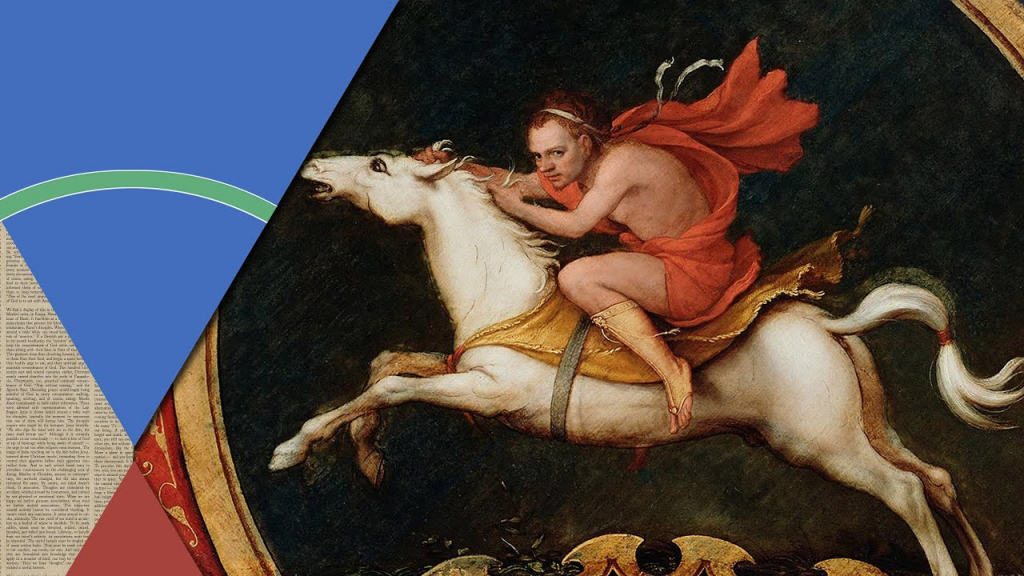
George Gurdjieff said, “Inside us we have a horse; it obeys orders from outside. And our mind is too weak to do anything inside. Even if the mind gives the order to stop, nothing will stop inside… It is easy to decide to change sitting quietly in your room. But as soon as you meet someone, the horse kicks.”

(OldNewMethod.com)

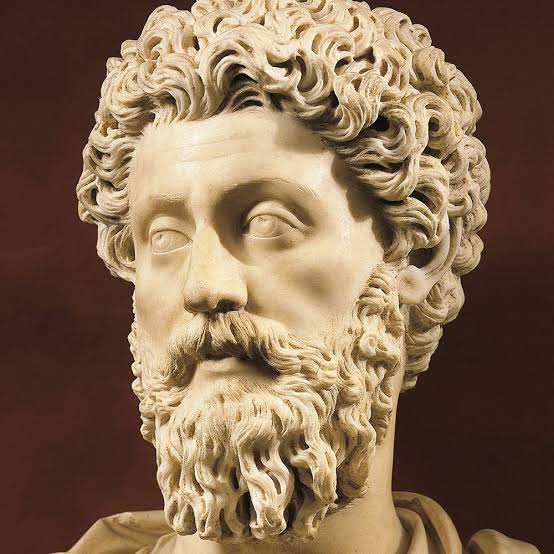
Marcus Aurelius on loving the ones you are bound to with all your heart

Accept the things to which fate binds you, and love the people with whom fate brings you together, but do so with all your heart.”

~ Marcus Aurelius

Interesting. What does he mean by my “sense of injury”? Does that mean that my mind accepts the possibility of being hurt? Or is Aurelius saying that some of us walk around with a chronic experience of ‘hurt’? Once I reject the possibility of being ‘hurt’, what I perceived as ‘pain’ miraculously turns into an opportunity to heal a mistaken belief.

Love,

Diederik

* Diederik is the Founder and Program Director of Choose Again

Marcus Aurelius Antoninus (April 26, 121 – March 17, 180) was Roman emperor from 161 to 180 and a Stoic philosopher. He was a member of the Nerva–Antonine dynasty, the last of the rulers later known as the Five Good Emperors and the …

Source: Wikipedia

Scientists capture interstellar invader comet 3I/ATLAS growing a tail

‘This image is both a scientific milestone and a source of wonder’

News

By Robert Lea published 2 days ago (Space.com)

“We were excited to see the growth of the tail, suggesting a change in the particles from the previous Gemini images.”

When you purchase through links on our site, we may earn an affiliate commission. Here’s how it works.

Click here for more Space.com videos…

Video: https://cdn.jwplayer.com/previews/388I5IFa

https://imasdk.googleapis.com/js/core/bridge3.718.0_en.html#fid=goog_1986262233

Astronomers have captured a stunning image of a tail growing on interstellar invader Comet 3I/ATLAS. The image was captured on Aug. 27, 2025, by a team of scientists and students using the Gemini South telescope located on Cerro Pachón in Chile.

Discovered on July 1 by the ATLAS (Asteroid Terrestrial-impact Last Alert System), 3I/ATLAS is just the third-ever object found drifting through our solar system that is believed to have originated from around another star. The previous two interstellar intruders were the cigar-shaped ‘Oumuamua (officially designated 1I/2017 U1), discovered drifting through the solar system in 2017, and the comet/asteroid hybrid 2I/Borisov discovered two years later in 2019.

All of these objects offer scientists a unique opportunity to study material from another planetary system, and the growing tail of 3I/ATLAS is a tantalizing glimpse at the material that lies within this comet. But this opportunity is limited; as happened with ‘Oumuamua and 2I/Borisov, 3I/ATLAS’ orbit will eventually carry out of the solar system.YOU MAY LIKE

a blurry white smudge on a black background dotted with colorful stars
Observations of Comet 3I/ATLAS taken using the Gemini South Observatory (Image credit: International Gemini Observatory/NOIRLab/NSF/AURA/Shadow the ScientistImage Processing: J. Miller & M. Rodriguez (International Gemini Observatory/NSF NOIRLab), T.A. Rector (University of Alaska Anchorage/NSF NOIRLab), M. Zamani (NSF NOIRLab))

Regardless of whether they originate from the solar system or beyond, when comets like 3I/ATLAS approach the sun, solar radiation heats ices at their hearts. This causes solid ice they carry to change directly into gas, skipping a liquid phase, in a process called “sublimation.” This gas then erupts from the comet, forming its distinctive halo or “coma” and its characteristic tail. As comets get closer to the sun, they express more material and their tails become longer  — a process that these new images from Gemini South show happening for 3I/ATLAS.

“As 3I/ATLAS speeds back in to the depths of interstellar space, this image is both a scientific milestone and a source of wonder,” team leader and University of Hawaii Institute for Astronomy astronomer Karen Meech said in a statement. “It reminds us that our solar system is just one part of a vast and dynamic galaxy — and that even the most fleeting visitors can leave a lasting impact.”

The images of 3I/ATLAS were collected in collaboration with the Shadow the Scientists initiative, which connects researchers with the general public as they perform authentic scientific experiments, like catching an interstellar comet with a world-class telescope like Gemini South and its Gemini Multi-Object Spectrograph (GMOS) instrument.

an animation showing a fuzzy blob of light traveling through a background of stars
3I/ATLAS traveling through a background of stars as seen by the ground-based telescopes of the Las Cumbres Observatory. (Image credit: ESA)

In the image captured by the team, the wide coma of 3I/ATLAS can clearly be seen, as can the interstellar comet’s tail, which stretches out for around 1/120th of a degree in the sky (one degree is about the width of your little finger as viewed with your arm outstretched). As expected, as 3I/ATLAS approaches the sun and becomes more active, these features have grown since the comet was last imaged.

Get the Space.com Newsletter

Breaking space news, the latest updates on rocket launches, skywatching events and more!Contact me with news and offers from other Future brandsReceive email from us on behalf of our trusted partners or sponsorsBy submitting your information you agree to the Terms & Conditions and Privacy Policy and are aged 16 or over.

a blurry white smudge on a black background dotted with colorful stars
Comet 3I/ATLAS streaks across a dense star field in this image captured by the Gemini Multi-Object Spectrograph (GMOS) on Gemini South at Cerro Pachón in Chile. The multicolored streaks are stars in the background of the image. (Image credit: International Gemini Observatory/NOIRLab/NSF/AURA/Shadow the ScientistImage Processing: J. Miller & M. Rodriguez (International Gemini Observatory/NSF NOIRLab), T.A. Rector (University of Alaska Anchorage/NSF NOIRLab), M. Zamani (NSF NOIRLab))

Beyond the aesthetic value of the images, this sighting of 3I/ATLAS allows scientists to observe the wavelengths of light, or spectrum, it emits. This is useful because different chemicals emit and absorb light at their own characteristic wavelengths, which means the chemical contents of 3I/ATLAS leave their “fingerprints” in the spectrum from the comet’s coma and tail.

“The primary objectives of the observations were to look at the colors of the comet, which provide clues to the composition and sizes of the dust particles in the coma, and to take spectra for a direct measure of the chemistry,” Meech said. “We were excited to see the growth of the tail, suggesting a change in the particles from the previous Gemini images, and we got our first glimpse of the chemistry from the spectrum.”

These new observations suggest that the chemical composition of 3I/ATLAS is similar to that of comets that originate in the solar system. Because comets are formed at the same time as the planets and asteroids of a planetary system, this suggests that the processes that formed the planets of the solar system around 4.6 billion years ago are common to other planetary systems around stars other than the sun.

RELATED STORIES:

— James Webb Space Telescope takes 1st look at interstellar comet 3I/ATLAS with unexpected results

— Astronomers say new interstellar visitor 3I/ATLAS is ‘very likely to be the oldest comet we have ever seen’

— Astronauts could mine asteroids for food someday, scientists say

The Gemini South telescope will get another chance to examine 3I/ATLAS when it emerges from the other side of the sun in November 2025, and scientists are already looking forward to this rare opportunity.

“These observations provide both a breathtaking view and critical scientific data,” Bryce Bolin, research scientist from Eureka Scientific, who assisted the team in making these observations, said. “Every interstellar comet is a messenger from another star system, and by studying their light and color, we can begin to understand the diversity of worlds beyond our own.”

Join our Space Forums to keep talking space on the latest missions, night sky and more! And if you have a news tip, correction or comment, let us know at: community@space.com.

Robert Lea

Robert Lea

Senior Writer

Robert Lea is a science journalist in the U.K. whose articles have been published in Physics World, New Scientist, Astronomy Magazine, All About Space, Newsweek and ZME Science. He also writes about science communication for Elsevier and the European Journal of Physics. Rob holds a bachelor of science degree in physics and astronomy from the U.K.’s Open University. Follow him on Twitter @sciencef1rst.

(Contributed by JP Massar)

AI: Is metamorphosis painful to butterflies or to humans?


Google AI Overview

Metamorphosis is not painful for a butterfly because their nervous systems do not have the ability to feel pain; they are not conscious of the physical process. In contrast, the word “metamorphosis” in humans refers to personal growth and transformation, which can be a difficult and emotionally painful experience, but this is a metaphorical use of the term, not a literal biological process.  

For Butterflies

  • No Pain Receptors:Butterflies, like most insects, lack pain receptors in their nervous system. 
  • Unconscious Process:Metamorphosis is a completely unconscious and involuntary biological process for the insect. 
  • Digestion and Rebuilding:During metamorphosis, the caterpillar’s body is broken down and rebuilt into a butterfly using enzymes, hormones, and specialized cells. There is no conscious experience of this. 

For Humans 

  • Metaphorical Transformation:The term “metamorphosis” in relation to humans is a metaphor for significant personal, psychological, or spiritual change and growth.
  • Emotional and Psychological Impact:This kind of transformation can indeed be challenging, difficult, and even painful, as it often involves confronting old habits, beliefs, or aspects of oneself.
  • No Biological Process:There is no literal, physical process of metamorphosis in humans that causes pain.

AI responses may include mistakes. Learn more

The Pain of Becoming Something New

Leave a Comment / Betrayal TraumaI feel stuck / By Trish trishwhite.ca)

Lessons from a Luna Moth

Several months ago I watched a video of a luna moth that was making its rounds on Facebook. This tiny little caterpillar, as small as a pine needle kept growing and changing. Every so often, it would stop and wiggle and jolt and burst its way out of its skin. Then it would eat and eat, and before too long it happened again.

Don’t you think that would hurt? What’s it feel like when the very skin that has housed and protected you becomes too tight and you literally have to crawl out of it.

I get to see glimpses of this transformation every day in my office. People come in unaware that they’ve grown too big for their space. Their ideologies have changed. Their relationships have become stunted. Their jobs provide a pay cheque and very little else. They know something isn’t right and they are in the painful growth process of transformation.

I sometimes think anxiety and depression serve us in this way. They can make us painfully aware that something in our life isn’t working right now. A shift needs to happen.

Pain of Transition

We love the idea of metamorphosis but, being human, I suspect we struggle, more than caterpillars do, with the process. I’m of the belief that part of the problem is our brain. Although it has amazing capabilities, one of its flaws seems to be a tendency to resist change. It would rather you stay safe and small than risk the pain of metamorphosis.

And be sure metamorphosis, we now know, is a painful process. The mystery of what happened inside a cocoon was just that…a complete mystery. Now though, through modern technology, scientists have been able to see what happens in the days and weeks that the caterpillar is holed up in its cocoon.

And it’s gross. It’s not a beautiful rendering of painless growth. It’s not the awe inspiring sprouting and growing of beautiful wings ready to unfurl and lift the caterpillar to new heights.

Nope, that version is not real life.

Science blew the lid off that idyllic picture. Instead our poor little caterpillar, after already undergoing many painful skin shedding episodes, now completely dissolves in its own gastric juices!

There may be Moments You Don’t Recognize Yourself

That’s right. Almost total anhilation of what it was before. If you open the cocoon at the right time (please don’t do this!) you will find our caterpillar friend is nothing but goop. I bet he wouldn’t even recognize himself.

Some of you have been there haven’t you? All of a sudden you no longer recognize what you have become. Where once you enjoyed life, now you feel more like a pointless blob.

To make matters worse, we have audio samples of what it sounds like in the cocoon too! “In a lab at UCLA, scientists use high-tech tactile microscopes to read the vibrations inside the chrysalis. Those vibrations are then transformed to audio…The sounds are like that of an agonizing cry.” (Heuertz, Phileena. Pilgrimage of a Soul. 2010 quoting “The Secret Life of Butterflies,” Studio 360, NPR, KIOS 91.5, Omaha, Nebraska, Dec. 8, 2007).

While we picture a painless, smooth transition, instead our poor little friend is cut off from the world, slowly disintegrating into primordial goop in the dark with no one to reassure him there will be a better day tomorrow.

Now, we all know, it’s only a matter of time before the process completes and the butterfly emerges, unfurls its wings and takes off on a whole new adventure. But, when it was trapped in that painful darkness, did it have a clue what was in store for him or her? Did it know when it felt all alone that there was an entire world eager for its emerging self? Do you know that about yourself?

You Were Created for a Purpose

Scientists also tell us that butterflies have memory of their caterpillar days. Apparently puzzles they learned as a kindergarten caterpillars are able to be solved in their winged state.

I find that fascinating. We too remember the past. We remember what we were. I think perhaps the best gift of the butterfly is a reminder that you really don’t know what you are becoming. Press into it though. Go with what lies ahead. Resist the urge to stop growing. Don’t let your brain or any of your friends convince you to stop changing. Don’t give up because the pain is too much. You are morphing into something new.

Your Wings are in the Making

Have patience. Like the caterpillar, you must shed layer after layer. You may have to spend time in the dark. You may be cut off from previously important people in your life. You may become unrecognizable for a period. Press on. Your wings are in the making, beautiful thing.

Take some time and watch this video as you ponder what is beginning to feel too small in your world. Ask yourself where you are in this process. Remind yourself that your wings are in the making.

Trish White is a counsellor in Kamloops, BC, that has a string of shed skins behind her. Find out more how she can help you shed that skin that isn’t fitting here: https://trelliscounselling.ca

Caesar to Brutus: “The fault, dear Brutus…”

(Image from RSC.org.uk)

“The fault, dear Brutus, is not in our stars, But in ourselves,”

–Julius Caesar, Act 1, Scene 2,

The Tragedy of Julius Caesar, often shortened to Julius Caesar, is a historical tragedy by William Shakespeare, believed to have been written and first performed in 1599. The play portrays the political conspiracy that led to the assassination of the Roman dictator Julius Caesar and Rome’s subsequent civil war. Wikipedia

Originally published: 1599

Author: William Shakespeare

Ms. Rachel’s Plea to Congress To Help Gaza’s Starving Babies (starts at 5:30)


The Majority Report w/ Sam Seder
Sep 2, 2025 The Majority Report w/ Sam Seder A powerful resolution from the International Association of Genocide Scholars has declared Israel’s actions in Gaza as meeting the legal definition of genocide. Sam Seder and Emma Vigeland discuss the significance of this statement from a body of top international scholars and tie it to the growing public pressure on elected officials, exemplified by a poignant video from beloved children’s entertainer Ms. Rachel, who is advocating for aid to be sent to Gaza’s starving children.

Ms Rachel’s letter to Congress: https://www.instagram.com/p/DN4f-nuDD…

View this post on Instagram

A post shared by Ms Rachel (@msrachelforlittles)

Marcus Aurelius on your “sense of injury”

“Reject your sense of injury and the injury itself disappears.”

~ Marcus Aurelius

Interesting. What does he mean by my “sense of injury”? Does that mean that my mind accepts the possibility of being hurt? Or is Aurelius saying that some of us walk around with a chronic experience of ‘hurt’? Once I reject the possibility of being ‘hurt’, what I perceived as ‘pain’ miraculously turns into an opportunity to heal a mistaken belief.

Love,

Diederik

* Diederik is the Founder and Program Director of Choose Again

Marcus Aurelius Antoninus (April 26, 121 – March 17, 180) was Roman emperor from 161 to 180 and a Stoic philosopher. He was a member of the Nerva–Antonine dynasty, the last of the rulers later known as the Five Good Emperors and the …

Source: Wikipedia