Meyerson on TAP Americans’ economic views are at odds with Americans’ economic behavior. So, whence those views?
A Quinnipiac Poll from late this summer contained this conundrum: Asked to describe the nation’s economy, 28 percent said it was good or excellent (excellent was just 3 percent), while 71 percent described it as not so good or poor. Asked to describe their own financial situation, however, 60 percent said good or excellent, while 38 percent said not so good or poor.
Hmmm.
As a New York Times article points out, American consumers are now consuming at rates commensurate with renewed prosperity. Median weekly real earnings now exceed their 2019 levels. Inflation has subsided to roughly 3 percent. So, where’s the (still way overpriced) beef?
These figures can be read too rosily. Prices for necessities like food, gas, and housing remain high, and for some quadrants of the population, such as young people paying off student loans again and seeing their rent climb ever higher, the economy is indeed a major problem. In the Times/Siena poll of six swing states, 93 percent of those from the ages of 18 through 29 rated the economy “only fair” or “poor” (fully 59 percent answered “poor”). Thanks to the federal benefits in Biden’s American Rescue Plan Act, the after-tax income of Americans under 25 actually exceeded their expenditures in 2021, but expenditures only matched their incomes in 2022. (Still, their incomes reached record highs in 2022 in a very vibrant job market.)
Even so, the very real economic obstacles confronting the young fail to fully explain the gap between their popular perceptions of the economy and the actual economy where they work and spend. So what does?
How about how young people get their news, their view of the wider world? According to Pew, 43 percent of TikTok users say that’s where they regularly get their news, while just as many or more Americans get theirs from Facebook or X (formerly Twitter). Among all Americans age 18 through 29, fully 32 percent get their news on TikTok.
That means we’re far from the nation that once got its news from Cronkite, Huntley, or Brinkley. Imperfect as those portals on the world may have been, they were largely reality-based. They went through editing by experienced professional journalists, imperfect as they were (and as we are still).
As the Timesreported last week, however, much of TikTok talk consists of “Silent Depression” memes, conveying a sense of despair over the economy. Actual economic news, not so much.
That doesn’t mean Biden and the Democrats should counter this by choruses of “Happy Days Are Here Again”; far from it. It does mean, however, that their highlighting of his very real economic achievements, or economists’ assessment of the economy, reaches an audience that has shrunk as the old Cronkite media have steadily diminished sway. It means that actual economic news may barely make it onto TikTok at all. What will make it onto TikTok, one can only hope, is the Democrats’ contrast of Biden with Trump—on economics, on social policy, on abortion, on climate change, on democracy.
McLuhan shouldst not just be living at this hour, but ruing it. The medium is, way too much, the message.
Germans cheer Adolf Hitler on his 51st birthaday as he stands on the balcony of the Reich Chancellory.
(Photo: Bettman / via Getty Images)
There are few Americans alive today who remember Hitler, and for most of us the details of his rise to power are lost to the mists of time. But Donald Trump is bringing it all back to us with a fresh, stark splash of reality.
The Nazis in America are now “out.” This morning, former Republican Joe Scarborough explicitly compared Trump and his followers to Hitler and his Brownshirts on national television. They’re here.
At the same time, America’s richest man is retweeting antisemitism, rightwing influencers and radio/TV hosts are blaming “Jews and liberals” for the “invasion” of “illegals” to “replace white people,” and the entire GOP is embracing candidates and legislators who encourage hate and call for violence.
Are there parallels between the MAGA takeover of the GOP and the Nazi takeover of the German right in the 1930s?
It began with a national humiliation: defeat in war. For Germany, it was WWI; for America is was two wars George W. Bush and Dick Cheney lied us into as part of their 2004 “wartime president” re-election strategy (which had worked so well for Nixon with Vietnam in 1972 and Reagan with Grenada in 1984).
Hitler fought in WWI but later blamed Germany’s defeat on the nation being “stabbed in the back” by liberal Jews, their fellow travelers, and incompetent German military leadership.
We’ve been sliding down this slippery slope toward unaccountable fascism for several decades, and this coming year will stand at the threshold of an entirely new form of American government that could mean the end of the American experiment.
Trump cheered on Bush’s invasion of Iraq, but later lied and claimed he’d opposed the war. Both blamed the nation’s humiliation on the incompetence or evil of their political enemies.
The economic crisis caused by America’s Republican Great Depression had gone worldwide and Hitler used the gutting of the German middle class (made worse by the punishing Treaty of Versailles) as a campaign issue, promising to restore economic good times.
Trump pointed to the damage forty years of neoliberalism had done to the American middle class and promised to restore blue-collar prosperity. Hitler promised he would “make Germany great again”; Trump campaigned on the slogan: “Make America Great Again.”
Both tried to overthrow their governments by violence and failed, Hitler in a Bavarian beer hall and Trump on January 6th. Both then turned to legal means to seize control of their nations.
Hitler’s scapegoats were Jews, gays, and liberals. “There are only two possibilities,” he told a Munich crowd in 1922. “Either victory of the Aryan, or annihilation of the Aryan and the victory of the Jew.”
He promised “I will get rid of the ‘communist vermin’,” “I will take care of the ‘enemy within’,” “Jews and migrants are poisoning Aryan blood,” and “One people, one nation, one leader.”
Trump’s scapegoats were Blacks, Muslims, immigrants, and liberals.
He said he will “root out” “communists … and radical left thugs that live like vermin”; he would destroy “the threat from within”; migrants are “poisoning the blood of our country”; and that under Trump’s leadership America will become “One people, one family, one glorious nation.”
Hitler called the press the Lügenpresse or “lying press.” Trump quoted Stalin, calling our news agencies and reporters “the enemy of the people.”
Both exploited religion and religious believers. Hitler proclaimed a “New Christianity” for Germany and encouraged fundamentalist factions within both the Catholic and Protestant faiths.
Every member of the Germany army got a belt-buckle inscribed with Gott Mit Uns (God is with us).
Trump embraced rightwing Catholics and evangelical Protestants and, like the German churches in 1933, has been lionized by their leaders.
Hitler made alliances with other autocrats (Mussolini, Franco, and Tojo) and conspired with them to take over much of the planet. Trump disrespected our NATO and European allies and embraced the murderous dictator of Saudi Arabia, the psychopathic leader of Russia, and the absolute tyrant who runs North Korea.
Both Hitler and Trump had an “inciting incident” that became the touchstone for their rise to illegitimate levels of power.
For Hitler it was the burning of the German parliament building, the Reichstag, by a mentally ill Dutchman. For Trump it is his claim that the 2020 election was stolen from him and the martyrdom of his supporters after their attempted coup on January 6th.
Hitler embraced rightwing Bavarian street gangs and brawlers, organizing them into a volunteer militia who called themselves the Brownshirts (Hitler called them the Sturm Abeilung or Storm Division).
Trump embraces rightwing militia groups and motorcycle gangs, and implicitly praises his followers when they attack people like Paul Pelosi, election workers, and prosecutors and judges who are attempting to hold him accountable for his criminal behavior.
While Trump has mostly focused his public hate campaigns against racial and religious minorities, behind the scenes he and his administration had worked hand-in-glove with anti-gay fanatics like Mike Johnson to limit the rights of the LGBTQ+ community.
His administration opposed the Equality Act, saying it would “undermine parental and conscience rights.” More than a third (36%) of his judicial nominees had previously expressed “bias and bigotry towards queer people.” His administration filed briefs in the landmark Bostock case before the Supreme Court, claiming that civil rights laws don’t protect LGBTQ+ people.
His Department of Health and Human Services ended Obama-era medical protections for queer people. His Secretary of Education, billionaire Betsy DeVos, took apart regulations protecting transgender kids in public schools. His HUD Secretary, Ben Carson, proposed new rules allowing shelters to turn away homeless queer people at a time when one-in-five homeless youth identify as LGBTQ+.
German Pastor Martin Niemöller’s famous poem begins with, “First they came for the socialists, and I did not speak out because I was not a socialist.” But, in fact, first Hitler came for queer people.
A year before Nazis began attacking union leaders and socialists, a full five years before attacking Jewish-owned stores on Kristallnacht, the Nazis came for the trans people at the Institute for Sexual Research in Berlin.
In 1930, the Institute had pioneered the first gender-affirming surgery in modern Europe. It’s director, Magnus Hirschfeld, had compiled the largest library of books and scientific papers on the LGBTQ+ spectrum in the world and was internationally recognized in the field of sexual and gender studies.
Being gay, lesbian, or trans was widely tolerated in Germany, at least in the big cities, when Hitler came to power on January 30, 1933, and the German queer community was his first explicit target. Within weeks, the Nazis began a campaign to demonize queer people — with especially vitriolic attacks on trans people — across German media.
German states put into law bans on gender-affirming care, drag shows, and any sort of “public display of deviance,” enforcing a long-moribund German law, Paragraph 175, first put into the nation’s penal code in 1871, that outlawed homosexuality. Books and magazines telling stories of gay men and lesbians were removed from schools and libraries.
Thus, a mere five months after Hitler came to power, on May 6, 1933, Nazis showed up at the Institute and hauled over 20,000 books and manuscripts about gender and sexuality out in the street to burn, creating a massive bonfire. It was the first major Nazi book-burning and was celebrated with newsreels played in theaters across the nation. It wouldn’t be the last: soon it spread to the libraries and public high schools.
Hitler couldn’t have risen to power without the support of the largest outlets in German media. Some treated him as “just another politician,” normalizing his fascist rhetoric. Others openly supported him.
The conservative elite of Germany, particularly Fritz Thyssen, Hjalmar Schacht, and Gustav Krupp were early supporters of Hitler, as he promised to crush the German labor movement and cut their taxes.
Without the support of rightwing billionaires funding Cambridge Analytica and Trump’s campaign he never would have won the electoral college in 2016.
Hitler couldn’t have risen to power without the support of the largest outlets in German media. Some treated him as “just another politician,” normalizing his fascist rhetoric. Others openly supported him.
After his failed beer hall putsch, he was legally banned from public speaking and mass rallies but, in 1930, German media mogul Alfred Hugenberg — a rightwing billionaire who owned two of the largest national newspapers and had considerable influence over radio — joined forces with Hitler and relentlessly promoted him, much like the Murdoch media empire and 1,500 billionaire-owned rightwing radio stations across the country helped bring Trump to power in 2016 and still promote him every day.
Hitler’s first major seizure of dictatorial power was his use of the Weimar law Article 48 which, during a time of crisis, empowered the nation’s leader to suspend due process and habeas corpus, turn the army’s guns on people deemed insurrectionists, and arrest people without charges or trial.
Its American equivalents are the State of Emergency Declaration and the Insurrection Act, both of which Trump has promised to invoke in his first days in office if he’s re-elected in 2024.
Once Hitler had seized full control of the German government, he set about changing the nation’s laws to replace democracy with autocracy. His enablers in the German Parliament passed the “Enabling Act” that gave Hitler’s cabinet the power to write and implement their own laws.
Trump promises to use the theoretical “unitary executive” powers rightwing groups claim the president holds, but has never used in our history, to have his new cabinet rewrite many of our nation’s laws.
Hitler followed the Enabling Act, six months later, with the Act for the Restoration of the Professional Civil Service which authorized him to gut the German Civil Service and replace career bureaucrats with toadies loyal exclusively to him. It was the end of any semblance of resistance to the Nazis or preservation of democracy within the new German government.
In his last three weeks in office, Trump issued an executive order called Schedule F that ended Civil Service protections for around 50,000 of America’s top government officials, including the senior levels of every federal agency, so he could replace them all with political appointees (Biden reversed it). The Heritage Foundation is reportedly now vetting over 50,000 people to fill these ranks if Trump is reelected and, as promised, reinstates Schedule F.
The last bastion of resistance to Hitler within the German government was the judiciary, and Hitler altered the German Civil Service Code in January 1937, giving his cabinet the power to remove any judges from office who were deemed “non-compliant” with “Nazi laws or principles.”
When Judge Jon Tigar of the Ninth Circuit Court of Appeals struck down Trump’s new rules barring people from receiving asylum in 2018, Trump attacked Tigar as “a disgrace” and “an Obama judge.” He added that the Ninth Circuit Court of Appeals is “really something we have to take a look at because it’s not fair,” adding, “That’s not law. Every case that gets filed in the Ninth Circuit we get beaten.”
Because the German Supreme Court was still, from time to time, ruling against Hitler’s Gleichschaltung or Nazification of the German government and legal code, and he had no easy legal mechanism to pack the court or term-limit the justices, in 1934 he created an entirely new court to replace it, which he called the People’s Court.
Trump packed the US Supreme Court with rightwing ideologues, many of whom are heavily beholden to oligarchs and industries aligned with Trump and the GOP. If they continue to go along with him — and there’s little to indicate they won’t — he won’t need to create a new court.
When Hitler took over the country in 1933, the military leadership was wary of him and his plans. While they shared many of his conservative views about social issues, most still held a strong loyalty to the German constitution.
It took him the better part of two years, with heavy support from his Brownshirts (who he’d by then integrated into the military) to purge the senior levels of the Army and replace them with Nazi loyalists.
The night before January 6th, newly-elected Alabama Senator Tommy Tuberville joined Trump’s sons to help organize the coup planned for the next day. As the Alabama Political Reporter newspaper reported at the time:
“The night before the deadly attack on the U.S. Capitol, Alabama Republican Senator Tommy Tuberville and the then-director of the Republican Attorneys General Association met with then-President Donald Trump’s sons and close advisers, according to a social media post by a Nebraska Republican who at the time was a Trump administration appointee. “Charles W. Herbster, who was then the national chairman of the Agriculture and Rural Advisory Committee in Trump’s administration, in a Facebook post at 8:33 p.m. on Jan. 5 said that he was standing ‘in the private residence of the President at Trump International with the following patriots who are joining me in a battle for justice and truth.’ … “Among the attendees, according to Herbster’s post, were Tuberville, former RAGA director Adam Piper, Donald Trump Jr., Eric Trump, Trump’s former National Security Advisor Michael Flynn, adviser Peter Navarro, Trump’s 2016 campaign manager Corey Lewandowski and 2016 deputy campaign manager David Bossie.”
Tuberville is now holding open the top ranks of the US military, presumably so if Trump is reelected he can pack our armed forces with people who won’t defy his orders when he demands they seize voting machines and fire live ammunition at the inevitable protestors.
When Hitler took power in 1933, he quickly began mass arrests of illegal immigrants, gypsies, union activists, liberal commentators and reporters, and (as noted earlier) queer people. To house this exploding prison population, he first took over a defunct munitions factory in Dachau; within a few years there were over a hundred of these camps where “criminals” were “concentrated and separated from society.” He called them concentration camps.
The New York Timesreports that Trump is planning to “build huge camps to detain people,” and “to get around any refusal by Congress to appropriate the necessary funds, Mr. Trump would redirect money in the military budget.”
How many people? “Millions” writes the Times. And not just immigrants: Trump is planning to send his enemies to them, too.
Will he succeed in getting around Congress? He did the last time, with money to build his wall taken from military housing.
So far, that’s as bad as it gets: what he has already promised. But these are early days.
Hitler was unbothered by the deaths of German citizens, and was enthusiastic about the deaths of those he considered his enemies.
On April 7, 2020 all three TV networks, The New York Times and The Washington Post all lead with the breaking story that Black people were dying at about twice the rate of white people from Covid. The Times headline, for example, read: “Black Americans Bear the Brunt as Deaths Climb.”
As an “expert” member of Jared Kushner’s team of young, unqualified volunteers supervising the administration’s PPE response noted to Vanity Fair’s Katherine Eban:
“The political folks believed that because it was going to be relegated to Democratic states, that they could blame those governors, and that would be an effective political strategy.”
It was, after all, exclusively Blue States that were then hit hard by the virus: Washington, New York, New Jersey, and Connecticut. And there was an election coming in just a few months.
Trump even invoked the Defense Production Act and issued an Executive Order requiring mostly minority slaughterhouse and meatpacking employees go back to work. It led to a half-million unnecessary American deaths and to this day neither Trump nor Kushner have ever apologized.
In the final years of the Third Reich, Hitler authorized his “final solution to the Jewish problem” that included building death camps in countries outside Germany to methodically exterminate millions of people. These were different from the hundreds of prisons and concentration camps he’d built within Germany for “criminals and undesirables,” although at those camps people were often worked to death or slaughtered when the war started going south.
So far, Trump and his people haven’t suggested the need for death camps in America, although Ron DeSantis and Greg Abbott seem particularly eager to see immigrants die either from razor wire or gunshot.
But, then, the Nazis never officially announced their external death camps either; like Bush’s criminal “black sites” overseas where hundreds of innocent Afghans and Iraqis were tortured, often to death, they figured they’d never be found out.
There are few Americans alive today who remember Hitler, and for most of us the details of his rise to power are lost to the mists of time. But Donald Trump is bringing it all back to us with a fresh, stark splash of reality.
When I lived in Germany I worked with several Germans who had been in the Hitler Youth. One met Hitler. Another, Armin Lehmann, became a dear friend over the years and wrote a book about his experience as the 16-year-old courier who handed Hitler the news the war was lost and stood outside Hitler’s bunker room as he committed suicide.
They were good people, children at the time really, and were (they’ve all died within the last two decades) haunted by their experience.
It can happen here.
We’ve been sliding down this slippery slope toward unaccountable fascism for several decades, and this coming year will stand at the threshold of an entirely new form of American government that could mean the end of the American experiment.
To the extent that our Constitution is still intact, the choice for our democracy to rise or fall will be in our hands.
Our work is licensed under Creative Commons (CC BY-NC-ND 3.0). Feel free to republish and share widely.
Thom Hartmann is a talk-show host and the author of “The Hidden History of Monopolies: How Big Business Destroyed the American Dream” (2020); “The Hidden History of the Supreme Court and the Betrayal of America” (2019); and more than 25 other books in print.
New Thinking Nov 21, 2023 Who is America’s Greatest Spiritual teacher? Arguably at the core of the American spiritual experience lies this man: Ralph Waldo Emerson. Unitarian minister, Transcendentalist (the uniquely American philosophy promising direct connection to the divine), venerated author of Self Reliance, Nature and The Oversoul and one of the earliest synthesizers of East-West spiritual thinking, Emerson laid the groundwork for the father of American psychology William James, the ensuing New Thought movement, even the New Age movement of the late 20th century. In his latest book Lessons from an American Stoic: How Emerson Can Change Your Life, award-winning author Mark Matousek shows how Emerson reminds his countrymen to trust the higher angels of their nature, trust their human potential, and remember the importance of an examined life. Mark is a teacher, spiritual seeker, and author of seven books including Sex Death Enlightenment and Writing to Awaken. His work has been featured in The New Yorker, O: The Oprah Magazine, and Harper’s Bazaar. Matousek’s transformative workshops and mentoring have inspired thousands of people around the world to reach their artistic and personal goals, using writing as a tool for insight, innovation, and clarity of purpose. He is the founder of The Seekers Forum, an online community for self-inquiry, and lives in Springs, New York. His website is MarkMatousek.com. In this interview, Matousek reveals how Emerson’s timeless wisdom can help us with the problems we’re facing today. In twelve powerful lessons, he shows how Emerson’s path of self-reliance can radically improve one’s quality of life. 00:00 Introduction 05:21 Transcendentalists & Perennial Philosophy 11:47 Engaging the Shadow 16:45 American Mysticism & William James 20:21 Spiritual Not Religious, New Age 2.0 28:32 “Pragmatic Mystics” 31:41 America’s “Mystical Core” 40:00 Gen Z/Millennials 44:47 International Emersonianism 47:13 Conclusion New Thinking Allowed Guest Host, Christopher Naughton, JD, is a former prosecutor and multiple Emmy Award-winning host of The American Law Journal television program. His website is ChristopherNaughton.com. Naughton is author of America’s Next Great Awakening: What the Convergence of Mysticism, Religion, Atheism, and Science Means for the Nation. And You. To order America’s Next Great Awakening by Christopher Naughton, click here: https://amzn.to/3P1ab7x Edited subtitles for this video are available in Russian, Portuguese, Italian, German, French, Swedish, and Spanish. (Recorded on September 22, 2023)
The man represented by the Prince of Disks is a quiet and meditative man, who works with unfailing determination towards the goals he sets himself. He is reliable and resourceful, unswerving and creative in his dedication.
He is more imaginative than the Knight of Disks, though he has the same quiet strength and gentleness. His quality of contemplation often yields fruit in surprising ways, generating a deep and broad-sweeping understanding about the inner workings of life.
If he is ill-dignified, the Prince of Disks can become stubborn and short-sighted – even bloody-minded in his attitudes. Faithful and loyal himself, he will not tolerate faithlessness in others. Neither will he accept lack of integrity, nor dishonesty.
He is hard-working, trustworthy and inventive, often producing unusual yet practical solutions which resolve otherwise intractable problems. As a friend he is non-judgemental and supportive, though capable of shedding new perspectives on situations. He’s generally a good listener, though he has little patience with histrionics and manipulation.
His approach to life overall is one of industrious practicality. He believes that all things yield to a determined will and well-directed activity.
Though emotionally he at first gives the impression that he is solid and perhaps even a little unimaginative, when his feelings are roused, he can be deeply passionate and sensual.
He rarely comes up to indicate a change of mood in a person, though sometimes he will appear to indicate some-one learning to take responsibility in everyday life.
We walk on starry fields of white And do not see the daisies; For blessings common in our sight We rarely offer praises. We sigh for some supreme delight To crown our lives with splendor, And quite ignore our daily store Of pleasures sweet and tender.
Our cares are bold and push their way Upon our thought and feeling. They hand about us all the day, Our time from pleasure stealing. So unobtrusive many a joy We pass by and forget it, But worry strives to own our lives, And conquers if we let it.
There’s not a day in all the year But holds some hidden pleasure, And looking back, joys oft appear To brim the past’s wide measure. But blessings are like friends, I hold, Who love and labor near us. We ought to raise our notes of praise While living hearts can hear us.
Full many a blessing wears the guise Of worry or of trouble; Far-seeing is the soul, and wise, Who knows the mask is double. But he who has the faith and strength To thank his God for sorrow Has found a joy without alloy To gladden every morrow.
We ought to make the moments notes Of happy, glad Thanksgiving; The hours and days a silent phrase Of music we are living. And so the theme should swell and grow As weeks and months pass o’er us, And rise sublime at this good time, A grand Thanksgiving chorus.
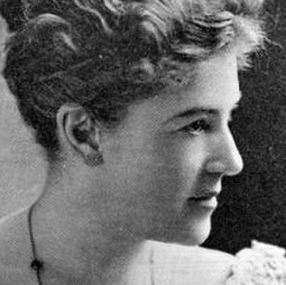
Ella Wheeler Wilcox was born on November 5, 1850, in Johnstown Center, Wisconsin. She was a popular writer characterized mainly by her upbeat and optimistic poetry, though she was also an activist. Her poetry collections include Poems of Passion (W. B. Conkey Company, 1883) and Poems of Peace (Gay & Bird, 1906). She died in Connecticut on October 30, 1919. (poets.org)
“Why does it seem like I have (or someone I know has) become ‘more Autistic’?”
There could be many reasons for this:
Maybe we’ve become more comfortable with you and have started masking less
We may be developing greater self-awareness and are getting to know ourselves better, allowing us to let our true selves show
Changes in our lives (stress levels, hormonal changes, neurological maturity, etc., etc.) can impact certain things such as executive functioning, ability to mask, and our need to engage in self-soothing behaviours or practice self-care
Maturity may also lead to reduced concerns about social expectations, making less effort to “fit in”, and feeling more confidence to be ourselves
Sometimes addressing underlying or co-occurring conditions (such as ADHD, depression, anxiety, sleep issues, etc.) which were masking our Autism allows our Autistic traits to become more noticeable
Late-in-life identification
For folks whose Autistic traits may not have been as obvious when they were growing up, they may have been overlooked.
Many parents are diagnosed after their children, when they recognize a lot of similarities in their own experience and decide to pursue their own assessment (or self-diagnose).
There can be a long grieving and unmasking process as a person considers, accepts, and embraces their newly-discovered identity. We often experience disbelief, anger, imposter syndrome, sadness, confusion — a roller-coaster of emotions.
Working through these feelings and coming to welcome and celebrate this different view of ourselves can be a liberating experience. As we get to know our authentic selves and engage with the Autistic community, we may feel freer to reveal those unique and quirky aspects of ourselves which we’d previously suppressed.
Unmasking Autism
This self-suppression may have been conscious or unconscious — likely a bit of both — depending on our experiences growing up. Some people were bullied or mistreated due to being different and hid parts of themselves as a necessary act of self-protection.
Others may have unconsciously internalized social norms and expectations, not even realizing we’d been forcing ourselves to do something that didn’t quite feel right, in order to avoid sticking out.
Most of us have had both of these experiences and the process of unmasking and self-discovery is ongoing. I would estimate I’ve been working at unmasking for about 4–5 years, and I’m still discovering things I do (or don’t do) as a result of unconscious masking.
It can be painful
While this process can be incredibly freeing, it can also be intensely painful. We look back at our lives and see ways our suffering or hardships may have been avoided if we’d had the necessary supports or information.
We might feel anger about how our needs or differences were invalidated, dismissed, even punished.
As we unmask, we may even find there are some people in our lives who don’t accept this “new” (more genuine) version of our personalities. They may like the masked us better. That hurts like hell.
We may encounter people who don’t believe us, who don’t take our struggles seriously because we seemed to be “doing fine” before. What they don’t understand is just because they can’t see the internal struggles doesn’t mean they don’t exist.
It’s not “put on”
If a person seems to be “acting” more Autistic than they previously did, this does not mean they are putting it on. What it could mean is this process of self-discovery has allowed us to learn new ways of coping and of thriving.
For example: stimming. Stimming is commonly hidden or suppressed because it is perceived as odd or unusual by people who don’t understand Autism.
This could be intentional, such as children being told to “quiet” their hands, to stop flapping or twirling or doing whatever behaviours they used for self-regulation which were deemed “abnormal”. It can also be an unconscious process whereby we observe others and learn through experience what is accepted and what is punished or mocked.
Upon embracing our true inner selves, we may discover (or rediscover) that stimming does help us regulate. It can be calming, soothing, and just plain enjoyable. We can now see those people were wrong to tell us to stop, and give ourselves permission to listen to our bodies again.
Noticing that a person is doing something more now than they used to doesn’t mean they’re exaggerating. It could very well mean we’ve shed those old, harmful expectations and are giving ourselves what we needed all along.
We don’t develop Autism
No one “develops” Autism, except in utero. It is highly heritable, meaning it’s inherited through genetics.
Autism is dynamic, meaning a person’s needs and capabilities fluctuate from one day to the next, but Autism doesn’t go away (thankfully!), nor does it develop later in life.
Autism is part of our nervous systems, and an important part of who we are.
We can finally shed those old, harmful expectations and give ourselves what we needed all along.
Although he died in relative obscurity in 1972, mystic Neville Goddard (1905–1972) now ranks among the 21st century’s most widely followed writers and lecturers in alternative spirituality.
Search results for the mononymous Neville’s talks number in the millions. His books, once relegated to literature tables at New Thought churches (and even then difficult to find) — populate countless editions which, along with an expanding catalogue of anthologies, amass yearly sales of hundreds of thousands in print, audio, and digital.
Across Neville’s vast range of lectures, which he freely permitted audience members to tape-record in a dawning age of portable technology — a foresight that secured his legacy in the digital era — the teacher contended with unfailing simplicity and elegance that everything you see and experience is the out-picturing of your emotionalized thoughts and mental images.
“The only God,” the radical idealist told audiences, “is your own wonderful human imagination.”
Neville’s literary career began in 1939 with his slender, evocative volume, At Your Command. It isnot only the mystic’s first book but among his most elegant and powerful statements in a career that spanned more than ten volumes and thousands of lectures.
Rare jacket image of Neville, circa 1940s.
With disarming brevity, At Your Command presents Neville’s full-circle philosophy: Your imagination is the creative force called God in Scripture; the Bible itself is neither historical nor theological but rather a symbolic blueprint of the individual’s psychological development.
“Every man,” Neville said in a lecture of October 23, 1967, “is destined to discover that Scripture is his autobiography.”
It is idealist philosophy — or what might be called spiritualized objectivism — taken to the razor’s edge, argued with jewel-like precision. However often Neville restated his basic premise, it always sounded fresh, reaching even repeat listeners and readers as though for the first time — a gift possessed by Ralph Waldo Emerson (1803–1882), Jiddu Krishnamurti (1895–1986), Vernon Howard (1918–1992), and few others.
Neville on Barbados, undated.
ABritish native of Barbados, Neville first ventured to the U.S. at age 17 to study theater. He had never before left his island environs. Although the graceful, angular youth found some success on screen and stage, he radically changed directions in the early 1930s when he said he began studying under a mysterious teacher named Abdullah, a turbaned black man of Jewish descent. The seeker said they worked together in New York City for five years poring over Kabbalah, number symbolism, and Scripture.
Despite Neville’s screen-idol looks, there exist few images of him. Some students thought him a man of mystery. One of Neville’s most dedicated acolytes in the mid-1950s was Margaret Runyan (1921–2011), cousin of American storyteller Damon Runyon (1880–1946) and briefly wife to New Age icon Carlos Castaneda. Margaret recalled in her 2001 memoir, A Magical Journey with Carlos Castaneda:
…it was more than the message that attracted Carlos, it was Neville himself. He was so mysterious. Nobody was really sure who he was or where he had come from. There were vague references to Barbados in the West Indies and his being the son of an ultra-rich plantation family, but nobody knew for sure. They couldn’t even be sure about this Abdullah business, his Indian teacher, who was always way back there in the jungle, or someplace. The only thing you really knew was that Neville was here and that he might be back next week, but then again…
“There was,” she concluded, “a certain power in that position, an appealing kind of freedom in the lack of past and Carlos knew it.”
It is not a stretch to reckon that Neville’s description of tutelage under an arcane teacher — a common theme in Western occultism since Madame H.P. Blavatsky’s (1831–1891) late-19th century claims of guidance from hidden Masters — informed Castaneda’s fanciful but undeniably penetrating narratives of mentorship to a Native American sorcerer.
A dashing Neville in 1946.
Attimes, however, Neville opened up about his private life and how he responded to disappointing or bitter episodes.
In one instance, the lecturer recounted a painful incident from his drama school days, when he was fresh from the Caribbean and new to city life. In a late-career lecture of March 17, 1972, Neville described suffering humiliation by his acting teacher — but using the experience as a goad to something greater.
As you read his words, note that the youthful Neville probably spoke in a rounder, more rural Anglo-Caribbean accent — versus his later clipped and mellifluous diction — which his instructor deemed a career-killer:
My own disappointments in my world led up to whatever I am doing today. When the teacher in my school, I could ill afford the $500 that my father gave me to go to this small school in New York City, and she made me the goat. She called me out before an audience of about forty students. And she said, “Now listen to him speak. He will never earn a living using his voice.”
She should not have done that, but she did it — but she didn’t know the kind of person that she was talking about. Instead of going down into the grave and burying my head in shame, I was determined that I would actually disprove her. It did something to me when she said to me, “you will never earn” to the class — using me as the guinea pig to show them what not to do — and so, she said, I spoke with a guttural voice and I spoke with this very heavy accent, and I will never use my voice to earn a living.
We all went to this school and this teacher simply singled me out to make some little, well, exhibition of what I should not be doing in class. But I went home and I was so annoyed that I had lost my father’s $500 or $600 that he gave me for the six-months course, but I was determined that she was false, that she was wrong. So, I went to the end. I went to the end and actually felt that I was facing an audience and unembarrassed that I could talk and talk and talk forever without notes, no notes.
By early 1938, Neville quit his theatrical career to dedicate himself to writing and lecturing on metaphysics. As noted, Neville is not only one of the most widely heard spiritual orators of the 20th century but he spoke extemporaneously and elegantly across decades-worth of lectures, without a note in sight.
Although Neville wrote fuller works with greater metaphysical exposition, At Your Command remains the perfect user’s manual. What you experience, Neville told seekers, is not what you pray for but what matches your “awareness of being.” Clarified desire, properly directed, he said, catalyzes a new state:
For instance; if you were imprisoned no man would have to tell you that you should desire freedom. Freedom, or rather the desire of freedom would be automatic. So why look behind the four walls of your prison bars? Take your attention from being imprisoned and begin to feel yourself to be free. FEEL it to the point where it is natural — the very second you do so, those prison bars will dissolve. Apply this same principle to any problem.
Mere solipsism? The difference between a solipsist and an idealist is that the former burdens others to validate his self-image. Neville’s system is fiercely independent. Wishful thinking? Neville’s outlook evolved into what I consider the most elegant mystical analogue to quantum theory — and is increasingly recognized as such.
Speaking at a series of Los Angeles lectures in 1948, often published under the title Five Lessons, Neville announced: “Scientists will one day explain why there is a serial universe. But in practice, how you use this serial universe to change the future is more important.”
In an era before the popularization of quantum theory, it was a striking observation. It was not until years later that quantum physicists began discussing the many-worlds theory, devised by physicist Hugh Everett III (1930–1982) in 1957.
For his part, Everett was attempting to make sense of some of the extraordinary findings emergent from about three decades in quantum mechanics. For example, scientists are able to demonstrate, through interference patterns, that a subatomic particle occupies a “wave state” or state of superposition — that is, an infinite number of places — until an observer or automatized device takes a measurement: it is only when measurement is taken that the particle collapses, so to speak, from a wave state into a localized one. Before measurement is taken the localized particle exists only in potential.
Some argue that the “wave state” is nothing but a probability formula — it is certainly that, too (extraordinary in itself) — but I believe I am accurately stating what has been observed in the last 90-plus years of particle experiments.
Indeed, starting about 20 years ago, it became fashionable for New Agers and laypeople, like me, to put quantum theory at the back of cherished spiritual principles. It became equally fashionable for professional skeptics and mainstream journalists to pushback, crying B.S. and sophistry. That position, while still heard, has quieted. Not because skeptics have grown more pensive or attenuated to media-speak, but because the proposition of mind-over-matter, strange as it may seem, now resounds in debates on theoretical physics in mainline journals and magazines.
Newspaper image of Neville, circa 1950s.
Since Neville exemplified his own philosophy, it is important to understand something about him personally. Let’s pick up where we began earlier: the island of Barbados, where Neville was born in 1905. He was not a scion of the island’s wealthy, landowning class. Rather, he was part of a large, somewhat scrappy family of British merchants. They ran a small grocery and provisions business.
Transplanted from his tropical home to the streets of New York City, Neville led a precarious financial life. When theater jobs ran dry, the actor and dancer found work as an elevator operator, shipping clerk, and department store salesman. He did land some impressive roles, including on Broadway. But most stage opportunities vanished with the onset of the Great Depression. He often wore the same suit of clothes and bounced around shared rooms on Manhattan’s Upper West Side. Food was not a guarantee.
After Neville’s speaking career took off, syndicated gossip columnist Jimmie Fidler reported on May 4, 1955, that the Barbadian came from an “enormously wealthy” family who “owned a whole island” in the Caribbean. This is invention — but over time, and in line with stories Neville told himself, the Goddard family did, in fact, grow rich.
The clan of green grocers expanded into Goddard Enterprises, which is now a publicly traded catering and food service employing about 6,500 people in the Caribbean and Latin America. Neville’s father Joseph, called Joe, founded the business, and ran it with Neville’s older brother Victor, of whom Neville spoke frequently in his lectures. Indeed, everything Neville related about the rise of his family’s fortunes matches business records and reportage in Caribbean newspapers. But there is a more dramatic example of Neville’s self-descriptions cleaving to fact.
In the years immediately before and after World War II, Neville lived in New York’s Greenwich Village, a place he relished. He resided with his wife, Catherine Willa Van Schumus (1907–1975), nicknamed Bill, and daughter Victoria, or Vicky, at 32 Washington Square, a handsome, redbrick apartment tower on the west side of Washington Square Park. (The mystic’s prospering family had since put him on a stipend.) Neville recalled many happy years in the building, which still stands.
Like millions, he was pulled away from home by the draft in late 1942, just under a year into America’s entry to World War II. In lectures, however, Neville described using the powers of visualization to gain an honorable discharge a few months later and return home.
Why would the U.S. Army release a healthy, athletic man — Neville was lithe and fit as a dancer — at the height of the war effort when nearly every able-bodied male was mobilized? At age 37, he was a little old for the draft but well below the cutoff of 45.
In his accounts, the metaphysician wanted no part of the war. He was newly married with a 4-month-old daughter and also had an 18-year-old son, Joseph, from a prior marriage. He had obligations most draftees did not. While stationed for basic training, the buck private requested a discharge — and was abruptly shut down.
Neville said he determined to use his methods of mental creativity. Each night, as he described it, he laid on his army cot and before drifting to sleep pictured himself home in Greenwich Village. He would see from the perspective of being in his apartment and strolling Washington Square Park. He continued, night after night, in this imaginal activity.
Within a few weeks, Neville said, seemingly from nowhere, his commanding officer summoned him and asked, “Do you still want a discharge?” Neville said, “I do.” The CO continued, “You’re being honorably discharged.”
I questioned this story and decided to verify it.
U.S. Army Human Resources Command provided Neville’s service records. The one original document remaining is his final pay statement, which, along with digital archives, shows his enlistment from November 12, 1942 to March 1943 with the 490th Armored FA Battalion at Camp Polk, Louisiana. A spokesman for Army Human Resources Command confirmed that Neville was honorably discharged in about four months in March 1943. The reason, as recorded by the military, is that the conscript was released “to accept employment in an essential wartime industry.”
I asked: “This man was a metaphysical lecturer — how is that a vital civilian occupation?” The spokesman replied: “Unfortunately, Mr. Goddard’s records were destroyed in the 1973 fire at the National Personnel Records Center,” about a year after Neville’s death.
On September 11, 1943, The New Yorker confirmed Neville being back on the lecture circuit in asurprisingly extensive profile, “A Blue Flame on the Forehead” — the last time mainstream letters took any note of the mystic.
I cannot say precisely what happened; I can only report that Neville described the logistics accurately. I must add that if any quotidian reason exists for Neville’s honorable discharge, it may be a mistake in his draft records. Neville’s Electronic Army Serial Number Merged File lists his marital status as “separated, without dependents.” This is obviously incorrect. Yet the correction of this error does not mesh with official reasons for his discharge.
Across years, I’ve reviewed census data, citizenship applications, military documents, and other sources that track Neville’s whereabouts and employment and can only say that his self-professed timelines and life details match the available record.
The one facet of Neville’s career I have been unable to verify is his mentorship to the mysterious Abdullah, a man for whom there exists no definite paper trail beyond Neville’s descriptions.
A commercial fortune teller called “Prof. Abdullah” occasionally appears in period newspapers but it is important to note that sundry “seers” widely populated the New York scene, often adopting Eastern or arabesque names. One or more “Abdullah” in the press does not make a match.
Detail from New York Times article of August 3, 1899.
I have considered whether Neville’s Abdullah may be found in the more impressive persona of a 1920s- and ’30s-era black-nationalist mystic named Arnold Josiah Ford. Like Neville, Ford was born in Barbados, in 1877, the son of an itinerant preacher. Ford arrived in Harlem around 1910 and established himself as a leading voice in the Ethiopianism movement, a precursor to Jamaican Rastafarianism.
Arnold Josiah Ford (1877–1935) in New York City.
Both movements held that the East African nation of Ethiopia was home to a lost Israelite tribe that had preserved the teachings of a mystical African belief system. Ford considered himself an original Israelite and a man of authentic Judaic descent. Like Abdullah, Ford was sometimes considered an “Ethiopian rabbi.” Surviving photographs show Ford as a dignified, somewhat severe-looking man with a set jaw and penetrating gaze, sometimes wearing a turban, just like Neville’s Abdullah, with a Star of David on his lapel. Ford himself cultivated an air of mystery, attracting “much apocryphal and often contradictory speculation,” noted historian Randall K. Burkett in his Garveyism as a Religious Movement (Scarecrow Press, 1978).
Ford lived in New York City at the same time that Neville began his discipleship to Abdullah. Neville recalled his and Abdullah’s first meeting in 1931, and U.S. Census records show Ford was living in Harlem on West 131st Street in 1930. In his study The Black Jews of Harlem by Howard Brotz (Schocken Books, 1964, 1970), historian Howard Brotz wrote of Ford: “It is certain that he studied Hebrew with some immigrant teacher and was a key link” in communicating “approximations of Talmudic Judaism” from within the Ethiopianism movement. This would fit Neville’s depiction of Abdullah tutoring him in Hebrew and Kabbalah. (It should be noted that early 20th century occultists often loosely used the term Kabbalah to denote any kind of Judaic study.)
More still, Ford’s Ethiopianism possessed a mental metaphysics. “The philosophy,” noted historian Jill Watts in God, Harlem U.S.A.(University of California Press, 1992), “…contained an element of mind-power, for many adherents of Ethiopianism subscribed to mental healing and believed that material circumstances could be altered through God’s power. Such notions closely paralleled tenets of New Thought…”
Ford was also an early supporter of black-nationalist pioneer Marcus Garvey and served as musical director of Garvey’s Universal Negro Improvement Association. Garvey, as documented in my 2009 Occult America, suffused his movement with New Thought metaphysics and phraseology.
The commonalities between Ford and Abdullah are striking. Yet too many gaps emerge in Neville’s and Ford’s backgrounds to allow for a conclusive leap. Records of Ford’s life grow thinner after 1931, the year he departed New York and migrated to Ethiopia, where he died in 1935. Ethiopian emperor Haile Selassie, after his coronation in 1930, offered land grants to any African Americans willing to relocate to the East African nation. Ford accepted the offer. The timing of Ford’s departure is the biggest single blow to the Abdullah-Ford theory. Neville said he and his teacher had studied together for five years. This obviously would not have been possible with Ford, who had apparently left New York in 1931, the same year Neville said he and Abdullah first met.
Was there a real Abdullah? On this count, an enticing and notable testimony exists.
In the final year of his life, bestselling metaphysical author and minister Joseph Murphy (1898–1981) told an interviewer that he studied in the 1930s with the same teacher who tutored his friend and contemporary New Yorker, Neville. It was a turbaned man of black-Jewish descent named Abdullah.
In 1981, Murphy sat for a little-known series of interviews with French-Canadian writer Bernard Cantin, who in 1987 published the French language work Joseph Murphy se raconte à Bernard Cantin [Joseph Murphy Speaks to Bernard Cantin]. It has never appeared in English. Murphy described his experience with Abdullah, as recounted by Cantin:
It was in New York that Joseph Murphy also met the professor Abdullah, a Jewish man of black ancestry, a native of Israel, who knew, in every detail, all the symbolism of each of the verses of the Old and the New Testaments. This meeting was one of the most significant in Dr. Murphy’s spiritual evolution. In fact, Abdullah, who had never seen nor known the Murphy family, said flatly that Murphy came from a family of six children, and not five, as Murphy himself had believed. Later on, Murphy, intrigued, questioned his mother and learned that, indeed, he had had another brother who had died a few hours after his birth, and was never spoken of again.
A rare edition of Murphy’s final interviews.
In a letter of June 1987, reproduced below, Murphy’s second wife Jean, told Cantin that his interviews with her husband were the only to have received the metaphysician’s approval in the past thirty years.
Although he won audiences on both coasts by his death in 1972, it was difficult to fathom that the Barbadian’s voice, persona, and ideas would resonate in future decades. Indeed, the Woodstock Generation displayed little interest in the silver-maned, tailored man who spoke of the promethean power of imagination.
A snapshot of Neville toward the end of his life.
Conflicting accounts exist around Neville’s death. The most widely heard is that on October 1, 1972, Neville “collapsed and died of an apparent heart attack” at age 67 in his West Hollywood home, as reported in The Los Angeles Times on October 4, 1972.
In actuality, Neville’s death certificate from the state of California provides a different record, which squares with an account from one of his intimates, driver and friend Frank Carter, who was the last person to be with the mystic on the night of his death. (Neville’s wife was hospitalized at the time.)
Neville’s daughter Vicky summoned Carter to the teacher’s home to consult with the coroner the morning of October 1 when his body was found. In the coroner’s presence, Carter witnessed a massive amount of blood around Neville’s corpse and a contorted expression on his face, as though he had choked and bled out. (See Neville Goddard: The Frank Carter Lectures from Audio Enlightenment, 2018.)
According to his death certificate, Neville died of a rupture of the esophageal varices — i.e., swollen or enlarged veins — leading from the throat to stomach with subsequent hemorrhaging, hence the profusion of blood and appearance of choking. The cause was liver damage or cirrhosis. That condition generally results from long-term alcohol abuse.
“The coroner kept asking me what happened,” Carter recalled, “he said, ‘Was Mr. Goddard a heavy drinker?’ and his daughter said, ‘Well he used to be, but not lately.’” At a dinner party the night before, Carter recalled, Neville did not even finish a full martini, nor did the men have anything further to drink when he dropped Neville off at home.
Yet Neville often spoke of enjoying alcohol, including a bottle of wine each day with lunch. In a lecture delivered on an unknown day in 1972, he remarked, “I had my full bottle of wine today with some cheese for my lunch, and thoroughly enjoyed a bit of wine and, oh, a section of Edam.”
Neville’s death certificate.
I do not view the teacher, or any artist, in a lesser light for his probable cause of death, and I realize, too, that there exist symbolical or extra-physical interpretations of Neville’s passing, some referenced by Carter, which I honor in the outlook of every mature seeker. Indeed, Neville referred to his own demise occurring, as it did, in his sixties, in a lecture delivered November 21, 1969: “In my own case this little garment seemed to begin in 1905, but it was always so. It was always growing into manhood and departing in its sixties. Always appearing, occupied by God, moving towards a certain point and then disappearing.”
Since many readers and listeners describe their experience of discovering Neville’s work in catalytic terms, I want to share my own story.
I am often drawn to a teaching based on my perception of its purveyor’s character and gravitas. Something about Neville’s persona gripped me even before I heard his clipped Anglican accent or glimpsed his Romanesque image. Neville, to me, conveyed personal seriousness intermingled with the most radical proposition I had ever heard: everything is ultimately rooted in you, as you are rooted in the infinite.
I initially wrote about Neville in early 2005 in an article for Science of Mind magazine. My article “Searching for Neville Goddard” was the first journalistic portrait of the mystic since occult philosopher Israel Regardie, profiled him in his 1946 book, The Romance of Metaphysics. A colleague teased me at the time: “You only like Neville because he’s so obscure and esoteric.” Not exactly — but he was then a figure of opaqueness to most New Thoughters.
Just hearing Neville’s name filled me with intrigue. In summer 2003, I was interviewing major-league pitcher Barry Zito, who was then playing for the Oakland A’s. Barry’s tough-talking but idealistic father, Joe, had tutored his son in Neville’s work. The Cy Young Award-winner used Neville’s method of mental creativity in his training regimen. Pitching for the San Francisco Giants, Barry became the hero of the 2012 World Series.
Neville’s teaching that all of reality is self-created — that your mind is God the Creator — then formed a key part of the athlete’s system of self-development, which he inherited from both his father, Joe, and mother, Roberta, who led their own metaphysical congregation in San Diego, Teaching of the Inner Christ Church.
Midway through our conversation, Barry paused and said, “You must really be into Neville.” I had no idea what he meant. The athlete was incredulous. Immediately following our talk, I sought out Neville’s 1966 book Resurrection, his last. Upon reading it, I was enthralled — and hooked ever after.
Neville’s books were then available only in nondescript editions with plain beige covers. They were issued from a single publisher in Los Angeles, DeVorss & Co. (At Your Command was not among them — it recirculated only after Neville’s resurgence.) The covers were uniform in design, featuring title, author, and the intriguing insignia of an eye impressed on a heart impressed on a tree. Neville told a Los Angeles audience in 1948: “It is an eye imposed upon a heart which, in turn is imposed upon a tree laden with fruit, meaning that what you are conscious of, and accept as true, you are going to realize. As a man thinketh in his heart, so he is.”
My copy of Neville’s 1966 Resurrection.
The austere editions, more suited to Cato the Elder than a dramatic mystic, inadvertently heightened the mystery around the man. The volumes also opened a generation of readers — me included — to Neville’s ideas when virtually no other entry point existed.
A final word about Barry Zito. After my article appeared, his father Joe instilled me with confidence in my writing, still a new endeavor. At my desk at a publishing company one morning, I heard that Joe Zito was on the phone. Knowing Joe’s glass-eating reputation, I lifted the receiver nervously. In drill-sergeant tones, the voice on the other end announced: “Mitch, you stick with this thing.” He meant writing. I followed Joe’s exhortation. In a little over three years, I had my first book contract with Random House.
IfI had to reduce Neville’s method to its barest simplicity I would say that the teacher’s approach to life, perhaps imported from his thespian days, is to always be on stage. Feel and occupy the life you wish to experience; immerse yourself within that life in your mental-emotive self or psyche. Do so through emotive visualization, employed particularly in states of meditation or comfortable drowsiness where the rational defenses of the intellect slacken.
Author and magician Alan Moore has spoken eloquently of the connection between fiction, language, and magic. Moore has mentioned — and I can affirm — that anyone who’s been writing for a while has a file of extraordinary coincidences in which experience follows story. Concepts of “make believe” are powerful in ways one may not suspect.
IfI have any critique of Neville’s techniques, it is that I am unsure he realized how difficult it is for an individual to enter and sustain a feeling state contrary to dire circumstances or emotional duress.
Thought alone cannot produce emotion — emotion overpowers thought. Were thought or intention able to control passion, much less physicality, we would have no addictions, untoward outbursts, or depleting attachments. As a trained performer, Neville found it natural to summon different emotional states, similar to an accomplished Method Actor. Those abilities are unavailable to most people.
Resolution to this dilemma is private for every seeker. One workaround, which the teacher often referenced and which I suggested earlier, involves using hypnagogia (not his term) — the state of cognizant pre-sleep or drowsy relaxation — to facilitate the feeling process. Hypnagogia naturally occurs twice daily: just as you are drifting to and rousing from sleep. It is a period of hallucinatory sentience during which you are nonetheless capable of controlling attention. What’s more, your rational barriers are lowered. This may be considered primetime to visualize a desired end. (Hypnagogia is also a period of heightened extrasensory-perception (ESP) activity, as recorded in academic psychical research.) This is similar to the methods of French mind theorist Émile Coué (1857–1926), whose phraseology appears in Neville’s work.
Hypnagogia is not necessarily limited to sleeping and waking hours. In Neville’s telling, he entered this state daily at 3 p.m. following lunch — aided by a full bottle of wine. Neville required no abstemiousness in his system. Whether excessive consumption of alcohol also proved the teacher’s undoing is a valid and somber question.
Another way of using Neville’s system is to adopt an inner state of theatrical or childlike play. Not childish, childlike: a state of internal wonder and pretending. Children excel at this. We grow embarrassed by this quality as we age but Neville spoke ingenuously of walking the wintry streets of Manhattan imagining that he was in the treelined, tropical lanes of his native Barbados, boarding a ship to some desired destination, or in a location where he wished to be.
Neville cautioned against rationalizing exactly how your wishes will arrive. Again from At Your Command:
Your desires contain within themselves the plan of self-expression. So leave all judgments out of the picture and rise in consciousness to the level of your desire and make yourself one with it by claiming it to be so now.
Unfoldment, he wrote, occurs in “ways beyond knowing” — harmonious, natural, and appropriate. In that vein, desires are neither to be feared nor conditioned:
The measurements of right and wrong belong to man alone. To life there is nothing right or wrong…Stop asking yourself whether you are worthy or unworthy to receive that which you desire. You, as man, did not create the desire. Your desires are ever fashioned within you because of what you now claim yourself to be.
When a man is hungry (without thinking), he automatically desires food. When imprisoned, he automatically desires freedom and so forth. Your desires contain within themselves the plan of self-expression…
The reason most of us fail to realize our desires is because we are constantly conditioning them. Do not condition your desire. Just accept it as it comes to you. Give thanks for it to the point that you are grateful for having already received it — then go about your way in peace…But, to be worried or concerned about the HOW of your desire maturing is to hold these fertile seeds in a mental grasp, and, therefore, never to have dropped them in the soil of confidence.
First edition of At Your Command, 1939.
This relates to an observation by 20th century spiritual teacher Jiddu Krishnamurti, which is that when we ask how we really don’t want something. How is avoidance. When the realness of desire exists, without conflict or contradiction, the means appear — albeit sometimes after an interval — as naturally as shooting open an umbrella in the rain. The hungry person desires food — not thoughts of food. This must be kept in mind when assuming your feeling state. And finally:
Recognition is the power that conjures in the world. Every state that you have ever recognized, you have embodied. That which you are recognizing as true of yourself today is that which you are experiencing.
Neville’s voice, even in his nascent work, summons us, finally, beyond all method, system, or liturgy. Above all, the teacher emphasized the literalness of a truth whispered in nearly every spiritual, therapeutic, and ethical philosophy: you are as your mind is.
Ihad intended to end this article on the words just written. But I am moved to a different conclusion, or at least an after-note, due to a letter I received as I was wrapping. It came from a reader and seeker, Irfan Tarin, on whose words I close with his permission:
I am from Afghanistan but living in Toronto since three years. I traveled to west in search to find answers for my questions. I have accidentally got to know about the “Infinite Potential” book of Neville Goddard…I don’t know how to say, I am so happy after reading this book, and feel a great relief and expansion since I started reading this. Specially the mystical experiences. And the real meaning of scriptures and verses which are same both in Bible and Quran. Like God made man in his own image or all the stories of prophets and messengers and all the book. Which nobody told us the real meaning.
We in the West tend to take the search for granted. The opportunity is all but handed us at birth. Human nature often devalues what is freely given. Consider Irfan’s words a gift — a reminder of your freedom to search. Use it.
Need a boost of strength to face a challenge, overcome a hurdle, or just make it through a tough day?
Look no further than the powerful words written by Marcus Aurelius in his philosophical masterpiece, Meditations.
It is filled with quotes to help you tap into your inner Stoic and find the strength you need to meet any challenge in life head on.
Here are my 10 favorites…
“Today I escaped from anxiety. Or no, I discarded it, because it was within me, in my own perceptions — not outside.”
Anxiety isn’t a product of our external circumstances. It’s a product of our internal perception of them.
“It’s time you realize that you have something in you more powerful and miraculous than the things that affect you and make you dance like a puppet.”
Stop selling yourself short. Tap into the internal power that is your birthright.
“An athlete in the greatest of all contests — the struggle not to be overwhelmed by anything that happens.”
Life is a contest and the greatest skill we can obtain is the ability to keep our cool, no matter what happens.
“The tranquility that comes when you stop caring what they say. Or think, or do. Only what you do.”
Stop caring what others think of you. Tap into the power of following your own lead.
“Something happens to you. Good. It was meant for you by nature, woven into the pattern from the beginning.”
Everything that happens to you is a gift. Everything.
“To be like the rock that waves keep crashing over. It stands unmoved and the raging of the sea falls still around it.”
Trace your opinions in sand, but carve your principles in rock.
“The impediment to action advances action. What stands in the way becomes the way.”
Everything you see as an obstacle is actually an opportunity.
“Get a move on — if you have it in you. And don’t go expecting Plato’s republic; be satisfied with even the smallest progress, and treat the outcome of it all as unimportant.”
Perfectionism is just a dressed up form of procrastination. Stop waiting for circumstances to be ideal and get going!
“Stop being jerked like a puppet. Limit yourself to the present.”
The more you focus on the past or future, the less power you have. Focus on the present.
“It’s time you realize that you have something in you more powerful and miraculous than the things that affect you and make you dance like a puppet.”
Recognize, respect, and embrace your inner strength.
What really matters in life? In a moment of enlighten listening, this occurred during my period of personal journal writing, I was drawn to concepts that I had uncovered from the history and philosophy research I had done for my cultural history class. Ideas from the Buddhist (eastern) and Stoic (western) philosophies, pass through my mind in their explanation of the pursuit of happiness.
People think happiness is getting away from their troubles, traumas, or discontent, and that this will lead to happiness. What I learned in my study from the Prosperos and its core classes, were the keys or instruction in ways to use Eastern and Western philosophical thought – to understand which parts of your life to value and thus to develop a wisdom that allows you to shed your attachment to the parts that don’t enhance your well-being.
I found that Life is engagement, and the ancient philosophies were not really about having an empty slate for a mind, that shuts out all stimuli, but about recreating, and reusing that stimuli to bring you back into a higher consciousness with its wholeness and perfection, to see it, even in the mist of chaos. To practice, practice, practice the ‘Sight’ of Wholeness, Completeness, and the connectedness of the Oneness that is All there Is.
I am looking forward to working with many of you in classes and workshops in 2024.
Aloha
Calvin
Consciousness, spirituality, biography, sexuality, androgyny, futurism, space, the arts, science, astrology, democracy, humor, books, movies and more