Most of what we’ve learned is wrong

Published in Artisanal Article Machine
Nov 13, 2023 (Medium.com)
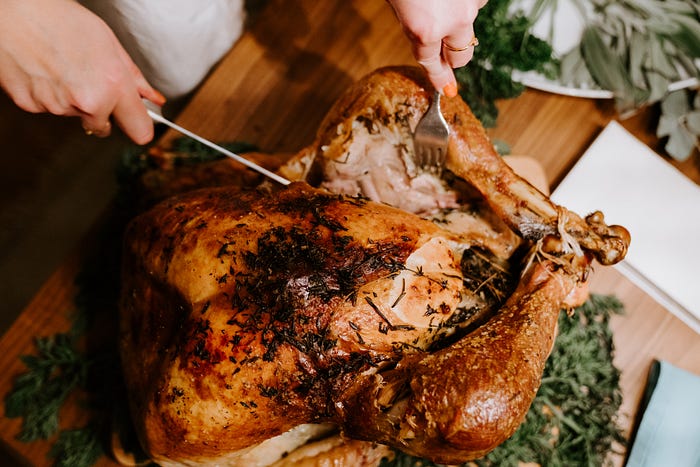
We are just ten days until Thanksgiving Day in the United States, which makes it a fine time to slaughter some sacred cows along with the turkeys and debunk several Thanksgiving myths that have become entrenched in our popular culture. I want to be clear that I am talking about Thanksgiving in the United States; our Canadian cousins celebrated their Thanksgiving more than a month ago. I don’t know anything about the holiday there, but I imagine it partly involves giving thanks that they don’t live in America, something they would never say out loud because they’re far too polite.
The basic story we’ve heard since we were kids is that in 1620 the Pilgrims bravely sailed to the New World seeking a better life and religious freedom, ultimately landing at Plymouth Rock. Life was difficult that first year, and it was only through the kindness of the local Native Americans that they survived. To celebrate this successful new alliance, in 1621 the Pilgrims and Native Americans shared a big Thanksgiving feast of turkey, mashed potatoes, cranberry sauce, and pie, and we’ve celebrated it ever since.
It is true that there were English settlers and Native Americans present at that first Thanksgiving. Beyond that (to paraphrase Luke Skywalker’s awesome line in The Last Jedi), every word I just wrote was wrong. The most glaring error is what we call the settlers themselves; the Pilgrims were not called Pilgrims at all, but rather either Saints or Separatists. It wasn’t until the celebration of the Plymouth colony’s 200th anniversary in 1820 that Daniel Webster called them the “Pilgrim Fathers,” and the name stuck. Also, those Separatist Saints already had religious freedom in Holland, so that wasn’t their main reason for leaving (it was more likely an inability to learn how to speak Dutch).
Furthermore, what we commemorate today as the first Thanksgiving wasn’t a particularly special event at all, as harvest festivals were celebrated every year already and strictly speaking it wasn’t even a “thanksgiving.” For the Christian English settlers, a “thanksgiving” was a day of prayer and reflection, not feasting, and they never would have invited the non-believing Natives to such a thanksgiving. It’s also important to note that thanksgivings actually occurred numerous times throughout the year, while the harvest festival occurred only once a year.
As for the menu, it bore little resemblance to what we enjoy on the fourth Thursday of November every year. Some of the foods they would not have served include apples, pears, potatoes, corn on the cob, or cranberries. There may or may not have been turkey, which was not new to the English. The meat dishes would have likely included venison, ham, waterfowl, clams, and lobster; non-meat items included fruit, berries, squash, and pumpkin (though not in pie form). Personally, I think we should get rid of the turkey and bring back lobster. Lobster…yum.
It’s also a myth that we’ve celebrated Thanksgiving ever since that first one at Plymouth; we haven’t. As I’ve already mentioned, it wasn’t seen as anything special or out of the ordinary to the Plymouth colonists, and it wasn’t a national holiday in the United States until 1863, more than 240 years after that first celebration. It was then, in the middle of the Civil War, that President Abraham Lincoln declared an annual Day of Thanksgiving that was only later tied to the event in 1621.
Sadly, the budding friendship between the Native Americans and English settlers lasted about as long as your typical post-Thanksgiving meal nap. Things turned sour very quickly, as they often would in our dealings with Native Americans throughout our history. Though Natives like Tisquantum, better known to history as Squanto, helped the settlers by translating for them, establishing trade with his tribe, teaching them how to how to smoke (and thus preserve) the local meats and fish, and how to plant beans, squash, and corn, the English settlers typically saw the Native tribes only as an impediment to their expansion (unlike the French settlers, who quickly developed strong alliances with the local tribes). The main thing the English settlers gave the Native Americans in return for their help was whiskey and smallpox.
There is one last interesting tidbit that isn’t a myth but is usually left out of the historical narrative. The town of Plymouth, Massachusetts, is famous today because the Pilgrims landed there, but that wasn’t their intended destination. They were actually trying to get to Virginia and missed it by roughly 600 miles. That’s not nearly as bad as Christopher Columbus’s navigational error, but it’s embarrassing enough that we don’t mention it.
I realize that none of these myths in any way lessen the importance of taking one day a year to consider and be thankful for our many blessings, but getting history wrong does nothing to help that. Feast away next Thursday but toss out those romanticized illusions about the Pilgrims the same as you do your sister-in-law’s horrible three-bean casserole. And be sure to cheer for the Dallas Cowboys, the one true Thanksgiving tradition we can all get behind.
If you enjoyed this story, you can support my writing directly by leaving a tip below using the small (and kind of weird) hand icon (you tip waiters and bartenders, so why not writers?).

·Editor for Artisanal Article Machine
Writer, bookseller, would-be roadie for the E Street Band. My ultimate goal is to make books as popular in Texas as high school football…it may take a while.