When we reach deep inside ourselves, with a heart that is unafraid and accepting, we will discover new depths of strength and power. These deep reaches of wisdom, which lay dormant with in the subconscious until we are brave enough to search them out, will bring balance and equilibrium. And from new centredness will arise an unshakeable trust in ourselves that will carry us forward through life.
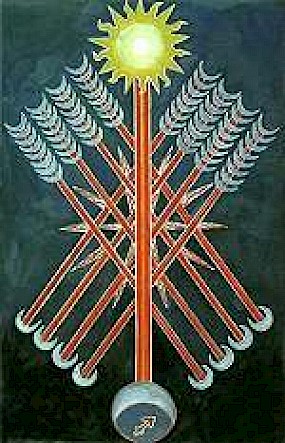
It’s true that when we travel deep inside ourselves, we will also find material that we might prefer to leave unacknowledged – but the Nine of Wands, Lord of Strength, reminds us that in being true to ourselves we release energies that will help us to deal with whatever we find within. And after all, whatever lies inside our own subconscious is, for better or for worse, a part of us.
When the Nine of Wands turns up in a reading, we can be re-assured that we have what it takes to get by. Even in times of stress and difficulty, inner strength will rise up to guide us forward toward our goals. And in the process we shall learn more about ourselves and our abilities, gaining a new all-round perspective which brings security and self-confidence.
This card tells us to trust ourselves. We have everything we need. There is no necessity to analyse nor question. And absolutely no excuse to give in to doubt!
“Life is dissociation from the one Subjectivity [the one Mind]. Death is the end of that dissociation”
–Bernardo Kastrup
T he Weekend University • Nov 2, 2023 To access our conference library of 200+ fascinating psychology talks and interviews (with certification), please visit: https://twumembers.com In this episode, I’m joined by Dr Bernardo Kastrup. Bernardo is an author, scientist, philosopher, and the Director of the Essentia Foundation. He holds two PhDs – one in philosophy and the other in engineering. His work has been leading the modern renaissance of metaphysical idealism, the notion that reality is essentially mental. In this conversation, you’ll learn: — How the life of Friedrich Nietzsche can be thought of as a microcosm of a cultural macrocosm we are currently experiencing — Why life is inherently sacrificial and how understanding this can provide a rich and deep source of meaning in our lives — Bernardo’s concept of the “Daimon” and how to harness it to live a life of service and let nature work through you. And more. You can learn more about Bernardo’s pioneering work by going to https://essentiafoundation.org. — To access the full conference package, as well as supporting materials, quizzes, and certification, please visit: https://twumembers.com — Dr Bernardo Kastrup is the executive director of Essentia Foundation. His work has been leading the modern renaissance of metaphysical idealism, the notion that reality is essentially mental. He has a Ph.D. in philosophy (ontology, philosophy of mind) and another Ph.D. in computer engineering (reconfigurable computing, artificial intelligence). As a scientist, Bernardo has worked for the European Organization for Nuclear Research (CERN) and the Philips Research Laboratories (where the ‘Casimir Effect’ of Quantum Field Theory was discovered). Formulated in detail in many academic papers and books, his ideas have been featured on Scientific American, the Institute of Art and Ideas, the Blog of the American Philosophical Association and Big Think, among others. Bernardo’s most recent book is Science Ideated: The fall of matter and the contours of the next mainstream scientific worldview. For more information, freely downloadable papers, videos, etc., please visit https://www.bernardokastrup.com. — Timestamps: 00:00 – Intro 00:28 – Metacognition and Adam & Eve Story 06:46 – Living Without Regrets 09:02 – Sacrifice and Meaning 14:39 – Consciousness and the Afterlife 22:26 – Materialism’s Impact 27:38 – Navigating Meaninglessness 39:12 – Escaping Addiction 47:18 – Avoiding Ego Inflation 53:27 – The Impersonal Will 59:33 – Staying Grounded 1:06:32 – Unveiling the Philosopher — Interview Links: — Dr Kastrup’s website: https://www.bernardokastrup.com/ — Dr Kastrup’s books: https://amzn.to/45TaC8T
ARIES (March 21-April 19): When we experience authentic awe, our humility deepens. This in turn tends to make us kinder, smarter and more positive. So how can we stimulate awe? Among the many possible ways are gazing at magnificent art, hiking in a natural wonderland, or being in the presence of a beautiful human soul. In accordance with astrological omens, I recommend that you go in quest of awe and related feelings like reverence, amazement, adoration and veneration. Your mental, physical and spiritual health will flourish in response.
TAURUS (April 20-May 20): It’s the Season for Cherishing and Smoking Out Secrets. So let’s talk about the subject. 1. Some secrets are sad, haunting, even risky—and worth keeping secret. 2. Other secrets can be beautiful, healing, and potentially life-changing if they are revealed gracefully. 3. Some secrets are buried so deeply that only very persistent seekers dig them up. 4. Some secrets are “hidden” in plain view, and only visible to people who are clear and brave enough to identify them. I suspect you Tauruses will have a special knack for managing all types of secrets in the coming weeks, including those I mentioned.
GEMINI (May 21-June 20): I hope you won’t fill yourself up with appetizers and hors d’oeuvres in the coming weeks, Gemini. My soul will be at peace if I see you save your hunger for the main courses. Your motto should be “Feasts, not snacks!” or “The Real Deal, not the pretenders!” or “The jubilee, not the distractions!” If you ever find yourself feeling halfhearted or inattentive, you’re probably not in the right situation. Here’s an affirmation to go with your mottoes: “I am liberating my divine appetite!”
CANCER (June 21-July 22): Playwright Anton Chekhov (1860–1904) is regarded as one of history’s great writers. That does not mean everything he said was wise, useful or worthy of our attention. For example, he was once asked to give his opinion about ballet. “During the intermissions, the ballerinas stink like horses,” he replied. I hesitate to bring up such a vulgar reference, but I wanted to make a vivid point. In the coming weeks, I hope you will ignore the advice of people who don’t know what they are talking about, no matter how smart or charismatic they may be. I hope you will not attribute expertise to those who have no such expertise. I hope that as much as possible, you will rely on first-hand information, rigorous research and reliable influences.
LEO (July 23-Aug. 22): Researchers have determined that there are two basic dispositions among tigers. One is what they call “majesty.” Creatures with this orientation tend to be dignified, imposing and agile. The other type of tiger personality revolves around “steadiness.” This is the opposite of neuroticism, and includes the qualities of being affable, easy to get along with and well-adjusted. I know many astrologers associate lions with you Leos, but I prefer to link you with tigers. If you agree with me, here’s my prediction: You are beginning a phase when you will be more majestic than steady—but with plenty of steadiness also available if you want it.
VIRGO (Aug. 23-Sept. 22): “It is better to entertain an idea than to take it home to live with you for the rest of your life,” wrote author Randall Jarrell. That’s decent advice, though I will add a caveat. If you entertain an idea for a while and it turns out that you love it, and you also love the beneficent effect it has on you, you may be smart to take it home to live with you. I’m guessing you Virgos are at a pivotal point in this regard. Not yet, but soon, you will know whether it will be wise to get cozier with certain influences you have been flirting with—or else decide they are not ones you want to keep.
LIBRA (Sept. 23-Oct. 22): If I could give an award for Most Curious Genius in the World, it would be to Libran author and naturalist Diane Ackerman. She would also get my prize for Most Voracious Learner and Best Questioner and Most Exuberant Seeker and Searcher. “To hear the melody,” she writes, “we must hear all the notes.” In response to the question, “What is life?” she offers this answer: “corsages and dust mites and alligator skin and tree-frog serenades and foreskins and blue hydrangeas and banana slugs and war dances and cedar chips and bombardier beetles.” In accordance with current astrological omens, I encourage you to be like Diane Ackerman in the coming weeks.
SCORPIO (Oct. 23-Nov. 21): Have you located any of your soul twins? If not, is that an interesting prospect for you? Please note that soul twins are not necessarily the same as dream lovers. They may simply be people with whom you share deep values and perspectives. They might aspire to influence the world in ways similar to you. With a soul twin, you feel at home in the world and extra happy to be yourself. I bring these meditations to your attention, Scorpio, because the coming months will be an especially likely time for you to encounter and engage with soul twins. Be on the alert!
SAGITTARIUS (Nov. 22-Dec. 21): Composer Ludwig van Beethoven (1770–1827) was charismatic and forceful, but also hot-tempered and prone to rude behavior. The writer Goethe, his contemporary, said “his talent amazed me,” and described him as an “utterly untamed personality.” Beethoven seldom lived in one home for very long and loved to sing at the top of his lungs as he washed himself. Although he played piano with exquisite skill, he was quite clumsy as he moved through the world. Can you guess what astrological sign he was? Same as you! Sagittarius! I’m not saying you are exactly like this wild, unruly genius, but you do have tendencies in that direction. And in the coming weeks, I expect you’ll be inclined to be more Beethoven-esque than usual. Please work on emphasizing the winsome aspects.
CAPRICORN (Dec. 22-Jan. 19): I hope you have developed good boundaries, Capricorn. I hope you are so skilled at taking care of yourself that you steadfastly refuse to let people manipulate you or hurt you. Just to make sure your discernment is working at peak levels, though, I will offer you a tip. In the English language, we have the idiom “to rub salt in a wound,” which refers to the fact that daubing salt in an open gash in the skin makes the pain even worse. But did you know that smearing sugar in a wound is equally distressing? The metaphorical lesson is that you should be vigilant for seemingly nice, sweet people who might also violate your boundaries to hurt or manipulate you.
AQUARIUS (Jan. 20-Feb. 18): I estimate this horoscope is worth $22,225. It has been made possible by my many years of disciplined meditations, extensive reading of holy texts, and an ever-growing devotion to astrology and my readers. But here’s the fun part: You can read these words for free! No cost at all! I will, however, ask you to do something for me in return. First, give your gifts joyously and generously in the coming weeks, holding nothing back. Second, don’t be in the least concerned about whether you will receive benefits in return for your gifts. Find the sweet spot where you love bestowing blessings for no other reason except this one: You are expressing your gratitude for the miraculous life you have been given.
PISCES (Feb. 19-March 20): Do you possess gambits, tactics and knacks that we might refer to as your “bag of tricks”? I hope so, because such an asset will be extra valuable during the coming weeks. You will be wise to employ every cagey move you can imagine and call on every favor that’s owed to you and cash in on every advantage you have accrued. I don’t want you to engage in outright cheating, but I encourage you to use ploys and stratagems that have full integrity. Be on the lookout for secret shortcuts, magic cookies and wild cards.
Al Jazeera English • May 8, 2013 • Al-NakbaAl-Nakba: The Palestinian catastrophe “The Nakba did not begin in 1948. Its origins lie over two centuries ago….” So begins this four-part series on the ‘nakba’, meaning the ‘catastrophe’, about the history of the Palestinian exodus that led to the first Arab-Israeli war in 1948, and the establishment of the state of Israel. This sweeping history starts back in 1799 with Napoleon’s attempted advance into Palestine to check British expansion and his appeal to the Jews of the world to reclaim their land in league with France. The narrative moves through the 19th century and into the 20th century with the British Mandate in Palestine and comes right up to date in the 21st century and the ongoing ‘nakba’ on the ground. Arab, Israeli and Western intellectuals, historians and eye-witnesses provide the central narrative which is accompanied by archive material and documents, many only recently released for the first time. For Palestinians, 1948 marks the ‘nakba’ or the ‘catastrophe’, when hundreds of thousands were forced out of their homes. But for Israelis, the same year marks the creation of their own state. This series attempts to present an understanding of the events of the past that are still shaping the present. This story starts in 1799, outside the walls of Acre in Ottoman-controlled Palestine, when an army under Napoleon Bonaparte besieged the city. It was all part of a campaign to defeat the Ottomans and establish a French presence in the region. In search of allies, Napoleon issued a letter offering Palestine as a homeland to the Jews under French protection. He called on the Jews to ‘rise up’ against what he called their oppressors. Napoleon’s appeal was widely publicised. But he was ultimately defeated. In Acre today, the only memory of him is a statue atop a hill overlooking the city. Yet Napoleon’s project for a Jewish homeland in the region under a colonial protectorate did not die, 40 years later, the plan was revived but by the British.
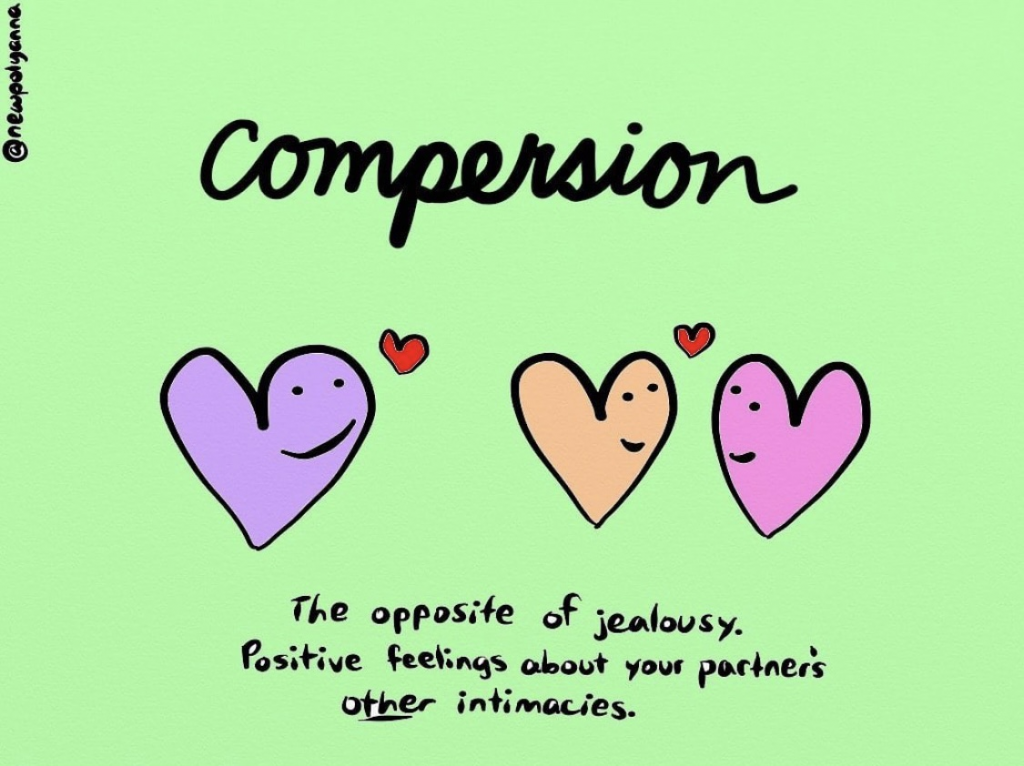
Compersion is our wholehearted participation in the happiness of others. It is the sympathetic joy we feel for somebody else, even when their positive experience does not involve or benefit us directly. Thus, compersion can be thought of as the opposite of jealousy and possessiveness.
Most people hear the term emotionally strong and assume that it means the ability to ignore your emotions or not feel them. But that’s dead wrong…
Emotional strength isn’t about getting rid of difficult feelings — it means you know how to respond to them in a healthy way.
For example:
Being emotionally strong in the face of anxiety means learning to accept your anxious thoughts and feelings rather than constantly running away from them.
Being emotionally strong when you’re grieving means being willing to feel your sadness and accept your loss instead of distracting yourself from it.
Being emotionally strong when you’re angry means validating that anger rather than denying it or criticizing yourself.
Of course, it’s hard work to cultivate a healthier relationship with your emotions — one that allows you to be resilient and strong in the face of painful feelings instead of fragile.
But it is possible.
And the most effective way to do it is to build consistent habits that promote a more tolerant and accepting relationship with all your feelings — even the painful ones. If you want to become emotionally strong, work to cultivate these 4 habits.
1. Control your attention, not your emotions
Like anything painful, our automatic response to difficult emotions is to try and control them — usually in an attempt to escape them or “fix” them.
And this tendency to control makes sense given how good at exerting control we are in most areas of life:
You’re good at exerting control and generating creative solutions at work.
You’re good at exerting control and fixing a leaky drain under the sink at home.
You’re good at exerting control and asking for help at the grocery store when you can’t find something.
In many areas of our life, it’s helpful and productive to exert control over our problems. But here’s the thing…
Emotions aren’t under our direct control.
Go ahead and try it:
I want you to take control of your mood right now and make yourself really happy.
Or, if yourself stop feeling anxious, go ahead and just stop feeling so anxious.
Of course, these are ridiculous experiments to run because you don’t have a happiness dial you can just adjust at will. Or an anxiety button you can just turn on and off.
You can only control your emotions indirectly, primarily through how you choose to think and what you choose to pay attention to.
For example:
If you’re feeling ashamed about a mistake you made at work, focusing your attention on replaying the details of that mistake over and over again is going to make you feel even more ashamed. On the other hand, if you can switch your attention to correcting the problem or learning from it, you’re likely to start to feel better much faster.
When you try to control things you don’t have control over — like your feelings — you’ll only create more pain and suffering for yourself in the long run.
Emotionally strong people take control over their attention and what they choose to focus on. Instead of letting their mind bounce around according to the whims of instinct, they practice holding their attention on what matters and avoid getting sucked into unhelpful thought patterns like rumination or worry.
If you want to be more emotionally strong, validate your emotions and control your attention.
“Crying does not indicate that you are weak. Since birth, it has always been a sign that you are alive.”
― Charlotte Brontë
2. Practice compassionate self-talk
Most people associate emotional strength with toughness and being hard on themselves.
This makes sense because as children this is what most of us learned: That if you wanted to be strong — a strong student, a strong athlete, a strong musician — you had to be strict and hard on yourself in order to achieve.
Unfortunately, this toughness approach doesn’t work real well with difficult emotions. And in fact, the harder you are on yourself for feeling bad, the worse you’ll end up feeling.
For example:
If every time you feel anxious, you start criticizing yourself for being weak and not strong enough, now you feel ashamed in addition to feeling anxious. Which means your overall level of emotional distress is much higher.
If every time you feel sad, you judge yourself as selfish or self-centered, well now you’re going to feel guilty on top of feeling sad. This means that dealing with your sadness in a healthy way and moving on from it is going to be much, much harder.
Here’s the bigger point:
When you respond to painful emotions with negative self-talk, you train your brain to be ashamed of feeling bad.
Emotionally strong people realize that it’s actually much more helpful to be compassionate and understanding with yourself when you feel bad. In other words, they practice compassionate self-talk.
Now, if that sounds a little woo-woo or new-agey, it’s not at all. Self-compassion simply means applying the same standard of kindness and support that you would give to a friend who was struggling to yourself.
For example:
If a friend was feeling sad for no apparent reason, you wouldn’t tell him to “stop being such a baby and get over it.”
If a friend was feeling afraid, you would tell them they were weak and that they should just “stop it.”
True emotional strength comes from gentleness, not criticism.
“Words matter. And the words that matter most are the ones you say to yourself.”
― David Taylor-Klaus
3. Use values, not feelings, to make decisions
Emotionally strong people listen to their emotions but never take orders from them.
Unfortunately, our cultural attitude toward emotions tends to be one of extremes… Most people see emotions either as silly and to be ignored or gotten rid of or that they are quasi-mystical experiences guiding us toward truth and ultimate enlightenment.
In reality, emotions are much more mundane. They’re a survival mechanism that adapted over hundreds of thousands of years. And while they’re quite useful in some situations, they’re just as often unhelpful in others.
For example:
If you’re walking across the street, hear a super loud noise, and fear causes you to quickly look and notice a car that’s about to hit you, that’s a very useful instance of an emotion.
But if you’re sitting in a meeting wanting to share a creative idea but then fear of other people thinking your idea will be stupid pops up and causes you to hold back, that’s not so useful.
The point is simply this:
Your emotions will lead you astray just as often as they will guide you.
Emotionally strong people know that in the face of difficult decisions, it’s best to listen to their emotions. But ultimately, they use their values and reason to guide their decisions, not the emotional whims of the moment.
Think about it:
How often would you exercise if you only listened to your emotions and how you felt in the moment and ignored your values and commitments to health and wellbeing?
How many creative projects would you actually produce and finish if you only listened to your emotions and how you happened to feel about creating and ignored your values and commitment to creativity?
How many incredible relationships would you pass up if you listened to your fearful feelings about asking someone out and ignored your values and commitment to put yourself out there more to find a satisfying relationship?
Listen to all your emotions but don’t blindly take orders from them.
Emotionally strong people are able to resist the pull of unhelpful emotions because they’ve spent time discovering and clarifying their values. As a result, they’re able to make decisions that are good for them in the long-term rather than just impulsively acting on whatever feels easy in the moment.
“Motivation often comes after starting, not before. Action produces momentum.”
— James Clear
4. Set (and enforce) healthy boundaries
It’s hard to set and enforce healthy boundaries…
It feels scary to tell your manager that you won’t stay late again to take care of someone else’s work.
It feels awkward and embarrassing to ask your partner for something different in your sex life.
It feels sad to say no to your family member who always asks for money (and never repays you).
But it’s even harder to live without good boundaries…
The chronic stress and burnout that come from always taking on extra work and staying late
The persistent low-level dissatisfaction and lack of intimacy that come from doing the same old thing in sex year after year, decade after decade
The habitual frustration, conflict, and resentment that come from reinforcing an unhealthy habit in a family member and then constantly expecting them to change.
Emotionally strong people know that you can’t be emotionally healthy if you never stand up for yourself and your own wants and needs.
Unfortunately, setting and enforcing healthy boundaries is a classic short-term/long-term problem: Like eating a healthy diet, studying in school, or investing your money instead of spending it wastefully, what feels easy in the short-term doesn’t usually lead to great results in the long run. And what feels difficult in the short term often leads to much better outcomes in the end.
So too with setting and enforcing healthy boundaries…
It’s hard to ask for what you really want.
It’s difficult to say no to people and enforce those boundaries.
But here’s the thing…
Just because it feels bad doesn’t mean it is bad.
Saying no to an overbearing manager or manipulative family member feels bad in the moment. But don’t mistake the fact that it feels bad for whether it’s a good decision or not.
If you want to become more emotionally strong, practice communicating your wants and needs assertively and having the courage to set (and enforce) healthy boundaries.
“”No” is a complete sentence.”
― Annie Lamott
All You Need to Know
If you want to become emotionally strong, work to build these 5 habits:
Control your attention, not your emotions
Practice compassionate self-talk
Use values, not feelings, to make decisions
Set (and enforce) healthy boundaries
? ? Want more ideas for building emotional strength?
Each week, I send out a newsletter with simple, practical tips for building emotional strength and resilience. Join here for free →
Logic is the science of right thinking. It studies how to reason correctly and draw conclusions. Logic, as an ability, is not an innate quality, but is acquired with knowledge of the world. Therefore, logic needs to be developed like any skill. If you can reason according to the laws of logic, then the efficiency of thinking increases.
You are better at building cause-and-effect relationships, drawing conclusions and recognizing illogical things. Also, logical thinking helps to express thoughts better, which helps in communication. All human reasoning has been studied by logicians and described in the form of laws.
There are four of them in total:
1. The law of identity: any thought must necessarily be equal to itself, that is, it must be clear, precise, simple and definite;
2. The law of contradiction: it is forbidden to assert something and deny the same thing at the same time;
3. The law of the excluded third: two contradictory judgments about the same subject, at the same time and in the same relation, cannot be simultaneously true and cannot be simultaneously false. That is, the truth of one of them necessarily means the falsity of the other, and vice versa;
4. The law of sufficient reason: any thought, in order to be valid, must necessarily be justified by arguments. Arguments should be sufficient to prove the original idea.
I know it sounds complicated, but if you think carefully or watch videos with explanations, formulas and examples, it will immediately become clearer. We will not grow a beard like Aristotle’s and make a dash for such a complex science. You need to start with the simple and applicable. I think the argumentation skill is perfect. It can become a natural guide to the world of logic. That’s what happened to me.
The study of argumentation led me to the study of logic. I often began to notice that people cannot agree at meetings. Even the coolest professionals and top managers sometimes fail. They have long conversations, but they don’t move forward. I started analyzing people’s communication and visualizing cause-and-effect relationships, which led me to argumentation content.
That’s how I got acquainted with Sergey Povarnin’s book “The Art of Argument”. I recommend this book to everyone to start upgrading logical thinking. In the book, Sergey explains approaches to the truth, explains what a thesis, argument, proof is, what the tricks and varieties of disputes are. It’s all very accessible and interesting. When you realize that it was possible to approach the argument in this way, you will not be able to communicate with people as before.
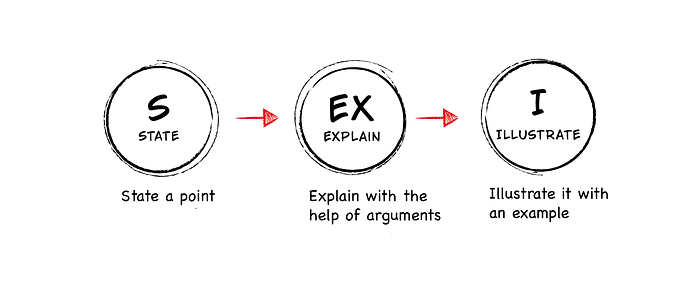
For example, try to argue and analyze other people’s arguments through the SExI algorithm. This is an abbreviation, where “S” (Statement) is a thesis, “Ex” (Explanation) is an explanation using arguments, “I” (Illustration) is an illustration. Good argumentation is when the main thesis is announced, then there are arguments and arguments from which the thesis follows, and at the end an illustrative example is given.
Algorithm of SExI
Look at the communication through this algorithm and you will notice that many parts are often missing, and sometimes people can’t even formulate a thesis. By applying the SExI algorithm, you will be able to convey thoughts better, which will have a positive impact on many things. Of course, not everything is so simple, and this is just the tip of the iceberg, but even such a small step towards understanding logic will significantly affect your thinking.
Develop logic in all possible ways. Play chess, solve logic problems, watch movies with intricate plots, analyze events, draw conclusions, ask yourself questions, learn to notice arguments. Read the reasoning of smart people and look at examples of logic. There is a lot of content, it is very fascinating and entertaining. The main thing is not to overdo it, so as not to become an insensitive, but absolutely logical person in all spheres of life. After all, we are living irrational beings and do not always act logically in relationships or negotiations because of emotions.
I’m a mainstream PhD physicist / biophysicist / AI guy. But IMO self-aware consciousness, the experiential sense we are ‘souls’, is so vivid and profound, yet so underrated by some that . .
. . I’m prepared to at least entertain the incredible, that we may be living a layer above base-level reality, that this universe is in some sense not real.
As Elon Musk muses occasionally.
Why? Plenty of physicists, information theorists and philosophers have pointed out there are hints the universe is simulation-like, a game even.
And because we can’t even come close to touching consciousness mechanistically. Consciousness is not – contrary to some claims – currently explained by any physical, biological or information theory mechanism.
At least, not in this level of reality.
Quantum mechanics and its fundamentally probabilistic nature is suggestive of a computation-minimizing mechanism.
The real universe’s way to save on ‘CPU’ and ‘memory’.
Wave-function collapse is like ‘just-in-time’ rendering.
The Planck scale is like the screen resolution of space-time.
And then there’s the mystery of ‘hard consciousness’ itself, how to explain the fact we humans have this sense that we’re a . . soul.
It’s no surprise consciousness researchers barely talk about this. It’s kinda embarrassing.
They focus on looking for neural correlates.
But maybe the simulation guys – and the theists are – in effect, right? And, on the other side, we’re souls of some kind?
It certainly feels like we are.
Who knows what the ‘science’ is on the other ‘side’?
Just another consequence of physics?
Many researchers (but not all) go immediately hook-line-and-sinker materialistic assuming consciousness is just another mystery to explain like e.g. lightning or breathing or eclipses.
Or that it’s ‘just an illusion’.
But, no, consciousness is VERY different.
In all other cases the mysteries, the ‘magic’ of the past were guessable, at least potentially, to be something physical, not too different from the truth.
Even if they initially got it wrong.
Think of e.g. lightning, breathing or eclipses.
Lightning was a burst of light . . in appearance . . and in reality. (The mechanism turned out to be electricity.)
Biological life was a collection of physical matter that was automated, and could breath in and out or pump blood, extract nutrients . . physical in appearance and . . in reality. (The mechanism was biology, parts of our body that used energy and microscopic machines to operate, the ancients couid see the body internals were physical mechanisms comprising pumps and air and liquid piping and processing systems, they couid actually find the physical systems, evident every time they gutted an animal).
Eclipses were a thing getting in the way of another thing . . in appearance . . And in reality. (The mechanism was crossing orbits.)
These were all arguably physical from the get go, despite the near endless mystery and miraculous explanations from some of our forefathers.
Sitting around the camp fire in eons past they arguably could have come pretty close to not too dissimilar gross answers to reality.
Just no way to prove it at the time.
But consciousness seems non-physical
This time the ‘magic’ seems impossible to even hypothesise on. By the best scientific minds.
The fact that some scientists are actually proposing that consciousness is ‘fundamental’, almost like in Star Wars, possessed in some form by almost everything?
That’s been labelled pseudo-science by neuroscientists and highlights why the simulation hypothesis is not actually as crazy or unnecessary or luxurious as it sounds.
The simulation hypothesis is proposed for good reasons. And consciousness IMO is a serious yet surprising contender for perhaps the strongest evidence yet.
Because it was always starring us in the face.
But a little too ever-present to be talked about in scientific circles.
A little too ‘religious’.
Atoms that . . ‘feel’
Why is something made of atoms feeling something? Thoughts. Pain. The full visual field. Colors. Again: pain.
The study of neural correlates of consciousness arguably uncovers ‘necessaries’, not ‘sufficients’. These capabilities would be required even for non-sentient so-called ‘philosophical zombies’ for survival and external function.
And if it’s just an illusion, why is something having an illusion in the first place?
Consciousness, from the get go, appears beyond physical.
At the very least layers of reality or even God should be seriously entertained. Rather than virtually shunned as ‘unscientific’ because it’s ‘dualistic’.
Yet, how unscientific not to even consider it?
After all, we’re prepared to entertain a quantum foam of multi-universes.
Around a third of physicists believe in the Many Worlds Interpretation of quantum mechanics.
Why not layers of reality? As per the simulation hypothesis?
And in the last layer, our consciousnesses are . . mechanistic.
Don’t forget, lots of evidence is building up that the universe is simulation-like . .
It’s crazy to leave it off the table.
At the very least it’s time that consciousness was not brushed away as almost ‘not even a thing’.
Let’s not be fooled by its pervasiveness.
And, scientifically, who knows what more evidence of the simulation hypothesis there is to . . hack?
PhD physicist / AI engineer into GPT, startups, EVs, green energy, space, physics, biomed, global good, futurism | Founder Pretzel Technologies, Melbourne AU
The Greek term eudaimonia has no one-word translation in English. Hursthouse describes it as a combination of well-being, happiness and flourishing [11]. It is the ultimate goal of a human being, a part of her function. The virtues are therefore human needs that benefit their possessor.