Conservative cardinals had challenged the pope to confirm teachings on LGBTQ+ issues
Associated Press
Mon 2 Oct 2023 23.02 EDT (TheGuardian.com)
Pope Francis has suggested there could be ways to bless same-sex unions, responding to five conservative cardinals who challenged him to affirm church teaching on homosexuality ahead of a big meeting where LGBTQ+ Catholics are on the agenda.
The Vatican on Monday published a letter Francis wrote to the cardinals on 11 July after receiving a list of five questions, or dubia, from them a day earlier. In it, Francis suggests that such blessings could be studied if they did not confuse the blessing with sacramental marriage.
New Ways Ministry, which advocates for LGBTQ+ Catholics, said the letter “significantly advances” efforts to make LGBTQ+ Catholics welcomed in the church and represented “one big straw towards breaking the camel’s back” in their marginalisation.
The Vatican holds that marriage is an indissoluble union between man and woman. As a result, it has long opposed gay marriage. But Francis has voiced support for civil laws extending legal benefits to same-sex spouses, and Catholic priests in parts of Europe have been blessing same-sex unions without Vatican censure.
Francis’ response to the cardinals, however, marks a reversal from the Vatican’s current official position. In an explanatory note in 2021, the Congregation for the Doctrine of the Faith said that the church could not bless gay unions because “God cannot bless sin”.
Pope Francis: ‘The vision of the doctrine of the church as a monolith is wrong.’ Photograph: Vatican Media/Ansa/Zuma Press/Shutterstock
In his new letter, Francis reiterated that matrimony is a union between a man and a woman. But responding to the cardinals’ question about homosexual unions and blessings, he said “pastoral charity” required patience and understanding, and priests could not become judges “who only deny, reject and exclude”.
“For this reason, pastoral prudence must adequately discern whether there are forms of benediction, requested by one or more persons, that do not transmit a mistaken conception of marriage,” he wrote. “Because when a benediction is requested, it is expressing a request for help from God, a plea to be able to live better, a trust in a father who can help us to live better.”
He said there were situations objectively “not morally acceptable” but the same “pastoral charity” required that people be treated as sinners who might not be fully at fault for their situations.
Francis added there was no need for dioceses or bishops’ conferences to turn such pastoral charity into fixed norms or protocols, saying the issue could be dealt with on a case-by-case basis “because the life of the church runs on channels beyond norms”.
Francis DeBernardo, executive director of New Ways Ministry, welcomed the pope’s openness.
“The allowance for pastoral ministers to bless same-gender couples implies that the church does indeed recognise that holy love can exist between same-gender couples, and the love of these couples mirrors the love of God,” DeBernardo said in a statement. “Those recognitions, while not completely what LGBTQ+ Catholics would want, are an enormous advance towards fuller and more comprehensive equality.”
The five cardinals, all of them conservative prelates from Europe, Asia, Africa and the Americas, had challenged Francis to affirm church teaching on gay people, women’s ordination, the authority of the pope and other issues in their letter.
They published the material two days before the start of a major three-week synod at the Vatican at which LGBTQ+ Catholics and their place in the church are on the agenda.
The signatories were some of Francis’ most vocal critics, all of them retired and of the more doctrinaire generation of cardinals appointed by St John Paul II or Pope Benedict XVI.
They were Walter Brandmueller of Germany, a former Vatican historian; Raymond Burke of the US, whom Francis axed as head of the Vatican supreme court; Juan Sandoval of Mexico, the retired archbishop of Guadalajara; Robert Sarah of Guinea, the retired head of the Vatican’s liturgy office; and Joseph Zen, the retired archbishop of Hong Kong.
Brandmueller and Burke were among four signatories of a previous round of dubia to Francis in 2016 after his controversial opening to letting divorced and civilly remarried couples receive communion. Then, the cardinals were concerned that Francis’ position violated church teaching on the indissolubility of marriage. Francis never responded to their questions, and two of their co-signatories subsequently died.
Francis did respond this time around. The cardinals did not publish his reply, but apparently found it so unsatisfactory that they reformulated their five questions, submitted them to him again and asked him to simply respond with a yes or no. When he did not, the cardinals decided to make the texts public and issue a “notification” warning to the faithful.
The Vatican’s doctrine office published his reply to them a few hours later, though it did so without his introduction in which he urged the cardinals not to be afraid of the synod.
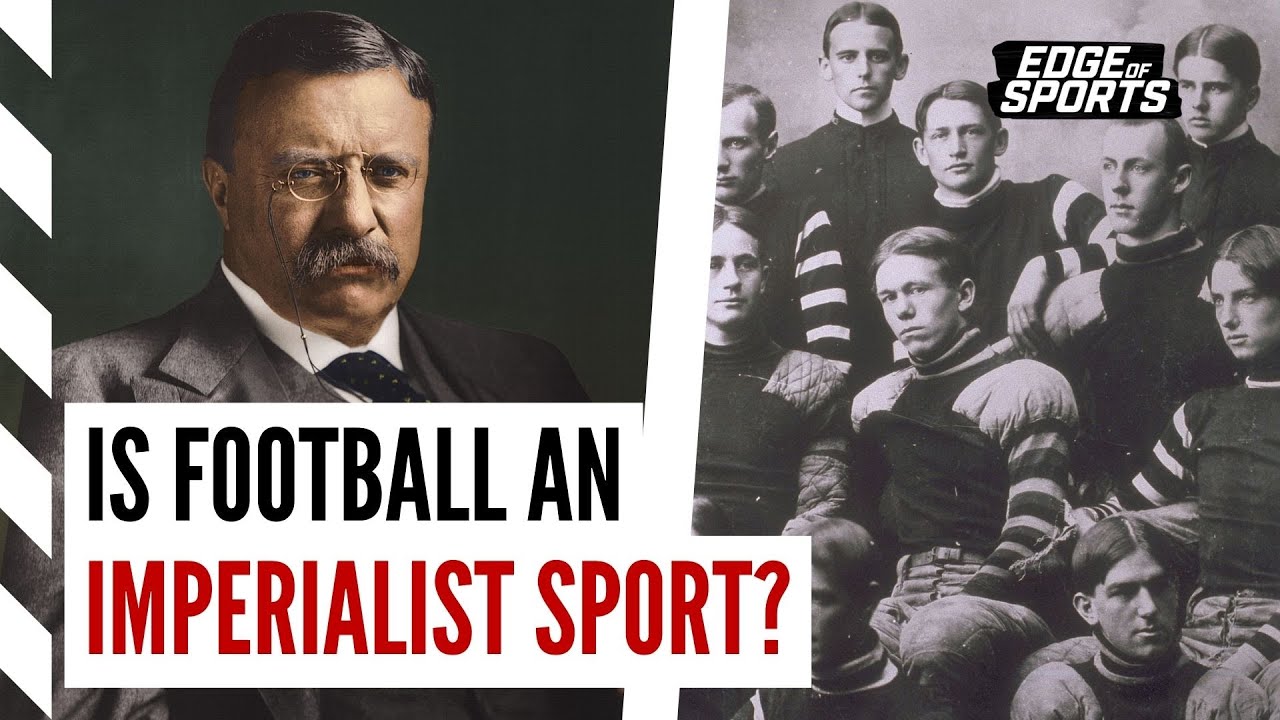
The origins of American football’s popularity go back to the turn of the 20th century, when the elite of an expansionist USA searched for a sport that would instill rugged manliness in their sons.
Theodore Roosevelt (1858 – 1919), twenty-sixth president of the United States of America. Photo by Stock Montage/Stock Montage/Getty Images
The US is the only country on earth where the word “football” refers to a different sport from the rest of the world. Where did American football come from, and why is it that the sport is virtually only played in the US? To answer that, Dave Zirin takes us on a brief journey through history to the turn of the 20th century, when imperialists like President Theodore Roosevelt took up the cause of promoting football as a way to cultivate a “masterful nation.”
Studio Production: David Hebden, Cameron Granadino Post-Production: Taylor Hebden Audio Post-Production: David Hebden Opening Sequence: Cameron Granadino Music by: Eze Jackson & Carlos Guillen
Join thousands of others who rely on our journalism to navigate complex issues, uncover hidden truths, and challenge the status quo with our free newsletter, delivered straight to your inbox twice a week:
TRANSCRIPT
Now some choice words. Okay. Look, the NFL season is underway and a big question always haunts me on Sunday afternoon when I sprint like Usain Bolt to my favorite part of my couch: Why is football only really popular in the United States? In the rest of the world, football is, of course, soccer, and our football is, at most, an afterthought – And please, don’t argue with me by bringing up NFL games in London. I am convinced those stands are packed with study abroad students on their way to Amsterdam.
So why is this the case? Why do other countries reject our football as a point of pride, especially when our other cultural products like music and movies or other sports like basketball tend to spread around the globe like wildfire? Now, I’ve heard some explain this by saying, well, the USA is a violent country, so people love a violent game, and that’s true. But while that sounds smart, as Jules Winfield said in Pulp Fiction, “That shit ain’t the truth.” There’s violence across the world and yet that doesn’t make people football fans. So what is it about this country that makes football our addiction of choice? Why are TV ratings, even in our fractured culture, always on the rise when it comes to football?
To understand why, you have to look at everyone’s favorite subject in high school: history. So let’s take a trip in the wayback machine and explain how football got baked into the cake of this country’s psyche.
Football began to flourish here at the turn of the 20th century, not as a fun diversion for kids, but to aid a US foreign policy obsessed with dreams of a global empire. Those dreams existed side-by-side with the fear that the children of the wealthy, the ones supposed to lead this conquest, were too soft, too weak, too “unmanly” for the task of running the world.
Now, this is hard for us to envision today because football draws most of its players from poor and working-class backgrounds, and the majority of NFL players are Black. But football started as a sport for privileged white elites on Ivy League campuses as a way to toughen up this new generation to lead what was called the American Century. That’s why this new game of football was embraced, not only as a sport, but as a training ground for war openly.
Not surprisingly, the ultimate imperial war hawk, President Theodore Roosevelt, was one of the earliest and most prominent promoters of the sport. In an 1893 piece called “The Value of Athletic Training,” Roosevelt defended football, writing, “All of the masterful nations in history encouraged rugged sports.” He believed that athletic training in football could build a new Anglo-Saxon super-race ready to stand to stride the world. So football was born intertwined alongside ideas about white nationalism and imperial expansion.
These early games were so violent that dozens of young men died on the field of play. When newspapers started to report the shocking number of casualties and the grim reality that football had essentially become a death harvest, many prominent thinkers called for its elimination and even its abolition. The NCAA was actually formed initially to find a way to lower the body counts in the face of a torrent of criticism. In other words, my little rant here is not just hindsight, but people back then recoiled not just from the violence, but the ethos of the sport as well.
Charles Eliot, the president of Harvard, pushed for an abolition of football altogether, writing in 1915 that it was “A fight whose strategy and ethics are those of war where the weaker man is considered the legitimate prey of the stronger, all of which sets up the wrong kind of hero.”
But Teddy Roosevelt and other defenders of the sport were not having any of this Ivy League, powderpuff moralism. The one-time rough rider blasted Eliot and Harvard for wanting to “emasculate football.” Roosevelt’s belief that football was a necessary antidote to male effeminacy was so intense that he once wrote that he would disinherit his own sons if they didn’t play, and would “rather see one of them die than have them grow up as weaklings.”
So why is football so baked into the cake of the United States? Here’s the answer: its imperial ambitions and a ruling class fear of losing a masculine edge in a society where rich kids tend to grow up as soft as a duck feather pillow.
Now, fast-forward to 2023, and it’s amazing how little has changed. The GOP in particular has become the party of white male panic. Their platform is fear-based, fear of decline-ism, fear of the other, and fear that we won’t be able to keep what has already been conquered. This is not to say that only right-wingers are football fans; far from it. But only in a country such as this one, only in the United States of anxiety, do people clutch this sport so firmly. And maybe we clutch it because we feel it all just slipping away.
Dave Zirin is the sports editor of the Nation Magazine. He is the author of 11 books on the politics of sports, including most recently, The Kaepernick Effect Taking A Knee, Saving the World. He’s appeared on ESPN, NBC News, CNN, Democracy Now, and numerous other outlets. Follow him at @EdgeofSports.
OFFICE FOR Apr 2, 2021 Welcome at The Office For The Future. We are in a moment of transformation. The purpose of the Office for the Future is to articulate a set of First Principles and First Values, which are the context for the next great flowering of humanity. The First Principles and First Values activate the emergence of a new human and a new humanity, what we have called Homo amor, the fulfillment of Homo sapiens. This is the new story of humanity that we need, to transform the exponential risk of the present and activate the exponential potential of the future. The world is changing so fast that the future is not going to look at all like today and certainly not like yesterday. We need to imagine the highest of all possible futures. We must articulate a global ethos for a global civilization, based on the New Story. The New Story is woven from First Values and First Principles, themselves drawn from the leading edge validated insights of the interior and exterior sciences, from the traditional and modern and postmodern epochs of human history. This is our absolute obligation, absolute joy, and absolute gift to ourselves and to our children. It is the gift that the stakeholders of the future demand from us. More info on www.officeforthefuture.com
Scientists have cured a handful of people of HIV by piggybacking on treatments they received for blood cancer. But does that bring a widespread cure any closer?
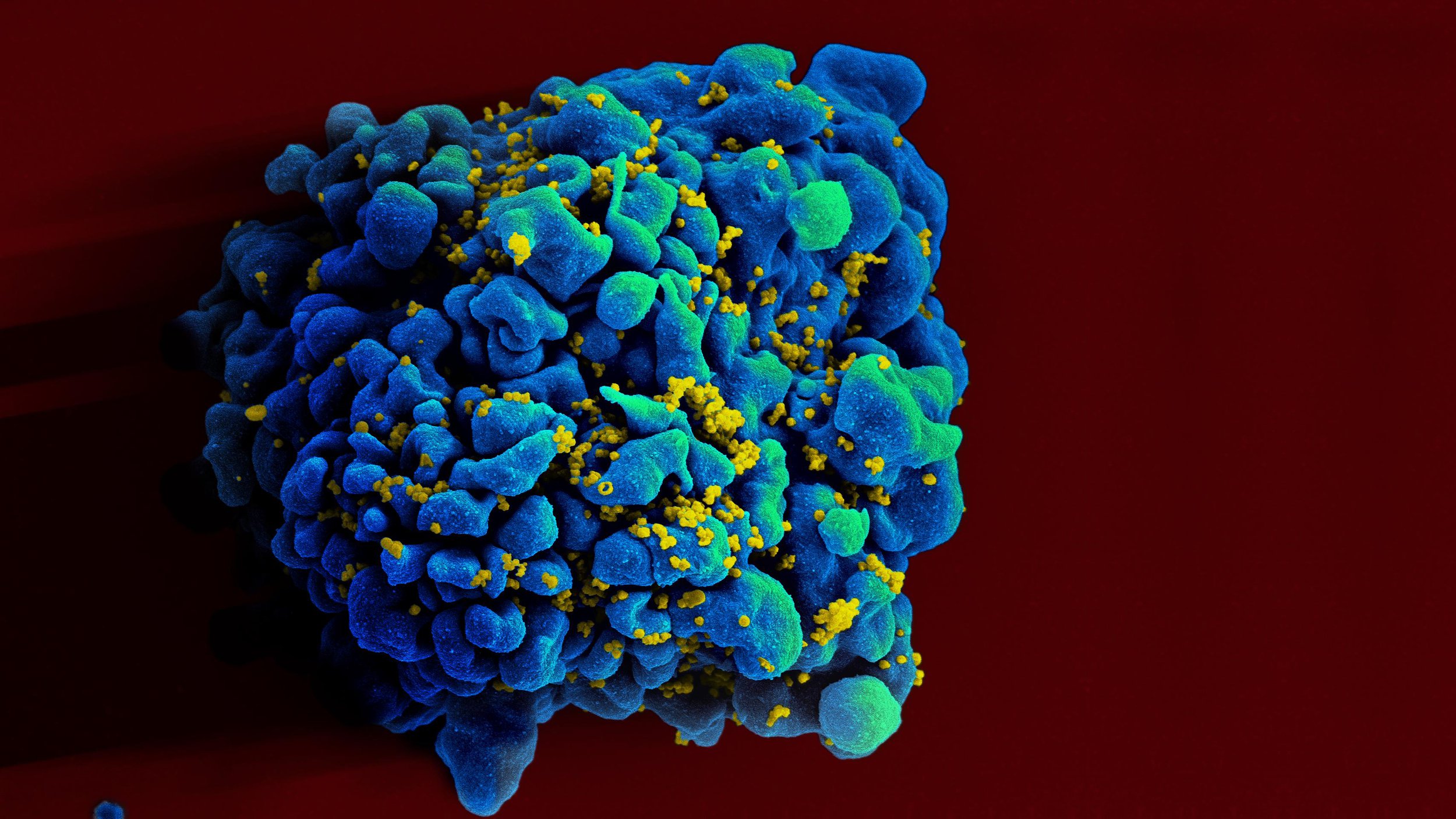
A transmission electron micrograph of HIV-1 virus particles (orange) replicating from the plasma membrane of an infected H9 T cell. Credit: NIAID, Flickr
Over the past year, news of two new people cured of HIV grabbed headlines, stirring hopeful talk of what these scientific wonders might portend for the four-decade fight against the virus.
To researchers working in the HIV cure arena, these cases are inspiring because they prove it is in fact possible to eradicate this extraordinarily complex virus from the body.
That said, such cures are the result of treatments too toxic to attempt on all but a select few. So while they provide a scientific roadmap toward success, they do not necessarily make researchers’ job any easier as they work to develop alternatives: safe, effective and, crucially, scalable therapies to cure HIV.
“HIV has been a tough nut to crack,” says Marshall Glesby, an infectious disease specialist at Weill Cornell Medicine in New York City and a coauthor of one of the recent HIV cure case studies. “But there is incremental progress being made in terms of our understanding of where the virus hides within the body and potential ways to purge it from those sites.”
The HIV cure research field is yet quite young. And it likely never would have ballooned as it has in recent years were it not for the very first successful cure—one that served as a catalyst and guiding light for scientists.
A transformative success
During the late 1990s and early 2000s, the HIV research establishment focused the lion’s share of its energy and resources on treatment and prevention of the virus. Actually curing HIV was generally regarded as a distant dream, with only a small set of researchers pursuing such a goal.
Then, in 2008, German scientists announced the first case of what would ultimately be deemed a successful cure of the virus. This proof of concept ignited the field and sent financial investment soaring—to $337 million in non–pharmaceutical industry funding in 2020, according to the HIV nonprofit AVAC.
Clinicians were able to cure HIV in an American man living in Berlin named Timothy Ray Brown, by exploiting the fact that he had also been diagnosed with acute myeloid leukemia, or AML. This made Brown a candidate for a stem cell (bone marrow) transplant to treat his blood cancer.
Brown’s treatment team relied on the existence of a rare genetic abnormality found among people with northern European ancestry. Known as the CCR5-delta32 mutation, it gives rise to immune cells lacking a certain coreceptor called CCR5 on their surface. This is a hook to which HIV typically latches to begin the process of infecting an immune cell and hijacking its machinery to manufacture new copies of the virus.
The clinicians found a stem cell donor who was not only a good genetic match for Brown, but who also had the CCR5-delta32 mutation. First they destroyed Brown’s immune system with full-dose chemotherapy and full-body radiation. Then they effectively gave him the donor’s immune system through the stem cell transplant. This cured his HIV by ensuring that any remaining virus in his body was incapable of infecting his new immune cells.
Variations of this method have yielded cures, or likely cures, in four other people during the years since. These cases provide researchers with increasing certainty that it is possible to achieve the ultimate goal: a sterilizing cure, in which the body has been rid of every last copy of virus capable of producing viable new copies of itself.
“It was not a given that if you completely replace the immune system, even with a purportedly non-susceptible immune system, that you would cure infection,” says Louis Picker, associate director of the Vaccine and Gene Therapy Institute at the Oregon Health & Science University. “It was possible that HIV could be hiding in non-immune cells, like endothelial cells, and still find targets to infect.”
But the small cohort of people who have been cured or likely cured to date, Picker says, “show that’s not the case.”
Nevertheless, these successes have not opened the door to a cure for HIV available to much more than a few of the estimated 38 million people living with the virus worldwide. Critically, it is unethical to provide such a dangerous and toxic treatment to anyone who does not already qualify for a stem cell transplant to treat blood cancer or another health condition.
Brown, for one, nearly died from his treatment. And a number of efforts to repeat his case have failed.
Why is HIV so hard to cure?
Highly effective treatment for HIV hit the market in 1996, transforming what was once a death sentence into a manageable health condition. Today, the therapy, a combination of drugs called antiretrovirals, is so safe, tolerable and effective, that it has extended recipients’ life expectancy to near normal. But despite the fact that these medications can inhibit viral replication to such a degree that it’s undetectable by standard tests, they cannot eradicate HIV from the body.
Standing in the way is what’s known as the HIV reservoir.
This viral reservoir is composed in large part of long-lived immune cells that enter a resting, or latent, state. Antiretrovirals only target cells that are actively producing new copies of the virus. So when HIV has infected a cell that is in a non-replicating state, the virus remains under the radar of these medications. Stop the treatment, and at any moment, any of these cells, which clone themselves, can restart their engines and repopulate the body with HIV.
This phenomenon is why people with HIV typically experience a viral rebound within a few weeks of stopping their antiretrovirals. And it is the reason why, given the harm such viral replication causes the body, those living with HIV must remain on treatment for the virus indefinitely to mitigate the deleterious impactsof the infection.
“A key new advance is the finding that those cells which harbor the virus seem resistant to dying, a problem with cancer cells,” HIV cure researcher Steven Deeks, a professor of medicine at University of California, San Francisco, says of the viral reservoir. “We will be leveraging new cancer therapies aimed at targeting these resilient, hard-to-kill cells.”
Follow-up acts
Brown stood alone on his pedestal for over a decade.
Then, at the 2019 Conference on Retroviruses and Opportunistic Infections (CROI) in Seattle, researchers announced two new case studies of men with blood cancer and HIV who had received treatments similar to Brown’s. The men, known as the Düsseldorf and London patients, were treated for Hodgkin lymphoma and AML, respectively. By the time of the conference, both had spent extended periods off of antiretroviral treatment without a viral rebound.
To this day, neither man has experienced a viral rebound—leading the authors of the London and Düsseldorf case studies recently to assert that they are “definitely” and “almost definitely” cured, respectively.
In February 2022, a team of researchers reported at CROI, held virtually, the first possible case of an HIV cure in a woman. The treatment she received for her leukemia represented an important scientific advance.
Called a haplo-cord transplant, this cutting-edge approach to treating blood cancer was developed to compensate for the difficulty of finding a close genetic match in the stem cell donor–which is traditionally needed to provide the best chance that the stem cell transplant will work properly. Such an effort is made even more challenging when attempting to cure HIV, because the CCR5-delta32 mutation is so rare.
The American woman received a transplant of umbilical cord blood from a baby, who had the genetic mutation, followed by a transplant of stem cells from an adult, who did not. While each donor was only a partial match, the combination of the two transplants was meant to compensate for this less-than-ideal scenario. The result was the successful blooming of a new, HIV-resistant immune system.
The authors of the woman’s case study, including Weill Cornell’s Marshall Glesby, estimate that this new method could expand the number of candidates for HIV cure treatment to about 50 per year.
A variety of antiretroviral drugs used to treat HIV infection. Image Credit: NIAID, Flickr
In July, at the International AIDS Conference in Montreal, researchers announced the case of a fifth person possibly cured of HIV. Diagnosed with the virus in 1988 and 63 years old at the time of his stem cell transplant three years ago, the American man is the oldest to have achieved potential success with such a treatment and the one living with the virus for the longest. Because of his age, he received reduced intensity chemotherapy to treat his AML. Promisingly, he still beat both the cancer and the virus.
The lead author of this man’s case study, Jana K. Dickter, an associate clinical professor of infectious disease at City of Hope in Duarte, California, says that such cases provide a guide for researchers. “If we are able to successfully modify the CCR5 receptors from T cells for people living with HIV,” she says, “then there is a possibility we can cure a person from their HIV infection.”
Scientists also know of two women whose own immune systems, in an extraordinary feat, appear to have cured them of HIV. Both are among the approximately 1 in 200 people with HIV, known as elite controllers, whose immune systems are able to suppress replication of the virus to low levels without antiretroviral treatment.
Researchers believe that these women’s immune systems managed to preferentially eliminate immune cells infected with viral DNA capable of producing viable new virus, ultimately succeeding in eradicating every last such copy.
The search for the holy grail
As they seek safer and more broadly applicable therapeutic options than the stem cell transplant approach, HIV cure researchers are pursuing a variety of avenues.
Some investigators are developing genetic treatments in which, for example, they attempt to edit an individual’s own immune cells to make them lack the CCR5 coreceptor.
“The science that I am particularly excited about and that we and others are working on is to make this treatment as an in vivo deliverable therapy that would not rely on transplant centers and could ultimately be given in an outpatient setting,” says Hans-Peter Kiem, director of the stem cell and gene therapy program at the Fred Hutchinson Cancer Center in Seattle.
Then there is what’s known as the “shock and kill” method, in which drugs are used to flush the virus from the reservoir and other treatments are then used to kill off the infected cells. Conversely, “block and lock” attempts to freeze the reservoir cells in a latent state for good. Researchers are also developing therapeutic vaccines that would augment the immune response to the virus.
“Progress will be incremental and slow,” Picker predicts, “unless there is a discovery from left field—an unpredictable advance that revolutionizes the field. I do think it will happen. My personal goal is to be a very good left fielder.”
Correction: Dr. Glesby’s quote in the fourth paragraph was initially published with a typo, saying “track” instead of “crack.”
This reporting was supported by the Global Health Reporting Center.
WASHINGTON—Spreading the word ahead of time so that Americans wouldn’t be caught off guard, President Joe Biden announced that all of the nation’s vibrators would buzz at 2 p.m. today in a test of the Emergency Stimulation Program. “This routine test of the ESP will be automatically directed to every consumer vibrator in the country, which will simultaneously begin to emit quivering pulses until the stimulation drill is over,” said the commander in chief, noting that citizens should turn off any wands, plugs, bullets, or other electric dildos ahead of the test if they didn’t plan on becoming aroused at that time. “Remember, it’s only a test, so you will not be required to climax at this time. This is merely a safeguard to ensure the federal government can reach your erogenous zones if we ever need to quickly and effectively get you all off. We just want to be prepared in case, God forbid, one of our foreign adversaries ever threatens to make you come harder than we do.” The White House later released an Emergency Stimulation Program fact sheet detailing the creation of the national network of sexual pleasure devices during the Cold War, when the country was in a heated race with the Soviet Union to develop the world’s first military-grade fuck machine.
The dolly moves the camera away from or towards. These directions take on emotional resonances, depending on the object of the camera’s scrutiny, depending on how it wants them. “Dolly out” becomes motion away—I don’t want. “Dolly in” becomes interest in—I want. This is the way a cinema moves. Emotions emerge in cinematic language because emotions are attached to humans, who operate cameras. All camera moves negotiate desire because cinema is the medium of watching.
The motion of the camera through space, the dolly shot, introduces the sensation of another body: we experience the physical space the camera has traveled through, being pushed or being pulled, which our senses tell us is the same physical space as the subject. Desire needs distance to move through, otherwise it’s theoretical, academic. Without the rush towards touch and the flight when it starts to press too hard, there cannot be a cinema.
Passages, the eighth feature film directed by Ira Sachs (now streaming on MUBI), arrives at a tempting moment in cinema—and desire’s—history. It has been shouldered with reacquainting audiences with sex scenes amid the mostly online malaise regarding on-screen erotics while contending with the very real continued proliferation of anti-gay sentiment and actions, not in the moviehouse but at the ballot box and houses of governance. It must both address the collective cinephile’s anxieties over the disappearing “mid-budget film about love and lust”—consider two of Sachs’ beloved antecedents, Pialat and Eustache—while also existing as a mid-budget film about love and lust in a filmic ecosystem redoubtably dominated by zombified IP and over-warmed, undercooked corporate tupperwares.
And it must make money, the drudge designation of all art under capitalism. To do that, it must scratch out getting seen, even as it combats—in an unwelcome boomerang back to cinema’s perpetual struggle with American puritanism and puritan Americanism—the Motion Picture Association, which assigned the film an NC-17 rating, all but proclaiming the film’s frank sex scenes, especially between its two male leads, worth shielding viewers’ eyes from. “It’s really about a form of cultural censorship that is quite dangerous,” Sachs told the Los Angeles Times, speaking about the MPA’s decision. “Particularly in a culture which is already battling, in such extreme ways, the possibility of LGBT imagery to exist.”
Passages, then, arrives in a moment when to dolly out on Passages is to hold it responsible for remedying so many of the cracks and crevasses in our collective effort to make and access art in 2023. It is not enough to desire, to be desired, to see desire and want to show it, we implore the art film. It must overcome our everything. It must consume us if we are to consume it.
How lucky, then, to have the film piloted by Ira Sachs, one of the great buoyancies in anti-consumer artmaking in the last three decades. Principally, this buoyancy comes not from optimism—a feeling too susceptible to marketing and en-corporation to retain an essential edge—but desire itself. Sachs’ desires to see more of the world, to show it and see it. This feels good. Desire feels good, as does being desired. It feels bad too, which is part of the desired arrangement. The regular interplay of desire got and desire frustrated, in home and in body—this is the see-saw stuff of Love is Strange (2014) and Keep the Lights On (2012), of the way want curdles and flourishes in the family collective, as in Little Men (2016), and liberty to be or spend time or money, as in Frankie (2019). The play of desire becomes a motion of objects moving towards and then repelling, returning only to spin out. It’s a regular facet of being alive, not a grand weapon in a discourse crusade or a creative writing exercise. Desire is the fact of desire, which is so much more than enough.The fucking is good. The dancing is good. The jokes are good. The hard conversations are good. These things aren’t other, deeper things.
Passages speaks the lingua franca of many of these films: a trust—indeed, a desire—for the actors to tell the story as the movie encounters them around themselves. It begins on the movie set twice over, as the camera eye pans around a set for a film called Passages. “Action” is called and extras file down the staircase. One boy in particular, a little loping in his step and jangly in his arms, draws the attention of Tomas (Franz Rogowski), who stops the shot. Tomas gives the boy a few notes, tells him to not swing his arms so much. They start the shot over, Tomas stops it again, gives the boy more notes, then nitpicks a few of the other extras. He is trying to get them to move in a way that suggests that their coming down the stairs is not about them coming down the stairs. It’s just them moving from one space to another. From off to on, through the stairs to a bar, into a space they’re looking forward to being in. We never see the actors get the shot right. Presumably they do: Passages (Sachs’ film, not Tomas’) jumps ahead not long after, to the wrap party at a bar. The actors, in both films, have transitioned into the place they want to be.
The film unfolds. It uncurls, rather, flexes and then scrunches. Tomas’ attentions and appetites are variously drawn to his husband of many years, Martin (Ben Whishaw) and Agathe (Adèle Exarchopoulos), a teacher he encounters at the wrap party, first as a dance partner and later in bed. When Tomas confesses this act the next morning, excitedly, Martin is wounded, then expresses understanding. He reminds Tomas “you always get like this” at the end of shooting. He tries to remind himself of this fact as well.
Tomas and Agathe’s tryst spikes into a full-blown affair. Martin and Tomas separate, sort of. Martin begins an affair with Ahmad (Erwan Kepoa Falé), and Tomas continues—scene to scene—chasing and appeasing, ignoring and consuming his two scene partners. He is out of control and chasing control, exerting it over two people who desire him, who he desires. Agathe becomes pregnant. Tomas proposes that the three can make the arrangement work, raise the child, sustain the tête-à-tête-à-tête. They can’t, really, clearly: Tomas doesn’t want three equal parts, but two parts that he can have. Martin doesn’t know how wanting that feels, but he wants a child. Agathe doesn’t want this kind of desire—hot and cold, not on her terms—at all.
It’s tempting to make too much and too little of the first experience of Tomas, as a director of actors, in light of the film’s unfolding. In one light, his fixated direction of his actors reads as controlling and fussy, an exercise in power simply to show that it exists. And surely, Tomas’ entry into the film feels domineering and preening, the opposite of his body language at the close as he kneels dejected in a school hallway or pedals a too-small bike around the streets of Paris, the camera dollying beside him, in and out. He is behaving differently, as the discordant underscore insists. “Scoring” itself is a tactic used sparingly if at all throughout—the film prefers the songs the characters listen to. And so, the entry of discordant saxophone at the close is especially chaotic to Tomas’ interiority in these penultimate moments. Has Tomas changed? Surely, a character is a person, especially in an Ira Sachs film; the behavior of people is not incidental, nor is our reaction to it. And Rogowski offers a performance too subtle to be misread as “unlikeable” or “static.” Tomas’ eyes scrutinize and dare in the early goings and soften to a kind of frustrated and then bewildered blink by the end. He is seeing the world differently. Desire does this.
On the other hand, we might beware imposing the dramatic fallout of Passages on the actions of its protagonist’s past. We might resist the urge to psychologize—or worse, pathologize—him and treat his actions as evidence of some future sin. We might resist thinking of images in terms of evidence at all. Mostly, Tomas looks like a director in the opening scenes. I suspect he is probably a good one.
Passages isn’t about a character changing. There isn’t a message so much as a loss, and then a change in lens. But Sachs and his collaborators respect the audience too much, have too much love for growth and transformation, to offer something as reducible or consumable as a sketch, even a sexy one. While Passages isn’t about a character learning a message—that the audience is, in turn, supposed to learn—this framing is, from a certain angle, the message of Passages: art and life aren’t resources for extraction. Tomas at the beginning of the film doesn’t exist as a foil to be mined for Tomas and us at the end.This framing is, from a certain angle, the message of Passages: art and life aren’t resources for extraction.
Passages can mean so much without us strip-mining its parts for parts. Frequently funny and escalatingly absurd, this is a film that is about, if it’s about anything, the plastic power of outfits—the moments of levity and irony don’t annotate our history or psychiatry, don’t disprove our despair or ask us to entertain escapism. They emerge, pleasurably, as life sometimes does. That they are occasionally more spectacular than realistic is the bastion of art—isn’t part of the point of the effort to look at pleasing things?
At a crisp 90 minutes and editing to shuttle us into and out of the drama, Passages can remind us of the morphable power of narrative without speaking in the staid voice of the instructor. Its best moments—as in the blanks between Proust’s slates or the un-inked space around Whitman’s—are its elisions, as it cuts then jumps before a scene “finishes,” into one that’s already “begun.” Sometimes the collisions begin on-screen. Tomas’ re-seduction of Martin when the former spends an at-first unwelcome night at the apartment is as thoughtfully choreographed and tempoed as any erotic scene that’s played in a moviehouse in years. The fucking is good. It doesn’t have to be exemplary of anything other than good fucking. Sometimes the encounters begin before we get a glimpse, as when we’re dropped into an early bedside argument between Tomas and Martin, the former’s body wound around and pointing away from the camera and nearly obscuring Martin’s thin frame from view. The shot continues, their argument already mid wheel-spinning and going nowhere, remaining there.
What we don’t get is as satisfying as what we do. Sachs refuses to patronize the spectator; he respects us and his actors too much. We never watch Agathe and Tomas deliberate the decision to get an abortion. Instead, we watch Tomas drive her to the train, watch her disaffected discomfort and his puerile frustration. And then we cut to Exarchopoulos curled in bed, looking lost, looking. She looks like she did in bed a few nights and a few shots earlier, listening to Tomas and Martin fuck noisily, realizing that she doesn’t want this, whatever it may be. Passages makes as good a case as any film this year (or any other) to consider actors fellow image-makers equal with their directors and cinematographers and editors. In no small part, it’s due to their collective willingness to perform the truth of their characters’ messes, the myriad ways that want spills over and sometimes settles for getting-off instead of resolution. As performers, they don’t cannibalize intention for meaning. The fucking is good. The dancing is good. The jokes are good. The hard conversations are good. These things aren’t other, deeper things.
If the unsurprising (and unfortunate) trouble Passages has encountered at the hands of several filmic institutions ping Hollywood’s Code days in our collective consciousness, it is appropriate and thrilling that Sachs and his collaborators have crafted a work that chimes in the liberatory buzz of pre-Code art. A tempting reduction to apply to such objects approaches them in terms of their possibility: how did theypossiblymake something so free? Watching William Dieterle’s Kay Francis/William Powell vehicle Jewel Robbery (1932) elicits such a reaction, so hungry are the actors’ gazes and so easily does the script and direction conjure a world where cops might be perpetually clueless and wrong, where the heroic act is always to drug policing forces with marijuana cigarettes while stealing back glamor and leisure. How did they make something so free?
They made it—like Passages—by simply looking around the world. Liberatory art and life is the baseline for existence, not the exception, no matter what our art and “real” life tell us. Looking closer, moving into it, we realize we make it by wanting it, which has always been more than enough.
Frank Falisi is an Associate Editor at Bright Wall/ Dark Room. His writing has appeared in Reverse Shot, Mubi Notebook, the LA Review of Books, and other outlets. He is currently a student at CUNY’s Graduate Center.
“Why does a vibrator make us uncomfortable, but Viagra does not?” asks cognitive-behavioral coach Robin Buckley. Sharing her own personal story of empowering her teenage daughter to explore the power of pleasure, Buckley encourages parents to talk to their teens about healthy sexual development — and shares why the awkward conversations are worth it.
PBS NewsHour Oct 6, 2023 Veteran journalist and Nobel Peace Prize winner Maria Ressa has a dire warning about the defense of truth in the digital age. She says we risk losing the information war to adversarial artificial intelligence and to authoritarian governments who can weaponize the tech. Geoff Bennett spoke with Ressa at the inaugural summit of the newly launched Institute of Global Politics at Columbia University.
New Thinking Allowed with Jeffrey Mishlove Oct 3, 2023 Caroline Myss, MA, is an international speaker and has taught workshops on consciousness, healing, energy medicine, spirituality, mysticism, and the science of medical intuition around the world for 35 years. She has her own education institute, Caroline Myss Education Institute (CMED). Caroline refined her skills as a medical intuitive, with the assistance of C. Norman Shealy, MD, PhD, a Harvard-trained neurosurgeon. She is a five-time New York Times bestselling author and author of many books, including Anatomy of the Spirit: The Seven Stages of Power and Healing, Sacred Contracts: Awakening Your Divine Potential, Intimate Conversations with the Divine: Prayer, Guidance, and Grace, Entering the Castle: Finding the Inner Path to God and Your Soul’s Purpose, Archetypes: A Beginner’s Guide to Your Inner-net, Why People Don’t Heal and How They Can. Her website is myss.com. Caroline gives insights about the profound shift from dualistic thinking to embracing wholism. She encourages cultivating thoughts that unify and bring a sense of wholeness to each moment, allowing love to flow abundantly for a more fulfilling life and a greater sense of community that helps each other and the planet. 00:00 Introduction 09:47 Energy consciousness 10:50 Journey into the soul 14:22 Self-empowerment 20:01 Path of suffering 27:22 Love Power 33:20 Collective dark night of the soul 38:27 Wholism 47:33 Inner-net 48:20 Conclusion Edited subtitles for this video are available in Russian, Portuguese, Italian, German, French, and Spanish. New Thinking Allowed CoHost, Emmy Vadnais, OTR/L, is an intuitive healer and health coach based in St. Paul, Minnesota. She is the author of Intuitive Development: How to Trust Your Inner Knowing for Guidance With Relationships, Health, and Spirituality. Her website is https://emmyvadnais.com/ (Recorded on August 21, 2023)
Consciousness, spirituality, biography, sexuality, androgyny, futurism, space, the arts, science, astrology, democracy, humor, books, movies and more







 Benjamin Ryan