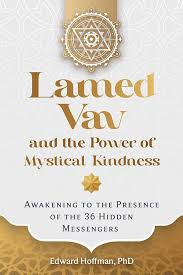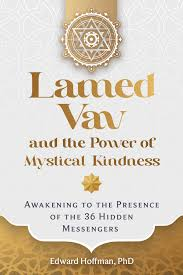
(Image from Simon & Schuster)
Humor has quite a lot to do with play . . . The Latin root of “humor” is “umor,” meaning liquid or fluid. Humor is something that flows [and therefore] resembles water itself . . . Another important part of play is a sense of wonder . . . Play offers the leeway to let images, thoughts, and ideas turn things upside down, inside out . . . Play is, I hold, an attitude, not only an activity. (Joan Erickson, “The Importance of Play in Adulthood,” 51-64)
Hasidic tales about in which individuals who felt lost, alone, or abandoned spiritually were able to regain hope and direction through personal guidance conveyed in a dream. Such guidance could be highly specific: a directive to travel to an unfamiliar locale and there wait for an epiphany to break stagnation and reenergize one’s soul. Or the advice could be broad and temporally open-ended.
“In my own notes, I had at first labeled this defense the ‘fear of one’s own greatness’ or the ‘evasion of one’s destiny’ or the ‘running away from one’s own ‘best talents.’ So often we run away from the responsibilities dictated (or rather suggested) by nature, by fate, even sometimes by accident, just as Jonah tried–in vain–to run away from his fate.” (Maslow, The Farther Reaches of Human Nature, 37)
[A]s adults, we likewise forged close friendships with those committed to helping new generations acquire the knowledge, skills, and wisdom necessary for building a better world. In contemporary psychology, this trait is called generativity, first identified by the Danish-Jewish psychologist Erik Erikson in the early 1950s.
Developed through his close association with the quantum physicist Wolfgang Pauli in the 1940s to 1950s, Jung suggested that in such occurrences [synchronicities], the very forces of time and space lose their boundaries or become relativistic–that is, causality disappears.
Forming Your Kvittel
Take a sheet of paper and write the names of the following persons if applicable–and they are alive:
Your mother
Your father
Each grandparent
Your spouse (or current spouse if previously married)
Each of your children
Each of your grandchildren
Each of your siblings
Each of your closest friends–romantic or otherwise
Each extended family member to whom you feel close (cousins, aunts, uncles, etc.)
Yourself
Now next to each name, write one sentence on what this person currently needs the most–in your opinion. The need can be material (financial, occupational), emotional-social, health-physical, or spiritual. . . .
Then go about your day’s activities.