“Destiny and Desire: Finding Your Purpose” by Rod Stryker

JANUARY 15, 2014   (YogaInternational.com)

Yoga’s supreme objective is to awaken an exalted state of spiritual realization, yet the tradition also recognizes that this state does not exist in absolute isolation from the world and worldly matters. Thus, the science of yoga teaches us how to live and how to shape our lives with a commanding sense of purpose, capacity, and meaning.

Learning to honor the four desires allows us to thrive at every level and leads us to a complete and balanced life.

According to the Vedas, our soul has four distinct desires, which collectively are described in the tradition as purushartha, “for the purpose of the soul.” The four desires—dharma, artha, kama, and moksha—are inherent aspects of our soul or essence; our soul uses them for the purpose of fulfilling its unique potential. All four kinds of desire, including the desire for material prosperity, if pursued mindfully, can be spiritual because they can pave the way for our soul to express itself on earth. Learning to honor the four desires allows us to thrive at every level and leads us to a complete and balanced life.

The concept of desire coming from the soul or essence may seem strange since, by definition, the soul is eternal and changeless. But the Vedas explain that the soul has two aspects: it is complete, whole, and eternal, in a permanent state of oneness with the Absolute, and at the same time, it desires to fully express itself and its divine nature in the world. The Vedic term for “soul” is atman, which means “essence”—the highest principle, or Self. The two distinct aspects of atman arepara and jiva. Para means “supreme, highest, or culmination.” Jiva means “individual or personal.”

The Vedic term for “soul” is atman, which means “essence”—the highest principle, or Self. The two distinct aspects of atman are para and jiva. Para means “supreme, highest, or culmination.” Jiva means “individual or personal.”

The paramatman or higher soul is the infinite and unconditioned essence that is beyond all limitation, eternal and changeless. The Shvetashvatara Upanshad, a sacred text from the seventh century, describes this higher aspect of soul beautifully: “Omnipresent, dwelling in the heart of every living creature…He is the inner Self of all, hidden like a little flame in the heart…. Know Him and all fetters will fall away.” The Apostle Paul, in 1 Corinthians 3:16, points to this same aspect of soul: “Know ye not that ye are the temple of God and that the Spirit of God dwelleth in you?” Your paramatman is identical to the Divine; there is no separation or distinction. “Aham brahma smi” (I am one with the Absolute), say the Vedas.

Jivatman, on the other hand, is the individual soul. Think of it as your spiritual thumbprint, utterly unique for everyone. It is the part of you that, from the moment you were conceived, determines your uniqueness, your distinct capacities, talents, and challenges, as well as your inclinations and desires. Jivatman is literally where your soul meets your unconscious—the individual aspects of you that make you uniquely who you are.

I first became familiar with the Vedic teaching about the nature of soul many years ago, but it was not until my twin sons were born that I had practical proof of its accuracy, for I saw from the very beginning of their lives how the concept of jivatman applied to them. My boys, Jaden and Theo, were conceived at the same time and gestated in the same womb, where they consumed the same nutrients. They were born only ten minutes apart, yet from the moment they came into the world they have been utterly distinct. Theo, for example, was born with an incredible ear for music. Days after he was born, we noticed that music would completely captivate him. Jaden, on the other hand, showed little response to music; he came into the world with much more tactile awareness. A gentle rub on his back and he would be spellbound. I can also recall him, at just a couple of months old, clenching my shirt and trying to climb upward. A few months later he could work his way up to the top of my head. Ten years later he’s still a relentless climber. Theo has turned out to have a pitch-perfect ear and is now an inspired pianist. Now that they are in the world, their environment will undoubtedly affect their inherent qualities in a variety of ways, but what made them, from the beginning of their lives, who they are and who they will potentially become is their jivatman, their individual souls.

The ancient wisdom of the Vedas teaches that each of us is both universal and unique, that the two aspects of the soul, para and jiva, are distinct but not separate. The nature of the paramatman is that it is identical to Infinite Being. Jiva or the individual soul, on the other hand, comes into the world with a specific purpose, which it is compelled to fulfill. In the same way that there are specific genetic traits in a tulip bulb that will determine its color, the shape of its petals, and the time it will most likely bloom, the jiva of Wolfgang Amadeus Mozart, Leonardo da Vinci, and Albert Einstein contained the unique potentialities of their destiny the moment they were conceived.

Dharma

Your soul, specifically the jiva aspect of your soul, has four desires that it uses to propel you toward your unique destiny. The first and most overriding of the four desires is dharma, the longing for purpose, the drive to be and to become who you are meant to be. Dharma, in simple terms, is the drive to fulfill your potential; it is the inherent drive of every being to thrive. Dharma is also the impulse toward altruism, the inner longing, known or unknown, of every individual to add his or her unique luster to the gem of creation. The term dharma has many meanings, including “law,” “path,” “order,” and “virtue.” Each of these definitions helps to define dharma as the one desire that informs the other three desires. In the yoga tradition, dharma is often referred to as duty. Dharma, in the context of the four desires, is usually interpreted to mean career, life path, or work—but dharma specifically places career and work, as well as the other roles we play in the world, within a larger context of serving the universe of which we are a part.

This larger sense of dharma is at the heart of the soul’s inherent longing to fulfill its individual potential. Arthur Avalon, one of the world’s greatest authorities on tantra, described the drive to fulfill our dharma as “that course of meritorious action by which man fits himself for this world, heaven, and liberation.” In other words, the inherent drive or desire for dharma is to fully realize everything that we are capable of and, in so doing, positively affect the world. According to the tradition, there is nothing in nature that is not compelled by this same imperative.

The reason dharma is the first of the four desires is twofold. One, the Vedic tradition is founded on the principle that, as individuals, our happiness is completely dependent on us fulfilling our own unique version of duty. The second reason is that everyone’s unique dharma determines the scope and specifics of our three other desires.

Artha

The desire for artha includes all the means necessary to fulfill our soul’s destiny.

The second desire, artha, is for the means necessary to accomplish our dharma. In the most basic sense, artha refers to material resources, such as money, food, physical well-being, and a roof over our head, without which fulfilling our purpose would be difficult if not impossible. The particulars and the scope of what each of us will need to fulfill our drive for artha will vary from individual to individual, but all of us, even monks, have some material needs. However, artha is not confined to material wealth or abundance. The desire for artha includes all the means necessary to fulfill our soul’s destiny. Mahatma Gandhi’s artha included fasting, meditation and prayer, passive resistance, vegetarianism, even the clothes he wore, for which he spun the yarn himself. All these elements were unique to his version of artha. Compare him to Jackie Robinson, for example, the first African American baseball player to break the color barrier and play in the major leagues. Aside from a salary, food, and a place to sleep, some of his means included boundless will and an extraordinary capacity to endure prejudice (like Gandhi), as well as being a great baseball player.

Kama

The third desire, kama, is for pleasure. Kama is often interpreted to mean “sensuality” or “lust,” but the deeper understanding of it that comes from the ancient tradition speaks of kama as the desire for pleasure of all kinds, including closeness and intimacy, beauty, family, art, and friendship, as well as sex. For some people there is a temptation to write this desire off as lowly or sinful, but consider whether any of us would exist if there were no desire for the pleasure of sex.

The truth is that the desire for pleasure is the motivation behind all actions. Anything and everything aspired to and achieved produces a feeling of pleasure.

The truth is that the desire for pleasure is the motivation behind all actions. Anything and everything aspired to and achieved produces a feeling of pleasure. In his book Virtue, Success, Pleasure, and Liberation, esteemed Vedic scholar Alain Daniélou cites two quotes from the Mahabharata that make this crystal clear: “He who does not desire pleasure will not seek to enrich himself. Without desires, neither does a man desire to fulfill his duty,” and “The merchant, the laborer, the gods themselves act only if their actions are linked to some satisfaction. For pleasure, a courageous man will brave the ocean.” Thus, if it were not for kama, few things of value in this world would exist.

Moksha

The desire for moksha is the longing for lasting peace or to experience the sacred, whether it is found in a church, a temple, a mosque, contemplative solitude, nature, or self-inquiry.

The fourth and final desire, moksha, is the longing for liberation, true freedom. It is the intrinsic desire to realize a state free from all boundaries, including the limitations of the other three desires. This desire has been the driving force behind the world’s spiritual traditions. It is the longing to know the Eternal, that which is beyond all limitations, beyond the province of the five senses and even death. It is the impulse that compels us to seek out prayer, meditation, contemplation, surrender. The desire for moksha is the longing for lasting peace or to experience the sacred, whether it is found in a church, a temple, a mosque, contemplative solitude, nature, or self-inquiry. In practical terms, moksha is the longing to be free, to experience unfettered awareness, to be completely unburdened. It is the aspiration to be free of suffering and realize something beyond temporal pleasure. Fulfilling this desire gives us entry into the rarest and most sublime heights—heaven on earth.

______

It is critical to understand that learning to honor all four desires is key to achieving both worldly and spiritual fulfillment. While dharma is preeminent in that it shapes the particulars of our other three desires, no one of the four is greater or more important than the rest.

At various stages of life, a particular desire often comes to the forefront as the one that needs to be focused on and fulfilled. During a health crisis, for example, artha—our soul’s innate desire for well-being and health—would very likely become our preeminent desire. Once we regained our health, we could expect our soul to move on and place greater emphasis on fulfilling one of the other three desires. Collectively, the four desires are the compelling force that our soul utilizes to lead us to realize our full potential in becoming who we are meant to be.

Adapted from The Four Desires: Creating a Life of Purpose, Happiness, Prosperity, and Freedom by Rod Stryker (Delacorte Press, July 2011).

ROD STRYKER  
Founder of ParaYoga®, Rod Stryker is widely recognized as one of the country’s leading authorities on the ancient traditions of yoga, tantra, and meditation. Rod’s teaching weaves together his depth of understanding, experience, and ability to make the ancient teachings and practices accessible to students of all levels. Rod has trained teachers for over 25 years and leads retreats, workshops, and trainings worldwide. He lives in the mountains of Colorado with his wife and four children.

Becoming Homo Universalis: 52 Codes for Embodying Your Universal Self


Homo sapiens are giving birth to a new species: Homo Universalis. It is no accident that you are here! Join visionary Barbara Marx Hubbard and Humanity’s Team as we experience our “collective next beginning” as a species. We are currently experiencing a great wake up call for human maturation. We have entered the first phase of conscious evolution, the evolution of evolution from unconscious to conscious choice, when our species becomes aware of the whole evolutionary journey and becomes co-responsible for guiding the process on a planetary scale.

Go to https://awakeningnewspecies.com for more information.

“Martin Amis on Lenin’s Deadly Revolution” by MARTIN AMIS

Photo

Aleksandr Solzhenitsyn off Norway’s coast in 1974. His three-volume “Gulag Archipelago” was translated between 1973 and 1975. CreditKeystone/Getty Images

It was not a good idea that somehow went wrong or withered away. It was a very bad idea from the outset, and one forced into life — or the life of the undead — with barely imaginable self-righteousness, pedantry, dynamism, and horror. The chief demerit of the Marxist program was its point-by-point defiance of human nature. Bolshevik leaders subliminally grasped the contradiction almost at once; and their rankly Procrustean answer was to leave the program untouched and change human nature. In practical terms this is what “totalitarianism” really means: On their citizens such regimes make “a total claim.”

The following is from “the secret archive,” published as “The Unknown Lenin” (1996), and the entry is dated March 1922: “It is precisely now and only now, when in the starving regions people are eating human flesh, and hundreds if not thousands of corpses are littering the roads, that we can (and therefore must) …” At this point the unversed reader might pause to wonder how the sentence will go forward. Something like “pursue all avenues of amelioration and relief,” perhaps?

But no. This is Vladimir Ilyich Lenin, the leader of “a party of a new type,” who continues: “… carry out the confiscation of church valuables with the most savage and merciless energy. … Precisely at this moment we must give battle to [the clergy] in the most decisive and merciless manner and crush its resistance with such brutality that it will not forget it for decades to come. … The greater the number of representatives of the reactionary clergy and reactionary bourgeoisie we succeed in executing for this reason, the better.” Church records show that 1,962 monks, 2,691 priests and 3,447 nuns were killed in that year alone. Religion, you see, was part of human nature, so the Bolsheviks were obliged to suppress it in all its forms (including Islam and Buddhism).

“The Unknown Lenin: From the Secret Archive” was edited by Richard Pipes, and Pipes was responsible for what is probably the most comprehensive account of the period, namely the trilogy “Russia Under the Old Regime,” “The Russian Revolution” and “Russia Under the Bolshevik Regime, 1919-1924.” The two best single-volume studies known to me share the virtues of erudition and brio; and they very nearly share a title — “The Soviet Tragedy,” by Martin Malia, and “A People’s Tragedy,” by Orlando Figes. It was indeed a “tragedy” in the colloquial sense (“an event causing great suffering, destruction, and distress”), but not at all in the literary sense, with its implicit pattern of crisis/hubris/nemesis. What is eloquent, in this case, is the word’s derivation: from the Greek tragoidia, “apparently from tragos ‘goat’ + oide ‘song.’”

Song of the goat, the bleat as dirge — reminding us also that Russia was a rural society, and therefore the least eligible of the European powers for a “dictatorship of the proletariat”: There was a vast peasantry, but the proletariat was minuscule. The revolution came from above (a coup underscored by machine guns); the tragedy was experienced from below. “A People’s Tragedy,” then, is decidedly the more resonant.

Nowadays, of course, the “unknown” Lenin is unknown no longer — though as late as 1989 Mikhail Gorbachev was rereading the complete works of “Ilyich” (55 volumes in Russian) in search of some last-hour remedy, even as the U.S.S.R. was melting away all around him. Lenin bequeathed a fully functioning police state to Joseph Stalin ; thus the experiment, in its fulminant form, lasted from 1917 to 1953, by which time there were many millions of supernumerary deaths (and if Stalin hadn’t died in March of the latter year there would have been a second Jewish Holocaust by Christmastime). The verdict of history has at last been returned. But the jury — i.e., informed opinion in the First World — stayed out until the late 1970s. What took it so long?

Western intellectuals deserve their usual share of the obloquy. As one historian of Russia put it, it is to the intellectuals that we turn for “real prowess of wrong-headedness.” But it wasn’t just the pundits, the writers (H. G. Wells, G. B. Shaw) and the philosophers (J.P. Sartre, A. J. Ayer) who swallowed the Moscow line; so did historians, sociologists, politicians, and even businessmen. To its supporters the allure of the Communist Party was twofold. The secondary appeal was that it gave you the (not quite delusive) impression that you were playing your part in world events; the primary appeal was that the program looked wonderful on paper, and spoke to the optimism and idealism of many of the most generous hearts and minds.

It was vaguely understood that there had been some loss of life: the terror and famine under Lenin, the Civil War, forced collectivization (“Ten millions,” Stalin said to Churchill, holding up both palms, in the Kremlin in 1942), the burgeoning system of state slavery known as the gulag (created under Lenin), the Great Purge of 1937-38.All that could be set aside, for now, because (a) revolutions are always violent, and (b) the ends supposedly justify the means.

Photo

Nadezhda Mandelstam, author of “Hope Against Hope.”CreditFine Art Images/Heritage Images, via Getty Images

As for the first point, the French revolutionary terror lasted from June 1793 to July 1794, and claimed more than 16,000 victims, no more than a busy couple of weeks for the Bolsheviks (and imagine if Robespierre had kept at it until 1830). As for the second point, well, there is a counterproposition: Means shape ends, and tend to poison them. We all know, now, what we think of the Good Intentions Paving Company. Anyway, the means were all the Soviet citizen was ever going to get. Western doublethink and selective blindness on this question is a very rich field; the wisest and most stylish guide to it is “Reflections on a Ravaged Century” (2000), by Robert Conquest, to whom we will necessarily return.

So far as I know, the first writer to see it all with an illusionless eye was that highly privileged observer Vladimir Nabokov (born 1899), whose family fled Russia in 1919. Once established in America, he was befriended by Edmund Wilson, and they engaged in a celebrated correspondence from 1940 to 1971 (published as “Dear Bunny, Dear Volodya”). Not lastingly duped by Stalin, the author of “To the Finland Station” was lastingly duped by Lenin and Trotsky. The Nabokov-Wilson letters are therefore very lively. Nabokov’s definitive rebuke is dated Feb. 23, 1948. It concludes:

“Under the Soviets, from the very start, the only protection a dissenter could hope for was dependent on governmental whims, not laws. No parties except the one in power could exist. Your Alymovs [Sergei Alymov was a showcase hack poet] are specters bobbing in the wake of a foreign tourist. Bureaucracy … took over immediately. Public opinion disintegrated. The intelligentsia ceased to exist. Any changes that took place between November [1917] and now have been changes in the décor which more or less screens an unchanging black abyss of oppression and terror.”

The correspondence ended in 1971, but the friendship died five years earlier. Nabokov could forgive Wilson’s mawkish indulgence of the Bolsheviks — but not his hostile and ignorant review of “Eugene Onegin” (Nabokov’s famously eccentric translation of Pushkin’s epic). Wilson died in 1972, just after his stern revision of “To the Finland Station”: “I have also been charged with having given a much too amiable picture of Lenin. … One can see the point of Lenin’s being short with the temporizing and arguing Russians but one cannot be surprised that he gave offense and did not show himself so benevolent as I perhaps tend to make him.” As for Trotsky (who said, inter alia, “We must rid ourselves once and for all of the Quaker-Papist babble about the sanctity of human life”), “I have not found anything,” Wilson wrote, “which obliges me to make any rectifications.” So this, among much else, went unrectified: “It is as a hero of the faith in Reason that Trotsky must figure for us.”

By 1972 Wilson might have found time to read the three outstanding memoirs of the period: “I Chose Freedom,” by Viktor Kravchenko (1946), “Journey Into the Whirlwind,” by Eugenia Ginzburg (1967), and “Hope Against Hope,” by Nadezhda Mandelstam (1970). Kravchenko was an apparat high-up who defected immediately after the war; Ginzburg was a provincial don and journalist who was found guilty of Trotskyism; and Mandelstam was the wife, and then the widow, of the great poet Osip (1891-1938). Cumulatively, these books persuade you of a disconcerting truth: Compared with Stalin’s Russia, Hitler’s Germany was a terrestrial paradise — except for Communists and Jews (and, later, Gypsies and homosexuals).

Kravchenko, Ginzburg and Mandelstam show us a society from which the concept of trust had been completely excised — a society where the conversational meaning of the question “Do they write?” was “Do they write letters of denunciation to the secret police?” You couldn’t trust your parents; you couldn’t trust your children. In addition, everyone was terrified all the time, right up to and including Stalin, who feared assassination at every waking minute. When he flew to Tehran for the first Big Three summit, his plane was escorted by 27 fighters; when he entrained for Potsdam (the third and final summit), his bodyguards numbered 18,500. By contrast, ordinary Germans knew no panic until 1943, as the reckoning loomed, and as the cities were being bombed nightly, then daily, then daily as well as nightly.

The truth about Russia dawned in cloud and mist. The first consciousness-shifting book was Conquest’s “The Great Terror” (1968). Very soon the samizdat version was circulating in Russia; and freshly enlightened parents would wonder if their growing teenagers were “ready for Conquest” and the attendant shock. Conquest had time to add “The Nation Killers” and “Lenin,” but not long enough to add ”Kolyma: The Arctic Death Camps” (1976) — before the translation of Aleksandr Solzhenitsyn’s “The Gulag Archipelago” was complete in its three volumes (1973-75). This was and is a visionary nonfiction epic written by an artist in the Russian Orthodox, old-regime tradition of Gogol, Dostoyevsky and Tolstoy. Hereafter the great argument (like the original Marxist idea) had only a vampiric existence — technically dead, but still animate.

For a while anything that could be mistaken for “Red-baiting,” in the United Kingdom at least, was considered bad form, like kicking a man when he was down. About five years later there was a reaction, then an overreaction, then a judgment. Having gone from wondering whether Stalin was “better” than Churchill and Roosevelt, the commentariat was suddenly asking itself whether Stalin was better than Hitler; half a decade after that, the finding of “equivalence” at last gave way to “broad parity.” Equivalence marks the overreaction. Hitler and Stalin were not equivalent.

One of the few developments in recent years, apart from a further downgrading of Lenin and Trotsky, has been a morally slight but otherwise highly significant upgrading of Stalin. This was the result of two very substantial books by Simon Sebag Montefiore, “Stalin: The Court of the Red Tsar” (2003) and “Young Stalin” (2007). Montefiore is innocent of ideology; he is an honest Stakhanovite of the archives, and was genuinely embarrassed and apologetic about “changing the picture,” as his mentor, Conquest, “anti-Sovietchik number one” (according to the Kremlin), was the first to acknowledge.

What Montefiore has done is give flesh to the “Red Tsar.” For decades Trotsky’s jealous dismissal — “the gray blur,” the faceless bureaucrat — was the utterly misleading orthodoxy. Stalin was never a gray blur. Let us for a moment consider the Stalin versus Hitler question simply as a contest between two human beings. Until 1917 Stalin was a czarist dissident, a brawler, a boozer, a singer, a charmer, a womanizer and a brilliant mimic; he was not only a published but an anthologized poet; and he was wholly dedicated to the fight for universal equality and justice. Compare him with Hitler, the dank, sexless, humorless, milk-drinking vegetarian invert, nursing dreams, in his Viennese flophouse, of Judaeocide and world domination. Once established as the autocrat, Hitler went back to reading nothing but trash ethnology and the westerns of Karl May, whereas Stalin went back to reading Dickens, Chekhov, Gogol, Hemingway, Zola, Balzac, Maupassant and Oscar Wilde. Stalin was an Earthling; Hitler climbed up from the infernal regions.

“A map of the world that does not include Utopia,” Wilde said, “is not worth even glancing at.” In fact the opposite is true. Utopia means “not place,” it means “nowhere.” In the 20th century the effort to create the Marxist variant cost close to 100 million lives (a mid-estimate not including warfare). Literary history, here, provides an unignorable hint. Every imagined Utopia, from Plato to the present day, helplessly becomes a Dystopia, almost certainly because the writers just couldn’t resist the urge to make the “place” sound halfway interesting. Otherwise the Perfect Society is perfectly inhuman and perfectly inane. What would you do all day in Utopia? And who now would turn to a map of the world in a vain quest for the wastelands called Never Has Been, Never Could Be and Never Should Be?

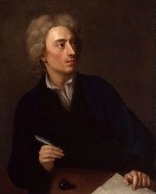
Alexander Pope, Translator

Alexander Pope

“All nature is but art, unknown to thee;
All chance, direction, which thou canst not see;
All discord, harmony not understood;
All partial evil, universal good.
And, spite of pride, in erring reason’s spite,
One truth is clear, ‘Whatever is, is right.”

― Alexander PopeAn Essay on Man

Alexander Pope (May 21, 1688 – May 30, 1744) was an 18th-century English poet. He is best known for his satirical verse and for his translation of Homer, and he is also famous for his use of the heroic couplet. Wikipedia

Ubuntu: I am because you are

This is the truth taught to us in an old South African principle, ubuntu, or ‘A person is a person through other persons.’ As Archbishop Desmond Tutu describes this perspective, ubuntu ‘is not, “I think therefore I am.” It says rather: “I am a human because I belong. I participate. I share.”’ In essence, I am because you are.

Desmond Mpilo Tutu (born October 7, 1931) is a South African anti-apartheid and social rights activist, as well as an Anglican clergyman and theologian. He was the first black Archbishop of Cape Town and bishop of the Church of the Province of Southern Africa. Wikipedia

Consciousness, spirituality, biography, sexuality, androgyny, futurism, space, the arts, science, astrology, democracy, humor, books, movies and more