
“Comedy has consequences”

Leonard Bernstein’s Symphony No. 3 – Kaddish
Live-streamed on Monday, 23 March 2015 from The Henry Crown Hall, Jerusalem
A memorial concert in honor of David Azrieli
Second half of the concert was dedicated to Bernstein’s Kadish.
Conductor – Steven Mercurio
Soprano – Sharon Azrieli
Anchor – Richard Dreyfuss
The Jerusalem Oratorio Chamber Choir
Kate Belshé, conductor
The Ankor Choir of The Jerusalem Academy of Music and Dance
Dafna Ben Yohanan, conductor
The Tel Aviv Philharmonic Choir
Leonti Wolf, conductor
Shahar Choir, Rehovot
Gila Brill, conductor
The Work – Official Trailer
Published on Aug 10, 2017
The Work is out in cinemas and on demand now.
https://theworkmovie.com
Set entirely inside Folsom State Prison, The Work follows 3 men during 4 days of intensive group therapy with convicts, revealing an intimate and powerful portrait of authentic human transformation that transcends what we think of as rehabilitation.
https://www.facebook.com/theworkmovie/
https://twitter.com/theworkmovie
The History of our World in 18 Minutes
Katie Lee, Folk Singer Who Fought to Protect a Canyon, Dies at 98

The folk singer Katie Lee, a passionate defender of Glen Canyon in Northern Arizona, in an undated photo. CreditCline Library/Northern Arizona University
Katie Lee, a free-spirited folk singer who found her mission as a performer and writer protesting the loss of Glen Canyon’s spectacular beauty to a dam on the Colorado River, died on Nov. 1 at her home in Jerome, Ariz. She was 98.
Her death was confirmed by Kathleen Williamson, the executor of her will.
“Rivers are the lifeblood of our planet and they need to flow,” Ms. Lee said in “Kickass Katie Lee” (2016), a short biographical film by Beth and George Gage. “They don’t need to be dammed every 15 feet.”
Eloquent and blissfully profane, Ms. Lee joined conservationists like David Brower, executive director of the Sierra Club, and the writer Edward Abbey to try to stop construction of the 710-foot-high Glen Canyon Dam in Northern Arizona, which opened in 1963. She became part of the chorus of environmentalists that ever since has demanded that the canyon be restored.
The only impediment to her blowing up the dam, she would say, was that she did not know how.
Her enchantment with Glen Canyon began in 1953 during a visit with friends and continued when she became a river runner. She adored its rapids, and the breezes that she said sounded like voices speaking to her. She swam nude in its potholes and waterfalls. She explored its 125 contoured side canyons, each of them named (some by her), and each one a different aesthetic experience.
“When they drowned that place, they drowned my whole guts,” she said in an interview in 2010 at Telluride MountainFilm, a documentary festival. “And I will never forgive the bastards. May they rot in hell.”
Her anger at the federal government, in particular the Bureau of Reclamation, which built the Glen Canyon Dam, fueled her music and made her a magnet for filmmakers. In her ballads, she sang about rivers and boatmen. In her protest songs, she rebuked dam builders.
In “Colorado River Songs,” an album she released in 1964, she pilloried the Bureau of Reclamation.

Three jeers for the Wreck-the-Nation Bureau
Freeloaders with souls so pure-o
Wiped out the good Lord’s work in six short years.
Eric Balken, executive director of the nonprofit Glen Canyon Institute, said that Ms. Lee was an important part of the environmental movement to the end of her life.
“She converted her passion for the canyon into fiery opposition to the Glen Canyon Dam,” Mr. Balken said in a telephone interview. “She conveyed the canyon’s beauty and essence to so many people nationwide.”
She was often referred to as “the Desert Goddess of Glen Canyon.”
Once the dam was built, she did not return to Glen Canyon. The loss was too great.
“What’s left of my rivers, what’s left of me,” she said when she was 96. “We’re probably going to go together.”
Kathryn Louise Lee was born on Oct. 23, 1919, in Aledo, Ill. Her family moved to Tucson when she was three months old, and she grew up loving the desert. Her father, Zanna, was an architect and homebuilder; her mother, the former Ruth Detwiler, was a decorator. Her mother pushed her to play the piano. Her father taught her to hunt rabbit and quail with a Remington shotgun.

Earning the lead in a high school play called “The Patsy” made her feel as if the stage were her living room. “Wow! This is where I belong!” she recalled thinking in 2008 in an oral history interview for the Cline Library at Northern Arizona University. “I knew every line of the play, I knew exactly what to do, and I was fine.”
That early acting experience led her to study drama at the University of Arizona. She went on to have a modest career as an actress that included roles on radio shows like “The Great Gildersleeve” and “The Railroad Hour,” a music series starring the singer Gordon MacRae.
She found greater acclaim as a folk singer, developing friendships with stars like Burl Ives, Josh White and Ramblin’ Jack Elliott. Mr. Ives praised her once by saying, “The best cowboy singer I know is a girl — Katie Lee.” Her repertoire was traditional for folk singers in the 1950s: songs about outlaws and murder, love and hate, cowboys, labor, poverty, injustice and politics.
But the planning for the dam on Glen Canyon gave her a particularly strong motivatation to sing.
“My river was about to be unjustly dammed … politically dammed,” she wrote in “All My Rivers Are Gone” (1998), one of several books she wrote about Glen Canyon. “Songs about my river! Songs of protest! Folk songs. Holy Mother!”
She added: “I had a cause! A cause that didn’t center on me-me-me: one that asked nothing of me, really, yet was far from mute. I’d never had a cause before, but now there was a place, almost a person, that needed my help.”
She did not sing only folk or protest songs. She recorded humorous songs about psychoanalysis on the 1957 album “Songs of Couch and Consultation.” With lyrics by the jazz saxophonist Bud Freeman and music by Leon Prober, the album became a hit in England and the songs became a popular element of her act. She had initially rejected Mr. Freeman’s suggestion that she record the songs but reconsidered after listening to his demo tapes on her way back from a trip to the Colorado River.

“The tunes were catchy,” she told The Arizona Republic in 1960, “so I thought, ‘Why not?’ ”
In “Stay as Sick as You Are,” she sang:
I love your streak of cruelty
Your psychopathic lies
The homicidal tendencies
Shining in your eyes.
She continued to sing about cowboys, rivers and canyons. She recorded the album “Love’s Little Sisters” in 1975 at a studio on the ranch owned by the Grateful Dead drummer Mickey Hart in Novato, Calif. At the time, Mr. Hart was living and working with Jerilyn Lee Brandelius, Ms. Lee’s stepdaughter.
Last month, at a party for her 98th birthday, Ms. Lee performed her composition “Song of the Boatman.” Holding a birthday card, she sang:
Today I know your magic call
Will lead me back to the canyon wall.
And the music in your rapids roar
Make this boatman’s song from his soul outpour.
In addition to Ms. Brandelius, Ms. Lee is survived by her son, Ronald Eld; another stepdaughter, Susie Brandelius; and two stepsons, Ken and John Brandelius.
Her longtime partner, Joey van Leeuwen, whom she met on a trip to Australia in 1979, committed suicide one day after her death, Ms. Williamson said. Mr. van Leeuwen, who filled their house with his wood carvings of birds, worried about what would happen to him if Ms. Lee died first. In “Kickass Katie Lee,” he said, “I would have a terrible life on my own.”
Ms. Lee was married at least twice. She was divorced from Eugene Busch Jr., a businessman, and became a widow after the death of Edwin C. Brandelius Jr., a racecar driver and track announcer.
Ms. Lee recalled in “All My Rivers Are Gone” that while on a trip to Glen Canyon in 1957, a year after the first dynamite blast that initiated construction of the dam, she took a break from lunch, stared at the river and talked to the water.
“I feel betrayed,” she said. “Homo sapiens! Greedy pathetic fools with a genetic mania to destroy all the sanctuaries that feed their souls. Well, hell, I don’t give a damn if we’re blotted out. I don’t want to be a part of the human race when I see the pimps in government and the whores who do their bidding. I’d rather be a coyote.”
Scorpio New Moon, Nov. 18, 2017 (27 degrees) 3:42 am PST

In the darkness of this Scorpio New Moon, we renew our commitment to life. The Tibetan Book of Living and Dying, by Sogyl Rinpoche, teaches the philosophy of living well to die well. This quote from the book, “Death is a mirror in which the entire meaning of life is reflected”, shows us that we are living our lives in hopes of employing the discipline to live life with intention to then die in peace, free of regret.
This Scorpio time of year, with the onset of winter, reminds us of our own mortality. Scorpio is the sign most deeply connected to Spirit and the other realms. Its message is death and rebirth. Like its glyph, the phoenix, Scorpio raises anew from the ashes, as does our world from the winter. Plunging into the depths of Scorpio water can be scary. As a water sign, Scorpio lives in the realm of emotion, and we can discover our truth by delving into our emotional depths. Scorpio teaches that moving toward discomfort is an awakening. Facing what scares us, to embrace what has been hidden, is the Scorpio path of transformation. What areas of your life needs renewal? It can be any area of life where we feel stuck or stagnant. Wherever emotions have stopped moving could be a sign of trouble spots. Scorpio also deals with secrets and hidden things. Don’t be surprised if you spot your own shadow in the mirror of others which can be intensely uncomfortable. Avoid being triggered, by always looking within, to find the source of the upset.
This New Moon is in hard aspect to Uranus in Aries, continuing the Uranian theme of being shaken up and out of our comfort zones. This is the perfect time to interrupt habitual patterns of reacting and defending. Remember, the best defense is defenselessness.
Mars and Pluto, the rulers of Scorpio, are moving into a challenging square. This has everything to do with power. Are you using your power wisely? When you feel insecure and powerless are you getting caught up in defensiveness, competition and struggle. Or, are you playing the victim? Noticing and working to improve your habitual response patterns are supported at this time.
Written by Wendy Cicchetti
PLAN YOUR OWN NEW MOON CEREMONY. Give yourself some quiet time in meditation to see where you need to seed new ways of becoming. List these areas within your life you want to change. What areas do you want to break free from the norm and become more productive and discerning? The NEW MOON is the time to manifest the personal attributes you want to cultivate as well as the tangible things you want to bring to you. Possible phrasing: I now manifest ____ into my life. I am now _______ . Remember, think, envision and feel with as much emotion as possible, as though you already have what you want. Thoughts are things and the brain manifests exactly what you show it in the form of thoughts, visuals and emotions. The Buddha said, and I am paraphrasing, “We are the sum total of our thoughts up to today. ” If we want to be different then we must change our thoughts. “If you always do what you’ve always done then you’ll always get what you’ve always got.” CONSCIOUS CHANGE is the key.
New Moon November 18, 2017 ~ Silent Night by Darkstar Astrology
Darkstar Astrology
Published on Nov 11, 2017
The New Moon In Scorpio looks at childhood wounds, remembering the ancestors, esoteric Christianity and briefly how astrology falls into the political compass test. The written version of this New Moon is found here: http://darkstarastrology.com/new-moon…
2018 Horoscopes! : http://darkstarastrology.com/2018-hor…
The Stepford Wives: a fictional discussion of robotics
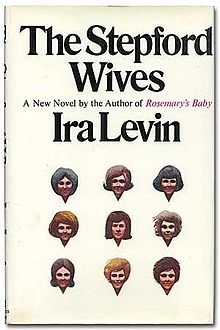
The Stepford Wives is a 1972 satirical thriller novel by Ira Levin. The story concerns Joanna Eberhart, a photographerand young mother who begins to suspect that the frighteningly submissive housewives in her new idyllic Connecticutneighborhood may be robots created by their husbands.
The book has had two feature film adaptations, both using the same title as the novel: the critically acclaimed 1975 version, and the critically panned 2004 remake. Edgar J. Scherick produced the 1975 version, as well as all three of the made-for-television sequels. Scherick was posthumously credited as producer on the 2004 remake.
In a March 27, 2007 letter to The New York Times, Levin said that he based the town of Stepford on Wilton, Connecticut, where he lived in the 1960s. Wilton is a “step” from Stamford, a major city lying 15 miles away.[1]
Plot
The premise involves the married men of the fictional town of Stepford, Connecticut and their fawning, submissive, impossibly beautiful wives. The protagonist is Joanna Eberhart, a talented photographer newly arrived from New York City with her husband and children, eager to start a new life. As time goes on, she becomes increasingly disturbed by the zombie-like, submissive wives of Stepford, especially when she sees her once independent-minded friends, fellow new arrivals to Stepford, turn into mindless, docile housewives overnight. Her husband, who seems to be spending more and more time at meetings of the local men’s association, mocks her fears.
As the story progresses, Joanna becomes convinced that the wives of Stepford are being poisoned or brainwashed into submission by the men’s club. She visits the library and researches the pasts of Stepford’s wives, discovering that some of the women were once feminist activists and very successful professionals and that the leader of the men’s club is a former Disney engineer and others are artists and scientists, capable of creating lifelike robots. Her friend Bobbie helps her investigate, going so far as to write to the Environmental Protection Agency (EPA) to inquire about possible toxins in Stepford. However, eventually, Bobbie is also transformed into a docile housewife and has no interest in her previous activities.
At the end of the novel, Joanna decides to flee Stepford but when she gets home she finds that her children have been taken. She asks her husband to let her leave but he takes her car keys. She manages to escape from the house on foot and several of the men’s club members track her down. They corner her in the woods, and she accuses them of creating robots out of the town’s women. The men deny the accusation and ask Joanna if she would believe them if she saw one of the other women bleed. Joanna agrees to this, and they take her to Bobbie’s house. Bobbie’s husband and son are upstairs, with loud rock music playing as if to cover screams. The scene ends as Bobbie brandishes a knife at her former friend.
In the story’s epilogue, Joanna has become another Stepford wife gliding through the local supermarket, having given up her career as a photographer, while Ruthanne (a new resident in Stepford) appears poised to become the conspiracy’s next victim.
Adaptations
In 1975, the book was adapted into a science fiction thriller directed by Bryan Forbes with a screenplay by William Goldman and starring Katharine Ross, Paula Prentiss, Peter Masterson and Tina Louise. While the script emphasis is on gender conflict and the sterility of suburban living, and thus the science fiction elements are only lightly explored, the movie still makes it much clearer than the book that the women are being replaced by some form of robot. Goldman’s treatment of the book differed from that of Forbes, with the robots closer to an idealized Playboy Bunny; it has been claimed that the look was scrapped when Forbes’ actress wife Nanette Newman was cast as one of the town residents.[2]
A 1980 made-for-television sequel was titled Revenge of the Stepford Wives. In this film, instead of being androids, the wives underwent a brainwashing procedure and then took pills that keep them hypnotized. In the end the wives broke free of their conditioning and a mob of them killed the mastermind behind the conspiracy.
In a 1987 made-for-television sequel/remake called The Stepford Children, both the wives and the children of the male residents were replaced by drones. It ended with the members of the conspiracy being killed.
A 1996 version called The Stepford Husbands was made as a third television movie with the gender roles reversed and the men in the town being brainwashed by a female clinic director into being perfect husbands.
A largely panned[3][4][5][6] remake of the original The Stepford Wives was released in 2004. It was directed by Frank Oz and featured Nicole Kidman, Bette Midler, Matthew Broderick, Christopher Walken, Roger Bart, Faith Hill, Glenn Close and Jon Lovitz. It was intended to be more comedic than previous versions. The new script by screenwriter Paul Rudnick featured several other changes, most importantly the almost complete erasure of the powerful feminist message of the original film, culminating in a role reversal in which it is the powerful woman (played by Glenn Close) who is the evil mastermind of the injustice perpetrated on other women and featuring a Stepford-drone replacement for the male partner of a gay town resident.
Both versions were filmed in various towns in Fairfield County, Connecticut, including Redding, Westport, Darien, New Canaan, Wilton and Norwalk. The 1975 version had several locations in the Greenfield Hill section of Fairfield, including the Eberharts’ house and the Greenfield Hill Congregational Church. Additional scenes from the 2004 movie were filmed in Bedminster, New Jersey, with extras from surrounding communities.
In language
“Stepford wife”
The term “Stepford wife” entered common use in the English language after the publication of Levin’s book and it is generally used as a term of satire which refers to a submissive and docile wife who seems to conform blindly to the stereotype of an old-fashioned subservient role in relationship to her husband, compared to other, presumably more independent women. It is sometimes used in reference to any woman, even an accomplished professional woman, who had subordinated her life and/or career to her husband’s interests and who affected submission and devotion to him even in the face of the husband’s public problems and disgrace.
It can also be used to criticise any person, male or female, who submits meekly to authority and/or abuse; or even to describe someone who lives in a robotic, conformist manner without giving offense to anyone.
Hollywood Removes Statue Of Louis B. Mayer Beckoning Judy Garland To Sit On His Lap

LOS ANGELES—In response to recent sexual misconduct allegations against prominent figures in the industry, Hollywood officials reportedly ordered Thursday the removal of a controversial statue depicting Louis B. Mayer beckoning the actress Judy Garland to sit on his lap. “Hollywood is proud of its history, but unfortunately, this statue no longer coincides with the principles that we as an industry would like to represent,” said Hollywood Chamber of Commerce chair Arnold Slavens, adding that the statue featuring the famed film producer and MGM studio executive lasciviously gesturing to the young, concerned-looking starlet to sit on his open knee would be taken down later this afternoon. “Like the famous Hollywood sign or the stars on the Walk of Fame, this statue was a proud, popular symbol for the film industry. For a long time, when people thought of Hollywood, they immediately thought of a powerful male figure sexually preying on the vulnerable. We think times have changed.” Slavens added that the committee was already planning on replacing the statue with an equally impressive monument celebrating Hollywood’s strong tradition of forcing aging actresses out of the industry.