


A couple years ago I was in Telluride, waiting around for a talk to begin at the Nugget Theater downtown. I was talking to Lucy, the woman who has owned the 186-seat theater for the last 20 years. In thinking about that small mountain town rich with mining history, I sensed that those walls had seen more characters than just those featured in the infamous film festival movies. I asked her if the place was haunted. “No,” she replied with a smile. “But the staff shirts do say ‘behind you in the dark.’”
This came to mind as I was thinking about shadow and leadership. The shadow is often referred to as a black bag that you drag behind yourself, filled with all the things that you haven’t been able to consciously look at for a variety of reasons: You weren’t ready to, you couldn’t, it was too much, etc. And yet, wherever you go, there it is: behind you in the dark.
Ah, shadow.
Years ago before I began a deep dive with my first coach and mentor, she asked me:
“Are you willing to look at the shadow-side of you? The part of you that doesn’t want you to do all that you aspire to do? Are you willing to see, listen to and look directly at anything in you that is wanting to hold you back? And, what might be the greatest potential gift in doing that?”
I had little idea what this meant. The thought of looking at something I hadn’t even known about seemed terrifying, quite honestly. Thinking about it felt like this image from Tim Burton’s sketches.

An illustration from Tim Burton’s 1982 film “Vincent.”
At that point, my mind raced a bit: Why hadn’t I seen this shadow thing before? What was I going to find? Looking at this seemingly terrifying, potent dark thing was going to be a gift? What the… ?!
She explained that shadow was that part of us that said: “It’s better to be small and inauthentic than emotionally crushed.” It’s the part of us that wants to keep us safe. The greatest potential gift of looking at that square in the face still seemed to me a bit like eating an entire box of Cracker Jacks only to be left with a gut ache and a lame-ass prize. But I trusted her, and my nighttime vision, and therein began the exploration of the dark.
The dark side wasn’t as terrifying as part of me had imagined. I met and got re-acquainted with stuff from childhood — happenings that my little self tried to make sense of and those young reasonings that were still running in the background cycles of my experience, which created a current sense of reality for myself that was operating from an old map. And that old map was projecting old things that were not going to get me where I aspired to be, and in fact were getting in the way.
“Shadow Work is consciousness-seeking,” writes David Kantor in his book My Lover, Myself:
“It is a descent into the underworld in search of the dark side of the soul for the purpose of bringing our shadows back up into the light of day where we may come to know them and reconnect with them. Our shadows are a projection of reality rather than reality itself. The problem with our shadows is not that we have them, but that we deny their presence. When we continue to suppress our shadows, they overwhelm our sense of reality so that we come to believe that their voices are the ultimate truth. […] Once we become aware of our shadows we start to understand how subjective our view of reality really is.”
This is the importance of shadow work: If we don’t work on our stuff, our stuff will work on us. It will work on us while even our best intentions are to have an amazing life. And it will show up everywhere projecting its own reality in front of us like a bad movie — or perhaps recurring situations you keep finding yourself in — until it is brought to light. Once we see it — and learn how it operates — we can recognize it when it shows up.
Reclaiming what’s in shadow brings those pieces of you back into wholeness. It allows you to see the projection and walk out of that theater into your more dimensional life. It allows you to harness your potential more effectively. Embracing what’s shadowed helps you find a tender love for yourself, warts and all.
I found more clarity, like I was shifting from a fragmented camera obscura projection of reality to the direct experience in the dimensions of embodied life. More of my resources showed up for myself, my work, my relationships, my play since the old maps of distorted images stopped running as background cycles. With that energy freed up, I found a refreshing and renewed sense of life itself.
“How you choose to interact with the opposing forces within you will determine your life. Starve one or the other or guide them both,” recounts an old Cherokee story. Learning to work with shadow could be one of the most liberating things you can choose to be conscious about, in your relationships with yourself, your work, intimate relationships, and living more fully in alignment with your purpose.
Know what the beautiful part is? When it comes to shadow work, your medicine is always right in front of you: What you’re creating is telling you something potent about how your shadow side may be showing up for you. It’s good to get curious, look awry, and wonder what’s playing on the screen from behind you in the dark.
This interview with Parker Palmer, I hope, shines more light on the shadow side — specifically how it shows up in leadership and why it’s an important piece of self-inquiry for anyone who works with humans.

Ta-Nehisi Coates is a poetic journalist and a defining voice of our times. He’s with us in a conversation that is joyful and hard and kind, soaring and down-to-earth all at once. He spoke with Krista as part of the 2017 Chicago Humanities Festival before an audience of over 1,500 people, black and white, young and old. To a teacher in the audience who asks how to speak to the young now about the complexity of our world, he says, “Give me the tools. Arm me. Allow me to be able to understand why. That’s not hope, but I think that’s the sort of perspective I would’ve come from, at that age.

is a national correspondent for The Atlantic. His books include The Beautiful Struggle: A Memoir, Between the World and Me, and most recently, We Were Eight Years in Power: An American Tragedy.
Translators: Ben Gilberti, Calvin Harris, Ned Henry, Alex Gambeau, Heather Williams
Sense Testimony: Persons want Power over the Other
Conclusions:
Watch the music video for “A Diagnosis”, then watch full episodes of Crazy Ex-Girlfriend FREE on The CW App: http://go.cwtv.com/genCXGyt
SUBSCRIBE: http://go.cwtv.com/YTSubscribe
About CRAZY EX-GIRLFRIEND:
Rebecca Bunch is a successful, driven, and possibly crazy young woman who impulsively gives up everything – her partnership at a prestigious law firm and her upscale apartment in Manhattan – in a desperate attempt to find love and happiness in that exotic hotbed of romance and adventure: suburban West Covina, CA.
The Dover Quartet plays the masterpiece by Samuel Barber in its original form, from the composer’s String Quartet Op. 11. The piece is primarily known in its version for string orchestra, which is also incredibly powerful- the quartet version, however, lends a sense of intimacy and vulnerability to the work that is truly unique.
Follow our weird and fun Facebook page: https://www.facebook.com/DoverQuartet/
Website: doverquartet.com
This is, in short, a scientific theory that our universe is in fact in a false phase state as part of a bigger universe, like if it were a momentary thing (think the actual universe is a vessel of boiling water, and we are just within a bubble developing at the bottom of the pot). Ultimately though that false vacuum has to pop, even after billions of years in this false state and we and everything we know in our observable universe will vanish in an instant with no warning whatsoever and there is nothing you can do about it.

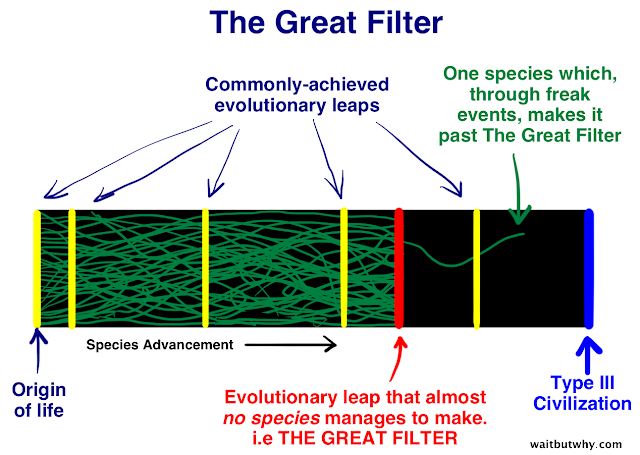
It’s a theory about why the cosmos appears to be filled with potential for life and yet we have not discovered it. It says that somewhere amid pre-life and an advanced civilization that is able to colonize the stars, there is a Great Filter that stops them and ends life. This means we fit into one of these three situations:
The brain in a vat is an element used in a range of thought experiments projected to draw out certain features of our thoughts of knowledge, reality, truth, mind, and meaning. It assumes the following:
The point is that you could be a brain in a jar, being fed false impulses for your whole life by an external source, or you (still a brain in a vat) could be hallucinating your whole life from lack of stimuli.

Visualize if there was a 2D person. If you gaze at them in a specific way, they can’t see you. All you have to do is look from a top view and they would not know you are there, and they would never know. Living their life as 2D, they would never be capable of comprehending how something could be viewing down on them.
Now visualize a 4D person. They could be observing you from a 4-dimensional angle, an angle that you will never comprehend. They could be right alongside you, but you would not know, and you would never know. Just as we could interact with the 2D person, the 4D person could interact with us. But as long as they do not want us to, we could never interrelate with them or not even know of them.

Let’s say we there is an ant hill in the mid of the forest. And right next to the ant hill, we are constructing a ten-lane super-highway. And the question is “Would the ants be capable of comprehending what a ten-lane super-highway is? Would the ants be capable of comprehending the technology and the purposes of the beings constructing the highway next to them?
So it is not that we cannot pick up the signals from Planet X using our technology, it is that we cannot even understand what the beings from Planet X are or what they are trying to do. It is so beyond us that even if they actually wanted to educate us, it would be like trying to teach ants about the internet.
When Pizarro entered into Peru, did he stop for a while at an anthill to attempt to communicate? Was he generous, trying to help the ants in the anthill? Did he become aggressive and slow his original mission down in order to smash the anthill apart? Or was the anthill of complete and utter and eternal insignificance to Pizarro? That might be our condition here.
Roko’s basilisk is a proposal that states an all-powerful artificial intelligence from the future may retroactively punish those who did not contribute in bringing about its existence. It looks like a futurist form of Pascal’s wager; an argument proposing that people should take into account specific singularitarian ideas, or even donate money, by weighing up the view of punishment versus reward. Additionally, the proposition states that only knowing about it incurs the risk of punishment (Now you know about it. You know who to thank while you will be tortured). It is also mixed with an ontological argument, to propose this is even a reasonable threat.

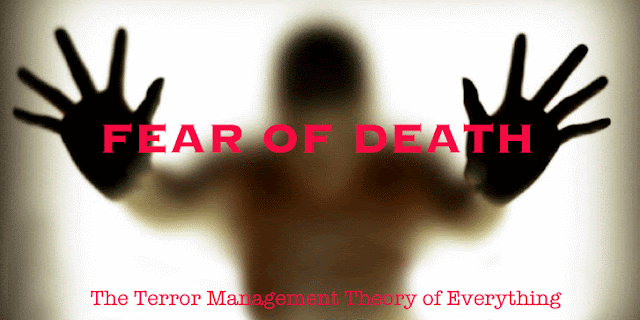
Everything that humankind has ever achieved other than basic survival has been driven by a basic and irreducible fear of non-existence. Our conception of self and self-esteem normally is a buffer against the anxiety that comes with knowing that we will cease to be. Culture is just a massively shared illusion to mitigate our fear of the unknown and eventually of death. Thus we want to visualize certain works of art as timeless or to place value in family lines and offspring, to project ourselves beyond death. We take ease in our value systems and the structures that arise from them, whether that’s through conceptions of biological kinship, national/ political identity, religious faith, etc.
This includes belief in the inherent value of safeguarding the future of humanity by scientific development. Indeed much of modern western life is devoted to the escaping of death, the various euphemisms and stock phrases in mourning, the whole funeral home industry that serves to remove death from the ordinary course of life, from the home and onto the embalming table or into the crematorium. We build up the artifice to evade the brutal truth. In short, everything that we have ever done and will ever do is driven by nothing more than our existential terror in challenging death.
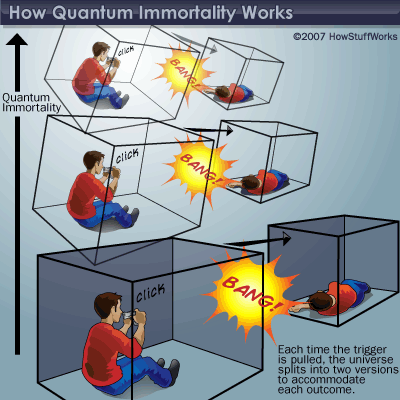
A man sits down before a gun, which is pointed at his head. This is no regular gun; it’s assembled with a machine that calculates the spin of a quantum particle. Each time the trigger is pulled, the spin of the quantum particle — or quark — is calculated. Depending on the measurement, the gun will either fire, or it won’t. If the quantum particle is observed as spinning in a clockwise motion, the gun will fire. If the quark is spinning counterclockwise, the gun won’t go off. There will only be a click.
Anxiously, the man takes a breath and pulls the trigger. The gun clicks. He pulls the trigger again. Click. And again: click. The man will continue to pull the trigger again and again with the same outcome: The gun will not fire. However it is working properly and loaded with bullets, no matter how many times he pulls the trigger, the gun will never fire. He will continue this process for eternity, becoming immortal.
Go back in time to the start of the experiment. The man pulls the trigger for the very first time, and the quark is now measured as spinning clockwise. The gun fires and the man die.
But, wait. The man already pulled the trigger the first time — and an infinite amount of times following that — and we by this time know the gun did not fire. How can the man be dead? The man is unaware, but he is both alive and dead. Each time he pulls the trigger, the cosmos is split in two. It will carry on splitting, again and again, each time the trigger is pulled. This thought experiment is named quantum suicide.
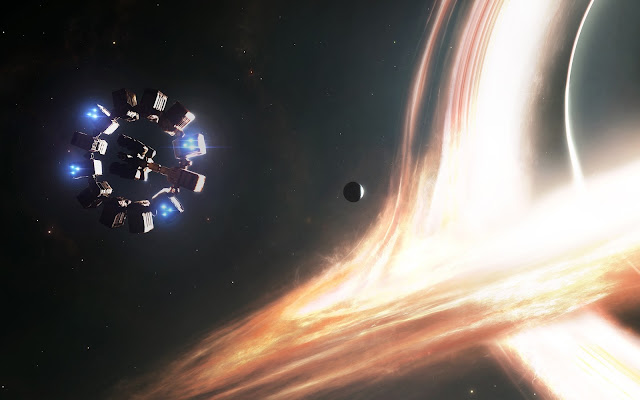
The hypothesis suggests that once civilizations saturate their local area of space with their intelligence, reach microscopic technological singularity, construct a black hole and leave our visible, macroscopic cosmos in order to carry on the exponential growth of complexity and intelligence, and vanish from this universe, thus clarifying the Fermi Paradox. Developments in astrobiology make this a testable hypothesis. It suggests space, time, energy and matter compression, as a driver of accelerating change, which must lead cosmic intelligence to a future of highly-miniaturized, accelerated, and local “transcension” to extra-universal domains, rather than to space-faring expansion within our current universe.
We are at present living through what many biologists consider to be the sixth mass extinction that the world has ever experienced. This is going to be a stimulating puzzle for the species that comes after us. It was not until around the year 1800 that humanity touched a population of 1 billion after thousands and thousands of years. In the 215 years since then, the world population has raised to ~7.2 Billion. That exponential growth has very big and long lasting negative effects on our planet, and will continue to do so until we reach carrying capacity or die off.
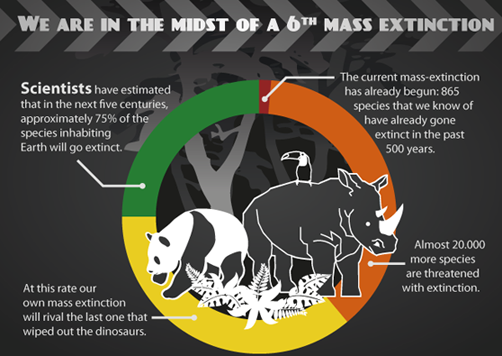
~ http://www.sci-techuniverse.com/2015/09/10-scriest-theories-known-to-man.html

November 13, 2017 (SFChronicle.com)
The conversation continues.
In bars, at dinner tables and parties, in line for coffee.
People are angry, interested, offended, supportive, intrigued, irritated.
But–in one form or another–the conversation continues. The one that Colin Kaepernick started 16 months ago.
On Monday, Kaepernick was named GQ magazine’s “Citizen of the Year.” Which meant that his face, his cause, his exclusion from the NFL–his now-iconic image that I’m quite sure will last far into this century as a recognizable symbol for peaceful protest–was back in the news.
Kevin Durant was also recognized by GQ as its “Champion of the Year.” On Monday, the Warrior’s forward said he was honored to share the magazine with Kaepernick.
“He started a conversation that was needed in this country,” Durant said. “He knew he would take a lot of heat for what he did. He stood up for people who can’t stand up for themselves.
“As athletes, we’re taught to kind of shut up and play our sport,” Durant added. “He put everything on the line. You’ve got to respect it. We all stand behind him as athletes. He makes us proud to be part of the athletic community.”
Durant’s comments came two days after his teammate Stephen Curry posted a thoughtful piece on the Players’ Tribune, timed for Veterans Day. Entitled “The Noise,” Curry wrote about what it means to have a platform. What it means to accuse peaceful protestors of “disrespecting the military.”
“Every single veteran I’ve spoken to, they’ve all said pretty much the exact same thing: That this conversation we’ve started to have in the world of sports . . . whether it’s been Colin kneeling, or entire NFL teams finding their own ways to show unity, or me saying that I didn’t want to go to the White House–it’s the opposite of disrespectful to them,” Curry wrote.
“A lot of them have said that even if they can’t totally agree with every position of every person, this is exactly the thing that they fought to preserve: the freedom of every American to express our struggles, our fears, our frustrations and our dreams for a more equal society.”
Curry went on to plea for real help for veterans, not just “thank you for your service.”
“If i’m going to use my platform, I don’t want to just be noise. I want to use it to talk about real issues that are affecting real people.”
A proposed Veterans Day weekend boycott o the NFL, by people offended by protests, didn’t materialize. But neither has a follow-up meeting between the NFL and involved players, including Kaepernick. Meanwhile, bad quarterbacking continues to derail once-promising teams. And Kaepernick remains out of work.
Kaepernick chose not to be interviewed by GQ. He wanted to participate in the magazine piece in order to–according to the editors–“reclaim the narrative of his protest” that he feels has been hijacked by those with political agendas. Kaepenick didn’t add his voice to “the noise” about which Curry wrote.
People want him to speak but, for now, his silence has been powerful. No one can twist his words or criticize his statements, or turn them into GIFs or memes on social media.
His actions have spoken loudly, as he continues to support–through money and actions–groups that serve the disenfranchised. His inability to get a job speaks even more loudly.
Instead, others spoke to GQ about him. Filmmaker Ava DuVernay wrote, “Look at this brother–he’s doing better than any of us would’ve done. A lot better. With a lot more elegance.” Rapper J.Cole said “he sacrificed his career.”
Ameer Hasan Loggins wrote about how Kaepernick came to his class at Cal, with his “little notebook and pencil,” driving up from San Jose to attend every week.
“We’ve decided the conversation leans on ‘Does Colin want to be an activist, or does he want to be an athlete?'” Loggins wrote. “As if the two cannot happen simultaneously. You can care about people and play sports. Athletes do it all the time. The problem is that his particular activism was toward the cause of blackness. That’s what he’s being ostracized for.”
Civil-rights activist Harry Belafonte also was included i the piece.
“Not being ‘political” is not a solution,” Belafonte wrote. “Any young person who takes that position would have to ask Muhammad Ali and Jackie Robinson and so many of us if we had anything at stake.”
Kaepernick’s former 49ers teammate, Eric Reid, also had a voice.
“These issues are real,” he said. “And people know they’re real. But some will do anything to distract from that, to change the narrative, and it’s gotten Colin blackballed from the NFL.
“The Bible talks very explicitly in Proverbs about being the voice of the voiceless and speaking up for the vulnerable. Another version is: ‘Faith without works is dead.’ I guess selfishly I’m trying to get to heaven.”
Kaepernick has been the voice the voiceless. He doesn’t have to say a word, and yet the conversation continues.

TRANSCRIPT
Krista Tippett, host: “And so we must imagine a new country.” These are words of the poet, journalist, prophet of our times: Ta-Nehisi Coates. This hour, he’s with us in a conversation that is joyful and hard and kind, direct and soaring and down-to-earth all at once.
I’m Krista Tippett, and this is On Being.
Continue reading “Imagining a New America” with Ta-Nehisi Coates →