William Blake’s quote “Eternity is in love with the productions of time” means that the timeless, infinite divine realm deeply values, cherishes, and seeks expression through the physical things humans create and experience within our limited lifetimes. [1, 2, 3]
Key Concepts in the Quote
Eternity: The permanent, endless, and timeless realm of the spirit or God. It does not change and has no clock.
Time: Our temporary physical world. It is marked by aging, limits, endings, and change.
Productions of Time: Everything we make, feel, and do while alive. This includes art, music, human struggles, love, and everyday actions. [1, 2, 3]
The Core Message
Fulfilling the Infinite: Blake flips the usual idea that heaven or eternity is perfect and our physical world is just trash. Instead, he says eternity needs our mortal world to truly feel and express itself. [1]
Meaning in the Finite: Because time has limits, everything we do matters deeply. A poem, a painting, or an act of kindness has real weight because it happens in a temporary life. [1]
Making the Temporary Last: When we put true passion and soul into our work, those mortal creations take on an eternal quality. They echo far beyond our own lives. [1]
William Blake was an English poet, painter and printmaker. Largely unrecognised during his life, Blake has become a seminal figure in the history of the poetry and visual art of the Romantic Age. Wikipedia
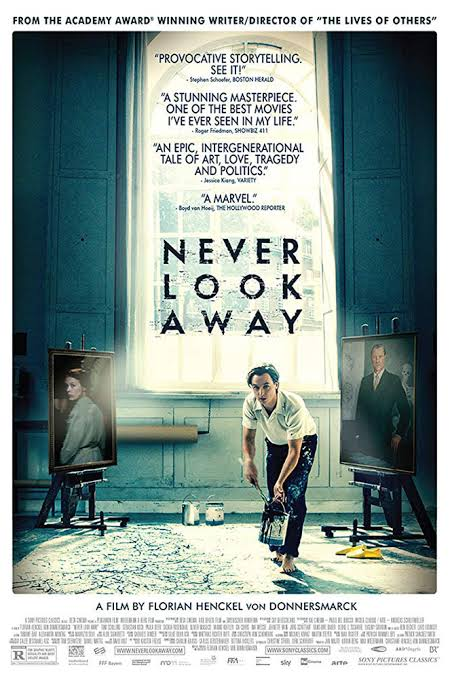
Paula Beer as Ellie Seeband: [She stops, taken aback by the question.]
Kurt: Do you love me? Otherwise… It doesn’t work… with me.
Ellie: [She doesn’t understand.]
Kurt: Otherwise it doesn’t work.
Ellie: I love you.
Kurt: [He becomes more passionate and aroused.] Really?
Ellie: Yes.
Later:
Oliver Masucci as Professor Antonius van Verten (Kurt’s art teacher): “I think, therefore I am”. Descartes had questioned everything. Everything. Everything could be an illusion, a trick, his imagination. But then he understood that something had provoked that very thought within him, and consequently something must exist… and that something he decided to call “myself”… But who are you? What are you?
New Thinking Allowed with Jeffrey Mishlove Aug 24, 2026 New Thinking Allowed Audio Podcast New Thinking Allowed CoHost, Emmy Vadnais, OTR/L, is a licensed occupational therapist, intuitive healer and coach, and spiritual guide based in St. Paul, Minnesota. Emmy is the founder of the Intuitive Connections and Holistic OT communities. She is the author of Intuitive Development: How to Trust Your Inner Knowing for Guidance With Relationships, Health, and Spirituality. She offers intuitive coaching to help individuals access their inner guidance for clarity, healing, and meaningful decision-making. Her website is https://emmyvadnais.com Here she offers a number of techniques and strategies for self-healing and distant healing of others. They include breathing exercises and visualization. She focuses on stress management, intuition development, and compassion for oneself and others.
New Thinking Allowed with Jeffrey Mishlove Aug 25, 2026 New Thinking Allowed Audio Podcast Joanna Kujawa, PhD, is a Polish-born author, scholar, and spiritual detective based in Australia. She is the author of The Other Goddess: Mary Magdalene and the Goddesses of Eros and Secret Knowledge, and Alien Goddess: UFOs, AI, and the Goddesses of Ascension. Her website is https://www.joannakujawa.com/ Joanna suggests that goddesses throughout history and within a variety of cultures and spiritual traditions are not only archetypal, but are real beings and reside in the interdimensional realm. She estimates that 90% of the feminine has been pushed aside by the masculine, impacting all genders in their consciousness. She offers ways for the feminine and masculine to be more in balance and provides how to embrace the goddesses’ holistic knowledge of intuition and their transformative powers of healing, love, and compassion to empower us all and create a better life, both individually and collectively. 00:00:00 Introduction 00:02:26 Goddess characteristics 00:08:49 Embodying the feminine 00:13:06 Types of goddesses 00:27:23 Goddess stories 00:46:29 Masculine and feminine balance 01:01:16 Demeter and the maiden well 01:08:15 The Eleusinian Mysteries 01:13:03 Unity consciousness, wisdom, and ascension 01:25:12 Conclusion New Thinking Allowed CoHost, Emmy Vadnais, OTR/L, is a licensed occupational therapist, intuitive healer and coach, and spiritual guide based in St. Paul, Minnesota. Emmy is the founder of the Intuitive Connections and Holistic OT communities. She is the author of Intuitive Development: How to Trust Your Inner Knowing for Guidance With Relationships, Health, and Spirituality. She offers intuitive coaching to help individuals access their inner guidance for clarity, healing, and meaningful decision-making. Her website is https://emmyvadnais.com (Recorded on June 26, 2026)
The great cruelty of life, and also its great mercy, is that only hindsight ever knows each last — the last time your lover put their hand on the small of your back, the last sip of the last cup at your favorite coffee shop before it vanished overnight, the last living note of your mother’s voice. Bittersweet or downright devastating, lasts are the currency of loss with which we pay the price for loving. They are the necessary losses that make us who we are, our training ground for mastering the art of losing by which we apprentice ourselves to love.
Great children’s books are works of philosophy in disguise — philosophy being, in Montaigne’s perfect definition, the art of learning to die, which is of course the key to learning to live, just as learning to lose is the key to learning to love. Odds and Ends (public library) by Finnish author and artist Maija Hurme is one such book — a tender illustrated catalogue of losses, from the everyday to the existential, that is at bottom a love letter to what we have, to the bittersweet knowledge that we have none of it for the keeping, calling to mind poet Lisel Mueller’s poignant line: “What exists, exists so that it can be lost and become precious.”
Taxonomized by type, there are the “late lasts” (“the last rays of the sun, spreading color across the sky”), the “hopeful lasts” (“the last migrating bird to arrive might still find a mate”), the “last chances” (“a lost toy is always found in the very last place you look”), the “lasts that are firsts” (a baby’s “last wobbly moment before she starts walking”), the “lingering lasts” (“watching the last snowflake of winter drift slowly and silently down”), the “lonely lasts” (“the last tree standing”).
Page after page we come to feel that we are rehearsing for the final act, the “very last last” that awaits every living thing.
Everything ends with a last: the very last thought, the very last breath, the very last heartbeat. And the very last goodbyes.
Pulsating beneath it all is an invitation to practice the art of letting go, which, paradoxically, is what allows us to go on living.
When we look up at the night sky, we see a star suddenly twinkle and then go out.
Maria tells me that this star died hundreds or millions of years ago, long before we were even born. The last rays of its light are reflected in our eyes.
“All things are so very uncertain, and that’s exactly what makes me feel reassured,” Tove Jansson wrote in one of our civilization’s great works of philosophy disguised as a children’s book. This is the paradox we live with: We crave certainty, only to discover over and over that it is a mirage, that the love of life is rooted in the courage of uncertainty — because certainty doesn’t allow for surprise, but everything we know of life is the product of the wildest bet that prevailed against the odds of otherwise so we may exist; because certainty thrives on clear category and neat classification, but the most meaningful experiences we have inhabit the liminal spaces between the common categories of what we can name.
NASA engineer Lisa Rosenberg offers a lovely ode to the life-force of uncertainty in the title poem from her altogether ravishing collection Weeds and Stars (public library) — the finest reverie of reality since Diane Ackerman’s The Planets: A Cosmic Pastoral, with the feeling-tone of Whitman’s Leaves of Grass and the sensibility of astronomer-poet Rebecca Elson’s A Responsibility to Awe:
WEEDS AND STARS by Lisa Rosenberg
Weeds and stars and everything between, from ocean dwellers to accretion disks — resilient, intact, or wholly fragmented — recall the transience of clouds.
The ocean dwellers and accretion disks, the finest river stones and faintest moons recall the transience of clouds, of harmonies at work in gorgeous noise.
The faintest moon, the finest river stone, the lucid silences at play in dreams find harmony at work in gorgeous noise. Let night and day be open quandaries
in play with silences and lucid dreams. Forget the cries for certainty, the heft of night and day and open quandaries, the pitch-perfected music of the spheres.
The case for certainty forgets the weft of wholes, of fragments and resiliency, imperfect music of imperfect spheres, the weediest of stars, the in-betweens.
In our yearning for certainty, we have tried to reduce the cosmos to clockwork, to side with probability over surprise, and yet again and again it is the break in the pattern, the chaos in the order, that creates the conditions for possibility. The most brutal benediction of life is that every experience is unrepeatable, every organism irreplicable, every existence a singular phenomenon that has never before occurred and will never again occur in the entire history and future of the universe — something Rosenberg channels in another poem from the book, reverencing the most poetic of numbers:
PRAISE ON PI DAY by Lisa Rosenberg
To praise the nonrepeating, I will praise the universe: each smooth circumference, each jagged fit and fractal-sculpted face of life and not-life. They’re everywhere you look.
The universe, each smooth circumference of our daily mess, won’t fit in simple bins of life and not-life. They’re everywhere and elsewhere, too. What surprises us is not
our daily mess, unfit for simple bins, but each repeated lesson learned anew and elsewhere, too. What surprises us is not that we forget, but that our learning shifts
with each repeated lesson learned anew. The aster blooms. The supernova cools. We might forget that all our learning shifts into the pupil of the coming day.
The aster blooms. The supernova cools its jagged fit and fractal-sculpted face into the pupil of a coming day where praise is nonrepeating, and we praise.
Adeline Virginia Woolf was an influential 20th century English novelist, essayist, biographer, and feminist. A pioneer of stream of consciousness narration, her innovations in narrative technique expanded the possibilities of the novel. Woolf’s work resonated with feminist movements in the 1970s and inspired adaptations like Michael Cunningham’s Pulitzer Prize-winning novel The Hours (1998). (Wikipedia.org)
Known for “The Rocky Horror Picture Show,” “Clue,” and more cult classics, the electric performer was a patron saint of the midnight movie whose seductive impact can never be forgotten.
The late Tim Curry in ‘The Rocky Horror Picture Show’ (1975)Courtesy Everett Collection
Tim Curry, the shape-shifting English thespian whose entertainment career never failed to defy industry expectations, has died at 80 years old, according to reports from multiple outlets. TMZ was first to report the news.
For audiences familiar with the transgressive thrill of repertory screenings, Curry was more than “just” an actor. An icon of cult cinema whose electric spirit never flickered, even when he was ailing in his final years, Curry was an undeniable force in acting whose ability to sell viewers on the seductive power of fearless spectacle is still unmatched. Whether Curry was strutting onstage live in fishnets and heels for “The Rocky Horror Show” on the West End — or purring through the musical’s perfectly calibrated film adaptation in movie theaters for decades after that — the man rarely missed.
To witness even a split second of a top-tier Curry performance means to almost instantly understand that a lived-in caricature can be both technically precise and strategically unhinged for an actor. Few artists have made that duality appear as natural as Curry, in part because so few scripts have dared to make that quality of camp he could deliver essential to their stories. From “Annie” (1982) to “Clue” (1985) to “The Three Musketeers” (1993), the wild energy that Curry brought to screens big and small should be remembered as a hallmark of titles not just worth watching once but combing for details.
Born April 19, 1946, in Grappenhall, England, Curry trained in drama at the University of Birmingham before sharpening his acting skills in theater. That traditional arts foundation never left Curry’s characteristically British approach to the craft. Even at his filmography’s most cinematic across film and TV, Curry retained an immediacy that recalled the high-risk potential of being on stage — as reflected in his Tony-nominated parts for “Amadeus,” “Spamalot,” and more.
Equal parts sexy and satire, “The Rocky Horror Picture Show” turned ritualized screening culture into an essential safe haven for theater-going weirdos that’s stood its ground for more than half a century. It’s well documented, but Curry’s singular contribution to the texture and mood of the genre filmmaking landscape around “Rocky Horror” cannot be overstated. Other performers have tried to replicate his command of audacious, boundary-pushing comedy, but few (if any) have succeeded.
After slowly changing the theatrical underworld as the king of midnight movies, Curry spent the rest of his acting career gleefully refusing to be pinned down. He was the embodiment of what happens when a classically trained performer with infinite talent decides typical taste is optional for his path through Hollywood, and any one Curry’s films is arguably worth reevaluating in the wake of his death.
In Ridley Scott’s “Legend” (1985), Curry disappeared under layers of prosthetics to deliver a demonic performance that’s so committed it became the epic fantasy film’s defining image. In the 1990 miniseries adaptation of Stephen King’s “It,” Curry used Pennywise the Dancing Clown as an avenue to redefine, intentionally or not, what serialized horror could even look like — doubling-down on the genre expertise in his earlier film adaptation of the boardgame “Clue.”
The cherished cult classic from 1985 is an ideal showcase for Curry’s impeccable physical humor and timing. As the ever-exasperated butler, Wadsworth, Curry guides the main characters and audience through an escalating experiment in choose-your-own absurdity that sees pure chaos choreographed. That palpable elasticity extended into Curry’s voice work for animation, unearthing another layer of the late actor’s otherworldly talent. Curry’s turn in Disney’s “Beauty and the Beast: The Enchanted Christmas” (1997) is an oddly vivid example that shouldn’t be missed if you’re even vaguely tempted to the possibility of this particular performer speaking for a villainous pipe organ named Maestro Forte.
Over the years, Curry was also the voice of Nigel on “The Wild Thornberrys,” Emperor Palpatine in “Star Wars: The Clone Wars,” and Hexxus in “FernGully: The Last Rainforest” (1992). Whether by Curry’s charismatic nature or through a perfectionist drive to study, the late artist understood how to expand almost any creative assignment. Curry was the rare actor to recognize that genre films rely as much on their gutsy style as they do performers earnestly engaging with outrageous universes around them through a proportionately grounded sense of play.
He also appeared in “Home Alone 2: Lost in New York” (1992), “Muppet Treasure Island” (1996), and more. Curry never condescended to material, but consistently elevated scripts by taking them seriously. That paradox is at the heart of why Curry’s work will always endure. It’s also why so much of his filmography has found a second life in the cult film world of today. Sincerity and audacity are not opposing forces but complementary ones in this space, and for writers, retro programmers, and other film fans who came of age after midnight at the movies, Curry’s impact persists as its own kind of religion.
In his later years, even as Curry’s health declined following a major stroke in 2012, the actor remained a devoted presence in the ever-lasting orbit of “The Rocky Horror Picture Show” — up through its triumphant 50th anniversary. Curry continued to make appearances for the film’s obsessives, who never stopped doing the “Time Warp” alongside him. Let’s just hope this saint’s practically inevitable second coming doesn’t leave his fans forever hanging in antici…
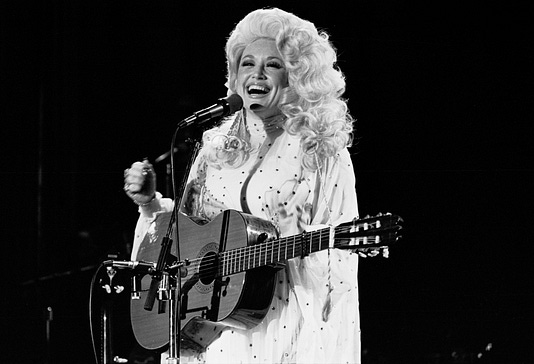
I burst into tears when I heard that Dolly Parton had left us. Damn, we didn’t need that right now.
But then again, perhaps we did. Nothing makes the brilliance of a life more obvious than when someone dies. What a light, what a talent, what a burst of love, what a powerful woman, what a talented artist, and what a generous soul she was on every level. Her light lives on and will bless us all.
If you experience after you die everything you gave to others while you were here, then eternal bliss is certainly guaranteed for Dolly. I don’t know how we can look at her life and think she was anything other than a very big soul.
May her passage be joyful, which I’m sure it is. May those who grieve her be comforted (her sister Stella is a deeply appreciated warrior for justice. I often felt Dolly was probably encouraging her in the background). Whom God has brought together no one and nothing can put asunder, not even death itself. May God wipe away all tears….
“It is a good idea to go looking for God, before he comes looking for you.”
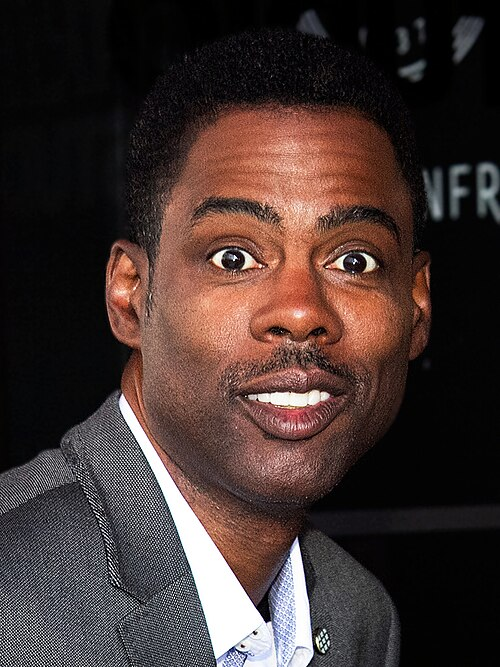
Christopher Julius Rock III, born February 7, 1965 in Andrews, South Carolina, is an award-winning American actor, comedian, producer, director, and screenwriter. He’s known for his stand-up routines that tackle race relations, human sexuality, and observational comedy, often referencing differences between Black and white Americans. Rock’s comedy specials include Bring the Pain, Never Scared, and Bigger & Blacker, which all won Grammy Awards. (Wikipedia.org)



 Everything ends with a last: