
“Perpetual inspiration is as necessary to the life of goodness, holiness and happiness as perpetual respiration is necessary to animal life.”
–William Law
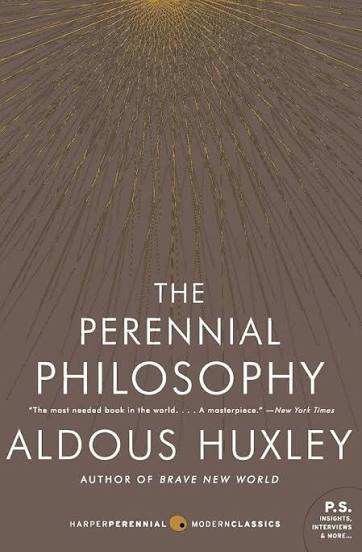
(Image from Amazon.com)
[H]ow significant it is that in the Indo-European languages . . . the root meaning “two” should connote badness. The Greek prefix dys- (as in dyspepsia) and the latin dis- (as in dishonorable) are both derived from “duo.” The cognate bis-gives a pejorative sense to such modern French words as bévue (“blunder,” literally “two-sight”). Traces of that “second which leads you astray” can be found in “dubious,” “doubt” and Zweifel--for to doubt is to be double-minded. . . . Obscurely and unconsciously wise, our language confirms the findings of the mystics and proclaims the essential badness of division–a word, incidentally, in which our old enemy “two” makes another decisive appearance.
“When Bayazid was asked how old he was, he replied, ‘Four years.’ They said, ‘How can that be?’ He answered, ‘I have been veiled from God by the world for seventy years, but I have seen Him during the last four years. The period during which one is veiled does not belong to one’s life.'”
“For my part, I think the chief reason which prompted the invisible God to become visible in the flesh and to hold converse with men was to lead carnal men, who are only able to love carnally, to the healthful love of his flesh, and afterwards, little by little, to spiritual love.” –St. Bernard
“Your enjoyment of the world is never right till every morning you awake in Heaven; see yourself in your Father’s palace; and look upon the skies, the earth and the air as celestial joys; having such a reverend esteem of all, as if you were among the Angels. The bride fo a monarch, in her husband’s chamber, hath no such causes of delight as you.
“You never enjoy the world aright till the sea itself floweth in your veins, till you are clothed with the heavens and crowned with the stars; and perceive yourself to be the sole heir of the whole world, and more than so, because men are in it who are every one sole heirs as well as you.
“Till you can sing and rejoice and delight in God, as misers do in gold, and kings in sceptres, you can never enjoy the world. Till your spirit filleth the whole world, and the stars are your jewels; till you are as familiar with the ways of God in all ages as with your walk and table; till you are intimately acquainted with that shady nothing out of which the world was made; till you love men so as to desire their happiness with a thirst equal to the zeal of your own; till you delight in God for being good to all; you never enjoy the world.
“Till you more feel it than your private estate, and are more present in the hemisphere, considering the glories and the beauties there, than in your own house; till you remember how lately you were made, and how wonderful it was when you came into it; and more rejoice in the palace of your glory than if it had been made today morning.
“Yet further, you never enjoyed the world aright, till you so love the beauty of enjoying it, that you are covetous and earnest to persuade others to enjoy it. And so perfectly hate the abominable corruption of men in despising it that you had rather suffer the flames of hell than willingly be guilty of their error.” –Thomas Traherne
“Therefore I give you still another thought, which is yet purer and more spiritual. In the Kingdom of Heaven all is in all, all is one, and all is ours.” –Eckhart
“Love is infallible; it has no errors, for all errors are the want of love.”
–William Law
Love is a mode of knowledge.
[M]an’s obsessive consciousness of, and insistence on being, a separate self is the final and most formidable obstacle to the unitive knowledge of God.
“The sect of lovers is distinct from all others; Lovers have a religion and a faith all their own.” –Jalal-uddin Rumi
“Temperance is love surrendering itself wholly to Him who is its object; courage is love bearing all things gladly for the sake of Him who is its object; justice is love serving only Him who is its object, and therefore rightly ruling; prudence is love making wise distinction between what hinders and what helps itself.” –St. Augustine
“Our kingdom go” is the necessary and unavoidable corollary of “Thy kingdom come.”
“The rout and destruction of the passions, while a good, is not the ultimate good; the discovery of Wisdom is the surpassing good. When this is found, all the people will sing.” –Philo
It is by losing the egocentric life that we save the hitherto latent and undiscovered life which, in the spiritual part of our being, we share with the divine Ground. This new-found life is “more abundant” than the other, and of a different and higher kind. Its possession is liberation into the eternal, and liberation is beatitude [happiness].
It is by long obedience and hard work that the artist comes to unforced spontaneity and consummate mastery. Knowing that he can never create anything on his own account, out of the top layers, so to speak, of his personal consciousness, he submits obediently to the workings of ‘inspiration’; and knowing that the medium in which he works has its own self-nature, which must not be ignored or violently overridden, he makes himself its patient servant and, in this way, achieves perfect freedom of expression. But life is also an art, and the man who would become a consummate artist in living must follow, on all the levels of his being, the same procedure as that by which the painter or the sculptor or any other craftsman comes to his own more limited perfection.
No infallible method for controlling the political manifestations of the lust for power has ever been devised. Since power is of its very essence indefinitely expansive, it cannot be checked except by colliding with another power. Hence, any society that values liberty, in the sense of government by law rather than by class interest or personal decree, must see to it that the power of its rulers is divided. National unity means national servitude to a single man and his supporting oligarchy. Organized and balanced disunity is the necessary condition of liberty.
There is nothing true anywhere,
The True is nowhere to be found.
If you say you see the True,
This seeing is not the true one.
When the True is left to itself,
There is nothing false in it, for it is Mind itself.
When Mind in itself is not liberated from the false,
There is nothing true; nowhere is the True to be found.
–Hui Neng
As the Godhead is nameless, and all naming is alien to Him, so also the soul is nameless; for it is here the same as God. –Eckhart
The experience of beauty is pure, self-manifested, compounded
equally of joy and consciousness, free from admixture of any
other perception, the very twin brother of mystical experience,
and the very life of it is supersensuous wonder. … It is enjoyed
by those who are competent thereto, in identity, just as the form of God is itself the joy with which it is recognized. –Visvanatha
Learning consists in adding to one’s stock day by day. The
practice of Tao consists in subtracting day by day: subtracting
and yet again subtracting until one has reached inactivity. –Lao
Spiritual progress is through the growing knowledge of the
self as nothing and of the Godhead as all-embracing Reality.
(Such knowledge, of course, is worthless if it is merely
theoretical; to be effective, it must be realized as an immediate,
intuitive experience and appropriately acted upon.)
As the light grows, we see ourselves to be worse than we thought.
We are amazed at our former blindness as we see issuing from our
heart a whole swarm of shameful feelings, like filthy reptiles
crawling from a hidden cave. But we must be neither amazed
nor disturbed. We are not worse than we were; on the contrary, we are better. But while our faults diminish, the light wesee them by waxes brighter, and we are filled with horror. So long as there is no sign of cure, we are unaware of the depth of our disease; we are in a state of blind presumption and hardness, the prey of self-delusion. While we go with the stream, we are unconscious of its rapid course; but when we begin to stem it ever so little, it makes itself felt. –Fenelon
Perpetual inspiration is as necessary to the life of goodness, holiness and happiness as perpetual respiration is necessary to animal life.
–William Law
Shun asked Ch’eng, saying, ‘Can one get Tao so as to have it for
oneself?’
‘Your very body,’ replied Ch’eng, ‘is not your own. How should Tao be?’
‘If my body,’ said Shun, ‘is not my own, pray whose is it?’
‘It is the delegated image of God,’ replied Ch’eng. ‘Your life is not your own. It is the delegated harmony of God. Your individuality is not your own. It is the delegated adaptability of God. Your posterity is not your own. It is the delegated exuviae of God. You move, but know not how. You are at rest, but know not why. You taste, but know not the cause. These are the operations of God’s laws. How then should you get Tao so as to have it for your own ?’ –Chuang Tzu
God expects but one thing of you, and that is that you should come out of yourself in so far as you are a created being and let God be God in you. –Eckhart
Nothing burns. in hell but the self. -Theologic Germanica
The mind is on fire, thoughts are on fire. Mind-consciousness
and the impressions received by the mind, and the sensations that
arise from the impressions that the mind receives these too are
on fire.
And with what are they on fire? With the fire of greed, with
the fire of resentment, with the fire of infatuation; with birth, old
age and death, with sorrow and lamentation, with misery and
grief and despair they are on fire. –From the Buddha’s Fire Sermon
I have maintained ere this and I still maintain that I already possess all that is granted to me in eternity. For God in the fullness of his Godhead dwells eternally in his image the soul. –Eckhart
The twentieth century is, among other things, the Age of Noise. Physical noise, mental noise and noise of desire wehold history’s record for all of them. And no wonder; for all the resources of our almost miraculous technology have been thrown into the current assault against silence. That most popular and influential of all recent inventions, the radio, is nothing but a conduit through which pre-fabricated din can flow into our homes. And this din goes far deeper, of course, than the ear-drums. It penetrates the mind, filling it with a babel of distractions news items, mutually irrelevant bits of information, blasts of corybantic or sentimental music, continually repeated doses of drama that bring no catharsis, but merely create a cravingfor daily or even hourly emotional enemas.
Picture God as saying to you,’ My son, why is it that day by day
you rise and pray, and genuflect, and even strike the ground with
your forehead, nay, sometimes even shed tears, while you say to
Me : “My Father, my God, give me wealth!” If I were to give
it to you, you would think yourself of some importance, you
would fancy you had gained something very great. Because you
asked for it, you have it. But take care to make good use of it.
Before you had it you were humble; now that you have begun
to be rich you despise the poor. What kind of a good is that which only makes you worse? For worse you are, since you were bad already. And that it would make you worse you knew not; hence you asked it of Me. I gave it you and I proved you; you have found and you are found out! Ask of Me better things than these, greater things than these. Ask of Me spiritual things. Ask of Me Myself.’
–St. Augustine
The elements which make up man produce a capacity for pain.
The cause of pain is the craving for individual life.
Deliverance from craving does away with pain.
The way of deliverance is the Eightfold Path.
–The Four Noble Truths of Buddhism
The Perennial Philosophy pdf: https://s3.us-west-1.wasabisys.com/luminist/EB/H/Huxley%20-%20The%20Perennial%20Philosophy.pdf