
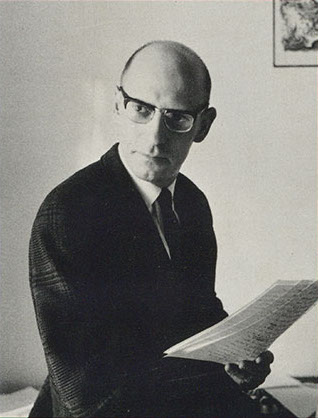
Foucault, c. 1970 (en.wikipedia.org)
- Google AI Overview
In English, this concept from Foucault is typically translated as: “The hospital… creates disease by means of the enclosed, pestilential domain that it constitutes.” [1]
This observation is found in his 1963 book, The Birth of the Clinic. Foucault argued that early hospitals—intended to protect and heal—actually spread and multiplied illness by enclosing sick people in concentrated environments. [1, 2]
Explore Foucault’s broader ideas on the history of medicine through this overview on Wikipedia or read a breakdown of the text on the University of North Carolina discussion page. [1]
The Medical Gaze (Le Regard Médical)
In The Birth of the Clinic, Michel Foucault introduces the “medical gaze.”
This concept describes a fundamental shift in how doctors look at patients. In the late 18th century, medicine stopped asking “What is the matter with you?” and started asking “Where does it hurt?”
- The Patient as a Case: The medical gaze separates a patient’s body from their personal identity.
- The Body as a Machine: Doctors began viewing patients as biological puzzles to be solved.
- The Power of Knowledge: This gaze gives doctors absolute authority, turning the patient into a passive object.
- The Spatialization of Disease: Illness was no longer seen as a abstract force, but as a localized problem hidden inside the flesh.
Carceral Institutions: Prisons and Asylums
Foucault saw the hospital as just one part of a larger network of institutions designed to control human bodies. He explored this in his other major works, including Madness and Civilization (1961) and Discipline and Punish (1975).
- The Asylum: Mental illness was historically integrated into society. Foucault argues that the modern asylum was created to isolate the “mad” from the sane, defining sanity by what it excludes.
- The Prison: Punishment shifted from public, physical torture to private, psychological discipline. The goal became “re-educating” the soul rather than breaking the body.
- The Panopticon: Foucault popularized this prison design where inmates might always be watched from a central tower. Because prisoners never know when they are being watched, they control their own behavior.
Biopolitics: The Ultimate Goal
Ultimately, Foucault argues that hospitals, prisons, and schools all serve biopolitics—the state’s management of populations through public health, hygiene, and social order. These institutions do not just punish or cure; they train individuals to become docile, productive citizens.
(Courtesy of Madame Renée Morel)