
- Google AI Overview
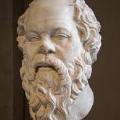
Socrates’ daemon (or daimonion) was his famous personal inner voice or “divine sign”. Unlike a malevolent demon, it acted as an infallible guide—always warning him against taking the wrong actions, such as making a speech or fleeing Athens. It never told him what to do, just what to avoid. [1, 2, 3]
Socrates referred to this phenomenon in Plato’s dialogues (like the Apology and Phaedrus) as an adjectival “divine something” rather than a specific god, and trusted it implicitly. It has been interpreted by philosophers and historians in various ways: [1, 2]
- Conscience: A highly developed internal moral compass.
- Intuition: Subconscious, rapid processing of situations.
- Divine Guardian: An intermediary spirit connecting him to higher, divine wisdom. [1, 2, 3]
You can read more about its historical and philosophical context in this breakdown by TheCollector or review the exact references on Wikipedia. [1, 2]