
New Thinking Allowed with Jeffrey Mishlove Aug 17, 2026 New Thinking Allowed Audio Podcast Betty J. Kovács, PhD, taught symbolic/mythic language for twenty-five years. She has served as Chair of the Board of Directors of the Jung Society of Claremont, California, and sits on the Academic Advisory Board of Forever Family Foundation. Dr. Kovács is author of Merchants of Light: The Consciousness That Is Changing the World, winner of The Scientific and Medical Network 2019 Book Prize and a Nautilus Silver Award. She has also written The Miracle of Death: There Is Nothing But Life. Her website is www.kamlak.com. Here she explains that consciousness is infinite and that, ultimately, there is no real separation between our waking consciousness, our subconscious mind, and the afterlife. It is all one. However, that realization is difficult to maintain in the face of daily life’s necessities. She describes several powerful examples of both archetypal, visionary experiences and after-death communications. They blend into each other. She closes with a riveting prophetic vision. New Thinking Allowed host, Jeffrey Mishlove, PhD, is author of The Roots of Consciousness, Psi Development Systems, and The PK Man. Between 1986 and 2002 he hosted and co-produced the original Thinking Allowed public television series. He is the recipient of the only doctoral diploma in “Parapsychology” ever awarded by an accredited university (University of California, Berkeley, 1980). He is also the Grand Prize winner of the 2021 Bigelow Institute essay competition regarding the best evidence for survival of human consciousness after permanent bodily death. He is Co-Director of Parapsychology Education at the California Institute for Human Science. (Recorded on April 17, 2021)
Category Archives: Consciousness
Ontology, metaphysics, spirituality
“Resist Not Evil” with Paul Chek
New Thinking Allowed with Jeffrey Mishlove Aug 16, 2026 Paul Chek is a holistic health practitioner, wellness coach, corrective exercise specialist and educator. His journey began when he served on the US Army boxing team. He is the author of How to Eat, Move, and Be Healthy. He is the creator of the Spirit Gym and host of the Spirit Gym with Paul Chek podcast. Paul explores Jesus’ teaching to “resist not evil,” examining how trauma, consciousness, forgiveness, and spiritual maturity shape our response to conflict rather than retaliation. Drawing on his experience as a therapist, holistic health educator, former Army boxing trainer, and founder of Spirit Gym, Chek argues that true strength comes through healing wounded parts of ourselves instead of becoming what we oppose. Chek touches on psychology, Jung, Rudolf Steiner, nonviolent resistance, forgiveness, mythology, and practical spiritual development as pathways toward greater wisdom. 00:00:00 Introduction 00:02:13 Paul’s background and spiritual journey 00:07:19 Responding to evil without becoming it 00:13:02 Trauma, boxing and healing childhood wounds 00:20:05 Spirit Gym and holistic spiritual development 00:27:51 Can evil serve human growth? 00:35:21 Humanity as a school for evolving souls 00:43:01 Religion, consciousness and unconditional love 00:52:07 Nonviolent resistance and forgiveness 01:00:45 Conclusion New Thinking Allowed host, Jeffrey Mishlove, PhD, is author of The Roots of Consciousness, Psi Development Systems, and The PK Man. Between 1986 and 2002 he hosted and co-produced the original Thinking Allowed public television series. He is the recipient of the only doctoral diploma in “parapsychology” ever awarded by an accredited university (University of California, Berkeley, 1980). He is also the Grand Prize winner of the 2021 Bigelow Institute essay competition regarding the best evidence for survival of human consciousness after permanent bodily death. He is Co-Director of Parapsychology Education at the California Institute for Human Science. (Recorded on Tuesday, July 30, 2026)
Locating Yourself – A Key to Conscious Leadership
The Conscious Leadership Group Nov 15, 2014 Learn the difference between leading from trust versus threat.
(Contributed by John Atwater, H.W.)
Eric Micha’el Leventahl on who is creating the world of your experience

(Image from LinkedIn.com)
“The closer you come to knowing that you alone create the world of your experience, the more vital it becomes for you to discover just who is doing the creating.”
~ Eric Micha’el Leventahl
Eric Micha’el Leventhal is a literary consultant, philosophy instructor & holistic educator on the island of Maui, Hawai’i. A graduate of Stanford University and San Diego’s International Professional School of Bodywork, he lived and journeyed extensively in Japan, Brazil, India and elsewhere before trading everything for love.
Ram Dass on where there’s work to be done
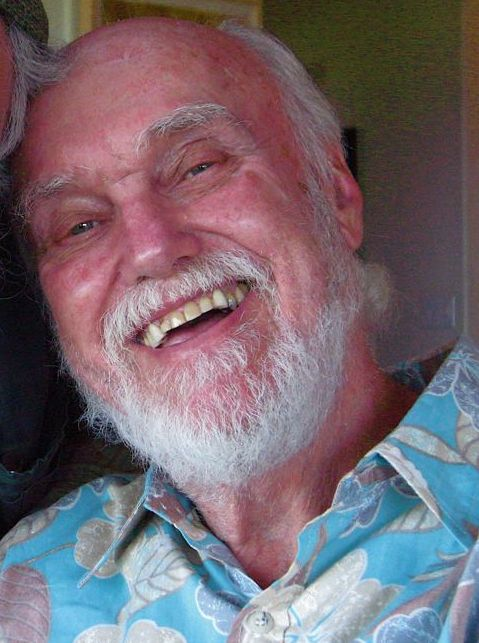
Ram Dass in 2008
“A feeling of aversion or attachment toward something is your clue that there’s work to be done.”
~ Ram Dass
Ram Dass, also known as Baba Ram Dass, was an American spiritual teacher, guru of modern yoga, psychologist, and writer. His best-selling 1971 book Be Here Now, which has been described by multiple reviewers as “seminal”, helped popularize Eastern spirituality and yoga in the West. Wikipedia
Born April 6, 1931, Boston, MA
Died December 22, 2019 (age 88 years), Maui, HI
18th Annual Tapping Summit

Starts August 19th, 2026

Release Stress and Boost Your Health, Happiness and Confidence to Take Your Life to New Heights!
10 Days
100% Content
100% Free
18th Annual Tapping World SummitLimited Time Replay
Sign up now to reserve your spot.
Join 24 of the World’s Leading Personal Development and Health Experts
They’ll Show You Step by Step How to Use a Technique Known as “Tapping” to Improve Your Finances, Health, Emotions And Much More
See all 10 Days of Presentations
Discover Why EFT Tapping is Quickly Becoming the Most Talked About Wellness Technique
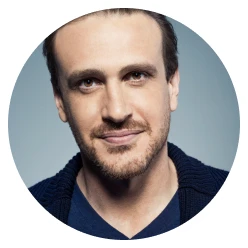
Jason Segel
Actor, Producer, and Screenwriter
“Tapping has helped me break down walls that prevented good sleep, and limited my joy. With each session I feel more freedom from lifelong anxiety. It has changed my life.”
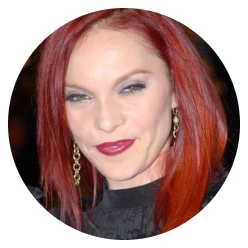
Carmit
Multi-Platinum Recording Artist
“I was first introduced to Tapping when I experienced anxiety after having my daughter. It helped immediately and through practice I felt a shift.”
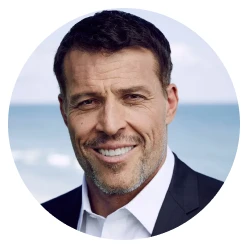
Tony Robbins
Author, Coach and Speaker
“Tapping is a breakthrough, research-backed technique that I’ve used in my life and seen people around the world get incredible results with. The Tapping Solution App is an easy and powerful way to get started.”
Limited Time Replay! Don’t Miss Out!
Starts August 19th, 2026
18th Annual Tapping World Summit, sign up now to reserve your spot
* By submitting this form you agree to receive email updates from The Tapping Solution. Your email will NEVER be shared or sold and you can easily unsubscribe at any time
“Put away the skepticism, this really works. I have worked with Nick Ortner and had great results with Tapping in my own life”
 Dr. Wayne W. Dyer
What is Tapping?
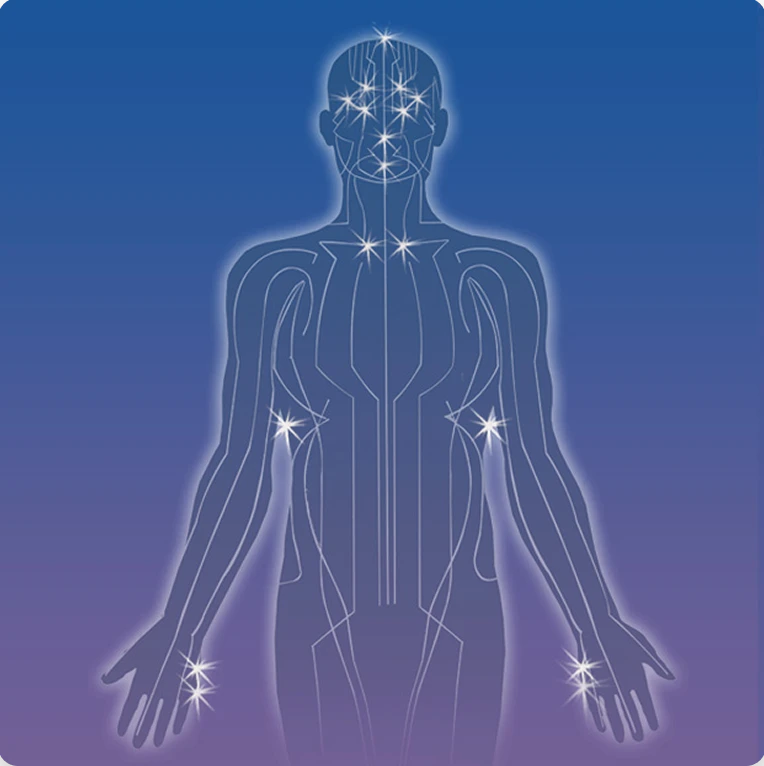
Tapping, also known as EFT (Emotional Freedom Techniques) is a powerful practice that helps millions worldwide reduce anxiety, process emotions, relieve physical discomfort, and create lasting transformation.
This scientifically-backed technique combines principles of cognitive therapy, exposure techniques, and stimulation of acupressure points. By tapping on specific acupressure points on your face and body while focusing on what’s bothering you, you send calming signals directly to your brain and rewire your stress response in real time.
It’s a tool you can use anywhere, anytime, to shift from stressed and reactive to calm and regulated – All within minutes.

Rewires Your Brain for Lasting Change
Tapping interrupts outdated automatic loops and creates new neural pathways that support calm, clarity, and ease. Brain scans suggest Tapping changes how your brain processes stress and triggers, making you less reactive to what used to overwhelm you.
Backed by 300+ Scientific Studies
Tapping is one of the most proven interventions for emotional well-being available today. Its benefits have been documented in studies across the globe in diverse populations such as veterans, genocide survivors, chronic pain sufferers, and everyday people like you.
Fast, Simple Relief for Anxiety, Sleep, Pain & More
30+ million sessions show rapid relief for the real issues that impact your daily life, from anxiety and insomnia to food cravings, fear, self-doubt, pain, and more. For example, users report an average reduction in anxiety of 40% after a single 9-minute session.
I’ve brought together the world’s leading EFT Tapping experts to share their knowledge in 21 content-packed presentations!

Here are the speakers and topics…
Day 1

The Awakening
Breaking Free From Autopilot
Why Do I Keep Overthinking, Worrying, and Doubting Myself-Even When I Know Better?
What You’ll Learn
What’s actually driving those mental loops that won’t quit
How to stop fighting your mind and start befriending it
Why Tapping is on the cutting edge of neuroscience
Why Do I Keep Doing the Same Old Thing Even When I Know Better?
What You’ll Learn
What self-sabotage is actually trying to tell you
The ‘motivation by misery’ trap — and why hating yourself never works
Why feeling great might secretly threaten your nervous system (and how to change that)
Day 2

Nervous System Breakthroughs
The New Science of Change
Will I Ever Stop Feeling Hurt By The Past, Or Can I Set Myself Free?
What You’ll Learn
Why old triggers still haunt you decades later — even when you ‘know better’
The fascinating science of memory reconsolidation, and how Tapping helps you ‘edit’ old memories
The ‘prediction error’ that rewires your brain, so you can finally feel differently about your past
How Do I Teach a Trauma-Shaped Nervous System to Finally Feel Safe, Strong, and Steady?
What You’ll Learn
The secret to calming down without collapsing, and getting energized without spiraling
Why responses like shutdown, bracing, and hypervigilance aren’t weaknesses — but your nervous system’s brilliant survival strategies
The 3 ‘rungs’ of your nervous system ladder — and why you can’t skip steps when climbing back up
Continue reading 18th Annual Tapping SummitSeeing the Unseen, Part II, with Christopher Laprath
New Thinking Allowed with Jeffrey Mishlove Aug 13, 2026 Christopher Laprath, who works as a professional intuitive, is author of Trestle Creek: Things the Dead Fear. Christopher explores what it means to “see the unseen,” describing how intuitive perception can reveal hidden belief systems, inherited patterns, energetic imprints, and unresolved experiences that quietly shape our lives. Through vivid personal stories, he explains how learning to recognize and release these unseen influences can awaken our innate gifts and open new possibilities for healing and transformation. Laprath discusses intuition, consciousness, time, mediumship, and the mysteries that lie beyond ordinary perception. 00:00:00 Introduction 00:02:24 Seeing the unseen 00:09:24 Energetic perception 00:17:59 Knowing beyond time 00:25:48 Releasing old patterns 00:34:07 Letting go 00:42:20 Earthbound spirits 00:50:53 Living with mystery 00:59:08 Opening new possibilities 01:06:09 Conclusion New Thinking Allowed host, Jeffrey Mishlove, PhD, is author of The Roots of Consciousness, Psi Development Systems, and The PK Man. Between 1986 and 2002 he hosted and co-produced the original Thinking Allowed public television series. He is the recipient of the only doctoral diploma in “parapsychology” ever awarded by an accredited university (University of California, Berkeley, 1980). He is also the Grand Prize winner of the 2021 Bigelow Institute essay competition regarding the best evidence for survival of human consciousness after permanent bodily death. He is Co-Director of Parapsychology Education at the California Institute for Human Science. (Recorded on Saturday, June 27, 2026)
“20th to 21st Century Mindset” with Marianne Williamson
The Abstract Mind with Chris Niebauer
New Thinking Allowed with Jeffrey Mishlove Aug 11, 2026 Chris Niebauer earned his Ph.D in cognitive neuropsychology from the University of Toledo, specializing in left- and right-brain differences. He is the author of The Abstract Mind: How Thinking Became the Source of Suffering—And How to Break Free, the bestselling No Self, No Problem: How Neuropsychology Is Catching Up to Buddhism, and its companion workbook. He taught consciousness, mindfulness, brain lateralization, and artificial intelligence for 22 years as a professor at a Pennsylvania state university. In this conversation, Chris explores the philosophical foundations of his new book, The Abstract Mind, drawing on William James’s concept of vicious abstractionism and Alfred North Whitehead’s fallacy of misplaced concreteness to examine how thinking itself can become a source of suffering. Building on the insights of No Self, No Problem, he considers the distinction between consciousness and thought, the role of affective neuroscience and embodied development, and why direct experience may offer a path beyond abstraction. Along the way, he reflects on artificial intelligence, contemplative practice, and what it might mean to come home to the immediacy of lived experience. 00:00:00 Introduction 00:04:03 Chris’s background 00:10:58 Consciousness vs thinking 00:21:42 Thought, memory, abstraction, and reality 00:29:10 Vicious abstraction and the illusion of ownership 00:39:24 The DSM, mental illness, and consciousness 00:48:38 Affective neuroscience and emotion 00:53:11 Trauma, the nervous system, and safety 01:12:19 The richness of direct experience 01:20:32 Redefining our role in the age of AI 01:24:22 Jung, the unconscious, and awareness 01:26:59 A simple practice for everyday life Producer: Elena McNally Editor: John Hartmann (Recorded on July 11, 2026) New Thinking Allowed Guest Host Leanne Whitney, PhD, is a depth psychologist and transformational coach based in Los Angeles, CA. She is the author of Consciousness in Jung and Patañjali and currently serves as Executive Director of Center for Transformation and Integration. Her website is https://leannewhitney.com/ To learn about Leanne Whitney’s upcoming Transformational Coaching Certification Course with an emphasis in Somatic Integration Therapy, please visit: https://transformationandintegration…. To order Consciousness in Jung and Patañjali by Leanne Whitney go to: https://amzn.to/2QY3tS2 To order The Abstract Mind: How Thinking Became the Source of Suffering—And How to Break Free by Chris Niebauer go to https://amzn.to/4vIokrU To order No Self, No Problem: How Neuropsychology Is Catching Up to Buddhism by Chris Niebauer go to: https://amzn.to/4cDPfNt To order the No Self, No Problem Workbook by Chris Niebauer, click on https://amzn.to/4cDa0IZ
Russell Square: A Crucible of Consciousness with James Tunney
New Thinking Allowed with Jeffrey Mishlove Aug 5, 2026 James Tunney, LLM, is an Irish barrister who has lectured on legal matters throughout the world. He is a poet, a scholar, and author of The Mystery of the Trapped Light: Mystical Thoughts in the Dark Age of Scientism plus The Mystical Accord: Sutras to Suit Our Times, Lines for Spiritual Evolution. His website is http://www.jamestunney.com. In this video from 2021, he describes the many threads woven into the intense cultural neighborhood near the British Museum in London. The discussion centers on the literary and artistic endeavors of the Bloomsbury Group, the spiritualist movement and psychical research, publishing, esoteric and occult groups, and the scientistic effort to suppress the realm of spirit. The interview concludes with James’ poem about Russell Square. New Thinking Allowed host, Jeffrey Mishlove, PhD, is author of The Roots of Consciousness, Psi Development Systems, and The PK Man. Between 1986 and 2002 he hosted and co-produced the original Thinking Allowed public television series. He is the recipient of the only doctoral diploma in “Parapsychology” ever awarded by an accredited university (University of California, Berkeley, 1980). He is also the Grand Prize winner of the 2021 Bigelow Institute essay competition regarding the best evidence for survival of human consciousness after permanent bodily death. He is Co-Director of Parapsychology Education at the California Institute for Human Science. (Recorded on February 15, 2021)