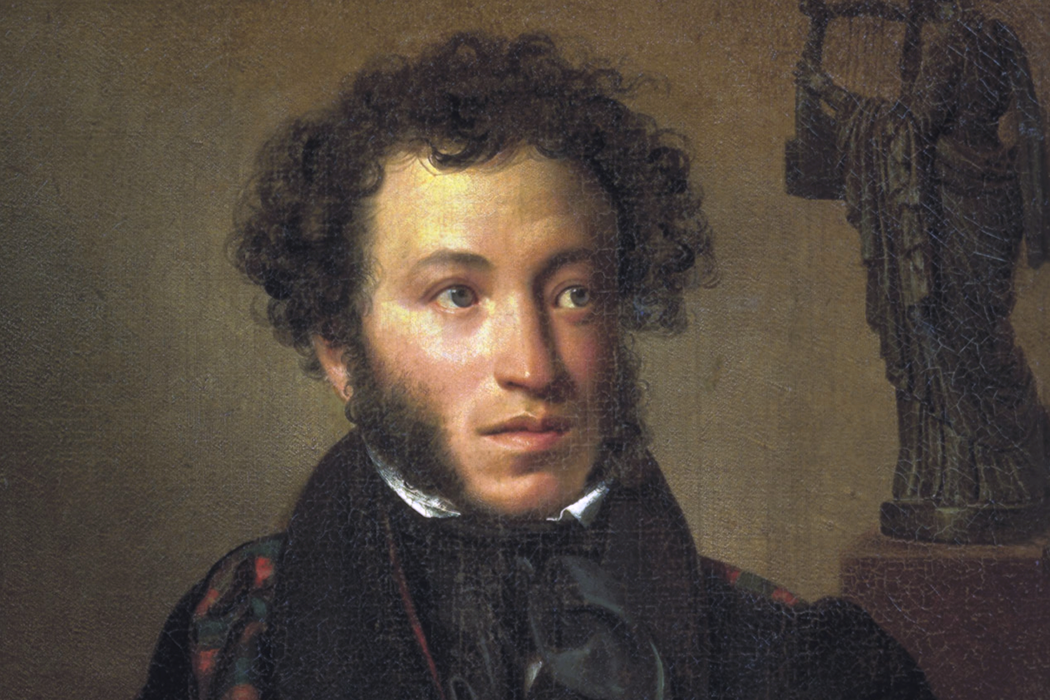
Alexander Pushkin is known as the quintessential Russian writer, but he took particular inspiration from his African great-grandfather, General Abraham Petrovitch Gannibal.
Alexander Pushkin is known as the quintessential Russian writer. What many readers don’t know is that he took particular inspiration from his African great-grandfather, General Abraham Petrovitch Gannibal.
According to Anne Lounsbery, a scholar of Russian Literature, “Boyar credentials, African heritage, and a personal link to Peter the Great were all crucial to Pushkin’s identity.” Playing up his connection with Gannibal, the author adopted the nickname “afrikanets, ‘the African.” His connection with his relative showed up in other ways, too.
Pushkin’s Cameroonian great-grandfather was simultaneously an insider and an outsider, rather like a poet who looks in on the world to compose about it.
Gannibal (sometimes written Hannibal), was very young when he was kidnapped from Africa and sent to Constantinople as a slave. From there, a Serbian Count named Sava Vladislavić brought him to the Court of Peter the Great in St. Petersburg.
The Tsar became very fond of the young boy. He made him his godson, conferring upon him the patronymic Petrovitch, son of Peter, and sent him to study in France. By the time Peter the Great’s daughter Elizabeth took the throne, Gannibal’s rank and accomplishments allowed him noble status. But, in a 1742 letter to the Russian Senate, Gannibal insisted that his noble status was linked to his father being an African chief. “I am of African origin, of an illustrious local nobility. I was born in the city of Logone, on lands belonging to my father, who reigned, furthermore, over two other cities.”
This appeal is the only recorded testimony of his African origins. The search for Logone began in the nineteenth century, culminating in historian Dr. Dieudonné Gnammankou’s late-twentieth century discovery. The African Institute, The Russian Academy of Sciences, and the Pushkin Museums in Moscow, St Petersburg and Mikhaïlovskoe, support his finding that Gannibal was probably born in Logone-Birni in Cameroon.
For Pushkin, the African ancestor who left traces of himself in his physique was also present in his persona. Pushkin’s work criticized society, which led to temporary banishment. Gannibal represented what it was like to be uprooted, yet live in the heart of one’s adoptive homeland. He was simultaneously an insider and an outsider, rather like a poet who looks in on the world to compose about it.
This influence provides a subtext for many of Pushkin’s writings, including The Moor of Peter the Great, his unfinished historical novel of Gannibal’s life.
Pushkin’s most famous work, Eugène Onegin, alludes to Russia’s turbulent history straddling East and West. The story has been reinterpreted as an opera (Tchaikovsky, 1879), ballet (Cranko, 1965), and film (Martha Fiennes, 1999, starring Ralph Fiennes and Liv Tyler). It also contains one of his most famous references to his own mixture of Russian and African heritage. It is a description of straddling two worlds:
“It’s time to drop astern the shape of the dull shores of my disfavour, and there, beneath your noonday sky, my Africa, where waves break high, to mourn for Russia’s gloomy savour, land where I learned to love and weep, land where my heart is buried deep.”
JSTOR is a digital library for scholars, researchers, and students. JSTOR Daily readers can access the original research behind our articles for free on JSTOR.
—Crazy Alert! Oklahoma Superintendent says about infamous Tulsa massacre, “Let’s not tie it to skin color…” Back in 1921 the good white people of Tulsa, Oklahoma went on a rampage, slaughtering hundreds of Black people and burning to the ground the Greenwood District, often referred to as “Black Wall Street,” because it was such a prosperous Black-owned area. Oklahoma’s new statewide Superintendent of Public Schools came to office on the promise of ending the teaching of critical race theory, and when he was asked in a public forum how a teacher should deal with the Tulsa massacre, he said, “Let’s not tie it to the skin color and say that the skin color determined that.” Exactly. Moms For Liberty couldn’t have said it better.
The Hartmann Report (thomhartmann+the-saturday-report@substack.com)
Remembering Tulsa’s Black Wall Street
Black Wall Street was a thriving Black-owned business district that housed hundreds of Black-owned businesses
By Vince Sims• Published June 18, 2020 • Updated on June 19, 2020 (nbcdfw.com)
NBCUniversal, Inc.Black Wall Street was a thriving Black-owned business district that housed hundreds of Black-owned businesses. NBC 5’s Vince Sims reports.
Old black and white pictures inside the Greenwood Cultural Center in Tulsa, Oklahoma, gives a small glimpse into Tulsa’s historical Black Wall Street.
Picture of band marching on Greenwood Avenue. Courtesy: Greenwood Cultural Center
“Black Wall Street was a thriving Black-owned business district that housed hundreds of Black-owned businesses,” Greenwood Cultural District Program Director Michelle Brown said. “There were grand hotels, movie theaters, there were restaurants, doctors and attorneys.”
Black Owned Business during Black Wall Street days of Tulsa. Courtesy: Greenwood Cultural Center
The interstate running across Greenwood Avenue sits where J. Kavin Ross’s great grandfather owned a business on Black Wall Street.
“He had a juke joint on Greenwood called Isaac Evitts Zulu Lounge,” J. Kavin Ross said.
Ross is a Greenwood District historian who has been recording the memory of what was once a rich Black community.
“This house is just one example of the kind of homes,” Ross said pointing to one lone house still standing from that era. “These weren’t shacks or shotgun homes. These were nice homes and they were well built and built by African Americans who were a part of this community.”
The Black Wall Street and Greenwood District covered more than 35 city blocks. An estimated 10,000 Black people lived in the area. Black Wall Street was successful because of the oil industry and farming money. Black people couldn’t shop in white-owned stores during this time. So, they spent their money in their own community which helped support and build up the community.
“It was a powerful scene,” Ross said. “People would walk up and down the corridor of Greenwood. Especially at night time and the nightlife. You had grocery stores, savings and loans, hotels, law offices, photography, anything you could think of.”
Things took a tragic turn in May 1921. A young Black man was accused of assaulting a white woman in a downtown elevator. That event started the Tulsa Race Massacre that sent mobs of white men into Black Wall Street who destroyed the area and killed hundreds of Black people.
“These are individuals willing to come forward and tell their stories decades later,” Brown said showing a wall of pictures of survivors inside the Greenwood Cultural Center.
Many of their survival stories have been documented.
“People running through the streets of the Greenwood District simply running for their lives,” Brown recalled of a survivor’s story. “They’ve talked about the fires. They talk about seeing planes flying over the Greenwood District dropping turpentine bombs on the community.”
Pictures also show proof of the devastation.
“Some of the photographs it looks as if this was a war zone,” Brown said. “Survivors returned to the Greenwood District looking for their homes and businesses where they stood and found nothing but ashes.”
It’s estimated around 300 Black people were killed during the destruction of Black Wall Street.
“It was economically devastating but also mentally, emotionally, and spiritually traumatizing to the Black community,” Brown said.
There was a period afterward where Black Wall Street made a comeback.
“Greenwood continued to build and continued to build and in fact it got much larger and much bigger were at that time in the ’30s, ’40s, and ’50s it was having a second renaissance at that time,” Ross said.
But once segregation ended the black dollar started to leave Black Wall Street.
Black Wall Street mural with downtown Tulsa in the background.
“It wasn’t until the 1960s when Black folks were able to go in white stores to spend their green dollars that’s when Greenwood suffered its next attack and the businesses started to leave and started to decay,” Ross said.
Now Tulsa’s Black Wall Street is hoping to one day return to its former glory.
“Greenwood is a shell of its former self,” Ross said.
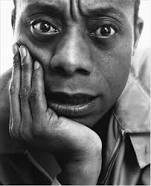
[We] discover, or invent-the two words, here, are synonyms-the stranger, the barbarian, who is responsible for our confusion and our pain. Once he is driven out-destroyed then we can be at peace: those questions will be gone. Of course, those questions never go, but it has always seemed much easier to murder than to change. And this is really the choice with which we are confronted now.
–James Bsldwin from Nothing Personal (1964)
James Arthur Baldwin (August 2, 1924 – December 1, 1987) was an American writer. He garnered acclaim for his work across several forms, including essays, novels, plays, and poems. Wikipedia
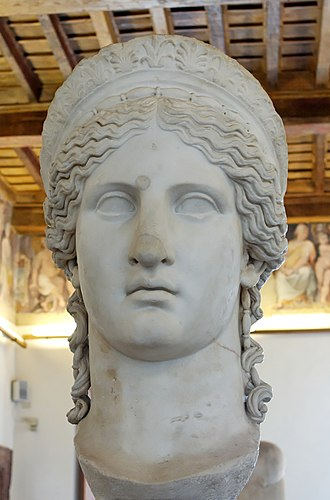
The Temple of Juno Moneta (Latin: Templum Iunonis Monetæ) was an ancient Roman temple that stood on the Arx or the citadel on the Capitoline Hill overlooking the Roman Forum.[2] Located at the center of the city of Rome, it was next to the place where Roman coins were first minted, and probably stored the metal and coins involved in this process, thereby initiating the ancient practice of associating mints with temples.[3] In addition, it was the place where the books of the magistrates were deposited.
Juno Moneta, the second name associating the Roman goddess Juno with the goddess Moneta who was worshiped at some locations outside Rome, was regarded as the protectress of the city’s funds. Money was coined in her temple for over four centuries, before the mint was moved to a new location near the Colosseum during the reign of emperor Domitian.[1] Thus, moneta came to mean “mint” (mint itself being a corruption of moneta) in Latin, which was used in written works of ancient Roman writers such as Ovid, Martial, Juvenal, and Cicero, and was the origin of the English words “monetary” and “money”.
Cicero suggests that the name Moneta derived from the verb “monere” (to warn) because during an earthquake, a voice from this temple had demanded the expiatory sacrifice of a pregnant sow, connecting to the old Roman legend that Juno’s sacred geese warned the Roman commander Marcus Manlius Capitolinus of the approach of the Gauls in 390 BC.[2] But modern scholars reject this explanation, because it is clear that “Moneta” was the name of a goddess who was worshiped in some places outside Rome, and when her worship was transferred to Rome, she was equated with Juno.
Moneta is also a name used for Mnemosyne, mother of the Muses, by Livius Andronicus in his translation of the Odyssey, and Hyginus’ citation of Jupiter and Moneta as parents of the muses. The name Mnemosyne or Memory was connected to Juno Moneta who maintained in her temple an unimpeachable record of historical events.[2]
The work of Immanuel Kant has had a profound impact on modern philosophy. Though he lived nearly two centuries before the birth of modern psychology, his ideas on the subject have been studied by psychologists and therapists ever since.
“Anarchy is law and freedom without force. Despotism is law and force without freedom. Barbarism force without freedom and law. Republicanism is force with freedom and law.” ― Immanuel Kant, Anthropology from a Pragmatic Point of View
His idea that the mind is its own “window” into reality -His idea that perception is based on categories instead of particulars -His concept of “transcendental inference” -His idea that there are three types of knowledge: empirical (which comes from sensory experience), rational (based on logical reasoning), or transcendental (based upon pure reason)
The following post will explore some of Kant’s unique ideas and concepts that have influenced modern thought:
Overview of his contributions to philosophy
Kant was born on April 22, 1724, in Konigsberg, Prussia. He studied theology and philosophy at the University of Königsberg and then moved to Berlin to complete his studies under Christian Wolff. In 1756 he became a professor of metaphysics at Königsberg University where he taught until his death in 1804.
Kant’s philosophical legacy is considered one of the most important developments in Western thought since Descartes’ rationalism or Locke’s empiricism. As such it has had an enormous impact on both European intellectual history as well as that of other countries such as China where much research has been done around this subject matter (see below).
2. Kant’s Epistemology
Kant’s epistemology is a discipline of philosophy that investigates the nature of knowing and how humans learn. It’s based on the idea that we can only know things through sense experience.
Kant argues that human beings can only perceive two modes of sensibility: feeling (intuition) and understanding (reason). These two faculties work together to give us information about an object or idea.
“As a matter of fact, no other language in the world has received such praise as the Lithuanian language. The garlands of high honour have been taken to Lithuanian people for inventing, elaborating, and introducing the most highly developed human speech with its beautiful and clear phonology. Moreover, according to comparative philology, the Lithuanian language is best qualified to represent the primitive Aryan civilization and culture”.” ― Immanuel Kant
For example, if you see someone standing in front of you who looks sad, your intuition tells you something about their mood without needing any additional information — even though it might be difficult for us humans to understand what exactly this means in terms of feeling sadness ourselves!
As part of his theory regarding human cognition, Kant also makes an important distinction between reason’s ability to provide us with certain truths about objects versus our senses’ ability only tell us things about them indirectly through perception or imagination (or other forms).
3. Kant’s Critique of Metaphysics
Noumena are things in themselves that are known through pure reason alone, such as God and immortality. Phenomena are appearances (or “things as they appear”), which can only be known through experience.
We cannot know anything about noumena because they exist outside our minds and physical world; therefore there is no way to prove them true or false through observation or experimentation.
“The whole interest of my reason, whether speculative or practical, is concentrated in the three following questions: What can I know? What should I do? What may I hope? (Critique of Pure Reason” ― Immanuel Kant
It is impossible for us to experience anything but appearances because all our senses function only within the physical world we live in! However, we do have access through some kind of intuition or insight into what lies beneath these appearances; this insight allows us access to understanding reality beyond its surface-level appearance but does not allow us full knowledge of whether something truly exists objectively — it could still just be an illusion created by our own minds!
4. Kant’s Theory of Knowledge
Kant’s theory of knowledge is based on the distinction between analytic and synthetic judgments. Analytic judgments are those that can be derived from premises, whereas synthetic judgments require no such derivation. An example of an analytic judgment would be “I am hungry”, since you could derive this statement from your own experience as well as by observing other people who have been hungry (though not necessarily you).
“Every beginning is in time, and every limit of extension in space. Space and time, however, exist in the world of sense only. Hence phenomena are only limited in the world conditionally, the world itself, however, is limited neither conditionally nor unconditionally.” ― Immanuel Kant, Critique of Pure Reason
A statement such as “There is a fire in my living room” would be more difficult to understand in terms of its meaning because it cannot be derived from anything else — it must be given meaning before we can know what it means.
Kant also argues that all knowledge comes from our senses: perception; sensuous intuition; induction; reasoning through analogy or abstraction (deduction); scientific investigation (experimentation).
5. Kant’s Ethics
Duty is a moral concept that Kant defines as “a requirement imposed upon oneself in accordance with the principles of reason.” In other words, duty is something you do out of respect for others and yourself. It can be either positive or negative.
“Give me matter and i will build a world out of it.” ― Immanuel Kant
The Categorical Imperative (CI) is an important concept in Immanuel Kant’s ethics because it helps him explain how people should act morally or ethically when faced with various situations or dilemmas that arise outside their control.
The CI states: “Act only according to that maxim whereby thou canst at the same time will that it should become a universal law,” which means that we must always choose between two conflicting actions based on their consequences without regard for their personal preferences or desires; this principle also applies outside of life-and-death situations like a war where one side may kill another unarmed person who has no choice but fights back anyway because self-defense cannot be justified under any circumstances — it would amount to murder if done intentionally!
6. Kant’s Political Philosophy
The concept of social contract is at the center of Kant’s political philosophy.
Individual rights and duties are based on a principle known as the Categorical Imperative: that we must act only according to maxims that can be derived from universal law (notably, the notion that everyone has an equal worth). In other words, if you want people to do something for you, then it’s your responsibility to make sure they know what their duties are. In turn, this means that everyone has an obligation towards one another; however, this isn’t necessarily reciprocated because people might not want others interfering in their own lives or privacy.
Freedom and equality are important concepts within Kant’s thought because they’re related directly to how society should be organized — and these ideas do not exist without each other! It can’t just be about freedom while ignoring equality; otherwise, there would be no point in having any kind of government at all! So while freedom is important because it gives us choices over our own lives (which includes working hours), equality also needs work since many people won’t always agree with one another when making decisions about things like health care costs etcetera.”
7. Kant’s Philosophy of Religion
Kant’s philosophy of religion is based on his moral philosophy. The idea of a “Moral Religion” refers to the belief that it is possible to justify beliefs in God and immortality using reason alone, without relying on faith.
This is because all men are born with certain rights and duties through nature, which include being able to make rational decisions about what they think is right or wrong based on their own personal experiences.
Kant argues that these rights and duties can be seen as having been created by God because man has no other explanations for why we should treat others humanely when necessary (i.e., not steal from them).
Therefore, if you do not believe in God then there must still be something else outside yourself that gives you this sense of morality — namely yourself!
“Two things fill the mind with ever new and increasing admiration and reverence the more often and more steadily one reflects on them, the starry heavens above me and the moral law within me.” ― Immanuel Kant
This means that even though humans may think differently about their minds compared with other animals because we have more experience living life than most animals do; nonetheless our minds are still able to understand certain truths even if those truths don’t come directly into contact with us physically as plants would do during summertime rainstorms where our senses aren’t active enough yet again due again according to once more…
8. Key Concepts in Kant’s Philosophy
One of the central ideas in Kant’s philosophy is that there are three separate ways we can think about things:
Apperception. This is what you’re thinking about right now, for example, whether you’re reading this article or having breakfast. It’s your immediate perception of a thing based on your senses and experience with it (e.g., seeing red).
Forms of sensibility and understanding. These are abstract concepts that exist outside time and space — they’re not necessarily physical things like tables or chairs; they can be mental images like “the chair” or “redness.” For example, when we look at something physical like an apple tree outside our window today — it may seem like an actual tree to us because we know what an apple looks like! But if someone else were describing this same scene using different words (like “apple tree”) then other people would hear different sounds coming from their mouths every time they said them aloud which means each person’s perception would be slightly different than someone else’s own version due to differences between how our brains work compared to others.
9. Critiques of Kant’s Philosophy
Kant’s ethics and morality are based on the Categorical Imperative, which states that one should act only according to what one considers to be “universal law.” This means that one cannot decide for oneself whether or not it is right or wrong for him/herself to do something, because there is no absolute right or wrong in this world; rather all judgments can only be made relative to their own circumstances (i.e., we cannot say how much money someone has versus how much I have).
“Metaphysics… is nothing but the inventory of all we possess through pure reason, ordered systematically. Nothing here can escape us, because what reason brings forth entirely out of itself cannot be hidden, but is brought to light by reason itself as soon as reason’s common principle has been discovered. The perfect unity of this kind of cognition, and the fact that it arises solely out of pure concepts without any influence that would extend or increase it from experience or even particular intuition, which would lead to a determinate experience, make this unconditioned completeness not only feasible but also necessary. Tecum habita, et noris quam sit tibi curta supellex. Dwell in your own house, and you will know how simple your possessions are. — Persius” ― Immanuel Kant, Critique of Pure Reason
If a person follows this guideline then they will always find themselves acting ethically towards others as well as themselves — which means that no matter how much money someone has or how many other things they have at stake (e.g., family members), no matter how wealthy you are compared with others around you — if everyone lives by these rules then everyone would benefit from living happily together!
10. The Enduring Impact of Kant’s Philosophy
The enduring impact of Kant’s philosophy is still relevant today. Kant’s ideas have been applied to modern society in a friendly tone, which has made them accessible and easy to understand by the masses.
“Laughter is an affect resulting from the sudden transformation of a heightened expectation into nothing.” ― Immanuel Kant, Critique of Judgment
Kant’s work has influenced many different fields such as ethics, political theory, and aesthetics; all three deal with human behavior or how people should act toward one another. In this way, Kant can be seen as an important influence on our understanding of what it means to be human (or not).
Conclusion
Immanuel Kant’s philosophy has been largely forgotten in the modern era. However, it remains an important figure to consider when evaluating the state of society today.
His ideas are still relevant today because they address issues such as how to live in a world that is constantly changing, what constitutes happiness and well-being, and how we should treat each other as individuals. Hopefully, this article has given readers some insight into Kant’s thoughts and his unique approach to these subjects!
ShareAs a death doula, or someone who supports dying people and their loved ones, Alua Arthur spends a lot of time thinking about the end of life. In a profound talk that examines our brief, perfectly human time on this planet, she asks us to look at our lives through the lens of our deaths in seeking to answer the question: “What must I do to be at peace with myself so that I may live presently and die gracefully?”
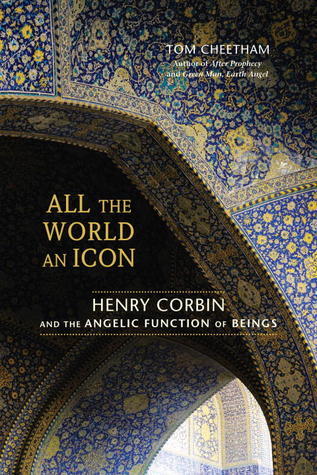
All the World an Icon is the fourth book in an informal “quartet” of works by Tom Cheetham on the spirituality of Henry Corbin, a major twentieth-century scholar of Sufism and colleague of C. G. Jung, whose influence on contemporary religion and the humanities is beginning to become clear. Cheetham’s books have helped spark a renewed interest in the work of this important, creative religious thinker.
Henry Corbin (1903-1978) was professor of Islamic religion at the Sorbonne in Paris and director of the department of Iranic studies at the Institut Franco-Iranien in Teheran. His wide-ranging work includes the first translations of Heidegger into French, studies in Swedenborg and Boehme, writings on the Grail and angelology, and definitive translations of Persian Islamic and Sufi texts. He introduced such seminal terms as “the imaginal realm” and “theophany” into Western thought, and his use of the Shi’ite idea of ta’wil or “spiritual interpretation” influenced psychologist James Hillman and the literary critic Harold Bloom. His books were read by a broad range of poets including Charles Olson and Robert Duncan, and his impact on American poetry, says Cheetham, has yet to be fully appreciated. His published titles in English include Creative Imagination in the Sufism of Ibn Arabi, Avicenna and the Visionary Recital , and The Man of Light in Iranian Sufism.
As the religions of the Book place the divine Word at the center of creation, the importance of hermaneutics, the theory and practice of interpretation, cannot be overstated. In the theology and spirituality of Henry Corbin, the mystical heart of this tradition is to be found in the creative, active imagination; the alchemy of spiritual development is best understood as a story of the soul’s search for the Lost Speech. Cheetham eloquently demonstrates Corbin’s view that the living interpretation of texts, whether divine or human—or, indeed, of the world itself seen as the Text of Creation—is the primary task of spiritual life.
In his first three books on Corbin, Cheetham explores different aspects of Corbin’s work, but has saved for this book his final analysis of what Corbin meant by the Arabic term ta’wil —perhaps the most important concept in his entire oeuvre . “Any consideration of how Corbin’s ideas were adapted by others has to begin with a clear idea of what Corbin himself intended,” writes Cheetham; “his own intellectual and spiritual cosmos is already highly complex and eclectic and a knowledge of his particular philosophical project is crucial for understanding the range and implications of his work.” Cheetham lays out the implications of ta’wil as well as the use of language as integral part of any artistic or spiritual practice, with the view that the creative imagination is a fundamentally linguistic phenomenon for the Abrahamic religions, and, as Corbin tells us, prayer is the supreme form of creative imagination.
Aubrey Marcu Jun 8, 2023 Aubrey Marcus Podcast If you have watched the Guardians of the Galaxy trilogy, this podcast will blow your mind. Because hidden within these fictional films, are true stories of value and reality drawn forth into existence by a force even greater than the writers themselves. So what deep mythic wisdom can we find hiding in the Guardians Of The Galaxy story? You’ll have to join Dr. Marc Gafni and I to find out. SPOILER ALERT! For more on the wisdom from the Soloman lineage, and a deeper understanding of the cosmo-erotic universe, check out the book: A Return to Eros by Marc Gafni and Kristina Kincaid. #guardiansofthegalaxy#mythology Timestamps: 00:00– Intro 2:30– Cast Of Characters | A New Vision of Heroes & Trauma 37:55– A New Vision Of Family 57:27– Who is the enemy? 1:10:15– Field Of Value 1:20:37– The Role Of Dance & Expanding Circles Of Intimacy 2:11:34– The Blessing Of the Father 2:16:45– Themes Recap & 1 Disappointment
In the realm of human consciousness and the study of the mind, few figures have left as profound an impact as Carl Gustav Jung. Through his groundbreaking theories and extensive exploration of the human psyche, Jung unveiled a hidden dimension of our mental landscape — the collective unconscious.
This concept, which encompasses deep-rooted archetypes and shared patterns of thought, has forever transformed our understanding of reality and our place within it.
Jung’s remarkable insights into the collective unconscious emerged during his tireless pursuit of unraveling the mysteries of the human mind. Born in Switzerland in 1875, he embarked on a path that would lead him to become a psychiatrist, psychoanalyst, and among the 20th century’s most significant intellectuals.
“A group experience takes place on a lower level of consciousness than the experience of an individual. This is due to the fact that, when many people gather together to share one common emotion, the total psyche emerging from the group is below the level of the individual psyche. If it is a very large group, the collective psyche will be more like the psyche of an animal, which is the reason why the ethical attitude of large organizations is always doubtful. The psychology of a large crowd inevitably sinks to the level of mob psychology. If, therefore, I have a so-called collective experience as a member of a group, it takes place on a lower level of consciousness than if I had the experience by myself alone.” ― C.G. Jung, The Archetypes and the Collective Unconscious
His collaborations with Sigmund Freud and the subsequent development of analytical psychology paved the way for a new understanding of the human psyche, liberating it from the constraints of traditional psychoanalysis.
The cornerstone of Jung’s theory lies in the concept of the collective unconscious, which he saw as an innate reservoir of shared experiences and symbolic imagery that transcends individuality. While the personal unconscious contains repressed memories and individual experiences, the collective unconscious encompasses the inherited, universal elements of the human psyche.
It is a vast storehouse of archetypes, ancient symbols, and mythical motifs that exist beyond individual consciousness but profoundly shape our perceptions, behaviors, and cultural expressions.
By delving into the collective unconscious, Jung revealed the profound interconnectedness of humanity. He recognized that our individual experiences are not isolated, but rather intertwined with the collective experiences of our ancestors and the broader human family.
This collective reservoir of unconscious material serves as a wellspring of inspiration, creativity, and transformative potential. It influences our dreams, fantasies, and the narratives that underpin our cultural, religious, and artistic expressions.
Understanding the power of the collective unconscious grants us access to the hidden realms of our shared humanity. It unveils the archetypal patterns that underlie the myths, symbols, and rituals found in diverse cultures across time and space.
Jung believed that by engaging with these archetypes, we can connect with the fundamental essence of our human nature and gain insights into the universal aspects of the human condition.
Moreover, exploring the collective unconscious can foster profound personal growth and self-realization. By becoming aware of the archetypal forces at play within us, we gain a deeper understanding of our motivations, fears, and desires.
We can uncover the hidden aspects of ourselves and integrate them into a more cohesive and authentic identity. Through this process of individuation, we move towards wholeness, aligning our conscious awareness with the deep currents of the collective unconscious.
By exploring the depths of our collective psyche, we can tap into a wellspring of wisdom, creativity, and resilience. We can navigate the complexities of our world with greater awareness, compassion, and a profound sense of our place within the tapestry of existence.
As we embark on a journey to understand Jung’s profound exploration of the collective unconscious, we open ourselves to a world of infinite possibilities. We step into a realm where ancient myths and contemporary experiences intertwine.
In this blog post, we’ll delve into Jung’s intriguing ideas and explore how embracing the collective unconscious can create profound transformations in our lives and society as a whole.
Key Takeaways
Swiss psychologist Carl Jung’s theory on the collective unconscious and archetypes provide powerful insight into our shared human experience, allowing for personal growth and connection with others on a deeper level.
The collective unconscious plays a significant role in shaping behavior and decision making in modern society, from marketing strategies to political elections.
Accessing the collective unconscious requires patience and practice through techniques such as dream analysis, active imagination, visualization exercises, and guided meditation sessions. Incorporating these techniques into therapy can lead to positive transformation on both an individual and cultural level.
Carl Jung’s Contributions To Psychology
Carl Jung’s contributions to psychology have left a significant mark on the field, shaping the way we understand and analyze human behavior. A Swiss psychiatrist, he was one of the pioneers in exploring the depths of our unconscious mind.
Jung introduced groundbreaking concepts like introversion and extraversion in personality studies, offering insight into how individuals process their thoughts and feelings. One of his most revolutionary ideas is the notion of collective unconscious.
“Real liberation comes not from glossing over or repressing painful states of feeling, but only from experiencing them to the full.” ― C.G. Jung, The Archetypes and the Collective Unconscious
This concept not only influenced psychology but also impacted areas such as philosophy, religion, literature, art therapy, and even marketing strategies. Furthermore, he founded analytical psychology — an approach that integrates an individual’s personal experiences with these larger cultural forces at play by examining dreams and myths for clues about inner struggles or growth opportunities.
Understanding Carl Jung And The Collective Unconscious
Carl Jung’s contributions to Psychology include his theory on the collective unconscious, which he saw as a common storehouse of archetypes and patterns that every individual share.
Distinction Between Personal And Collective Unconscious
Carl Jung believed that the human psyche is composed of both personal and collective unconsciousness. The personal unconscious is unique to each individual and contains repressed or forgotten thoughts, memories, and experiences.
In contrast, the collective unconscious is shared by all humanity and consists of universal archetypes or symbols that are inherited from our ancestors.
“Were it not for the leaping and twinkling of the soul, man would rot away in his greatest passion, idleness.” ― C.G. Jung, The Archetypes and the Collective Unconscious
An example of an archetype in the collective unconscious would be the concept of the “shadow,” which represents aspects of ourselves we don’t want to acknowledge. This idea appears in myths from around the world as a monster lurking in dark corners waiting to devour us when we’re vulnerable.
Archetypes And Symbols
Archetypes and symbols are some of the most fundamental concepts in Carl Jung’s theory of the collective unconscious. According to Jung, archetypes are universal patterns that exist within the human psyche and have been inherited from our ancestors’ experiences.
Symbols, on the other hand, are images or representations that elicit a particular emotional response in individuals and have deep meaning beyond their physical form.
“The mirror does not flatter, it faithfully shows whatever looks into it; namely, the face we never show to the world because we cover it with the persona, the mask of the actor.” ― C.G. Jung, The Archetypes and the Collective Unconscious
For example, the image of a serpent is an archetype that represents transformational power.
Understanding these archetypes and symbols provides insight into our deepest fears, desires, and motivations and can help us better navigate through life’s challenges.
The Role Of Religion In The Collective Unconscious
Religion serves as a manifestation of the collective unconscious, tapping into universal concepts and symbols that are expressed across diverse world religions.
How Religion Manifests As A Part Of The Collective Unconscious?
Religion is a fascinating aspect of the collective unconscious, and its influence can be seen in cultures around the world. According to Jungian theory, religious symbols and motifs are archetypal images that have been passed down through generations and are present within all individuals.
“If it be true that there can be no metaphysics transcending human reason, it is no less true that there can be no empirical knowledge that is not already caught and limited by the a priori structure of cognition.” ― C.G. Jung, The Archetypes and the Collective Unconscious
For example, many religions incorporate concepts like creation myths or divine beings that represent universal ideals such as compassion or justice. These shared themes point to deeper underlying truths about humanity’s collective experiences and aspirations.
Similarities And Universality Of World Religions
Carl Jung believed that religion is a manifestation of the collective unconscious, and as such, there are universal concepts and symbols that appear in religions across the world.
“When, for instance, a highly esteemed professor in his seventies abandons his family and runs off with a young red-headed actress, we know that the gods have claimed another victim.” ― C.G. Jung, The Archetypes and the Collective Unconscious
For example, almost all religions have some form of creation story or myth, often involving a divine being who brings order out of chaos.
Another similarity among world religions is the idea of transcendence — the belief in something larger than oneself. This can manifest in various ways, such as through prayer or meditation or by adhering to certain moral principles.
The Collective Unconscious In Modern Society
The collective unconscious plays a significant role in shaping behavior and decision-making in modern society, from the products we buy to the political leaders we elect.
Impact On Behavior And Decision Making
The collective unconscious plays a significant role in shaping our behavior and decision-making, often without us even realizing it. Our thoughts, emotions, and actions are influenced by archetypes and symbols stored within the collective unconscious that have been passed down through generations.
“We have let the house our fathers built fall into decay, and now we try to break into Oriental palaces that our fathers never knew. Anyone who has lost the historical symbols and cannot be satisfied with substitutes is certainly in a very difficult position today: before him there yawns the void, and he turns away from it in horror. What is worse, the vacuum gets filled with absurd political and social ideas, which one and all are distinguished by their spiritual bleakness.” ― C.G. Jung, The Archetypes and the Collective Unconscious
In marketing and branding, companies use archetypes to appeal to their target audience’s subconscious desires and motivations. By understanding how these universal concepts resonate with people on a deep level, marketers can create more effective campaigns that tap into consumers’ emotional responses.
Use Of Collective Unconscious In Marketing And Branding
The principles of the collective unconscious have been employed in marketing and branding for many years now. Companies use archetypes and symbols to evoke particular emotions or associations with their brand, tapping into the shared experiences of their target market.
“But the very fact that this process is unconscious gives us the reason why man has thought of everything except the psyche in his attempts to explain myths. He simply didn’t know that the psyche contains all the images that have ever given rise to myths, and that our unconscious is an acting and suffering subject with an inner drama which primitive man rediscovers, by means of analogy, in the processes of nature both great and small.” ― C.G. Jung, The Archetypes and the Collective Unconscious
For instance, a luxury car manufacturer might create ads that portray the driver as powerful, confident, and successful — all qualities associated with the King archetype.
These techniques work because they tap into deeply ingrained patterns within our minds — concepts that are hard-wired into our collective psyche through centuries of cultural evolution.
By speaking directly to these universal themes and symbols, companies can create an emotional connection with consumers on a subconscious level.
Applications Of The Collective Unconscious In Personal Growth And Transformation
Accessing the collective unconscious can lead to personal transformation by providing insights into our deepest motivations and desires, allowing us to connect more deeply with ourselves and others, and fostering greater creativity and intuition.
Techniques For Accessing The Collective Unconscious
Accessing the collective unconscious is not a straightforward process, but there are several techniques that one can use to tap into this deeper level of consciousness. One common method used by therapists and psychologists is dream analysis.
“That the gods die from time to time is due to man’s sudden discovery that they do not mean anything, that they are made by human hands, useless idols of wood and stone.” ― C.G. Jung, The Archetypes and the Collective Unconscious
Another technique for accessing the collective unconscious is through active imagination. Active imagination involves entering a meditative state and allowing oneself to explore images, thoughts, and emotions that arise spontaneously.
Visualization exercises are also useful in accessing the collective unconscious. These involve picturing different scenarios or environments in one’s mind’s eye and paying attention to any images or sensations that come up during these visualizations.
Overall, accessing the collective unconscious requires patience and practice, but it can lead to profound insights about oneself, others, and our shared human experience on a deeper level than everyday consciousness allows us to perceive.
Incorporating The Collective Unconscious In Therapy And Counseling
Incorporating the collective unconscious in therapy and counseling can be a transformative experience for clients seeking personal growth. One technique for accessing the collective unconscious is through dream analysis, which involves exploring recurring symbols and themes in dreams to uncover underlying emotions and patterns.
“there is good reason for supposing that the archetypes are the unconscious images of the instincts themselves, in other words, that they are patterns of instinctual behaviour.” ― C.G. Jung, The Archetypes and the Collective Unconscious
By incorporating elements of the collective unconscious into therapy sessions, counselors can help clients gain insight into their own behaviors and thought processes. This can lead to increased self-awareness, improved interpersonal relationships, and ultimately, greater fulfillment in life.
Connection With Others And The World Around Us
Understanding the collective unconscious can give us important insights into our connections with others and the world around us. According to Carl Jung, we each have a personal unconscious that is shaped by our unique experiences and memories.
However, we also share a collective unconscious that contains archetypes and symbols common to all of humanity.
“[R]eal liberation comes not from glossing over or repressing painful states of feeling, but only from experiencing them to the full.… By accepting the darkness, the patient has not, to be sure, changed it into light, but she has kindled a light that illuminates the darkness within. By day no light is needed, and if you don’t know it is night you won’t light one, nor will any light be lit for you unless you have suffered the horror of darkness.” ― C.G. Jung, The Archetypes and the Collective Unconscious
One way to connect with the collective unconscious is through dreams. Our dreams often contain imagery that taps into universal concepts and symbols. Through dream analysis or other techniques for accessing the subconscious mind, we can uncover hidden truths about ourselves and our relationships with others.
Final Thoughts
Jung’s concept of the collective unconscious also holds significant implications for our perception of reality. It challenges the prevailing notion of an objective and purely materialistic world.
Instead, it suggests that our experience of reality is profoundly influenced by the unconscious archetypal structures that shape our perceptions, beliefs, and values. This understanding invites us to question the limitations of our subjective experiences and to acknowledge the potential for alternative ways of knowing and interpreting the world.
“We should never forget that in any psychological discussion we are not saying anything about the psyche, but that the psyche is always speaking about itself. It is no use thinking we can ever get beyond the psyche by means of the “mind,” even though the mind asserts that it is not dependent on the psyche. How could it prove that?” ― C.G. Jung, The Archetypes and the Collective Unconscious
In a time when humanity grapples with myriad challenges, Jung’s insights into the power of the collective unconscious offer a guiding light. They remind us of our shared heritage, our interconnectedness, and the capacity for transformation that every one of us possesses.
By understanding these concepts, we can gain a deeper connection with others, and our world religions, and even utilize this knowledge for personal growth.
In conclusion, exploring the theories of Carl Jung and the collective unconscious has the potential to unlock hidden secrets about ourselves and the world around us.
By understanding and embracing these universal concepts, we can experience personal growth and connection with others on a deeper level. From marketing strategies to counseling techniques, incorporating Jung’s ideas into our lives can lead to positive transformation on both an individual and cultural level.
New Thinking Jul 6, 2023 Jason Reza Jorjani is a philosopher and author of Prometheus and Atlas, World State of Emergency, Lovers of Sophia, and Novel Folklore: The Blind Owl of Sadegh Hedayat. Here he describes the important plot threads of Franz Kafka’s posthumously published novel. The main character seems to be trapped in a nightmarish scenario, in which he is put through a mysterious legal proceding, from which he cannot seem to escape. Jorjani elucidates several important folklore and mythological references. Ultimately, he believes that the protagonist is trapped inside of his own inability to take himself less seriously. Edited subtitles for this video are available in Russian, Portuguese, Italian, German, French, and Spanish. New Thinking Allowed host, Jeffrey Mishlove, PhD, is author of The Roots of Consciousness, Psi Development Systems, and The PK Man. Between 1986 and 2002 he hosted and co-produced the original Thinking Allowed public television series. He is the recipient of the only doctoral diploma in “parapsychology” ever awarded by an accredited university (University of California, Berkeley, 1980). He is also the Grand Prize winner of the 2021 Bigelow Institute essay competition regarding the best evidence for survival of human consciousness after permanent bodily death. (Recorded on April 6, 2018)
Consciousness, spirituality, biography, sexuality, androgyny, futurism, space, the arts, science, astrology, democracy, humor, books, movies and more







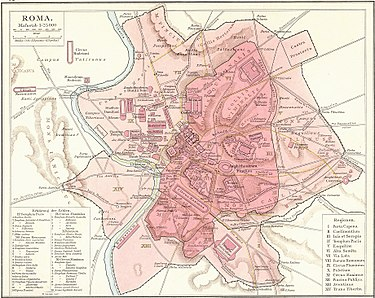

 Juno Moneta Shown within Rome



.PNG)


