All posts by Mike Zonta

Gibbons on Muhammed’s Penis

Muhammed
The Prophet Muhammad

Abu al-Fida (1273 – 1331 AD) was a Muslim geographer and historian. He relates that Muhammad suffered from a death erection. From Edward Gibbon’s “The Decline and Fall of the Roman Empire”:

Sibi robur ad generationem, quantum triginta viri habent, inesse jactaret; ita ut unicâ horâ posset undecim feminis satisfacere, ut ex Arabum libris refert Stus Petrus Paschasius, c. 2 (Maracci, Prodromus Alcoran, p. iv. p. 55. See likewise Observations de Belon, l. iii. c. 10, fol. 179, recto). Al Jannabi (Gagmer, tom. iii. p. 487) records his own testimony that he surpassed all men in conjugal vigour; and Abulfeda mentions the exclamation of Ali, who washed his body after his death, “O propheta, certe penis tuus cælum versus erectus est” (in Vit. Mohammed. p. 140).

In English, Ali had exclaimed, “O prophet, thy penis is erect unto the sky!

(from WikiIslam.net)

God Announces Successful Test Of First Category 7 Hurricane

HurricaneGod
NEWS IN BRIEF

THE HEAVENS—Calling the powerful tropical cyclone one of His greatest meteorological feats to date, God Almighty, Creator of Heaven and Earth, announced Thursday the first successful test of a Category 7 hurricane. “I’d been tinkering with the idea of a Category 7 for a while and the trial run went off without a hitch, so I’m quite pleased with the results,” said Our Lord and Heavenly Father, describing how the unprecedented 2,000-mile-wide storm gathered strength for 15 days over the warm waters of the Pacific before making landfall on the Marshall Islands test site, battering the small country with 300-mile-per-hour winds and storm surges that raised the water level by 80 feet. “Given how well the test case performed, I’m definitely going to start using these a lot more often. Hopefully, if there aren’t any major setbacks, I’ll roll out several Category 7 hurricanes in the Atlantic and the Gulf of Mexico by the end of the month.” At press time, God abandoned plans for an experimental earthquake that registers 12 on the Richter scale after the prototype cracked Venus in half.

Biography: Charles Perrault

CharlesPerrault

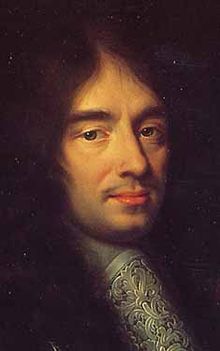
Charles Perrault (12 January 1628 – 16 May 1703) was a French author and member of the Académie Française. He laid the foundations for a new literary genre, the fairy tale, with his works derived from pre-existing folk tales. The best known of his tales include Le Petit Chaperon Rouge (Little Red Riding Hood), Cendrillon (Cinderella), Le Chat Botté (Puss in Boots), La Belle au bois Dormant (The Sleeping Beauty), and Barbe Bleue (Bluebeard). Some of Perrault’s versions of old stories may have influenced the German versions published by the Brothers Grimm more than 100 years later. The stories continue to be printed and have been adapted to opera, ballet (such asTchaikovsky‘s The Sleeping Beauty), theatre, and film. Perrault was an influential figure in the 17th-century French literary scene, and was the leader of the Modern faction during the Quarrel of the Ancients and the Moderns.

“National Anthem Is a Celebration of Slavery” by Jon Schwarz

ColinK

August 28, 2016 (TheIntercept.com)

Before a Preseason game on Friday, San Francisco 49ers quarterback Colin Kaepernick refused to stand for the playing of “The Star-Spangled Banner.” When he explained why, he only spoke about the present: “I am not going to stand up to show pride in a flag for a country that oppresses black people and people of color. … There are bodies in the street and people getting paid leave and getting away with murder.”

Twitter then went predictably nuts, with at least one 49ers fan burning Kaepernick’s jersey.

Almost no one seems to be aware that even if the U.S. were a perfect country today, it would be bizarre to expect African-American players to stand for “The Star-Spangled Banner.” Why? Because it literally celebrates the murder of African-Americans.

Few people know this because we only ever sing the first verse. But read the end of the third verse and you’ll see why “The Star-Spangled Banner” is not just a musical atrocity, it’s an intellectual and moral one, too:

No refuge could save the hireling and slave
From the terror of flight or the gloom of the grave,
And the star-spangled banner in triumph doth wave
O’er the land of the free and the home of the brave.

“The Star-Spangled Banner,” Americans hazily remember, was written by Francis Scott Key about the Battle of Fort McHenry in Baltimore during the War of 1812. But we don’t ever talk about how the War of 1812 was a war of aggression that began with an attempt by the U.S. to grab Canada from the British Empire.

However, we’d wildly overestimated the strength of the U.S. military. By the time of the Battle of Fort McHenry in 1814, the British had counterattacked and overrun Washington, D.C., setting fire to the White House.

And one of the key tactics behind the British military’s success was its active recruitment of American slaves. As a detailed 2014 article in Harper’s explains, the orders given to the Royal Navy’s Admiral Sir George Cockburn read:

Let the landings you make be more for the protection of the desertion of the Black Population than with a view to any other advantage. … The great point to be attained is the cordial Support of the Black population. With them properly armed & backed with 20,000 British Troops, Mr. Madison will be hurled from his throne.

Whole families found their way to the ships of the British, who accepted everyone and pledged no one would be given back to their “owners.” Adult men were trained to create a regiment called the Colonial Marines, who participated in many of the most important battles, including the August 1814 raid on Washington.

Then on the night of September 13, 1814, the British bombarded Fort McHenry. Key, seeing the fort’s flag the next morning, was inspired to write the lyrics for “The Star-Spangled Banner.”

So when Key penned “No refuge could save the hireling and slave / From the terror of flight or the gloom of the grave,” he was taking great satisfaction in the death of slaves who’d freed themselves. His perspective may have been affected by the fact he owned several slaves himself.

With that in mind, think again about the next two lines: “And the star-spangled banner in triumph doth wave / O’er the land of the free and the home of the brave.”

The reality is that there were human beings fighting for freedom with incredible bravery during the War of 1812. However, “The Star-Spangled Banner” glorifies America’s “triumph” over them — and then turns that reality completely upside down, transforming their killers into the courageous freedom fighters.

After the U.S. and the British signed a peace treaty at the end of 1814, the U.S. government demanded the return of American “property,” which by that point numbered about 6,000 people. The British refused. Most of the 6,000 eventually settled in Canada, with some going to Trinidad, where their descendants are still known as “Merikins.”

Furthermore, if those leading the backlash against Kaepernick need more inspiration, they can get it from Francis Scott Key’s later life.

By 1833, Key was a district attorney for Washington, D.C. As described in a book called Snowstorm in August by formerWashington Post reporter Jefferson Morley, the police were notorious thieves, frequently stealing free blacks’ possessions with impunity. One night, one of the constables tried to attack a woman who escaped and ran away — until she fell off a bridge across the Potomac and drowned.

“There is neither mercy nor justice for colored people in this district,” an abolitionist paper wrote. “No fuss or stir was made about it. She was got out of the river, and was buried, and there the matter ended.”

Key was furious and indicted the newspaper for intending “to injure, oppress, aggrieve & vilify the good name, fame, credit & reputation of the Magistrates & constables of Washington County.”

You can decide for yourself whether there’s some connection between what happened 200 years ago and what Colin Kaepernick is angry about today. Maybe it’s all ancient, meaningless history. Or maybe it’s not, and Kaepernick is right, and we really need a new national anthem.

“Intellectuals: From Marx and Tolstoy to Sartre and Chomsky”

Intellectuals

By Paul Johnson

A fascinating portrait of the minds that have shaped the modern world. In an intriguing series of case studies, Rousseau, Shelley, Marx, Ibsen, Tolstoy, Hemingway, Bertrand Russell, Brecht, Sartre, Edmund Wilson, Victor Gollancz, Lillian Hellman, Cyril Connolly, Norman Mailer, James Baldwin, Kenneth Tynan, and Noam Chomsky, among others, are revealed as intellectuals both brilliant and contradictory, magnetic and dangerous.

(Google Books)

Sonnet 18

Shakespeare

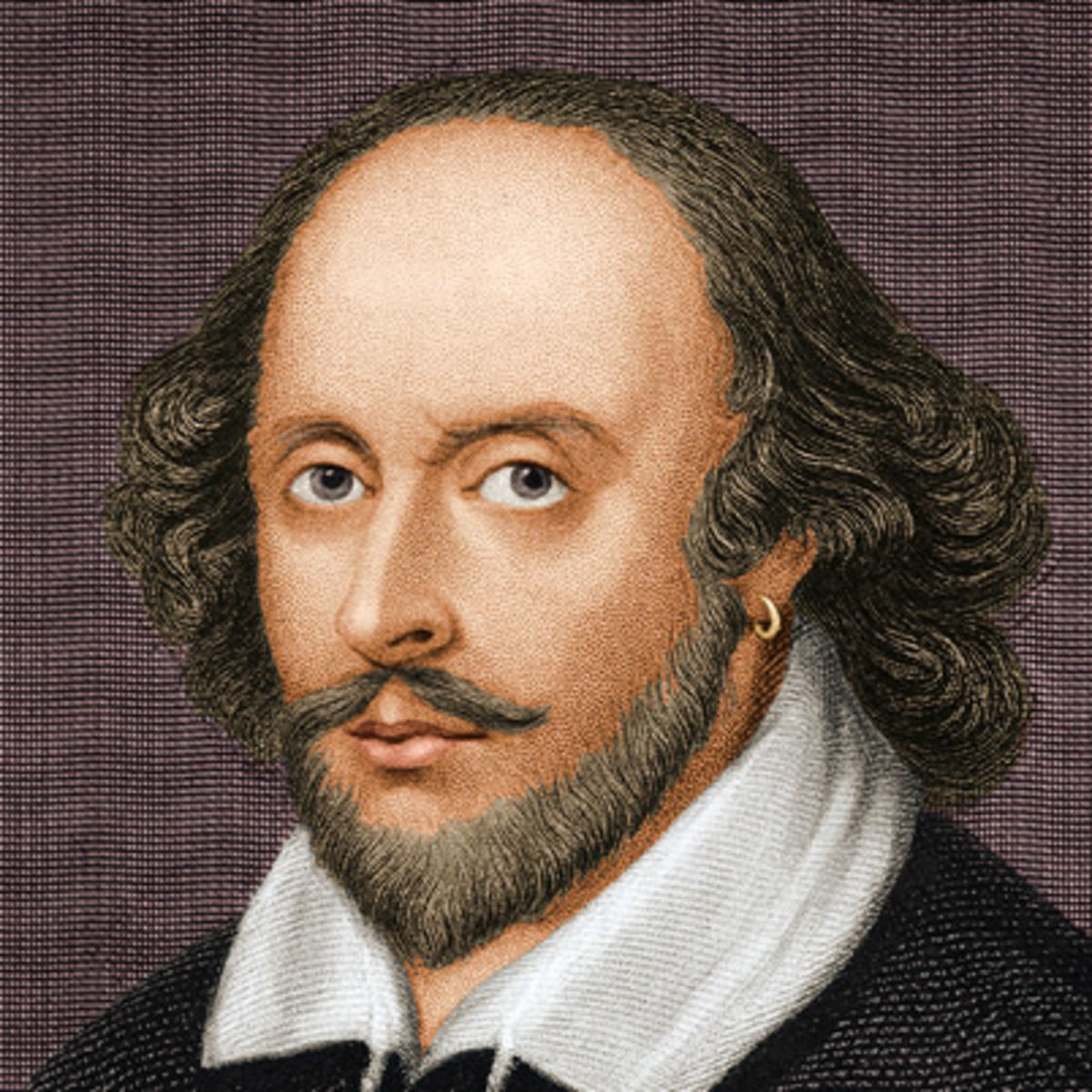
Shall I compare thee to a summer’s day? Thou art more lovely and more temperate. Rough winds do shake the darling buds of May, And summer’s lease hath all too short a date. Sometime too hot the eye of heaven shines, And often is his gold complexion dimmed; And every fair from fair sometime declines, By chance, or nature’s changing course, untrimmed; But thy eternal summer shall not fade, Nor lose possession of that fair thou ow’st, Nor shall death brag thou wand’rest in his shade, When in eternal lines to Time thou grow’st. So long as men can breathe, or eyes can see, So long lives this, and this gives life to thee.

–William Shakespeare (April 1564 – May 3, 1616) was an English poet, playwright, and actor, widely regarded as the greatest writer in the English language and the world’s pre-eminent dramatist. He is often called England’s national poet, and the “Bard of Avon”. Wikipedia

Herbert Hoover at Stanford

HerbertHoover

Herbert Clark Hoover (August 10, 1874 – October 20, 1964) was an American politician who served as the 31st President of the United States from 1929 to 1933. (via Wikipedia)

Herbert Hoover entered Stanford University in 1891, its inaugural year, after failing all the entrance exams (except mathematics) and then being tutored for the summer in Palo Alto. The first-year students were not required to pay tuition. Hoover claimed to be the very first student at Stanford, by virtue of having been the first person in the first class to sleep in the dormitory. While at the university, he was the student manager of both the baseball and football teams and was a part of the inaugural Big Game versus rival the University of California and friend (CAL Manager) Herbert Lang. Only 10,000 tickets were printed for the inaugural game and 20,000 people showed up. Both Hoover and Lang had to find pots, bowls and any other available receptacles to collect admission fees. Stanford won the game: 21–22. Hoover graduated in 1895 with a degree in geology. He earned his way through four years of college working various jobs on and off campus, including the Geological Survey of Arkansas and the United States Geological Survey. Throughout his tenure at Stanford, he was adamantly opposed to the fraternity system.

Pre-Suasion: A Revolutionary Way to Influence and Persuade

Pre-Suasion

The author of the legendary bestseller Influence, social psychologist Robert Cialdini shines a light on effective persuasion and reveals that the secret doesn’t lie in the message itself, but in the key moment before that message is delivered.

What separates effective communicators from truly successful persuaders? Using the same combination of rigorous scientific research and accessibility that made hisInfluence an iconic bestseller, Robert Cialdini explains how to capitalize on the essential window of time before you deliver an important message. This “privileged moment for change” prepares people to be receptive to a message before they experience it. Optimal persuasion is achieved only through optimal pre-suasion. In other words, to change “minds” a pre-suader must also change “states of mind.”

His first solo work in over thirty years, Cialdini’s Pre-Suasion draws on his extensive experience as the most cited social psychologist of our time and explains the techniques a person should implement to become a master persuader. Altering a listener’s attitudes, beliefs, or experiences isn’t necessary, says Cialdini—all that’s required is for a communicator to redirect the audience’s focus of attention before a relevant action.

From studies on advertising imagery to treating opiate addiction, from the annual letters of Berkshire Hathaway to the annals of history, Cialdini draws on an array of studies and narratives to outline the specific techniques you can use on online marketing campaigns and even effective wartime propaganda. He illustrates how the artful diversion of attention leads to successful pre-suasion and gets your targeted audience primed and ready to say, “Yes.”

(Amazon.com)