
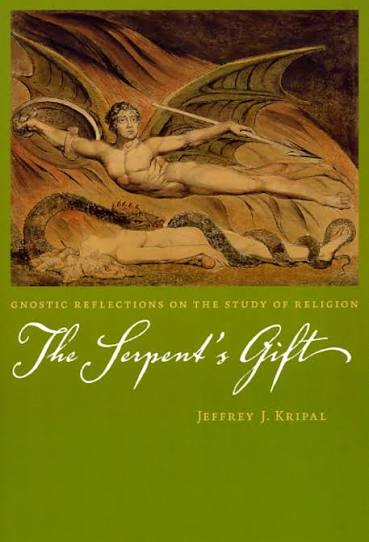
(Image from press.uchicago.edu)
I have been thinking about the sexuality of Jesus since I was thirteen.
A man from South Korea writes. When he was sixten, in 1984, to be exact, he spontaneously entered a state of cosmic consciousness while sitting in the back row of a high school classroom. He was looking out the window, mesmerized by some shimmering sunlight reflecting off the side of a bright white building. Caught by the sight, he found this beauty and joy strangely expanding and growing inside him. And then,
[s]uddenly something weird happened to my body. I felt like thousands of hot small worms came into existence inside of me. At first, they appeared near my foot and crawled up my body, making my pleasure bigger and bigger. As if the dead body of an animal was full of tens of thousands of small maggots without leaving any space, my body was being fully occupied by all these hot and small creeping things. They made me feel that my body was boiling like hot water. In that way, my body was getting hotter and more aroused by the upward creeping of innumerable “energy” worms, and my whole body and mind were filled with even greater pleasure! And when those creeping and crawling things inside reached my whole body. It happened! Or more exactly, I exploded into It.
[William James] remained troubled, however, by how to reconcile this state of cosmic consciousness with the mundane needs of the ego or social self. He now writes often of the “trauma” of these initiatory states.
“Let him kiss me with the kisses of his mouth,” he prayed, directly from the biblical text [Song of Songs 1:1]. “And He did. I was overcome with the erotic passion of my Beloved.”
Put simply, the men who could receive such a teaching, who “had ears to hear,” were those whom we would today call gay, and those who could not receive such a teaching were those whom we would today call straight. Sexual orientation, in other words, determined the hierarchy of Jesus’s kingdom of heaven, and it was the gay man, not the heterosexual married man, who was clearly privileged by Jesus. This is certainly an imperfect and anachronistic way to gloss such a saying, but it is hardly, I think an inaccurate way.
What makes biblical love “spiritual,” then, is not its lack of sex (there is plenty of that), but its sublimation of the erotics of the Beloved into a systematic denial of social hierarchy and a radical affirmation of the man or woman “on the bottom.”
[F]urther down the path, one would learn to see the phenomenal world as a “mansion of fun” in which to take delight in the omnipresence and essential bliss of the divine.
Indeed, the word personality is derived form the Latin for “mask”: a persona is quite literally a “mask” that one speaks (sona) through (per).
Mythically put, it is suffering and a psyche’s subsequent dissociation that often grant access to the super- or x-tra of the hero. Thus it is the early horrible event of a little boy witnessing the murder of his parents outside a theater that psychologically produces the figure of Batman, and it is the trauma of watching his father accidentally murder his mother that produces the rage that triggers the transformation of Bruce Banner into the Hulk in the Hollywood movie.
[S]exuality and death are indeed two sides of the same mortal coin. Organisms engage in procreative sexual activity because they die. If there were no death, there would be no need of sexual activity.
[T]he attentive reader may have noticed that my earlier discussions of consciousness in the history of religions were actually discussions of consciousness and energy. The two, I would suggest, cannot be separated, ever.
—The Serpent’s Gift: Gnostic Reflections on the Study of Religion, by Jeffrey J. Kripal