

All posts by Mike Zonta

Raphael Warnock Loses All Faith In God After Being Forced Into Runoff Against Herschel Walker
Published Friday 12:45PM (TheOnion.com)
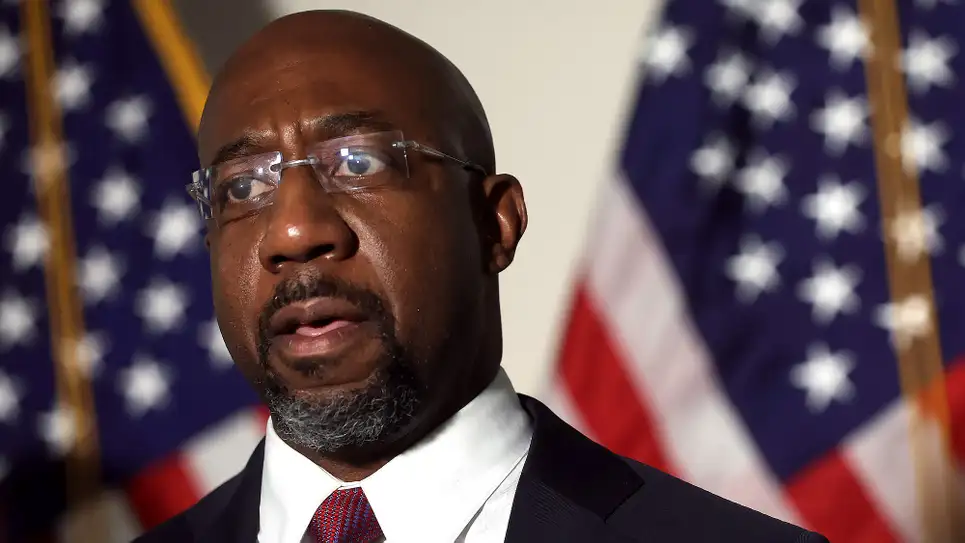
ATLANTA—Struggling to cope with his shock at the outcome of the midterm elections, Sen. Raphael Warnock (D-GA) reportedly lost all faith in God this week after being forced into a runoff against Herschel Walker. “What loving creator would create a world where I’m required to compete in not one, but two elections against a man like Herschel Walker?” said the visibly shaken Warnock, who removed his glasses in disbelief as he wrestled with the grave theological implications of being a mere percentage point away from losing to a former football player who allegedly threatened to murder his own family members. “Is this some sort of divine test? No, it is much, much worse. I have been a person of faith for 52 years on this planet and every moment was a rotten lie. There’s no meaning in this twisted universe. There is no God watching over us, and, surely, if there is any sort of deity, he is a wicked being who tortures us for His pleasure. Don’t call me reverend. I am not God’s emissary. I am His nemesis.” At press time, Warnock’s approval rating had edged upward several points after he was spotted tearing his clothes asunder and running naked into a river to curse the sky.
Tarot Card for November 15: The Queen of Disks
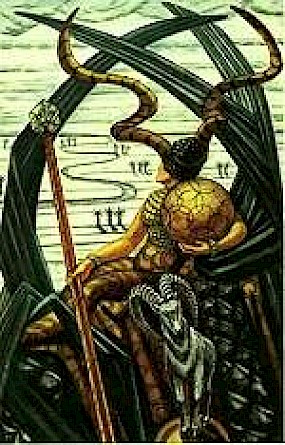
The Queen of Disks
As the Queen of the Suit most connected to the home environment, families, materiality and fecundity, the woman represented by the Queen of Disks will most likely be a person whose attention centres upon the family environment. Here, she will excel, gaining a great deal of pleasure from providing a secure haven where she and others can feel cosseted and cared for.
In modern times the qualities for which this Queen stands have tended to be devalued and downgraded (‘I’m only a housewife’). This causes difficulties for the woman who feels most fulfilled expending her energies in a home situation, working with her family and a close circle of friends.
Yet the contribution that this sort of work makes to the lives of anyone who comes into contact with it cannot be underestimated. We all want to feel welcome and warm in our own homes. We want to feel nurtured and secure. So perhaps it’s time to re-instate the Queen of Disks to her rightful place – Regent to the Empress, and important to everybody. Furthermore, maybe we need to invoke our own caring qualities more readily so that we all pour our unique energies into our domestic surroundings.
If the Queen of Disks is ill-dignified in a reading, she will generally have lost sight of her position – or, perhaps, is being taken for granted by others. At that point the weaker side of her personality will show through. She may become dependent and clingy, believing herself to be unable to stand alone. She might manipulate by adopting a passive victim’s role.
Though usually the type of woman indicated by the Queen of Disks is a gentle soul, when angered she can become a fierce enemy, particularly where she sees injustice done to her family and friends. She’s loyal and willing to help, rooted in the practical aspects of life.
Her concept of spirituality centres on the nourishing aspects of her personality – she is therefor a facilitator, quietly assisting others on their journey, though often her contribution will go unnoticed.
She is often interested in, and involved with, the healing arts, being a willing and generous healer. When she is ambitious it is usually for others, again in her facilitator role. She maintains a strong link with Nature, loving plants, trees and animals.
(via angelpaths.com and Alan Blackman)
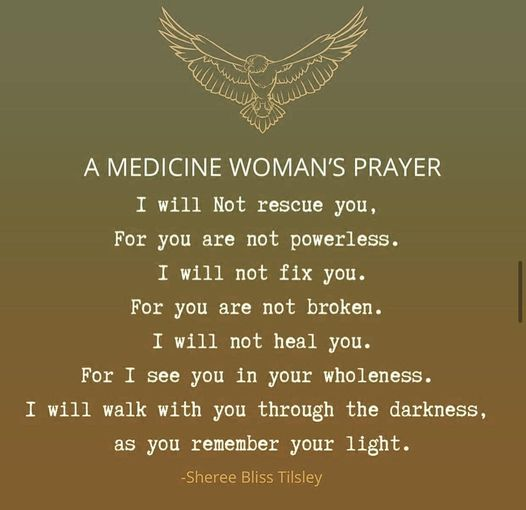
A Medicine Woman’s Prayer
Fyodor Dostoevsky is sentenced to death for plotting against the Russian state.
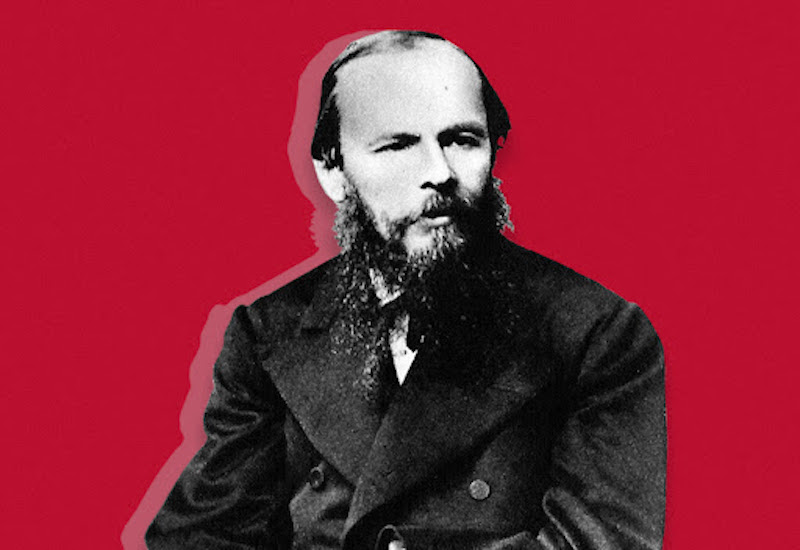
| Fyodor Dostoevsky was just like you: he read banned books. Unlike you (probably—and so far), he was arrested and sentenced to death for it. In the 1840s, the Russian novelist was part of a progressive group called the Petrashevsky Circle, whose primary purpose was to discuss literary and philosophical texts that had been banned by the government of Tsar Nicholas I. In April of 1849, Dostoevsky and other members of the group were arrested for their literary “activities,” which were decried as “anti-Russian.” They were sent to prison, and on November 16th, sentenced to death for crimes committed while at book club. On the morning of December 22nd, the prisoners were led in front of the firing squad, but at the last moment, the soldiers lowered their guns—a messenger had shown up with a commutation from the Tsar. After this little bit of theater, which Nicholas I had planned in advance, the prisoners were officially exiled and packed off to a prison camp in Siberia, where Dostoevsky would remain until February 14, 1854. The experience would inform his 1869 novel The Idiot, in which Prince Myshkin recounts an anecdote that hews very closely to Dostoevsky’s experience: a man is sentenced to death for “a political offense” and spared at the last moment. “The uncertainty and feeling of version for that new thing which would be and was just coming was awful,” Dostoevsky writes. But he said that nothing was so dreadful at that time as the continual thought, ‘What if I were not to die! What if I could go back to life—what eternity! And it would all be mine! I would turn every minute into an age; I would lose nothing, I would count every minute as it passed, I would not waste one!’ He said that this idea turned to such a fury at last that he longed to be shot quickly. Luckily for literature, he was not. |
| “The best way to keep a prisoner from escaping is to make sure he never knows he’s in prison.” |
| –FYODOR DOSTOEVSKY One Day in the Life of Ivan Denisovich |
Nick Cave on Music, Mystery, and the Relationship Between Vulnerability and Freedom
By Maria Popova (themarginalian.org)
“Whatever inspiration is,” the Polish poet Wisława Szymborska observed in her superb Nobel Prize acceptance speech, “it’s born from a continuous ‘I don’t know.’” And yet, with our reflex for teleological thinking — that childish grab at “I know!” — we habitually cut ourselves off from the mystery that houses the most creative, and therefore the most vulnerable and alive, part of our own souls, forgetting what Carl Sagan’s ghost so poetically reminds us: that “the universe will always be much richer than our ability to understand it.”
Nothing restores our porousness and receptivity to that richness more readily than music — the backdoor of consciousness, through which something transcendent slips past all of our reasoned reservations, all of our guardedness and confusion, at once releasing us from the solitary confinement of the self and restoring us to ourselves, reminding us that we are always half-opaque to ourselves and this opacity shimmers with possibility.
One of William Blake’s paintings for The Book of Job, 1806. (Available as a print.)
These questions — the power of music, the power of porousness — animate Nick Cave, whom I see as a kind of sculptor of the spirit, turning the raw materials of life — a life that has not been easy — into something of transcendent beauty.
In Faith, Hope and Carnage (public library) — his long and luscious conversation with Seán O’Hagan — he considers how music parts the veil between the known world and the mystery of being:
I think music, out of all that we can do, at least artistically, is the great indicator that something else is going on, something unexplained, because it allows us to experience genuine moments of transcendence.
[…]
I think there is more going on than we can see or understand, and we need to find a way to lean into the mystery of things — the impossibility of things — and recognise the evident value in doing that, and summon the courage it requires to not always shrink back into the known mind.
In a passage evocative of Nathaniel Hawthorne’s contour of the edges of consciousness, he considers that “impossible” place where transcendence lives — “a semi-conscious place, a twilight place, a distracted place, a place of surrender” — the place where his dead son also lives, and the life-deep sorrow of the loss, and the portal to beauty the loss unlatched in his creative spirit:

One of Arthur Rackham’s rare 1917 illustrations for the fairy tales of the Brothers Grimm. (Available as a print.)
That otherness, that beyondness, is what we commonly call mystery — the realm of experience inaccessible to our analytical minds, unaccountable by reason, and yet a stratum of reality we touch beyond doubt in those rare transcendent moments, as palpable as a lover’s hand, as alive as prayer.
Nick reflects on the supreme portal our species has devised for accessing that realm:
[…]
[Music] has the ability to lead us, if only temporarily, into a sacred realm. Music plays into the yearning many of us instinctively have — you know, the God-shaped hole. It is the art form that can most effectively fill that hole, because it makes us feel less alone, existentially. It makes us feel spiritually connected. Some music can even lead us to a place where a fundamental spiritual shift of consciousness can happen. At best, it can conjure a sacred space.
In that sacred space, we get to see the world more whole — not artificially, not as a pretty delusion, but with greater fidelity to the deeper reality. He weighs the robust salvation to be found in that space:
But because there are no absolutes in beauty, everything we experience as beautiful is a projection of something we long for — a fragmentary fulfillment of our existential longing, or what C.S. Lewis called “the thing itself.” Every artist makes what they make out of the raw material of longing, conscious of it in varying degrees, codified in various forms. Nick considers his:
[…]
Songs have the capacity to be revealing, acutely so. There is much they can teach us about ourselves. They are little dangerous bombs of truth.

Altarpiece by the Swedish artist and mystic Hilma af Klint, 1907. (Available as a print and as stationery cards.)
Self-revelation is the most vulnerable-making thing of which human beings are capable, and yet in that vulnerability we find our deepest freedom. Echoing Bob Dylan’s insistence that “you must be vulnerable to be sensitive to reality,” he adds:
Faith, Hope and Carnage is a joy in its wide-roaming entirety. Complement these fragments with the poetic physicist and pianist Alan Lightman on music as a language for the exhilaration of being alive and other superb writers, from Whitman and Woolf to Kurt Vonnegut and Oliver Sacks, on the singular power of music, then revisit Nick Cave on songwriting, the remedy for despair, and art as an instrument of self-forgiveness.
Syllogisms and Mysticism
Seekers of Unity Sep 10, 2020 Mystics are often seen as irrational. The word ‘mystical’ is oft employed disparagingly as a synonym for the vague, dubious and enigmatic. In this convo with Dr Justin Sledge, scholar of religion and philosophy and host of Esoterica, we challenge and debate this conception. Asking: What is Logic? How does it work? What are its Origins and History? Is it Discovered or Invented? Is there a common Logic among the Mystics? What of Alternative and Paraconsistent Logics? Does a Two Truths Doctrine make sense? Does logic require faith at some level? What happens when mystics take logic to its limits? To what degree, if any, are mystics beholden to or bound by logic? Can mystics give up on logic? All this and more…
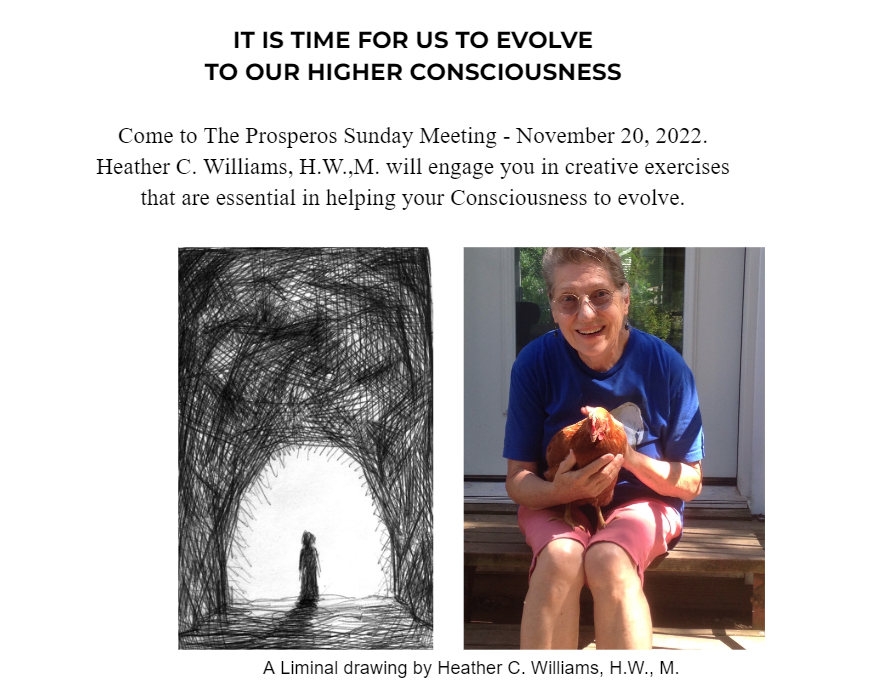
Sunday talk with Heather Williams, H.W., M., on November 20
Everyone is challenged with all the stuff happening in our world today. I hope and pray that you are doing well.
As you know, I love, practice and teach drawing as a simple, inexpensive way to mindfully connect our outer – physical, material self with our inner – formless True Self, Consciousness or Mind. Mindfully connecting these two selves is essential in moving forward in our lives. My Teacher, Thane said: “We have to learn to walk with one foot in the 3D world and one foot in the 4D world.” My friend Alex Gambeau (fellow Mentor and author of Finding the Unpredictable Good) said: “Be a servant to your Higher Self! This is how you release the Unpredictable Good!”
I invite you – to explore more of this – at my one hour Prosperos Sunday Meeting Talk!
(Remember to bring paper and pencil to draw out new insights through some of my creative exercises!)
DATE: November 20, 2022
TIME: 11:00 am Pacific/Noon Mtn/1:00 pm Central/2:00 pm EasternLINK: https://us02web.zoom.us/j/332275676
LOVE IS KEY!
Tarot Card for November 14: The Hanged Man
The Hanged Man
The Hanged Man is numbered twelve and is depicted as a figure, usually male, hanging upside down from a tree or branch. He often has his hands behind his back, as though tied (though as you can see the Thoth interpretation moves away from this aspect of apparent helpnessness). Usually one leg is tucked behind the other to form a triangle shape. Strangely though, he tends to look quite happy and content with his situation.
Not a very popular card, the Hanged Man deals with sacrifice, delays and waiting – and also being bogged down and helplessness. We sacrifice every time we make a choice – reading this web page means you have sacrificed reading the alternatives. Since sacrifice can mean giving up one thing of value for another thing of equal or greater value, this card can easily be seen as representing the natural and normal function of disposing of something that no longer suits its purpose as well as its replacement will.
The Hanged Man is totally vulnerable, his attitude is “whatever will be, will be”. He accepts everything that happens with equanimity and courage – he is, after all, simply giving in to his destiny. He can sometimes represent the person who has waited too long, who is perhaps scared to change. We should endure with strength and inner peace, but also be courageous enough to take action when destiny calls.
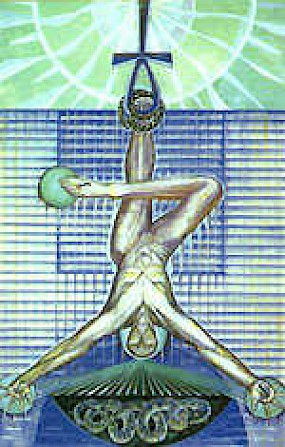
(via angelpaths.com and Alan Blackman)
Bucky Fuller on our future choice
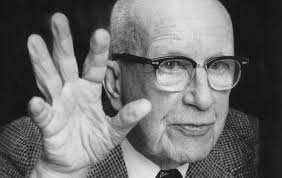
“The future is a choice between Utopia and Oblivion. Whether it is to be Utopia or Oblivion will be a touch and go relay race right up to the final moment.”
–Bucky Fuller
Richard Buckminster Fuller (July 12, 1895 – July 1, 1983) was an American architect, systems theorist, writer, designer, inventor, philosopher, and futurist. Wikipedia