YouKreuz Jul 22, 2026 Adolf Hitler’s associates talk about his first time in politics: what is it that leads him to power, what causes him to start building the Third Reich, and what makes people follow him.
YouKreuz Jul 18, 2026 Adolf Hitler’s friends and contemporaries recall how tyranny took hold during the 1930s.
YouKreuz Jul 18, 2026 Those who were at Hitler’s side during World War II remember how he led Germany to defeat and disaster.
Taboo Education – Let’s Talk Death May 8, 2026 The world constantly looks at the United States and asks one question: “How did they get so dumb?” But the truth is much darker. Americans aren’t naturally stupid – their system was meticulously engineered over 200 years to destroy critical thinking. Today, we’re looking at the “engineered ignorance” of the American public. From importing a 19th-century Prussian military school model specifically to mass-produce obedient factory workers, to the 1950s Red Scare that literally labeled “critical thinking” as Communist propaganda. And the wildest part? America is actively exporting this hyper-narcissistic, tribal dysfunction – from the prosperity gospel to toxic internet culture wars – straight to the rest of the world. If you thought failing test scores were the only issue, you haven’t met their media machine. Make sure you subscribe to Taboo Education for brand new videos every single Friday! 0:00 The Superpower Engineered to Fail 3:15 What is Critical Thinking (And Why Does It Matter?) 6:30 A Nation Founded on Anti-Intellectualism 11:00 The School System: From Prussia to No Child Left Behind 22:30 Adulthood: Compelled Loyalty & The Media Machine 34:00 The Cost: Healthcare, Debt, & Epistemic Tribalism 40:15 Why the World Is Done Being Nice 48:30 A Final Note to Our American Viewers
New Thinking Allowed with Jeffrey Mishlove Aug 14, 2026 This video is a special release from the original Thinking Allowed series that ran on public television from 1986 until 2002. It was recorded around 1990. It will remain public for only one week. The late Arthur M. Young was the inventor of the Bell Helicopter. He was also founder of the Institute for the Study of Consciousness in Berkeley, California, and author of The Reflexive Universe and The Geometry of Meaning. Here, Young elaborates on the difference between the planets Saturn, Uranus and Neptune, explaining how the planetary cycles of Saturn have had significance in his own life. He discusses the use of progressed charts in astrology from the perspective of systems theory in which whole cycles are embedded within each other. Astrology, he suggests, is a larger, more comprehensive system than science. Scientists can benefit from studying it regardless of its application in individual horoscopes.
“The closer you come to knowing that you alone create the world of your experience, the more vital it becomes for you to discover just who is doing the creating.”
~ Eric Micha’el Leventahl
Eric Micha’el Leventhal is a literary consultant, philosophy instructor & holistic educator on the island of Maui, Hawai’i. A graduate of Stanford University and San Diego’s International Professional School of Bodywork, he lived and journeyed extensively in Japan, Brazil, India and elsewhere before trading everything for love.
Arthur Young conceived of The Geometry of Meaning as an essay in philosophy, but philosophy in the older sense, encompassing the natural sciences, exploring the implications of science, and dealing with the relationship of the knower and the known. At the heart of this book is what he called the “Rosetta Stone of meaning,” a diagram of relationships based upon the twelve measure formulae of modern physics, which he used to describe the interaction of mind with matter.
Over a period of years Betty J. Kovács, her husband and their son experienced dreams and visions of future events that completely changed their lives. They learned that life and death, sorrow and joy, and matter and spirit are inseparably intertwined. Every page of this testament to life loosens our grip on the imagination and opens us to dimensions of the mind that speak in images, metaphors and symbols.
Dr. David Hanscom explains the physiology of mental pain and presents a unique four-part “dynamic healing” program to help your brain regenerate and repair. The key is learning to regulate your nervous system by cultivating what he calls “safety physiology.”
Wetiko (also spelled windigo or wendigo) is an Algonquian-rooted concept describing an evil, cannibalistic spirit or destructive force driven by insatiable greed, selfish consumption, and a total disconnect from community and nature. In modern psychological and spiritual contexts, it is widely interpreted as a contagious “mind-virus” or collective psychosis that compels humans to act against their own best interests. [1, 2, 3, 4, 5]
Traditional Origin
Cannibalistic Spirit: In Algonquin, Cree, and Ojibwe traditions, wetiko represents a monster or spirit embodying greed, excess, and a literal or figurative “heart of ice”. [1, 2, 3, 4]
Behavioral Warning: Legends warned that individuals who gave in to extreme selfishness, gluttony, or harm toward their tribe could become possessed or transformed by the wetiko force. [1]
Modern Psychospiritual Interpretation
The Mind-Virus: Authors like Paul Levy and indigenous scholars like Jack Forbes describe wetiko as an invisible, contagious psychic parasite. [1, 2, 3]
Core Traits: It manifests as consumption for the sake of consumption, systemic exploitation, environmental destruction, and an egocentric illusion of absolute separation from others. [1]
The Antidote: Writers on the subject emphasize that recognizing wetiko within our own blind spots and unconscious reactions is the first step toward breaking its cycle. [1, 2, 3]
In the context of modern capitalism, scholars and activists use wetiko as a conceptual lens to critique systemic exploitation, viewing hyper-accelerated globalized capitalism not just as an economic structure, but as the ultimate institutionalized manifestation of the wetiko “mind-virus.” [1, 2, 3, 4]
When applied to modern market systems, the concept highlights several structural parallels:
Insatiable Growth
Endless Accumulation: Capitalism’s core imperative is continuous, infinite growth. This directly mirrors the wetiko monster’s defining curse: the more it consumes, the larger, hungrier, and more desperate it becomes. [1, 2, 3, 4, 5]
Consumption as Salvation: Culturally, the system encourages consumerism as a fix-all solution for human discontent, equating personal value with material possession. [1, 2]
Commercial “Cannibalism”
Life as a Commodity: Indigenous scholar Jack Forbes defined cannibalism under wetiko as “the consuming of another’s life for one’s private purpose or profit.” [1, 2]
Exploitation: Under this framework, transforming natural ecosystems into dead commodities (ecocide) and reducing human time, health, and labor to mere line-item expenses are seen as forms of systemic cannibalism. [1, 2]
Institutionalized Blindness
Externalized Harms: Modern market mechanics separate consumers from the consequences of their purchases (e.g., hidden environmental degradation or sweatshop labor). This distance numbs social accountability.
Amputated Empathy: The classic wetiko symptom—an “icy heart”—is institutionalized when corporations are legally obligated to prioritize quarterly profit and shareholder returns over community wellbeing or ecological safety. [1, 2, 3, 4]
The Alternative Vision
Writers like Alnoor Ladha and Paul Levy argue that to fix global crises, we must look beyond policy tweaks. They advocate for: [1, 2]
“Undreaming” the System: Seeing the global economy as a collective psychological projection rather than an unchangeable law of nature.
Shifting the Goal: Moving from extractive economics to reciprocal, sustainable systems modeled on Indigenous stewardship. [1]
One clear way to lessen our leadership-centered leadership model is to rotate the Deanship of the school on a yearly basis among the three elected members of the Executive Council. Too often we confuse the person with the role. Rotating the Deanship will lessen that expectation on the part of the student body and on the part of the Dean him- or herself.
Give Robert the Boot
This is a quote from The Prosperos publication called ““Group Leadership and the Art of Leadership”
“Efficiency of operation requires that there be agreed-upon rules of operation. The standard method of solving this problem, that of parliamentary procedures [Robert’s Rules], is seldom satisfactory in group-centered groups. It tends to introduce an element of stiffness that destroys the climate of warm informality. It disrupts group unity. In general, no decision is completely satisfactory unless it has been reached by consensus. If for some reason it becomes necessary take a vote, it should be done with the greatest respect to the position of the minority.”
The trustees, the High Watch and the Mentor’s Association should drop Robert’s Rules immediately. Let’s trust each other enough to be able to run these meetings without Robert or his rules.
Group Observers
Most of our trustee, High Watch and Mentor’s Association meetings open with an invocation. As a reminder of our efforts to be more group-centered, we should close each meeting with an observer’s report. We have lots of practice doing this in our Find Yourself and Live listening and dialogue groups. So let’s put that training to good use.
If any of these ideas go against The Prosperos charter or by-laws, it’s within our power to change that charter or those by-laws.
Sparked by an Internal Family Systems (IFS) client’s lifelong affliction with an unattached burden—something in her mind that was not part of her—Bob Falconer began a decade-long study of the others within us and how they are treated worldwide. This study is important to all of us because what it reveals about the nature of mind holds a key to healing our underlying alienation and isolation.
The Others Within Us
case studiesa detailed description of how to work with unattached burdens from an IFS perspectivean extensive survey of how people have worked with the others within in times past and in many cultures around the world. The journey Bob has taken goes to the farther reaches of human experience. It has revealed insights and understandings that can’t help but cause readers to expand their beliefs about the nature of mind and healing.
Be part of the biggest human moment in historyJoin the ClapI want to receive email updates about World Clap Day, including announcements and reminders. I can unsubscribe at any time.
We use essential cookies to operate this website and analytics cookies to understand how it’s used. You can accept or reject non-essential cookies.Accept AllReject Non-Essential
World Clap Day – A Global Moment of Unity
Our Mission
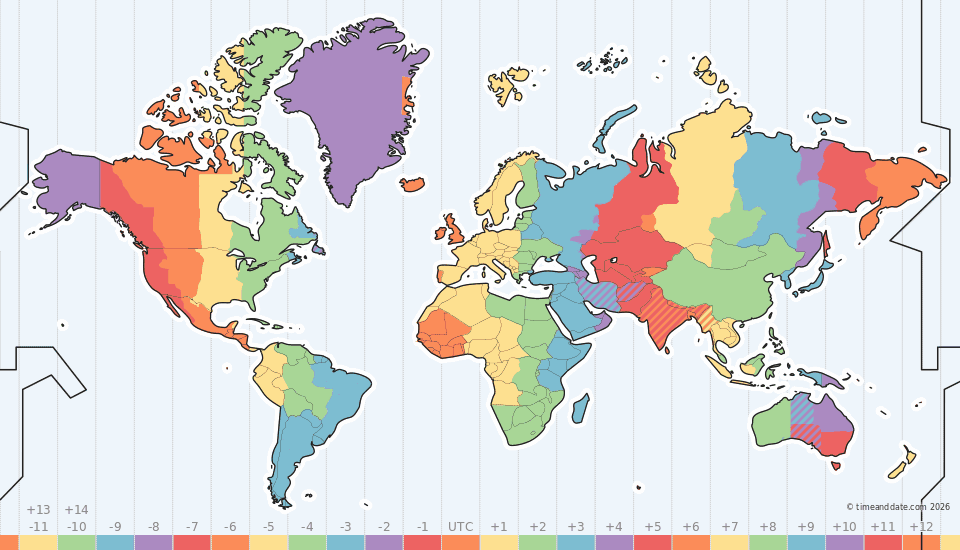
World Clap Day is a global event happening on August 16, 2026. At one exact coordinated moment, people all around the world will clap their hands for one second.
No politics. No religion. No agenda.
Just one simple, universal action done together.
It is a celebration of being alive. A reminder that beyond language, culture, or beliefs, we are human first.
For one second, the world moves as one.
The goal is not noise. The goal is unity.
Through the simplest action possible, we prove that billions of different people can synchronize, not because of tragedy or crisis, but simply to celebrate existence.
Our Vision
On August 16, 2026 all cities are invited.
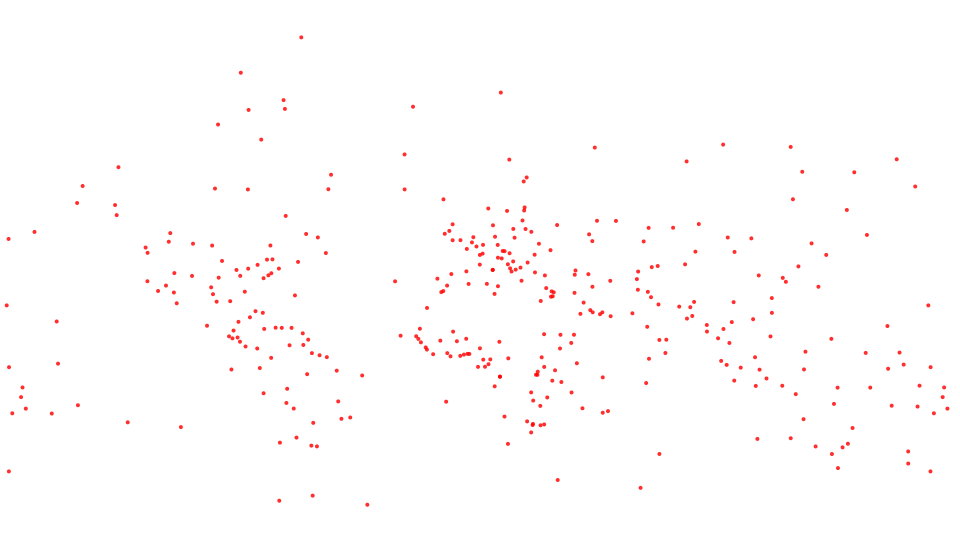
In every country, people will meet in the main squares of their cities. Friends, families, strangers. Standing side by side.
This will be broadcast online and become real in the streets.
Before the synchronized clap, each city hosts its own celebration. Music. Food. Local artists. Conversations. A moment of community.
Then, at the exact coordinated second, everyone claps together. Not just imagining the world is connected, but knowing it is.
Large screens in the main squares broadcast the central live feed of the event. Cities see each other. Crowds see crowds. Continents see continents.
The synchronization becomes visible. Tangible. Undeniable.
And immediately after that one second, the silence breaks into a massive applause to celebrate humanity.
For what the world just proved it can do. A peaceful, voluntary, global coordination of joy.
This transforms the idea from a social media movement into a physical global gathering. From movement into experience.
We use essential cookies to operate this website and analytics cookies to understand how it’s used. You can accept or reject non-essential cookies.Accept AllReject Non-Essential
“A feeling of aversion or attachment toward something is your clue that there’s work to be done.”
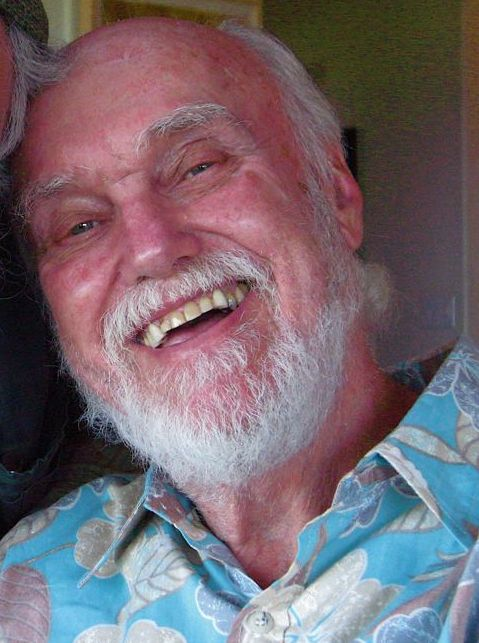
~ Ram Dass
Ram Dass, also known as Baba Ram Dass, was an American spiritual teacher, guru of modern yoga, psychologist, and writer. His best-selling 1971 book Be Here Now, which has been described by multiple reviewers as “seminal”, helped popularize Eastern spirituality and yoga in the West. Wikipedia