Paul Tillich and Reinhold Niebuhr on institutions

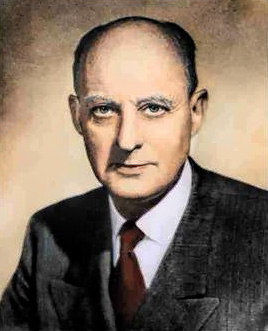
Paul Johannes Tillich (Wikipedia.org)

Paul Tillich wrote that all institutions, including the church, are inherently demonic. Reinhold Niebuhr asserted that no institution could ever achieve the morality of the individual. Institutions, he warned, to extend their lives when confronted with collapse, will swiftly betray the stances that ostensibly define them. Only individual men and women have the strength to hold fast to virtue when faced with the threat of death. And decaying institutions, including the church, when consumed by fear, swiftly push those endowed with this moral courage and radicalism from their ranks, rendering themselves obsolete.

Chris Hedges, “The Suicide of the Liberal Church”, January 24, 2016

Paul Johannes Tillich (August 20, 1886 – October 22, 1965) was a German-American Christian existentialist philosopher, Christian socialist, and Lutheran theologian who was one of the most influential theologians of the twentieth century. Wikipedia

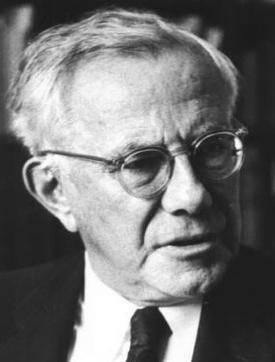
Reinhold Niebuhr (Wikipedia.org)

Karl Paul Reinhold Niebuhr (June 21, 1892 – June 1, 1971) was an American Reformed theologian, ethicist, commentator on politics and public affairs, and professor at Union Theological Seminary for more than 30 years. Wikipedia

Hawaii Is “on the Verge of Catastrophe,” Locals Say, as Water Crisis Continues

Li Cohen/CBS News

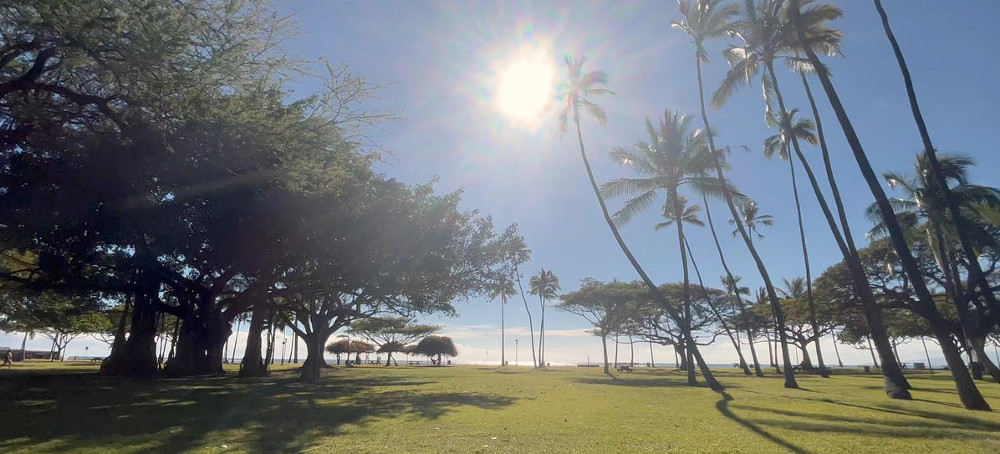
Hawaii Is ‘”Water is life” — a phrase that not only sums up what it means to exist on an island, but what it means to live, period.’ (photo: CBS News)

12 april 24 (RSN.org)

In Hawaii, one of the most important sayings is ola i ka wai, “water is life” — a phrase that not only sums up what it means to exist on an island, but what it means to live, period. But now, one of the largest of the island chain’s land masses is facing a triple threat to its sole freshwater source, and if it isn’t addressed soon, one community member says, “we’re in deep trouble.”

Despite being surrounded by seemingly endless ocean, freshwater on Oahu, the third-largest of Hawaii’s six major islands, is not easily accessible. The island relies on an underground aquifer for its water supply. Replenishing that aquifer is a decades-long natural process, as it takes a single drop of water roughly 25 years to make it there from the sky.

And recent years have seen compounding problems: less rain, leading to significant droughts, and repeated jet fuel leaks and PFAS chemical spills contaminating water systems. All of this significantly limits available water use for locals, many of whom say tourism is only worsening the situation. Just months ago, the world’s largest surfing wave pool opened up on the island — filled with freshwater.

“They’re not using it to drink or to support life, they’re using it to make money. They’re commodifying it,” said Healani Sonoda-Pale, who is Native Hawaiian and a member of advocacy group O’ahu Water Protectors. “… We are on the verge of a greater catastrophe.”

“We are in a water crisis, that has to be made very clear,” Wayne Tanaka, director of Sierra Club of Hawai’i, told CBS News, saying that if the reasons for this crisis aren’t soon addressed, “We may come to a point where we have to decide … who gets water and who doesn’t.”

Surrounded by water, Oahu runs dry

On an island, rain is essential.

Statewide, rainfall averages range widely, from just 8 inches to around 400 inches a year, Thomas Giambelluca, director of the University of Hawaii at Mānoa Water Resources Research Center, told CBS News. There is a massive difference just minutes apart. Some areas are extremely dry, while others have the wettest climate in the U.S.

At the university campus where CBS News spoke with Giambelluca, the average yearly rainfall is about 60 inches a year, while nearby Waikiki, two miles away, gets 20 inches.

Water supplies depend on that rainfall, with drier areas having a smaller supply. But those drier areas also face higher demand, as they are where tourists flock and many locals reside. And because the drinking water supply is almost entirely from groundwater, shifting weather patterns can pose a major problem.

“We have the problem of getting water to where it’s needed from where it can be found,” Giambelluca said. “…When the rain doesn’t come, we don’t have any second chance, we don’t have any other way to get our water supply. We can’t pipe it from a nearby state.”

Currently, the entire island of Oahu is considered “abnormally dry,” according to the U.S. Drought Monitor. “Severe and persistent droughts,” prompting water conservation measures, are not uncommon, Giambelluca said. While officials could work to desalinate ocean water, “that’s not the preferred way to get drinking water,” he added.

“It’s very energy-intensive, and so that would be in opposition to our goals of reducing our dependency on fossil fuels in Hawaii, reducing our emissions,” he said.

And as global temperatures continue to rise, that will only get worse — not just on Oahu, but across Hawaii.

“Hawaii is getting drier and drier, particularly since the 1980s,” state climatologist Pao-Shin Chu said. “…The consecutive dry days become longer and longer. That’s very clear.”

But drought isn’t the only issue. Warmer global temperatures also fuel more extreme precipitation, bringing more rain in a shorter duration. According to Giambelluca, that won’t necessarily help maintain the water supply, as steep watersheds will channel that water into flooding, and rising sea levels will prevent rainwater from having a place to go — not even into the aquifer. Rising seas are already causing significant erosion on coastlines.

Giambelluca explained that as sea levels rise, the ocean will infiltrate the underground freshwater system, physically pushing that resource out while also infiltrating wells and other components of the water supply system that will need to be adjusted.

“It’s already affecting those water systems,” Giambelluca said. “…There’s no question that climate change is going to make problems caused by other factors worse.”

In fact, some evidence suggests that after 2030, there will be less groundwater to extract from, Chu said, adding, “that’s going to be a problem.”

“Without water, there is no life”

For Anthony Deluze, it already is a problem. He manages farmland on Oahu, nestled in between Pearl Harbor, a highway and a shopping center. His land is spring-fed, which he uses to primarily grow taro, a root vegetable considered a sacred staple in Native Hawaiian food and culture. But climate change has made growing taro for his family and community much more difficult.

“The biggest challenge is water,” he said. “…Without water, there is no life.”

Deluze has managed the land he is on for more than a decade, but within the past five years, he said, the water table has significantly dropped, reducing the available freshwater while more seawater seeps in. Between that and the ongoing drought issues, he didn’t have even half the amount of water needed to properly maintain his crops.

“A healthy lo’i [water taro] system needs about 250,000 gallons per day per acre for it to be healthy,” he said. “… We were probably getting, in the summertime, about 35,000 per day. And if we’re lucky, maybe about 40- to 45,000 in the wintertime, per day. And this is three acres, so we’re not even hitting a fraction of what we need.”

But it’s not just a lack of water, it’s a lack of clean water.

“Water quality and water quantity are tied together,” Giambelluca said. “…Water contamination is always going to impact water quantity, water availability.”

Across the highway from Deluze’s farm lies Pearl Harbor and Joint Base Pearl Harbor-Hickam, where in November 2021, there was a jet fuel leak in the Navy’s World War II-era underground storage tanks. Nearly 20,000 gallons of jet fuel leaked out of the Red Hill Bulk Fuel Storage Facility, contaminating the base’s water system and sickening thousands of military families and locals, many of whom say they are still reeling from the health impacts.

The Board of Water Supply instantly had to shut down three wells that supply water to the island, as the aquifer sits just below Red Hill. A year later, that same facility saw a major leak of 1,300 gallons of AFFF, a fire suppressant that contains PFAS, otherwise known as “forever chemicals.”

“We can’t farm with fuel; we can’t live, period,” Deluze said.

The military has since cleaned up the bulk of the lost fuel and chemicals, but many officials believe some of both could have ended up in the environment regardless.

“Red Hill…did spark off this crisis,” Sierra Club’s Wayne Tanaka told CBS News.

“If we lose our water, every aspect of life will be impacted and upended. Not just for the next few years, but for the next few generations.”

Aretha Franklin: “How I Got Over”

Aretha Franklin • Feb 10, 2019 The official audio of “How I Got Over” by Aretha Franklin with James Cleveland and The Southern California Community Choir from the album ‘Amazing Grace’ (1972). ‘Amazing Grace’ earned Aretha a Grammy in 1973 for Best Soul Gospel Performance and remains the best selling Gospel album of all time. Find a copy of ‘Amazing Grace: The Complete Recordings’ on 4LP and 2CD here: https://rh-ino.co/amazinggrace4lp ? Subscribe to the Aretha Franklin channel and ring the bell to turn on notifications https://lnk.to/SubscribetoArethaFranklin Watch all of Aretha Franklin’s official videos here https://lnk.to/ArethaFranklinVideosID Listen to more Aretha Franklin here https://lnk.to/ArethaFranklinStreamAY

Your Body Is a Vehicle, Not a Real Self

A glimpse into a meditation on no-self

Sandra Pawula

Sandra Pawula

Published in Mystic Minds

2 days ago (Medium.com)

Photo by cottonbro studio from Pexels

When I meditate, I often feel compelled to get up and get on with the day’s activities. My ego identity feels threatened when my thoughts and emotions settle, making for a momentary lack of “me.”

My ego identity wants to re-assert and re-solidify itself. It tells me, “To hell with quiet and space, get busy now!”

Yesterday, this verse came to mind in my meditation. It contains advice from a teacher to an older student who prioritized work over her spiritual practice.

“You are misdirecting your attention. You’re constantly telling yourself, ‘This is what is real.’ These administrative problems are real. Producing a magazine is my purpose in life. Your endless focus on these externals drowns out the subtle dimension. It’s time for your focus to shift and your awareness to expand, but you’re resisting.” — Panditji

His emphasis on how humans make everything in worldly existence so real especially stood out to me. It’s why I feel this pull to end my meditation prematurely and attend to my arm’s length to-do list.

This time, I just sat with the feeling of compulsion until it dissolved.

Usually, I begin my daily practice with mindfulness meditation. I focus on where the breath enters and departs the nostrils.

I notice the wild array of thoughts I typically have—all the seriousness I conjure up about this supposed self. When I see this, I can’t help but laugh at myself a bit.

That cues me to move into contemplation on no-self.

In Vajrayana Buddhism, contemplation on the nature of the self and reality is called insight meditation or “vipashyana.” This advanced practice can lead to the realization of no-self and emptiness. Through this practice, the conceptual mind brings you to non-conceptual awareness and insight.

Lately, I’ve started by observing how my body breathes. It doesn’t need an all-important “I” to tell it to breathe. My brain knows how to react to an emergency, and it doesn’t need an “I,” either. Most of my speech and behavior results from conditioning or habit without an “I” making real choices.

When examined closely, the self begins to feel superfluous.

To take the contemplation deeper, I ask myself:

“Who is this “I” that wants to jump up and get busy? Where does it exist—in my body, brain, or little finger?

I’m not opposed to the notion of a conventionally existent self. It’s a convenient idea that helps me maneuver in the world. But I’ve never found it in my brain, body, or little finger.

I see only a mindstream of thoughts and emotions, with gaps in between. When I rest in those gaps, and they expand, I’ve found something far more real than the identity my conceptual mind has composed for itself. However, that spacious awareness I discover is real in the most insubstantial way.

You might consider that an oxymoron, but I prefer to see it as a paradox.

Like actors in a play, we embody a character and speak its script. But we’re not that character or the actor playing its role.

Most people will have no idea what I’m talking about. They see their characters and scripts seriously and hope their play will never end.

Their play constantly embroils them in intense emotions—sometimes it’s a tragedy, sometimes a comedy, sometimes a romance. Often, they want to escape a particular scene, but please, not the entire play.

I’m also imprisoned in my character, script, and play. I’ve experienced endless attachments and aversions. I cling to moments of joy and feel opposed to periods of suffering.

But when I meditate, and occasionally in other special moments too, a portal opens to reality as it is. For a moment, I rest in awareness, and a tiny piece of my ever-so-solid character begins to dissolve.

I’m not awakened, but I have glimmers of awakening.

I must habituate myself to spacious awareness to counteract this strong belief in a solid self. I must question the reality of this self to break down my firm belief in my non-existent character.

When I realize I’m trapped in a play cleverly constructed by my ego identity, I see everyone else is, too.

That insight gives birth to compassion. People must be held accountable for harmful behaviors. But I can’t fault them entirely for their intractable dedication to their performance.

I’m mesmerized by myself, too. I spend most of each day in character. But periodic glimpses tell me she’s just the figment of a playwright’s imagination, not an everlasting identity.

For more inspiration, sign up for my bi-monthly Wild Arisings newsletter and receive access to free self-discovery resources.

Sandra Pawula

Written by Sandra Pawula

·Writer for Mystic Minds

Essays to calm your mind, ease your heart and connect with your inner wisdom. Writer | mindfulness expert | trauma survivor. https://sandrapawula.substack.com/Follow

Twelve reasons you hate yourself and will continue to suck at life

Follow Alex’s Instagram for more of his drawings and bonus ideas.
Alex Mathers

Alex Mathers

Feb 29, 2024 (iamalexmathers.medium.com)

There have been many moments in my life when I felt terrible, weak and victimised.

But here’s what I learned:

Like the slight nudge of the joystick on a plane, you can divert the course of your life by thousands of miles with a tiny shift in mindset.

The nudge you need is not to fall into the following traps:

You’re obsessed with your past.

Your past seems real, but it’s nothing more than an idea. Ideas get people on the moon.

Ideas can also limit you in powerful ways.

If it suffocates your present-day joy, you must find a way to detach from the past.

You think you need ‘fixing.’

Don’t believe the hype sold to us by psychologists.

You don’t need fixing. You only need to grow and learn.

Spending time worrying about your ‘inadequacy’ holds you back unnecessarily.

You have everything you need to navigate life with intelligence.

You think you’re nothing like your ancient ancestors.

‘It’s like the 2020s! Times have changed!’ you shriek.

Put a sock in it, Sebastian.

Your biology and natural instincts don’t give a monkey’s butt about the date on your freaking apple watch.

Evolution is a slow process. Little has changed regarding what lights us up and keeps us alive.

You may want to cover up your danglers in public, but beyond that, do as your ancestors did for optimal health.

You believe your dumb thoughts.

Thoughts are tools.

They are not facts. When we believe a made-up lie in our heads, we’re being foolish.

Please stop allowing your mental estimations about life dictate what’s true.

You will waste time and do regrettable things. Use thoughts as tools, not as your personal fortune-teller.

You think worrying is intelligent.

Worriers often cling to the belief that grinding on visions in their heads is helpful.

It does nothing of the sort except weaken you physically and make you think even dumber thoughts.

Try little, empowering steps. Be courageous, and do not worry.

You treat your body like garbage.

Processed shit is such a regular feature of our diets that most of us are clueless about how good we can feel when we eat what we’re supposed to eat.

The body is a sensitive instrument and continually signals to stop fuelling your dad bod with diesel when it needs unleaded.

You don’t move your hips.

Many of our worries and stresses are locked in our bellies and hips.

We have scary moments in life and seize up.

So when we sit around on our fat asses all day, we never allow the tension to release.

Get moving and thrusting like a parakeet in heat.

You think you are your shitty stories.

‘I’m just a naturally lazy kind of person.’

No, you’re not, asshat.

You just think you are.

You’re not your stories.

Your stories were moulded over years of self-criticism and listening to the opinions of others as though they have authority.

You are everything behind your story.

You think others can influence your worth.

If we could internalise this one idea, our lives would transform in surprising ways.

Screw the law of attraction.

You’re not getting what you want because you’re scared of what others think.

When you realise that other people’s judgements can’t do a THING to your illusory sense of worth, you’ll be strutting about like He-Man on crack in no time.

You believe the media is a valid authority.

Lol.

You think bringing others down is empowering.

Ok, I know what you’re thinking.

‘Alex, aren’t you judging us here? Aren’t you bringing others down with your tone?’

Look beyond the words.

I’m teasing you to lift those of you ready to hear the message. We’re all connected.

So by striking down another, you strike yourself.

You keep making things about you.

Things always go sour when I take things personally.

Why is that?

If someone criticises my work and I go into pouty sulk mode, that’s taking something personally.

We make it about us when really it’s about the work.

Life taught me a major less when I experienced the joy and relief from finally thinking of myself less.

It isn’t about you.

When we let go and turn towards making art and helping others, we become more of ourselves anyway.

If you took something from this, please send me some claps (If you hold the button down you can hit 50 claps fast). It is appreciated.

Do you want to be mentally stronger than most people?

If you enjoyed this, you will love my free illustrated booklet for you:

‘The 12 Habits of Mentally Strong People.’

Yours free today for a short time, when you subscribe to my Substack newsletter.

Alex Mathers

Written by Alex Mathers

Helping you develop mental strength and write better. Regular tips: https://www.untetheredmind.co/

Prosperos Sunday Meeting April 14


SUNDAY MEETING 4/14/2024


Hugh John Malanaphy, H.W., M.

Getting to Know Your Dream Shadow

Our Dream Shadow will show up from time to time in our dreams. It can be scary but brings some opportunities for growth and to understand some of our unknown strengths.

Come listen, get inspired and consider taking Hugh John’s upcoming class Lucid Dreaming. This class will be held on Saturday, April 20th, beginning at 10 am pacific.

HughJohn also runs a dream interpretation workshop with the Prosperos. .

SUNDAY MEETING
4/14/2024
11:00 am Pacific/Noon Mountain/1:00 Central/2:00 Eastern


Join Sunday Meeting

By contribution.  Please click here to contribute: Contribute!

Lucid Dreaming class on April 20

LUCID DREAMING
Saturday, April 20, 2024, 10:00 AM to 3:00 P.M. Pacific
Presented on ZoomWe’re all swimming in our subconscious mind when we dream. With Lucid Dreaming, we bring the conscious mind to be aware that we’re dreaming (while we’re in the subconscious mind) and amazing things can happen. Come to class and learn the process of becoming a Lucid Dreamer. 
 
Lucid Dreaming will help to Release the Power of your Dreams
•    Accelerate your Personal Growth
•    Understand the route to your conscious evolution
•    Solve Problems
•    Realize those “not so secret” messages in your unconscious mind.
•    Gain ideas to help in waking life
•    Turn up your creativity
•    Learn to interpret your dreams
•    Practice methods to remember dreams
•    Review of the Latest scientific information on sleep, dreaming and health

What you’ll receive with the Class
•    5 hour class delivered via an online webinar.
•    Class Notes and resource Links
•    Workshop 
•    Invitation to the weekly Dream Group
•    Dream interpretation session with HughJohn
 Please Register with Button Below – Fees: $75 First Time $25 ReviewAfter registering you will be sent a Zoom meeting link to join on the day before class.Email me, HughJohn.Malanaphy@TheProsperos.org with any questions you have and I’ll be looking forward to having you in class.Register Here

Weekly Invitational Translation

Translation is a 5-step process of “straight thinking in the abstract.” The first step is an ontological statement of being beginning with the syllogism: “Truth is that which is so. That which is not truth is not so. Therefore Truth is all there is.” The second step is the sense testimony (what the senses tell us about anything). The third step is the argument between the absolute abstract nature of truth from the first step and the relative specific truth of experience from the second step. The fourth step is filtering out the conclusions you have arrived at in the third step. The fifth step is your overall conclusion.

1)    Truth is that which which is so. That which is not truth is not so. Therefore Truth is all that is. Truth being all is therefore total, therefore whole, therefore complete, therefore otherless, therefore one.  Truth being true is therefore correct, therefore perfect, therefore right, therefore moral, therefore ethical, therefore legal.  I think therefore I am.  Since I am and since Truth is all that is, therefore I, being, am Truth.  Since I, being, am Truth, therefore I, being, have all the attributes, of Truth.  Therefore I, being, am total, whole, complete, otherless, one, true, correct, perfect, right, moral, ethical, legal.  Since I am Truth and since I am mind/consciousness, therefore Truth is Mind/Consciousness.

2)    Neuroplastic pain can be eliminated. 

Word-tracking:
neuro-:  cord, communication between brain and body, nerve, sensation, awareness
plastic:  to mould, to form, to give shape to, changeable, malleable
pain:  payment due, penalty, communication of damage or lack
eliminate:  remove, open all the doors

3)    Truth being all is therefore infinite, without limits, without definition, without shape, so it would be incorrect to say that Truth is plastic, that it can change shapes, therefore Truth “broke the mould.”  Since the brain is in charge of the body and since I have very little idea of what goes on in my body, therefore my brain (my subconscious) must be a separate entity from me.  But we know that Truth is one, therefore there cannot be a brain which is separate from Truth being (my being), therefore the sole brain of the Universe is Truth/Consciousness.  Since pain is a communication of a lack of wholeness and since wholeness is all that is, therefore only wholeness can be communicated.  Truth being inclusive of all that is, there is nothing that can be added to all that is, and to remove something from all that is would create a duality, therefore there is no elimination in Truth.

4)    Truth “broke the mould.”
        The sole brain of the Universe is Truth/Consciousness. 
       Only wholeness can be communicated.
       There is no elimination in Truth

5)  One Mind is in charge of the body of Truth.

The claims in a Translation may seem outrageous, but they are always (or should always) be based on self-evident syllogistic reasoning. Here is one Translation from this week. 

For information about Translation or other Prosperos classes go to: https://www.theprosperos.org/teaching