
A glimpse into a meditation on no-self

Published in Mystic Minds
2 days ago (Medium.com)
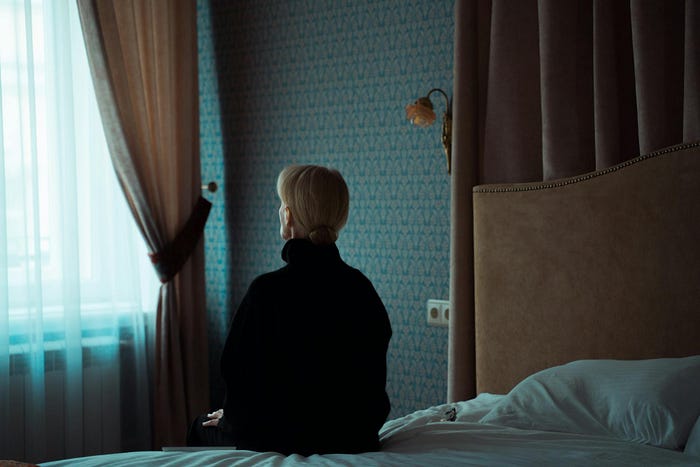
When I meditate, I often feel compelled to get up and get on with the day’s activities. My ego identity feels threatened when my thoughts and emotions settle, making for a momentary lack of “me.”
My ego identity wants to re-assert and re-solidify itself. It tells me, “To hell with quiet and space, get busy now!”
Yesterday, this verse came to mind in my meditation. It contains advice from a teacher to an older student who prioritized work over her spiritual practice.
“You are misdirecting your attention. You’re constantly telling yourself, ‘This is what is real.’ These administrative problems are real. Producing a magazine is my purpose in life. Your endless focus on these externals drowns out the subtle dimension. It’s time for your focus to shift and your awareness to expand, but you’re resisting.” — Panditji
His emphasis on how humans make everything in worldly existence so real especially stood out to me. It’s why I feel this pull to end my meditation prematurely and attend to my arm’s length to-do list.
This time, I just sat with the feeling of compulsion until it dissolved.
Usually, I begin my daily practice with mindfulness meditation. I focus on where the breath enters and departs the nostrils.
I notice the wild array of thoughts I typically have—all the seriousness I conjure up about this supposed self. When I see this, I can’t help but laugh at myself a bit.
That cues me to move into contemplation on no-self.
In Vajrayana Buddhism, contemplation on the nature of the self and reality is called insight meditation or “vipashyana.” This advanced practice can lead to the realization of no-self and emptiness. Through this practice, the conceptual mind brings you to non-conceptual awareness and insight.
Lately, I’ve started by observing how my body breathes. It doesn’t need an all-important “I” to tell it to breathe. My brain knows how to react to an emergency, and it doesn’t need an “I,” either. Most of my speech and behavior results from conditioning or habit without an “I” making real choices.
When examined closely, the self begins to feel superfluous.
To take the contemplation deeper, I ask myself:
“Who is this “I” that wants to jump up and get busy? Where does it exist—in my body, brain, or little finger?
I’m not opposed to the notion of a conventionally existent self. It’s a convenient idea that helps me maneuver in the world. But I’ve never found it in my brain, body, or little finger.
I see only a mindstream of thoughts and emotions, with gaps in between. When I rest in those gaps, and they expand, I’ve found something far more real than the identity my conceptual mind has composed for itself. However, that spacious awareness I discover is real in the most insubstantial way.
You might consider that an oxymoron, but I prefer to see it as a paradox.
Like actors in a play, we embody a character and speak its script. But we’re not that character or the actor playing its role.
Most people will have no idea what I’m talking about. They see their characters and scripts seriously and hope their play will never end.
Their play constantly embroils them in intense emotions—sometimes it’s a tragedy, sometimes a comedy, sometimes a romance. Often, they want to escape a particular scene, but please, not the entire play.
I’m also imprisoned in my character, script, and play. I’ve experienced endless attachments and aversions. I cling to moments of joy and feel opposed to periods of suffering.
But when I meditate, and occasionally in other special moments too, a portal opens to reality as it is. For a moment, I rest in awareness, and a tiny piece of my ever-so-solid character begins to dissolve.
I’m not awakened, but I have glimmers of awakening.
I must habituate myself to spacious awareness to counteract this strong belief in a solid self. I must question the reality of this self to break down my firm belief in my non-existent character.
When I realize I’m trapped in a play cleverly constructed by my ego identity, I see everyone else is, too.
That insight gives birth to compassion. People must be held accountable for harmful behaviors. But I can’t fault them entirely for their intractable dedication to their performance.
I’m mesmerized by myself, too. I spend most of each day in character. But periodic glimpses tell me she’s just the figment of a playwright’s imagination, not an everlasting identity.
For more inspiration, sign up for my bi-monthly Wild Arisings newsletter and receive access to free self-discovery resources.

·Writer for Mystic Minds
Essays to calm your mind, ease your heart and connect with your inner wisdom. Writer | mindfulness expert | trauma survivor. https://sandrapawula.substack.com/Follow