Bio: Leonard McCoy

DeForest Kelley, who played Dr McCoy in Star Trek, wanted to become a doctor, but couldn’t afford medical school. He regularly received letters from fans who went into medicine because of him and said “to influence the youth of the country … is an award that is not handed out by the industry”

From Wikipedia, the free encyclopedia

“Dr. McCoy” redirects here. For the Marvel Comics character Dr. Hank McCoy, see Beast (comics).

Leonard McCoy
Star Trek character
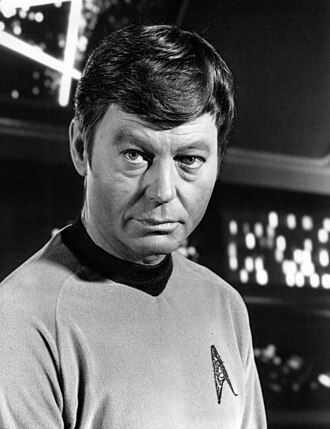
DeForest Kelley as Leonard McCoy in a publicity photograph for the original Star Trek series
First appearanceThe Man Trap” (1966)
(The Original Series)
Last appearanceStar Trek Beyond (2016)
Created byGene Roddenberry
Portrayed byDeForest Kelley (1966–1991)
Karl Urban (2009–2016)
In-universe information
Full nameLeonard Horatio McCoy
NicknameBones
SpeciesHuman
GenderMale
TitleDoctor
AffiliationUnited Federation of PlanetsStarfleet
FamilyDavid McCoy (father)
SpouseUnnamed wife (divorced)
Natira (separated)
ChildrenJoanna McCoy (daughter)

Dr. Leonard H. McCoy, known as “Bones“, is a character in the American science-fiction franchise Star Trek.[1] McCoy was played by actor DeForest Kelley in the original Star Trek series from 1966 to 1969, and he also appears in the animated Star Trek series, in six Star Trek films, in the pilot episode of Star Trek: The Next Generation, and in numerous books, comics, and video games.[2] A decade after Kelley’s death, Karl Urban assumed the role of McCoy in the Star Trek reboot film in 2009.[3]

Depiction

McCoy was born in Atlanta, Georgia, in 2227.[4] The son of David McCoy,[5]: 257–258  he attended the University of Mississippi[2] and is a divorcé.[6] McCoy later married Natira, the priestess of Yonada, characterized in the episode, “For the World Is Hollow and I Have Touched the Sky“. In 2266, McCoy was posted as chief medical officer of the USS Enterprise under Captain James T. Kirk, who often calls him “Bones”.[2] McCoy and Kirk are good friends, even “brotherly”.[5]: 146  The passionate, sometimes cantankerous McCoy frequently argues with Kirk’s other confidant, science officer Spock,[1] and occasionally is prejudiced against Spock’s Vulcan heritage.[7] McCoy often plays the role of Kirk’s conscience, offering a counterpoint to Spock’s logic.[1] McCoy is suspicious of technology,[8] especially the transporter.[2] As a physician, he prefers less intrusive treatment and believes in the body’s innate recuperative powers.[1] The nickname “Bones” – chosen before the character was named – is a play on sawbones, a 19th century epithet for a surgeon.[9][10][11] In the 2009 Star Trek film reboot, when McCoy first meets Kirk, he complains that his ex-wife took all their shared assets following their divorce: “All I got left is my bones”, implying this was the origin of the nickname.[12]

When Kirk orders McCoy’s commission reactivated in Star Trek: The Motion Picture (1979);[2] a resentful McCoy complains of being “drafted“.[13] Spock transfers his katra—his knowledge and experience—into McCoy before dying in Star Trek II: The Wrath of Khan (1982).[2] This causes mental anguish for McCoy, who in Star Trek III: The Search for Spock (1984) helps restore Spock’s katra to his reanimated body.[2] McCoy continues to serve on Kirk’s crew aboard the captured Klingon ship in Star Trek IV: The Voyage Home (1986).[2] In Star Trek V: The Final Frontier (1989), McCoy (through the intervention of Spock’s half-brother Sybok) reveals that he helped his father commit suicide to relieve him of his pain. Shortly after the suicide, a cure was found for his father’s disease, and McCoy had carried the guilt about it with him until Sybok’s intervention.

In Star Trek VI: The Undiscovered Country (1991), McCoy and Kirk escape from a Klingon prison world, and the Enterprise crew stops a plot to prevent peace between the United Federation of Planets and the Klingon Empire.[2] Kelley reprised the role for the “Encounter at Farpoint” pilot episode of Star Trek: The Next Generation (1987), insisting upon no more than the minimum Screen Actors Guild payment for his appearance.[14] McCoy had attained the rank of admiral in the Trek timeline when this episode was aired, and he is stated to be 137 years of age. He went on to become chief of Starfleet Medical, with a special rank known as branch admiral. The fictional book Comparative Alien Physiology was written by McCoy, and was required reading at the Starfleet Medical Academy through the 2370s.

In the 1973 Star Trek: The Animated Series episode “The Survivor“, McCoy mentions he has a daughter, Joanna. Although Chekov‘s friend Irina in the original series episode “The Way to Eden” was originally written as McCoy’s daughter, it was changed before the episode was shot.[15]

Reboot film series

Karl Urban as McCoy in Star Trek (2009)

In the 2009 Star Trek film, which takes place in an alternate, parallel reality,[16] McCoy and Kirk become friends at Starfleet Academy, which McCoy joins after a divorce that he says, “left [him] nothing but [his] bones.” This line, improvised by Urban,[12] explains how McCoy earned the nickname Bones. McCoy later helps get Kirk posted aboard the USS Enterprise. He later becomes the chief medical officer after Doctor Puri is killed during an attack by Nero. McCoy remains aboard to see the Enterprise defeat Nero and his crew, with Kirk becoming the commanding officer of the ship.

The Guardian called Urban’s portrayal of McCoy in the 2009 film an “unqualified success”,[17] and The New York Times called the character “wild-eyed and funny”.[18] Slate said Urban came closer than the other actors to impersonating a character’s original depiction.[19]

Development

Kelley had worked with Star Trek creator Gene Roddenberry on previous television pilots,[20] and he was Roddenberry’s first choice to play the doctor aboard the USS Enterprise.[21] However, for the rejected pilot “The Cage” (1964), Roddenberry went with director Robert Butler‘s choice of John Hoyt to play Dr. Philip Boyce.[22] For the second pilot, “Where No Man Has Gone Before” (1966), Roddenberry accepted director James Goldstone‘s decision to have Paul Fix play Dr. Mark Piper.[23] Although Roddenberry wanted Kelley to play the character of ship’s doctor, he did not put Kelley’s name forward to NBC; the network never “rejected” the actor, as Roddenberry sometimes suggested.[21]

Kelley’s first broadcast appearance as Doctor Leonard McCoy was in “The Man Trap” (1966). Despite his character’s prominence, Kelley’s contract granted him only a “featuring” credit; he was not given “starring” credit until the second season, at the urging of producer Robert Justman.[24] Kelley was apprehensive about Star Trek‘s future, telling Roddenberry that the show was “going to be the biggest hit or the biggest miss God ever made”.[5]: 146  Kelley portrayed McCoy throughout the original Star Trek series, and voiced the character in the animated Star Trek.[1]

Kelley, who in his youth wanted to become a doctor like his uncle, but whose family could not pay for a medical education,[25] in part drew upon his real-life experiences in creating McCoy, a doctor’s “matter-of-fact” delivery of news of Kelley’s mother’s terminal cancer was the “abrasive sand” Kelley used in creating McCoy’s demeanor.[5]: 145  Star Trek writer D. C. Fontana said that while Roddenberry created the series, Kelley essentially created McCoy; everything done with the character was done with Kelley’s input.[5]: 156 

“Exquisite chemistry” among Kelley, William Shatner, and Leonard Nimoy manifested itself in their performances as McCoy, Captain James T. Kirk, and Science Officer Spock, respectively. Nichelle Nichols, who played Uhura, referred to Kelley as her “sassy gentleman friend”; the friendship between the African-American Nichols and Southern Kelley was a real-life demonstration of the message Roddenberry hoped to convey through Star Trek.[5]: 154 

For the 2009 Star Trek film, writers Roberto Orci and Alex Kurtzman saw McCoy as an “arbiter” in Kirk and Spock’s relationship. While Spock represented “extreme logic, extreme science” and Kirk symbolized “extreme emotion and intuition”, McCoy’s role as “a very colorful doctor, essentially a very humanistic scientist”, represented the “two extremes that often served as the glue that held the trio together”. They chose to reveal that McCoy befriended Kirk first, explaining the “bias” in their friendship and why he would often be a “little dismissive” of Spock.[26] Urban said the script was “very faithful” to the original character, including the “great compassion for humanity and that sense of irascibility” with which Kelley imbued the character. New Zealand-born Urban trained with a dialect coach to create McCoy’s accent[27] and reprised the role in its sequels Star Trek Into Darkness[28] and Star Trek Beyond.

Cultural impact

McCoy is someone to whom Kirk unburdens himself, but is a foil to Spock.[24] He is Kirk’s “friend, personal bartender, confidant, counselor, and priest”.[29] Spock and McCoy’s bickering became so popular that Roddenberry wrote in a 1968 memo “we simply didn’t realize … how much the fans loved the bickering between our Arrowsmith and our Alien”.[30] Urban said McCoy has a “sense of irascibility with real passion for life and doing the right thing”, and that “Spock’s logic and McCoy’s moral standing gave Kirk the benefit of having three brains instead of just one.”[31]

Kelley said that his greatest thrill at Star Trek conventions was the number of people who told him they entered the medical profession because of the McCoy character.[32] He received two or three letters a month from others reporting similar experiences. A friend observed that despite not becoming a doctor as he had hoped, Kelley’s portrayal of McCoy had helped create many doctors. According to Kelley, “You can win awards and that sort of thing, but to influence the youth of the country … is an award that is not handed out by the industry”.[5]: 273 

More at: https://en.wikipedia.org/wiki/Leonard_McCoy#Development
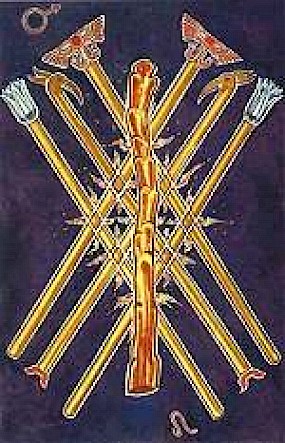
Tarot Card for September 28: The Seven of Wands

The Seven of Wands

The Lord of Valour can best be summed up by the phrase ‘feel the fear and do it anyway’. It is a card about encountering demanding and formidable situations in life, and having the courage to be true to your own desires, ambitions and needs.

Life is full of challenges. And sometimes we find it difficult to seize the moment, grasp our opportunities and live life to the full. The Seven of Wands comes up to indicate that you are facing one of those momentous happenings in life, and advises you to believe in yourself, grab your courage in both hands and go forward.

This will not only apply to difficult things – it can also point out to you that there is an opportunity to make your wildest dream come true, if only you will throw caution to the winds and dive right in!

The Lord of Valour is an exciting card, but when it comes up you will probably also feel a bit apprehensive. Don’t let caution dampen your enthusiasm. Go ahead! Fight for what you want. If you do, you’ll stand a good chance of getting it.

Because Wands are a suit much concerned (at their deepest level) with the ethics of right living, there is another instance when this card might show in a reading. That is when you find yourself in a position where you are forced to fight for what you believe in. Whilst sometimes reluctant to take up the fight, you will feel compelled to stand up and be counted. Identify this aspect if you have the Aeon (the Last Judgement) or Adjustment (Justice) coming up. Often, if we acquit ourselves well in times like these, we will achieve major progress in our own spiritual journey.

And remember – there’s no courage without fear. If you don’t feel fearful, courage is not required!!

The Seven of Wands

(via angelpaths.com and Alan Blackman)

Why Lolita (Yes, the Book About P*dophilia) is My Favorite Novel

Savvy Pepper

Published in Books Are Our Superpowe

1 day ago (baos.pub)

Light of my life, fire of my loins. My sin, my soul. Lo-lee-ta: the tip of the tongue taking a trip of three steps down the palate to tap, at three, on the teeth. Lo. Lee. Ta.

— Lolita, Vladimir Nabokov

Great. another game of is it a Lana Del Rey lyric or the opening to a novel centering around a pedophiliac rapist?

The answer? Both.

Photo from https://commons.wikimedia.org/wiki/File:Lolita_Trailer_%28Sceenshot%29.jpg

You see, we as a society have failed Vladimir Nabokov.

We manipulated Lolita into a romanticization of paedophilic relationships, and the sort-of protagonist Dolores Haze into an icon of the ‘femme fatale’ (seductive woman) aesthetic with her characteristic heart-shaped sunglasses, red lipstick, petticoats, laces, and frills basically taking over Tumblr in the 2010s.

Even Nabokov’s insistence that the covers of Lolita should not feature a little girl was soon forgotten.

It’s been a few weeks since my finishing of Nabokov’s novel and like always, I have some thoughts.

And two of those thoughts are, damn that was a good book, and, maybe one of my favorites of all time.

Here’s why.

What Makes a Book Great?

Photo by Mikołaj on Unsplash

IN MY OPINION (sorry that was aggressive), two very important features of a great book is its ability to take you into its world and to make you think.

Two features that I think Nabokov’s Lolita ate up and left absolutely no crumbs.

But before we get onto that let me start by…

Addressing the elephant in the room

(If you have already read Lolita or are familiar with the content, feel free to skip to the next section)

The book famously centers around the lust of Humbert Humbert (for the sake of not typing out 14 letters we will simply refer to him as Humbert), a man in his late thirties, who lusts after young girls, or ‘nymphettes’, due to an unfulfilled and rather tragic romance when he was a teenager.

Readers watch in terror as Humbert marries Charlotte Haze, who in shock runs onto the streets and is killed by a truck upon her discovery of her husband’s desire for her daughter Dolores Haze, whom he refers to as Lolita.

“She was Lo, plain Lo, in the morning, standing four feet ten in one sock. She was Lola in slacks. She was Dolly at school. She was Dolores on the dotted line. But in my arms, she was always Lolita”.

The novel then unravels a series of abuse and rape that is inflicted upon Lolita by Humbert disguised to the readers as a beautifully written love story.

Photo by Federico Respini on Unsplash

Substance + Style = Chaos

As you can see from my genius equation above, I have explained what I think is the root of the controversy surrounding ‘Lolita’, the contrast between the substance and the style.

This, ladies and gentlemen of the jury (see what I did there), is the culprit for all of the accusations of the romanticizing of inappropriate relationships, the defending of rape and pedophilia, and the general insanity cast against Lolita.

It presents Humbert, who is objectively a narcissist, rapist, and pedophile, as a well-spoken, attractive, and even romantic character.

The novel depicts Humbert’s pedophilia as ‘true love’ and seemingly excuses his abuses (damn, I could be a rapper) of a literal child as an idealistic display of passion.

“I just don’t know what is wrong with people that think this is okay. I don’t care how well-written this book is considered to be. I wouldn’t recommend it to any age.” — a concerned parent to Common Sense Media Reviews for Lolita

The various movie adaptations of Lolita, especially the 1997 Adrian Lyne adaptation, are the embodiments of the problems that society has with Lolita.

Photo from https://commons.wikimedia.org/wiki/File:Lolita_Trailer_%28Sceenshot%29.jpg

Dominique Swain, who plays Dolores, and Jeremy Irons, the actor for Humbert, are both attractive people. The styling and aesthetic contained within the film are probably what comes to mind when Lolita is mentioned.

I mean the amount of screenshots from the film with an edgy love quote on it I’ve seen on my Instagram feed is a little crazy.

In the movie, they upped the age of Dolores Haze to sixteen despite her being twelve in the original book, this contributes to a larger problem of the movie adaptations, that it quite literally glamorizes the storyline, a storyline that is not directly derived from the original text.

In the novel, the story is told from the perspective of an unreliable narrator who we know is not trustworthy, however, when it comes to the film, we view it from a third-person perspective which hints that what is being shown on screen is the reality.

The beautifully styled sixteen-year-old Dolores Haze (who looks much older than sixteen in the movie) and the broodingly handsome Humbert transform the film from a psychological thriller into a somewhat tragic romance story.

But that wasn’t Nabokov’s intention.

Photo by Nathan Dumlao on Unsplash

So why do I like it so much?

I am in no way shape or form defending pedophilia. I just wanted to get that out of the way.

But that is not what we are talking about.

You don’t have to support murder for you to like a murder mystery book, so I think it’s a rather dumb assumption for one to make that someone who likes Lolita as a novel has to have support for pedophilia or any of the other disgusting acts that occur within the novel.

Talking about the novel specifically here, remember the two features I mentioned above of what makes a book so great?

I know, I know, that was quite a while back so let me remind you:

  • ability to draw you into its world
  • ability to make you think

Let’s tackle the first one first.

Nabokov is an absolutely outstanding author. I have rarely been so captivated by the world-building of a story as much as I have with “Lolita”.

The control that Nabokov has over the dynamics of the story, contrasting intense emotional scenes where Lolita finds out that her mother is dead, with light-hearted slow-moving narration of a road trip down the American countryside, is something to marvel at. And all of this was written with his masterful use of language.

His profound understanding of human psychology allows the characters to come to life in a way that is real.

Photo by Andrew Seaman on Unsplash

Here’s probably a controversial opinion but I think the way that Nabokov characterized Humbert allows us as readers to coil back in disgust at his actions but at the same time at the back of our minds pity this man who can’t seem to escape his childhood traumas whether that be his unfulfilled and tragic Riviera love story as a teenager, or his mother dying when he was an infant which may have been the root cause of his perverse attraction (sorry to get all Freudian up in here).

At times, perhaps under the influence of the manipulative Humbert, we see him as but a sad man who has this uncontrollable desire that is rejected by society but is consuming him from the inside.

To speak in Freudian terms, Humbert’s clash between his id (impulsive desires) and superego (one’s idealized self-image) is something that I think a lot of us can relate to, perhaps not to the extreme degree that is experienced by Humbert but you know what I mean.

It’s sad to think that many people whose sexual identity diverted from traditionally established norms probably have felt this too, especially back in the day and it really makes us feel the humanity of Humbert in a way that does not excuse nor justify his actions.

This is the brilliance of the novel. Fiction reveals truths about humanity in a way that it is encountered in real life, under masks and facades.

This leads me to my next point.

It makes you think…like a lot

I remember many sleepless nights when I foolishly decided that Lolita should be the book that I read before bed.

Photo by Jp Valery on Unsplash

Here are some questions that I had whilst reading.

  • Does the garden of the Haze house resemble the garden of Eden with Mrs. Haze as Eve and Lolita as the forbidden fruit?
  • Did Humbert have any guilt or remorse for his attraction to little girls that was not based on law?

I find it rather ironic that a text written by an author who ‘in starting to work on a book has no other purpose than to get rid of that book’ had created what had become such a thought-provoking masterpiece.

It allows us to grapple with complex subjects and dilemmas where our capabilities as intellectuals are pushed to the extremes.

I agree that some of the topics touched upon by this book are disgusting and that the misinterpretations of this book by pop culture may result in some prejudice against its source.

But I do want to mention that just because something is not represented doesn’t mean that it doesn’t exist.

You would be mistaken to assume that there are no longer cases similar to that of Lolita in the present day, Lolita itself being suggested to have been influenced by the real-life kidnapping of young Sally Horner.

As the fictitious author and editor of Humbert’s memoir said,

‘As a case history, “Lolita” will become, no doubt, a classic in psychiatric circles. As a work of art, it transcends its expiatory aspects, and still more important to us than scientific significance and literary worth, is the ethical impact the book should have on the serious reader; for in this poignant personal study there lurks a general lesson; the wayward child, the egotistic mother, the pantic maniac- these are not only vivid characters in a unique story: they warn us of dangerous trends; they point out potent evils. “Lolita” should make all of us- parents, social workers, educators- apply ourselves with still greater vigilance and vision to the task of bringing up a better generation in a safer world.’

And with that, I’m signing off,

Keep hustling my little peppers,

stay savvy.

If you have enjoyed this article, you are free to smash that follow button for more content coming your way!

About Us

I’m sure that Leonardo Da Vinci, Steve Jobs, and other legends would agree with me that it is to stand at the intersection of different disciplines that separates the great from the good.

That is why we cover insights into psychology, money, business, and everything in between that will help you achieve whatever is your definition of success. What more could you ask for?

It’s all about YOU.

Through chaotic explorations and sarcastic narrations, Savvy Pepper aims to challenge the standards and norms imposed by society and look at things from a different perspective.

Join us on our journey for a better future!

Savvy Pepper

Written by Savvy Pepper

·Writer for Books Are Our Superpower

Chaotic insights into psychology, money, business, and everything in between. What more could you ask for?

The Astrology of October 2023 – The Eclipse Season is ON!

Astro Butterfly contact@astrobutterfly.com  Sept. 26, 2023

October 2023 is marked by 2 powerful eclipses in Libra and Taurus.

The eclipse season is when things ‘happen’ – so in October we know we’re up for some interesting developments.

While the eclipses are shifting from the Taurus/Scorpio axis into the Aries/Libra axis, we still have a lot of Scorpio energy to deal with this month: Pluto goes direct, and Mars, Mercury and Sun all enter Scorpio, reminding us of ‘that time of the year’ when we’re compelled to explore the hidden aspects of ourselves and the world around us.

In the 2nd part of the month, Venus in Virgo applies a beautiful trine to Jupiter, and then she forms a grounded and productive Grand Earth Trine with Uranus and Pluto. This lovely earth energy is our reward for a job well done!

But let’s take a look at the most important astrological events of the month:

October 4th, 2023 – Mercury Enters Libra

On October 4th, 2023, Mercury enters Libra. Over the next couple of weeks, our communication becomes more diplomatic and tactful, and our negotiation skills sharpen.

Many people associate Libra with indecision, but let’s ot forget that Libra is a cardinal, initiating sign. Mercury in Libra’s goal is to move things forward: come up with ideas, initiate conversations, and reach agreements.

If you’ve been stuck (and you’re probably been stuck, since we just got out of a Mercury retrograde) with a long laundry list of to-dos and decisions to make – Mercury’s transit in Libra is a great opportunity to finally make those crucial decisions that have been pending.

October 9th, 2023 – Venus Enters Virgo

October 9th, 2023, Venus enters Virgo. Hallelujah! It’s been a loooong Venus in Leo transit. Can you believe we had 4 months of Venus in Leo?

The difference between look-at-me Venus in Leo to practical and humble Venus in Virgo is like Barbie vs. Cinderella.

Unlike Barbie, Cinderella was not born in a shiny outfit… she had to scrub the whole house to go to the ball.

When Venus moves into Virgo, the slogan changes from “Because I’m worth it” to “Because I’ve earned it”. The invitation to the ball WILL come! Later this month, Venus trines Jupiter, and then Uranus and Pluto.

October 11th, 2023 – Pluto Goes Direct

On October 11th, 2023 Pluto goes direct at 27° Capricorn.

When an outer planet like Pluto changes direction, its energy is stronger than usual.

On October 11th (plus minus 2 days), the Plutonic energy will be at its peak. This is when we can expect intense thoughts, feelings, and events that will catalyze profound transformation in our lives.

Pluto transits feel cathartic and purifying – they ask us to remove what’s out of alignment, so we can create space for new life to grow.

You are especially influenced by Pluto’s station if you have planets at the ending degrees (25°-29°) of cardinal signs: Aries, Cancer, Libra, and Capricorn.

October 12th, 2023 – Mars Enters Scorpio

On October 12th, 2023, Mars enters its home sign, Scorpio. Mars feels great in Scorpio because in this fixed, powerful sign, Mars gets to channel its intense energy and passion with surgical precision to achieve its ultimate goal.

Scorpio’s glyph and Mars’ glyph both feature an arrow, a symbol for assertive, directed energy that needs an outlet for expression.

When Mars in Scorpio sets a goal, it will relentlessly pursue it, piercing through obstacles, going deep into the shadows if necessary, until it conquers and transforms whatever stands in its way.

October 14th, 2023 – New Moon Solar Eclipse In Libra

On October 14th, 2023 we have a New Moon Annular Solar Eclipse at 21° Libra. This is a South Node Eclipse and is conjunct Mercury, square Pluto and quincunx Uranus in Taurus.

At this powerful Solar Eclipse, we are pressing the RESET button. South Node Solar Eclipses often come with an ending followed by a new beginning.

The New Moon Eclipse in Libra is a great opportunity to reset unhealthy relationship patterns and start from a clear state.

October 20th, 2023 – Sun Conjunct Mercury in Libra

On October 20th, 2023, Sun is conjunct Mercury at 26° Libra. We are now in the middle, or the “Full Moon” phase of the current Mercury cycle. This means it’s manifestation time!

What do we manifest? Anything ‘Mercury’: an intellectual project, a piece of writing, a speech, a presentation, a negotiation, or a collaboration. Pluto is squaring the conjunction, so your Mercurial delivery will be intense and transformative.

October 22nd-23rd, 2023 – Mercury And The Sun Enter Scorpio

On October 22nd, 2023, Mercury enters Scorpio, and the next day, the Sun joins in. Happy birthday to all Scorpios out there!

Sun in Scorpio brings in passion, and a desire for transformation, and Mercury in Scorpio brings in a sharp intellect and a focus on uncovering hidden truths.

Both Sun and Mercury in Scorpio seek meaningful connections. This is not a time for chit chat or superficial encounters. This is a great transit to have honest conversations (with ourselves and others), do therapy, and get to the bottom of our thinking patterns.

October 28th, 2023 – Full Moon Eclipse In Taurus

On October 28th, 2023 we have a Full Moon and North Node Lunar Eclipse at 5° Taurus. The Eclipse is conjunct Jupiter in Taurus and it’s opposite Mercury and Mars in Scorpio.

This is a North Node eclipse so it comes with opportunities to change our karmic patterns and align ourselves with our soul’s purpose.

With the Moon conjunct Jupiter, we feel confident and optimistic – the world is ours! We need, however, to consider what others think of our grand ideas (Eclipse opposite Mercury and Mars).

The good news is that the universe (aka Venus, the Full Moon ruler) is on our side. At the time of the Full Moon, Venus engages in a beautiful Grand Earth Trine with Uranus and Pluto.

We do have what it takes to succeed, and the Grand Trine will help us manifest our aspirations into tangible reality.

October 29th, 2023 – Mercury Conjunct Mars In Scorpio

On October 29th, 2023, Mercury is conjunct Mars at 11° Scorpio.

Mercury conjunct Mars is decisive, determined, and doesn’t leave any stone unturned.

When we combine Mercury in Scorpio’s sharp intellect with Mars’ drive and assertiveness, we get a Sherlock Holmes-y type of energy.

This transit will give you the drive and the intellectual stamina to tackle complex challenges and take bold action. The exact area of life impacted by this transit is revealed by the house ruled by Scorpio in your birth chart.

Astro Butterfly Wings Natal Chart Program

Do you want to go beyond reading astrology transits? Do you feel drawn to go deeper?

There are only 10 hours left to join Astro Butterfly Wings. On Wednesday we start!

Unlike other courses, Astro Butterfly is not just a series of lectures. We gather for 10 weeks to learn, practice, have breakthroughs, and forge lasting relationships.

We’re here because we believe in you and the transformative power of astrology. If you feel drawn to join us, now it’s the time:

Astro Butterfly Wings

Astro Butterfly Wings PRO

Traditional downtowns are dead or dying in many US cities — here’s what’s next

Traditional downtowns are dead or dying in many US cities — here's what's next

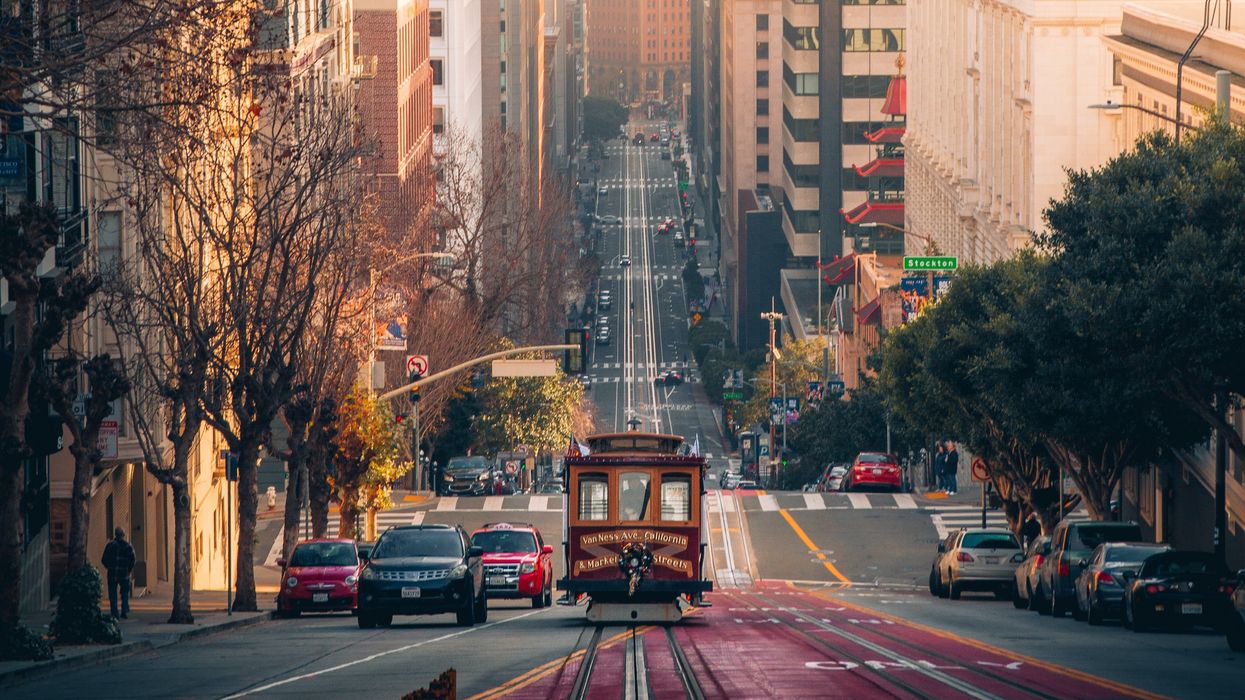
Photo by Ethan Chang on Unsplash

cars on road near high rise buildings during daytime

The Conversation

September 25, 2023 (alternet.org)

The hollowing out of U.S. cities’ office and commercial cores is a national trend with serious consequences for millions of Americans. As more people have stayed home following the COVID-19 pandemic, foot traffic has fallen. Major retail chains are closing stores, and even prestigious properties are having a hard time retaining tenants.

The shuttering of a Whole Foods market after only a year in downtown San Francisco in May 2023 received widespread coverage. Even more telling was the high-end department store Nordstrom’s decision to close its flagship store there in August after a 35-year run.

In New York City, office vacancy rates have risen by over 70% since 2019. Chicago’s Magnificent Mile, a stretch of high-end shops and restaurants, had a 26% vacancy rate in spring 2023.

A recent study from the University of Toronto found that across North America, downtowns are recovering from the pandemic more slowly than other urban areas and that “older, denser downtowns reliant on professional or tech workers and located within large metros” are struggling the hardest.https://www.youtube.com/embed/G5qBZrj6Rt8?wmode=transparent&start=0

Like many U.S. cities, Portland, Oregon, is losing downtown businesses. This is cutting into urban revenues and creating a perception of decline.

Over more than 50 years of researching urban policy, I have watched U.S. cities go through many booms and busts. Now, however, I see a more fundamental shift taking place. In my view, traditional downtowns are dead, dying or on life support across the U.S. and elsewhere. Local governments and urban residents urgently need to consider what the post-pandemic city will look like.

Decades of overbuilding

U.S. downtowns were in trouble before the COVID-19 pandemic. Today’s overhang of excess commercial space was years in the making.

Urban property markets are speculative enterprises. When the economy is booming, individual developers decide to build more – and the collective result of these rational individual decisions is excess buildings.

In the 1980s, the Reagan administration allowed a quicker depreciation of commercial real estate that effectively lowered tax rates for developers. With financial globalization, foreign money flowed into the U.S. property sector, especially to very big development projects that could absorb large pools of liquid capital looking for relatively safe long-term investments.

Years of low interest rates meant cheap money for developers to finance their projects. City governments were eager to greenlight projects that would generate tax revenues. In many downtowns, office space now takes up between 70% and 80% of all real estate.

A construction worker on a movable scaffold in a gutted office building.

A former office building at 160 Water St. in New York City’s financial district undergoing conversion into 600 apartments in March 2023.

Lev Radin/Pacific Press/LightRocket via Getty Images

The pandemic push

COVID-19 finally burst this 40-year bubble. During pandemic lockdowns, many people worked from home and became comfortable with virtual meetings. Telecommuting grew as conventional commuting declined. Workers with the resources and job flexibility moved from cities to so-called “zoom towns” where housing was more affordable and parks and outdoor activities were close at hand.

Now, many employers want their staffs to return to the office. However, workers are pushing back, especially against spending full five-day weeks in the office. New technologies have made it easier to work from home, and a tight labor market has strengthened employees’ bargaining power.

There are significant knock-on effects. A range of businesses, including restaurants, retail stores and services, rely on downtown office workers. At least 17% of all leisure and hospitality sector jobs are in the downtowns of the 100 largest U.S. cities.

In San Francisco, for example, a typical office worker used to spend $168 near their office per week. Now, with nearly 150,000 fewer office workers commuting downtown, about 33,000 people in the service and retail sectors have lost their jobs.

Terminal decline?

Today, many cities are confronting the prospect of an urban doom loop, with a massive oversupply of office and retail space, fewer commuters and a looming urban fiscal crisis. Washington, D.C., is an illustration.

In December 2022, the city had approximately 27,000 fewer jobs than in February 2020, and it faced a growing financial shortfall from declining property taxes due to downtown business closures and fewer property purchases. The District of Columbia government projects that city revenues will decline by US$81 million in fiscal year 2024, $183 million in 2025 and $200 million in 2026. Washington’s Metropolitan Transit Authority faces a $750 million shortfall because of a sharp decline in ridership.

In the Communist Manifesto, Karl Marx and Friedrich Engels famously wrote that under the pressures of dynamic capitalism, “all that is solid melts into air.” They could have been describing the ever-changing built form of the United States, with people and money flowing to Main Street stores through the 1960s, then to suburban malls in the 1970s and 80s, then abandoning malls for revived downtowns and online shopping. Now, traditional downtowns may be in similar terminal decline.

Repurposing office space

What can cities do with their surplus office spaces? In some cities, such as Columbus, Ohio, investors are purchasing deeply discounted buildings, demolishing them and finding more profitable uses for the land, such as residential and mixed-use buildings. Other options include converting commercial space into residences or more specialized applications such as biotech labs.

But conversion is no panacea. There are many regulatory hurdles, although cities are changing zoning laws to make the process easier. Many office buildings have large internal floor spaces that makes it expensive to divide them into individual residential units that all receive outdoor light. And glass-sheathed buildings with windows that don’t open are prone to overheating.

Another approach is making downtowns more alluring, through steps such as waiving fees for food trucks and small businesses, offering free parking at night and on weekends and promoting events and eateries. The city of Columbus gives out lunch coupons for downtown restaurants.

Worcester, Massachusetts, offers financial aid for small businesses that move into vacant storefronts. San Francisco is considering a proposal to convert its downtown Westfield Centre Mall, formerly home to Nordstrom and other retailers, into a soccer stadium.

In my view, the growth of commercial office complexes that has long been promoted by investors, developers and federal and city governments has probably come to an end. The nation no longer needs so much office space. It will require more community involvement to find out what people want instead. Some communities may focus on housing, while others opt for more recreational opportunities or green spaces.

The downtown filled with acres of banal office blocks, with accompanying ground-level retail stores and shopping malls, is a relic of the 20th century. It’s daunting but exciting to envision what will take its place.

John Rennie Short, Professor Emeritus of Public Policy, University of Maryland, Baltimore County

This article is republished from The Conversation under a Creative Commons license. Read the original article.

Robots aren’t really going to take our jobs. They’re going to do something much worse

OPINION

In his new book, Los Angeles Times columnist Brian Merchant connects the 19th century weavers’ rebellion with today’s battles with Big Tech and AI.

Soleil Ho

Sep. 26, 2023 (SFChronicle.com)

Jamie Gerkowski places hot meals on a delivery robot at the San Francisco Towers retirement community in February. New technology is raising questions about automation and labor.
Jamie Gerkowski places hot meals on a delivery robot at the San Francisco Towers retirement community in February. New technology is raising questions about automation and labor.Santiago Mejia/The Chronicle

In today’s tech-obsessed world, the Luddites, 19th century British worker rebels known for smashing the machines made to replace them, are considered hammer-wielding, anti-progress primitives who we’d do well to leave in the dustbin of history. But according to Los Angeles Times tech columnist Brian Merchant, that popular conception is dead wrong. In his new book, “Blood in the Machine: The Origins of the Rebellion Against Big Tech,” Merchant zooms in on the misunderstood movement to show us that those machine-smashing rebels were anything but ignorant — in reality, they were grappling with the same questions about automation and labor that we are now. 

Merchant writes, “We owe the Luddites a great deal, in fact, for resisting the onslaught of automated technology, the onset of the factory system, and the earliest iterations of unrestrained tech titanism and corporate exploitation. For refusing to ‘lie down and die’ as those in power expected them to.”

I spoke to Merchant about what lessons we could learn from the Luddites, how robots aren’t really going to take our jobs (but do something much worse), and the revolutionary power of being able to say “no” to technology that makes your life worse. 

Q: In the book, you start with the premise that “Luddite” has become a pejorative that doesn’t reflect historical reality — that this was a worker movement about dignity and economic security, not an irrational fear of machines. How did this rhetorical shift happen?

More Opinions

A: Sometimes I bristle at venturing into hyperbole when using terms like “propaganda,” but that’s basically what the English state did almost immediately 200 years ago: launch a propaganda campaign against the Luddites. They knew the Luddites were making points that were popular with the working and middle classes, so they put out a countervailing narrative that would benefit the industrialists. The government argued that to oppose this emerging tech sector was to oppose progress. And today, we have 200 years of this idea being inculcated into us by the captains of industry and tech CEOs who benefit mightily from that being the status quo.

Q: The book follows one Luddite leader, George Mellor, who was trained in cloth work but ended up leading raids against factories when he was made obsolete by owners who embraced mechanization. I’ve recently heard so many stories similar to his: taxi drivers testifying about driverless cars, for example. 

A: George did everything right. He spent years apprenticing his trade and came out the other end ready to embark on a career as a skilled tradesman. People like him had been doing the same trade for many years in an egalitarian system governed by regulations, standards and practices. The idea that I could put all my machinery under one roof and lower my prices ’til others can’t compete anymore was a new sentiment. The emerging laissez-faire capitalists tore up these social contracts that governed these pre-industrial towns for hundreds of years. 

Q: A huge part of the book is your argument that we’re now at a similar tipping point. Are we getting closer to the machine-smashing phase?

A: We do see a lot of similar things happening, where gig workers are organizing and saying, “We’re in dire straits, with many of us working full-time and unable to pay rent. We need to be recognized as employees and get some basic protections.” After California passed AB5 and classified those workers as proper employees (entitled to benefits), what happened? Tech companies pushed Prop. 22 (which granted app-based taxi and delivery companies an exemption to AB5) to tear that all up. We’re in territory now where we have really precarious workers fighting for better conditions, and it would only take a handful of trends to start going the wrong way for it to tip into more tumultuous times. 

Q: There’s currently a lot of talk about automation and job loss, with several surveys and studies pointing to a large number of positions potentially being subject to automation. A recent Gallup poll showed 22% of Americans worry about their jobs becoming obsolete. What can history tell us about that idea?

A: In the Luddites’ time, it’s not that the jobs were replaced, but that machines could be worked by children or low-skill workers for way less pay. So the robot jobs apocalypse is really all about de-skilling, job degradation and moving those jobs to cheaper places.

Q: One thing you hear a lot from Silicon Valley is that technological advances are “inevitable” — it’s just a matter of who gets there first. But reading your book made me think a lot harder about those claims!

A: This is the big lesson of the Luddites: If there is a tech that is actively exploiting people, it is within our power to say no. This year, screenwriters went on strike when they realized that studios wanted to use generative AI and pay them half their rate to fix scripts written by ChatGPT. Even if the results would be worse, AI could be used as leverage against the writers. In saying no, the writers made a very Luddite move — and people are siding with them by huge margins. 

It’s a bad moment in a lot of ways, but I think that there’s a space for pushing back on some of these things that haven’t been pushed back. I think the Luddites can help us learn how to do that.

Reach Soleil Ho (they/them): soleil@sfchronicle.com; Twitter: @hooleil

Written By Soleil Ho

Soleil Ho is an opinion columnist and cultural critic, focusing on gender, race, food policy and life in San Francisco. They were previously The Chronicle’s Restaurant Critic, spearheading Bay Area restaurant recommendations through the flagship Top Restaurants series. In 2022, they won a Craig Claiborne Distinguished Restaurant Review Award from the James Beard Foundation.

Previously, Ho worked as a freelance food and pop culture writer, as a podcast producer on the Racist Sandwich, and as a restaurant chef. Illustration courtesy of Wendy Xu.

San Francisco Chronicle Homepage - Site Logo

HEARST newspapers logo©2023 Hearst Communications, Inc.