
New Thinking Allowed with Jeffrey Mishlove Jun 21, 2022 David Hanscom, MD, is author of, Back in Control: A Surgeon’s Roadmap Out of Chronic Pain and Do You Really Need Spine Surgery?: Take Control with a Spine Surgeon’s Advice. Dr. Hanscom is an orthopedic complex spinal deformity surgeon who quit his surgical practice in 2019 to focus on teaching people how to break loose from the grip of chronic mental and physical pain – with and without surgery. His insights arose out of escaping from his own 15-year ordeal of suffering with severe chronic pain. As he began to share his approaches with his patients, a predictable sequence of learning evolved. It is reflected in the self-directed action plan that he created, The DOC (Direct your Own Care) Journey. His website is backincontrol.com. Dr. Hanscom shares that chronic pain has its roots in anxiety. Most surgeries related to chronic pain are being done on anxiety and are unnecessary. All chronic mental and physical disease have the same common origin of inflammation that is caused by an elevated threat response and anxiety. Two-thirds of Americans are raised in traumatic environments that elevate their threat response. He describes his own journey out chronic pain. Resolving pain and anxiety is a multipronged approach that includes meditation, sleeping and eating well, and exercise. Expressive writing is emphasized to alleviate suppressed thoughts and anxiety. Spirituality is ultimately the answer to heal pain and thrive. New Thinking Allowed Guest Host, Emmy Vadnais, OTR/L, is an occupational therapist and integrative medicine practitioner based in St. Paul, Minnesota. She is the author of Intuitive Development: How to Trust Your Inner Knowing for Guidance With Relationships, Health, and Spirituality. Her website is https://emmyvadnais.com/ (Recorded on May 24, 2022)
Monthly Archives: June 2022
Book: “The Moral Equivalent of War”

The Moral Equivalent of War
William James, D.E. Wittkower (Narrator)
The Moral Equivalent of War, the last public utterance of William James, is significant as expressing the opinions of a practical psychologist on a question of growing popular interest. For the past fifteen years the movement for promoting international peace has been enlisting the support of organizations and individuals the world over. That this is a question on which much may be said for the opposition, James, though a pacificist, admits with his usual fair-mindedness, pointing out that militarism is the sole nourisher of certain human virtues that the world cannot let die, and that until the peace party devises some substitute, some moral equivalent, for the disciplinary value of war, their utopian goal is neither desirable nor possible. His own solution is advanced not as a practical measure, but merely as an illustration to show that the world is full of opportunities for the peaceful development and continuation of the martial qualities of human life.
This essay was written for general dissemination as a publication of the American Association for International Conciliation, February, 1910. As it not only presents a peace program but defines as well the most familiar arguments of the war party, no militarist article has been included, although it may be mentioned that a suggestive apology for war is to be found among De Quincey’s Essays and also in Ruskin’s Crown of Wild Olive. Additional documents on conciliation, approaching the question from innumerable points of view, are published by the Association mentioned above.
(Summary by Harrison Ross Steeves and Frank Humphrey Ristine, editors.)
(Goodreads.com)
HIGH WATCH STRAW POLL FOR NEW DEAN
A straw poll has been initiated to gauge the preferences of The Prosperos High Watch for the new Dean.
High Watch members can voice their preferences at the High Watch monthly meeting on Sunday, June 26, at 9 a.m. Pacific time via Zoom or they can email their preference to Pam Rodolph, Secretary-Treasurer of the High Watch, at pam.rodolph@theprosperos.org before that June 26 meeting.
High Watch Zoom link: https://us02web.zoom.us/j/85701064371
Meeting ID: 857 0106 4371
The two active candidates are William Fennie, H.W., M., and Mike Zonta, H.W., M.

Information about Mike’s platform and bio can be located here: https://bathtubbulletin.com/zonta-nominates-himself-for-dean-of-the-prosperos/

Information about William’s outlook and bio can be found here: https://www.theprosperos.org/dean
As outlined in the By-Laws of The Prosperos, a new Dean will be elected at the annual meeting of the trustees in September 2022.
The myth of ‘mad’ genius
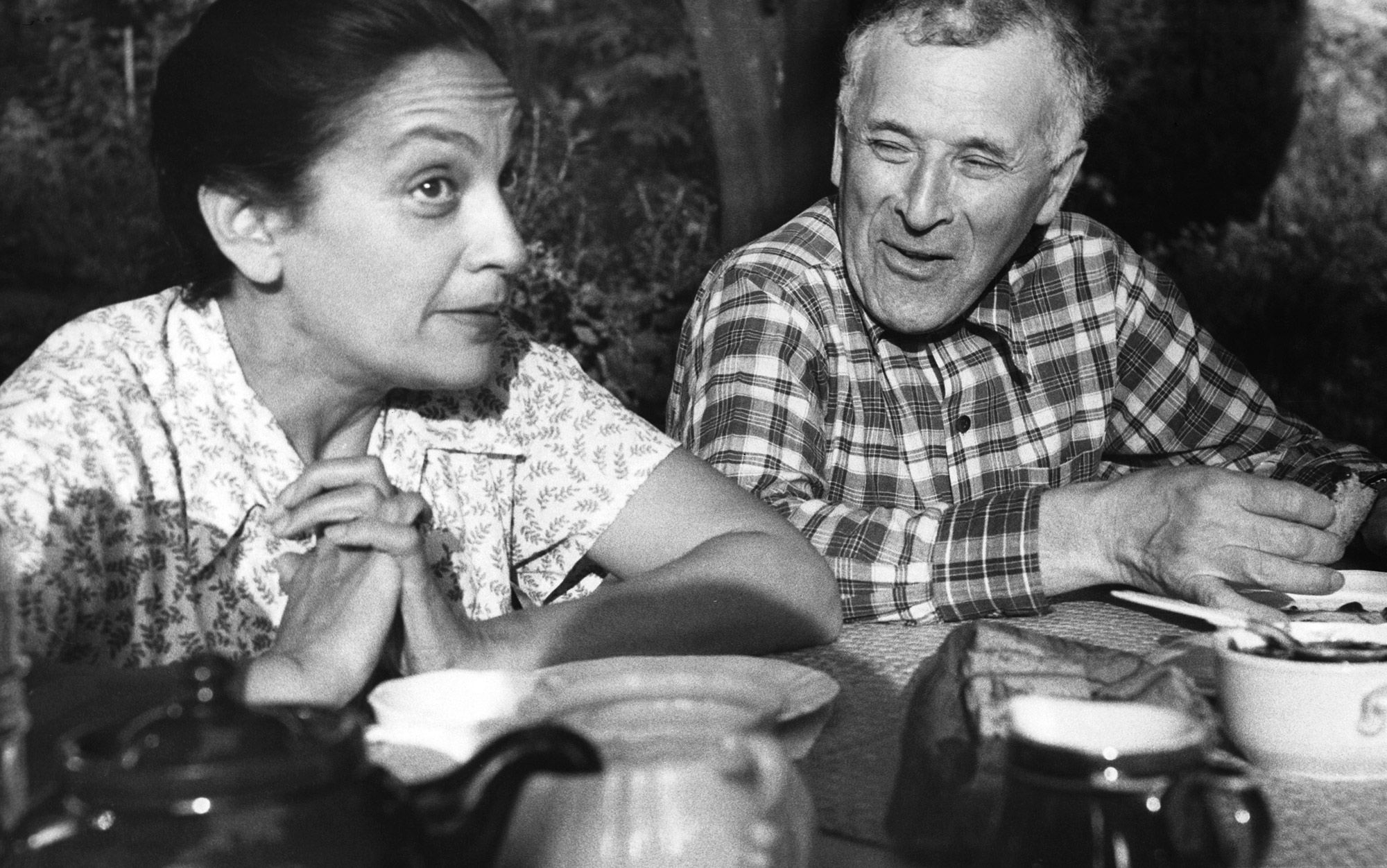
The Romantic stereotype that creativity is enhanced by a mood disorder is dangerous, and dissolves under careful scrutiny
The happy artist: Valentina ‘Vava’ Brodsky and Marc Chagall in the 1950s. Photo by Hulton-Deutsch Collection/Getty
Christa L Taylor is a postdoctoral research associate at the Yale Center for Emotional Intelligence.
Edited by Sam Dresser
Brought to you by Curio, an Aeon partner
Listen to more Aeon Essays here
16 May 2018 (aeon.co)
Is creativity inherently related to mood disorders? It’s a common belief today that there exists some intimate relationship between the two. Consider common paragons of creativity: Vincent van Gogh, Sylvia Plath, Virginia Woolf, Ezra Pound, Anne Sexton (and countless others), all reaching new creative heights while struggling with a terrible mental disorder of some kind. This idea of a connection between the two stems from the Romantic Era, when mental disorder was thought to be a sign of creativity – an idea that remains remarkably tenacious today. But is there any scientific reason to believe in a connection? Trying to answer this question illustrates how difficult it is to address knotty, multi-layered problems like this with research. It is not as straightforward as just seeing if ‘creativity’ is correlated with ‘mood disorder’. We’ve got to dig deeper.
The relationship is deeply enmeshed in the public mind for a couple of reasons. For many, the idea of the ‘creative person’ comes from popular media, which inundates us with news stories and movie portrayals of the suffering artist and the mad genius. And there are anecdotal accounts closer to our real lives: many of us have heard stories about someone who suffers from a deep depression – but also creates beautiful poetry. Repeatedly hearing these accounts fuels a stereotype. When we frequently see two unique things (eg, extraordinary creativity and mood disorders) occur together, they become paired in our minds, creating what is termed an illusory correlation.
This effect is compounded by the availability heuristic, wherein we judge how common something is by how easily it comes to mind. If our mental representation of a creative person is based on this notion of genius and disorder, it will be easier to remember creative people who have a disorder, rather than those that don’t. This makes the connection seem more common. These two types of biases occur unconsciously and are often beyond our control. It is only by studying the issue scientifically, limiting our bias to the greatest extent possible, that we can we truly understand if creativity is related to mood disorders.
The scientific study of creativity and mood disorders is limited. There are vastly more reviews and commentaries discussing why and how a relationship might exist than there are studies examining if there is a relationship at all. And the studies that do ask this fundamental question are frequently plagued by methodological issues that introduce bias, in part stemming from the available methods for measuring creativity and mood disorders, and the ambiguities inherent in the concepts themselves. It is important to understand just how difficult it is to establish a connection with scientific precision.
Creativity researchers commonly define ‘creativity’ as novel (original or unique) and useful (appropriate). Therefore, a creative person is one with the aptitude to create novel and useful products or ideas, and the creative process is the mental processes by which creative products or ideas are formed. However, because neither of these concepts is directly measurable, researchers must come up with indicators of creativity to infer whether or not a person is creative or engaged in a creative process. It’s a particularly slippery thing to study. Creativity is complex, and assessments are limited. They typically measure one indicator of creativity (such as personality characteristics typical of creative people or the subjectively rated creativity of a product, such as a poem), and only in one domain (such as science versus art). If we measure a person’s creativity by asking them to write a poem, inferences shouldn’t then be made about that person’s creative ability in science. The method of assessing creativity has to be carefully considered, as some types of mood disorder might be related to some types of creativity, but not others.
Also, a mood disorder is not directly measurable. It must be diagnosed based on a series of behaviours and symptoms, which themselves can be difficult to identify. Mood disorders are characterised by specific patterns of mood episodes: depressive, hypomanic, and/or manic. Depressive episodes can be identified by things like decreased pleasure in usual activities, fatigue, and a diminished ability to concentrate. Meanwhile, someone in the throes of a hypomanic episode will have an unusually elevated or irritable mood, increased energy, inflated self-esteem, and racing thoughts. Manic episodes are similar, but last longer and are more severe, sometimes even requiring hospitalisation. An overly simplified explanation of this is that a person who experiences a depressive episode might be diagnosed with Major Depressive Disorder, while a person who grapples with a depressive episode and a hypomanic episode might be diagnosed with Bipolar II Disorder. Someone who endures manic episodes (and can also experience depressive episodes) could be diagnosed with Bipolar I Disorder. Each type of disorder might – or might not – be related to a specific kind of creativity.
Research into the creativity/mood disorder link falls into three distinct categories. The first compares the instances of mood disorders exhibited by creative people and by less-creative people; the second compares the creativity of people with mood disorders and those without; and the third examines whether or not the symptoms of mood disorders are correlated with creativity (usually in the general population or students). Each approach is able to answer a different question. For instance, the question: Do creative individuals have more mood disorders? is distinct from: Do individuals with mood disorders have more creativity? Erroneously drawing conclusions about the answer to one from evidence for or against the other is known as the fallacy of the inverse, which is very common in this line of research. This explains, in part, why this research area is so muddied.
To get some clarity on the relationship, I conducted three meta-analyses (that is, an analysis of the studies that have already been conducted), one for each of the three research approaches above. This tactic combined the effect sizes of all of the relevant studies. As expected, the results were different for the analysis of studies comparing mood disorders in creative and less-creative people than they were for the analysis comparing creativity in people with a mood disorder and those without. Although creative people do exhibit a greater instance of all types of mood disorders when compared with less-creative people (except for dysthymia, a chronic and less severe depressive disorder), the analysis comparing the creativity of individuals with a mood disorder to those with no mental disorder was more nuanced. The creativity of people with a mood disorder did not differ from those without. However, there were differences in some domains of creativity (people with a mood disorder were more creative in verbal and performance creativity) and for specific disorders (cyclothymic disorder and unspecified bipolar disorder). But of course, meta-analyses by nature inherit the methodological limitations of the studies they analyse. So if the studies that go into the meta-analysis are biased, then the conclusions of the meta-analysis might themselves suffer from bias. Therefore it is vitally important to understand the context of each analysis – and by that route we get closer to understanding the psychological relationship.
Does having a mood disorder make you more creative? That’s the most frequent question I hear about the relationship. But because we cannot control the instance of a mood disorder (that is, we can’t turn it on and off, and measure that person’s creativity under both conditions), the question should really be: Do individuals with a mood disorder exhibit greater creativity than those without? Studies that attempt to answer this question by comparing the creativity of individuals with a mood disorder against those without have been, well, mixed.
Studies that ask participants to complete surveys of creative personality, behaviour or accomplishment, or to complete divergent thinking measures (where they are asked to generate lots of ideas) often find that individuals with mood disorders do not differ from those without. However, studies using “creative occupation” as an indicator of creativity (based on the assumption that those employed in these occupations are relatively more creative than others) have found that people with bipolar disorders are overrepresented in these occupations. These studies do not measure the creativity of participants directly, rather they use external records (such as censuses and medical registries) to tally the number of people with a history of mood disorders (compared with those without) who report being employed in a creative occupation at some time. These studies incorporate an enormous number of people and provide solid evidence that people who have sought treatment for mood disorders are engaged in creative occupations to a greater extent than those who have not. But can creative occupations serve as a proxy for creative ability?
The creative occupations considered in these studies are overwhelmingly in the arts, which frequently provide greater autonomy and less rigid structure than the average nine-to-five job. This makes these jobs more conducive to the success of individuals who struggle with performance consistency as the result of a mood disorder. The American psychiatrist Arnold Ludwig has suggested that the level of emotional expressiveness required to be successful in various occupations creates an occupational drift, and demonstrated that the pattern of expressive occupations being associated with a greater incidence of psychopathology is a self-repeating pattern. For example, professions in the creative arts are associated with greater psychopathology than professions in the sciences whereas, within creative arts professions, architects exhibit a lower lifetime prevalence rate of psychopathology than visual artists and, within the visual arts, abstract artists exhibit lower rates of psychopathology than expressive artists. Therefore, it is possible that many people who suffer from mood disorders gravitate towards these types of professions, regardless of creative ability or inclination.
Writers in the Romantic Era cultivated an ‘aura of mania’ to appear possessed of extraordinary ability
Do creative people have more mood disorders? To answer this question, researchers have to compare the instance or rate of mood disorders in creative people to people they consider less creative. Even though these kinds of studies appear to provide fairly consistent support for the creativity-mood disorder link, they are in fact highly controversial among creativity researchers.
Consider the method called autopsy diagnosis. Here researchers examine biographical and historical records to provide a post-mortem diagnosis for eminently creative people. But establishing the presence of a mental disorder for someone who is long-deceased is fraught with uncertainty at every step of the process. To be labelled a creative genius, a person must have creativity and the characteristics that we associate with creativity at that time. So the historical context is crucial. For instance, there are certain time periods for which being moody and irrational was seen as positive evidence of genius itself, particularly for those in the arts. Writers during the Romantic Era sometimes cultivated an ‘aura of mania’ in order to appear possessed of extraordinary ability. These artists were more likely to be recognised for profound creativity, and therefore recorded in the sources that many researchers use today. But there’s no way for us to tell whether that artist was actually suffering from a mood disorder. So whether the characteristics of a creative person just happen to fit the ideology of genius during that time, or whether, as some researchers have suggested, these characteristics are exhibited purposefully to make an impression, they might be more likely to be represented in historical records than someone with equivalent talent and creativity who does not fit this image.
There are more problems with the autopsy approach. The historically creative people included in today’s studies must have had a sufficient amount written about them to establish a diagnostic status, and, naturally, people with more sensational lives have had more written about them. Staid lives don’t sell. Judith Schlesinger, in her book The Insanity Hoax (2012), illustrates the point: multiple biographers abandoned projects about the American saxophonist Bud Shank because they were unable to uncover any salacious details about his life. Plus, biographers need to tell a story, so they inevitably emphasise and distort the details of their subject’s lives in order to engage their readers (or perhaps to adhere to their own romantic conceptions of what creativity is).
Finally, diagnostic reliability – the extent to which different clinicians and researchers agree on a diagnosis – is elusive with living patients, let alone those who have been dead for centuries. Many researchers believe that Van Gogh suffered from bipolar disorder, but a sizeable number vehemently insist that he actually suffered from schizophrenia, temporal lobe epilepsy, syphilis, Ménière’s disease, or absinthe or lead poisoning. Indeed, just last year at an event sponsored by the Van Gogh Museum in Amsterdam, a room full of doctors and art historians could not reach a consensus as to what caused the artist’s suffering. (It’s also worth noting that the American Psychiatric Association’s Goldwater rule suggests that diagnoses should never be provided for people whom the psychiatrist has not examined in person.) Looking to the past to establish a connection between creativity and mood disorder is, if anything, more difficult than examining the present.
And what of the studies that use in-person diagnoses to report that creative people exhibit greater instances of mood disorders than less-creative people? They might be vulnerable to bias as well, since these studies frequently lack random sampling and/or experimenter-blind procedures. Although psychological researchers are often able only to approximate random sampling, the goal is to ensure that every person within a specified population has an equal chance of being chosen to participate in the study, which is not what happens. Most people chosen to be included in the creative groups are successful writers or artists, while those in the less-creative group are typically average people living nearby to wherever the study is taking place. This is a problem since there are differences that might vary systematically between the groups: for instance, people who have achieved real creative success typically face the stress of being in the public eye, while the average person does not. Just that component could account for any number of differences in the instance of mood disorder, given that stress is a major cause for the onset of mood disorders.
Additionally, diagnostic status is determined by lifetime prevalence, or if a person has ever experienced the symptoms associated with a disorder. One issue that researchers conducting diagnostic interviews face when asking people to remember their symptoms is recall bias, which means that when creative people are asked to recall if they have experienced mood-disorder symptoms, they are more likely to remember symptoms they view as influencing their creativity, whereas people in a ‘less-creative’ comparison group would have more trouble remembering past symptoms.
This leads us to the single greatest hurdle to studying a potential relationship between creativity and mood disorders. Because there is no agreed-upon objective way of measuring either one, the conclusions regarding their relationship end up being based on symptoms. Consider how this is a problem: increased energy, ideational fluency, reduced need for food or sleep and extreme task-absorption can accurately describe intense creative activity – or a (hypo)manic episode. Which one? Researchers have difficulty telling.
The stereotype that creativity is enhanced by a mood disorder is dangerous, both for those with mood disorders and those pursuing creativity
Indeed, one study found that 89 per cent of a sample of creative writers and artists suggested that they experienced symptoms indicative of both (hypo)manic episodes and creative activity (such as ideational fluency), but only 10 per cent suggested that they experienced episodes of excessive and impulsive spending – which is characteristic of a (hypo)manic episode, but not creative activity. Increased creative thinking has also been included as a symptom of hypomania itself, for instance in the 3rd edition of the Diagnostic and Statistical Manual for Mental Disorders (1980). It’s true that this overlap in symptoms might itself reflect a shared underlying cause, but this is difficult to test since it is quite possible to experience similar symptoms due to completely distinct underlying causes. No one would suggest that the flu is somehow linked to pregnancy, yet they can both cause fatigue, headaches and nausea.
I don’t mean to merely disparage others’ work. Psychological research requires a great deal of time and resources, and no study is perfect. But it crucial to understand how the difficulties of studying this subject with scientific precision can affect conclusions. If the meta-analytic finding that creative people suffer from most types of mood disorder at a heightened rate reflects a true real-world phenomenon, it might indicate that people engaged in creative pursuits are not receiving adequate support and resources to maintain good mental health. If the finding simply reflects our own biases and romantic conceptions of creativity and mood disorders, this needs to be demonstrated with methodologically sound research. In either case, the stereotype that creativity is somehow enhanced by a mood disorder is dangerous, both for those with mood disorders and for those pursuing creativity.
Believing that creativity is due to some underlying, uncontrollable factor reinforces the idea that few people are capable of true creativity, which prevents many from realising their own potential. It also undermines the skill and effort that creative endeavours require, if we can simply chalk it up to the consequence of a disorder. And the connection between mood disorders and creativity influences the very way we view the creative work of others: university students who were told the story of Van Gogh cutting off his ear before they examined his painting Sunflowers (1888) took a more favourable view of it than those who weren’t told the story. Similarly, students priced a piece of artwork higher when a fictitious artist’s biography briefly mentioned that he was ‘often described as very eccentric’.
This is a dangerous message for those engaged in creative pursuits – and for those creators who do suffer from a mood disorder: it could keep them from seeking treatment if they believe treatment would diminish their creative ability. This is why a meticulous and bias-free examination of creativity and its relation to mood disorders must be taken seriously – and must be held to high scientific standards. It’s not an easy task.
COULD A TRUTH COMMISSION UNITE AMERICA?
How Fractured Nations and Communities Reckon with History and Move Toward Repair

Canada’s Truth and Reconciliation Commission (TRC) Bentwood Box, made of western red cedar, by artist Luke Marston, member of the Stz’uminus (Chemainus) First Nation. Commissioned in 2009, the Bentwood Box traveled the country with the TRC, collecting items from Residential School survivors until reaching its home at the National Centre for Truth and Reconciliation at the University of Manitoba. Traditional bentwood boxes were used for collecting and storing food and goods, such as medicine. Courtesy of United Church/Flickr.
by GLORIA Y.A. AYEE | JUNE 20, 2022 (zocalopublicsquare.org)
This essay is part of the Zócalo/Mellon Foundation editorial and public program series “How Should Societies Remember Their Sins?” Register for “What Is Our Responsibility for Our Government’s Wars?,” taking place on July 12.
Can democracy stand the test of time? Many factors have triggered the deep schism in American politics today. But a root cause of our faltering democracy may be our failure to grapple with the truth about the nation’s history of discrimination and institutionalized racism. Because Americans can’t even agree on basic truths about our history of exclusion, slavery, and Jim Crow segregation, we have become mired in contentious debates about what role, if any, the government should play in addressing past injustices and their present-day legacies. To forge a path ahead, Americans must acknowledge our problematic past and collectively commit to upholding the principle of liberty and justice for all.
Where could we possibly start? As a first step, we can look to other nations that were once deeply divided, and learn from their efforts to address their difficult histories in pursuit of accountability and justice. The United States might do well to consider transitional justice approaches—the political, social, and legal processes societies use to respond to legacies of systematic or serious human rights abuses, primarily during periods of political transition like changes in leadership after a period of civil war or conflict, or the transition from an authoritarian to a democratic political system. These temporary judicial and non-judicial mechanisms and practices include criminal trials and prosecutions, truth commissions, reparations, and institutional reforms to help transform a society and reestablish the social contract. The United States is not undergoing a political regime transition, but transitional justice tools can still help us promote national reconciliation and reinforce our democracy as we reckon with the truth of our history and legacies of systemic harm and oppression.
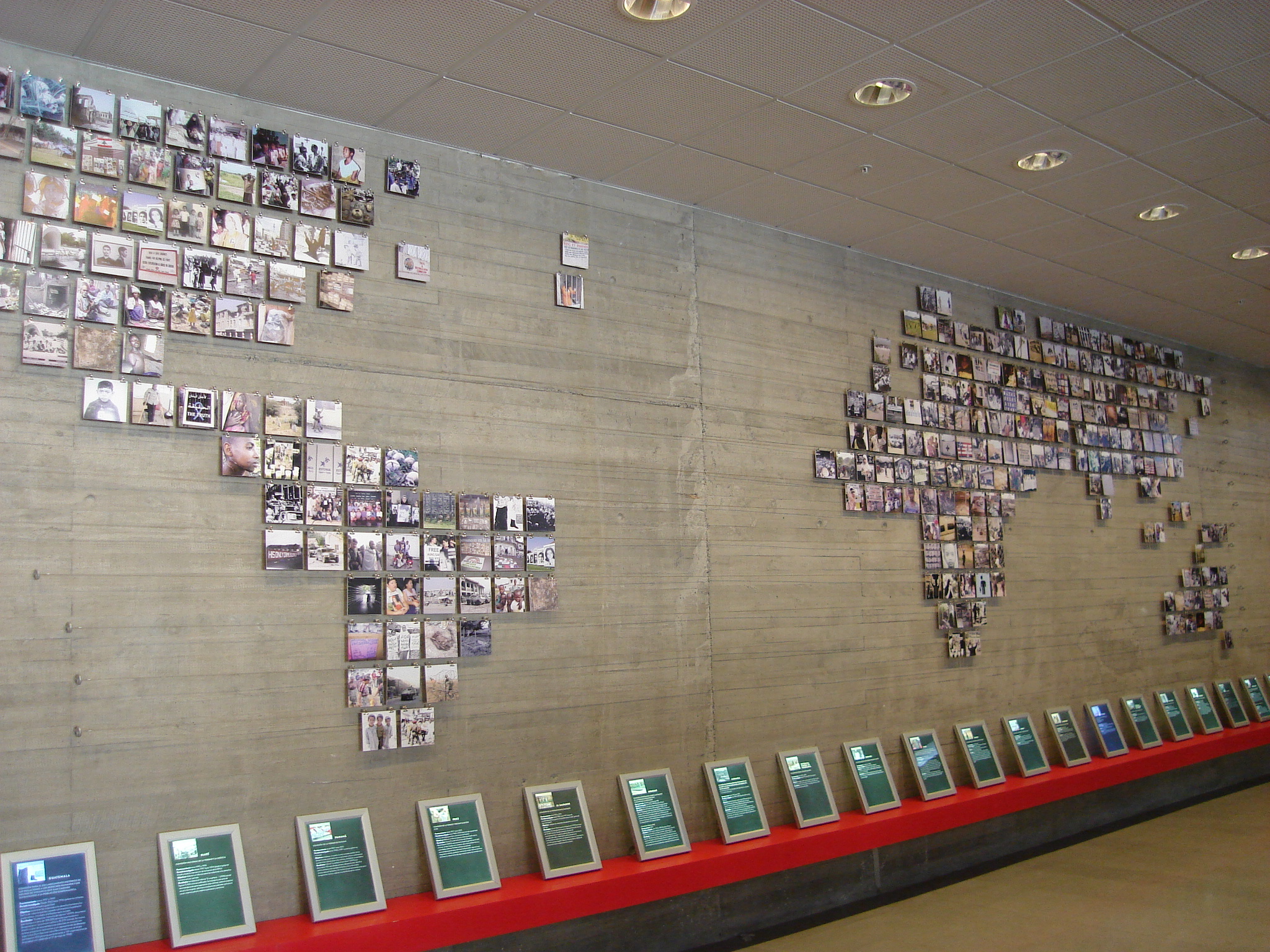
The “Human rights, universal challenge” room at the Museum of Memory and Human Rights in Santiago, Chile, showing a map of human rights abuses around the world. Courtesy of Warko/Wikimedia Commons.
The truth commission is a widely used transitional justice instrument—and one that can offer the most insight to Americans looking to reshape the collective memory and conscience of our nation. These official fact-finding bodies investigate, document, and disseminate accurate information about past wrongdoing and human rights violations authorized or carried out by the state. The United States can certainly learn a great deal from the successes and failures of these commissions in countries like Argentina, Canada, Chile, Colombia, Guatemala, Morocco, Peru, South Africa, South Korea, and Timor-Leste (East Timor).
The South African Truth and Reconciliation Commission (TRC) is one of the best-known national truth-telling and reconciliation processes and has been the model for several other truth commissions. In 1995, South Africa’s newly elected democratic, multicultural Government of National Unity established the TRC to investigate serious human rights violations perpetrated under the apartheid regime from 1960 to 1994. Apartheid was a brutal system of white minority rule and legally enforced racial segregation that formalized and expanded white supremacist and segregationist policies that had existed since the period of colonial rule. Institutionalized racism stripped Black South Africans and other non-whites of their civil and political rights—including their citizenship—and created extreme inequality and poverty. Anti-apartheid protests, demonstrations, and strikes organized by freedom fighters were met with swift and ruthless repression, and an estimated 21,000 people, the majority of whom were Black South Africans, were killed in the political violence during the apartheid era.
The primary purpose of the TRC was to promote reconciliation and forgiveness among all South Africans, while holding perpetrators of human rights abuses accountable for their actions. The commission’s work involved a systematic process of investigating human rights violations, organizing public proceedings where victims and perpetrators could testify, offering reparations to victims, and granting amnesty to perpetrators under specific, limited conditions. The TRC’s mandate covered both violations committed by the state and by anti-apartheid liberation movements. In its comprehensive final report, which the government endorsed, the truth commission outlined detailed recommendations for reforming the political system and civil sector, which included financial and symbolic reparations. President Nelson Mandela also apologized to victims on behalf of the state.
It is intriguing to consider the possibilities of a national truth and reconciliation process that could apply these approaches of truth-telling, restorative justice, and healing to address America’s legacy of slavery and racial discrimination.
The TRC faced some criticism for its amnesty provision and the limited identification of perpetrators, among other things. Many South Africans later railed against the government for its delay in implementing the TRC’s recommendations, including the reparations program. But despite these critiques, the TRC succeeded in making sure the crimes of apartheid would be fully documented so that South Africa’s horrific history would never be forgotten. And in the decades since, the TRC’s broader emphasis on truth-telling, social transformation, and national reconciliation have made it a standard for other justice and accountability efforts around the world.
Inspired by truth and reconciliation processes in other countries and recognizing the need to educate Americans on the historical context for current racial inequalities, in early 2021, Rep. Barbara Lee (CA-13) and Sen. Cory Booker (D-NJ) called for the establishment of a national truth commission in the U.S., proposing legislation to create the United States Commission on Truth, Racial Healing, and Transformation. The history Americans must reckon with is not as immediate as South Africa’s, and our political system is not in a moment of democratic transition. But similar efforts have succeeded in non-transitional societies, notably in Canada, which established a truth commission in 2008 to investigate, document, and educate Canadians about the abuses that occurred in the Indian residential school system for Indigenous children over the 19th and 20th centuries (between 1894 and 1947 attendance was made compulsory). These residential schools are a legacy of Canada’s colonial system and have been described as a form of “cultural genocide” because of their explicit goal of cultural erasure, and forcible assimilation of Indigenous peoples. The Canadian TRC documented widespread physical and sexual abuse in these schools, and officially recorded the deaths of 3,201 students, though concluded the actual toll is much higher. As part of its work, the commission hosted national events in different regions across Canada to support public education about the residential school system, pervasive discrimination, and the lasting trauma for survivors and Indigenous communities.
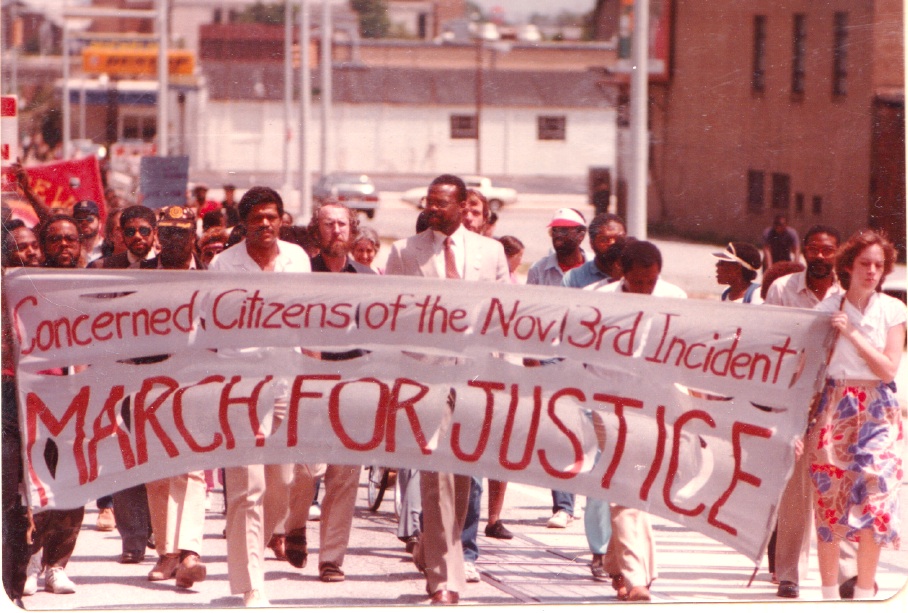
Citizens march for justice following the Greensboro Massacre of 1979. Twenty-five years later, community leadership organized the Greensboro Truth and Reconciliation Project to uncover the full harm done to victims of the domestic terrorist attack. Courtesy of Wikimedia Commons.
In the United States, there have been similar initiatives, organized by grassroots groups, to address abuses and wrongdoing at the local level. In 2013, the state of Maine’s Office of Child and Family Services with the support of the Wabanaki Tribes established the Maine Wabanaki-State Child Welfare Truth and Reconciliation Commission (MWTRC) to investigate and document state child welfare policies, their compliance with the Indian Child Welfare Act, and their effects on the Indigenous Wabanaki people. The commission collected testimony and found compelling evidence of public and institutional racism toward the Wabanaki people, documenting how Native children in Maine were placed in the foster care system at a rate of more than five times that of non-Native children, and concluding that the administration of child welfare by the state constituted a form of cultural genocide. The commission wanted to provide opportunities for truth-telling and healing, give voice to the Wabanaki people, establish a more complete account of the history of the Wabanaki people, and foster deeper understanding and reconciliation between Wabanaki people and the state of Maine.
The city of Greensboro in North Carolina also embarked on a notable truth and reconciliation effort, modeling the 2004 Greensboro Truth and Reconciliation Commission after the South African TRC. Greensboro created its commission to investigate and document the underlying causes and consequences of a single event: the “Greensboro Massacre,” a confrontation between members of the Communist Workers Party, the American Nazi Party, and the Ku Klux Klan on November 3, 1979. During a “Death to the Klan” rally, Klansmen and neo-Nazis shot into the crowd, killing five demonstrators and wounding 10 others. Suspiciously, there was no police presence at the rally, even though the Greensboro Police Department knew about the planned attack. Despite eyewitness accounts and videotaped evidence, the Klansmen and neo-Nazis claimed self-defense and were acquitted of all charges by all-white juries in two separate criminal trials. During a civil trial in 1985, the Greensboro Police Department, the Klan, and Nazi Party members were found liable for one of the deaths.
After about two years of collecting evidence and holding public hearings, the commission concluded that the decision of the police to stay away from the rally was a significant factor in the violence that unfolded. The commission also found that the police department and city managers deliberately misled the public in order to absolve the police department of any responsibility. They found fault in the two criminal trials as well: Neither jury was representative of Greensboro residents and community members, which contributed to impunity for the killings, distrust of the police department, and further strained race relations. The Greensboro truth commission’s goals were multifaceted—to pursue the truth about racially motivated political violence; to foster healing, reconciliation, and social transformation; and to learn from other truth and reconciliation processes.
GLORIA Y.A. AYEE is a political scientist and lecturer at Harvard University, and helped advise the Zócalo/Mellon Foundation project, “How Should Societies Remember Their Sins?” Her research focuses on transitional justice processes and truth commissions.
The actual cost of preventing climate breakdown
Nobody really knows how much it would cost to avoid the worst impacts of climate change. Yet historian Yuval Noah Harari’s analysis, based on the work of scientists and economists, indicates that humanity might avert catastrophe by investing the equivalent of just two percent of global GDP into climate solutions. He makes the case that preventing ecological cataclysm will not require the major global disruptions many fear and explains that we already have the resources we need — it’s just a matter of shifting our priorities.
About the speaker
Historian, author See speaker profile
Yuval Noah Harari is a historian, philosopher and the bestselling author of “Sapiens,” “Homo Deus,” “21 Lessons for the 21st Century” and the graphic novel series “Sapiens: A Graphic History.” He is considered one of the world’s most influential public intellectuals today.
Tarot Card for June 21: The Ten of Disks
The Ten of Disks
The Lord of Wealth talks not only about material wealth and its appropriate use, but about the inner wealth and resources that we all have. This is a card that teaches us that the harvest we gather in our lives is the end result of all that we have put into living – and more importantly, how we have used the riches at our disposal.
We make our own realities with every thought, every deed, every wish. And when we direct our energies positively we shall arrive – as a perfectly natural consequence – at the Ten of Disks. Of course, if we direct our energies negatively we’ll find ourselves with the Ten of Wands, or the Ten of Swords – neither of which are happy cards!
There is a warning connected to this card though. When we have created sufficient wealth to make ourselves comfortable and contented, if we have a surplus, then we must make that surplus work. We cannot expect energy to flow freely in our lives if we hoard it, and try to hang on to it. This is as pointless as trying to save up the breeze so that it will blow on a stuffy day! There are some things in life you cannot clutch tight in the hand without crushing their value out of them.
If this card comes up in an everyday reading, it re-assures that financial and material matters are proceeding well, and that there is no cause for concern.
If it comes up in a more spiritually based reading, then we need to be applying the underlying principles to our lives – so in this case, we need to be letting our inner wealth show, in order to manifest that into our lives.

(via angelpaths.com and Alan Blackman)
“The Bible is all about economics”: A Conversation with Dr. Michael Hudson


SEPTEMBER 25, 2017 (kairoscenter.org)
CATEGORY: RELIGIONS
“The word for sin and debt is the same in all language.”
–Dr. Michael Hudson
On December 8th, 2016, the Kairos Center hosted “The Land Belongs to God: The Bible’s Commandment Against Wealth and Poverty” at Union Theological Seminary. Our featured speaker was Dr. Michael Hudson, an economist who has studied the history of debt — as well as its consequences and the struggles that have been fought around it — in societies from ancient Babylonia up through today. Dr. Hudson’s recent book, J is for Junk Economics, was released in February, 2017, and his work on the history of debt in the Near East will be published by The Institute for the Study of Long-Term Economic Trends (ISLET) in early 2018.
Earlier in the day, the Kairos Center had a lunch conversation with Dr. Hudson on debt, politics, the Bible, and other issues. Below is an edited and condensed transcript of that discussion.
Kairos Center: Where did your interest in politics come from?
Dr. Michael Hudson: My father was a labor leader. He was sent to jail 75 years ago under the Smith Act for advocating the overthrow of the government through force and violence. The Attorney General later wrote it was the only thing he was ashamed of doing.
When he got out of jail, we moved to Chicago. I grew up in Hyde Park, went to the Lab School. It was a very formative experience. My closest friend in high school was Gavin MacFadyen — he was the head of the Center for Investigative Journalism and we spent a lot of time together. I grew up knowing most of the labor leaders and socialists in Chicago and elsewhere. People would come to the house – people who worked with Rosa Luxembourg, Karl Liebknecht – and they taught me the stories to remember when they all died.
KC: What inspired you to study economics?
MH: I came to New York and was encouraged by various people in my life that if I wanted to learn about economics I should go work on Wall Street. My degree in Chicago was in Germanic philology not economics. I never went near the economics department. So I went to work first for the Central Bank, then moved to Chase Manhattan. And while I was there I met an executive from the National Catholic Welfare Conference who I spoke to about population growth and Malthus, and I wrote him a letter saying that if you were not going to cut the population down to the food supply then you had to increase the food supply to feed the population.
He sent this around to most of the bishops and I began working with Monsignor Knot at Pittsburgh who later became Cardinal Knot and the foreign secretary of the Vatican. The Vatican then sent me around the country giving speeches on economics. I also worked with various Protestant groups who were attracted to my ideas. The plan was for Pope John Paul I to start an academy for Geo-economics to talk about land reform and debt that was to be centered in Tulane. But then he died and the two other popes who came in were not interested.
KC: How did you go from modern economics to the study of debt in the Bible and the ancient world?
MH: I worked in London with Peter Challen for the Christian campaign for monetary justice. He introduced me to Archbishop Welby, focusing on debt, but they were not able to get the Church as a whole to focus on debt. As it happened I worked for the UN pointing out that third world debt could not possibly be paid and had to be forgiven. After a riot at a meeting in Mexico, I decided to write a whole history of debt cancellations.
It took me about a year to get back to Greece and Rome and the biblical world. But I found a mass of material that had been ignored in the books on Mesopotamia, Sumer and Babylonia. So in 1984 I joined the Peabody Museum, Harvard’s anthropology department in Babylonian archaeology. We found that the word that was used in Babylonian for debt cancellation, andurarum, was the cognate to the Hebrew word, duror, which was used for the Jubilee year. And it turned out that the biblical scholarship taking place and just gaining momentum in the 1980s showed that the Bible was really written upon the return of the Jews from Exile.
The archaeology picture is very different from what you read in the Bible. There are no records at all about who got what land, no records at all about the Jubilee year after the return from exile, because they didn’t use clay. The most recent research in the last few years has shown that only some of the Jews came back to Israel, that there were many Jewish families that remained in Babylonia. They were thoroughly assimilated, part of the local culture. So it was a particular group of Jews that came back.
What we’ve also found is the Qumran scrolls. The scrolls were in Midrash, that is a collection of all of the biblical commentary on debt cancellation and everywhere that it occurred, Psalms, Isaiah. The whole Bible was rewritten from the point of view of redistributing the land and canceling the debts. The laws were a literal translation of the royal Babylonian proclamations of the time. What we found out was a parallel line of biblical studies.
You can imagine that when the Qumran scrolls were found the Christian churches all said this isn’t Christianity and they claimed that they must have been a sect. It turns out that these were the basic library of the temple in Jerusalem that was moved for safekeeping and they weren’t a sect, this was the official background.
KC: How does all this relate to Jesus and the New Testament period?
MH: This throws new light on what the fight over Jesus was. During his time a waiver was proposed whereby people would sign away their rights under the Jubilee year. The pretense in modern biblical scholarship is that the Jubilee could never have really occurred, because if it really happened, people wouldn’t lend money. Who would lend money if the debts were going to be cancelled?
The fallacy here is that people didn’t owe debts for borrowing money. They owed debts for not paying their bills. They ran up debts cause they couldn’t pay their taxes and owed money to the tax collectors who said, “You pay this or we’re going to throw you in jail.” And the whole economy worked very much on credit, not on cash. This is what the debts were owed for. And these are the debts that Jesus said should be cancelled. He gave his very first sermon when he opened up the book of Isaiah and read about canceling the debts and Jesus said that’s why he’s here. You do not hear this often in the churches, but this is in the Bible.
KC: What, then, do you say to those who say that the Bible isn’t about economics?
MH: The Bible is all about economics. Take, for example, the translation of the Lord’s Prayer, and compare it to the scroll 11Q Melchizedok which is the Midrash of all debt cancellation. It’s very clear debt cancellation is what’s meant. The word for sin and debt is the same in all language, and it goes back to the ancient concept in Europe called wergild. If you injure somebody, either he gets to kill you or you get to pay him and the payment which was called the Schuld, or the obligation, was the word injury with a saying. So a Schuld, debt and injury are the same everywhere.
KC: Has any of this work been popularized outside of the Academy to those who need to hear it?
MH: Most of my work on antiquity has been in scholarly publications, not popular lecturing. I didn’t think anybody was going to be interested in the near Eastern background until they were interested in today’s debt problems. But David Graeber wrote Debt following this theory and it took off.
There was a time when the whole ancient world was in a debt crisis going into a dark age. There is a dispute around this term, “the dark age.” We’ve had economists who’ve studied the GDP back then and they’ve found that the GDP and output were going up, because they’ve found expensive pottery and artwork in the houses of the very rich. Well imagine how Andy Warhol’s paintings are part of the GDP and it’s all going up and if you look at how rich the rich were getting, the economy was actually expanding, despite the fact that the 99% were falling into serfdom.
I think we’re in a similar situation right now. Since 2008, we’ve been hearing that the economy has been getting better and better. It turns out that all of the growth in national income and GDP since 2008 has been absorbed by the upper 5%. For the 95% it’s been going down.
My most recent book, J is for Junk Economics, basically claims that what people call economic growth is actually the FIRE sector. It’s Goldman-Sachs, it’s Chase Manhattan, it’s Donald Trump and the landlords. None of its adds anything to output at all, adds any goods and services, it’s because the rich are the whole GDP and the rest of the population are simply left at the bottom.
KC: How, if at all, have the churches responded to your research?
MH: I think it would be appropriate to have an encyclical on debt and property. But the spirit of our times is exactly the opposite: you’re having the pressure under the Democrats and Republicans to cut taxes on the rich, especially to cut taxes on real estate, and that’s where all of the money is. This absence of a public option in real estate is forcing all of the rents up, which is why so many people are homeless, because housing should basically be a public right, just as healthcare and other things.
All of this used to be done. And it was done for very practical reasons in Sumer and Babylonia. If the rulers wouldn’t cancel the debts, people would just run away and go somewhere else. By the 14th century BC the situation was so bad that they were all defecting and would make armed bands called the hapiru. And there’s a general belief that the hapiru were the original Hebrews. They were people fleeing from debt peonage in their own country.
I think we’re having a similar economic dynamic today. I’ve spent quite a bit of time in Greece and you can see the problems the Greeks are having, being reduced to debt peonage. Europe is basically shrinking. It’s turning into a dead zone and yet the labor parties, the parties that call themselves socialists, are now on the far right of the spectrum.
There has to be a whole realignment. Now the question is how do you do this? Thirty years ago, there was hope. Then you had almost all the religions swing around to the right. Obviously it’s going to be a fight.
KC: How could we do more to popularize what you’re doing? Because I think most people don’t know this history at all. Both the connection with the biblical material and the way that you are seeing what’s happening right now. They seem to be inextricably connected, those two things.
MH: My archaeology and biblical work has only been discussed academically. There’s been almost no connection at all made between my current economic work and political work.
Liz Theoharis: I have a couple of questions. Most of my academic work is informed by the anti-poverty organizing I’ve been doing for a long time, but is rooted in a reinterpretation of Matthew 26, where Jesus says, “The poor will be with you always, but you will not always have me.” And in part it’s a quotation of Deuteronomy 15.
When I was doing some of this work, even the very progressive biblical scholars were skeptical of the conservatism of Deuteronomy. And so they argue that radical social movements are what produce some of the debt cancellation but then what’s reified in Deuteronomy are the more social democratic responses to more radical action. I would love to hear some of your thoughts on that. Maybe to do with Deuteronomy, maybe to do with other historical parallels that one could apply methodologically to Deuteronomy, because to me they said that to discredit the radicalism, how revolutionary these economic practices really were. And how they actually happened. So that much of the work of reclaiming Deuteronomy is saying these practices really happened and these are written down because people were trying to do away with practices that were happening.
The other question or point is that I think much of the reason that we have been trying to look at the Bible in its social and economic context is that it has something to say about our social and economic context today.
What I am finding is that people, regular people, are just really hungry for understanding that context and for learning about any moment in the public sphere when those kinds of histories took place. For instance around the Da Vinci Code, the reason it was so popular was because people know there’s a different story that’s never told to them, even in some of its inaccuracies, and they’re drawn to it. And I see something similar with the kind of economic practices and particularly debt cancellation practices. I see people really hungry for this and yet there is a real inadequacy of resources to make that translation and to make that transition. Most of the books and articles I read doesn’t make those connections. But your work makes these connections.
MH: After the return from exile, that’s when the Bible was put together and Jewish history rewritten as if the whole Bible from the very founding of Israel, of David and Solomon, as if it were all a class war. And the real class war was debtors against creditors.
The pyramids were not built by slaves, neither Jewish nor anyone else. They were built by very skilled labor that was well fed and had a lot of beer. We have the records for all of this. So we know what they were paid. This is all published in Labor in the Near East.
We know what was happening in Israel was just what was happening in Rome. You had Zedekiah going to war with the Assyrians and he promised everyone he was going to cancel the debts if they came and joined the army. Then they joined the army, they fought, and then he didn’t cancel the debts. So he was a bad king.
As a matter of fact, if you look at the Bible, all the kings are pretty bad. They realized that all throughout the ancient world in the first millennium, the kings either were overthrown or they became just the heads of the aristocracy. So what Leviticus did was take debt cancellation out of the hands of kings. Throughout the near east when a king would take the throne, the first thing he would do would be to cancel everybody’s debts, redistribute the land, free the bondholders, and the slaves would be returned to their original owners. They didn’t free the slaves in this, they were returned to the owners. They did this because they had the idea that every reign should begin in economic balance. It should begin in order.
We have the economic models they used, the mathematical models that were used in 1,800 BC. These mathematical models are superior to any model that’s taught today in the University of Chicago or elsewhere, because they’re very simple. The first thing, they understood compound interest and how principles double every five years. And any rate of interest is a doubling time. They also understood the S-curve, that growth tapers off. Well, every economy works in an S-curve. Basically if you look at a business cycle it’s a series of S-curves tapering off.
As a natural tendency of any economy, if you know simple mathematics, you know that debt succeeds the means to pay. They all knew that — in Sumer, in Babylonia –and the job of the ruler was to free the debt bondsmen. Because if you let the debtors be enslaved to the creditors, then who is going to train the army? Any country that didn’t do that was going to be conquered by other people. We have Greek military manuals from, I think, the 3rd century by Tacticus saying, “People, if you want to conquer a city say you’re going to cancel debts; they’ll come over to your side. And if you want to defend a city, you promise to cancel their debts.”
While Zedekiah was going back on his word in Judea, you had Coriolanus in Rome doing the same thing. Rome went to war, he promised to cancel the people’s debts — this is what Shakespeare’s play was all about — and then he didn’t do it. You had the same thing everywhere. They all promised the population one thing and then they slammed down and double-crossed their backers. It’s what kings did then and it’s what’s happening today.
KC: Any final thoughts about what this history means for us today?
MH: I think in popularizing this history, the fact is you can’t depend on rulers. You cannot put your faith in princes to do things. It can only be the people that will actually do something. That has to be the message.
Now, people say that the rulers never canceled debts. But we now translated all of the legal records. We have the lawsuits: “Do I really have to cancel this debt?” “No you don’t or yes you do have to cancel them.” They went to court. We have every debt cancellation of every member of Hammurabi’s dynasty and his great-great-grandson Ammi-Saduqa. You can see the rulers are trying to close all of the loopholes that the creditors keep trying to develop. You can show that this was done for 2,000 years.
For example, just about everybody’s heard of the Rosetta Stone. What they don’t know is that it’s about debt cancellation. They had a young ruler and said, “Do what the pharaohs of the past did, cancel the debts.” It’s all written right there. There’s a reason everybody knows about the Rosetta Stone and yet nobody knows what’s in it.
I think that’s what you have to say: what the churches tell you is Christianity is not Christianity. Jesus is not going to make you rich. Jesus is not going to give you a bigger car if you help us build a cathedral. And you have to say that the Bible is all about economics. This is the real Bible, this is the real history.
Pesticides Are Spreading Toxic ‘Forever Chemicals,’ Scientists Warn
Common chemicals sprayed on many crops each year are cloaked in bureaucratic uncertainties
- By Meg Wilcox on June 15, 2022 (scientificamerican.com)

Scientists have been raising growing concerns for decades over the use of toxic “forever chemicals,” so called because their strong molecular bonds can take hundreds of years to completely break down in the environment. Widely used in consumer products such as cookware and clothing, these substances are turning up everywhere from drinking water to our bloodstream. And now researchers are warning of yet another—and so far underrecognized—source of these troubling toxins: common pesticides. Nearly 70 percent of all pesticides introduced into the global market from 2015 to 2020 contained these chemicals or related compounds, according to a review paper recently published in Environmental Pollution. And the surge in their use has come without a full understanding of their potential impact on the environment and human health.
Forever chemicals—scientifically known as perfluoroalkyl and polyfluoroalkyl substances, or PFASs—are a subset of so-called fluorinated chemicals, which possess strong carbon-fluorine bonds. That means such chemicals are both highly stable and useful in products designed to repel grease and water. But it also means they do not readily biodegrade. Though governments have been working to limit the use of PFASs, those efforts are complicated by differing technical definitions of which fluorinated chemicals are technically PFASs—and as such pose a risk to people and the environment. Many chemicals considered PFASs in much of the rest of the world are not classified this way in the U.S. This situation could leave communities exposed to harmful chemicals, including pesticides that contain fluorinated compounds and are sprayed on many different crops around the world every year.
Pesticides made from fluorinated chemicals, commonly referred to as fluorinated pesticides, “can be incredible molecules that meet a lot of the challenges that exist in agriculture,” says study co-author Diogo Alexandrino, a researcher at the University of Porto in Portugal and a co-author of the Environmental Pollution paper. “But they should be properly vetted, and we should be aware that they can have a very huge impact on the environment, on biodiversity and eventually on our own health.”
Stability or Persistence?
Fluorinated chemicals, including PFASs, have been widely used in consumer products since the 1940s. But in the following decades scientists began realizing that these chemicals persisted in drinking water and human bodies, and in the 1990s the Environmental Protection Agency began investigating PFASs. Nearly every U.S. resident now carries low levels of PFASs in their blood. These chemicals have been linked to testicular and kidney cancers, reproductive disorders, thyroid disease, high cholesterol levels, reduced immune response and even increased susceptibility to COVID-19. Based on these concerns, the U.S. Congress is weighing several bipartisan bills to restrict their use in food containers and cookware and to require the EPA to take comprehensive action to prevent PFAS pollution—including setting national limits on levels in drinking water. Under the Biden administration, the EPA has published a PFAS Strategic Roadmap for addressing the crisis. Eight states have already adopted laws to ban PFASs in certain products, especially food packaging—but not in pesticides.
Fluorinated pesticides first appeared on the market in the 1930s, but it is only in the past decade that this use has expanded so dramatically. This rise is linked to improvements in manufacturing processes and the expiration of patents that have allowed for wider competition, Alexandrino says.
Fluorinated pesticides bring “efficacy and stability” to pest management, says Karen Reardon, spokesperson for the pesticide industry group Responsible Industry for a Sound Environment (RISE). That stability makes pesticides remain effective longer, she says—so crops can be sprayed less often than would be needed with a nonfluorinated alternative.
But what Reardon calls stability, others call persistence. Data compiled by Alexandrino and his team show half-lives (the amounts of time it takes chemicals to dissipate by half in the environment) ranging from a few days to 2.5 years for top-selling fluorinated pesticides. That is less than the half-lives of some older pesticides such as DDT, but at the upper end of the scale, it is still a relatively long time: the EPA defines a “persistent” pollutant as having a half-life of 60 days or more. As Kyla Bennett, science director of the nonprofit environmental advocacy organization Public Employees for Environmental Responsibility (PEER), bluntly puts it, “Why on earth would you allow PFAS to be put in something that’s sprayed on millions and millions of acres every single year? It’s called a forever chemical for a reason.”
What Is—and Isn’t—a PFAS?
One of the most widely used fluorinated pesticides is bifenthrin. It targets insects’ nervous system and is the prime ingredient in more than 600 pesticide formulations used on corn, soy, vegetables, berries and orchard crops. It is also used to treat seeds and to control ants, termites and other pests in urban settings. Its potential effects on human health are not well known, though there is some evidence that chronic exposure is linked to neurotoxicity, and the EPA has classified it as a possible human carcinogen. Ultimately, the EPA concluded in a 2020 human health risk assessment that “dietary exposure and risk estimates are not of concern for the existing uses of bifenthrin”—at least when levels designated as safe for human consumption are not exceeded. But amounts found in recent years on collard greens, eggplants, spinach, cherry tomatoes, sweet potatoes and peaches have exceeded those EPA safety levels. Removing such residues from produce requires extra scrubbing because bifenthrin is an oily substance.
Bifenthrin is also a persistent pollutant with a half-life of 97 to 345 days in soil, depending on soil type. A 2016 U.S. Geological Survey study found that it binds to sediments contained in stormwater and can persist in surface waters, where it harms beneficial insects that provide food for fish, birds and wildlife. Its particular configuration of carbon and fluorine is “really stable and will be really persistent in the environment,” says University of Porto researcher Maria de Fátima Carvalho, a co-author of the new paper.

Although bifenthrin is one of more than 200 active pesticide ingredients that would be recognized as a PFAS by the latest Organization for Economic Co-operation and Development (OECD) definition and is banned for most agricultural uses in the European Union, the EPA has a narrower definition of a PFAS. Differing definitions complicate efforts to understand and regulate such chemicals’ use. The EPA definition only includes compounds with relatively longer carbon-fluorine molecule chains because it says those are generally less likely to accumulate in the food chain and are potentially less toxic—though not all experts agree on this. “It is incorrect to argue that everything is safe until you have two, three or four [carbon-fluorine] bonds,” says Rolf Halden, director of the Biodesign Center for Environmental Health Engineering at Arizona State University. “We’ve created a chemistry with no known biodegradation mechanism. You’re signing up for a lifetime of exposure around the world and for millennia.”
In an e-mail to Scientific American, EPA spokesperson Robert Daguillard wrote that the agency’s PFAS definition, first developed in 2006, was intended to “identify the PFAS most likely to present risk to human health and the environment.” The definition has since been adjusted, Daguillard added, and “we are currently looking at the differences between the OECD and [EPA] definitions to determine whether the [EPA] definition should be modified to capture additional substances.”
At least three active pesticide ingredients currently allowed by the EPA—broflanilide, pyrifluquinazon and noviflumuron—meet its definition for a PFAS. Four others that the EPA qualifies as a PFAS have been banned in the U.S. but are still used in Japan, China and some countries in Latin America. New pesticide ingredients that the EPA would classify as PFASs continue to come on the market in China. While the three allowed in the U.S. have half-lives of a few months at the most, that measure does not tell the whole story, says Nathan Donley, environmental health science director at the Center for Biological Diversity, a nonprofit conservation group. “On paper, they look like they break down within a reasonable time period”—but the by-products of that breakdown also need to be considered, Donley says. “You’ve got the parent pesticide molecule that can break down into something that’s … still a complex molecule, fairly fluorinated,” he adds. “And what those degradation products are doing in the environment is really not followed up with at all.” Wendy Heiger-Bernays, a clinical professor of environmental health at the Boston University School of Public Health, says the breakdown products of fluorinated pesticides may interact with other environmental PFAS pollution in unknown ways.
EPA spokesperson Cathy Milbourn says the agency “has a robust process for identifying and assessing the environmental risks of pesticide degradation products or metabolites.” But Donley argues that while the EPA looks at initial breakdown products, it does not follow the pesticide degradation process to its completion—which he says can take decades or centuries and can produce dozens of different molecules along the way. Moreover, what happens in the environment does not always track what happens in the laboratory. “I don’t necessarily expect the EPA to do all the study necessary to get definitive answers for all of these things, but they need to account for this uncertainty somehow,” Donley says. “The benefit of the doubt should be given to people and the environment, not to the pesticide companies.”
When Scientific American asked what actions the EPA may take to restrict pesticides that do meet its definition of a PFAS, Milbourn responded in an e-mail that “regardless of the evolving definition of PFAS, pesticides undergo a rigorous scientific assessment process prior to registration” and that “fluorinated pesticides in commerce have met appropriate risk-based standards for registration.”
But PEER’s Bennett, who previously worked at the EPA’s New England regional office for more than a decade, is among many who point out that the data the agency use to evaluate pesticide safety are almost entirely provided by manufacturers—which Bennet says leaves regulators open to “incredible industry capture” and “political pressure” to get pesticides on the market. She claims that EPA staff evaluating pesticide risks do not have access to enough information to do their job correctly. Recent reporting by the Intercept and Investigate Midwest has also brought these issues to light. Responding to Bennett’s points, RISE’s Reardon says that the “EPA’s pesticide determinations are made solely by the agency as it fulfills its remit under the Federal Insecticide, Fungicide and Rodenticide Act.” The EPA declined to comment when asked about Bennett’s claims.
“The EPA and everyone is telling us these [fluorinated pesticides] are so much better than the older [nonfluorinated] ones. And in some regards, that might be true,” Donley says. “But it’s really worrisome to me that even though these don’t technically meet the EPA definition of PFAS, they meet the PFAS definition of much of the rest of the world.”
Others, however, prefer to focus on the pesticides that the EPA has already labeled as PFASs. “We’ve seen fluoro groups in insecticides, but I would not call those PFAS,” says Graham Peaslee, a professor of physics at the University of Notre Dame. Heiger-Bernays also says she is “less concerned” about the potential for human harm from some pesticides such as bifenthrin. Emphasizing that she is not a “pesticide advocate,” she says there can be legitimate uses for these chemicals: “There are,” Heiger-Bernays notes, “times when we would like our houses not to be consumed by termites.” The issue, she says, is to figure out what those limited, legitimate uses are—and then curtail everything else.
Whether the EPA’s PFAS Strategic Roadmap will lead to action on fluorinated pesticides—particularly those that meet its PFAS definition—remains to be seen. In an e-mail to Scientific American, Milbourn wrote that “as EPA continues to refine the testing process, as regulatory work matures, and as the Agency learns more from its partnerships across the country, the Agency will adjust the definition of PFAS to reflect the information gathered through this process. As the agency determines the scope of this issue, it will continue to use all available regulatory and non-regulatory tools to address PFAS.”
For some, those words are not reassuring. “I think a lot of us are holding our breath. We really don’t know a lot right now,” Donley says. “I’m hoping for the best, but I think it’ll take a few years, or even a few decades, to really grasp what is going to happen with all these new fluorinated pesticides.”
ABOUT THE AUTHOR(S)
Meg Wilcox is a Boston-based environmental journalist.
The love, forgiveness and healing fathers need
Fathers have a profound impact on their children’s lives, yet an estimated ten million kids in the US see their dads less than once a month. Through his advocacy and mental health center, therapist Charles C. Daniels, Jr. empowers fathers to be more present by providing mentorship and community, so they learn to forgive their own shortcomings and, most importantly, learn how to reconnect with their kids.
This talk was presented at an official TED conference. TED’s editors chose to feature it for you.
About the speaker
Scholar, therapist See speaker profile
Charles C. Daniels, Jr., is on a mission to provide mental health counseling, coaching and advocacy to fathers to help them overcome barriers to remaining engaged in their children’s lives.