
New Thinking Allowed with Jeffrey Mishlove May 4, 2022 James Tunney, LLM, is an Irish barrister who has lectured on legal matters throughout the world. He is a poet, a scholar, and author of The Mystery of the Trapped Light: Mystical Thoughts in the Dark Age of Scientism plus The Mystical Accord: Sutras to Suit Our Times, Lines for Spiritual Evolution; also Empire of Scientism: The Dispiriting Conspiracy and Inevitable Tyranny of Scientocracy, TechBondAge: Slavery of the Human Spirit, and Human Entrance to Transhumanism: Machine Merger and the End of Humanity. His website is http://www.jamestunney.com. In this three-hour conversation, James reviews his background in international law. He shares his interest in the rights of indigenous people and how they conflict with the modern tendencies toward standardization. Tunney’s writings on mysticism (light) versus repressive technology (dark) emerges from the insight that there has been a failure of spiritual evolution. This is an inescapable issue and is directly and constantly relevant to questions of war and peace. With regard to the current global conflict and the risk of nuclear war, he maintains that it is important to view the situation through a wide historical lens. New Thinking Allowed host, Jeffrey Mishlove, PhD, is author of The Roots of Consciousness, Psi Development Systems, and The PK Man. Between 1986 and 2002 he hosted and co-produced the original Thinking Allowed public television series. He is the recipient of the only doctoral diploma in “parapsychology” ever awarded by an accredited university (University of California, Berkeley, 1980). He is also the Grand Prize winner of the 2021 Bigelow Institute essay competition regarding the best evidence for survival of human consciousness after permanent bodily death. (Recorded on April 20, 2022)
Monthly Archives: June 2022
Mars conjunct Chiron – Living up to your True Potential
| Astro Butterfly Jun 18, 2022 |
“Know who you are. Know what you want. Know what you deserve. And don’t settle for less” – T. Gaskins
On June 15th, 2022 Mars was conjunct Chiron in Aries. The conjunction is active until June 25th, 2022 and comes with the opportunity to understand who we need to become so that we can get what we want.

Mars conjunct Chiron is one of the most intense Chiron transits, because Mars and Chiron work at cross purposes. Mars is about affirming the Self and going for what we want, while Chiron is where we feel odd and inadequate, where we don’t feel worthy of getting what we want.
If Chiron is the bridge, Mars conjunct Chiron will show us the GAP – the gap between what we want and what we have, the gap between who we are, and who we could be.
Chiron’s role is to help us find wholeness, by accepting and integrating those parts of ourselves that appear to be at cross-purposes.
Chiron is a half-man, half-horse centaur, so its role is to bring together those parts of us that are apparently incompatible. Our yin and yang, our animal nature and our spiritual nature.
If Chiron conjunct the Sun, the Moon, Venus or Mercury (the inner planets) are about accepting ourselves as we are DESPITE our insecurities, Mars conjunct Chiron has a different goal: to show us where we stand – who we are vs. who we should be, to show us the gap between our current capabilities and our true potential.
Mars is the first planet to go a full circle around the Sun (as seen from Earth) so its role is to get us ‘out there’ and help us become the next best version of ourselves.
Mars Conjunct Chiron – Who We Are Vs. Who We Could Be
Mar’s purpose is to push us outside our comfort zone so we can integrate in society (Jupiter. Saturn) and reach our full potential (outer planets).
So when Chiron is conjunct Mars, Chiron will point to what we need to improve, where we need to grow, so that we can find our purpose and reach our true potential.
Perhaps you give a presentation at work, and despite some good feedback, you know you didn’t do that great, or that at least there is room for improvement. You feel awkward because you don’t feel comfortable in the limelight.
These feelings of awkwardness are very painful because they point to a very deep wound: the wound of identity.
When we feel awkward, undeserving, odd, when we feel uncomfortable in the limelight – we are reminded about our deepest insecurities, about our very early abandonment.
If we’ve been neglected, unacknowledged as children (and we’ve all been there to a certain extent, since this is a condition of being ‘expelled’ into the wild wide world) then every time we are expected to “be seen”, these early, unprocessed feelings of doubt and abandonment resurface.
We feel again small and vulnerable like a small child. We are now adults, but still feel vulnerable, and this gap between what we think society expects from us (to be strong) and how we actually feel (vulnerable) makes us feel like a fraud.
Mars Conjunct Chiron – Living Up To Your True Potential
Beyond this self-doubt lies a deeper question “Do I have a right to be here?”, “Do I have a right to be born?”. We question our very existence.
But if we really stay with this question, and dig even deeper, we quickly understand the deeper truth, that we are already here, that our existence is not random, and this realization will raise the real question: “Am I truly living my life?”, “How close – or how far – am I from living my purpose?”.
The root cause of all our issues is not fulfilling our true potential. The “true potential” is of course, a very individual thing. Not everyone was born to be Mahatma Gandhi.
Perhaps your true potential is not becoming a bestselling author, or a corporate manager… it is becoming the very best at that thing you were designed to be the very best at. Perhaps your gift is sculpting in matches, or growing velvet dandelions.
Whatever your gift is, find it, and then bring it forward to the best possible potential. If your gift is sculpting in matches, then become the very best match sculptor out there.
Mars conjunct Chiron helps us understand not only who we are, but who we are meant to become. Our wants, needs and desires will hint to that person we are motivated to grow into.
In the process, Mars conjunct Chiron can make us painfully aware of our weaknesses and insecurities – and that’s not to put us down, but to show us what’s still left to be done.
Mars conjunct Chiron can trigger feelings of inadequacy, longing and impotence – but if we take a closer look, all that Mars conjunct Chiron does is to make us aware of what we really want.
We can feel like a loser because we’ve missed out on a promotion – but that’s just the victim angle of looking at things (and Mars doesn’t like being a victim). Instead of feeling down, we can instead feel grateful, that at least now we know what we want. We now have something to aspire towards.
The only reason we don’t have what we want (yet) is because we are not (yet) the person worthy of getting it.
This has nothing to do with our worth as human beings. We are all worthy – we exist, therefore we are worthy. This is an unquestionable truth.
But if we want something specific, if we want something that is limited, or in high demand, then Mars conjunct Chiron will point to where we need to grow so that we can get the object of our desire.
The Mars-Chiron conjunction marks the beginning of a new 2-year Mars-Chiron cycle.
The Mars-Chiron cycle that began on June 15th, 2022 ends on May 29th, 2024 when we have another Mars-Chiron conjunction. We have 2 years to act upon what has been revealed to us at the time of the conjunction.
In which area of your life is it crucial that you don’t settle for less? Where do you need to grow to become the best version of yourself? What specific actions do you need to take to get what you want?
Conversations with Calvin on June 26
 |
  |
| Conversations with Calvin Natacha AlpertI I am excited to bring back to you my guest, Natacha Alpert who is proving to be a renaissance young woman in my world. Last October 2021, we discussed Natacha’s work with 3D printers, and wearable engineering artform. This time we will discuss the EMERGING TECHNOLOGIES NOW AND IN OUR FUTURE WORLD. Culturally and socially, Natacha is a young woman in the world, with a background that spans from the Middle East, through Europe, Asia, and the U.S.A. Her strength of character, curiosity, charm, warmth, and independence, have given her a unique perspective with insight into the understanding of technology today, as well as the time, space, and place continuum needed in building the future, Natacha reminds us we are to be conscious and open to the new ideas and opportunities that are everywhere around us with courage responsibility and accountability for the future.. Share with me how Natacha’s, insights on intelligence, talents, and what some would call the ability to channel the divine to create new life choice. Go to The Prosperos Sunday Meeting on Zoom: Sunday, June 26, 2022, 11:00 am Pacific Time Go to The Prosperos Sunday Meeting on Zoom: https://us02web.zoom.us/j/332275676 Interesting people + Fun Conversation + Important Insights |
Rupert Spira on happiness
Whenever we are seeking happiness, it is in fact our innate happiness that is seeking us.
–Rupert Spira
Rupert Spira (born March 13, 1960) is an English spiritual teacher and author of the Direct Path based in Oxford, UK. Spira offers meetings online and in-person at retreat centers in the UK, US and Europe. Wikipedia
Born: March 13, 1960
The Dandelion and the Meaning of Life: G.K. Chesterton on How to Dig for the “Submerged Sunrise of Wonder”
By Maria Popova (themarginalian.org)

There is a myth we live with, the myth of finding the meaning of life — as if meaning were an undiscovered law of physics. But unlike the laws of physics — which predate us and will postdate us and made us — meaning only exists in this brief interlude of consciousness between chaos and chaos, the interlude we call life. When you die — when these organized atoms that shimmer with fascination and feeling — disband into disorder to become unfeeling stardust once more, everything that filled your particular mind and its rosary of days with meaning will be gone too. From its particular vantage point, there will be no more meaning, for the point itself will have dissolved — there will only be other humans left, making meaning of their own lives, including any meaning they might make of the residue of yours.
These are the thoughts coursing through this temporary constellation of consciousness as I pause at the lush mid-June dandelion at the foot of the hill on my morning run — the dandelion, now a fiesta of green where a season ago the small sun of its bloom had been, then the ethereal orb of its seeds, now long dispersed; the dandelion, existing for no better reason than do I, than do you — and no worse — by the same laws of physics beyond meaning: these clauses of exquisite precision punctuated by chance.
Nebular by Maria Popova. (Available as a print, benefitting The Nature Conservancy)
And yet, somehow, against the staggering cosmic odds otherwise, we get to experience this sky, these trees, these colors, these loves we live. The recognition of this unbidden miracle of chance is the fundamental matter of meaning — the great awakening from the myth.
How to awaken to this miraculousness and begin to make meaning is, of course, the great creative challenge of life.
All of this — the dandelion, the insistence on wonder as the sieve for meaning — reminded me of a some passages by G.K. Chesterton (May 29, 1874–June 14, 1936) — philosopher, impassioned early eugenics opponent, prolific author of several dozen books, several hundred poems and short stories, and several thousand essays — from The Autobiography of G.K. Chesterton (public library).
G.K. Chesterton at seventeen
A century after Baudelaire observed that “genius is nothing more nor less than childhood recovered at will,” and a generation before Dylan Thomas insisted that “children in wonder watching the stars, is the aim and the end,” Chesterton looks back on his early life and how it fomented the animating ethos of his later life as a literary artist and thinker:
What was wonderful about childhood is that anything in it was a wonder. It was not merely a world full of miracles; it was a miraculous world.
With an eye to the absurdity of pessimism as a life-orientation, given the astonishing good luck of existing at all in a universe where the probability is overwhelmingly against it, he adds:
Once Chesterton found the art through which to channel this blaze of astonishment, he found his writing “full of a new and fiery resolution to write against the Decadents and the Pessimists who ruled the culture of the age.” He reflects:

Art by Dorothy Lathrop, 1922. (Available as a print and as stationery cards.)
And so we get to the dandelion:

Dandelion by Jackie Morris from The Lost Spells by Robert Macfarlane — a spell against the erasure of wonder from this world
Find some kindred thought in this epochs-wide meditation on the flower and the meaning of life, starring Emily Dickinson, Michael Pollan, and the Little Prince, then revisit Roar Like a Dandelion — poet Ruth Krauss’s lost serenade to wonder, found and turned into a modern picture-book by artist Sergio Ruzzier.
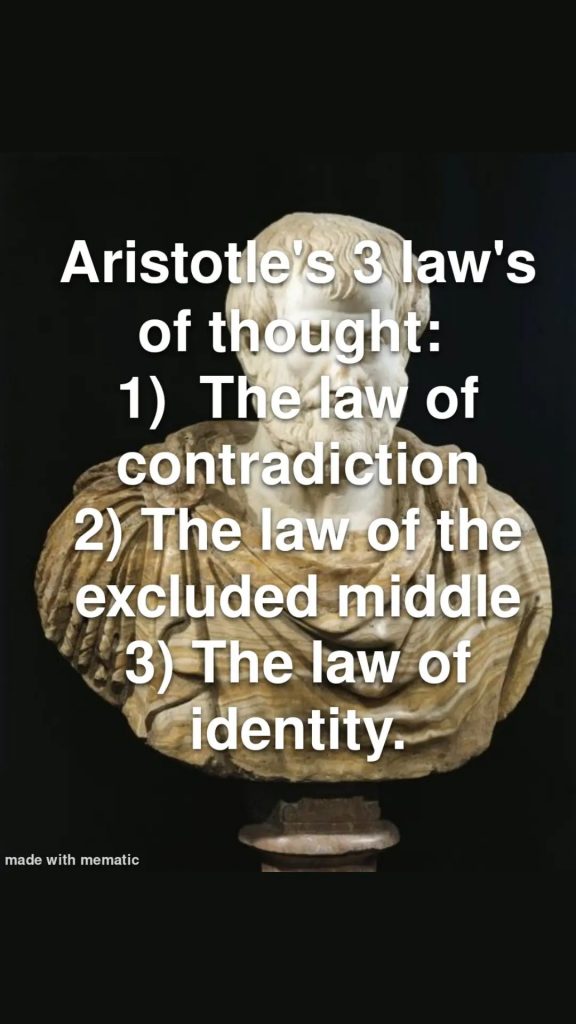
Aristotle’s Three Laws of Thought
Native Red Cloud on your life as your teacher
Tim Snyder – Reflections on Ukraine
Evolution: The Great Chain of Being with Arthur M. Young
New Thinking Allowed with Jeffrey Mishlove Jun 17, 2022 This video is a special release from the original Thinking Allowed series that ran on public television from 1986 until 2002. It was recorded in about 1991. Philosopher Arthur M. Young, inventor of the Bell helicopter, describes three different types of evolution: physical evolution of the form of the body, evolution of the “group soul” of a species, and personal evolution, i.e., your own spiritual evolution. This program contains excerpts from Arthur M. Young: The Reflexive Universe, a documentary about Young’s life and work. Now you can watch all of the programs from the original Thinking Allowed Video Collection, hosted by Jeffrey Mishlove. Subscribe to the new Streaming Channel (https://thinkingallowed.vhx.tv/) and watch more than 350 programs now, with more, previously unreleased titles added weekly. New!! Free month of the classic Thinking Allowed streaming channel for New Thinking Allowed subscribers only. Use code THINKFREELY.
Metro Atlanta sushi chef in search of the perfect bite

Credit: CHRIS HUNT
ATLANTA CULINARY JOURNEYS
By Angela Hansberger / For the AJC (ajc.com)
May 31, 2022
Omakase Table chef Leonard Yu’s quest to prove himself pays off.
While this article is provided as part of our public service mission, we offer much more. Support local journalism with today’s incredible deal: just 99¢ for 6 months of unlimited access! Subscribe now.
There is an Indonesian greeting, “Sudah makan nasi?,” that asks, “Have you eaten rice yet?” Because if you haven’t eaten rice, you simply have not eaten. Rice is one of the defining elements of the Indonesian diet. All-nourishing Hindu goddess Dewi Sri, from whose body rice was believed to have beenfirst produced, is honored with shrines in rice fields and harvest festivals.
“Rice is my foundation,” said Leonard Yu, chef of Omakase Table, a six-seat pop-up with two seatings on Mondays and Tuesdays at Brush Sushi Izakaya in Decatur with plans to open a brick and mortar restaurant in the fall.
As a child Yu rode water buffalo through the enormous rice fields of Karawang in Indonesia. His mother would tell him he needed to finish every grain of rice on his plate or Dewi Sri will cry.
“Sushi starts with rice, so I already had this understanding of how important it is,” he said.
But he never thought he would be building his own temple to sushi, serving a parade of small joys in the form of rice + fish + soy sauce. “I thought I would be a French or Italian chef,” Yu said. His grandmother and mother had restaurants in Jakarta, where he loved to be in the kitchen to help. “My mom always said I had a good palate and I should go to culinary school,” said Yu.
He was a diligent student in culinary college and was offered a job after studying for just six months. After stints cooking French and Italian cuisine at Ritz Carlton Indonesia, Ritz Carlton Malaysia and Singapore’s famed Raffles Hotel, he embarked on his American dream in New York with the promise of a job. The offered job did not exist when he arrived, so he found an interim restaurant job at Sushi Watanabe in New Jersey. It was here that he found his true calling.ExploreAtlanta pop-up restaurant Heritage owes its success to chef’s roots
Credit: CHRIS HUNT
Becoming a respected itamae (sushi chef) is steeped in tradition and formality and requires a long apprenticeship. One can spend years performing menial tasks before ever being able to prepare food.
“Being a non-Japanese chef, I had to work even harder to prove myself,” said Yu. “They told me everything I learned is wrong, even just holding the knife. I worked in one of the best hotels in Singapore, and here I am in New Jersey, and they tell me to scrub the floor, sharpen knives, cut scallions, clean the table. I couldn’t even clean the table properly,” he said. “But Watanabe San put the foundation and the discipline in me.”
Yu moved to Atlanta in 2016, working in a few Japanese restaurants before landing at Brush on the Decatur Square to work with chef-owner Jason Liang, who was named a James Beard semifinalist in February 2022.
“His sushi was very impressive to me,” Yu said. In Japan sushi masters say, “steal with your eyes. Jason is the only chef who shared recipes and their ratios with me; most sushi chefs don’t teach.”
Practice is a good master when it comes to sushi. It is a continual process in patience and respect. There is a lot of work and so many types of fish to learn. Every fish has a different preparation and a season. And everything a sushi chef does requires precision. Even the plastic wrap on the fish takes an hour and a half each evening.
“Sushi is a lifetime achievement and first you need to love it,” said Yu. “You need to get better every time. In 10 years I will be better. It’s my ikigai — the thing you live for,” Yu said.
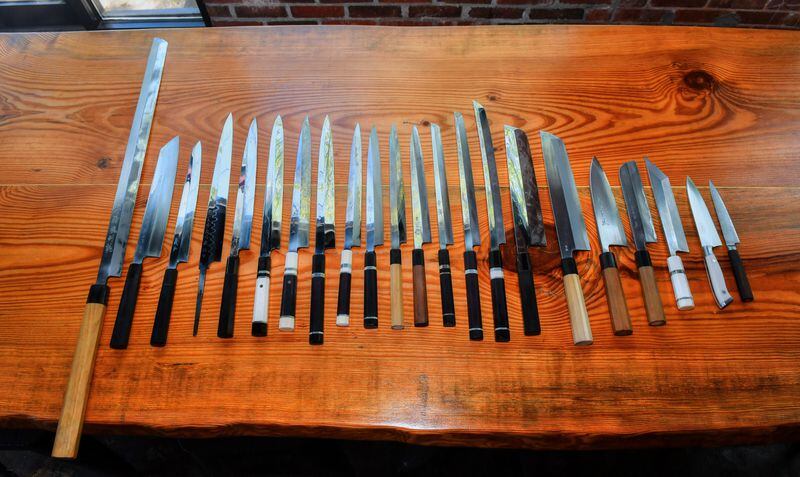
Sitting down to Yu’s omakase, guests first wipe hands clean with a hot towel called an oshibori. Yu adjusts his cooking implements, an array of sharp knives, long Moribashi plating chopsticks. He wipes his cutting board, all the while his apprentice gathers petite glazed ceramic dishes for the first course. A lidded vessel foretells chawanmushi, an egg custard he tops with salmon roe.
Omakase in English means “I leave it up to you” — as in, each course is chef’s choice.It is a type of dining in which the quality of the raw ingredients, their taste and texture and the overall aesthetic are inseparable and equally important as 20 or more nigiri and small dishes are served from light to heavy, each one highlighting seasonality. The sushi chef aims to present the purest flavors with minimal cooking and manipulation.
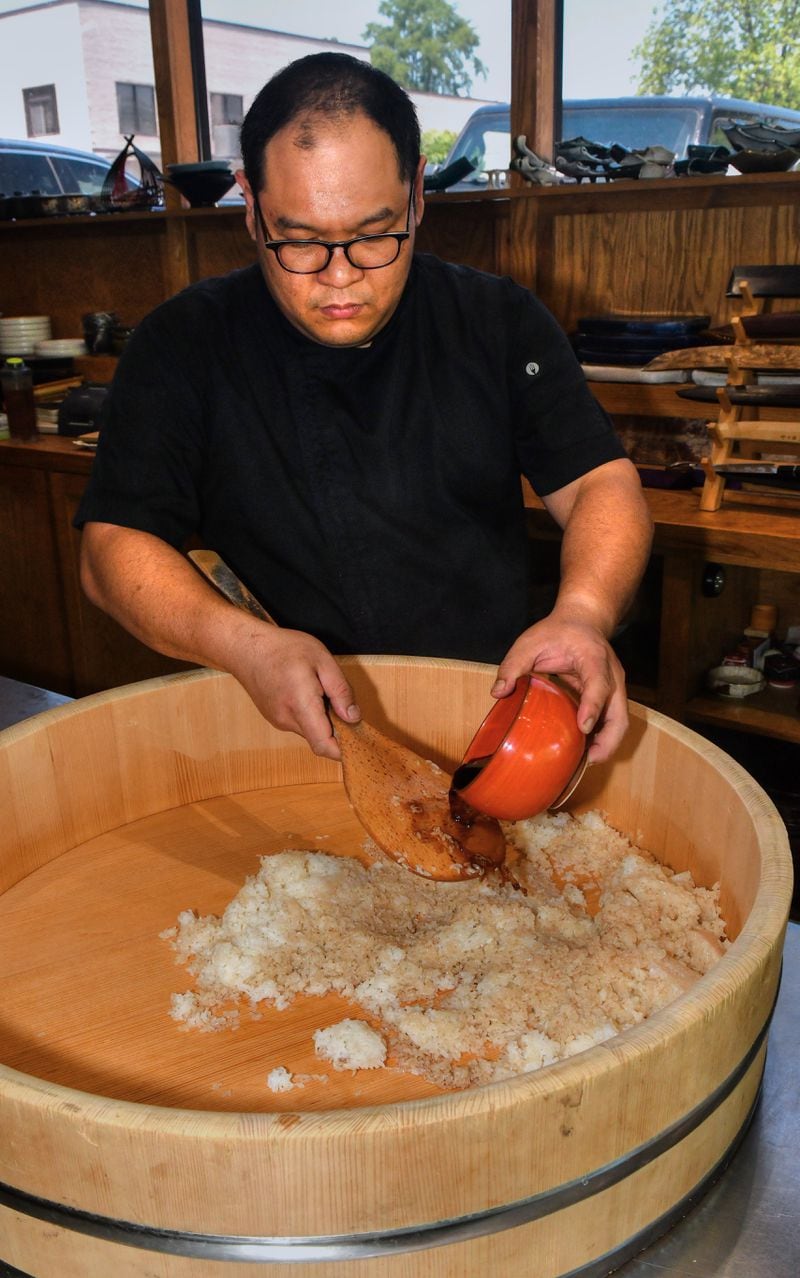
These are things a guest at a sushi bar can learn during omakase. As Yu fills a lidded wooden ohitsu with rice from the larger wooden holder called a hangiri, he mentions that his sushi is his own style, noting that many chefs describe theirs as Edomae, referring to sushi’s humble origins as a fast food developed alongside Edo Bay (now Tokyo Bay). Its inception was a way to preserve fish in fermented rice and evolved into the nigiri we know today. However, “There was no rice cooker in the Edo period, no refrigeration,” said Yu. “Technology makes it easier, but we can’t be authentic Edomae with these advances.” To correctly characterize it, most omakase is “Tokyo style.”
In a circular motion, he grated fresh wasabi root, not the green colored horseradish most sushi places serve. While preparing otsumami, the small snack dishes that precede the fish courses, he cleaned his board and wiped his Honyaki knife, made by skilled craftsmen in the same method as a traditional Japanese sword. He has a collection of Japanese knives, most in the $2,000 range. “I know the maker and the sharpener of each one,” he said.
Petite plates arrived with a Hokkaido scallop and strings of grape seaweed. He never serves hotate (scallop) as nigiri, as he doesn’t think it is balanced with rice and vinegar. “I’m really into using different types of seaweed,” he said as I delighted in the tiny pops of marine flavor from the green strands. “Omakase should be an expression of the chef who makes it.”ExploreBelén de la Cruz puts plenty of passion into her empanadas
Credit: CHRIS HUNT
The chef quickly noticed a diner using utensils with his left hand, so Yu adjusted his placement of things. There is discipline as well as conscientiousness with omakase service. When consuming a meal at a sushi bar, the dinner is a player in the process, able to ask questions in this experiential space.
During otsumami, small plates interspersed during omakase before nigiri, we tried hamo, dagger tooth eel, served with pickled ume (Asian plum). Yu has transformed this creepy looking bottom dweller into a delicate parcel with a hint of smoke and the complement of plum sweetness.
“It has thousands of bones,” Yu said. “I have two knives just for this fish.” It takes years to master cutting it, he told me. He learned via YouTube. He moves it to a binchotan charcoal grill for seconds and adds only a pinch of salt and lime. He never uses a torch on sushi, always the ancient way of binchotan.
As his expediter, Sophia Dillard, pours wine, she casually mentioned that sushi traditionally is meant to be eaten within 15-20 seconds after it’s placed in front of a diner. Even being a sushi eater takes practice and learning.
Midway through nigiri courses, sea bream with salt and lemon was served almost as a palate cleanser, priming my palate for more.
“Eating sushi is appreciating the true flavor of the fish,” he said. Sakura Masu, cherry blossom trout, is only available for a short season in the spring. He cut through the tender meat with one unstoppable pull of his long, single-bevel knife; his hand with one finger on top helped to focus on the precise cut — just as he was first shown by Watanabe San.
The order and the balance of the meal is carefully planned. Each person at the sushi bar got a description of the fish and preparation. When a guest left for the restroom, Yu continued serving each of us the next course. Seamlessly, her piece was placed as if she never left, never disrupting our order.
I asked how he forms the rice for nigiri, which means “two fingers,” the correct size of fish draped over seasoned rice.ExploreFrom adobo to adobaos: Atlanta’s developing Filipino food scene
Credit: CHRIS HUNT
“First I create an air pocket,” Yu said. “The rice needs to hold together but fall apart right away.” He shapes it like a boat, so it holds firm while you pick it up. If he notices a guest uses chopsticks to pick up nigiri, he packs their piece tighter.
Yu said his rice is saltier than most chefs, but the type of soy sauce he uses (aged in cedar for 10 years) is less salty than most. “When I started my pop-up, I experimented with a lot of rice,” he said. He uses a combination of Koshihikari and Nigota rice from Hokkaido aged with akasu red vinegar. He chose his distributor because they purchase from Japan, and he can tell them just how much he wants the rice polished, which helps balance taste. “The outside should be hard, but the inside should be soft so you can taste each grain,” he said.
In my next bite I noticed the curvature of the fish pressed into seasoned rice, the residual warmth of chef Yu’s hand that sculpted it, the bracing coolness of the fish, its sinuous resistance and the gradual melting on my tongue.
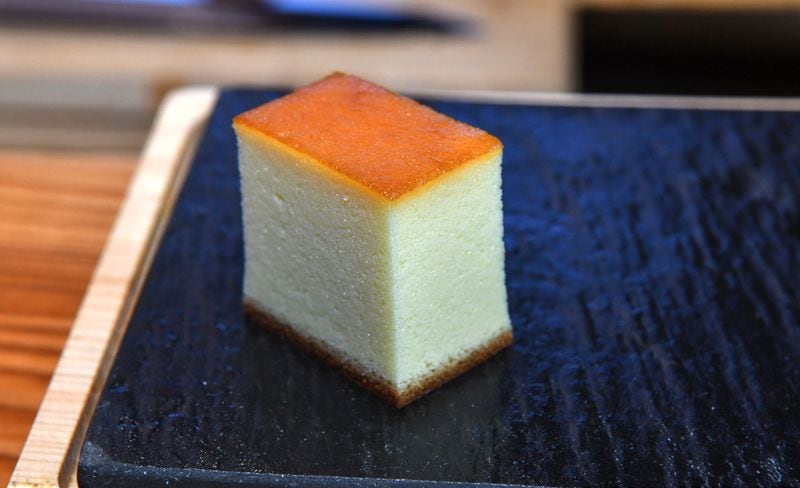
Near the end, chef Yu served sweet and delicate tamago, a rectangular omelet made by folding over the eggs many times. Beyond being tasty, it is something significant in rating a chef’s skill. Liang tested his recipe more than 40 times. It was Yu’s foundation. “He taught me his recipe — sushi chefs never do. I just perfected it,” Yu said.
He will take this recipe with him when Omakase Table, an 18-seat, omakase-only restaurant, opens in October in West Midtown. Until then he will serve Omakase Table on Mondays and Tuesdays at Brush.
And he will keep learning from Liang, who taught him much about aging fish and about culture and history, as his native Taiwan shares much flavor and tradition with Japan. Eventually, Yu will take his lead with burgeoning sushi chefs. “I will share, show and explain why it has to be that way,” he said as his apprentice washed the table behind him in the same Watanabe-style circular motion.
“Omakase is the highest a sushi chef can achieve, the best representation of him,” said Yu. “One piece of a perfect bite is my lifetime achievement.”
Omakase Table. 5:30 p.m. and 7:30 p.m. Mondays and Tuesdays. $185 per person. Prepaid reservations required. Brush, 316 Church St. Decatur. 347-977-7229, omakasetableatl.com.ExploreSushi to go in Atlanta: How to dine like you’re in Japan — at homeExploreThe ultimate guide to pizza in Atlanta
About the Author
Angela Hansberger is a freelance food, spirits, & culture writer who has written for Bon Appetit, Atlanta Magazine, Audubon, and is a contributing writer for the AJC.
(Contributed by Michael Kelly, H.W.)