New Thinking Allowed with Jeffrey Mishlove Pierre Grimes, PhD, is a specialist in classical Greek philosophy. He is the founder of the American Philosophical Practitioners Association. He is also founder of the Noetic Society in the Los Angeles area. He is author of Philosophical Midwifery: A New Paradigm for Understanding Human Problems, Socrates and Jesus: A Dialogue in Heaven, and Unblocking: Removing Blocks to Understanding. He is also a decorated veteran of the second world war. Here he shares his passion for Plato as his greatest spiritual inspiration. He distinguishes between the Socratic dialogue and the Platonic dialectic. He highlights passages from some of Plato’s dialogues. He describes the similarities between the emphasis on the “self” in Plato and in Buddhism, and laments that modern, western philosophy has lost this emphasis on self-knowledge. New Thinking Allowed host, Jeffrey Mishlove, PhD, is author of The Roots of Consciousness, Psi Development Systems, and The PK Man. Between 1986 and 2002 he hosted and co-produced the original Thinking Allowed public television series. He is also past-president of the non-profit Intuition Network, an organization dedicated to creating a world in which all people are encouraged to cultivate and apply their inner, intuitive abilities. (Recorded on April 16, 2018) For a complete, updated list with links to all of our videos — as well as many other opportunities to engage with and support the New Thinking Allowed video channel — please visit the New Thinking Allowed Foundation at http://www.newthinkingallowed.org.
Monthly Archives: November 2021
What is the Stink of Enlightenment?
| By Guru Swami G 3/18/2010 (guruswamig.com) There is a phrase that is the **stink of enlightenment**– a prime example of it is …. Reaching a point where one can say all the right things BUT thinking one is above the world and now they are some type of higher being and that the world is going to cater to them… There is no **mundane** versus not, and no one is above the world — one is in the world but not of it — that doesn’t mean above it though… it simply means that one is not deluded or drawn in or lost within some false view of the world… One enters into the Play of God — it ALL becomes Lila no matter what one is doing it doesn’t mean one runs away from responsibilities. That one is above it. Before Enlightenment one chops wood and carries water and AFTER enlightenment one chops wood and carries water… One doesn’t bum around – speak flowery words and think that others should cater to them… Neither does it mean that you can do whatever you damn well please without consequences to your actions — Karma for that one is still in place… There is nothing worse than to encounter the stink of enlightenment… One example of this was a supposed Enlightened Being that was procreating all over europe and then saying well it was the womens fault for sleeping with him as they knew he is not involved with anything – that he is in vairagya .. (That has nothing to do with Vairagya at all) Oh he traveled around giving Satsangs and they sounded good on the surface but there was no regard for honoring **any** responsibilities… After all responsibilities are for the unenlightened that are in the world… He is now above it… Let’s look at another one — Adi Da aka Ladi da… So above it all that he had a harem of women… Claimed to be above Jesus Christ and all other Guru’s on the planet… Is that Enlightenment ? No it’s having re-rooted into the stench of enlightenment ego… Does Enlightenment bring into place being beyond everything without consequences ? NO …. Does it make one a less authentic human being ? NO …. One becomes rather more Ordinary… Living life as it comes — without fanfare — without running away.. without grandiosity … Another of these prime examples is Nithyananda — claiming to be Enlightened and a Brahmachari and yet having sex with many of the devotees all the while claiming to be beyond it all and without desires or lust …. and having no responsibility to these actions… He is not Krishna reborn and that was not lila but sex pure and simple… He is defrauding the people in the name of Enlightenment… It stinks…. Maybe these guys had openings — maybe the ultimate truth was seen… remembered … spoke about… but a mind that is Still and Dead when within a Living Nirvikalpa Sahaja Samadhi is within a place where one lives a life of equity… of fairness to others. it’s not about am out to satisfy myself first and foremost… after all i am the center of the universe — i am the universe — there are no others ….. This is the delusion of the grand spiritual cosmic ego… It is not the actions where there is no Me that remains to be entranced by chasing desires… Ones desires are now within the realm of Vairagya – dispassion.. One does not chase after them they no longer run the show… OM Shanti |
Book: “Plato, Not Prozac!: Applying Eternal Wisdom to Everyday Problems”

Plato, Not Prozac!: Applying Eternal Wisdom to Everyday Problems
by Lou Marinoff
If you’re facing a dilemma — whether it’s handling a relationship, living ethically, dealing with a career change, or finding meaning in life — the world’s most important thinkers from centuries past will help guide you toward a solution compatible with your individual beliefs. From Kirkegaard’s thoughts on coping with death to the I Ching’s guidelines on adapting to change, Plato, Not Prozac! makes philosophy accessible and shows you how to use it to solve your everyday problems.
Gone is the need for expensive therapists, medication, and lengthy analysis. Clearly organized by common problems to help you tailor Dr. Lou Marinoff’s advice to your own needs, this is an intelligent, effective, and persuasive prescription for self-healing therapy that is giving psychotherapy a run for its money.
(Goodreads.com)
Book: “Programming & Metaprogramming in the Human Biocomputer: Theory & Experiments”

Programming & Metaprogramming in the Human Biocomputer: Theory & Experiments
In this pioneering study, renowned scientist Dr. John C. Lilly explodes our sense of the boundaries of the human brain, as he details his controversial experiments with exploring the mind’s vast potential.
Starting from the position that man is essentially a biological computer, Lilly explains we are all born with some “programs”–such as eating, sleeping, and feeling pain–ingrained in our genetic code. Our ability to take in new information and to develop ideas beyond these innate programs depends on our capacity for “metaprogramming,” or learning to learn. Here Lilly documents both the methods and results of his famous experiments with expanding the mind’s metaprogramming power with LSD and sensory deprivation. By altering the brain’s normal operations with psychotropic substances or freeing it of the need to create a safe environment, the range of human thought, Lilly contends, can be increased beyond any previous expectations.
Combining intellectual creativity and scientific rigor, Programming and Metaprogramming in the Human Biocomputer provides intriguing insights into the workings of the brain and the process of thought.
(Goodreads.com)
The Dream Master and The Pathologos
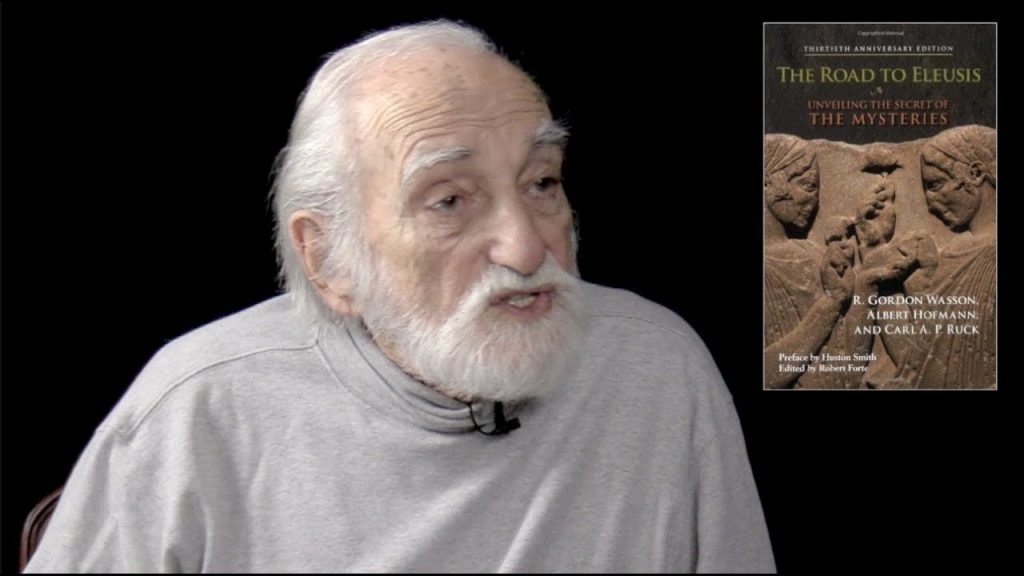
By Pierre Grimes, Ph. D.
Those who are led through our way of exploring dreams gain an understanding of themselves, their reality, and the profound nature of the role of the Dream Master. This approach is philosophical rather than psychological because it is a non-interpretive method that draws all the material for the exploration and analysis from the subject, bringing a recognition of how false beliefs are at the basis of one’s problems. The conclusions reached through this method are tested and verified when they are applied to the individual’s own experience. Thus, the exploration of each dream takes the form of a structured dialogue designed to uncover a subject’s belief system and as such it is a rational method.
Analyzing the content of many people’s dreams brings the realization that man is only partly aware in his waking life of the problems, failures, as well as the victories of his waking life. In the waking world that means that dreams play a vital complementary role in man’s psychic life. Equally, since the method of analysis makes this conclusion obvious, the method itself plays a critical role in dream work. For, in learning about dreams the dreamers learn not only about their personal lives, but learn a method of analysis that has far-reaching consequences. Once the method becomes second nature to dreamers, they apply it to other areas of their lives and learn to anticipate the occurrence of problems, find themselves more fully aware in their lives, and recognize more fully what they had previously ignored.
Dream analysis shows that dreams often carry a theme across many dreams, that there is a significant linkage between dreams, and that later dreams correct or modify the conclusions made in earlier dream analysis. The dreamers learn that the maker of dreams must be aware of the dreamers’ personal past since it uses their past history as the material for the dream; that it can artfully select key images from their past to represent the message of the dream; that is has a grasp of what they themselves have ignored from their waking world and reminds them of its significance both in terms of their present life as well as its implications on their past history. The dreamers realize that the maker of dreams must be awake to their life and is even awake in their life in a way that they themselves are not. This brings a greater realization to the dreamers that something beyond them, that is yet present to them, has an intelligibility that works for their personal good and, hence, is providential in its vision. This maker of dreams we call the Dream Master because its mastery is profound in its understanding and most artful in its production.
The dream master presents a special kind of problem to the dreamer, for the failures and successes that are ignored in the waking world become the subjects of the dream. The analysis of dreams discloses this special kind of problem as having its roots in beliefs about oneself that have been formulated in our early youth but which were never articulated and therefore cannot be recalled by the believer. These beliefs have their origin in early experiences in one’s youth, during occasions when families disclose their fundamental and emotionally held beliefs about life, about themselves, and about family members. From them one draws one’s own conclusions, in private, about oneself and the nature of reality. These beliefs are the root cause of our problems because these beliefs are always, in principle, false. These beliefs are never discussed in the family but live as milieu beliefs and taboos within the family.Invariably, these beliefs were shared when we ourselves were in the state of mind or approaching a success that threatened or challenged the beliefs of the family authorities. Thus, later in life, whenever we face analogous situations or states of mind that would threaten those family beliefs, we withdraw and find a solution that preserves or can be reconciled with those family taboos.
These beliefs are given the stamp of authenticity and are made believable because they were revealed by authorities who gave the appearance of being most caring, genuine and sincere. It appeared that they thought enough to share their fundamental convictions and, so, to reject the belief would be tantamount to rejecting them, leaving one to face the possibility of exile and loss of affection. Thus, while these beliefs shape an image of ourselves and our reality, they are, in principle, false and irreconcilable with our highest ideals. These false beliefs are called the pathologos because they are “sick beliefs.” The pathologos’ are the causes of our sense of dissatisfaction and failure in life. When one’s possible achievements are in contradiction to these beliefs, then blocks are experienced that either compromise one’s achievements or precipitate one’s failures.
The dream presents these blocks and sets them within scenes that show their common dynamic and structure within the history of our life. Through analysis we can unlock those personal blocks to our achievement of excellence and come to a way of analysis that opens up the possibility of leading a more rational life.
JANUARY 25, 2013 (noeticsociety.org)
Bio: Baird T. Spalding

From Wikipedia, the free encyclopedia
| Baird T Spalding | |
|---|---|
| Baird T. Spalding in 1935 | |
| Born | October 3, 1872 Cohocton, New York, United States |
| Died | March 18, 1953 (aged 80) Tempe, Arizona, US |
| Occupation | Writer, miner |
| Genre | Religion |
Baird Thomas Spalding (1872–1953) was an American spiritual writer, author of the spiritual book series: Life and Teaching of the Masters of the Far East.
American mystic Thane of Hawaii, founder of the Prosperos group, claimed in 1974 to have ghost-written several of Spalding’s later books and accompanied him on his 1935 India tour.
Biography
Although Spalding’s books claimed he was born in England in 1857, Spalding was also reported born in North Cohocton, New York in 1872.[1] He spent much of his life as a mining engineer in the American West. Research on his life and the purported eleven person research expeditions to the Far East beginning in 1894 to study the “Masters” has turned up evidence and pictures that are included in later volumes of his book. Spalding visited the Far East first in the late 1800s and then again in the 1920s and then again in the 1935 trip to India at the bequest of his publisher, Devorss & Company.[2][3] Anecdotal biographical detail was widely promulgated even during his lifetime. At his death in 1953 in Arizona, obituaries conflictingly cited his age as 95 or 107. His date of birth is given as “1872-1873” in the 1880 US census. However, that could mean that was the time he first came to the US as at that time it was common for foreigners to be given a new birth date and name when they first arrive in the US. The same date is given in a 1911 California marriage certificate. In other records his place of birth is given as England with him emigrating to the US later.[4]
Spalding did briefly visit India in 1935 as there is a US passport application dated 1935, and a Seattle immigration record on his return from India, dated 1936. A biography of Spalding, Baird T Spalding As I Knew Him was published by fellow mystic and DeVorss author David Bruton in 1954. About Spalding’s claims regarding his birthplace, Bruton wrote:
On two different occasions I asked him where he was born. The first time he told me in ‘upstate New York;’ the second, ‘Spalding, England.’ During one of his last public lectures a member of the audience asked where he was born and he answered, ‘In India.’ He spoke with equal affection for the ‘old family home’ in upstate New York, in Spalding, England and in Cocanada, Madras Province, India.
Works
In 1924, Spalding published the first volume of Life and Teaching of the Masters of the Far East. It describes the travels to India and Tibet of a research party of eleven scientists in 1894. During their trip they claim to have made contact with “the Great Masters of the Himalayas”, immortal beings with whom they lived and studied, gaining insight into their lives and spiritual message. This close contact enabled them to witness many of the spiritual principles evinced by these Great Masters translated into their everyday lives, which Spalding describes as acts that can be accomplished by anyone who comes to know his “TRUE” self. Such examples are walking on water, or manifesting bread to feed the hungry party – similar to some acts performed by eastern masters in more recent times. However, despite most of the action taking place in India, the Great Masters make it clear that the greatest embodiment of the Enlightened state is that of the Christ – the discovery of man’s source of power within himself – that light of God – the Christ consciousness is that “Christ” state:
The Masters accept that Buddha represents the Way to Enlightenment, but they clearly set forth that the Christ Consciousness is Enlightenment, or a state of consciousness for which we are all seeking – the Christ light of every individual; therefore, the light of every child born into the world.[5]
Death and influence
Spalding published three additional volumes before his death in 1953. Volumes 5 and 6 were published by DeVorss & Co posthumously from various articles that Spalding had written.
Spalding’s books have remained in print since his death and his stories have helped to popularize the concept of Ascended Masters which became a common meme in New Age and alternative religious movements during the later twentieth century.
During the 1920s, Spalding was a personal acquaintance of Guy Ballard, also a mining engineer and founder of the I AM activity. Similar themes to Spalding can be seen in Ascended Master groups such as the Church Universal and Triumphant and the writings of Elizabeth Clare Prophet. Spalding is named as an influence in the writings of New Age figures such as JZ Knight, Paul Baumann of the Methernitha sect and Father Divine.
The growth of the New Age movement during the 1970s resulted in a renewal of interest in Spalding, and several New Age figures have claimed tenuous connections to him after his death. American mystic Thane of Hawaii, founder of the Prosperos group, claimed in 1974 to have ghost-written several of Spalding’s later books and accompanied him on his 1935 India tour.
Thích Nhất Hạnh on being beautiful

Why Don’t Societies See Their Own Collapse Coming?
 By UMAIR HAQUE November 1, 2021 (dcreport.org)

Members of far-right groups at the Charlottesville “Unite the Right” rally in August 2017. (Source: Flickr/Anthony Crider)
What America and Britain Teach Us About the Willful Ignorance of Failing States
It’s a peculiar pattern of history. Like the axis around which a cycle of ruin spins. Societies — even civilizations — don’t see their own collapses coming. And not seeing them coming, they can hardly take steps to avert them. They’re left like deer in the headlights. And you know what happens next. If anything, curiously, societies tend to lean into their collapses.
So why don’t societies see their own collapses coming? Why do they accelerate and intensify them? It’s an especially relevant question, because, well, look around. Things aren’t exactly going too well for our civilization. We’re threatened by everything from global warming to ecological implosion to mass extinction to the pandemics and poverty and fascisms they’re already breeding.
If I think about it, four reasons jump out at me. In this little essay, I’ll use the examples of everyone’s favorite collapsing societies, America and Britain, to illustrate them.
The first reason’s simple: entrenched elites want to preserve the status quo. Think about America. The average American’s life is in freefall. Every single social indicator imaginable — from longevity to trust to happiness to income — is either flatlining or plummeting. Every single one. As a result, it’s not too hard to see why Americans are turning to hatred, superstition, fanaticism and other assorted forms of stupidity. They’re literally losing their minds as their lives fall apart.
And yet the really curious thing is that that’s been going for decades now — and the whole while, America’s ruling classes have pretended that everything’s OK. Which classes are those? Well, there are the political class, the intellectual class and the capitalist class. None of these three classes can even brook the idea that America is in serious, deep trouble, which adds up to a collapsing society.
Hence, American pundits will say, on cue, every quarter, that the “economy’s roaring” and that “confidence is rising” and all the other flavors of canned doublespeak they’re renowned for. Meanwhile, life keeps on falling apart.
The Soviet Union’s laughing in its grave, because it’s seen all this before. Why do entrenched elites want to preserve the status quo? You’re right to say that it preserves their power. But in a subtler way than I think is often understood. To say that a society is collapsing would be for elites to admit they mismanaged them. They’d have to admit they were badly, badly wrong — ideologically, theoretically, paradigmatically. Who wants to do that? And that, of course, would probably cost them. Fancy sinecures and “consulting” contracts and high office and all the rest of it.
Kids shoot each other in schools, people just…die…because they can’t afford insulin which is profiteered on…the average American lives and dies in debt, with little to no real freedoms or choices.
So entrenched elites go on pretending nothing’s wrong — even in societies like America, where social collapse has reached breathtaking proportions. Kids shoot each other in schools, people just…die…because they can’t afford insulin which is profiteered on…the average American lives and dies in debt, with little to no real freedoms or choices. And elites just whistle, shrug and walk away.
I have to give a special mention to intellectual elites. America’s in a funny place. It thinks of itself as having the finest thinkers in the world — and yet practically none of these fine thinkers can see that America’s collapsing, much less explain why, much less offer many ideas to stave it off. Intellectual elites, too, are complicit in the game of self-preservation, perhaps most of all so — because a collapsing society means their ideologies and theories were all badly wrong, too. Just ask the Soviets.
That brings me to the next reason that societies don’t foresee their own collapses. If elites want to preserve the status quo, then why don’t people…do something about those elites? Because elites in collapsing societies are entrenched. That means they’re dug tight into impregnable bunkers — and nobody can force them out and regain control of a society’s resources and decisions.
Corruption Run Rampant
Why can’t elites be forced out? How do they end up entrenched? Well, again, take a hard look at America. It has probably the most openly corrupt set of elites since the Soviet Union. In Europe, if politicians took “donations” the way American politicians do, it’d be a scandal every hour for decades. But in America, it’s just business as usual. The pervasive corruption of elites is another grand theme in collapsing societies. Who cares if Rome falls — as long as you’ve got your villa and your servants? That seems to be the feeling among elites when it comes to American collapse, too. Corruption saps incentives for elites to do anything but aggressively pursue self-preservation in the most antisocial and corrosive ways imaginable.
And yet it’s not just corruption that entrenches elites. That’s necessary, but not sufficient. A deeper force is at play: the disempowerment of the demos, as in, the democratic unit that is “the people.”
Think about that mouthful this way. The average American is completely disenchanted with their elites. Nobody much likes Biden or Pelosi or McConnell or any of the rest of them. But the problem is that Americans don’t have the time or energy or spirit or willpower to do anything about their failed elites. The American demos has little to no power over its elites.
Why not? Because they’re too busy just trying to survive. Just trying to make it through another day in America is a wearying affair. Life is an endless game of brutal competition, right down to death. Lose that job? Whoops, there goes everything, from health care to a home. So Americans, caught in the trap of capitalism, have to work every single day, to the bone, just to make ends meet. And even then, they can’t. Remember, the average American dies in debt — “credit card debt,” “medical debt,” “mortgage debt” and so on.
Trapped in Debt
To a good economist, societies where the average person dies in debt are also societies incapable of forcing entrenched elites out — at least short of a grand revolution. That’s the trap Americans are in. Elites have made sure they’re indebted…to elites…so Americans, worn out, broken, defeated, having to fight each other every day, over and over again…to pay off those debts…don’t have the energy or power left to dislodge those very entrenched elites.
Why don’t Americans protest? At least the way, say, the French famously do? It’s not just a cultural thing, though any proper Frenchman or woman is practically born waving a placard and shouting non! It’s also, more to the point, a matter of political economy: the French have time and energy left over to protest, like Europe and Canada generally do. From an American point of view, those societies hardly work at all — Americans work twice as long and receive less in return. No wonder Americans are indebted — and don’t have the energy left over to remove their entrenched yet failed elites from power.
If you’re working 80 hours a week at some crap job — like many Americans are — what time or energy do you really have left over for serious reflection about your society? Protesting? Giving “voice,” as political scientists, call it, to your discontents? Who’s going to organize and coordinate and fund all that, anyway? Maybe you see the problem. America’s ended up a democracy in name only, one without a demos exerting any real power over entrenched, failed elites.
Result? The grim, disheartening choice between Biden and Trump.
And yet there’s an even starker, darker path to collapse. Often, there is someone who sees a society’s in trouble, serious trouble, even beginning to collapse. The demagogue. The demagogue sees that a society’s not doing well, that things are beginning to break and crumble and fall apart. But he or she then scapegoats the most powerless groups in society for those problems — instead of fixing them. The obvious result is that the problems afflicting a society only get worse, while people are incited to hate, and so the vicious cycle of collapse only accelerates, usually hard and fast. Societies like this lean into their collapse — baffling and bewildering those around them, usually, too.
Britain Turns on Europe
It’s modern-day Britain that exemplifies this weird, sinister path to social collapse best. Britain was beset by problems after the financial crisis of the 2000s. But those problems came from a bungled bank bailout, which simply shifted costs to the public balance sheet, and led to a decade of austerity. In this vacuum, demagoguery arose — an entire generation of British leaders blamed Europe for Britain’s woes. Europe had nothing — nothing whatsoever — to do with British austerity, which led to falling living standards. And yet this class of demagogues — expertly scapegoated Europe, to the point that you’d turn on the BBC, and see someone called an “economist” or “analyst,” with no credentials whatsoever, just spouting folly, lies and hate…every day.
The catastrophic result was Brexit. And the consequences of Brexit, today, are as funny and absurd as they are shocking. Brits can’t get food — they see cardboard cutouts of food at supermarkets. The country’s running out of beer. Raw sewage is floating down waterways because the chemicals to treat it can’t be found. All that stuff came from Europe. And now it doesn’t come from anywhere.
Meanwhile, nobody in Britain, at least in a position of power, is allowed to say the word “Brexit.” It’s Voldemort, at idiot Hogwarts. Even the leader of the opposition, Keir Starmer, won’t say the obvious, which is that Brits can’t get food or fuel or, shortly, medicine, because it all used to come from Europe, and Britain is still busy picking fights with Europe, instead of trying to figure out how to supply itself with basic goods.
Meanwhile, Europe’s baffled — and at this point, infuriated — with Britain. It has little appetite left to be scapegoated. Give Europe some credit — it took Britain’s insults for five years, with grace and kindness, just out of friendship. Shortly, though, Europe’s going to do things like stop supplying Britain with power and gas, because Britain keeps on provoking it, demonizing it, attacking it. And then the real chaos will begin.
In this form of social collapse — let’s call it the Brexit Pattern — nobody sees collapse coming because they’re too busy cheering it on. The demagogue’s lies appeal to people because their lives really are hurting — and it’s always easiest to blame it on a scapegoat. Hence, Britain became literally a “hostile” country to foreigners — as its own government puts it — and especially to Europeans.
But attacking and insulting and provoking Europeans didn’t fix Britain’s problems. It only created far, far bigger ones — ones that have led Britain squarely to the point of collapse. What else do you call a society where people are given…cardboard cutouts of food…raw sewage is floating down rivers…where the lights are likely going to go off in the winter…while the people who created this mess are riding higher in the polls than ever…because, still, idiotically, astonishingly, it’s all someone else’s fault? Britain’s still so busy blaming Europe that it can’t see it’s collapsing because it began blaming Europe from the start.
It’s hard to unpack and unpick the layers of stupidity and irony therein, so many abound.
Five Decades of Decline
America took about half a century to collapse. Incomes began stagnating in the ’70s, social mobility began to stall in the ’80s, living standards began to flatline in the ’90s, by the end of the ’00s, America’s famed middle class was a minority and an underclass. That was the point at which debt, drugs and despair began to ravage (even white) America in earnest. That’s a pretty standard form of social collapse — it took the Soviet Union about three decades of stagnation and falling living standards to come undone.
Britain, though, is something closer to Weimar Germany. It took Weimar Germany a decade, maybe 15 years, depending on how you count it, to really implode into Nazi Germany. Britain’s much closer to that pattern, that form of collapse. Just 20 years ago, it was the envy of the world, with one of the world’s highest living standards, finest healthcare system, most renowned public broadcaster. Today? All that’s in tatters, precisely because Britain leaned into collapse even harder than America did.
In that respect, Britain and America teach us different lessons about how societies collapse. America teaches us that time, neglect, ignorance and poverty can slowly crumble the foundations of even the mightiest empires until they totter and fall. Britain teaches us an even darker lesson: Give a society a crisis, a demagogue and a scapegoat — and it takes just a decade or two of stupidity and anger to turn into hate and venom to the point of total and utter self-destruction.
America teaches us that small amounts of the social poisons of greed and indifference and inequality can add up to a very big collapse, in the end, given time. But Britain teaches us that societies can implode with lightning quickness, too; that even wise and gentle people like the British are not immune to the Big Lies of hate and nationalism and intolerance and unkindness, that anyone can be seduced by a demagogue offering a nation growing poorer a convenient scapegoat for its ills.
Does that get us a little closer to understanding why societies don’t see their own collapses coming? Perhaps it does — you’ll have to tell me. In the end, the answer may be as simple as this. Societies don’t see their own collapses coming because they grow weak, blind, dull, defeated in the spirit, corroded in the heart, hubristic in the mind. They’ve been warned, time and again, that it can’t happen here — and left too weary to fight it much, anyways. That’s America’s case. But that’s the kind case. Even more revealing, some societies, like Nazi Germany, end up leaning aggressively into their own collapse, cheering it all on in a frenzy, attacking every scapegoat in sight, provoking newly made enemies, instead of fixing their own problems. A weird Orwellian freedom-is-slavery perversion of reality takes place. That’s Britain’s case right about now.
Which one, I wonder, will hit which nation next?
The essay first appeared on Umair Haque’s Medium site.Create a PDF
Writer
- Umair Haque Umair Haque is a London-based consultant. He is director of Havas Media Lab, founder of Bubblegeneration and frequent tweeter and contributor to the online Harvard Business Review. He is the author of The New Capitalist Manifesto: Building a Disruptively Better Business (2011).
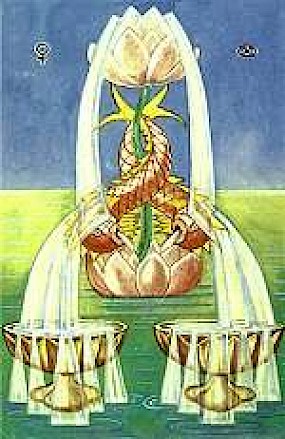
Tarot Card for November 5: The Two of Cups
The Two of Cups
And here we have the Lord of Love, a card of bliss, deep joyous love reciprocated fully and with great enthusiasm, a card of reconciliations and new growth! Here we see harmonious and contented exchanges of emotion, which vibrate with an ecstatic undercurrent of passion and heat.
Because this card is a reflective and receptive one, there’s an issue that people sometimes forget when reading it – to be truly loved, deeply treasured, valued highly by others, we must first and foremost strive to feel those things for ourselves. When we work toward loving ourselves, we hold our inner nature in high regard, treating it with deference and proper respect. When we see ourselves in that light, other people cannot help but respond to our personal sense of value.
Furthermore, when we work to love ourselves, we release so many areas of self-doubt and uncertainty that we become infused by a new energy – and this we can lavish on others. The Two of Cups is about engaging in a caring and tender fashion with our own needs, first and foremost.
It isn’t so much about achieving self-love, as about, in every single day of our lives, striving towards self-love. That action leads us into a positive, self-supportive and accepting approach to life. And also, when we stop wasting energy telling ourselves what’s wrong with us, we have lots more energy to enjoy being who we are.
When this card comes up in a reading, if it relates to the inner journey, then it tells you to put your attention in the moment, to leave the past behind, and to let yourself be free to enjoy everything that comes your way.
If it relates to outer events, it may point to a forthcoming reconciliation in a relationship where there has been pain and disappointment – this need not be a love affair, it can cover many different types of loving relationship.
It might point up a new relationship which has recently begun and which will grow into a deep and lasting friendship or affair.
And finally, it may reassure you that the meaningful relationship in your life will strengthen and grow, developing into exactly what you need it to be!!
(via angelpaths.com and Alan Blackman)
Physics suggests that the future has already happened
Our intuition tells us that the future can be changed, but Einstein’s theory of relativity suggests that there is no real difference between the future and the past.
The future, present and past may actually not be as different as we think, says science writer and astrophysicist Adam Becker.