An Education in Thanksgiving

Posted on  by c.l. charlesworth
(storieswithlegs.com)

when black authors' books are banned

James Baldwin, Zora Neale Hurston, Alice Walker, Ralph Ellison, Richard Wright, Toni Morrison, and Alice Walker:  What do they all have in common? They are all African-American writers who have published books considered American classics. And they are also authors whose novels are banned (or will be) by school boards and libraries across the United States.

 A new day clouded in dirty words.

Virginia Beach School Board Member wants books about race by Toni Morrison and Other Black Authors Banned from the School District and Public Libraries.

According to recent reports, books about race are on the chopping block in the public schools’ curriculum. Many books by Black Writers, considered American Classics, depict and incite racism. They are vulgar explanations of rape, incest, and very much perpetuated in racism.

(The tone of) Critical race: “Our students and teachers are exposed for too long that our country is innately racist. Racism pits teachers and students against one another based on their skin color.”                            

                                                 Silence is Golden

 Accordingly, Maya Angelou is one of the most banned African American writers for her (autobiographical) debut novel:  I Know Why the Caged Bird Sings. It deals with the rape and pregnancy of a black teenager and racism in America. Ms. Angelou’s book is an ongoing target for removal from school libraries’ reading lists.

“I’m always sorry that people ban my books. Many times I’ve been called the most banned,” Angelou said, referring to I Know Why the Caged Bird Sings, which was nominated for a National Book Award and remained on The New York Times paperback bestseller list for two years. “Many times my books are banned by people who never read two sentences.”

Virginia’s Republican GOP candidate released a political ad featuring a white mother who advocated banning Toni Morrison’s novel Beloved from school curriculums. The woman describes Beloved as “disgusting, gross, and written in the most vile and explicit language imaginable.” She said the book was extremely difficult for her to handle, and it gave her son nightmares.

banning books--where does it stop

Morrison’s Pulitzer Prize-winning novel Beloved tells the story of a family of former slaves. It is inspired by a true-life incident involving Margaret Garner, an escaped slave from Kentucky who fled to the free state of Ohio in 1856 but was captured in accordance with the Fugitive Slave Act of 1850. When U.S. marshals burst into the cabin where Garner and her husband had barricaded themselves, they found that she had killed her two-year-old daughter and was attempting to kill her other children to spare them from being returned to slavery. Morrison researched the historical account of Margaret Garner titled “A Visit to the Slave Mother who Killed Her Child” published in an 1856 newspaper article in the American Baptist.

Dana Williams, professor of African American literature at Howard University, says the fight over “parents’ rights” has become a racist dog whistle. “Books like Beloved force us to have real conversations about history,” she says (recently published in Truthout).

The below are touted books by white authors, banned by religious groups, conservatives, and school boards—yet Hollywood took a note of the massive readerships, profits, and literary recognitions and adapted them into significant motion pictures or television vehicles.  One of the biggest prizes was the silent movie:  Birth of a Nation.

  • To Kill a Mockingbird
  • The Adventures of Huckleberry Finn
  • Of Mice and Men
  • The Harry Potter Series
  • Little House on the Prairie

The question:  Why is RAP music using derogatory words and excessive profanity degrading women or movies given X or R ratings accepted? Why are social media bullying-lies, or shooting/killing an unarmed citizen seen as the victim’s fault? We have become a culture of picking and choosing when the shoe fits.
Freedom of expression

Are writers to be limited to happy-go-lucky stories bringing shallow substances and forgettable endings? A philosophy among fiction writers remains that the best prose is honest and written from the identified and familiar.

When books are banned, destroyed, and mocked, this is burning freedom of expression and creativity.

Stories are composed as symbols of the times within the writer’s life. Can we ease one’s experiences as a convenience for someone else’s?

I have read and collected many of the banned African American authors’ novels. My family instilled level-headed discussions. So I don’t consider myself damaged. Perhaps, if looking at the REAL reason WHAT brought the Africans to this country and what they endured, and still endure… then not banning their stories is the most human thing to do.Follow me:

This entry was posted in On WritingPersonal Journey by c.l. charlesworth. Bookmark the permalink.

About c.l. charlesworth

Back Porch Storyteller. Inspired by music, art, books, and people who have something worth saying. View all posts by c.l. charlesworth →

(Contributed by Gwyllm Llwydd)

New Moon In Scorpio – Thunderstruck

by Astro Butterfly (astrobutterfly.com)

On November 4th/5th 2021 we have a New Moon at 12° Scorpio.

This Scorpio lunation cycle is incredibly important. Mid-lunar cycle, we will have our first Eclipse on the Taurus/Scorpio axis, which kickstarts the upcoming 2-year eclipse season on the Taurus/Scorpio axis.

2 years from now we will pretty much bathe in Scorpio’s still waters, while at the same time getting THUNDERSTRUCK by Uranus in Taurus.

All the planets that are traveling through Scorpio will oppose Uranus in Taurus, creating an interesting water/light dynamic. While the Scorpionic water is not a good conductor for electricity, the Uranian light will shed light on what’s otherwise a territory of shadow and darkness.

The New Moon has a strong Scorpio energy not only because we have the Sun and Moon in the sign of Scorpio, but because the New Moon ruler, Mars, is also in Scorpio and is very powerful in the sign of its domicile.

This is an incredibly driven New Moon that won’t take no for an answer. When Mars in Scorpio wants something, he is going to get it NO MATTER WHAT. Mars in Scorpio is not blunt and pushy like Mars in Aries… Mars in Scorpio takes its time. His will is so strong, that in his quest to win the battle, he will do whatever it takes, go as deep as he can, and leave no stone unturned.

Scorpio waters run deep – Scorpio rules over the underworld afterall. The underworld – not to be confused with death – is the purgatory, a place of deep transformation. This is where we let go of what no longer sustains growth, so that we can rise again, stronger and wiser.

We all fear that place where things get rotten, decay, and change their substance. We never go there willingly. It is the element of ‘not knowing’ what’s on the other side that makes us want to stand back, be in control, and do whatever it takes to preserve the status quo.

But the Scorpio work is not about preserving the status quo, but about working through this deep transformation process from one state of being to another.

True power has nothing to do with control – of other people or of life circumstances. True power is about having that inner strength to navigate through the storm. There will always be things we can’t control, and true strength is not about getting our way, but about handling whatever comes our way.

New Moon In Scorpio – Thunderstruck

The New Moon in Scorpio is exactly opposite Uranus, the planet of ‘expect the unexpected’.

Uranus comes with an interesting plot twist.

Even the most minutious, well concocted Scorpio plans – and Scorpio is very good at hiding his traces – will now be revealed in the strike of a lightning bolt.

Whatever it is that was lurking in the back of your conscious mind – the taboo, the unspoken – will now come to light. Not to expose you or point a finger at you – but to reveal something that is so obvious, so striking, that it can no longer be ignored.

Whenever in doubt, always trust the outer planets – especially Uranus. Outer planets are ahead of their times and always know better – so what may feel like an unwelcome change of plans may be your best solution yet.

New Moons are dark Moons – not a time to get out there and change the world. These are times to sit still and listen. Uranus will thunderstruck you with something that will feel so real, so true, so obvious, that it will shake you to the core of your being.

Blindfolded, in the dark of the New Moon, what is it that you can now see for what it is – so obviously, so strikingly – that you can no longer ignore?

Releasing the Hidden Splendour class November 6 & 7


Releasing the Hidden Splendour
One of Thane’s Foundation Classes
Live/Monitor Zoom Class Sat/Sun November 6 and 7


Emotional blocks present us with challenges that can lead to the most profound insights. Releasing the Hidden Splendour teaches how to trade in painful or unpleasant feelings for insight and freedom by practicing the Joseph Technique™. In a practice of loving and thoughtful self reflection we come to release the past and embrace our true heritage of freedom and grace.

Audio with Thane and live instruction by Rick Thomas H.W., M.

Two full days (9 – 5 Pacific) of class on this weekend. 

Class fees:  $150 New to class / $75 Review

Class details with Zoom link will be emailed to you.

Register NOW

Algorithms And The Human Psyche with Pierre Grimes

New Thinking Allowed with Jeffrey Mishlove Pierre Grimes, PhD, is a specialist in classical Greek philosophy. He is the founder of the American Philosophical Practitioners Association. He is also founder of the Noetic Society in the Los Angeles area. He is author of Philosophical Midwifery: A New Paradigm for Understanding Human Problems, Socrates and Jesus: A Dialogue in Heaven, and Unblocking: Removing Block to Understanding. He is also a decorated veteran of the second world war. Here he points out that the “pathologos” (false beliefs we have about ourselves) tend to trigger robotic behavior patterns in an algorithmic fashion. Interestingly, the process for gaining insight and therefore correcting this behavior — as outlined in “philosophical midwifery” — also has an algorithmic element to it. Pierre also describes his understanding of the relationship between psyche and Self. New Thinking Allowed host, Jeffrey Mishlove, PhD, is author of The Roots of Consciousness, Psi Development Systems, and The PK Man. Between 1986 and 2002 he hosted and co-produced the original Thinking Allowed public television series. He is also past-president of the non-profit Intuition Network, an organization dedicated to creating a world in which all people are encouraged to cultivate and apply their inner, intuitive abilities. (Recorded on September 10, 2018) For a complete, updated list with links to all of our videos — as well as many other opportunities to engage with and support the New Thinking Allowed video channel — please visit the New Thinking Allowed Foundation at http://www.newthinkingallowed.org. To join the NTA Psi Experience Community on Facebook, see https://www.facebook.com/groups/19530… To download and listen to audio versions of the New Thinking Allowed videos, please visit our new podcast at https://itunes.apple.com/us/podcast/n…

MORTIMER ADLER’S READING LIST

(thinkingasleverage.wordpress.com)

Reading list from “How To Read a Book” by Mortimer Adler(1972 edition)
  1. HomerIliadOdyssey
  2. The Old Testament
  3. Aeschylus: Tragedies
  4. Sophocles: Tragedies
  5. HerodotusHistories
  6. Euripides: Tragedies
  7. ThucydidesHistory of the Peloponnesian War
  8. Hippocrates: Medical Writings
  9. Aristophanes: Comedies
  10. Plato: Dialogues
  11. Aristotle: Works
  12. EpicurusLetter to HerodotusLetter to Menoecus
  13. EuclidElements
  14. Archimedes: Works
  15. Apollonius of PergaConic Sections
  16. Cicero: Works
  17. LucretiusOn the Nature of Things
  18. Virgil: Works
  19. Horace: Works
  20. LivyHistory of Rome
  21. Ovid: Works
  22. PlutarchParallel LivesMoralia
  23. TacitusHistoriesAnnalsAgricola Germania
  24. Nicomachus of GerasaIntroduction to Arithmetic
  25. EpictetusDiscoursesEncheiridion
  26. PtolemyAlmagest
  27. Lucian: Works
  28. Marcus AureliusMeditations
  29. GalenOn the Natural Faculties
  30. The New Testament
  31. PlotinusThe Enneads
  32. St. Augustine: On the Teacher; ConfessionsCity of GodOn Christian Doctrine
  33. The Song of Roland
  34. The Nibelungenlied
  35. The Saga of Burnt Njál
  36. St. Thomas AquinasSumma Theologica
  37. Dante AlighieriThe Divine Comedy;The New LifeOn Monarchy
  38. Geoffrey ChaucerTroilus and CriseydeThe Canterbury Tales
  39. Leonardo da Vinci: Notebooks
  40. Niccolò MachiavelliThe PrinceDiscourses on the First Ten Books of Livy
  41. Desiderius ErasmusThe Praise of Folly
  42. Nicolaus CopernicusOn the Revolutions of the Heavenly Spheres
  43. Thomas MoreUtopia
  44. Martin Luther: Table Talk; Three Treatises
  45. Francois RabelaisGargantua and Pantagruel
  46. John CalvinInstitutes of the Christian Religion
  47. Michel de MontaigneEssays
  48. William GilbertOn the Loadstone and Magnetic Bodies
  49. Miguel de CervantesDon Quixote
  50. Edmund SpenserProthalamionThe Faerie Queene
  51. Francis BaconEssaysAdvancement of LearningNovum OrganumThe New Atlantis
  52. William ShakespearePoetry and Plays
  53. Galileo GalileiStarry MessengerDialogues Concerning Two New Sciences
  54. Johannes KeplerEpitome of Copernican AstronomyConcerning the Harmonies of the World
  55. William HarveyOn the Motion of the Heart and Blood in AnimalsOn the Circulation of the BloodOn the Generation of Animals
  56. Thomas HobbesLeviathan
  57. René DescartesRules for the Direction of the MindDiscourse on the MethodGeometryMeditations on First Philosophy
  58. John Milton: Works
  59. Molière: Comedies
  60. Blaise PascalThe Provincial LettersPensees; Scientific Treatises
  61. Christiaan HuygensTreatise on Light
  62. Benedict de SpinozaEthics
  63. John LockeLetter Concerning TolerationOf Civil GovernmentEssay Concerning Human UnderstandingThoughts Concerning Education
  64. Jean Baptiste Racine: Tragedies
  65. Isaac NewtonMathematical Principles of Natural PhilosophyOptics
  66. Gottfried Wilhelm von LeibnizDiscourse on MetaphysicsNew Essays Concerning Human UnderstandingMonadology
  67. Daniel DefoeRobinson Crusoe
  68. Jonathan SwiftA Tale of a Tub; Journal to Stella; Gulliver’s Travels; A Modest Proposal
  69. William CongreveThe Way of the World
  70. George BerkeleyPrinciples of Human Knowledge
  71. Alexander PopeEssay on CriticismRape of the LockEssay on Man
  72. Charles de Secondat, baron de MontesquieuPersian LettersSpirit of Laws
  73. VoltaireLetters on the EnglishCandidePhilosophical Dictionary
  74. Henry FieldingJoseph AndrewsTom Jones
  75. Samuel JohnsonThe Vanity of Human WishesDictionaryRasselasThe Lives of the Poets
  76. David HumeTreatise on Human NatureEssays Moral and PoliticalAn Enquiry Concerning Human Understanding
  77. Jean-Jacques RousseauOn the Origin of Inequality; On the Political Economy; EmileThe Social Contract
  78. Laurence SterneTristram ShandyA Sentimental Journey through France and Italy
  79. Adam SmithThe Theory of Moral SentimentsThe Wealth of Nations
  80. Immanuel KantCritique of Pure ReasonFundamental Principles of the Metaphysics of MoralsCritique of Practical ReasonThe Science of RightCritique of JudgmentPerpetual Peace
  81. Edward GibbonThe Decline and Fall of the Roman Empire; Autobiography
  82. James Boswell: Journal; Life of Samuel Johnson, Ll.D.
  83. Antoine Laurent LavoisierTraité Élémentaire de Chimie (Elements of Chemistry)
  84. Alexander HamiltonJohn Jay, and James MadisonFederalist Papers
  85. Jeremy Bentham: Introduction to the Principles of Morals and Legislation; Theory of Fictions
  86. Johann Wolfgang von GoetheFaustPoetry and Truth
  87. Jean Baptiste Joseph Fourier: Analytical Theory of Heat
  88. Georg Wilhelm Friedrich HegelPhenomenology of SpiritPhilosophy of RightLectures on the Philosophy of History
  89. William Wordsworth: Poems
  90. Samuel Taylor Coleridge: Poems; Biographia Literaria
  91. Jane AustenPride and PrejudiceEmma
  92. Carl von ClausewitzOn War
  93. StendhalThe Red and the BlackThe Charterhouse of Parma; On Love
  94. Lord ByronDon Juan
  95. Arthur Schopenhauer: Studies in Pessimism
  96. Michael Faraday: Chemical History of a Candle; Experimental Researches in Electricity
  97. Charles LyellPrinciples of Geology
  98. Auguste Comte: The Positive Philosophy
  99. Honore de BalzacPère GoriotEugenie Grandet
  100. Ralph Waldo Emerson: Representative Men; Essays; Journal
  101. Nathaniel HawthorneThe Scarlet Letter
  102. Alexis de TocquevilleDemocracy in America
  103. John Stuart MillA System of LogicOn Liberty; Representative Government; UtilitarianismThe Subjection of Women; Autobiography
  104. Charles DarwinThe Origin of SpeciesThe Descent of ManAutobiography
  105. Charles DickensPickwick PapersDavid CopperfieldHard Times
  106. Claude BernardIntroduction to the Study of Experimental Medicine
  107. Henry David ThoreauCivil DisobedienceWalden
  108. Karl MarxCapitalCommunist Manifesto
  109. George EliotAdam BedeMiddlemarch
  110. Herman MelvilleMoby-DickBilly Budd
  111. Fyodor DostoevskyCrime and PunishmentThe IdiotThe Brothers Karamazov
  112. Gustave FlaubertMadame Bovary; Three Stories
  113. Henrik Ibsen: Plays
  114. Leo TolstoyWar and PeaceAnna KareninaWhat is Art?; Twenty-Three Tales
  115. Mark TwainThe Adventures of Huckleberry FinnThe Mysterious Stranger
  116. William JamesThe Principles of PsychologyThe Varieties of Religious ExperiencePragmatismEssays in Radical Empiricism
  117. Henry JamesThe American; ‘The Ambassadors
  118. Friedrich Wilhelm NietzscheThus Spoke ZarathustraBeyond Good and EvilThe Genealogy of MoralsThe Will to Power
  119. Jules Henri PoincareScience and HypothesisScience and Method
  120. Sigmund FreudThe Interpretation of Dreams; Introductory Lectures on Psychoanalysis; Civilization and Its Discontents; New Introductory Lectures on Psychoanalysis
  121. George Bernard Shaw: Plays and Prefaces
  122. Max Planck: Origin and Development of the Quantum Theory; Where Is Science Going?; Scientific Autobiography
  123. Henri BergsonTime and Free WillMatter and MemoryCreative EvolutionThe Two Sources of Morality and Religion
  124. John Dewey: How We Think; Democracy and Education; Experience and Nature; Logic; the Theory of Inquiry
  125. Alfred North WhiteheadAn Introduction to MathematicsScience and the Modern WorldThe Aims of Education and Other EssaysAdventures of Ideas
  126. George SantayanaThe Life of ReasonSkepticism and Animal Faith; Persons and Places
  127. LeninThe State and Revolution
  128. Marcel ProustRemembrance of Things Past
  129. Bertrand RussellThe Problems of Philosophy; The Analysis of Mind; An Inquiry into Meaning and Truth; Human Knowledge, Its Scope and Limits
  130. Thomas MannThe Magic MountainJoseph and His Brothers
  131. Albert Einstein: The Meaning of Relativity; On the Method of Theoretical Physics; The Evolution of Physics
  132. James Joyce: ‘The Dead’ in DublinersA Portrait of the Artist as a Young ManUlysses
  133. Jacques MaritainArt and ScholasticismThe Degrees of KnowledgeThe Rights of Man and Natural LawTrue Humanism
  134. Franz KafkaThe TrialThe Castle
  135. Arnold J. ToynbeeA Study of HistoryCivilization on Trial
  136. Jean Paul SartreNauseaNo ExitBeing and Nothingness
  137. Aleksandr SolzhenitsynThe First CircleThe Cancer Ward

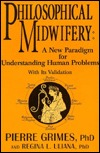
Book: “Philosophical Midwifery: A New Paradigm for Understanding Human Problems with Its Validation”

Philosophical Midwifery: A New Paradigm for Understanding Human Problems with Its Validation

Philosophical Midwifery: A New Paradigm for Understanding Human Problems with Its Validation

by Pierre Grimes

The subtitle of Philosophical Midwifery…makes the rather bold claim
that it is New Paradigm for Understanding Human Problems. It is expected that such a claim may be met with a healthy dose of skepticism were it not for the fact that the author bases the claim of being a new paradigm on Thomas Kuhn’s 1969 thesis on The Structure of Scientific Revolutions. Equally, the theory of PM is shown to be consistent with the most scientific theories in Chaos theory, Recursive Algorithmic theory, Systems theory, and Field theory and it is contrasted in a comparative study to Western and Eastern philosophy and to the principle systems of psychotherapy

(Goodreads.com)

Book: “Socrates and Jesus: A Dialogue in Heaven”

Blank 133x176

Socrates and Jesus: A Dialogue in Heaven

by Dr Pierre Grimes Grimes 

What if Socrates and Jesus met in the afterworld? What would they have to say to each other? What ideas would they explore? In this work, you can journey along is just such a dialogue. Socrates and Jesus share their wisdom, how each saw his destiny on earth, and their views on how each met his death. Since neither of them left writings on his own, they question each other and explore the various interpretations of their lives and teachings that arose among their followers after they died. What do they each say about which interpretation came closest to representing the truth of their respective thought, and which was totally off the mark? Pierre Grimes, PhD., is a Professor of Classical Philosophy at the University of Philosophical Research and at thethe Holmes Institute, the Divinity School of the Church of Religious Science. His writings and research are considered new paradigms and include “Philosophical Midwifery: a New Paradign for Understanding Human Problems,” “The Challenge of Plato’s Parmenides: to Know Thyself by Way of the Dialectic,” and “The Philosophy of the Logos and Analogy.”

(Goodreads.com)

Anything Goes – Cole Porter (with lyrics)

Gudula Bavon A song written by Cole Porter for his 1934 musical of the same name, set aboard an ocean liner. Many of the lyrics feature humorous references to various figures of scandal and gossip in Depression-era high society. The song occurs towards the end of the first act, as nightclub singer Reno Sweeney reflects that a brief romance aboard the ship with Lord Evelyn Oakleigh could mean she will soon be married, since in “modern” times love moves fast. Reflecting on modern romance and trends, she sings this song with the cast. “Anything Goes” was notably featured in the 1984 film “Indiana Jones and the Temple of Doom”, and on radio stations within hit video games “Fallout 3” & “Fallout 4” (updated with backing music from Vince Giordano & The Nighthawks).

Source videos

View attributions

(Contributed by Alan Blackman)

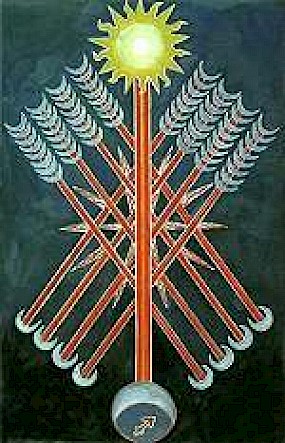
Tarot Card for November 4: The Nine of Wands

The Nine of Wands

When we reach deep inside ourselves, with a heart that is unafraid and accepting, we will discover new depths of strength and power. These deep reaches of wisdom, which lay dormant with in the subconscious until we are brave enough to search them out, will bring balance and equilibrium. And from new centredness will arise an unshakeable trust in ourselves that will carry us forward through life.

It’s true that when we travel deep inside ourselves, we will also find material that we might prefer to leave unacknowledged – but the Nine of Wands, Lord of Strength, reminds us that in being true to ourselves we release energies that will help us to deal with whatever we find within. And after all, whatever lies inside our own subconscious is, for better or for worse, a part of us.

When the Nine of Wands turns up in a reading, we can be re-assured that we have what it takes to get by. Even in times of stress and difficulty, inner strength will rise up to guide us forward toward our goals. And in the process we shall learn more about ourselves and our abilities, gaining a new all-round perspective which brings security and self-confidence.

This card tells us to trust ourselves. We have everything we need. There is no necessity to analyse nor question. And absolutely no excuse to give in to doubt!

The Nine of Wands

(via angelpaths.com and Alan Blackman)