The warped self

Social media makes us feel terrible about who we really are. Neuroscience explains why – and empowers us to fight back

Shoreditch, London, 5 October 2016. Photo by Stefan Wermuth/Reuters

Mark Miller is a philosopher of cognition. His research explores what recent advances in neuroscience can tell us about human happiness and wellbeing, and what it means to live well in our increasingly technologically mediated world. He is an assistant professor at the Center for Human Nature, Artificial Intelligence and Neuroscience at Hokkaido University in Japan.

Ben White is a graduate of the University of Edinburgh’s flagship Mind, Language and Embodied Cognition MSc, and will soon join the University of Sussex as a Leverhulme-funded PhD candidate, where his research will focus on neuroscience and digital technology.Listen here

Brought to you by Curio, an Aeon partner

25 May 2021 (aeon.co)

Edited by Sally Davies

Aeon for Friends
Find out more

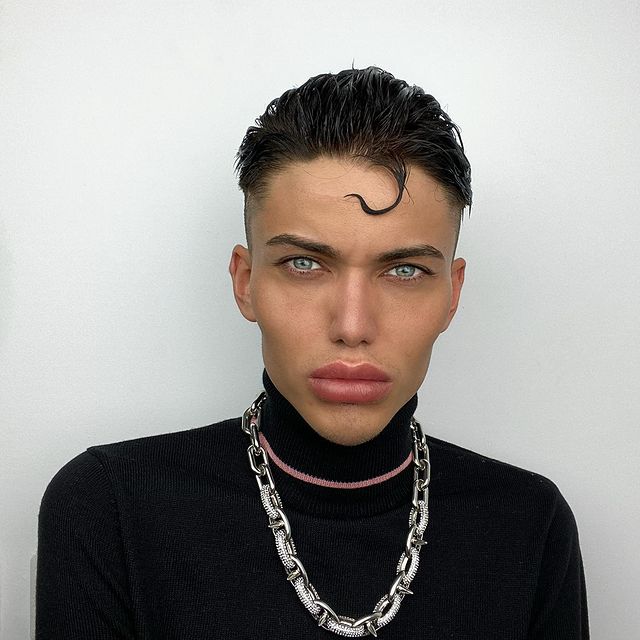
Levi Jed Murphy smoulders into the camera. It’s a powerful look: piercing blue eyes, high cheekbones, full lips and a razor-sharp jawline – all of which, he says, cost him around £30,000. Murphy is an influencer from Manchester in the UK, with a large social media following. Speaking on his approach to growing his fans, he says that, if a picture doesn’t receive a certain number of ‘Likes’ within a set time, it gets deleted. His surgeries are simply a way to achieve rapid validation: ‘Being good-looking is important for … social media, because obviously I want to attract an audience,’ he says.

His relationship with social media is a striking manifestation of the worries expressed by the French philosopher Guy Debord, in his classic work The Society of the Spectacle (1967). Social life is shifting from ‘having to appearing – all “having” must now derive its immediate prestige and its ultimate purpose from appearances,’ he claims. ‘At the same time all individual reality has become social.’ Debord recognised that individuals were increasingly beset by social forces, a prescient observation in light of the later rise of social media. But as a political theorist writing in the 1960s, Debord would have struggled to see how this shift towards appearances could affect human psychology and wellbeing, and why people such as Murphy might feel the need to take drastic action.

Today, social media is implicated in an array of mental health problems. A report from the Royal Society for Public Health in 2017 linked social media use with depression, anxiety and addiction. Some former influencers have turned against their platforms and chosen to highlight the dangers of curating a self-image with little purchase in reality. Meanwhile some platforms have trialled design tweaks aimed at protecting users’ health, such as limiting the visibility of ‘Likes’ on a post.

Concerns around social media have become mainstream, but researchers have yet to elucidate the specific cognitive mechanisms that explain the toll it takes on our psychological wellbeing. New advances in computational neuroscience, however, are poised to shed light on this matter. The architecture of some social media platforms takes the form of what some scientists are now calling ‘hyperstimulators’ – problematic digital delivery systems for rewarding and potentially addictive stimuli. According to a leading new theory in neuroscience known as predictive processing, hyperstimulants can interact with specific cognitive and affective mechanisms to produce precisely the sorts of pathological outcomes we see emerging today.

Predictive processing casts the brain as a ‘prediction engine’ – something that’s constantly attempting to predict the sensory signals it encounters in the world, and to minimise the discrepancy (called the ‘prediction error’) between those predictions and the incoming signal. Over time, such systems build up a ‘generative model’, a structured understanding of the statistical regularities in our environment that’s used to generate predictions. This generative model is essentially a mental model of our world, including both immediate, task-specific information, as well as longer-term information that constitutes our narrative sense of self. According to this framework, predictive systems go about minimising prediction errors in two ways: either they update the generative model to more accurately reflect the world, or they behave in ways that bring the world better in line with their prediction. In this way, the brain forms part of an embodied predictive system that’s always moving from uncertainty to certainty. By reducing potentially harmful surprises, it keeps us alive and well.

Consider the healthy and expected body temperature of 37°C for a human being. A shift in either direction registers as a spike in prediction error, signalling to the organism that it’s moving into an unexpected, and therefore potentially dangerous, state. This rise in prediction error is fed back to us as feelings of discomfort, stress and an inclination to do something to get a better predictive grip on reality. We could just sit there and come to terms with the changing temperature (update our generative model), or we might reach for a blanket or open a window. In these cases, what we’re doing is acting upon our environment, sampling the world and changing our relation to it, in order to bring ourselves back within acceptable bounds of uncertainty.

According to the emerging picture from predictive processing, cognition and affect are tightly interwoven aspects of the same predictive system. Prediction errors aren’t merely data points within a computational system. Rather, rising prediction errors feel bad to us, while resolving errors in line with expectation feels good. This means that, as predictive organisms, we actively seek out waves of manageable prediction error – manageable uncertainty – because resolving it results in our feeling good. The recent rise in jigsaw puzzle sales during the COVID-19 lockdown testifies to our love of manageable uncertainty. These feelings evolved to keep us well tuned to our environment, helping us to curiously feel out novel and successful strategies for survival, while also avoiding all of the stress and unpleasantness that comes with runaway uncertainty. This active, recursive and felt relationship with the environment is crucial to grasping how social media can be detrimental to our mental health, and why we often find it so hard to stop using it.

Living well, in predictive processing terms, means being able to effectively manage uncertainty – and that’s predicated on having a generative model that represents the world accurately. A generative model that poorly reflects the regularities of the environment would inevitably lead to an increase in bad predictions, and a flood of difficult-to-resolve errors. Predictive processing theorists are beginning to develop novel accounts of mental health conditions, focusing on the effectiveness of a person’s generative model. Depression, for instance, has been described as a form of ‘cognitive rigidity’, where the system fails to adjust how sensitive it is to corrective feedback from the world. For people in good mental health, emotional feedback allows them to flexibly tune their expectations: sometimes it makes sense to ‘write off’ a prediction error as just noise, rather than see it as something that demands a change in their generative model of the world; other times, it makes sense to change our model because of the error. In depression, researchers hypothesise that we lose this ability to move back and forth between more or less ‘sensitive’ states, which results in rising and unmanageable prediction error. Eventually, we come to predict the inefficacy and failure of our own actions – which in turn becomes a self-reinforcing prediction, which we achieve some minimal satisfaction from confirming. At the level of the person who is depressed, this manifests in feelings such as helplessness, isolation, lack of motivation and an inability to find pleasure in the world.

‘Snapchat surgery’ makes perfect sense within the predictive processing framework

Social media is a spectacularly effective method for warping our generative models. It overloads them with bad evidence about both the world around us and who we are. The space between being and appearing is potentially vast – with a few swipes, we can dramatically alter our appearance, or retake the same picture 20 times until our face exudes precisely the calm mastery of life we wish to project. As social media platforms develop features that allow us to present ourselves inauthentically, those platforms become all the more powerful bad-evidence generators, flooding the predictive systems of their users with inaccurate information, telling us that the world is full of impossibly beautiful, happy people, living wonderfully luxurious and leisurely lives. Typically, in the offline world, our generative model and expectations are encoded with information incoming from the immediate (unfiltered) environment, which means that most of the time the model accurately reflects the world. However, in cases of regular and heavy engagement with social media, incoming information about the world is carefully selected, curated and altered – we’re potentially engaging with a fantasy. In regard to Debord’s feared shift from authenticity to appearances, social media platforms act as a digital crowbar, prising apart our generative model from the offline environment. Instead, our model of the real world comes to take on the expectations generated through the online one, and the result is increasingly unmanageable waves of prediction error that the system must now strive to minimise.

The seemingly extreme actions of Murphy, the influencer above, are one strategy for resolving this kind of prediction error. A recent survey found that more than half of cosmetic surgeons had patients explicitly asking them for procedures that would enhance their online image, while some surgeons have also reported patients using enhanced images of themselves as an example of how they’d like to look. Murphy describes how filters allowed him to ‘preview’ the effects of cosmetic procedures and, while Instagram has now banned that specific filter, many other apps perform similar functions.

So-called ‘Snapchat surgery’ makes perfect sense within the predictive processing framework. If we become accustomed to our own doctored appearance, and to receiving all of the feedback associated with it, soon the level of validation available offline will be registered as mounting prediction error. That’s likely to result in feelings of stress, and inadequacy. Through the lens of predictive processing, we see that getting surgery to look more like a filtered image is just the system doing what it always does: it’s no different from grabbing a blanket as the temperature begins to drop. We’re sampling the world to bring us back into an expected state. But social media is capable of displacing our self-image so much that the only way to rectify the error and meet those expectations is to surgically alter the way we look.

Note, though, how high the stakes are in this scenario. If we’re unable to resolve the error, and continue to engage with social media, then this consistent failure is fed back to us, eventually teaching us to expect our own failure. Through a cascade of second-order predictions – predictions about our ability to predict accurately (or not) – we will be alive to the expected utility of our own actions. And when our actions consistently fail, we lose a sense of confidence in these actions. Eventually, we lower our predictions for success, which we feel as a complete hopelessness. This is precisely the scenario described by neuroscientists working on the computational accounts of depression mentioned earlier: if we consistently fail to reach our expectations, and then fail to readjust those expectations, we come to expect the failure of our own actions. The inauthentic content on social media, images of beauty and luxury, can pin those predictions in place, making it even harder for us to readjust our expectations for our own lives based on real-world feedback. Thus, social media can put us in a bind: either we bring the world into line with our new expectations, or we risk sliding into depression and despair.

Of course, there’s a more obvious way to alleviate these problems: spend less time online. For some of us, this is easier said than done, as mounting evidence supports the suspicion that social media can be addictive. A comprehensive review in 2015 defined social media addiction as a disproportionate concern with and drive to use social media that impairs other areas of life, and found that roughly 10 per cent of users exhibit symptoms of addiction. Interestingly, this is around the same percentage of people who have problems with alcohol – but while the addictive hooks of alcohol are relatively well understood, those of social media are not. Predictive processing might once again hold the key to understanding exactly how the features of particular platforms come to have such an effect.

Predictive processing offers a new understanding of addiction as a derailment of the alignment between predictive systems and their environment. Life contains many rewards, and the brain experiences these rewards as achieving a decreased prediction error: contrary to popular belief, it isn’t dopamine per se that’s rewarding, but the reduction in error that accompanies it. Neurotransmitters such as dopamine simply encode and entrench the behaviours that we learn to anticipate will deliver these rewards. Now, just like various addictive drugs, the developing landscape of digital technology is disrupting this relationship between reward and behaviour. In his important book Your Brain on Porn (2014), the science writer Gary Wilson argues that internet pornography presents itself as dangerously rewarding, an example of a ‘hyperstimulator’. Wilson points out that, in one evening, internet porn facilitates levels of sexual novelty that would have been unavailable to our ancestors across an entire lifetime: multiple tabs or windows, hundreds of different models, escalating fetishes, all of which conspire to have our reward circuitry screaming ‘Hell, we’re doing far better than we ever thought possible!’ when in reality we’re just staring at a screen, alone. The novelty is particularly enticing, as our brains are always seeking new ways of reducing error, novel ways of doing better than expected. Our brains register this as a huge resolution of uncertainty, and our reward circuitry in the brain goes into overdrive, reinforcing these particular reward-seeking behaviours.

What pornography is to sex, social media platforms are to our intrinsic appetite for socialising. Engaging in meaningful interpersonal bonding draws on all of the reward circuitry mentioned above: it feels good to socialise, and dopamine encodes learning for successful social behaviours. One major similarity between social media and pornography is that both are a powerful vehicle for taking carefully curated fantasy, and presenting it as an attainable reality. These presentations of ‘better than real life’ scenarios (eg, carefully staged and filtered images; maximally exciting sexual encounters in pornography) are highly alluring for predictive agents always on the lookout for ways to improve. On social media – just as with online porn – high levels of novelty and excess mean that the reward system is kicked into overdrive. It’s no wonder that a report in 2019 found that the average teenager in the US now spends more than seven hours a day looking at a screen. Through social media, hyperstimulation works to reorganise our predictive model and restructure our habits: we wake up and reach for our phone, never leave home without it, and constantly feel drawn toward our phones even when in the company of friends.

The hyperstimulating effect of social media, however, doesn’t emerge only from an excess of carefully edited content and potentially massive social feedback. It also comes from deliberate design features – features that place social media much closer to gambling than to pornography. In gambling, what’s so arousing (and habit-forming) is the anticipation of reward, or the expectation of an uncertain reward. Yes, offline social interactions are often unpredictable too, in that we don’t know when someone might contact us or interact with us in rewarding ways – but social media sites are engineered to compound this anticipation through gamification, in which features such as progression, points-scoring and risk-taking are introduced into a nongame setting. Social media gamifies social interaction, primarily through various highly interactive systems of ‘Likes’, ‘shares’, ‘upvotes’, comments and so on, which apply to user-created content. This feedback is the direct measure of the ‘success’ of a particular post, and allows for comparisons in popularity between posts and posters.

Debord was right: the detachment of appearance from reality can cause profound harm

Moreover, when feedback does come, it isn’t immediately communicated to the user. Rather, we receive notifications in the form of a shining button or exciting sound that delays the discovery of the precise nature of the incoming content. The simple act of pushing a button to reveal information has been shown to trigger arousal and compulsive behaviour, and newly developed features on smartphones add further layers of anticipation. The ‘swipe to refresh’ feature of the Facebook app’s news feed, for example, where users physically swipe the screen to generate a new stream of information, is a startlingly similar action to the pulling of a casino slot machine arm. In each case, users don’t know for sure what kind of content will spring up until they swipe. This feature, coupled with the fact that Facebook’s feed is now effectively infinite has led to the app being described as ‘behavioural crack cocaine’.

It’s worth noting how digital space dissolves the temporal and spatial restraints that govern offline interaction, offering an excess of novelty and validation that simply isn’t available in the real world. Even moderately successful Instagram profiles can count between 40,000 to 100,000 followers; users can instantaneously exchange direct messages with people who might well be complete strangers; and when users get bored of the content they’re currently interacting with, a quick swipe or message generates new, exciting, unpredictable content. These structural features – which deliberately elicit anticipatory states and facilitate near-endless potential for novelty – are something that deflationary accounts of social media addiction often fail to recognise.

Debord was right to be concerned about us: the detachment of appearance from reality can cause profound harm to our wellbeing, and drive us to take drastic action. Perhaps Debord’s take on these anxieties is most pithily summed up by the internet slang ‘pics or it didn’t happen’: experiences themselves are fully constituted by their appearance circulating across social networks. Moreover, Debord recognised that these harms don’t emerge from a vacuum. The danger of social media lies not only in the inauthenticity of content, but in its ability to grip us. There’s a powerful force driving the deliberate design of social media, which is their immense potential for monetisation. As the design guru Nir Eyal writes in Hooked (2014): ‘Companies increasingly find that their economic value is a function of the strength of the habits they create.’

If it turns out that engagement with hyperstimulants can lead to conditions such as addiction and depression, and as long as it remains the case that more engagement means more profit, then designers of social media will have a de facto interest in implementing designs that lead to human misery. This emerging scientific picture adds to the growing consensus that digital hyperstimulants are a threat to our wellbeing – and lends weight to those voices calling for change in how social media is designed, operated and regulated.

To read more about mental health, visit Psyche, a digital magazine from Aeon that illuminates the human condition through psychology, philosophical understanding and the arts.

Computing and artificial intelligenceNeuroscienceTechnology and the self
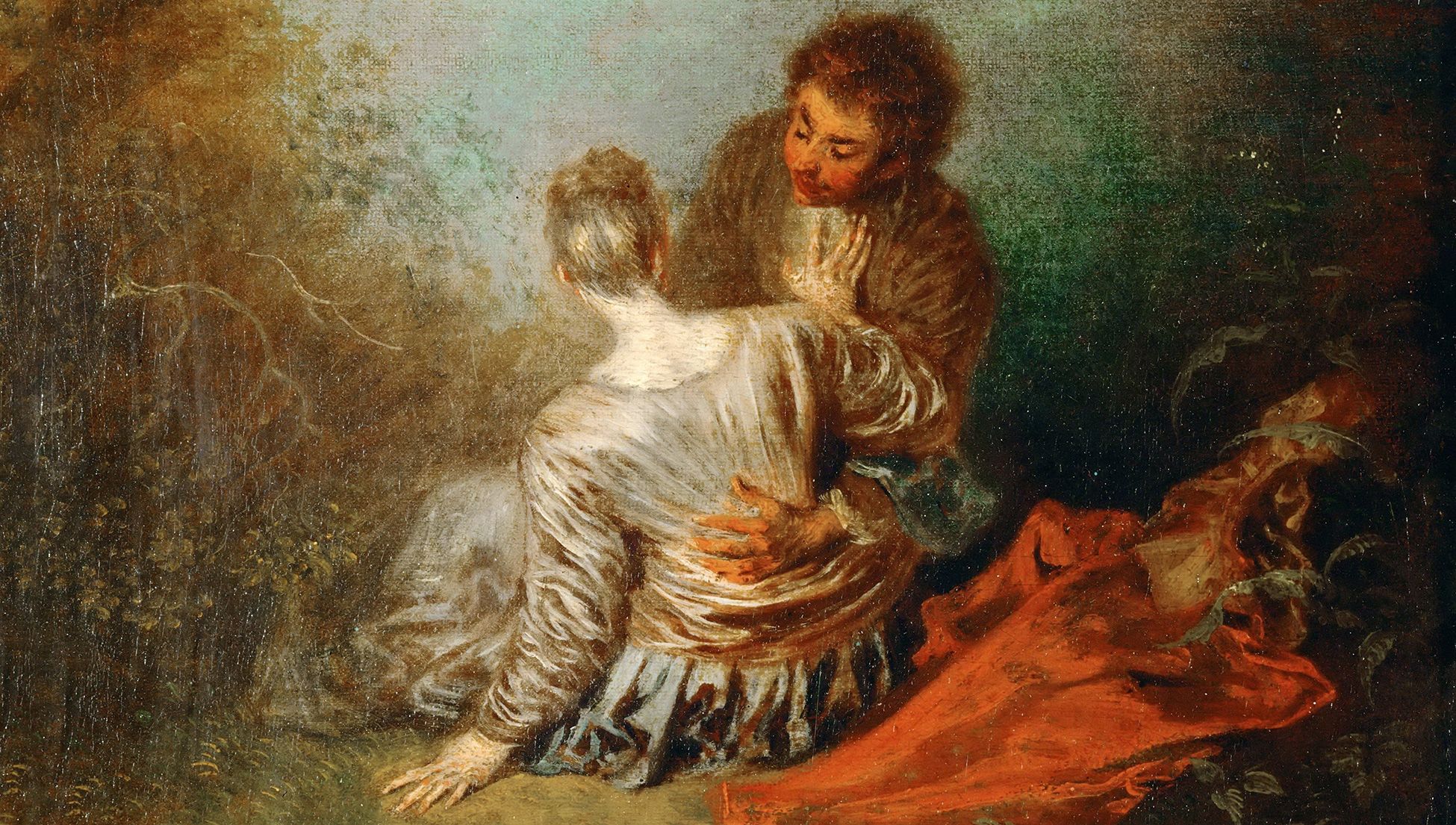
Working, flirting and sex: courtship in 18th-century France

Working, flirting and sex: courtship in 18th-century France | Psyche

Detail from Le Faux Pas (c1716-18) by Antoine Watteau. Courtesy the Louvre, Paris

Julie Hardwickis John E Green Regents Professor of History and Distinguished Teaching Professor at the University of Texas at Austin. She is the author of The Practice of Patriarchy (1998), Family Business (2009) and Sex in an Old Regime City (2020).

Edited by Sam Haselby

21 December 2020 (psyche.co)

In 1723, Jean Pillot and Marguerite Perricaud began to see each other often. They both worked in textile production in Lyon, France’s second city. They went out for a year and he promised marriage. She told him he had to ask her father. They took long walks together after work and on Sundays, during which they developed a physical and emotional intimacy that paved the way for marriage. Marguerite told a co-worker that they loved each other. Young couples’ talks about sex were tightly woven into discussions about matrimony. Neighbours often saw them together. Their relationship developed as a public matter in view of the community.

One evening, Jean came into Marguerite’s room with a lit candle and locked the door with a key. As she recalled later, he insisted that he loved her, and promised that he would never have another woman. Then he seized her by the arms, threw her on the bed and, despite all her resistance, had sex with her twice, all while continuing to promise that he wouldn’t be with other women and she didn’t need to be afraid. They continued to see each other and to have sex because, as she explained later, she still expected to get married.

The social life of single people in 18th-century France and in other parts of northwestern Europe lasted about a decade. It started when they began to work in their mid-teens and continued to their mid- to late-20s, when they married. Much of Lyon’s old city in which young people lived, worked, loved and sometimes fought still survives today, with its multistorey tenements, courtyards and narrow cobbled streets. Luxury silk production dominated the economy of 18th-century Lyon, and it employed thousands of young men and women in skilled jobs. The trade in allied goods such as gold or silver thread and decorative trims also employed many thousands of young people. Some single women worked as servants because every household at the time, no matter what rank, had at least one female servant, although fewer than elsewhere because many young women preferred the textile jobs that were available in Lyon.

The 18th-century world of young people’s intimacy is recorded in the city’s archives in a long run of paternity suits that pregnant young women sometimes filed when their boyfriends failed to marry them. The women told their side of the story and witnesses – neighbours, co-workers, employers, friends – gave their accounts of the relationships. Sometimes, personal items that young women deposited as evidence, such as promises to marry or letters, also survive.

Nothing was unusual about Marguerite and Jean dating, and having sex, in 18th-century France. Young people often dated co-workers. Workplaces could be opportunities for flirting and sometimes more after couples committed to marriage. Anne Rubard and Jean Claude Fiancon, for example, worked as partners on the same loom. Their employers watched their relationship develop as they took walks, went to Sunday mass together, and sometimes worked very late, long after others went to bed. They talked about getting married and he wrote her an effusive promise to marry. As Anne recalled later, with the decision to marry seeming firm, they started to have sex. On occasion, they took the opportunity of late-night work shifts to have breaks for sex.

Young women as well as men often seem to have enjoyed physical intimacy. Neighbours and friends remembered how they saw young couples making out: young couples kissed on the mouth, young men touched their partners’ breasts, or put their hands up skirts. Communities saw a wide range of intimacy short of intercourse as normal. As one neighbour said, after remembering that he’d often seen a young couple make out, ‘so I didn’t see anything inappropriate’.

When they got pregnant, they sometimes took that as a sign to move forward with the other steps to marriage

‘Marriage’ involved a multiple-step process rather than a ‘wedding day’ that marked a sharp break between single and married status. The frequent walks were social displays of coupledom that also kept their activities in public view. Promises of marriage usually led to intercourse, and young women often recalled the use of force as integral to that shift. Couples made marriage contracts that specified dowries and affirmed parental permission. Their parish churches read out banns that publicly announced the couple’s intention to marry and invited anyone to speak out who knew why they should not. The religious ceremony was brief, held at the door of the church with just a couple of witnesses. Sometimes a celebratory dinner and drink with friends followed. Pre-marital conception was common and regarded as routine and predictable in such a multi-stepped transition. It became a problem only if the parents failed to marry before, or not long after, their baby was born.

Couples had explicit talks about sex and about efforts to interrupt reproduction. Young women knew that they should be careful about intercourse because they were likely to get pregnant quickly, and sleeping around damaged their reputations. They tried to be sure that their partners were serious about marriage, sometimes – like Anne Rubard – getting written promises to marry that they could show their friends and neighbours in a kind of forerunner of showing off engagement rings. When they got pregnant, they sometimes took that as a sign to move forward with the other steps to marriage, and young men might say something like: ‘Don’t worry, we’ll get married.’

On other occasions, if one or both of them were not in fact ready to marry, couples often collaborated, negotiated or argued about efforts to interrupt reproduction. Young men could buy ‘remedies’ designed to ‘restore’ their partners’ menstrual cycles, de facto purgings that caused young women to be so ill that they spontaneously miscarried. They often tried having surgeons bleed women, a medical intervention thought to cure many ills, and sometimes they argued about what to do. When Anne Julliard became pregnant for a second time, she refused her boyfriend’s suggestion to take a remedy again because it had made her so ill. He offered another solution: if she delivered the baby and hid it under the blanket, he would come to take it away. What he would do with said baby to solve the problem remained unspoken, at least in the surviving record.

When young men told their girlfriends not to be afraid, whether about first intercourse or a pregnancy, young women pointed to the risks of sex. The guy might not marry them when they became pregnant, leaving them to face a hard path as a single mother. Pregnancy, interrupting pregnancy or delivery might threaten their lives or health. Risks for men were not negligible. Friends, families and employers expected young men to take responsibility for the reproductive consequences of their sexual activity, if not by marriage, then by taking custody of the baby and paying their partner’s costs. Young men who refused could find themselves in prison if their partners filed paternity suits with local courts.

For us today, the use of force in first intercourse in ongoing relationships headed towards marriage is jarring. In our age of #MeToo, physically coerced sex is a newly visible stigma. But 300 years ago, the fear and pain for women whose intimate partners locked them in and held them down to have sex was a routine part of their relationships. Ordinary violence was a mundane part of daily life. Husbands and employers were allowed to beat their wives, workers and children under the guise of discipline. Rape was almost never prosecuted. Prevailing family law (coverture, which subsumed a woman’s legal person under her husband’s) gave men the right to discipline their household members and manage their property, and also served culturally to entitle men to access to the bodies of their soon-to-be wives. Perhaps young men expected first intercourse would go like that, and young women knew that it likely would too. When young men locked the doors, they kept out neighbours, roommates or co-workers to secure some privacy in a world where working people always shared rooms. Indeed, sex in a bed was often euphemised as ‘what husband and wife do’.

What do these 300-year-old experiences of heterosexual sex in stable, affectionate, consensual relationships tell us about our own times? Some differences are clear. We sentimentalise marriage as part of romantic love, and are surrounded by media messaging that we should be great at sex and that great sex is essential to our relationships. However, 300 years ago, despite plenty of bawdy songs and the emergence of pornography in cheap print, young people didn’t have such high expectations. Today, we have reliable contraception and (in some places) legal abortion to control reproduction. We eschew violence as a part of healthy sexual intimacy. Marital rape is now a crime in Western countries.

Yet, young couples often live together before marriage and premarital sex is a widely observed norm, albeit rarely linked to matrimonial prospects. More babies are born out of wedlock than ever before. Even ‘bridezilla’ weddings, sometimes after parenthood, are only one step in a gradual transition. The strictly monitored courtships and no sex (or no knowledge even of sex) before marriage that my grandmother told me about are largely things of the past, as is, on the whole, the stigma of an out-of-wedlock pregnancy. Young couples or young women still find themselves facing hard decisions about interrupting reproduction when faced with untimely pregnancies, infanticide still occurs, and intimate partner violence is still all too common.

Perhaps nowhere more than in terms of (hetero)sexuality does history depart from the Whiggish tale of ever-increasing freedom, and the long history of sex is full of lusts satisfied and norms of robust sexual expression and happiness in many historically specific iterations. And seemingly inevitably, conflict and disappointment have long been frequent elements of intimacy too.

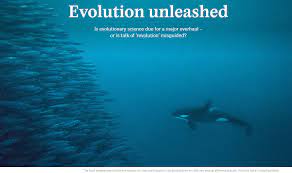
Evolution unleashed

Is evolutionary science due for a major overhaul – or is talk of ‘revolution’ misguided?

The food preferences of different groups of orcas are thought to be driving them to split into several different species. Photo by Mike Korostelev/Getty

Kevin Laland is professor of behavioural and evolutionary biology at the University of St Andrews in Scotland, an elected fellow of the Royal Society of Edinburgh and a fellow of the Society of Biology. His latest book, co-authored with Tobias Uller, is Evolutionary Causation: Biological and Philosophical Reflections (2019).Listen here

Brought to you by Curio, an Aeon partner

17 January 2018 (aeon.co)

Edited by Sally Davies

Aeon for Friends

Find out more

When researchers at Emory University in Atlanta trained mice to fear the smell of almonds (by pairing it with electric shocks), they found, to their consternation, that both the children and grandchildren of these mice were spontaneously afraid of the same smell. That is not supposed to happen. Generations of schoolchildren have been taught that the inheritance of acquired characteristics is impossible. A mouse should not be born with something its parents have learned during their lifetimes, any more than a mouse that loses its tail in an accident should give birth to tailless mice.

If you are not a biologist, you’d be forgiven for being confused about the state of evolutionary science. Modern evolutionary biology dates back to a synthesis that emerged around the 1940s-60s, which married Charles Darwin’s mechanism of natural selection with Gregor Mendel’s discoveries of how genes are inherited. The traditional, and still dominant, view is that adaptations – from the human brain to the peacock’s tail – are fully and satisfactorily explained by natural selection (and subsequent inheritance). Yet as novel ideas flood in from genomics, epigenetics and developmental biology, most evolutionists agree that their field is in flux. Much of the data implies that evolution is more complex than we once assumed.

Some evolutionary biologists, myself included, are calling for a broader characterisation of evolutionary theory, known as the extended evolutionary synthesis (EES). A central issue is whether what happens to organisms during their lifetime – their development – can play important and previously unanticipated roles in evolution. The orthodox view has been that developmental processes are largely irrelevant to evolution, but the EES views them as pivotal. Protagonists with authoritative credentials square up on both sides of this debate, with big-shot professors at Ivy League universities and members of national academies going head-to-head over the mechanisms of evolution. Some people are even starting to wonder if a revolution is on the cards.

In his book On Human Nature (1978), the evolutionary biologist Edward O Wilson claimed that human culture is held on a genetic leash. The metaphor was contentious for two reasons. First, as we’ll see, it’s no less true that culture holds genes on a leash. Second, while there must be a genetic propensity for cultural learning, few cultural differences can be explained by underlying genetic differences.

Nonetheless, the phrase has explanatory potential. Imagine a dog-walker (the genes) struggling to retain control of a brawny mastiff (human culture). The pair’s trajectory (the pathway of evolution) reflects the outcome of the struggle. Now imagine the same dog-walker struggling with multiple dogs, on leashes of varied lengths, with each dog tugging in different directions. All these tugs represent the influence of developmental factors, including epigenetics, antibodies and hormones passed on by parents, as well as the ecological legacies and culture they bequeath.

Image courtesy the author.

The struggling dog-walker is a good metaphor for how EES views the adaptive process. Does this require a revolution in evolution? Before we can answer this question, we need to examine how science works. The best authorities here are not biologists but philosophers and historians of science. Thomas Kuhn’s book The Structure of Scientific Revolutions (1962) popularised the idea that sciences change through revolutions in understanding. These ‘paradigm shifts’ were thought to follow a crisis of confidence in the old theory that arose through the accumulation of conflicting data.

Then there’s Karl Popper, and his conjecture that scientific theories can’t be proven but can be falsified. Consider the hypothesis: ‘All sheep are white.’ Popper maintained that no amount of positive findings consistent with this hypothesis could prove it to be correct, since one could never rule out the chance that a conflicting data-point might arise in the future; conversely, the observation of a single black sheep would decisively prove the hypothesis to be false. He maintained that scientists should strive to carry out critical experiments that could potentially falsify their theories.

Everything from diet to air pollution to parental behaviour can influence gene expression

While Kuhn and Popper’s ideas are well-known, they remain disputed and contentious in the eyes of philosophers and historians. Contemporary thinking in these fields is better captured by the Hungarian philosopher Imre Lakatos in The Methodology of Scientific Research Programmes (1978):

The history of science refutes both Popper and Kuhn: on close inspection both Popperian crucial experiments and Kuhnian revolutions turn out to be myths.

Popper’s arguments might make logical sense, but they don’t quite map on to how science works in the real world. Scientific observations are susceptible to errors of measurement; scientists are human beings and get attached to their theories; and scientific ideas can be fiendishly complex – all of which makes evaluating scientific hypotheses a messy business. Rather than accepting that our hypotheses might be wrong, we challenge the methodology (‘That sheep’s not black – your instruments are faulty’), dispute the interpretation (‘The sheep’s just dirty’), or come up with tweaks to our hypotheses (‘I meant domesticated breeds, not wild mouflon’). Lakatos called such fixes and fudges ‘auxiliary hypotheses’; scientists propose them to ‘protect’ their core ideas, so that they need not be rejected.

This sort of behaviour is clearly manifest in scientific debates over evolution. Take the idea that new features acquired by an organism during its life can be passed on to the next generation. This hypothesis was brought to prominence in the early 1800s by the French biologist Jean-Baptiste Lamarck, who used it to explain how species evolved. However, it has long been regarded as discredited by experiment – to the point that the term ‘Lamarckian’ has a derogatory connotation in evolutionary circles, and any researchers expressing sympathy for the idea effectively brand themselves ‘eccentric’. The received wisdom is that parental experiences can’t affect the characters of their offspring.

Except they do. The way that genes are expressed to produce an organism’s phenotype – the actual characteristics it ends up with – is affected by chemicals that attach to them. Everything from diet to air pollution to parental behaviour can influence the addition or removal of these chemical marks, which switches genes on or off. Usually these so-called ‘epigenetic’ attachments are removed during the production of sperm and eggs cells, but it turns out that some escape the resetting process and are passed on to the next generation, along with the genes. This is known as ‘epigenetic inheritance’, and more and more studies are confirming that it really happens.

Let’s return to the almond-fearing mice. The inheritance of an epigenetic mark transmitted in the sperm is what led the mice’s offspring to acquire an inherited fear. In 2011, another extraordinary study reported that worms responded to exposure to a nasty virus by producing virus-silencing factors – chemicals that shut down the virus – but, remarkably, subsequent generations epigenetically inherited these chemicals via regulatory molecules (known as ‘small RNAs’). There are now hundreds of such studies, many published in the most prominent and prestigious journals. Biologists dispute whether epigenetic inheritance is truly Lamarckian or only superficially resembles it, but there is no getting away from the fact that the inheritance of acquired characteristics really does happen.

By Popper’s reasoning, a single experimental demonstration of epigenetic inheritance – like a single black sheep – should suffice to convince evolutionary biologists that it’s possible. Yet, by and large, evolutionary biologists have not rushed to change their theories. Rather, as Lakatos anticipated, we have come up with auxiliary hypotheses that allow us to retain our long-held beliefs (ie, that inheritance is pretty much explained by the transmission of genes across generations). These include the ideas that epigenetic inheritance is rare, that it does not affect functionally important traits, that it is under genetic control, and that it is too unstable to underpin the spread of traits through selection.

Unfortunately for the traditionalists, none of these attempts to bracket epigenetic inheritance look credible. It is now known to be widespread in nature, with more and more examples appearing every day. It affects functionally important features such as fruit size, flowering time and root growth in plants – and while only a fraction of epigenetic variants are adaptive, that’s no less true of genetic variation, so it’s hardly grounds for dismissal. In some systems where rates of epigenetic change have been measured carefully, such as the plant Arabidopsis thaliana, the pace has been found to be low enough to be selected and lead to cumulative evolution. Mathematical models have shown that systems with epigenetic inheritance evolve differently from those solely reliant on genetic inheritance – for instance, selection on epigenetic marks can cause changes in gene frequencies. There’s no longer any doubt that epigenetic inheritance pushes us to think about evolution in a different way.

Epigenetics is only part of the story. Through culture and society, all of us inherit knowledge and skills acquired by our parents. Evolutionary biologists have accepted this for at least a century, but until recently it was considered to be restricted to humans. That’s no longer tenable: creatures across the animal kingdom learn socially about diet, feeding techniques, predator avoidance, communication, migration, and mate and breeding-site choices. Hundreds of experimental studies have demonstrated social learning in mammals, birds, fish and insects.

In a single mating season, ‘fads’ can develop in the qualities that individuals find attractive in their partners

Among the most compelling data are studies that cross-fostered great tits and blue tits. When raised by the other species, these birds shifted numerous aspects of their behaviour towards the behaviour of their foster parent (including the height in trees at which they foraged, their choice of prey, foraging method, calls and songs, and even their choice of mate). Everyone had assumed that the behavioural differences between these two species were genetic, but it turns out that many are cultural traditions.

Animal cultures can be sustained for surprisingly long periods. Archaeological remains show that chimpanzees have used stone tools to crack open nuts for at least 4,300 years. However, as for epigenetic inheritance, it would be a mistake to assume that animal culture must exhibit gene-like stability to be evolutionarily important. In the course of a single mating season, ‘fads’ can develop in the qualities that individuals find attractive in their partners; the process has been experimentally demonstrated in fruit flies, fish, birds and mammals, and mathematical models show that such ‘mate-choice copying’ can strongly affect sexual selection.

Another illustration comes from studies of birdsong. When young male birds learn their songs (usually from nearby adult males), they modify the natural-selection pressures of genes that affect how songs are acquired (in males) and which songs are preferred (in females). The cultural transmission of song is known to promote the evolution of brood parasitism – where birds, such as cuckoos, don’t make nests but lay eggs in other birds’ nests – as some brood parasites rely on cultural learning to figure out whom to mate with. It also facilitates speciation, since preferences for particular birdsong ‘dialects’ help to maintain genetic differences between populations.

Likewise, the diverse, culturally learned foraging traditions of orcas – where different groups specialise in particular types of fish, seals or dolphins – is thought to be driving them to split into several species. Of course, culture reaches its zenith in our own species, where it is now well-established that our cultural habits have been a major source of natural selection on our genes. Dairy farming and milk consumption generated selection for a genetic variant that increased lactase (the enzyme that metabolises dairy products), while starchy agricultural diets favoured increased amylase (the corresponding enzyme that breaks down starch).

All this complexity can’t be reconciled with a strictly genetic currency for adaptive evolution, as many biologists now acknowledge. Rather, it points to an evolutionary process in which genomes (over hundreds to thousands of generations), epigenetic modifications and inherited cultural factors (over several, perhaps tens or hundreds of generations), and parental effects (over single-generation timespans) collectively inform how organisms adapt. These extra-genetic kinds of inheritance give organisms the flexibility to make rapid adjustments to environmental challenges, dragging genetic change in their wake – much like a rowdy pack of dogs.

Despite the excitement of all the new data, it’s unlikely to trigger an evolution revolution for the simple reason that science doesn’t work that way – at least, not evolutionary science. Kuhnian paradigm shifts, like Popper’s critical experiments, are closer to myths than reality. Look back at the history of evolutionary biology, and you will see nothing that resembles a revolution. Even Charles Darwin’s theory of evolution through natural selection took approximately 70 years to become widely accepted by the scientific community, and at the turn of the 20th century was viewed with considerable skepticism. Over the following decades, new ideas appeared, they were critically evaluated by the scientific community, and gradually became integrated with pre-existing knowledge. By and large, evolutionary biology was updated without experiencing great periods of ‘crisis’.

The same holds for the present. Epigenetic inheritance does not disprove genetic inheritance, but shows it to be just one of several mechanisms through which traits are inherited. I know of no biologist who wants to rip up the textbooks, or throw out natural selection. The debate in evolutionary biology concerns whether we want to extend our understanding of the causes of evolution, and whether that changes how we think about the process as a whole. In this respect, what is going on is ‘normal science’.

Why, then, are traditionally minded evolutionary biologists complaining about the misguided evolutionary radicals that lobby for paradigm shift? Why are journalists writing articles about scientists calling for a ‘revolution’ in evolutionary biology? If nobody actually wants a revolution, and scientific revolutions rarely happen anyway, what’s all the fuss about? The answer to these questions provides a fascinating insight into the sociology of evolutionary biology.

Revolution in evolution is a misattribution – a myth propagated by an unlikely alliance of conservative-minded evolutionists, creationists and the press. I don’t doubt that there are a small number of genuine, revolutionarily minded evolutionary radicals out there, but the vast majority of researchers working towards an extended evolutionary synthesis are simply ordinary, hardworking evolutionary biologists.

We all know that sensationalism sells newspapers, and articles that portend a major upheaval make for better copy. Creationists and advocates of ‘intelligent design’ also feed this impression, with propaganda that exaggerates differences of opinion among evolutionists and gives a false impression that the field of evolutionary biology is in turmoil. What’s more surprising is how commonly conservative-minded biologists play the ‘We’re under attack!’ card against their fellow evolutionists. Portraying intellectual opponents as extremist, and telling people that they are being attacked, are age-old rhetorical tricks to win debate or allegiance.

I had always associated such games with politics, not science, but now realise I was naive. Some of the behind-the-scenes shenanigans I have witnessed, seemingly designed to prevent new ideas from spreading by fair means or foul, have truly shocked me, and are out of kilter with practice in other fields that I know. Scientists, too, have careers and legacies at stake, as well as struggles for funding, power and influence. I worry that the traditionalists’ rhetoric is backfiring, creating confusion and inadvertently fuelling creationism by exaggerating division. Too many reputable scientists feel the need for change in evolutionary biology for all to be credibly dismissed as fringe elements.

If the extended evolutionary synthesis is not a call for revolution in evolution, then what is it, and why do we need it? To answer these questions, we need to recognise what Kuhn got right – namely, that every scientific field possesses shared ways of thinking, or ‘conceptual frameworks’. Evolutionary biology is no different, and our shared values and assumptions influence what data is collected, how that data is interpreted, and what factors are built into explanations for how evolution works.

That is why pluralism in science is healthy. Lakatos stressed that alternative conceptual frameworks – what he called different ‘research programmes’ – can be valuable to the extent that they encourage new hypotheses to be generated and tested, or lead to novel insights. That is the primary function of the EES: to nurture, or even open up, new lines of enquiry, and new productive ways of thinking.

What if some ways of building a fish are just more probable than others?

A good example concerns what’s known as ‘developmental bias’. Consider the intriguing cichlid fishes of East Africa. For tens, perhaps hundreds, of the cichlid species in Lake Malawi, there exists an independently evolved, ‘duplicate’ species in Lake Tanganyika, with a strikingly similar body shape and way of feeding. Such likenesses are usually explained through convergent evolution: random genetic variation has bubbled up as usual, but similar environmental conditions have selected the genes to produce equivalent results. The way that organisms grow and develop might limit which traits arise, but the variation itself is assumed to be essentially random.

However, the extraordinary level of parallel evolution seen in these two lakes suggests that something else might be going on. What if some ways of building a fish are just more probable than others? What if trait variation skews towards certain solutions? Selection would still be part of the explanation, but parallel evolution would be much more likely.

Cheek teeth (molars) in mammals provide some of the most convincing data for bias. Studies show that it’s possible to use a mathematical model, based on laboratory mice, to predict the size and number of teeth in a sample of 29 other rodent species. Rather than being free to make any shape or number of teeth, it appears that natural selection is pushing species along a highly specific pathway created by the mechanisms of development. The existence of exceptions – rodents such as voles with different ratios of teeth – demonstrates that the old way of thinking (that developmental ‘constraints’ restrict selection) isn’t quite right. The effect of development is both more subtle and more interesting: developmental mechanisms bias the landscape for selection, and help to determine which features evolve.

Such studies are exciting as they help to make evolutionary biology a more predictive science. Why, then, have these ideas received comparatively little attention until recently? We come back to conceptual frameworks. Historically, evolutionary biologists have treated bias in phenotypic variation as a ‘constraint’ – an explanation for why evolution or adaptation has not occurred. The way that organisms grow restricts what sorts of features it is possible or adaptive to possess. Traditionally minded evolutionists have been far more reticent to embrace a positive role for development as a cause of evolutionary direction and change.

It took a different perspective (in this instance, that of evolutionary developmental biology, so-called ‘evo devo’), to motivate this kind of experimentation. From the evo-devo perspective, bias partly explains what evolution and adaptation has occurred. Rodents’ teeth and fishes’ bodies look the way they do because the way that creatures grow makes those characteristics more likely to arise. Bias thus becomes a much more significant concept in evolutionary explanation. By bringing the phenomenon to the fore, the EES hopes it will be investigated.

The EES, at least as my collaborators and I frame it, is best viewed as an alternative research programme for evolutionary biology. Inspired by recent findings emerging within evolutionary biology and adjacent fields, the EES starts from the assumption that developmental processes play important roles as causes of novel (and potentially beneficial) phenotypic variation, causes of differences in fitness of those variants, and causes of inheritance. In contrast to how evolution has traditionally been conceived, in the EES the burden of creativity in evolution does not rest on natural selection alone. This alternative way of thinking is being used to generate fresh hypotheses and establish new research agendas. It’s early days, but there are already signs that this research is starting to yield dividends.

If evolution is not to be explained solely in terms of changes in gene frequencies; if previously rejected mechanisms such as the inheritance of acquired characteristics turn out to be important after all; and if organisms are acknowledged to bias evolution through development, learning and other forms of plasticity – does all this mean a radically different and profoundly richer account of evolution is emerging? No one knows: but from the perspective of our adapting dog-walker, evolution is looking less like a gentle genetic stroll, and more like a frantic struggle by genes to keep up with strident developmental processes.

EvolutionHistory of ideasHistory of science

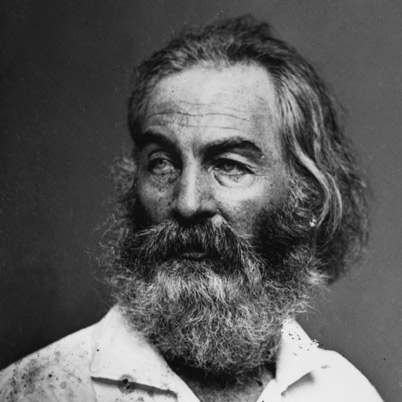
I Sing the Body Electric

BY WALT WHITMAN

I sing the body electric,
The armies of those I love engirth me and I engirth them,
They will not let me off till I go with them, respond to them,
And discorrupt them, and charge them full with the charge of the soul.

Was it doubted that those who corrupt their own bodies conceal themselves?
And if those who defile the living are as bad as they who defile the dead?
And if the body does not do fully as much as the soul?
And if the body were not the soul, what is the soul?

2
The love of the body of man or woman balks account, the body itself balks account,
That of the male is perfect, and that of the female is perfect.

The expression of the face balks account,
But the expression of a well-made man appears not only in his face,
It is in his limbs and joints also, it is curiously in the joints of his hips and wrists,
It is in his walk, the carriage of his neck, the flex of his waist and knees, dress does not hide him,
The strong sweet quality he has strikes through the cotton and broadcloth,
To see him pass conveys as much as the best poem, perhaps more,
You linger to see his back, and the back of his neck and shoulder-side.

The sprawl and fulness of babes, the bosoms and heads of women, the folds of their dress, their style as we pass in the street, the contour of their shape downwards,
The swimmer naked in the swimming-bath, seen as he swims through the transparent green-shine, or lies with his face up and rolls silently to and fro in the heave of the water,
The bending forward and backward of rowers in row-boats, the horseman in his saddle,
Girls, mothers, house-keepers, in all their performances,
The group of laborers seated at noon-time with their open dinner-kettles, and their wives waiting,
The female soothing a child, the farmer’s daughter in the garden or cow-yard,
The young fellow hoeing corn, the sleigh-driver driving his six horses through the crowd,
The wrestle of wrestlers, two apprentice-boys, quite grown, lusty, good-natured, native-born, out on the vacant lot at sun-down after work,
The coats and caps thrown down, the embrace of love and resistance,
The upper-hold and under-hold, the hair rumpled over and blinding the eyes;
The march of firemen in their own costumes, the play of masculine muscle through clean-setting trowsers and waist-straps,
The slow return from the fire, the pause when the bell strikes suddenly again, and the listening on the alert,
The natural, perfect, varied attitudes, the bent head, the curv’d neck and the counting;
Such-like I love—I loosen myself, pass freely, am at the mother’s breast with the little child,
Swim with the swimmers, wrestle with wrestlers, march in line with the firemen, and pause, listen, count.

3
I knew a man, a common farmer, the father of five sons,
And in them the fathers of sons, and in them the fathers of sons.

This man was of wonderful vigor, calmness, beauty of person,
The shape of his head, the pale yellow and white of his hair and beard, the immeasurable meaning of his black eyes, the richness and breadth of his manners,
These I used to go and visit him to see, he was wise also,
He was six feet tall, he was over eighty years old, his sons were massive, clean, bearded, tan-faced, handsome,
They and his daughters loved him, all who saw him loved him,
They did not love him by allowance, they loved him with personal love,
He drank water only, the blood show’d like scarlet through the clear-brown skin of his face,
He was a frequent gunner and fisher, he sail’d his boat himself, he had a fine one presented to him by a ship-joiner, he had fowling-pieces presented to him by men that loved him,
When he went with his five sons and many grand-sons to hunt or fish, you would pick him out as the most beautiful and vigorous of the gang,
You would wish long and long to be with him, you would wish to sit by him in the boat that you and he might touch each other.

4
I have perceiv’d that to be with those I like is enough,
To stop in company with the rest at evening is enough,
To be surrounded by beautiful, curious, breathing, laughing flesh is enough,
To pass among them or touch any one, or rest my arm ever so lightly round his or her neck for a moment, what is this then?
I do not ask any more delight, I swim in it as in a sea.

There is something in staying close to men and women and looking on them, and in the contact and odor of them, that pleases the soul well,
All things please the soul, but these please the soul well.

5
This is the female form,
A divine nimbus exhales from it from head to foot,
It attracts with fierce undeniable attraction,
I am drawn by its breath as if I were no more than a helpless vapor, all falls aside but myself and it,
Books, art, religion, time, the visible and solid earth, and what was expected of heaven or fear’d of hell, are now consumed,
Mad filaments, ungovernable shoots play out of it, the response likewise ungovernable,
Hair, bosom, hips, bend of legs, negligent falling hands all diffused, mine too diffused,
Ebb stung by the flow and flow stung by the ebb, love-flesh swelling and deliciously aching,
Limitless limpid jets of love hot and enormous, quivering jelly of love, white-blow and delirious juice,
Bridegroom night of love working surely and softly into the prostrate dawn,
Undulating into the willing and yielding day,
Lost in the cleave of the clasping and sweet-flesh’d day.

This the nucleus—after the child is born of woman, man is born of woman,
This the bath of birth, this the merge of small and large, and the outlet again.

Be not ashamed women, your privilege encloses the rest, and is the exit of the rest,
You are the gates of the body, and you are the gates of the soul.

The female contains all qualities and tempers them,
She is in her place and moves with perfect balance,
She is all things duly veil’d, she is both passive and active,
She is to conceive daughters as well as sons, and sons as well as daughters.

As I see my soul reflected in Nature,
As I see through a mist, One with inexpressible completeness, sanity, beauty,
See the bent head and arms folded over the breast, the Female I see.

6
The male is not less the soul nor more, he too is in his place,
He too is all qualities, he is action and power,
The flush of the known universe is in him,
Scorn becomes him well, and appetite and defiance become him well,
The wildest largest passions, bliss that is utmost, sorrow that is utmost become him well, pride is for him,
The full-spread pride of man is calming and excellent to the soul,
Knowledge becomes him, he likes it always, he brings every thing to the test of himself,
Whatever the survey, whatever the sea and the sail he strikes soundings at last only here,
(Where else does he strike soundings except here?)

The man’s body is sacred and the woman’s body is sacred,
No matter who it is, it is sacred—is it the meanest one in the laborers’ gang?
Is it one of the dull-faced immigrants just landed on the wharf?
Each belongs here or anywhere just as much as the well-off, just as much as you,
Each has his or her place in the procession.

(All is a procession,
The universe is a procession with measured and perfect motion.)

Do you know so much yourself that you call the meanest ignorant?
Do you suppose you have a right to a good sight, and he or she has no right to a sight?
Do you think matter has cohered together from its diffuse float, and the soil is on the surface, and water runs and vegetation sprouts,
For you only, and not for him and her?

7
A man’s body at auction,
(For before the war I often go to the slave-mart and watch the sale,)
I help the auctioneer, the sloven does not half know his business.

Gentlemen look on this wonder,
Whatever the bids of the bidders they cannot be high enough for it,
For it the globe lay preparing quintillions of years without one animal or plant,
For it the revolving cycles truly and steadily roll’d.

In this head the all-baffling brain,
In it and below it the makings of heroes.

Examine these limbs, red, black, or white, they are cunning in tendon and nerve,
They shall be stript that you may see them.

Exquisite senses, life-lit eyes, pluck, volition,
Flakes of breast-muscle, pliant backbone and neck, flesh not flabby, good-sized arms and legs,
And wonders within there yet.

Within there runs blood,
The same old blood! the same red-running blood!
There swells and jets a heart, there all passions, desires, reachings, aspirations,
(Do you think they are not there because they are not express’d in parlors and lecture-rooms?)

This is not only one man, this the father of those who shall be fathers in their turns,
In him the start of populous states and rich republics,
Of him countless immortal lives with countless embodiments and enjoyments.

How do you know who shall come from the offspring of his offspring through the centuries?
(Who might you find you have come from yourself, if you could trace back through the centuries?)

8
A woman’s body at auction,
She too is not only herself, she is the teeming mother of mothers,
She is the bearer of them that shall grow and be mates to the mothers.

Have you ever loved the body of a woman?
Have you ever loved the body of a man?
Do you not see that these are exactly the same to all in all nations and times all over the earth?

If any thing is sacred the human body is sacred,
And the glory and sweet of a man is the token of manhood untainted,
And in man or woman a clean, strong, firm-fibred body, is more beautiful than the most beautiful face.

Have you seen the fool that corrupted his own live body? or the fool that corrupted her own live body?
For they do not conceal themselves, and cannot conceal themselves.

9
O my body! I dare not desert the likes of you in other men and women, nor the likes of the parts of you,
I believe the likes of you are to stand or fall with the likes of the soul, (and that they are the soul,)
I believe the likes of you shall stand or fall with my poems, and that they are my poems,
Man’s, woman’s, child’s, youth’s, wife’s, husband’s, mother’s, father’s, young man’s, young woman’s poems,
Head, neck, hair, ears, drop and tympan of the ears,
Eyes, eye-fringes, iris of the eye, eyebrows, and the waking or sleeping of the lids,
Mouth, tongue, lips, teeth, roof of the mouth, jaws, and the jaw-hinges,
Nose, nostrils of the nose, and the partition,
Cheeks, temples, forehead, chin, throat, back of the neck, neck-slue,
Strong shoulders, manly beard, scapula, hind-shoulders, and the ample side-round of the chest,
Upper-arm, armpit, elbow-socket, lower-arm, arm-sinews, arm-bones,
Wrist and wrist-joints, hand, palm, knuckles, thumb, forefinger, finger-joints, finger-nails,
Broad breast-front, curling hair of the breast, breast-bone, breast-side,
Ribs, belly, backbone, joints of the backbone,
Hips, hip-sockets, hip-strength, inward and outward round, man-balls, man-root,
Strong set of thighs, well carrying the trunk above,
Leg fibres, knee, knee-pan, upper-leg, under-leg,
Ankles, instep, foot-ball, toes, toe-joints, the heel;
All attitudes, all the shapeliness, all the belongings of my or your body or of any one’s body, male or female,
The lung-sponges, the stomach-sac, the bowels sweet and clean,
The brain in its folds inside the skull-frame,
Sympathies, heart-valves, palate-valves, sexuality, maternity,
Womanhood, and all that is a woman, and the man that comes from woman,
The womb, the teats, nipples, breast-milk, tears, laughter, weeping, love-looks, love-perturbations and risings,
The voice, articulation, language, whispering, shouting aloud,
Food, drink, pulse, digestion, sweat, sleep, walking, swimming,
Poise on the hips, leaping, reclining, embracing, arm-curving and tightening,
The continual changes of the flex of the mouth, and around the eyes,
The skin, the sunburnt shade, freckles, hair,
The curious sympathy one feels when feeling with the hand the naked meat of the body,
The circling rivers the breath, and breathing it in and out,
The beauty of the waist, and thence of the hips, and thence downward toward the knees,
The thin red jellies within you or within me, the bones and the marrow in the bones,
The exquisite realization of health;
O I say these are not the parts and poems of the body only, but of the soul,
O I say now these are the soul!

(poetryfoundation.org)

Being Wrong is Amazing

May be an image of 1 person and text that says '" It's amazing to discover that you're wrong. In fact, it's liberating. It's not a threat. It opens your mind. " -Lawrence M. Krauss'

Lawrence Maxwell Krauss is a theoretical physicist and cosmologist who founded the ASU Interplanetary Initiative to investigate fundamental questions about the universe.

Krauss is an advocate for public understanding of science, public policy based on sound empirical datascientific skepticism, and science education. Krauss is the author of several bestselling books, including The Physics of Star Trek (1995) and A Universe from Nothing (2012), and chaired the Bulletin of the Atomic Scientists Board of Sponsors.

Dream Characters that Dream Too

May be an image of 1 person and text that says 'The universe is a dream dreamed by a single dreamer where all the dream characters dream too. Get moreonRelicsWorld.com -Arthur Schopenhauer'

Arthur Schopenhauer was a German philosopher best known for his 1818 work The World as Will and Representation.  His writing on aestheticsmorality, and psychology have influenced many thinkers and artists. Those who have cited his influence include philosophers such as Friedrich Nietzsche and Ludwig Wittgenstein, scientists such as Erwin Schrödinger and Albert Einstein, psychoanalysts such as Sigmund Freud and Carl Jung.

Signs of Life

Mark Victor & Crystal Hansen’s chuckles (via William P. Chiles)

+++++

In a London department store:
BARGAIN BASEMENT UPSTAIRS 

In a Laundromat:
AUTOMATIC WASHING MACHINES: PLEASE REMOVE ALL YOUR CLOTHES WHEN THE LIGHT GOES OUT
TOILET OUT OF ORDER. PLEASE USE FLOOR BELOW

In an office:
WOULD THE PERSON WHO TOOK THE STEP LADDER YESTERDAY PLEASE BRING IT BACK OR FURTHER STEPS WILL BE TAKEN 

In an office:
AFTER TEA BREAK STAFF SHOULD EMPTY THE TEAPOT AND STAND UPSIDE DOWN ON THE DRAINING BOARD 

Outside a second hand shop: 
WE EXCHANGE ANYTHING – BICYCLES, WASHING MACHINES, ETC. WHY NOT BRING YOUR WIFE ALONG AND GET A WONDERFUL BARGAIN?

Notice in health food shop window:
CLOSED DUE TO ILLNESS

Spotted in a safari parkI sure hope so)
ELEPHANTS PLEASE STAY IN YOUR CAR

Seen during a conference:
FOR ANYONE WHO HAS CHILDREN AND DOESN’T KNOW IT, THERE IS A DAY CARE ON THE 1ST FLOOR

Notice in a farmer’s field:
THE FARMER ALLOWS WALKERS TO CROSS THE FIELD FOR FREE, BUT THE BULL CHARGES.

Message on a leaflet:
IF YOU CANNOT READ, THIS LEAFLET WILL TELL YOU HOW TO GET LESSONS

On a repair shop door:
WE CAN REPAIR ANYTHING. (PLEASE KNOCK HARD – THE BELL DOESN’T WORK) 

Treasure them

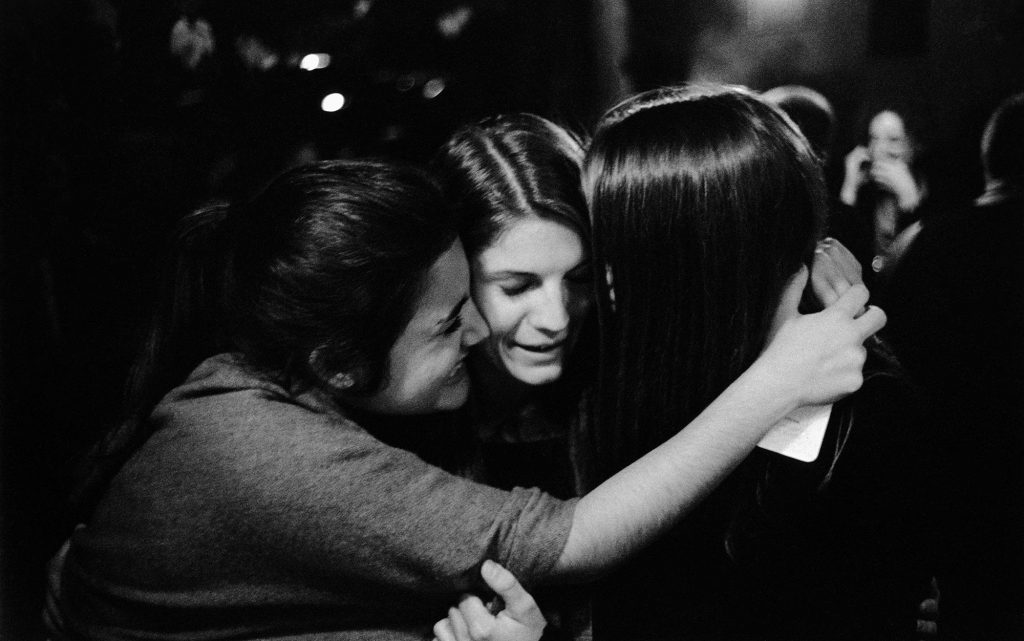
Sure, lovers and children are great. But friends are more than ever the heart of happiness, of family and of love itself

Photo by Didier Ruef/LUZ/Headpress

Anna Machin is an evolutionary anthropologist, writer and broadcaster whose work has appeared in the New Scientist and The Guardian, among others. She is the author of The Life of Dad: The Making of the Modern Father (2018) and Why We Love: The New Science Behind our Closest Relationships (forthcoming, 2022). She lives in Oxford.

4 June 2021 (aeon.co)

Edited by Pam Weintraub

Aeon for Friends

Find out more

As an evolutionary anthropologist, I have wrestled with the question ‘What is love?’ for more than a decade. At first glance, the answer is straightforward. After all, my many research subjects all have their own answers to share. And herein lies the fundamental problem for someone who would like to find a nice straightforward answer: love is complicated. My 10 years of work have led me to conclude that there are at least 10 very well-supported answers to this question, but give me another 10 years and I’m sure I can get you at least 10 more. There is no neat formula.

This is at once hugely frustrating and immensely pleasing because this complexity, this unknowable aspect of love, motivates us to create great art and to repeatedly embark on the exhilarating journey that is love, despite the end point being the possibility of great pain and rejection.

And what makes human love even more awe-inspiring is that we get to experience it in so many ways. I began my research life rather predictably with a consideration of romantic love but, as I started to explore the love lives of my subjects more broadly, it became clear that, yes, there might be lovers, parents, children but there might also be a god or gods, pets, celebrities, and even holograms. We are capable of loving so many beings both human and nonhuman and in physical and nonphysical form. When you understand how important love is to our very existence, you realise how immensely lucky we are. Love has got our back.

In many cultures, this full spectrum of love is fully embraced; as an anthropologist, you get used to being welcomed as one of the family you’re observing, kin name and all. But in the West, we’re missing out on experiencing everything that love has to offer because our field of view is too narrow. As a consequence, we’re in danger not only of limiting the fullness of our life experience but endangering our health. This blinkered view is a result of our tendency to conceive of a hierarchy of love. The top position is occupied by parental love with dad regularly relegated to assistant parent, whether he likes it or not; parental love is usually embodied in the love between mother and child. Running a close second is romantic love, with an overwhelming focus on finding your ‘soulmate’. Fail at this and you supposedly live only half a life. Following that, we have the immediate family – siblings, parents, grandparents – and maybe even the extended family.

After all these, the next category comes a rather distant fourth – our friends. It is fair to say that, when considering love, we can neglect our friendships. Indeed, in carrying out interviews for my next book, I found that those based in the UK or the US were often very happy to quickly declare their love for their cat or dog, but ask them whether they loved their friends and many had to pause and think.

This dismissal is based on a misunderstanding of how foundational friends are as members of our social network – they are its largest group – and how they hold the key to our health and survival. My work has shown that our friendships can provide a level of understanding and emotional intimacy that can eclipse any we might experience with a lover. Indeed, friends are often the most reliable source of an interpersonal ease, allowing us to be our true selves, something that we’d do well to embrace in this 24/7 social media world where ‘curating’ your image can be a full-time job.

At the same time, our society has profoundly changed in the past 50 years, putting the established hierarchy of love on shaky ground. It’s no longer the case that you have to be ‘coupled up’ to fit society’s norms, to have children or, as a woman, to make sure you’re economically provided for. As a consequence, within the West – although not necessarily elsewhere – romantic love has become a choice rather than a necessity. If children aren’t your thing, then greater control of your own fertility means that you can also dispense with parental love. But you discard the love that exists within your friendships at your peril, because, new findings show, friends are your key to a longhappy and chilled life.

Being within a supportive social network reduced the risk of mortality by 50 per cent

More than two decades of research into the nature of human social networks, including studies carried out within my group at the University of Oxford, has led us to two important and robustly evidenced conclusions. The first is that, regardless of age, personality, gender, ethnic background or any number of possible individual differences, we all interact with the members of this network in a broadly similar way. This is the magic number of 150, Dunbar’s number (named after my colleague, the evolutionary psychologist Robin Dunbar who discovered it), and it reflects the fact that, on average, the maximum size of an individual’s social network is stable at 150.

But not all is equal in the 150 club. Some people are allowed to get closer to us, and take up more of our time, than others, and it’s particularly within the two innermost layers of this network that we find our closest relationships, including our key friends. At the very core of our network sit our central support clique, the four or five people to whom we’re emotionally closest and to whom we will dedicate 40 per cent of our time. Many of us tend to have daily contact with this core, including our romantic partner, our children, maybe our parents or a best friend. Next we have the 10 or so people known as our sympathy group. These are our go-to people for a break away from the immediate family or a good night out, and we interact with them weekly. These are our close friends and maybe the occasional sibling or cousin. Together, the 15 people who make up our central support clique and our sympathy group get 60 per cent of our time. The remaining 40 per cent of time is spread thinly over the remaining 135 people who constitute the rest of our active network, and the further out you are, the less of this slim sliver of time you will receive.

There’s a powerful relationship between the characteristics of your social network and your mental and physical health, your longevity and your general life satisfaction. Way back in the knife-edge environments of our evolutionary past, having a strong social network was essential to survival, and there are still areas of the world today where having the help and support of others is the difference between life and death.

Here in the West, where our environment is relatively benign and everything we need to survive is becoming increasingly accessible at the click of a button from our sofa, cooperation, and in particular our closest relationships, are less about survival and more just about good fun and belonging – or so it seems. We know what’s important for a healthy life: exercise, a balanced diet, not smoking, and maintaining a healthy weight.

But a seminal study carried out in 2010 by the psychologist Julianne Holt-Lunstad at Brigham Young University in Utah and her colleagues would beg to differ. Holt-Lunstad collected together the data from 148 studies that had explored rates of mortality following chronic illness – cancer, cardiovascular disease and renal failure being the most prominent – and aspects of an individual’s social network. For some studies, this was the size of their network, their actual or perceived access to social support, their social isolation or the extent to which they were integrated into their network. Holt-Lunstad concluded that being within a supportive social network reduced the risk of mortality by 50 per cent. That places it on a par with quitting smoking, and of more influence than maintaining a healthy BMI measure. Since Holt-Lunstad and colleagues reported their findings, study after study has reinforced this conclusion, to the extent that we can now argue that the nature of your social network, and the strength and health of the relationships within it, is the biggest single factor influencing your health, happiness and longevity. They are your survival.

Over the past year, as I wrote my book Why We Love: The New Science Behind Our Closest Relationships (forthcoming, 2022), I conducted many interviews with people, whose comments on love are quoted throughout this piece. One such was Margaret:

There is a weird idea that you are supposed to get everything from your romantic relationship but I realise the huge amount of love I have in my life. Living in a house share with real friends makes me realise that a lot of what I thought I wanted from a relationship was really a close, daily friendship.

But what has all this got to do with your friendships? Why does neglecting your friends place you at considerable risk of ill health and guarantee that your life will be much less joyous and satisfying? Because for a significant number of people – a number that’s growing year on year – their friends fulfil the role of a romantic partner, a child and even a whole family. Their friends are those key 15 people they see and rely on most. As a consequence, they are the survival-critical relationships that will have a profound influence on their health, happiness and longevity.

Data from the 2015 US census has predicted that 6 per cent of the current adult population of Americans will remain single their entire lives. And the number of never-married singletons in their 40s has doubled in the UK between 2002 and 2018. Globally, we’re experiencing a significant downturn in the birthrate, which has led to panic among some governments as the increased costs of an ageing population go unmet by rapidly reducing tax revenues. In Japan, deaths can outstrip births by nearly 500,000 a year, meaning that by 2050 the population might have shrunk by 30 million people.

When we focus our love on our friends, we’re actively choosing to do so

Many people will remain childless. In the US, the rate of births in women between the ages of 20 and 29 dropped a massive 15 per cent in the five years between 2007 and 2012, with this trend not limited to any one ethnic group. In some cases, these declines are due to women choosing to have children later in life or, in Japan’s case, a fall in the number of women of reproductive age in a shrinking population. But, in many cases, women, particularly those of the millennial generation, are actively choosing to not have children. Instead, they’re deciding to focus their energies on building a good career and directing their caring skills to the community. For these people, their central support clique isn’t populated by a lover or children. It’s populated by their friends. As June, another study participant, said:

I love my friends. It is different because it is a love that is chosen and quite special. People talk about unconditional love but I think there is something special about conditional love because you are always opting into it. It is an obligation but there is something special about day by day by day you are choosing to stay in those relationships.

I love this quote from June about the nature of friendship love. It’s a brilliant, and quite rare, way of thinking but it makes such perfect sense. That we have an instinct, driven by our shared genetics, to love our children and family – for some, this is a duty love – but, when we focus our love on our friends, we’re actively choosing to do so. We’re taking our precious time and energy, and consciously committing it to them, so important are they to us.

Perhaps as a reflection of our perception that friends are relatively unimportant, compared with the attachment between lovers or a parent and child, research on the power of the friends’ attachment is still only in its early days. However, in her 2017 study of female singles, Claudia Brumbaugh, a psychologist in New York, found that best friends played a crucial role for them – both because, as June points out, of the freedom to choose them, and because of the close similarity to them. Brumbaugh found that, when it comes to choosing our friends, there’s none of the familial obligation or cultural pressure that can influence our choice of lover or our commitment to our family.

Indeed, when you’re a child and enter preschool for the first time, your world opens up dramatically, and you get to initiate friendships yourself, making your own choices rather than being forced to play with your parent’s best friend’s kid while the adults chat over a coffee. And when you’re at secondary school, your friends become your primary attachment figures, the people you turn to to influence your behaviour and thoughts as you establish your autonomous identity. In adulthood, friendships might ebb and flow as you reach life stages at different points, but they will remain a source of comfort, advice, fun and freedom. They might even become your family.

With such unfettered choice, what draws us to the people who ultimately become our friends? One of the first studies I carried out at Oxford was an analysis of how heterosexual people chose their romantic partners and their best friends. I asked the participants to what extent they shared a range of attributes with their lover and their best friend, including levels of physical attractiveness, creativity, intelligence, education, sense of humour, outgoingness and optimism. What was important in each case? I was trying to understand whether there was a ‘friendship market’ much like a ‘dating market’. Since our friends contribute so much to our chance of survival, shouldn’t we be taking some care in choosing them?

What I found surprised me and challenged the idea that our friends can never be as close to us as our lovers. For many heterosexual women, their same-sex best friend was someone with whom they shared more emotional intimacy than with their male lover. For many heterosexual men, their same-sex best friend represented ease of interaction and a sense of humour – someone you could truly relax with. Further, both sexes had more in common with their best friend – that is, they were more similar to them in terms of education, interests, etc – than with their lover. These results perhaps point to the inherent tension that exists at the centre of all heterosexual romantic relationships. Cross-sex cooperation is cognitively the costliest of all cooperation ­– the most time-consuming and emotionally draining of relationships ­– because of the need to trade unequal currencies, and because you must ‘mind read’ a brain that probably operates in a distinctly different way than yours. With best friends, particularly of the same sex, these tensions aren’t there, meaning that you can truly relax and reveal your authentic self. And, because we’re so similar, we approach life from the same perspective, meaning that our friends know us at least as well as we know ourselves.

Evidence that our friends know us that well comes from a 2019 study in which people were asked to consider their own personality, and the personalities of 10 friends, while inside a brain scanner. The psychologists Robert Chavez and Dylan Wagner found that when an individual, let’s call her Sarah, reflected on her own personality, her brainscan pattern matched the pattern seen in the scans of her 10 friends while thinking about Sarah’s personality, but not when they thought about their other friends’ personalities. It would appear that Sarah’s friends knew her as well as she knew herself.

These families were bound by a shared identity rather than shared blood – they were fictive kin

And the extent of these similarities between friends can stretch beyond a shared love for French avant-garde films or a shared school experience to the fundamental way in which we make sense of our world. In 2018, the researchers Carolyn Parkinson, Adam Kleinbaum and Thalia Wheatley recruited 279 students – the entire cohort from one year of a graduate programme. They asked them to complete a questionnaire listing everyone in the programme they deemed to be a friend. The researchers then set about creating a social network for the class, illustrating every link between the students. Their prediction was that the closer two people were to each other in the network, indicating a stronger bond, the more similar their neural responses would be. A subset of 42 students was used for a scanning study. Once in the scanner, everyone watched the same set of videos in the same order. And the results confirmed the researchers’ hunch: similarities between friends extended way beyond hobbies, ethnicity, age or sex. The signals seen in the brains of friends – both in the unconscious and conscious brain – were more similar than those between people who were more distant in the network. They were also able to predict just how close two people were in the network simply by comparing scans. Now that is a concrete finding.

I am a firm believer that friends are God’s way of apologising for our family. I do not come from a high-functioning family, and even though I love my family and I accept them for who they are, it is really my friends that are my family. I have been predominantly on my own but my girlfriends have been that emotional touchstone, that physical presence in my life when my family was largely absent.
– Carol

The term ‘chosen family’ was first coined in the US during the 1970s and ’80s to describe the networks of friends that provided emotional support and nurture to those who’d been rejected by their own family or who were excluded from legally sanctioned methods of creating a family such as marriage or parenthood. In the vast majority of instances, these were gay men and women who had been excluded by their culture and/or disowned by their biological family, and whose need for support was made all the more urgent by the arrival of HIV within their communities.

These families were bound by a shared identity rather than shared blood – they were fictive kin. While those who pioneered this new form of ‘friend’ family in the 1970s have now grown old within the bosom of their chosen family, recent work among younger communities in the US has shown that chosen families are as important to the lives and as vital to the security and development of young people as they’ve always been, particularly when it comes to one of the trickier aspects of growing up – exploring your sexuality.

In 2013, the Illinois Caucus for Adolescent Health (ICAH) carried out a study exploring the role of chosen and given family in discussions with adolescents about sexual identity, health and rights. They used individual interviews, online surveys and focus groups to explore the experiences of nearly 500 adolescents as they navigated this at times rocky and confusing stage of their development. The results showed that, while there was a role for both family types, the chosen family was the first port of call when discussing these potentially tricky topics.

In fact, of those interviewed, 80.7 per cent reported that they’d formed a chosen family. When it came to discussing sex and sexuality, 73.4 per cent of young people spoke to their chosen family compared with 52.8 per cent who spoke to their given family. But when it came to how comfortable they felt while doing this, 63.2 per cent were more comfortable talking to their chosen family as opposed to only 9.7 per cent who felt comfortable speaking to their given family. There were topics, for instance, personal sexual experiences, about which participants wouldn’t speak to their given family. Yet three-quarters said they could speak to their chosen family about anything. These friend networks were especially important for transgender, gender nonconforming and genderqueer youth, who were overall more likely to speak to their chosen family (81 per cent) than their given family (59.1 per cent). Because members of Generation Z (ie, those born between the mid-1990s and early 2010s) explore their gender and sexuality more freely than any previous generation, it’s clear that the love and understanding found in a chosen family is as vital as it’s always been.

As our Western world becomes slowly more tolerant, the options for creating your family become broader. While the statistics seem to point to a world where fewer of us choose to find a romantic significant other, this doesn’t mean that we must spend our lives alone or miss the opportunity to become parents. I spend a lot of time exploring the changing world of parenting, and it’s fair to say that today’s reality is far from the Victorian nuclear ideal.

But what’s particularly holding my focus at the moment is the rise of platonic co-parenting relationships and queer platonic partnerships (QPPs). These are both relationships where the foundation is not of romantic but of friendship love. In the first case, the core is usually a man and a woman who’ve chosen to have a child together and raise it as a co-parenting team. In the simplest manifestation, this is how the family remains, with two parents who love each other as friends and use this as the foundation for raising their child. In more complex arrangements, the parenting team can expand to include the partners of the biological mother and father, an egg or sperm donor and sometimes a surrogate. All of these people are focused on the raising of a child but their ability to do this successfully is based upon a strong tie of friendship.

I came across the queer platonic partnership as I explored the world of aromanticism. An aromantic is someone who doesn’t experience romantic love. Often, a misunderstanding of what it means to be aromantic leads others to characterise those who have this identity as incapable of loving anyone and, as a consequence, of living in a world devoid of love. But aromantics are as capable of love for their family, their children, their friends or their god as any of us. And, because of this, many don’t want to live a life devoid of a companion or a co-parent. To do this, they must look beyond the conventional to the QPP, someone with whom to build a life on the basis of friendship love. And, just as there are dating sites, so there are now areas of the internet dedicated to helping those who wish to pursue a QPP.

It’s clear that, in opposition to the accepted order of things, for many of us, it’s our friendships that need to be at the top of our love hierarchy if we want to live long and happy lives. Friends can be our sources of intimacy and nonjudgmental support, they can be our life’s companions, they can be our family and our co-parent. Put bluntly, they’re our survival. But this means that we must decide to actively nurture and invest in them to benefit from their many rewards. Our unique ability to love many beings in many ways means that we all have the opportunity for love in our lives. We just have to lift our eyes to the horizon and broaden our perspective to see all the love that is on offer. And for many of us that will mean celebrating, treasuring and reasserting the love we have for our friends.

To read more about love and relationships, visit Psyche, a digital magazine from Aeon that illuminates the human condition through psychology, philosophical understanding and the arts.

This Essay was made possible through the support of a grant to Aeon from the John Templeton Foundation. The opinions expressed in this publication are those of the author and do not necessarily reflect the views of the Foundation. Funders to Aeon Magazine are not involved in editorial decision-making.

Love and friendshipFamily lifeMeaning and the good life

Werner Herzog on Philosophy of his Films, Cancel Culture, Consumerism & More

The Origins Podcast Lawrence joins acclaimed film director Werner Herzog at his home in Los Angeles to discuss societal norms, consumerism, cancel culture, the colonization of Mars, the philosophy behind his art and films, and much more. Consider supporting the podcast and the Origins Project Foundation at https://www.originsprojectfoundation…. To see commercial-free, full HD video episodes, join us at www.patreon.com/originspodcast Thank you for your support! iTunes: https://podcasts.apple.com/us/podcast… Website: https://TheOriginsPodcast.com Twitter: https://twitter.com/TheOriginsPod Instagram: https://www.instagram.com/TheOriginsPod Facebook: https://www.facebook.com/TheOriginsPod The Origins Podcast, a production of The Origins Project Foundation, features in-depth conversations with some of the most interesting people in the world about the issues that impact all of us in the 21st century. Host, theoretical physicist, lecturer, and author, Lawrence M. Krauss, will be joined by guests from a wide range of fields, including science, the arts, and journalism. The topics discussed on The Origins Podcast reflect the full range of the human experience – exploring science and culture in a way that seeks to entertain, educate, and inspire. Full Episodes Playlist: https://www.youtube.com/watch?v=qXLv1…

Werner Herzog (born September 5, 1942) is a German film director, screenwriter, writer, actor, and opera director. Herzog is considered a figure of the New German Cinema. His films often feature ambitious protagonists with impossible dreams, people with unique talents in obscure fields, or individuals who are in conflict with nature. Wikipedia