

Or, 70 Afternoons Well Spent
Emily Temple May 11, 2020 (lithub.com)

We updated this list as part of the the Best of the Best Books Reading Challenge! Join the challenge now!
Contemporary novels tend to fit into a certain range: around 300 pages is typical. A little more, or a little less, depending. But I have a particular fondness for the extremes: books over 500 pages, or books under 200. It is the latter category which draws us together today.
For our purposes here, the “contemporary” of the headline means published (in English) after 1970. (See here for a list of classic novels under 200 pages that you should also read.) NB that I’m not making a distinction between novellas and novels—I’m not sure there really is one—but I’m not including short story collections, or books that include a novella and stories. Finally, as ever, “great” is subjective, and this list is limited by time and space and the literary tastes of this editor. As always, feel free to add your own favorites in the comments below.
Shop the List on Bookshop.org\
*
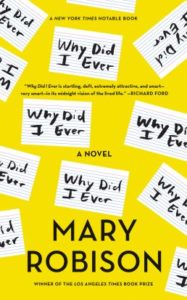
Mary Robison, Why Did I Ever (200 pages)
Probably the best fragment novel on the block: the saga of Money Breton, errant script doctor, mother of two, obsessive obssesser, is funny, irreverent, and weirdly moving. Not for nothing, but this novel is my own personal ultimate coolness test, because yep, I am an adult who judges other people’s coolness, and I do it based on the books they read.
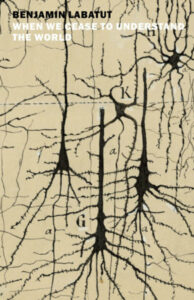
Benjamín Labatut, tr. Adrian Nathan West, When We Cease to Understand the World (192 pages)
Translated from the Spanish (Labatut is Chilean) by Adrian Nathan West, reading the first few paragraphs of When We Cease to Understand the World is like encountering a new intoxicant, with all its attendant thrills and shivers—and the uncertainty about where, exactly, things might lead.
In what is essentially a fictionalized account of the real lives of a miscellany of 20th-century scientific giants (some famous, some less so), Labatut wades through the murky waters of human genius, finding there the darker implications of discovery, for society and scientist alike. Reading the inner lives of the likes of Fritz Haber, Werner Heisenberg, and Erwin Schrödinger—rendered by Labatut with the same kind of metaphorical heuristic so often employed to reveal truths about theoretical physics—one is left almost breathless by the grim consequences of all our endless wonder. There’s a reason this hybrid novel-biography has left its mark on nearly everyone who’s taken a taste. –Jonny Diamond (One of Lit Hub’s favorite books of 2021)
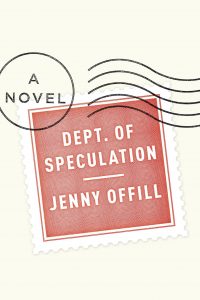
Jenny Offill, Dept. of Speculation (177 pages)
My other candidate for the best contemporary fragment novel—not to mention one of the best novels of the decade, full stop—is of course Offill’s luminous, eye-wormy (this is a term I have just now invented for the literary version of ear-wormy, you’re welcome, and sorry), and consistently wise modern classic, which is ostensibly the story of a marriage but is more importantly the story of a mind.
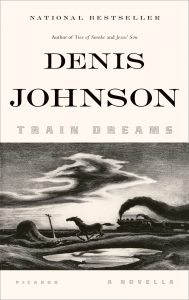
Denis Johnson, Train Dreams (116 pages)
Johnson’s novella is a shibboleth among a certain kind of reader (and, typically, writer). In our list of the best novels of the decade, editor Dan Sheehan described it as “the incantatory story of a turn-of-the-century logger and railroad laborer, Robert Grainier, who loses his family to a wildfire and retreats deep into the woods of the Idaho panhandle as the country modernizes around him. Johnson’s spare, strange, elegiac prose conjures a world that feels both ancient and ephemeral, full of beauty and menace and deep sorrow. . . . An American epic in miniature, Train Dreams is a visionary portrait of soul untethered from civilization, a man stoically persevering on his own hermetic terms in the face of unimaginable tragedy. A haunted and haunting reverie.”
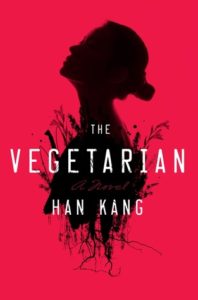
Han Kang, tr. Deborah Smith, The Vegetarian (188 pages)
The Vegetarian has come under scrutiny for its translation, and the accuracy thereof, but since I can only read English, all I know is that whatever came out of the union of Kang and Smith is very, very good. In our list of the best debut novels of the decade, editor Molly Odintz wrote, “Han Kang’s tale begins with a description of a dutiful wife, unusual only in her refusal to wear a bra, whose sudden decision to stop eating meat sends her partner and family into a spiral of confusion, where forcible consumption of meat quickly becomes a metaphor for violation. The vegetarian begins a slow transformation into vegetable itself—first, she stops eating meat; gradually, she stops eating everything. Her withdrawal from culinary delights is mirrored by her withdrawal from the world. She basks in sunlight, is painted all over with flowers by her sister’s husband (a not-so-successful artist), and for all intents and purposes, attempts to become a plant. Is she onto something, or is she out of her mind? Is she denying the world, or is she fully embracing it? Han Kang leaves the answers to these questions deliberately vague, and the sign of a great work is its ability to be read by many people and interpreted differently by each one.”
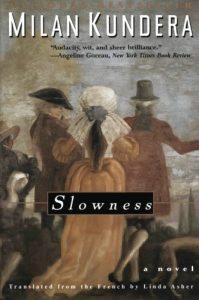
Milan Kundera, Slowness (176 pages)
A metafictional meditation on modernity and memory—and on “the dancer,” showing off for the abstracted “everyone,” the concept of which gets more relevant every day.
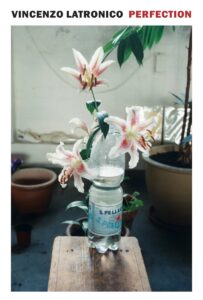
Vincenzo Latronico, tr. Sophie Hughes, Perfection (136 pages)
Some novels are mirrors, and this is one of those, and some novels are hit jobs on a certain kind of fantasy, and this is one of those too. It is a reworking, and updating, of George Perec’s Things: A Story of the Sixties, and might itself have been subtitled A Story of the 2010s, the “things” replaced by, broadly, the “internet,” which directs the lives and identities of Anna and Tom, ex-pat “digital nomads” living in Berlin. Nothing happens, which is the point. Anna and Tom are just like you and I, neither more or less reprehensible, which is the point. Instead the book is a collection of images and ideas and ordinary moments and banal successes and disappointments that slowly becomes much more than the sum of its parts. (One of Lit Hub’s favorite books of 2025)
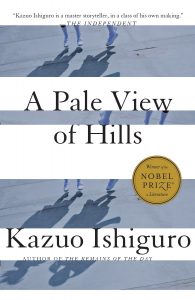
Kazuo Ishiguro, A Pale View of Hills (192 pages)
Ishiguro’s debut, first published in 1982, takes shape through the recollections of an aging Japanese woman, living in England, now alone after her husband’s death. But as she reflects, the memories become less secure—or at least less restricted to the past. Like everything Ishiguro writes, it’s beautiful, subtle, and not a little shadowy.
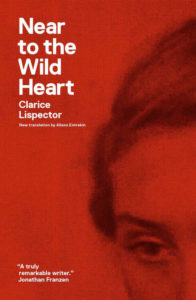
Clarice Lispector, tr. Alison Entrekin, Near to the Wild Heart (194 pages)
I register that this is something of a cheat, since Lispector’s first novel was originally published in Brazil in 1943—but considering that it wasn’t translated into English until 1990, I’m going to sneak it in here. After all, it is too glorious to ignore: evidence of a mind on fire. We follow Joana through her life in this short novel, but it’s really the sentences you should read for: sometimes inscrutable, sometimes wild, sometimes transcendent.
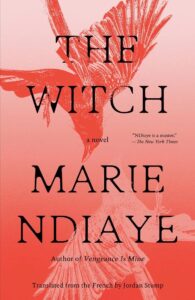
Marie NDiaye, tr. Jordan Stump, The Witch (144 pages)
In the French novelist’s latest to be translated into English (though published in France some 30 years ago), a woman decides to initiate her twelve-year-old daughters into their heritage: witchcraft. They are not impressed. “No offense, Mama, but it’s really all just so lame,” one of them tells her. But as the girls gain power, their family begins falling apart.
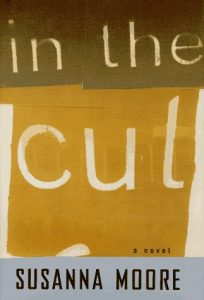
Susanna Moore, In the Cut (179 pages)
Okay, I’m hereby warning you: this novel is not for the squeamish. My best friend recommended this book to me not too long ago and didn’t tell me anything about it except that it was amazing, and it was totally a replay of that time she made me go see Hard Candy with her and told me it was going to be an indie comedy. And look, it is amazing, in the sense that you will have physical reactions reading this book, and in the sense that Moore perfectly captures a range of emotions and impulses rarely committed to paper. But like . . . you’re not going to feel good at the end. So just know that.
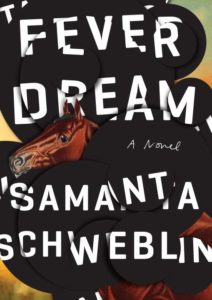
Samanta Schweblin, tr. Megan McDowell, Fever Dream (189 pages)
This is a weird and terrifying, almost suffocating novel that kept me up for an entire night. In our list of the best debut novels of the decade, our editorial fellow Eleni Theodoropoulos wrote that in this novel, “detail is dramatized through dialogue, and Schweblin knows just what to pick and what to leave out so that characters and readers alike are obsessed with the story about the poison. Everyone is at the mercy of someone: David is at the mercy of Amanda, Amanda at the mercy of David, and the reader at the mercy of both of them. The only way to find out the truth in Fever Dream is by trusting someone else’s narrative. Even in being swept away in the horrific progression of the novel, and simultaneously, the disease, the reader identifies with Amanda, a mother who realizes she cannot protect her child. In just under 200 pages, Schweblin has delivered a poignant, tragic tale of a fear come true.”
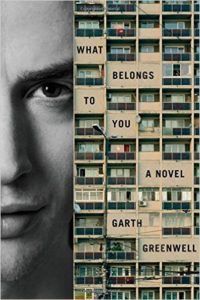
Garth Greenwell, What Belongs to You (191 pages)
If you’ve been reading Lit Hub for any amount of time, you know how much we love Garth Greenwell’s debut, which is, after all, one of the best debut novels of the decade. It’s an exquisite book, both on the sentence and the story level, a mesmerizing work of art.
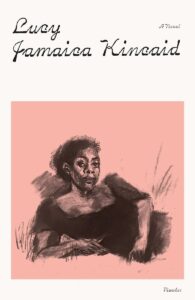
Jamaica Kincaid, Lucy (164 pages)
Kincaid’s semi-autobiographical, intertextual coming-of-age story follows a teenager from the West Indies who travels to the US to work as an au pair and to escape the life she has always known. A stranger in a strange land, and somewhat contemptuous of it, while also in a kind of love, she nonetheless finds her way, in spare but evocative prose, exploring her own sexuality and developing her own interests as the relationship between her employers unravels.
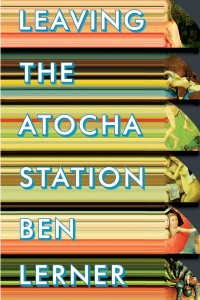
Ben Lerner, Leaving the Atocha Station (181 pages)
I still love Lerner’s debut, which is basically about a poet not writing poetry in Madrid, but is actually very good, despite that. In our list of the best debut novels of the decade, our editor Jessie Gaynor described it as one of the “most subtly hilarious novels around” and wrote that “Lerner invites the reader to laugh with his protagonist as well as with him. The novel feels propulsive rather than meandering, as if the reader is the one whose fellowship is quickly running short.”
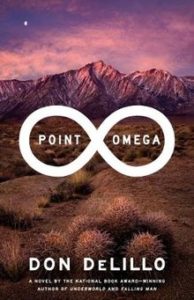
Don DeLillo, Point Omega (117 pages)
DeLillo’s the rare writer who excels in both the long and the short form. This one, his fifteenth, is a destabilizing, compelling portrait of grief refracted through art. According to me, at least—it’s also one of DeLillo’s most polarizing novels, so you might as well read it, at least to have an opinion on the matter.
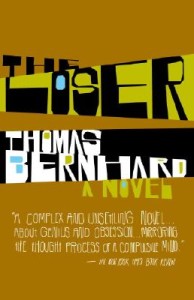
Thomas Bernhard, tr. Jack Dawson, The Loser (190 pages)
Possibly the best ill-tempered 190 page monologue in contemporary literature, if you’re into that sort of thing.
Continue reading 70 Great Contemporary Novels Under 200 Pages