
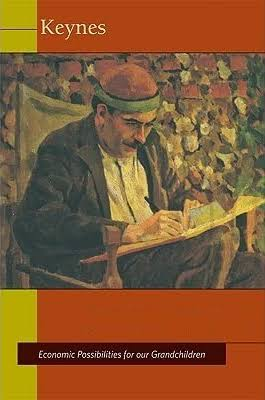
(Image from Goodreads.com)
Economic Possibilities for Our Grandchildren by John Maynard Keynes
“When the accumulation of wealth is no longer of high social importance, there will be great changes in the code of morals. We shall be able to rid ourselves of many of the pseudo-moral principles which have hag-ridden us for two hundred years, by which we have exalted some of the most distasteful of human qualities into the position of the highest virtues. We shall be able to afford to dare to assess the money-motive at its true value. The love of money as a possession — as distinguished from the love of money as a means to the enjoyments and realities of life — will be recognized for what it is, a somewhat disgusting morbidity, one of those semi-criminal, semi-pathological propensities which one hands over with a shudder to the specialists in mental disease.”
― John Maynard Keynes, Economic Possibilities for Our Grandchildren
John Maynard Keynes, 1st Baron Keynes, was an English economist whose writings are considered the basis for the school of thought known as Keynesian economics, as well as its various offshoots. Originally trained in mathematics, he built on and refined earlier work on the causes of business cycles. Wikipedia
Born June 5, 1883, Cambridge, United Kingdom
Died April 21, 1946 (age 62 years)
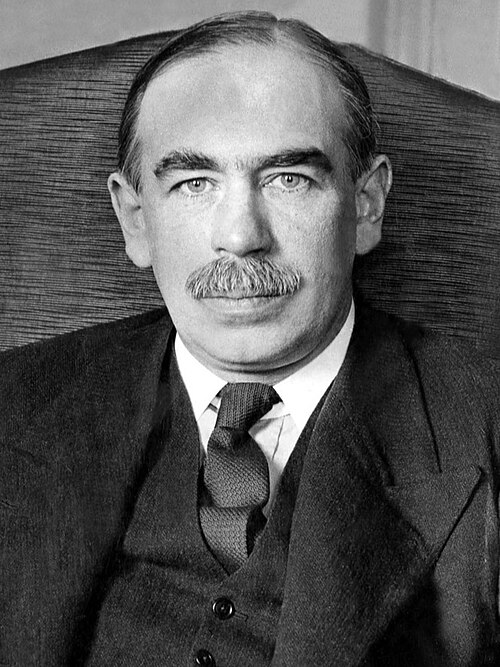
Keynes in 1929