Robert Reich and Inequality Media Premiered Aug 13, 2026 In early 2026, a team of filmmakers, including former Sec. of Labor Robert Reich, wondered what it would be like to invite 30- and 80-year-olds to gather in conversation about America. The idea was to visit six states in six months, convening a wide variety of mostly strangers to play a simple game:
Pull up a chair
Ask each other questions
Take the time to listen
THE WORK IN PROGRESS captures candid discussions about America’s ever-evolving democracy, identity, definitions of community, and where we go from here — alongside portraits of Americans at work. Watch the trailer for THE WORK IN PROGRESS, in theaters September 4. And make sure to sign up for updates about the film, including where it’s playing, future live watchalongs, and how to order the deck of conversation cards used in the movie: https://www.theworkinprogressfilm.com/
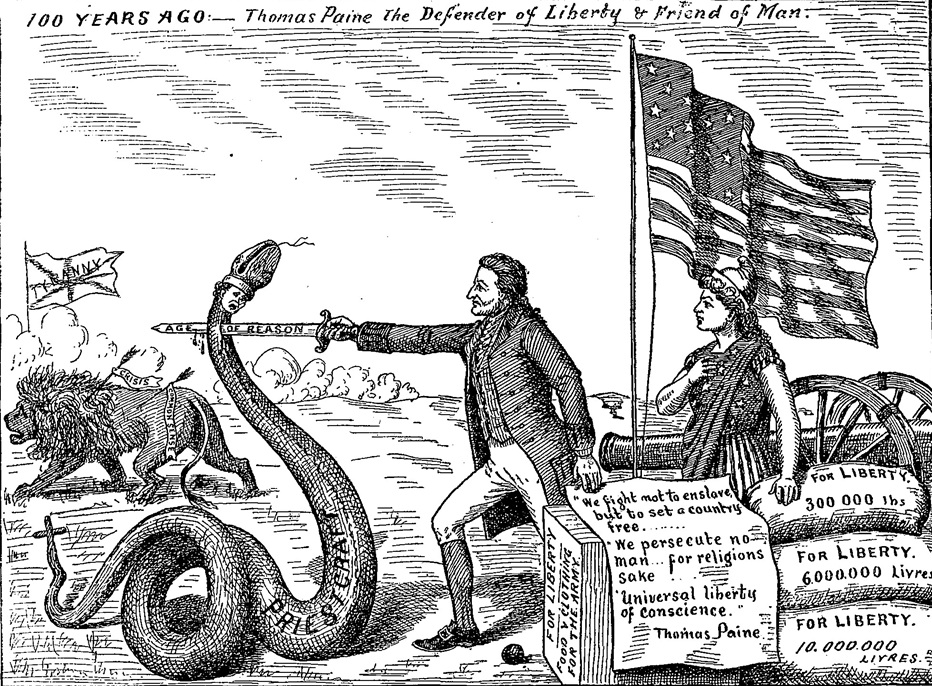
On the 250th anniversary of the Declaration of Independence, most Americans will celebrate the revolutionary manifesto as the culmination of a long-simmering rebellion against King George III. But until only a few months earlier, the colonists blamed Parliament for odious British measures they simply wanted to reform. Beginning January 10, 1776, all of that changed with the publication of a brief pamphlet, authored by an anonymous Englishman. That pamphlet, “Common Sense,” reframed the colonists’ dispute with Parliament over taxes and imperial authority into a radical revolution against King George III and against monarchy itself.
For fear of being hanged as a traitor, Thomas Paine did not reveal himself as the “Common Sense” author until three years later. Born in England in 1737 into a Quaker family, Paine had schooled himself in the Enlightenment philosophy of natural rights and the social contract. While working as a tax collector, he penned petitions for better pay and working conditions for his fellow excise officers, which cost him his job. In London, he met Benjamin Franklin, who urged him to take his polemical talents to America, and wrote the letter of introduction that secured Paine a job as an editor and author at The Pennsylvania Magazine.
Paine arrived in Philadelphia in November 1774. He found not a united country with a common enemy but a fractious group of divided colonies, religious sects, and ethnic groups quarreling with the British Parliament and one another. Americans had been haranguing Parliament to rescind the new tariffs, taxes, and commercial regulations it had imposed on the colonies after Britain’s successful war against the French, which ended in 1763.
Most Americans perceived King George III as their “common father” and protector of his distant colonial subjects, not least against the British soldiers and customs collectors Parliament had sicced upon them. Americans celebrated the anniversaries of the king’s birthday and coronation even as the Sons of Liberty were arousing anger against His Majesty’s Parliament. New Yorkers showed their royalist sympathies by raising an equestrian statue of the king on Manhattan’s Bowling Green in 1770. (Six years later, on July 9, 1776, an angry mob tore down the statue and purportedly melted it down into ammunition.)
Less than three months after the Minutemen gave battle to British soldiers at Lexington and Concord in April 1775, the Second Continental Congress sent the “Olive Branch Petition” to King George III. The delegates swore loyalty and denied any intention of separation, if only His Majesty would protect them from Parliament’s unjust laws. King George III coldly refused to acknowledge his subjects’ plea, declared the colonies to be in open rebellion, and sent more troops to enforce British rule.
With that, the colonists became resigned to war, but most remained uncertain if its goal was to be separation from Britain when, six months after King George III’s rejection of their olive branch, “Common Sense” appeared.
Paine saw beyond the quarrels over taxes, trade regulations, and colonial autonomy to envision a much grander conflict between the Old World’s anachronistic monarchical rule and the New World’s republican future. The main question he raised was not how King George III should rule the American colonies but why kings should rule at all.
Paine began by setting forth a careful argument assailing the absurdity and danger of hereditary power. Kings originated, as often as not, with the “principal ruffian of some restless gang … chief among plunderers,” he insisted. Likewise, the ridiculous notion that kingly wisdom and virtue would pass through bloodlines was mocked by nature itself, “by giving mankind an ass for a lion.” Monarchy had inflicted war, oppression, and misery everywhere, Paine argued. “Freedom hath been hunted round the globe. Asia, and Africa, have long expelled her—Europe regards her like a stranger, and England hath given her warning to depart.” By rejecting monarchical tyranny, he proposed, America would be the “asylum for mankind,” and a break with the past. “We have it in our power to begin the world over again,” he wrote.
These were heady aspirations, and Paine understood he was challenging deeply ingrained loyalties—or, as he put it, “a long habit of not thinking a thing wrong, gives it a superficial appearance of being right.” His was an appeal to common sense, which would eventually prevail, for “time makes more converts than reason.”
“Common Sense” was the first and most influential outright call for American independence, and for rebellion against the king. It spread like wildfire: In 25 editions, with some 150,000 copies sold in a population of just 2.5 million, it was read aloud to great effect in taverns and shops throughout the colonies.
The colonial leaders who met in Philadelphia in July 1776 had read the pamphlet, too. Samuel Adams urged fellow delegates to read it and noted that “Common Sense” “has fretted some folks here more than a little.” John Adams wrote to his wife Abigail that “all agree there is a great deal of good sense, delivered in a clear, simple, concise and nervous Style.”
Thomas Jefferson, like John Adams, was convinced independence was the path forward even before his friend and fellow signer, Thomas Nelson, sent him a copy of “Common Sense.” Looking back on the declaration, Jefferson insisted that he, as its primary author, expressed the American mind; he never explicitly credited Paine or “Common Sense.” Still, Paine had enormous influence in converting Americans to the cause of independence, and the many agreements between the two documents is clear. The declaration, like “Common Sense,” placed blame for a “long train of abuses” squarely on the king, not Parliament: “The history of the present King of Great Britain is a history of repeated injuries and usurpations, all having in direct object the establishment of an absolute Tyranny over these States.” This tyrant, it concluded, “is unfit to be the ruler of a free people.”
The revolution that followed embedded a deep and enduring distrust of concentrated power unaccountable to the people. The new nation’s federal and state governments featured deliberately weak executives. The Articles of Confederation, the nation’s first constitution, eliminated the office of chief executive altogether.
That changed after the Constitutional Convention of 1787 created a strong president. Still, a system of checks and balances limited presidential powers. There were some futile efforts to invest the office with the aura of monarchy. Alexander Hamilton proposed that the president be elected for life. John Adams suggested that the president be addressed as “His Highness.” Such pretenses were quickly rejected. The United States would have no kings. Not in name, not in spirit. Two hundred fifty years later, it feels like common sense.
U.S. Independence Is a Story of the Entire Western Hemisphere
by Arturo Chang July 2, 2026 (zocalopublicsquare.org)
Since the 18th century, citizens and revolutionaries throughout the Western Hemisphere found inspiration in the U.S.—and vice versa, writes political scientist Arturo Chang. | Dedication of the Simon Bolivar statue in Central Park in New York City in 1921. Credit: Bain News Service photograph collection. Library of Congress
As the United States reaches the 250th anniversary of its independence, the nation is still debating what defines the “American” tradition. Are we characterized by a particular set of institutions? Are we characterized by national borders? And perhaps in the broadest sense, what identities, communities, and cultures comprise the category of “America”? These questions evade simple conclusions, but they are particularly important for situating our current, divisive political moment. One way to make sense of these questions is to turn to a hemispheric, more pluralized understanding of the publics, imaginations, and politics that were at stake in the early years of U.S. independence.
“America” is not a nation-state. Geographically, it encompasses the lands and peoples that extend from the Yukon to Patagonia. Ideologically, “America,” or what one might call the project of “American political thought,” offers a similarly capacious tradition. The shared politics, cultures, and identities of America and its publics are most apparent at the peak of hemispheric solidarity, during the so-called the Age of Revolutions (approximately 1770–1850). During this period, dozens of anti-colonial movements emerged to rebel against European rule, reject notions of American inferiority, and ultimately call for the establishment of their own political projects. At the same time, an astounding array of communities—Indigenous, Creole, Pardo, Mestizo, as well as enslaved and recently emancipated peoples—all self-identifying as Americans, together built a tradition that sought to live beyond the conditions of colonization.
The U.S. Declaration’s account of inalienable rights became a prominent example to follow for other American movements, with its ideas proliferating throughout the hemisphere by way of the press, political manifestos, and the first constitutions. For instance, the language of liberty and happiness framed Mexican Revolutionaries’ 1813 Constitution of Chilpancingo, which granted citizenship to all Americans (people born in the “new world”) or to non-Americans who aligned with the project of anti-colonial resistance. Similar language would also appear in the “Declarations” of the Republic of Texas (1813), Cartagena de Indias (1811), and the United Provinces of South America (1816). As such, anti-colonial revolution in the Americas evolved as a shared project of popular liberation that stretched from Boston to Buenos Aires.
Shared sentiments associated with the Declaration, in turn, influenced the direction of 19th-century revolutionary U.S. politics. As historian Caitlin Fitz shows, many U.S. citizens understood themselves as part of the revolutionary efforts of their hemispheric “sister republics.” These connections manifested in songs, orations, poems, and plays like James Workman’s Liberty in Louisiana, which deployed comedy to simultaneously argue against Spanish rule in the region while celebrating the Louisiana Purchase of 1803. In the “borderlands” that today comprise Louisiana to California, in particular, national identities were not fully formed, and political rhetoric rarely operated within the constraints of state borders. This is reflected in the print activity of the region. Newspapers like El Misisipi (founded in New Orleans in 1808), for example, published in parallel Spanish and English columns to comment on events that cut across French, Spanish, and U.S. jurisdictions.
These points of exchange have been overlooked in favor of the simpler story of a nation-state that emerged and developed linearly and with little relation to parallel national projects. Nationalist histories are useful for retroactively concretizing the state as a perennial institution, but they do so at a cost. They evade the reality that cultural, social, and political practices and identities necessarily operated more freely. A more interesting history emerges when one takes seriously that early 19th-century nation-states were at best weak institutions with real concerns surrounding re-conquest. Americans throughout the hemisphere had a desperate need for regional allies and like-minded revolutionaries.
Take, for example, the little-known history of Mexican Texas. The first republic of Texas was founded in 1813 by Mexican citizen José Bernardo Gutiérrez de Lara. The militia which led to Texas independence—self-identified as the “Republicans of Nacogdoches”—received covert support from the James Madison administration, which hoped to expel colonial powers from the region, as well as direct aid from Caribbean and South American revolutionaries living in the U.S. who wanted to liberate their own communities. Gutiérrez de Lara traveled across the United States to recruit volunteers, meeting with prominent figures of the period such as future President James Monroe (secretary of state at the time), Louisiana Governor William C.C. Claiborne, and Cuban revolutionary José Álvarez de Toledo y Dubois.
The movement, however, was also driven by popular support among U.S. citizens who believed that the liberation of Mexico was directly important to the success of the Union. Regional newspapers celebrated Gutiérrez de Lara’s efforts. The Nashville Whig (1813), for example, encouraged U.S. Americans to “lend their aid” in liberating “another portion of the Western Hemisphere…from the bonds of European tyranny and oppression” and to help Mexico become “an empire among the nations of the earth.” As Fitz, the historian, shows, these appeals to mutual liberation would continue in the U.S. well into the 19th century. Celebratory gestures to Latin American revolutions would appear alongside 4th of July processions, parents named babies after Venezuelan Revolutionary Simón Bolívar, and the press published dedications to the “to the patriots of Mexico and South-America.”
Telling the story of independence grew more complicated as the U.S. made a turn toward empire, placing its relationship with Latin American allies in precarious standing. Cuban intellectual José Martí, for example, reflected on the ideological tensions symbolized by the United States as he worked toward Cuban independence while living in New York City in 1886, when the Statue of Liberty was being assembled there. In Fiestas de la Estatua de la Libertad, Martí wrote, “It is terrible, liberty, to speak of you for someone who is deprived of you.” For Martí, the political celebrations posed a political paradox: New York bustled with interest in the monument that would personify the United States’ best impulses—the “noise of triumph at rest.” But U.S. Americans didn’t consider the ways their nation’s expansion into Latin America took liberty away from other Americans who, until very recently, had been fellow travelers in the hemispheric project. “Darkness does not come from a rainy day, nor the gray of October,” he wrote, addressing the statue, “but of the dust, shadowed in death, that your carriage picked up on the way.”
It is perhaps unsurprising that, today, as the U.S. reflects on its history, themes such as revolution, empire, and “the people” remain at the center of the conversation—making returning to the hemispheric character of American emancipation all the more important. The semiquincentennial anniversary of the U.S. Declaration of Independence can help us think through all that undergirded North Americans’ break from colonial rule—rather than only considering the state that would eventually emerge. One way to begin is by recognizing that the “American tradition,” at its roots, operates far beyond the scope of the U.S. and its boundaries.
As historian David Armitage suggests, the Declaration was a genre-producing document that evolved alongside the public who saw themselves in it. That is, the Declaration—and its language of “equality” in “Life, Liberty, and the Pursuit of Happiness” meant different things, to different people, both within the United States and across the world. Those people, and their communities, went on to transform this country’s young history. But Americans did not achieve those transformations through consensus; they were a result of conflict and contention. As celebrations of the 250th anniversary abound, it is worth deploying a broader story that embraces critique as a central catalyst of political change. One that opens possibilities for renewed understanding of the communities, cultures, and identities that make America.
No, he’s not over over. I wish he were. But something important has changed.
Yesterday, the U.S. House of Representatives voted to direct him to withdraw U.S. forces from Iran or win approval from Congress to continue the war. It was a remarkable rebuke. Four Republicans sided with Democrats.
His “short-term excursion” into Iran, which he promised in late February would last no more than “four to five weeks,” has now entered its fourth month, with no end in sight. His claim to have “destroyed” Iran’s missiles and drones is belied by Iran’s massive attack on Kuwait on Tuesday. Iran still controls the Strait of Hormuz. Its highly enriched uranium remains hidden. Even MAGAs have had enough of his forever war.
Meanwhile, Senate Republicans are rebelling. They’ve forced Trump to abandon the $1 billion request for his gilded ballroom, which was becoming ever more grotesque as Americans struggle to make ends meets.
His $1.8 billion Thug Fund is also dead, largely because a significant number of previously gutless Republicans (including — gasp! — Lindsey Graham) pushed back.
Trump’s name is coming off the Kennedy Center because a federal judge ordered it off and no Republicans came to his defense.
Even Trump’s endorsement is losing its magic. On Tuesday, Iowa voters rejected Trump’s choice for governor, Randy Feenstra, whom Trump called “MAGA all the way.” It was Trump’s first major endorsement loss.
And even with Stephen Colbert off the air, Trump has become a bigger late-night joke than ever. All the entertainers — even the B- and C-list also-rans desperate for exposure — dropped out of his 250th anniversary ego trip. So he’s going to be the headliner in a four-hour Fidel Castro speech. Good luck with that.
His Ultimate Fighting Championship event on the White House’s South Lawn has become a one-liner. To attend, military members have to pay their way to Washington and cannot have a waist size more than 55 percent of their height. (“No Fatties at UFC White House Event,” declared a Facebook page.) We’ll see how many show up.
As if all this weren’t enough, he’s nominated an unqualified sycophantic MAGA mortgage clown to be the director of national intelligence — an action so absurd that even Mitch McConnell had to object: “Anyone performing this role of such immense public trust must have the extensive national security experience required by statute, and no nominee who falls short of this requirement will earn my vote.” Get ready for a circus of a Senate confirmation fight.
No, Trump’s not done. He’ll continue to torment us with his cruelty, corruption, and criminality for some time, so we have to keep fighting.
But his power is disappearing. He’s become a lame duck whose quack no longer causes anyone to quake.
He has no one to blame but himself. His hubris finally reached its own breaking point.
Visiting Paris for a few days, I’m reminded of the intense beauty of this city. Anyone who travels here has to be.
Driving around the Luxor Obelisk at the bottom of the Champs-Elysee, I started thinking about where all that beauty came from. It doesn’t take away from its magnificence to realize how much money had to be hoarded by a small group of people in order to create it. Century after century, a vast majority of the French population lived like serfs in order to support the unbelievable extravagance of a few. And while we gaze with awe at the gorgeous art, sculpture, and architecture in such places as the palaces of Fountainebleau and Versailles, you can also understand the anger of the French people that built up generation after generation, century after century, among those who witnessed all that while having no way to feed their hungry children. Millions of people with no hope of anything ever being better. People whose frustration and despair would lead in time to the grotesque horrors of the French Revolution and the overthrow of the French monarchy and aristocracy. All that beauty led to all that ugliness.
There’s a whole lot to ponder there.
It’s when you realize the human dimension of history that your own point in time opens up to you. Monarchic and aristocratic systems throughout Europe led some of its citizens to simply accept what was, many like the French to revolutionize their societies from within, and some like the American colonists to seek a new life elsewhere. The North American colonies were not settled by people who wanted to separate from England, but they moved to a new continent in hopes of achieving things they felt they could not achieve in Britain. When even in America they felt the frustration and anger of living at the effect of an oppressive King, they declared their independence, fought a revolutionary war, and created their own way of doing things.
So began the United States of America, as an audacious experiment in repudiating the reign of kings. What a sad and bitter irony that our 250th birthday celebration is overseen by someone who clearly doesn’t get the point. Our president has no sense of the radicalism of the American ideal. He doesn’t seem to understand that our country was founded to reject the dictates of an oppressive king; quite the opposite, he wants to be one. Just like Napoleon had the letter N written everywhere, Trump wants his name to be everywhere. Absolute monarchs and imperialistic Emperors appeal to him, actually, both those of the past as well as the present. But the United States does not have a king. The role of our President comes with restraints, and President Trump doesn’t like restraints. He wants it to be all him, all the time, doing whatever it is he wants to do. He sees any limits to his power as a personal affront. And while he has cunningly purged the government of almost anyone who would hold him accountable, every day it’s more and more obvious that the American people plan to do so. He knows this, which is why his rigging of the midterms has begun in earnest. We are already in the throes of a cold civil war.
The American people are the heirs of our original ideals, and we are not the first generation needing to defend them. We’re called on now, as others have been before us, to stand for our liberty despite intense opposition. Our Founders understood the horrors of a system in which the whims of one person, enabled by an aristocracy of sycophants, suppressed the hopes and dreams of ordinary people. Nowhere in the Constitution is it written these words, “Don’t worry, it will all be fine.” Quite to the contrary. It’s a document written by people living hundreds of years before us, trying the best they could to protect us from the worst aspects of ourselves.
What an audacious bunch they were. It’s not enough to celebrate those men; we need to embody their audacity. This 250th birthday celebration should be a time of recommitment and rededication. The sign-off to the Declaration of Independence was this: And for the support of this Declaration, with a firm reliance on the protection of divine Providence, we mutually pledge to each other our Lives, our Fortunes and our sacred Honor. We need to do that too.
Those 56 men, by signing the Declaration of Independence, were committing treason against the King of England. Had the British won the war, each of them would have been hanged as traitors. It’s one of the great ironies of history that 41 of the signers owned slaves – the most egregious transgression against the very principle of human equality – they nevertheless risked their lives placing into the ethers of human possibility that one day such evils would not exist. It’s been left to every generation that followed to make real in its own time the actualization of the document’s vision. Before we rush to cynically judge those who came before us – which is, after all, so chic to do these days – perhaps we should ask how well we ourselves are doing
America has never completed the task of “creating a more perfect union” – but at our best we have tried. Against great odds we have moved forward, we have self-corrected. Today, however, we’re not just not moving forward. We are not just standing still. We are walking backwards. We have regressed.
July 4th, the official signing of the Declaration, is considered our country’s birthday. The Constitution was ratified twelve years later. With the Declaration of Independence, we separated from England. With the Constitution, we established how we would be doing things our own way.
While Donald Trump’s name is not written in the Constitution, the document was created to ensure that no one such as he would gain power in this country. It happened nevertheless, of course, but not only because of the aggressive nature of the political darkness he represents. It happened just as much because of the political light we failed to commit to. We failed to keep it in our hearts and to teach it to our children. “Where there is no vision, the people perish.” It’s not that we don’t have a vision; there has never been a more visionary statement than our Declaration of Independence. But our vision has been sidelined, and we the people allowed that.
Generation after generation, compromise heaped upon compromise, particularly over the last fifty years, we farmed out our best thinking to those unworthy of the trust. With every passing year our political institutions have become just another form of aristocracy-lite. When Thomas Jefferson said “The only safe repository for power is in the hands of the people,” he meant it. But somehow we forgot.
Let’s go over the four basic principles of the Declaration of Independence, just in case anyone needs to be reminded. 1) That all men are created equal; 2) That all men are endowed by their Creator with the unalienable rights of life, liberty and the pursuit of happiness, 3) That governments are instituted to secure those rights, and 4) If the government if not doing that job, it’s the right of the people to alter or to abolish it.
Although Donald Trump neither understands nor respects those American First Principles (it was so clear in his interview with Terry Moran that he had never read the Declaration – he said it was about “unity and love and respect”) what ultimately matters is that we do. We can, despite the difficulties of this moment, protect our freedoms and the ideals they signify. That our country is in a state of decline is irrefutable; the question that remains is whether or not that decline is reversible. I choose to believe that it is, but then again I believe in miracles. Americans are in the process of a great remembering. We ourselves created the conditions of our brokenness, and we ourselves are the source of our repair. As we become more humble, as we become more receptive, as we become more available to the great work that lies before us, the seas are gonna rise and the winds will start to blow. The waters are gonna part I tell you. I feel it in my bones.
Consciousness, spirituality, biography, sexuality, androgyny, futurism, space, the arts, science, astrology, democracy, humor, books, movies and more