What’s with all the Broicism?

James O’Sullivan

Jan 21, 2026 (reddit.com)
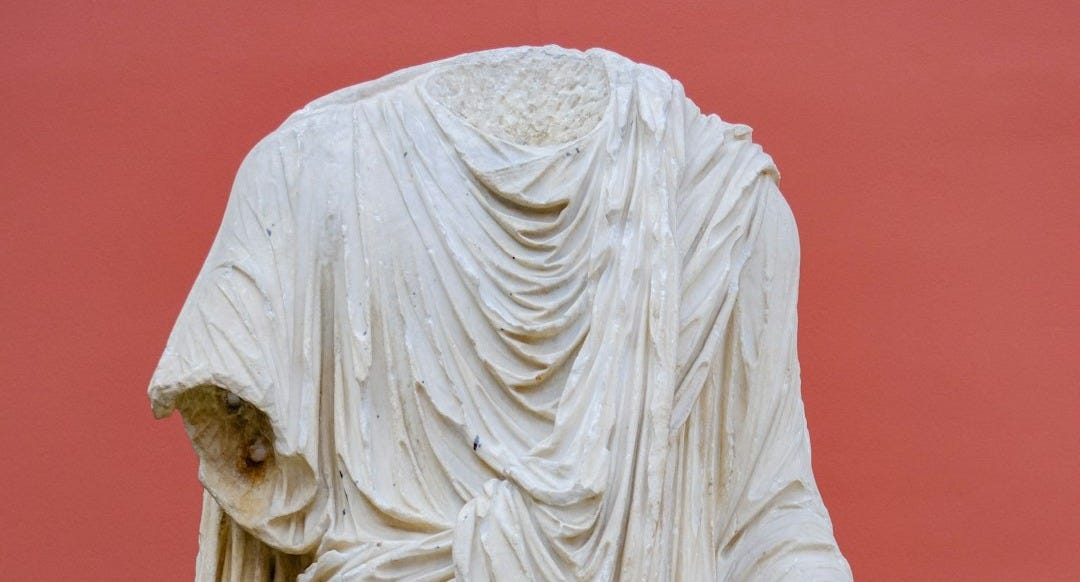
a statue of a woman with a veil on her head
Photo by Sarah Sheedy on Unsplash

Scroll through any social media platform these days and you will eventually encounter the bearded visage of Marcus Aurelius. He is usually rendered in high-contrast black and white, perhaps superimposed with a quote about enduring pain or ignoring the opinions of sheep. The Roman Emperor has become the unlikely patron saint of a very specific digital subculture, but the ‘philosophy’ being peddled under his name bears only a ghostly resemblance to the complex ethics of the Stoa—it has essentially been strip-mined as a mental gym membership for the aspiring alpha. We are living in the age of ‘Broicism’, a hollowed-out version of Stoic philosophy that serves as the theological backbone for performative masculinity and right-leaning individualism (with a good dash of the hustle culture of Silicon Valley).

Share

To understand how a school of Hellenistic philosophy centred on virtue and cosmopolitanism became the operating system for the manosphere, one must look to what has been discarded. The original Stoics, from Zeno to Epictetus, were deeply concerned with physics and logic, viewing the world as a coherent, divinely ordered web of cause and effect. Their ethics were inextricably bound to a sense of civic duty. To be a Stoic was to recognise one’s role in the cosmopolis, the universal city of gods and men. It was a philosophy of radical interdependence. The modern iteration strips away the physics and the civic obligation, leaving behind only the psychological mechanism of emotional suppression. In this reduced form, Stoicism becomes a toolkit for resilience in the service of capitalism, asking ‘how can I ignore the critics while I build my empire?’ rather than ‘how can I live virtuously among my neighbours?’

This utility makes it uniquely attractive to the tech elite and the self-optimisation crowd. If you view your brain as software, Stoicism is represented as a firewall, a philosophy that, if followed, promises an impermeable emotional fortress. But this focus on individual endurance aligns neatly with a particular strain of right-wing political thought. If the locus of control is entirely internal—if, as the distorted maxim goes, you cannot control the world, only your reaction to it—then structural critique becomes obsolete. Inequality and systemic injustice are rebranded as external circumstances to be endured with stiff-lipped dignity, and the onus for change shifts from the state to the individual’s mindset.

It is here that the philosophy merges with the aesthetics of the modern far-right and the ‘trad’ masculine revival. Online communities fixated on returning to a mythical past of patriarchal order have adopted the marble statues of antiquity as their avatars. They see in Stoicism a validation of emotional repression, mistaking the Stoic ideal of apatheia (freedom from disturbing passions) for the modern toxicity of simply not feeling anything. This reading validates a hard-edged, dominance-based masculinity. The ‘Stoic’ man of the Instagram reel is solitary, uncomplaining, and fiercely competitive, conquering his emotions so he can conquer his environment.

Nowhere is this distortion more acute than in the treatment of Marcus Aurelius himself. To the modern acolyte of Broicism, the Emperor is cast as the ultimate patriarch, a conquering general who ruled the world with an iron fist and a frozen heart. His Meditations are read as a tactical manual for alpha dominance, a sort of Art of War for the soul. But this caricature, for anyone who actually engages with the text, is a fantasy. The Meditations were never intended for publication. They were private notes, originally titled To Himself, written by an exhausted man trying to talk himself down from the ledge of despair. When the ‘stoic’ influencers quote him, they often select lines that sound like aggressive affirmations. They often seize upon the famous maxim: ‘The impediment to action advances action. What stands in the way becomes the way.’ In the hands of the tech-bro, this becomes a slogan for aggressive disruption, a command to smash through obstacles in pursuit of a Series B funding round or a personal best deadlift.

But Aurelius was not suggesting that one should bulldoze reality to satisfy personal ambition—he was arguing for a radical acceptance of defeat. The ‘way’ he speaks of is not the path to external success, but the path of virtue. If you are blocked from doing your job, you exercise patience; if you are sick, you exercise endurance. The obstacle does not help you get what you want, the obstacle replaces what you want with a new opportunity to be good. It is a philosophy of resignation, not conquest.

The contemporary fetishisation of Aurelius ignores his palpable hatred of the violence he was forced to oversee. He spent much of his reign on the Danube frontier, fighting the Marcomanni, but his journals are filled with reminders of the transience of military glory. He compared the procession of armies to ‘puppy dogs snapping at each other’. While the YouTube montages set his statues against backdrops of Spartans and Navy SEALs, the man himself was writing about the pointlessness of posthumous fame and the tedious monotony of war.

Perhaps the most damaging misinterpretation concerns his emotional life. The contemporary revival sells a Marcus Aurelius who is unfeeling, but the text itself reveals a man deeply sensitive to pain and grief, constantly struggling to regain his composure. He writes repeatedly about how difficult it is to get out of bed, how annoying he finds the people at court, and how terrified he is of losing his children. He does not suppress these feelings, but examines them and attempts to reintegrate them into a cosmic perspective. By erasing his struggle, the modern movement erases his humanity. They replace a complex, suffering philosopher with a two-dimensional action figure. This fictional Aurelius validates a rigid, impermeable masculinity that the real man spent a lifetime trying to dismantle within himself.

The political utility of this distortion is significant. By convincing a generation of young men that their unhappiness is a result of a weak mindset rather than a fractured society, this brand of Stoicism atomises political grievances. If you are struggling to pay rent or find community, the Broic answer is not to organise or demand policy change, but to retreat into the ‘inner citadel’ and harden your mind. It transforms citizens into islands, heavily fortified and utterly alone—it’s a to hell with everyone else but me and my own mantra.

But real Stoicism is hard. It requires a constant interrogation of one’s own impressions and a commitment to the common good that borders on the saintly. What is being sold today by the Broics—the fantasy that if you just ignore the needs of wider society while also repressing your own anxieties, you too can be an emperor—is much easier to get on board with.

  • Google AI Overview

Broicism is a modern, often critical term used to describe a “watered-down” or distorted version of Stoic philosophy that has gained popularity in the “manosphere,” “hustle culture,” and Silicon Valley. 

Coined by philosopher Massimo Pigliucci in 2019, it characterizes an interpretation of Stoicism that strips away its ethical and community-focused foundations in favor of personal gain and emotional suppression. 

Key Characteristics of Broicism

  • Emotional Suppression: Unlike traditional Stoicism, which teaches the management of emotions through reason, Broicism often advocates for “bottling up” feelings to appear “tough” or “unaffected”.
  • Focus on Material Success: It frequently reframes Stoic principles as “life hacks” or “productivity systems” to achieve external wealth, status, or romantic conquest.
  • Hyper-Masculinity: It is often associated with “alpha male” or “sigma” mindsets, emphasizing individual dominance and physical strength while ignoring the original Stoic belief in the equality of all rational beings.

Contrast with Traditional Stoicism

Feature Traditional StoicismBroicism
Primary GoalDeveloping virtue (wisdom, justice, courage, temperance)Achieving wealth, status, or “toughness”
View on EmotionsUnderstanding and transforming emotions through reasonSuppressing emotions to avoid looking weak
Social FocusService to the common good and human familySelf-centered success and personal dominance
Material WealthA “preferred indifferent”—nice to have but irrelevant to virtueA primary metric of success and a goal of the philosophy

AI can make mistakes, so double-check responses

Translation Saturday Meeting January 24

January 24:  11:00 AM – 12:00 PM PST

Mike Zonta, H.W., M.

In a crisis — any crisis — The Prosperos offers Translation.  Translation Saturday Meetings is a weekly series of Translation presentations by veteran Translators, live and up to date on the issues of the day.

It is not a Translation workshop,  It is not a Translation class.  It is not a group Translation, though group participation is encouraged.

It is, however, restricted to those who have taken Translation class. So if you have never taken Translation class, check the calendar tab on The Prosperos website (TheProsperos.org) or get in touch with us and we will schedule a class.

Last week our sense testimony was: Anxiety can cause disease of the gut. Out conclusion: Gut is the expression of Truth, the synchronous opportunity for ease of Consciousness.

– – – – – – – – – -Expose Yourself fo Translation!!!- – – – – – – – – –

Here’s the link:  https://us02web.zoom.us/j/81749347119

For more info and link to join please Email Mike Zonta at:

zonta1111@aol.com

Weekly Invitational Translation: Worry [about whether I will be coughing during my eye surgery] is causing me a sore throat.

Translation is a 5-step process of “straight thinking in the abstract” comparing and contrasting what seems to be truth with what you can syllogistically, axiomatically and mathematically (using word equations) prove is the truth. It is not an effort to change, alter or heal anything other than our consciousness.

The claims in a Translation should be outrageous and mind-blowing, but they are always (or should always be) based on self-evident syllogistic reasoning. Here is one Translation from this week. 

[This was a “back of the envelope” Translation I wrote out in the VA waiting room prior to cataract removal surgery on January 21. –m.z.]

1)    Truth is that which is so.  That which is not truth is not so.  Therefore Truth is all there is.  I think therefore I am. Since I am and since Truth is all that is, therefore I, being, am Truth.  And since it is consciousness which tells me that I’m being, therefore Truth Consciousness.

2)    Worry [about whether I will be coughing during my eye surgery] is causing me a sore throat.

Word-tracking:
worry:  state of conflict, etymology or worry is “seized by the throat”
conflict:  troubled, turgid, opaque
throat:  throttle, control

3)    Truth being all and Truth being Mind, therefore Mind is all-knowing.  Mind being all-knowing, there is nothing opaque in Mind.  Therefore Mind is transparent.  Mind being all that is, there is nothing other than Mind, therefore there is no conflict.  Therefore Mind is atonement.  Power (control) being the ability to be and Truth being all that is, therefore Truth is the only power OR Truth is the only control.

4)    Mind is transparent. 
       Mind is atonement.
       Truth is the only control/power

5)    Transparent atonement is in control.

Weekly Invitational Translation Group invites your participation.  If you would like to submit a Translation on any subject, feel free to send your weekly Translation to  zonta1111@aol.com and we will anonymously post it on the Bathtub Bulletin on Friday.

For information about Translation or other Prosperos classes go to: https://www.theprosperos.org/teaching.

Why Buddhist monks (and one very good rescue dog) are walking 2,300 miles across America for peace

Their dog Aloka, once a stray rescued by a monk, has become a symbol of resilience and light.

kat hong

01.23.26 (Upworthy.com)

dog, walk, peace, Budhhist, monks

Credit: Palm Beach Post

Aloka accompanying the monks on their Walk for Peace.

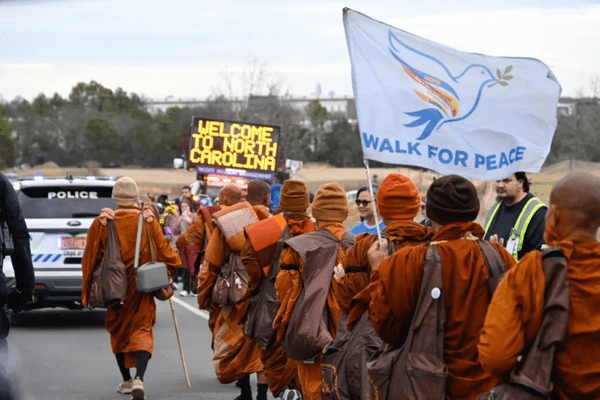
It was a normal winter’s day in Charlotte, North Carolina, when the Buddhist monks came to town. Soft gray clouds blanketed the city without a trace of wind in sight. A few people complained about the 96% humidity, while others put their heads down and went on with their damp day.

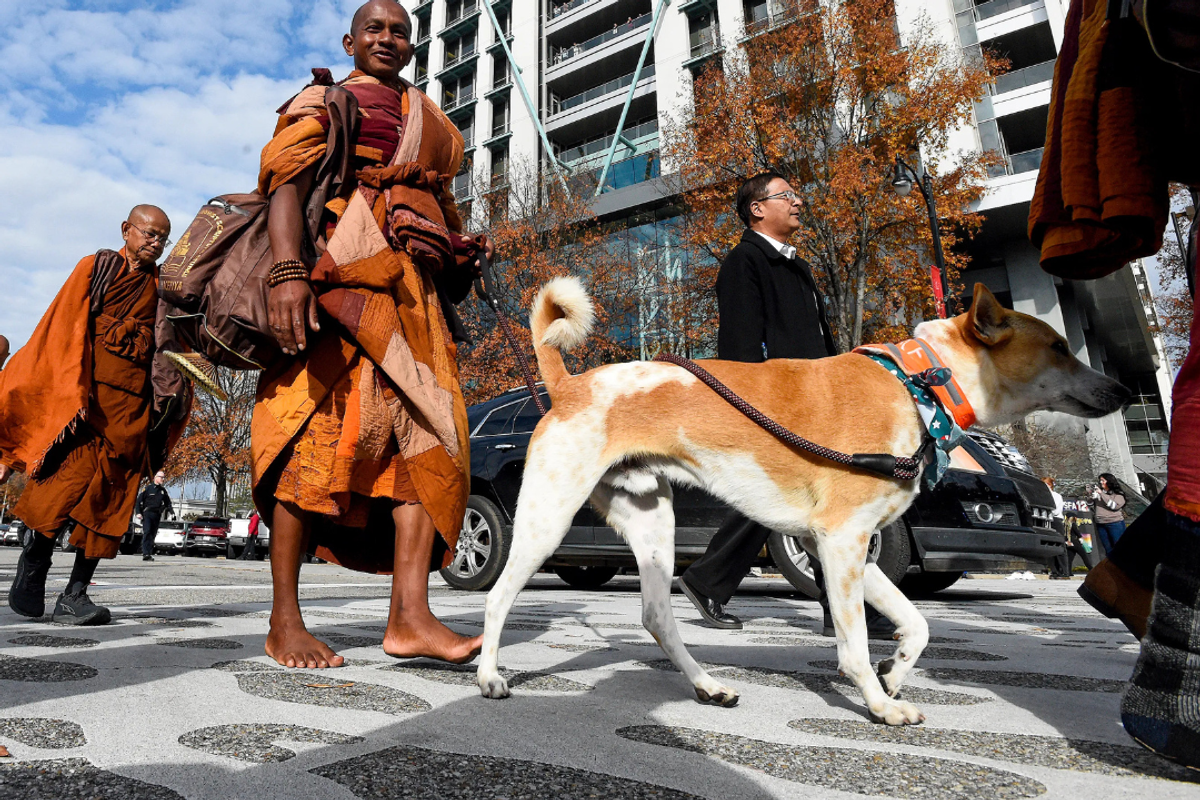
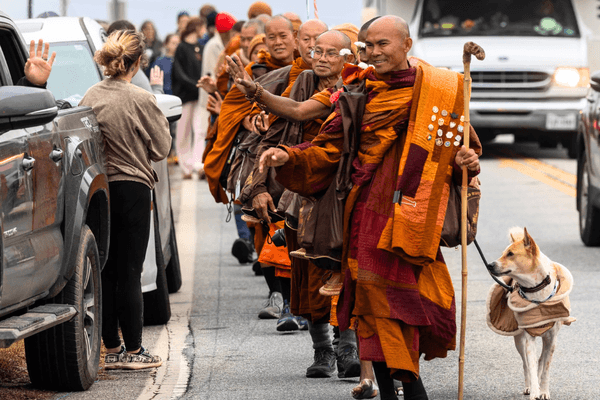
Then, like a scene from a movie, there they were: a single-file line of men, each wearing flowing saffron and ochre-colored robes, steadily marching along the shoulder of the highway. Some wore sandals while others cheerfully went ahead barefoot. Trotting alongside them—and at times, leading them—was a scruffy, tousle-haired rescue dog eagerly wagging his tail—Aloka, whose name translates to “Divine Light” in Sanskrit.

https://www.tiktok.com/embed/v2/7595172743402753311?lang=en-US&referrer=https%3A%2F%2Fwww.upworthy.com%2Fbuddhist-monks-walk-for-peace

–TokTok video

In October 2025, approximately two dozen Buddhist monks hailing from various Theravada Buddhist monasteries across the globe, along with Aloka, embarked from Fort Worth, Texas, on a 2,300-mile pilgrimage to Washington, D.C. This “Walk of Peace,” and the participating 18 monks, stand on the shoulders of giants: the countless of those who came before them in this time-old tradition of spiritual activism through walking meditation, from the Buddha himself to Gandhi’s groundbreaking 240-mile “Salt March” in 1930, to Dr. Martin Luther King’s immortalized March on Washington in 1963 and the marches from Selma to Montgomery in 1965.

The journey, expected to conclude in mid-February 2026, has attracted millions of social media followers and drawn thousands of participants to major stopping points, transcending the religious and political divide during a period defined by deep division.

A pilgrimage of resilience

The journey began in Fort Worth, Texas, on October 26, 2025, at Huong Dao Vipassana Bhavana Center, the Vietnamese Buddhist temple that organized the Walk for Peace. It’s also the Venerable Bhikkhu Pannakara’s home temple, who serves as the group’s spiritual leader and primary spokesperson.

While this is Pannakara’s first pilgrimage in the States, the Vietnamese Theravada Buddhist monk has reportedly walked across several South Asian countries, including a 112-day walk across India in 2022, where he met Aloka, the stray dog that’s become somewhat of a mascot for the walk. Aloka has been with Pannakara ever since.

Monks, walk, peace, Buddhism, Buddhists

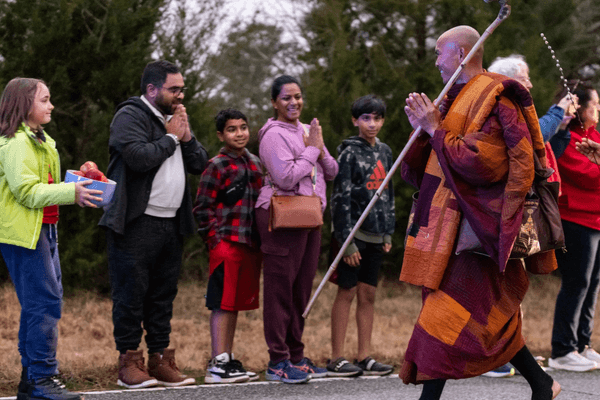
Monks offer blessings to people lined up to see them.Credit: Des Moines Register

In a written statement to USA Today, Pannakara encourages others to reframe the purpose of their mission. “We walk not to protest, but to awaken the peace that already lives within each of us,” he writes.

He continues: “The Walk for Peace is a simple, yet meaningful reminder that unity and kindness begin within each of us and can radiate outward to families, communities, and society as a whole.”

He means it. For Pannakara, this walk represents a national act of healing rather than a political statement. At every stop, he offers lessons about mindfulness, peace as an inner quality, forgiveness, healing, unity, and the importance of meeting people where they are.

2,300 miles is no walk in the park

The journey hasn’t been easy—though that was never the point for this group. As if walking 2,300 miles across ten states wasn’t difficult enough, Pannakara and the other Theravada Buddhist monks live in accordance with the earliest teachings of the Buddha and dedicated themselves to extreme monastic living and to following strict Buddhist codes of living.

https://www.tiktok.com/embed/v2/7591337796162440479?lang=en-US&referrer=https%3A%2F%2Fwww.upworthy.com%2Fbuddhist-monks-walk-for-peace

–TikTok video

As a result, the monks sleep in tents and rely on the kindness of strangers for shelter or sustenance. They’ve faced the physical reality of walking on asphalt for months. Then, in November, tragedy struck near Dayton, Texas. An escort vehicle was hit, resulting in an accident where one monk was severely injured and lost a leg.

Yet, the group continued.

At their stop Thursday in Saluda, South Carolina, Audrie Pearce—who had driven four hours from her village of Little River to see them—teared up as Pannakara handed her a flower.

https://www.tiktok.com/embed/v2/7595172743402753311?lang=en-US&referrer=https%3A%2F%2Fwww.upworthy.com%2Fbuddhist-monks-walk-for-peace

–TikTok video

“There’s something traumatic and heart-wrenching happening every day in our country,” Pearce told Newsday. She describes herself as spiritual, but not religious. “I looked into their eyes, and I saw peace. They’re putting their bodies through such physical torture, and yet they radiate peace.”

Aloka, the four-legged peacekeeper

While the monks inspire reverence, the true celebrity of the group might just be their canine companion.

Aloka is an Indian Pariah dog, a breed known for its intelligence and loyalty. His story with Bhikkhu Pannakara began thousands of miles away in India during a previous peace walk. When Aloka fell critically ill as a puppy, Pannakara carried him and nursed him back to health.

monks, Buddhist, walk, peace, Buddhism

Thevada Buddhist monks greeting fans on their Walk for Peace.Credit: Des Moines Register

Now, the roles have reversed. Aloka is the one keeping spirits high. He happily trots alongside the monks, offering a furry reminder of loyalty and joy. When the group reached North Carolina, locals didn’t just bring water for the monks; they brought dog treats for Aloka.

Strangers becoming neighbors

Perhaps the most beautiful part of this journey is how it has brought people together. As the monks traverse states like Mississippi, Alabama, and the Carolinas, they have been met not with suspicion but with overwhelming hospitality.

The Herald shared stories from people in the crowd as the monks traveled through Rock Hill and Fort Mill on their way to Charlotte.

“I like the idea of peace, and I’m concerned about the state our country is in,” said Penny Sheppard of Rock Hill, as she waited for the monks to walk by. “The peace walk exemplifies where we could be…. I just want to support them… They just impress the heck out of me.”

monks, Buddhism, Buddhist, walk, peace

The monks as they enter North Carolina.Credit: 7News

Stevie Goudui of Fort Mill echoed this sentiment. “We could definitely use a little more peace in the United States right now,” he said.

Then, from Rock Hill resident Carolyn Hall: “No matter your religion, it makes sense that the purpose of the walk was for peace,” Hall said.

“Women, children, people getting killed. It’s a sad day in America right now,” she added. “I think it’s great what (the monks) are doing. I love it, and I just want to be a part of it.”

Streets lined with onlookers on a cold, wet Wednesday made for an emotional morning. “That really touched my heart,” said the Venerable Bhikkhu Pannakara. “These days, you all make me cry so much. A lot. But happy tears. Joy.”

A quiet request for a national holiday

While the spiritual goal is paramount, the monks do have a tangible objective for their arrival in the nation’s capital. Upon reaching Washington, D.C. in mid-February, they plan to ask Congress to recognize Vesak—the day celebrating Buddha’s birth and enlightenment—as a federal holiday.

The hope is that recognizing Vesak will officially acknowledge a day dedicated to reflection, compassion, and unity for all people, regardless of their faith.

https://www.tiktok.com/embed/v2/7597838554135285022?lang=en-US&referrer=https%3A%2F%2Fwww.upworthy.com%2Fbuddhist-monks-walk-for-peace

–TikTok video

Judging by the overwhelming response to the Walk of Peace, the monks will always have the public’s support, regardless of the outcome in Congress.

The viral trek gained more than one million followers on both Facebook and TikTok since the monks started walking in October. Even Aloka the dog has enjoyed Internet stardom, gaining 752,000 followers on Facebook.

“Together, we are proving that peace is not just a dream—it is alive, it is real, and it is growing stronger every single day,” Walk for Peace organizers posted to Facebook.

Finding your own “peaceful day”

You don’t have to walk 2,300 miles to feel the impact of this journey. The monks’ message is that peace is accessible to everyone, right where they are.

Becki Gable, a woman grieving the loss of her daughters and parents, drove nearly 400 miles to meet the monks in Saluda, South Carolina.

“I just felt in my heart that this would help me have peace,” she told a local news station. “Maybe I could move a little bit forward in my life.”

She spoke about how the encounter helped her move forward, adopting a simple practice suggested by Bhikkhu Pannakara. Every morning, she writes down five words: “Today is my peaceful day.”

You can follow the monks on their journey to Washington, D.C. through their live tracker here.

From Your Site Articles

2000 Meters to Andriivka | FRONTLINE

FRONTLINE PBS | Official Premiered Nov 25, 2025A stunning and immersive portrayal of the men fighting on the front lines of the war in Ukraine, from the Oscar®-winning team behind “20 Days in Mariupol.” This journalism is made possible by viewers like you. Support your local PBS station here: https://www.pbs.org/donate​. “2000 Meters to Andriivka” documents the toll of the Russia-Ukraine war from a personal and devastating vantage point. Following his historic account of the civilian toll in Mariupol, Ukrainian filmmaker and Associated Press journalist Mstyslav Chernov turns his lens towards Ukrainian soldiers — who they are, where they came from, and the impossible decisions they face in the trenches as they fight for every inch of their land. The documentary follows a Ukrainian brigade battling through approximately one mile of a heavily fortified forest on their mission to liberate the Russian-occupied village of Andriivka amid a failing counteroffensive in 2023. Weaving together original footage, intensive Ukrainian Army bodycam video and powerful moments of reflection with haunting intimacy, the documentary reveals how the farther the soldiers advance through their destroyed homeland, the more they realize that, for them, this war may never end. “2000 Meters to Andriivka” is written, filmed and directed by filmmaker and Associated Press journalist Mstyslav Chernov. It is produced by Chernov, FRONTLINE’s senior documentary editor and producer Michelle Mizner and FRONTLINE’s editor-in-chief and executive producer Raney Aronson-Rath. It is edited by Michelle Mizner. The film is co-produced and includes additional cinematography by AP journalist Alex Babenko, and is composed by two-time Grammy Award®-winning composer and music-producer Sam Slater. Distributed domestically by PBS Distribution and internationally by Dogwoof, “2000 Meters to Andriivka” is a FRONTLINE FEATURES and The Associated Press production. 00:00 – Film Open 00:13 – In the Trenches With the Men Fighting the War in Ukraine 10:21 – Ukraine Launches a Counteroffensive Against Russia in 2023 23:53 – Ukrainian Soldiers Battle Through a Fortified Forest to the Village of Andriivka 49:41 – Ukrainian Officers at Headquarters Guide Soldiers Through the Battlefield 01:02:34 – A Ukrainian Soldier Reflects On His Hopes & Worries 01:14:44 – Surveying the Death & Destruction of the Russia-Ukraine War 01:21:29 – The Liberation of Andriivka 01:45:28 – Credits

Prosperos Sunday Meeting January 25


SUNDAY MEETING — JANUARY 25

with Mara Pennell, H.W., m.


The Truth Behind Appearances
How is Truth connected to those often confusing appearances? Discover ways to approach this conundrum at our upcoming Sunday Meeting!

Mara Pennell, H.W.,m. first encountered The Prosperos as a young teenager; she returned to the school as an adult and received her High Watch degree in 2020. She currently serves on several committees and as High Watch President, in addition to being an interning Mentor.

For more information, click here:
https://www.theprosperos.org/prosperos-events/sunday-talk-tba-wemx4-l66wa-jhcxl

SUNDAY MEETING January 25, 2026
11:00 am Pacific / Noon Mountain /
1:00 pm Central / 2:00 pm Eastern


NEW LINK…PLEASE USE THE JOIN BUTTON BELOW FOR MEETING

Join Sunday Meeting

By contribution.  Please click here to contribute:

Contribute!

Call In Information:One tap mobile 
+16699006833,,81707590593# US (San Jose) 
+16694449171,,81707590593# US 
— 

Meeting ID: 858 8286 3391

Find your local number: https://us02web.zoom.us/u/kdTAYZq0XQ 
Copyright © 2026 The Prosperos, All rights reserved.