What don’t we know, and why don’t we know it? What keeps ignorance alive, or allows it to be used as a political instrument? Agnotology―the study of ignorance―provides a new theoretical perspective to broaden traditional questions about “how we know” to Why don’t we know what we don’t know? The essays assembled in Agnotology show that ignorance is often more than just an absence of knowledge; it can also be the outcome of cultural and political struggles. Ignorance has a history and a political geography, but there are also things people don’t want you to know (“Doubt is our product” is the tobacco industry slogan). Individual chapters treat examples from the realms of global climate change, military secrecy, female orgasm, environmental denialism, Native American paleontology, theoretical archaeology, racial ignorance, and more. The goal of this volume is to better understand how and why various forms of knowing do not come to be, or have disappeared, or have become invisible.
American historian of science and Professor of the History of Science at Stanford University. While a professor of the history of science at the University of Pennsylvania in 1999, he became the first historian to testify against the tobacco industry.
“If I can’t make it through one door, I’ll go through another door- or I’ll make a door. Something terrific will come no matter how dark the present.”
~ Tagore
Rabindranath Thakur FRAS, also known by his pseudonym Bhanusimha (May 7, 1861 – August 7, 1941) was a Bengali polymath of the Bengal Renaissance period. In 1913, Tagore became the fourth non-European to win a Nobel Prize in any category, and also the first lyricist and non-European to win the Nobel Prize in Literature. Wikipedia
Creative writing used to be a human prerogative: do it well, do it badly, but either way endorse the consensus that to write about human experience was worth the candle and the coffee. Here was an essential human act, so much so that poetry formed a critical part of the computer pioneer Alan Turing’s original test: to determine whether an unseen respondent to a series of questions was human or a mechanical imposter. The Turing Test is often simplified to denote a single crossing point between two territories, human and machine. Pass the test, and artificial intelligence can stroll on over to our side of the line. Take a look around. Decide what to do with us. But, first, it has to pass.
In the paper ‘Computing Machinery and Intelligence’ (1950), published in the journal Mind, Turing set out his objective: ‘to consider the question, “Can machines think?”’ In true human fashion, he immediately re-phrases the question, at some length, and eventually arrives at the ‘imitation game’, modelled on a drawing-room entertainment from before the internet, before television. The original game he has in mind involves a guesser in the hotseat who poses questions to a man (X) and a woman (Y), who are out of sight and hearing in a separate room. The guesser has to determine from their written answers which is the man and which the woman. X tries to mislead, and wins if the guesser is wrong; Y wins if the guesser is right. Try it, it’s fun.
In this context, the first question posed in Turing’s proposed test is less surprising than at first it seems: ‘Will X please tell me the length of his or her hair?’ Next, Turing asks, equally politely: ‘Please write me a sonnet on the subject of the Forth Bridge.’ Two questions in, and the contested boundary between human and machine thinking is already looking for answers in literature, in art. Turing’s 1950s version of X – the participant aiming to mislead – replies: ‘Count me out on this one. I never could write poetry.’ To imagine this answer, in the second phase of his game, Turing’s complicated brain is playing the role of a machine playing X, hidden from sight and typing its answers, pretending to be a man (who previously played the game pretending to be a woman). I know, but if the test were easy an air-fryer could pass it.
Turing isn’t suggesting that a machine can’t write poetry. In the convoluted logic of the imitation game, X calculates that in 1950 ordinary people didn’t write poetry, a commonsense assumption that every computer masquerading as human should know. Among other prejudices from the mid-20th century, Turing’s paper makes incautious references to race, religion and the Constitution of the United States. He likens the inability to see computers as sentient as equivalent to the ‘Moslem view that women have no souls’. Turing wades in: he doesn’t compute as we would now.
And neither do the future computers of 2026 that he was trying to envisage. Any of today’s large language models (LLMs), like ChatGPT or Claude, can write an instant sonnet on the subject of the Forth Bridge. I typed in Turing’s test question, and Claude 4 threw up 14 lines of poetry including the abbreviated word ‘mathemat’cal’, for the scansion. The poem made sense, and was formally a sonnet, and appeared in seconds.
Whether or not this counts as thinking, Turing intuits that the frontier he’s marking out will be picketed by the arts. In his paper, he picks a fight with an eminent neuroscientist of the time, Sir Geoffrey Jefferson of the Royal Society, who believed that ‘Not until a machine can write a sonnet or compose a concerto because of thoughts and emotions felt, and not by the chance fall of symbols, could we agree that machine equals brain – that is, not only write it but know that it had written it.’ For Jefferson, addressing the Royal College of Surgeons in his 1949 Lister Oration, mechanising the efforts of the infinite monkeys on typewriters didn’t really count.
These days, in the arts, it’s harder to share Jefferson’s confidence. The advances made by AI prick at artistic vanity – the work of a human artist can’t be all that special if a machine can replicate the results almost instantly. That hurts. A great human artist, we’d like to believe, amplifies and defends the exceptionalist spirit of our species but, in an echo of the anxieties that haunted early photography, a demonised version of AI threatens to steal away our souls. Encroaching on the best of what we can do and make and be, machine art intrudes onto sacred territory. Creative artists are supposed to be special, inimitable.
Turing’s Imitation Game paper was published 14 years after the first Writers’ Workshop convened at the University of Iowa, in 1936. Turing may not have known, with his grounding in maths at King’s College Cambridge, that elements of machine learning had already evolved across the Atlantic in the apparently unrelated field of creative writing. Before Iowa, the Muse; after Iowa, a method for assembling literary content not dissimilar to the functioning of today’s LLMs.
First, work out what effective writing looks like. Then, develop a process that walks aspiring writers towards an imitation of the desired output. The premise extensively tested by Iowa – and every creative writing MFA since – is that a suite of learnable rules can generate text that, as a bare minimum, resembles passable literary product. Rare is the promising screenwriter unfamiliar with Syd Field’s Three-Act Structure or Christopher Vogler’s Hero’s Journey: cheat codes that promise the optimal sequence for acts, scenes, drama and dialogue. In the same way that an LLM is designed to ‘think’, these templates are a form of reverse engineering: first study how the mechanics of Jaws or Witness made those movies sing, then identify transferable components for reassembly to achieve similar artistic success further down the line.
To a computer-programmer, reverse engineering as a machine-learning mechanism is known as back-propagation. In A Brief History of Intelligence (2023), Max S Bennett shows how this methodology has already helped in the development of image recognition, natural language processing, speech recognition, and self-driving cars. Supervising coders work to isolate the required answer in advance, then go back to nudge input responses until the artificial neural network arrives at the pre-set solution.
The mysterious magic ingredient has been debated in English on the printed page since at least 1580
If only writing were so simple. According to figures from Data USA, up to 4,000 students graduate each year with creative writing MFAs in the US. No one expects that number of Great American Novels to show for so much studying, despite the fact that many hopeful writing careers start with the prompt mentality invited by Chat GPT: I want to write a bestseller like the one that blew me away last summer. Or, for the more adventurous: something new but relatable, a novel/memoir hybrid with literary credibility and strong narrative momentum, like a cross between Lee Child and Annie Ernaux. Thank you. I’ll wait. But not very patiently.
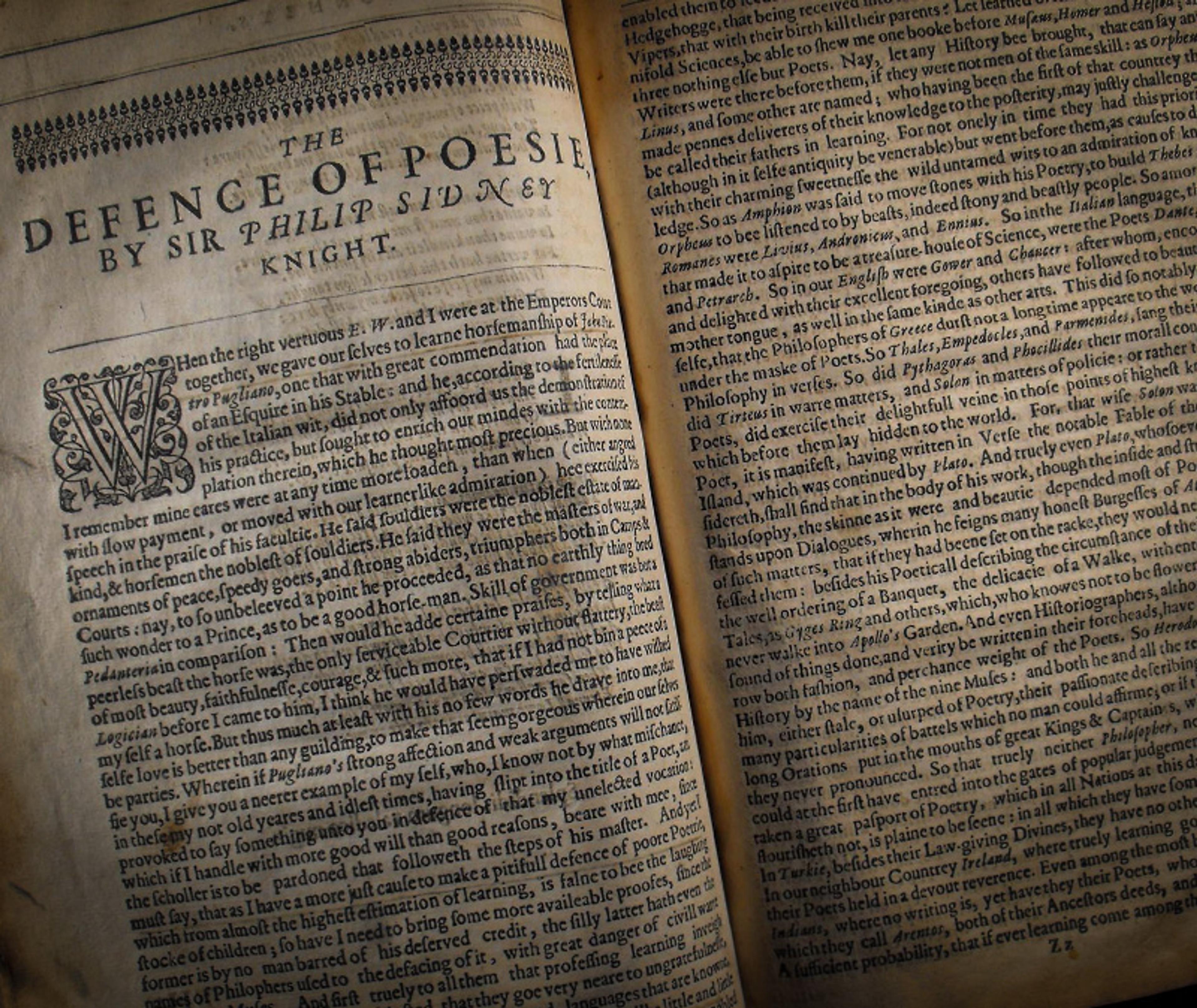
Clearly, when the end result is compared with the original intention, the back-propagation method is fallible for creative writing courses and LLMs alike. To revisit Jefferson, as quoted by Turing, the finished work is undermined when inspired by the wrong ‘thoughts and emotions’, whether blind ambition in student writers or blind obedience in computers. Something more is required, and the mysterious magic ingredient has been debated in English on the printed page since at least 1580, when Sir Philip Sidney reached for the essence of exemplary creative writing in An Apology for Poetry. When it worked, he concluded, good writing could both teach and delight. It provided a guide to living well in a more accessible form than theology or history or philosophy. Creative writing was special.
So special, in fact, that no one has yet been able to break down the findings of English literature departments – what makes literature work – into sufficient granular detail to reformulate as instructions actionable by an LLM. Or by a creative writing student. Nor are the efforts being made in this area by other art-forms particularly encouraging. ArtEmis is a large-scale dataset designed to record and subsequently predict emotional responses to works of visual art. The scheme matches emotional annotations from more than 6,500 participants to textual explanations of what they’re seeing, and from this data ArtEmis hopes to enable the back-propagated creation of artworks that provoke equivalent emotional responses.
The understanding seems to be that if a machine can create a visual image that generates a controlled set of feels, then art will have been successfully created. Which sounds plausible, except human emotional responses are notoriously capricious. The ArtEmis procedure already has an analogue precedent in Hollywood, but if focus groups worked reliably for the arts, then cinemas would be full of bangers. It’s worth remembering that the 2023 strike action by the Writers Guild of America won significant protections against the use of generative AI in screenwriting, specifically disallowing the replacement of human writers by AI. This hasn’t noticeably boosted the production of great art movies. Human writers still make so-so films. Without any intervention from AI, we continue to paint indifferent canvasses and write forgettable novels.
Bad art is something human beings love to do, in vast numbers. It’s part of who we are, and when abandoned by inspiration we trust in the same methods we’ve programmed into LLMs. As predicted by Turing, ‘digital computers … can in fact mimic the actions of a human computer very closely’, and for the creation of failed artistic product we’ve taught artificial intelligence all our dodges. Creative writing that falls short, whether originating in a garret or in an Nvidia chip, ‘writes’ by selecting language units that commonly fit together, as recognised from published material available in the public domain. Familiar word combinations are assembled into almost convincing sentences, a tired use of language formerly called out as cliché. LLMs are cliché machines, trained on a resilient human weakness for generating maximum content with minimum effort.
This explains the headline in June 2025 in the British publishing industry’s leading trade magazine The Bookseller: ‘AI “Likely” to Produce Bestseller by 2030’. The headline referenced a conference speech by Philip Stone of Nielsen, a company that compiles UK book-sales data. I expect he’s right about that bestseller, because LLMs will come for genre writing first – police procedurals, spy thrillers, romances – re-treading identifiable formulas with proven popular appeal. Eager to please (‘Hi Rich, how are you today?’), AI also has the advantage, shared by surprisingly few human writers, of being able to churn out derivative product without embarrassment.
Fortunately for everybody else, the endless capacity of an AI to deliver rule-bound and resolution-directed narrative has an unexpected benefit: AI is the tool that will prove not all writing has the same value.
Writing has been reluctant to imagine new ways of reading, despite the vistas opened up by new technologies
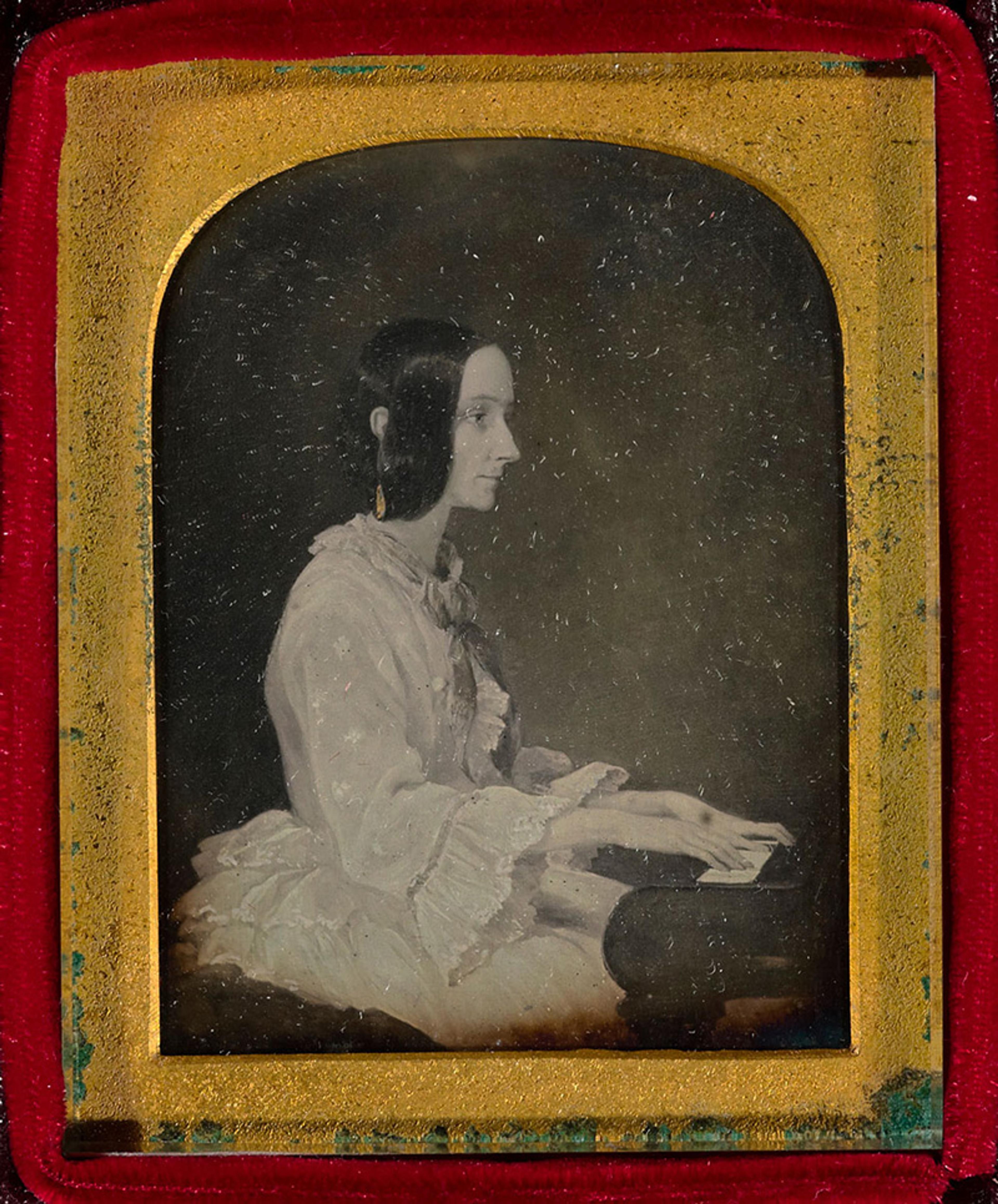
To escape the dead man’s handle of cliché, readers live in hope for organic associations, speculative leaps and surprise inferences. Whereas, to an AI, which is fed the answer before the question, ‘surprise’ remains an elusive concept. This objection to machine thinking was raised as long ago as 1842 by Ada Lovelace about one of the earliest computers, Charles Babbage’s Analytical Engine (for historical context, Iowa’s first creative writing get-together, though informal, took place in 1897). ‘The Analytical Engine has no pretensions whatever to originate anything,’ Lovelace observed. ‘It can do whatever we know how to order it to perform.’ Her italics emphasise the contrast with human thinking where originality, among artists at least, is a cherished value.
The visual arts, more than literature, have kept alive the modernist imperative to ‘make it new’. The Turner Prize, for example, awarded to the strongest UK contemporary art exhibition in any given year, is permeated by a sense that if it’s not new it’s not art. For visual artists, formal curiosity comes with the job, exploring new ways of making to invite new ways of seeing. Writing, on the other hand, happily rewards the comfort of familiar forms, which justifies, in the UK, the existence of a separate Goldsmiths Prize for fiction that ‘extends the possibilities of the novel form’. Because most other prize-winning novels aren’t doing that.
Writing has been reluctant to imagine new ways of reading, despite the vistas opened up by new technologies. Transferring books wholesale to Kindle and Audible is little more than digital haulage, and makes literature, in its complacency, vulnerable to proficient AI re-runs of familiar material, lowering the odds on that imminent AI-generated bestseller. Writers, or more accurately their publishers, seem to have mislaid any sense of urgency around the importance of difficulty, or curiosity about the astonishing returns that formally daring work can provide. It’s a rare book proposal submitted to a mainstream publisher that dares promise a book that’s not like all the other books.
Lovelace, thinking about how machines think, instantly identified the importance of originality. Or as a Marianne Moore poem has it:
these things are important not because a high-sounding interpretation can be put upon them but because they are useful; …
Originality, in the arts as in science, enables the human project to move forward. Any discovery that is new and true extends the scope of reality. In this context, art that only pretends to be original won’t get us anywhere very interesting.
The Turing Test is basically a test of lying. Can a machine, adopting a recognisably human strategy, pretend to be something it isn’t? Passing Turing’s Test calls for an act of deception, leaving the deceived human interrogator vulnerable to primitive fears about impersonation and imposture. Art is supposed to see the truth beyond this kind of lie, and the original creations worth defending are in a category so extraordinary, because of the intensity and authenticity of Jefferson’s ‘thoughts and emotions felt’, that they exist in a permanent present tense. What Toni Morrison does is unbelievable.
Whereas what an AI does is probabilistic. An LLM’s calculation of the most likely sequence of words is the least likely way to create great writing. Anyone working at a more emotionally engaged level than statistical probability, genuinely creating new work, has a better chance of resonating with readers, however that affinity is expressed. ‘If literature is a street brawl between the courageous and the banal,’ Greg Baxter wrote in his memoir A Preparation for Death (2010), ‘I bring the toughest gang I know: the pure killers, the insane.’ Baxter’s literary gangsters do not kneel before the most likely next word. Baxter values his ‘pure killers, the insane’, while computers as envisioned by Turing receive instructions to be ‘obeyed correctly and in the right order.’
We can defy AI creep by encouraging the human ambition to make art, unassisted, whether successful or otherwise
I don’t doubt that LLMs can be asked to imitate transgression, but obeying that instruction makes them ludicrously phony and the enemies of art, even though in their advanced contemporary forms they appear better equipped to respond to Turing’s stabs at English literature. In 2026, for example, ChatGPT and Claude make short work of the Turing Test challenge of 1950 to explain Shakespeare’s creative choices in Sonnet 18. Why a ‘summer’s day’ and not a ‘spring day’? Easy (just ask them, they know the answer). LLMs now ace most of Turing’s original questions, and if they can’t write a sonnet like Shakespeare, then neither can I. That doesn’t mean I can’t think, and Turing makes the same reasonable allowance for computers. They too are allowed their limitations, and his attitude to machine intelligence follows the logic of Denis Diderot’s parrot: if the illusion of understanding is sufficiently convincing, it qualifies as understanding. The machines are faking it until they make it.
Or in Turing’s words: ‘God has given an immortal soul to every man and woman, but not to any other animal or to machines. Hence no animal or machine can think. I am unable to accept any part of this.’ Turing invokes God for the sake of the 1950s, but he rejected the idea that humankind is ‘necessarily superior’ to the rest of creation, whether man-made or otherwise. He sides with materialist philosophers like Democritus and Thomas Hobbes, seeing the mind – whatever it might be – as located entirely in the physical structure of the brain. An AI is a physical structure, leading Turing to judge that whatever an AI can’t do, it can’t do yet.
In which case, how should writers and artists react to this situation as it stands now? We can attach stickers to the dustjackets of novels saying ‘Human Written’, as recently trialled by the UK publisher Faber and Faber. Visual artists have labels that say ‘Created with Human Intelligence’ or ‘Not by AI’, and maybe hashtags can keep AI at a distance until a generational talent arrives to save human honour in a blaze of truly original style and content. Take that, AI. See how much catching up you have to do.
More proactively, in the meantime, the rest of us can defy AI creep by defending and encouraging the human ambition to make art, unassisted, whether successful or otherwise. Art is an affirmation of human existence, the transmission and reception of messages about encounter and connection. One inner life can touch another and, for best results, nurture a creative process that no LLM can imitate. Marcel Duchamp called art ‘this missing link, not the links which exist’, an insight that arrives in the 21st century as a straight refutation of the imitative LLM creative model, stuck in its feedback loops and repeating existing sequences. Not for ChatGPT the electric shorting between inner lives, which in writing is most readily accessible in memoir. What anyone remembers is theirs alone, an undigitised storehouse of authentic human experience.
When Turing was deep in thought, according to his biographer Andrew Hodges, he used to scratch his side-parted hair and make a squelching noise with his mouth. Inside his head, at around the time he devised the Turing Test, he heard sceptical voices telling him a computer would never be able to be ‘kind, resourceful, beautiful, friendly’. His future machine brains wouldn’t ‘have initiative, have a sense of humour, tell right from wrong, make mistakes, fall in love, enjoy strawberries and cream,’ and so on. Turing was making comparisons with his remembered lived experience. What AIs couldn’t do was memoir.
Taking this idea as my starting point, I recently launched the Universal Turing Machine, a human proposal for a new way of writing and reading. The Universal Turing Machine is an expandable online grid of 8 x 8 squares, like a chessboard, and writers are invited to claim a grid for themselves and fill each of the squares with 1,000 words of memory. The reader can move randomly between memories and voices, playing an equally active role in the space Duchamp identified: ‘art is the gap’. Twice a year, I plan to tile new grids to those already online, steadily increasing the size of this collective experimental memoir, amplifying the diversity of human existence and creating a subjective encyclopaedia of true-to-life experience.
The Universal Turing Machine format is designed to encourage writing as a mode of thinking, which is what the arts – seeing, listening, writing, reading – have always offered. A memory that knows it’s being remembered is up there with the hardest, cleverest kind of thinking we can do, and why, for the purposes of his test, Turing couldn’t keep his hands off literature. AIs can’t yet emulate writing as its own mode of thinking, or reading, or remembering, and it doesn’t help to learn to write by reading everything. Just as memoirs aren’t improved by total recall.
The communication between writer and reader, artist and audience, is the nearest we come to telepathy
To see the miracle of human artistic selection in action, consider the French experimental writer Georges Perec’s novel La Disparition (1969), or A Void. This is the book that contains no instances of the letter ‘e’, the kind of systematic constraint an LLM could replicate in a flash. What the computer brain can’t do is add Perec’s life experience. The letter ‘e’ in French sounds like ‘eux’, meaning ‘them’. Perec’s father died while fighting in the war. His mother was deported from Paris to Auschwitz by the Nazis. The two of them are missing from their son’s life and from his novel, which then becomes the opposite of a disappearance, drawing attention to their distorting absence in a triumphant act of artistic reclamation.
Towards the end of ‘Computing Machinery and Intelligence’, Turing unexpectedly mentions that ‘the statistical evidence, at least for telepathy, is overwhelming’, and ‘If telepathy is admitted it will be necessary to tighten our test up.’ The communication between writer and reader, artist and audience, is the nearest we come to telepathy: to transmitting and receiving information between minds. Turing recognises that his machines will struggle to match this human refinement, and although not everyone discovers telepathy through art, anyone with an individual experience of strawberries and cream can try. The effort itself is worthwhile, and encouraged by projects like mine: the Universal Turing Machine welcomes human contributors, no test required.
Or more accurately, to do the work of recomposing memory in writing – to think in this distinctly human way – is itself an act of resistance. It reframes Turing’s test in favour of the part played in his original imitation game by Y, who aims to tell the truth, and doesn’t seek to mislead. X can’t have memories on your behalf; can’t fake it, won’t make it, and a knowledge of self remains now as always an assertion of cognitive sovereignty. In writing the self, Y becomes convincingly human. Y wins. The boundary between human and machine thinking remains intact, refortified by a self that won’t and can’t be outsourced.
In the middle of a London August in 1827, a small group of mourners gathered on a hill in the fields just north of the city limits at Bunhill Fields, named for “bone hill,” longtime burial ground for the disgraceful dead. There, in what was now a dissenters’ cemetery, the English Poor Laws had ensured a pauper’s funeral for the man who had died five days earlier in his squalid home and was now being lowered into an unmarked grave. The man whose “Songs of Innocence” would light the creative spark in the young Maurice Sendak’s imagination a century-some later. The man Patti Smith would celebrate as “the loom’s loom, spinning the fiber of revelation” — a guiding sun in the human cosmos of creativity.
Those who knew William Blake (November 28, 1757–August 12, 1827) cherished his overwhelming kindness, his capacity for delight even during his frequent and fathomless depressions, his “expression of great sweetness, but bordering on weakness — except when his features are animated by expression, and then he has an air of inspiration about him.” He was remembered for the strange, koan-like things he said about Jesus (He is the only God. And so am I and so are you.), about the prosperous artists who held his poverty as proof of his failure (I possess my visions and peace. They have bartered their birthright for a mess of pottage.), about the nature of creativity (The tree which moves some to tears of joy is in the eyes of others only a green thing which stands in the way… As a man is, so he sees.)
Art from Blake’s First Book of Urizen, 1796. (Available as a print.)
Unseen by his own world, he saw deep into the worlds to come, channeling his visions through anything at hand. It was not the medium that mattered, but its pliancy as he bent it to his vision of the mystery that is itself the message — the message we call art: He was a painter, a poet, a philosopher without meaning to, an early prophet of panpsychism, a mystic who lived not to solve the mystery but to revel in it, to encode it in verses and etch it onto copper plates and stain it onto canvases and seed it into souls for centuries to come.
As an artist, he was resolutely his own standard, his own guiding sun. Like Beethoven, with whom he shared a death-year and the stubborn unwillingness to compromise on the artistic vision he experienced as life, Blake was determined to make what he wanted to make and to make it on his own terms — in a world unready for the art and unfriendly to the terms.
There is no greater act of creative courage than this.
And so, centuries before the technologies existed to enable the proof, William Blake became the first living conjecture of the 1,000 True Fans theory. He knew what we all eventually realize, if we are awake and courageous enough: that the best way — and the only effective way — to complain about the way things are is to make new and better things, untested and unexampled things, things that spring from the gravity of creative conviction and drag the status quo like a tide toward some new horizon.
Poverty is no friend to the creative spirit, nor to this artist who knew that “Man has no body distinct from his Soul for that called Body is a portion of Soul.” To feed the body, Blake worked long wearying hours as an engraver for hire, squinting at sheets of copper to scratch and cross-hatch shapes onto them in intricate patterns of dots and lines. “Engraving is Eternal work,” he sighed to a client who grumbled that a project was taking too long.
“The Child Mary Shelley (at her Mother’s Death).” Engraving from William Blake’s commission to illustrate feminism founding mother Mary Wollstonecraft’s book of moral education for children.
All the while, Blake’s mind bustled and bloomed with the transcendent chaos of his own ideas. He pressed the plates onto white paper, watching the ink held in the tiny canals of the etchings render stark yet delicate black-and-white shapes, alive with light and shadow.
It was beautiful, but it was intensely toilsome — he could barely make a living illustrating other people’s work, and it left no time for his own art. He yearned for a different technique that could achieve the same result in less time and with less toil.
No such technique existed.
So he invented it.
Rather than cut the shapes onto the plates with his sharp steel burin, he painted directly onto the copper with a quill or brush dipped in acid-resistant varnish, then bathed the plates in acid, which stripped a layer of the surface to revealed the embossed shape of what he had drawn. A complaint made in chemistry and creative restlessness.
It came to him, he said, as a message from his dead brother’s spirit.
The new technique gave Blake full creative freedom and full control of production. Suddenly, he could combine text and image on a single page, in a single process, which neither traditional engraving nor etching could do — both required separate space for lettering and a second production pass for type-setting the words.
There was only one challenge with his invention: Because the print was still made by pressing a plate onto a page, any text he painted onto the plate was printed backward.
So he learned mirror-writing.
Art from Blake’s First Book of Urizen, 1796.
Suddenly, William Blake had unfettered himself from the production machine, giving his creative might free rein. His new process, he estimated, enabled him to make what he wanted to make for a quarter of the cost. He was a one-man operation, creating in his own space and with his own hands what ordinarily took entire teams of artisans and craftsmen, each with different training, using different tools, working in different workshops.
Centuries before zines, before blogs, before Instagram, before Substack, William Blake had built himself an autonomous platform on which to share his creative labors, exactly as he wanted them to live.
The magnitude of his innovation was not lost on Blake. In 1793, he composed and printed his Prospectus, addressed “TO THE PUBLIC,” in which he announced that he had “invented a method of Printing both Letter-press and Engraving in a style more ornamental, uniform, and grand, than any before discovered.” It was nothing less than a manifesto for creative self-liberation:
The Labours of the Artist, the Poet, the Musician, have been proverbially attended by poverty and obscurity; this was never the fault of the Public, but was owing to a neglect of means to propagate such works as have wholly absorbed the Man of Genius. Even Milton and Shakespeare could not publish their own works.
[…]
If a method of Printing which combines the Painter and the Poet is a phenomenon worthy of public attention, provided that it exceeds in elegance all former methods, the Author is sure of his reward.
Eighteenth-century printing was a complex job which involved many specialist tradesmen. One person wrote the book, another was responsible for editing it, and a third typeset the text. An artist designed illustrations for an engraver to produce, and a printer put each page through the press, once for text and a second time for the images. On occasions, these would be hand-coloured by another specialist, and finally a bookseller would sell the finished book. Thanks to Blake’s new technique, he had the ability to do all these tasks himself. He was a one-person publishing industry, writing, designing, printing and colouring illustrated works of his own devising. Although he was still in the Georgian era, Blake was practising the “do it yourself” ethos of punk rock.
Here is where a cynic or a Silicon Valley entrepreneur might scoff, So what? He died a pauper. And here is where Blake would wince back, as he did in a letter, I should be sorry if I had any earthly fame, for whatever natural glory a man has is so much detracted from his spiritual glory.
Precisely because he was his own standard, because he wanted to make exactly what he wanted to make, it was enough for him that a handful of devoted fans became his collectors and commissioned work he was inspired to make. It was just about enough to live on. And it was never what he lived for. (Centuries later, this ethos — which I believe is the natural state of the creative spirit — still raises eyebrows as radicalism.)
In the very act of this choice, he was modeling a kind of moral beauty that reached beyond art, into life itself — an unwillingness to accept the limitations imposed upon any present by the momentum of its past, a winged willingness to do whatever it takes to transcend them, which begins with a new way of seeing: seeing the limitations and seeing the alternate possibilities. For the Eye altering alters all.
Blake’s politics… existed in what he created. He may have had great empathy with the poor, but he did not spend his days working to better their situation. Instead, he believed that the imagination was the tool needed to improve society, and… would do more to liberate people than canvassing or protesting. To do this would take integrity, self-belief, and effort.
It is here that we find the strongest expression of Blake’s politics. True politics are not ideologies to discuss, but an attitude to your relationship with the world which is enacted in your daily life. Your politics are not what you tell yourself you believe. They are not the set of ideas that you identify with, or look to for personal validation of your goodness as a human being. Your politics are expressed in the choices that you make, the way you treat other people, and the actions you perform. It is here that hypocrisy and vanity fall away, as the reality of your politics is revealed in the countless decisions that you make every day. Who you work for, whether you volunteer for charity work, if you become a landlord, whether you eat meat, the extent to which you pursue money and consumer goods — these are the types of decisions in which our true politics are expressed… Blake needed commercial engraving work to keep a roof over his head. But he also needed to be free of compromise when it came to his own work. He produced his art as an individualist antinomian, asking no permission, answering to nobody.
“Oberon, Titania and Puck with Fairies Dancing” by William Blake, circa 1796, from Shakespeare’s A Midsummer Night’s Dream. (Available as a print.)
Blake himself put it both beautifully and bluntly:
There cannot be more than two or three great Painters or Poets in any Age or Country; and these, in a corrupt state of Society, are easily excluded, but not so easily obstructed.
The Saturn-Neptune Conjunction in Aries: The Evolutionary Change We Can Expect
On February 20, 2026, a major astrological event, the conjunction of Saturn and Neptune at 0° degrees Aries takes place. Amplifying her talk given at The Prosperos 2025 Assembly, Anne will discuss this event – and why it is important for all of us.
Anne Bollman, H.W.,M. has been a member of The Prosperos for many years. She is a member of the High Watch and is a Mentor. She has given monitor classes and workshops, as well as Sunday Meeting talks. Anne also serves as a Trustee, and is a member of The Prosperos Executive Council. Her interests include studies in mythology, astrology, history and science.
ARIES (March 21-April 19): In 1953, Edmund Hillary of New Zealand and Tenzing Norgay of Nepal became the first climbers to trek to the summit of Mount Everest. They both said later that the climb down was as important and challenging as the ascent. The lesson: Achievement doesn’t end when you reach the peak. Aries, you may be nearing or have just passed a high point of effort or recognition. Soon you will need to manage the descent with aplomb. Don’t rush! Tread carefully as you complete your victory. It’s not as glamorous as the push upward, but it’s equally vital to the legacy of the climb.
TAURUS (April 20-May 20): Aurora borealis occurs when highly charged particles from the Sun strike molecules high in the Earth’s atmosphere, causing them to glow. The display that looks like gorgeous magic is actually our planet’s invisible magnetic shield and upper atmosphere lighting up under the pressure of an intense solar storm. Dear Taurus, I think your life has a metaphorical resemblance. The strength you’ve been quietly maintaining without much fanfare has become vividly apparent because it’s being activated. The protection you’ve been offering and the boundaries you’ve been holding are more visible than usual. This is good news! Your shields are working.
GEMINI (May 21-June 20): “Nothing in excess” was the maxim inscribed on the ancient Temple of Apollo at Delphi. “Moderation is a chief moral virtue,” proclaimed the philosopher Aristotle. But I don’t recommend those approaches for you right now, Gemini. A sounder principle is “More is better” or “Almost too much is just the right amount.” You have a holy duty to cultivate lavishness and splendor. I hope you will stir up as many joyous liberations and fun exploits as possible.
CANCER (June 21-July 22): When sea otters sleep, they sometimes hold each other’s paws to keep from drifting apart. This simple, instinctive act ensures they remain safe and connected. I suggest making their bond your power symbol for now, Cancer. You’ll be wise to formulate a strong intention about which people, values and projects you want to be tethered to. And if sea otters holding hands sounds too sentimental or cutesy to be a power symbol, you need to rethink your understanding of power. For you right now, it’s potency personified.
LEO (July 23-Aug. 22): To be healthy, we all need to continually be in the process of letting go. It’s always a favorable phase to shed aspects of our old selves to make room for what comes next. The challenge for you Leos is to keep showing up with your special brightness even as parts of you die away to feed new growth. So here are my questions: What old versions of your generosity or courage are ready to compost? What fiercer, wilder, more sustainable expression of your leonine nature wants to emerge? The coming weeks will be an excellent time to stop performing the hero you used to be and become the hero you are destined to become.
VIRGO (Aug. 23-Sept. 22): The Haudenosaunee people practice “seventh-generation thinking”: making decisions based on their impact seven generations into the future. You would be wise to incorporate the spirit of their visionary approach, Virgo. Here’s the problem: You’re so skilled at fixing what needs urgent attention that you sometimes neglect what’s even more important in the long run. So I will ask you to contemplate what choices you could make now that will be blessings to your future self. This might involve ripening an immature skill, shedding a boring obligation that drains you, or delivering honest words that don’t come easily. Rather than obsessing on the crisis of the moment, send a sweet boost to the life you want to be living three years from now.
LIBRA (Sept. 23-Oct. 22): Are you open to the idea that new wisdom doesn’t always demand struggle and strain? In the days ahead, I invite you to move as if the world is deeply in love with you; as if every element, every coincidence, every kind pair of eyes is cheering you forward. Imagine that generous souls everywhere want to help you be and reveal your best self. Trust that unseen allies are rearranging the flow of fate to help you grow into the beautiful original you were born to be. Do you dare to be so confident that life loves you?
SCORPIO (Oct. 23-Nov. 21): Psychologist James Pennebaker did studies showing that people who write about traumatic experiences for just fifteen minutes a day show improved immune function, fewer doctor visits and better emotional health. But here’s a key detail: The benefits don’t come from the trauma itself or from “processing feelings.” They come from constructing a narrative: making meaning, finding patterns and creating coherence. The healing isn’t in the wound. It’s in the story you shape from the wound’s raw material. You Scorpios excel at this alchemical work. One of your superpowers is to take what’s dark, buried or painful and transform it through the piercing attention of your intelligence and imagination. The coming weeks will be an excellent time to do this.
SAGITTARIUS (Nov. 22-Dec. 21): In Jewish mysticism, tikkun olam means “repair of the world.” This is the idea that we’re all responsible for healing what’s broken. But the teaching also says you’re not required to complete the work; you’re only asked to not abandon it. This is your message right now, Sagittarius: You don’t have to save everyone. You don’t have to heal everything, and you don’t even have to finish the projects you’ve started. But you can’t abandon them entirely, either. Keep showing up. Do what you can today. That’s enough. The work will continue whether or not you complete it. Your part is to not walk away from your own brokenness and the world’s. Stay engaged.
CAPRICORN (Dec. 22-Jan. 19): The Talmud teaches that “every blade of grass has an angel bending over it, whispering, ‘Grow, grow.’” I sense that you are now receiving the extra intense influence of your own guardian angels, Capricorn. They aren’t demanding or threatening, just encouraging. Please tune into their helpful ministrations. Don’t get distracted by harsher voices, like your internalized critic, the pressure of impossible standards, or the ghost of adversaries who didn’t believe in you. Here’s your assignment: Create time and space to hear and fully register the supportive counsel. It’s saying: Grow. You’re allowed to grow. You don’t have to earn it. Just grow.
AQUARIUS (Jan. 20-Feb. 18): In ecology, there’s a concept called “keystone species.” This refers to organisms that have a huge effect on their environment relative to their abundance. Remove them, and the whole ecosystem shifts. I bring this up, Aquarius, because I believe you are currently functioning as a keystone species in your social ecosystem. You may not even be fully aware of how much your presence influences others. And here’s the challenge: You shouldn’t let your impact weigh on your conscience. You don’t have to sacrifice yourself as you carry out your service. Instead, ask how you can contribute to the common good while also thriving yourself. Ensuring your well-being isn’t selfish; it’s essential to the gifts you provide and the duties you perform.
PISCES (Feb. 19-March 20): I foresee a dose of real magic becoming available to you: equivalent to an enchanted potion, a handful of charmed seeds or a supernatural spell. But owning the magic and knowing how to use it are two different matters. There’s no promise you will instantly grasp its secrets. To give yourself the best shot, follow a few rules: 1. Keep it quiet. Only share news of your lucky charm with those who truly need to hear about it. 2. Before using it to make wholesale transformations, test it gently in a situation where the stakes are low. 3. Whatever you do, make sure your magic leaves no bruises behind.
New Thinking Allowed with Jeffrey Mishlove Jan 28, 2026 William S. Lyon, PhD, an anthropologist, is author of the Encyclopedia of Native American Healing, the Encyclopedia of Native American Shamanism, and Spirit Talkers: North American Indian Medicine Powers. He is coauthor, with Wallace Black Elk of Black Elk: The Sacred Ways of a Lakota. He explains the distinction between shamanism and sorcery. William points out that, in modern times, shamanistic rituals and traditions communicate readily across continents. Lyon suggests that shamans use their telepathic abilities to recognize each other. He describes a number of shamanistic powers, including bilocation and teleportation. He emphasizes the importance of heart-centered consciousness. New Thinking Allowed host, Jeffrey Mishlove, PhD, is author of The Roots of Consciousness, Psi Development Systems, and The PK Man. Between 1986 and 2002 he hosted and co-produced the original Thinking Allowed public television series. He is the recipient of the only doctoral diploma in “parapsychology” ever awarded by an accredited university (University of California, Berkeley, 1980). He is also the Grand Prize winner of the 2021 Bigelow Institute essay competition regarding the best evidence for survival of human consciousness after permanent bodily death. He is Co-Director of Parapsychology Education at the California Institute for Human Science. (Recorded on July 18, 2020)
New Thinking Allowed with Jeffrey Mishlove Jan 25, 2026 Bruce Olav Solheim, PhD, is professor of history at Citrus College in Glendora, California. He also served as a Fulbright professor in 2003 at the University of Tromsø in northern Norway. He teaches a paranormal personal history course. He is author of five books on history and political science, one novel, three plays, and three books about his personal paranormal history, Timeless: A Paranormal Personal History, Timeless Deja Vu: A Paranormal Personal History, and Timeless Trinity: An Extra-Terrestrial and Paranormal Personal History. He is also author of a new comic book series, about an alien visitor to earth, called SNARC. His website is http://www.bruceolavsolheim.com/. Here he reflects upon a variety of paranormal experiences and mediumistic contacts he has experienced throughout his life. He addresses the conundrum of whether, during his “spirit walks”, he is actually communing with autonomous entities or merely talking to himself. He also goes into some detail describing a series of four potential alien contact/abduction experiences in his life – and raises the question of what it might mean to be a human-alien hybrid. New Thinking Allowed host, Jeffrey Mishlove, PhD, is author of The Roots of Consciousness, Psi Development Systems, and The PK Man. Between 1986 and 2002 he hosted and co-produced the original Thinking Allowed public television series. He is the recipient of the only doctoral diploma in “parapsychology” ever awarded by an accredited university (University of California, Berkeley, 1980). He is also the Grand Prize winner of the 2021 Bigelow Institute essay competition regarding the best evidence for survival of human consciousness after permanent bodily death. He is Co-Director of Parapsychology Education at the California Institute for Human Science. (Recorded on April 22, 2020)
New Thinking Allowed with Jeffrey Mishlove Jan 26, 2026 Craig Weiler is a parapsychology journalist and the author of Psi Wars: TED, Wikipedia and the Battle for the Internet. He also hosts the Weiler Psi blog. Here he discusses the controversies that occurred when TED talks by biologist Rupert Sheldrake and writer Graham Hancock were removed due to pressure from individuals proclaiming themselves as scientific skeptics. He also explains the process by which similar zealots have come to dominate Wikipedia. He argues that open discussion of new or unpopular ideas is more effective than censorship. New Thinking Allowed host, Jeffrey Mishlove, PhD, is author of The Roots of Consciousness, Psi Development Systems, and The PK Man. Between 1986 and 2002 he hosted and co-produced the original Thinking Allowed public television series. He is the recipient of the only doctoral diploma in “parapsychology” ever awarded by an accredited university (University of California, Berkeley, 1980). He is also the Grand Prize winner of the 2021 Bigelow Institute essay competition regarding the best evidence for survival of human consciousness after permanent bodily death. He is Co-Director of Parapsychology Education at the California Institute for Human Science. (Recorded on August 8, 2020)
New Thinking Allowed with Jeffrey Mishlove Jan 27, 2026 Biological Systems, Health and Healing Michael J. Shea, PhD, holds a doctorate in somatic psychology from the Union Institute and a master’s degree in Buddhist Psychology from Naropa University. He has taught at the Upledger Institute, the Santa Barbara Graduate Institute, and the International University for Professional Studies. He is a craniosacral therapist, licensed massage therapist, and educator with the Shea Educational Group that is a center for the study of the human heart. He is author of Somatic Psychology and Biodynamic Craniosacral Therapy – Volumes 1 through 5; Myofasical Release Therapy: A Visual Guide to Clinical Application; Myofascial Release Therapy and Biodynamic Craniosacral Therapy: The Heart of the Practice; The Biodynamics of the Immune System: Balancing the Energies of the Body with the Cosmos; and The Biodynamic Heart: Somatic Compassion Practices for a Clear and Vital Heart. His website is sheaheart.com. Michael details how being in a terrorist bombing resulted in a near-death experience and post-traumatic stress disorder (PTSD) that shaped his understanding of the heart’s role in emotional and physical health. He describes how the heart develops from embryonic tissue and is the center of the universe with an infinite capacity to expand in compassion. 00:00:00 Introduction 00:03:08 Journey to compassion 00:13:03 Removing a gun from the heart 00:18:46 Metabolism and the heart 00:28:12 Craniosacral therapy and the still point 00:34:21 Somatic psychology and spirituality 00:50:52 Infinite capacity to expand 00:57:03 Compassion and Tonglen meditation 01:09:52 Heart as center of the universe 01:15:51 Conclusion New Thinking Allowed CoHost, Emmy Vadnais, OTR/L, is a licensed occupational therapist, intuitive healer and coach, and spiritual guide based in St. Paul, Minnesota. Emmy is the founder of the Intuitive Connections and Holistic OT communities. She is the author of Intuitive Development: How to Trust Your Inner Knowing for Guidance With Relationships, Health, and Spirituality. Her website is https://emmyvadnais.com (Recorded on December 5, 2025)
Consciousness, spirituality, biography, sexuality, androgyny, futurism, space, the arts, science, astrology, democracy, humor, books, movies and more




 The Labours of the Artist, the Poet, the Musician, have been proverbially attended by poverty and obscurity; this was never the fault of the Public, but was owing to a neglect of means to propagate such works as have wholly absorbed the Man of Genius. Even Milton and Shakespeare could not publish their own works.


