With the Knight of Disks we see a man who is deeply committed to practical matters in life – work, career, home and family are his major spheres of influence. He is diligent, hard-working and pays great attention to detail.His progress in life is a steady, sure development of ongoing projects, which he works through with great industriousness and perseverance. Not for him, risky schemes, nor extravagant business deals. He moves with caution and circumspection, consolidating each step forward before taking the next one.Some would consider him dull and boring – others would call him prudent and reliable.The card often comes up to represent a quiet man, whose approach to life is measured and calm. However it’s as well not to be taken in by the sturdy exterior. Disks males have a capacity for deep and boundless passion – they just don’t shout too loudly about it. Whilst life with him may not be a roller-coaster ride, you will surely know what to expect, and what you can count on.He makes an excellent business partner, particularly for the high-flyer, because he introduces forethought and pre-planning. He’s a faithful and dependable partner, and a committed father.
New Thinking • Apr 21, 2025 Anngwyn St. Just, PhD, is a social traumatologist. She is author of the two volume set of books titled Trauma: Time, Space, and Fractals. She is also author of Trauma and the Human Condition. She has worked throughout the world helping victims of war and disaster. Here she points out that traumatic events, particularly those that are unresolved, tend to repeat themselves in both time and space. Sometimes this is deliberate as when terrorists choose anniversary dates of previous attacks. Mostly, it appears to be less than fully conscious. She suggests that this repetition of patterns can be understood in terms of fractal geometry. To illustrate her thesis she focuses on the massacre at Columbine High School in Littleton, Colorado. New Thinking Allowed host, Jeffrey Mishlove, PhD, is author of The Roots of Consciousness, Psi Development Systems, and The PK Man. Between 1986 and 2002 he hosted and co-produced the original Thinking Allowed public television series. He is the recipient of the only doctoral diploma in “parapsychology” ever awarded by an accredited university (University of California, Berkeley, 1980). He is also the Grand Prize winner of the 2021 Bigelow Institute essay competition regarding the best evidence for survival of human consciousness after permanent bodily death. He is Co-Director of Parapsychology Education at the California Institute for Human Science. (Recorded on April 5, 2019)
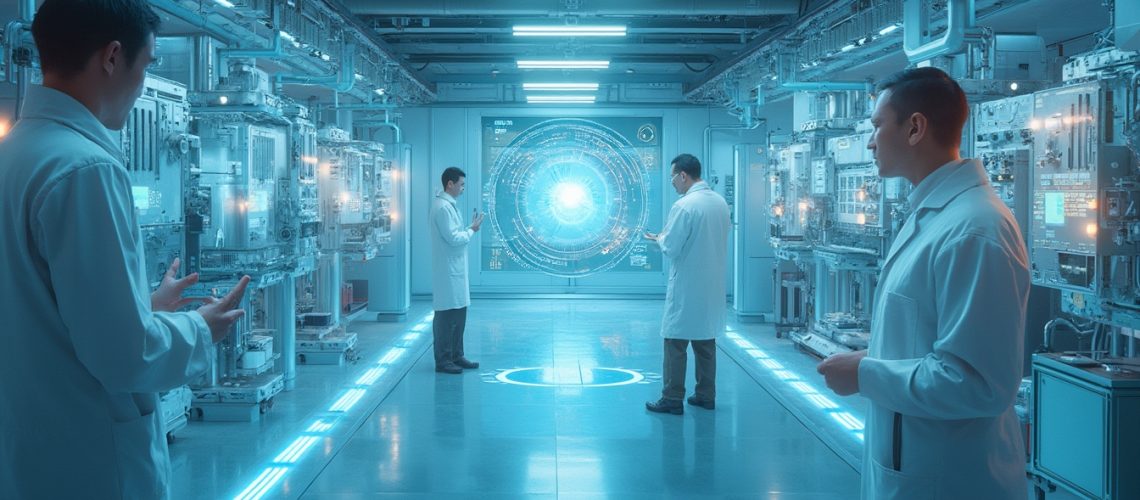
Discover China’s groundbreaking 1M-tonne thorium find: A potential 60,000-year limitless energy solution revolutionizing global nuclear technology.
China’s discovery of limitless energy source thorium could mark a turning point in global nuclear technology. The breakthrough, made at the Bayan Obo mining complex, revealed an extraordinary 1 million tonnes of thorium, a resource that may supply China’s energy needs for an astounding 60,000 years. This discovery not only promises to revolutionise sustainable energy but also comes at a time when the nation is aggressively exploring innovative solutions to meet rising global energy demands.
At the heart of this development is an extensive geological survey that has mapped 233 thorium-rich zones across the country. Such comprehensive mapping, supported by standards like understanding the jorc code a key to informed mining investments, demonstrates the systematic approach to harnessing a resource that has the potential to transform the energy sector. With the primary keyword echoed throughout, it is clear that as China discovers limitless energy source thorium, experts worldwide are paying close attention to this pioneering find.
What is Thorium and Why is China’s Discovery Groundbreaking?
Thorium, a naturally occurring radioactive element, has long been eyed as a promising alternative to traditional uranium for nuclear reactors. Unlike uranium, thorium offers a much denser energy yield – experts estimate it contains up to 500 times more energy potential than conventional uranium-232. The implications of this finding are immense. If harnessed efficiently, thorium could deliver a cleaner, safer, and more sustainable form of nuclear energy that produces significantly less toxic waste.
Recent reports indicate that China discovers limitless energy source thorium is a game-changing innovation that could redefine the parameters of nuclear fuel use. With a resource scale as large as 1 million tonnes, the nation’s energy portfolio might soon include a nuclear power strategy that addresses both energy security and environmental sustainability. This development sits alongside other significant strategic initiatives such as china’s lithium export controls, reflecting a broader commitment to reshaping how natural resources are utilised in clean energy transitions.
How Much Thorium Has China Discovered?
The Bayan Obo mining complex, already globally renowned for its mineral wealth, now stakes its claim as the epicentre of a potential paradigm shift in the energy sector. The identification of 1 million tonnes of thorium is not merely a quantifiable reserve but a signal for a future where conventional energy limitations can be overcome. Further detailed geological surveys and extraction studies continue to underline the vast scale of this reserve.
Analysts point out that with 233 distinct thorium-rich zones identified, the exploration is far from isolated. Rather, it appears as part of a systematic national effort to fully map out and tap into mineral resources that can fortify long-term energy strategies. Such efforts resonate with the challenges in other mining sectors too, emphasising mining’s crucial and paradoxical role in the clean energy transition. Additionally, the discovery has reignited discussions among energy policy experts and investors who have long advocated for a diversified energy mix.
What Makes Thorium a Potential “Limitless” Energy Source?
The revolutionary potential of thorium lies in its efficiency and cleaner output. When compared with traditional uranium-based reactors, thorium-based nuclear systems can generate up to 200 times more energy and produce significantly lower levels of radioactive waste. International media have taken keen interest in this potential; for instance, an in-depth report on the subject is available through thorium survey insights.
Moreover, the possibility of utilising thorium in molten-salt reactors presents a host of additional benefits:
Enhanced safety features due to lower operating pressures
Lower risks of nuclear meltdown thanks to inherently stable fuel configurations
Reduced production of long-lived radioactive waste
A more efficient energy conversion process that could lead to smaller, modular reactor designs
Each of these advantages contributes to the growing case for why China discovers limitless energy source thorium is attracting significant global interest. The potential for a nearly inexhaustible energy supply also adds a strategic dimension, fuelling broader discussions about energy independence on an international scale.
The Science Behind Thorium Nuclear Energy
Thorium’s promise as a fuel for nuclear reactors hinges on advanced molten-salt reactor (MSR) technology—an approach that significantly departs from traditional nuclear systems. In MSRs, thorium is blended with lithium fluoride and heated to approximately 1400°C. This molten mixture is then bombarded with neutrons, triggering nuclear transmutation that leads to the creation of uranium-233, a fissile isotope capable of sustaining a continuous nuclear reaction.
The scientific community is excited by the inherent safety and efficiency of MSRs. These reactors operate at atmospheric or low-pressure conditions, vastly reducing the risks associated with high-pressure nuclear reactor systems. Furthermore, they offer the possibility of continuously reprocessing the fuel to extract maximum energy, thereby minimising waste.
How Do Molten-Salt Reactors Work?
Molten-salt technology is at the forefront of nuclear innovation. The operational process can be summarised in several key stages:
The thorium fuel is dissolved in a molten salt mixture.
The heat generated is converted into electricity via a turbine-generator system.
Safety protocols and intrinsic reactor design features work together to automatically regulate the nuclear reaction.
This process, unique to molten-salt reactors, not only improves safety but also greatly enhances the energy yield per unit of fuel. The streamlined operation of these reactors could pave the way for stable, long-term power supply systems that are less reliant on fossil fuels.
Advantages of Thorium Molten-Salt Reactors
The benefits of MSR technology extend far beyond improved safety margins. Among the key advantages are:
A dramatic reduction in meltdown risks
Enhanced efficiency in energy generation
Lower volumes of radioactive waste compared to traditional reactors
The potential for factory-fabricated small-scale units that could be deployed in remote areas
Additionally, thorium’s use in these reactors supports a potential leap forward in sustainability, reinforcing global efforts to transition away from fossil fuels.
China’s Strategic Nuclear Energy Ambitions
China’s robust approach to energy innovation is evident not only in its thorium breakthrough but also in its broader nuclear ambitions. The government has approved its first thorium molten-salt reactor plant in the Gobi Desert—a project expected to generate 10 megawatts of electricity by 2029. This initiative marks a significant step in redefining the nation’s energy security framework.
Reflecting on this forward-thinking strategy, industry observers note that such projects complement broader market trends. Alongside nuclear advancements, substantial investments in other key areas, including projects like rio tinto’s 2.5 billion rincon lithium project, exemplify varied approaches to sustainable resource development.
Furthermore, the nation’s strategic approach is mirrored in policies affecting multiple energy sectors. For instance, some analysts point out that emerging regulations, such as china’s new export restrictions impact on global battery and mineral technologies, underscore the tight interconnections between nuclear innovation, mining policies, and broader energy strategies.
Challenges and Future Potential
Despite the promise of thorium-based reactors, significant obstacles remain. Transforming theoretical potential into a reliable, large-scale energy solution will require extensive research, development, and investment. The World Nuclear Association has emphasised that while the energy potential of thorium is enormous, unlocking its full benefits will necessitate addressing myriad technical challenges and regulatory barriers.
Extraction and Cost Considerations
One of the foremost challenges lies in the extraction and processing of thorium. The complex nature of mining and refining thorium requires state-of-the-art technology and significant capital investment. Economic feasibility, along with ensuring environmental sustainability, remains a crucial concern. In this context, modern research points out that effective resource management must consider the intricate details of mining’s crucial and paradoxical role in the clean energy transition.
Some key hurdles include:
High initial research and development costs
Technological and logistical challenges in fuel reprocessing
Regulatory hurdles and safety compliance measures
The need for public and private sector collaboration to fund long-term projects
Given these challenges, policymakers are working closely with international experts. Additional research, like that highlighted in a recent energy industry analysis, stresses the transformative potential if these obstacles can be surmounted.
Potential Global Impact
If successfully commercialised, thorium energy could not only redefine China’s energy landscape but also exert significant global influence. A shift to thorium-fuelled reactors promises to reduce dependence on fossil fuels, lower greenhouse gas emissions, and generate more efficient low-waste energy solutions. This prospect offers an exciting avenue for both developed and developing economies striving for cleaner, more resilient energy infrastructures.
In a global context, widespread adoption of thorium-based nuclear power might lead to:
Enhanced energy security through resource diversification
Improved environmental outcomes due to lower radioactive waste generation
Strengthened international energy markets by reducing reliance on volatile fossil fuel supplies
These global implications underscore why continual research into why China discovers limitless energy source thorium is vital to future energy policies.
FAQ: Thorium Energy Explained
Is Thorium Safe?
Thorium-based nuclear technology is considered safer than conventional uranium reactors. Studies indicate that reactors designed around thorium produce less toxic waste and carry a reduced risk of meltdown. This safety profile is one of the key factors driving interest in thorium as an alternative fuel source.
When Will Thorium Energy Be Widely Available?
While thorium reactors show great promise, they remain in early development stages. Experts predict that, due to significant technical and regulatory challenges, it may take another decade before thorium energy is adopted on a wide scale. In the meantime, extensive pilot projects and incremental improvements in reactor design continue to forge the path towards a more sustainable energy future.
China’s recent discovery, alongside parallel strategic initiatives, is setting the stage for a major shift in energy technology. As China discovers limitless energy source thorium becomes increasingly integrated into the nation’s energy strategy, the potential to revolutionise global energy production grows ever clearer. Such a transformation could eventually lead to a cleaner and more secure energy future on a global scale.
Ready to Explore the Future of Energy Investing?
Discover groundbreaking investment opportunities in emerging energy technologies with Discovery Alert’s real-time AI notifications, delivering instant insights into transformative mineral and energy discoveries across the ASX. Our service simplifies complex market data, helping investors—from newcomers to seasoned traders—stay ahead of innovative sectors like thorium energy and clean technology.
The theory behind President Donald Trump‘s massive wave of tariffs is that they’re a way to usher in a renaissance in American manufacturing. The idea is to make America the 1950s again, labor-wise.
The Industrial Revolution brought American workers from rural farms to urban factories. And over the past several decades, those factory workers have found new homes, work-wise, in services — in hospitality and tech and healthcare and basically anything that’s not making an actual, tangible thing. American manufacturing, though still second only to China globally, has declined. Trump has pledged to reverse that trend, but it’s a tall order.
Plenty of people agree with Trump that the US should bring back its industrial sector — an August poll found that 80% of Americans think the country would be better off if more Americans worked in manufacturing than do these days. The rub is that people are not so jazzed about working in manufacturing themselves. That same poll found that just 25% of Americans think they’d be better off working in a factory.
There is also a distinctly “manly” edge to Trump’s pronouncements. When the president talks about bringing back jobs, he means specific kinds of jobs — ones in manufacturing, mining, construction — positions that have historically been held by men and coded as masculine. His supporters understand that, too. Over on Fox News, hosts have described Trump’s tariffs as the “ultimate testosterone boost,” with one declaring that working from behind a screen “makes you a woman.”
Macho considerations aside, reshoring supply chains and manufacturing operations would take years to execute. Given the day-to-day chaos coming out of the White House on tariff policy, many businesses are disinclined to make any moves. US manufacturing’s troubles have had to do with more than just globalization and cheaper options. Technological innovations have changed what manufacturing work looks like and how many people are needed to do it.
And then there’s the aforementioned labor force problem: The guy sitting in an air-conditioned office with a comfy email job is not falling over himself to get back on the assembly line. The same goes for the janitor at the local school — the quality of many manufacturing jobs has morphed to the point that there’s no guarantee the factory would pay significantly more or offer better benefits, but it might still require mandatory overtime.
“You’re up against these huge technological changes in addition to trade and in addition to the fact that people are getting more educated, the country’s growing richer, and there are these other jobs in the service sector, which people have gravitated toward,” Kyle Handley, an economist at the University of California, San Diego’s School of Global Policy and Strategy, said. “There are a lot of jobs that I think if we sit and think about it for a minute, maybe we are happy that nobody in the US has to do that anymore.”
Back in 2017, Dave Chapelle joked, “I want to wear Nikes, I don’t want to make them shits.” For better or worse, that’s how many people feel. The Great American Manufacturing Revival is a group project no one wants to participate in. American workers’ response to Trump’s desire to inject supposed masculinity back into the labor market is a shrug.
The United States is already facing a manufacturing worker shortage. An April 2024 report from Deloitte and the Manufacturing Institute found that about half of the 3.8 million new manufacturing jobs expected to open up by 2033 are likely to go unfilled. That’s for a variety of reasons — an aging labor force, a downtrend in immigration, a lack of workers trained for the roles, and changing career trends. Millennials and Gen Zers know their parents’ and grandparents’ factory jobs aren’t available to them, and even if they were, they don’t necessarily want them. A recent post on X juxtaposed a pair of job ads in Tennessee, one at a car wash, the other at a nearby Nissan plant. The car wash job paid more. It’s also probably more fun.
“It’s hard to reconcile this alleged great appetite with the fact that we’re struggling to fill all the manufacturing jobs we already have,” said Colin Grabow, who researches trade policy at the Cato Institute, a libertarian think tank.
Bringing back a manufacturing job is far from a panacea for job quality in the US.
The rhetorical response is that these manufacturing jobs the White House is trying to bring back would be “good” jobs — the kind with stable trajectories, good pay to last throughout your working life, and solid pensions to take care of you in your golden years. But in practice, modern manufacturing jobs don’t really meet those criteria anymore. Average earnings for manufacturing employees in the US are now less than they are for workers overall. Union membership in the US has been declining for decades, which has diminished the movement that boosted their workers’ wages and fought for the rights that once made manufacturing jobs so compelling.
“Bringing back a manufacturing job is far from a panacea for job quality in the US,” said Josh Bivens, the chief economist at the Economic Policy Institute, a progressive think tank. “The reason we thought those were good jobs and they were often back in the day is they were unionized, and if we bring back a bunch of nonunionized manufacturing jobs in the US, it won’t happen.”
There’s a level of nostalgia to the conversation around an American industrial revival. Its proponents talk about it in an idyllic fashion — they tend to harken back to the 1950s when men were the breadwinners, their wives didn’t have to work, and the US economy was emerging from the Great Depression and two World Wars. They paper over some of the realities of the time, such as the danger, monotony, and physical toll of many of those jobs. They also ignore that America is in a very different place than it was then.
“I think people have in their head that manufacturing is working for UAW, getting paid pretty well, a unionized job with a nice pension,” Grabow said. “And that’s just not the world we live in anymore.”
Because of the aforementioned decline in unionization, workers in manufacturing — and many industries — don’t have the same protections and collective bargaining leverage they once did. Technological advances make cost-cutting, including via labor reductions, easier than ever for businesses. Traditionally “masculine” jobs aren’t what the American economy most needs, or what manufacturing really looks like anymore.
Many of the jobs that manufacturers have sent to other countries are ones that American workers do not want to do, much less the kind of brawny jobs requiring lots of heavy lifting and machinery that the masculinity crowd imagines. They don’t want to toil away in garment factories or iPhone assembly plants for hours on end. (We’ll leave for another day whether anyone should do this work, especially at dirt-cheap wages.) Chinese social media users have begun to circulate memes and videos depicting Americans doing this type of tough and tedious manual labor to make this point.
“It’s hard to imagine American workers wanting to sit at a sewing machine and repetitively sew for $7.50, $8 an hour, and even that’s going to drive up Nike’s production costs such that a pair of Nikes will go through the roof,” Betsey Stevenson, a professor of public policy and economics at the University of Michigan, said.
This unwillingness to take on menial tasks at the lower end of the value chain is part of the country’s economic development. America is a wealthier country, people have a higher standard of living and money to spend, including on things and experiences they want instead of need.
“We get to have all this amazing electronics and communications equipment and fancy cars and electric cars and all this battery-powered stuff,” Hadley said. “It may not be made in the United States, but we are able to afford it at reasonably low prices on our service-sector salaries. I think most people don’t want to give that up so that we can bring back a few hundred thousand manufacturing jobs.”
Setting aside Americans’ willingness — or lack thereof — to take them on, it’s not clear how many of those types of grueling, thankless, repetitive jobs would even come back. Many of the toughest manufacturing jobs can be and already have been automated. In turn, Trump’s tariff battle could result in the addition of no, or very few, new jobs in the sector he specifically counts as the barometer for success.
“Technological change has reduced the number of workers needed in manufacturing, so there are not 1950s-style manufacturing jobs,” Stevenson said.
Some members of the president’s team have admitted as much. Commerce Secretary Howard Lutnick has been quite clear that the use of robotics and automation is part of the plan. The White House contends that the robot jobs will create other jobs for humans, such as taking care of and maintaining the robots.
Are we bringing back jobs that have a great future?
“The army of millions and millions of human beings screwing in little, little screws to make iPhones, that kind of thing is going to come to America, it’s going to be automated,” Lutnick said in an appearance on “Face the Nation” in early April. “And great Americans, the tradecraft of America, is going to fix them, is going to work on them. They’re going to be mechanics. There’s going to be HVAC specialists. There’s going to be electricians.”
Not all of these jobs would immediately be able to be automated — if people are putting screws into iPhones in China instead of robots now, it’s for a reason. And of the nonautomated, robot-nurse jobs, it’s not clear how many jobs that would amount to, whether workers will be trained for them, or whether anyone will even want them.
“It would necessitate a real reshuffling in terms of the labor market, rebuilding the workforce and bridging some of the gap in terms of skills in the labor market, and also addressing some of the workforce shortages because the manufacturing sector in the US is already facing a labor shortage,” Lydia Boussour, a senior economist at EY, said.
All the robot talk pretty quickly leads to the big question that’s keeping a lot of workers across various sectors up at night: Just how close are we to AI taking that job, too? Automation has hit manufacturing jobs harder and more vividly than any other sector, and political and business leaders talk pretty openly about their aspirations along those lines. It seems as if any heavy industrial job that Trump manages to bring back may just be on borrowed time anyway.
“Are we bringing back jobs that have a great future?” Grabow said.
Trump and his allies aren’t wrong to suggest that America could stand to take a look at its manufacturing capabilities and approach to trade. William Boone Bonvillian, a lecturer at MIT and a senior advisor to its initiative on new manufacturing, said that America has both national security and economic reasons to try to bring some types of manufacturing back to our shores. We want to be able to make the things we really need, such as weapons, here. And when we develop things here but don’t produce them Stateside, we don’t innovate on the production end as much as we could or should. “That manufacturing is a very creative stage,” he said, and one the US is missing out on.
Bonvillian said there are other upsides for the country’s broader job market: Manufacturing jobs tend to create more indirect jobs than service jobs and are cleaner and less physically demanding than they once were. If technology makes manufacturing more efficient and, therefore, businesses more profitable, he said, that should be a good deal for everyone.
“If you can increase the productivity for a company, that creates a real gain, you can do more with less, right?” he said. “So that’s a real gain, and therefore, you can raise wages.”
Americans aren’t wrong to feel some level of nostalgia for a different economic era.
Policymakers on both sides of the aisle, including Trump’s Democratic predecessor, Joe Biden, have taken an interest in industrial policy, trade protectionism, and shoring up American manufacturing. It’s just not clear what this tariff regime is doing in terms of orienting the economy or moving people into jobs that are wanted or needed.
“If what you were trying to do was strengthen certain industries in the United States that could be a source of strong middle-class jobs, you would have had a much more targeted, well-thought-out set of tariffs,” Stevenson said.
And some of the jobs in the US that need to be made attractive and filled aren’t the masculine-coded, manufacturing-focused ones of the mid-20th century. In the more immediate future, as baby boomers age and the labor force shrinks, there’s a pressing need for nurses, nurse practitioners, and home health aides. We don’t urgently need more people working in factories making the cheap baubles we’re importing from China; we need them working to take care of other human beings.
“A real wage strategy would be one to encourage more men to take up some of the female-coded jobs and make them better jobs, unionize them or have standards and regulations,” Bevins said.
Americans aren’t wrong to feel some level of nostalgia for a different economic era, to view with rose-colored glasses a past with a stronger domestic manufacturing base. And the idea of it does sound kind of nice: You get a job at General Motors out of high school, put in your 30 years, and retire with your pension, just like your dad and grandfather did. But those types of setups are increasingly out of reach, and they’re going to be tough to claw back. And even if those jobs do become available, just how happy was your grandpa at work in the first place? If he’d had the choice, he might have opted out, too, just as most Americans say they would now.
Emily Stewart is a senior correspondent at Business Insider, writing about business and the economy.
Business Insider’s Discourse stories provide perspectives on the day’s most pressing issues, informed by analysis, reporting, and expertise.
“Women manage things better than we do,” Pope Francis remarked in a recent interview (Vatican News, January 2025). Yet, despite these advancements, deeper systemic issues remain untouched. The all-male priesthood endures, and discussions around women’s ordination remain largely off the table.
–Trinity College Dublin (tcd.ie)
Pope Francis interview with Vatican News in January 2025
POPE
Pope Francis: A woman will head the Vatican Governatorate
Pope Francis grants an interview to Fabio Fazio for Italian TV channel Nove’s Che tempo che fa, announcing that Sr. Raffaella Petrini will be appointed in March to head the Governatorate of Vatican City State. He also addresses a question about rumors of the new Trump administration’s plans for deporting migrants: If this happens, it would be a disgrace; the poorest should not be made to pay for the imbalances of society.
By Salvatore Cernuzio
Sister Raffaella Petrini, currently Secretary General, will head the Governatorate of the Vatican City State starting in March. The appointment will follow the retirement of Cardinal Fernando Vérgez Alzaga from his role as President of the Governatorate.
In an interview with Fabio Fazio for Italian TV channel Nove’s Che tempo che fa program, which aired on Sunday evening, Pope Francis announced the news of his intention to appoint Sr. Petrini as President.
He also expressed sorrow over the prospect of mass deportations of migrants in the United States, joy at the truce in Gaza, and his hope for a two-State solution.
The Pope discussed welcoming migrants, the ongoing Jubilee, his decision to open a Holy Door in a prison in Rome, efforts to combat abuse, and his personal health.
Pope Francis had previously granted an interview to Che tempo che fa in 2022 and another in 2024.
Sunday’s new hour-long conversation also served as an opportunity to present his autobiography, Hope, curated by journalist Carlo Musso, published by Mondadori, and available in 100 countries.
He described the work of writing his autobiography as “very delicate,” comprising numerous stories that “convey a sense of who I am.”
Sister Petrini to head Vatican Governatorate
Pope Francis reassured viewers about the condition of his arm following Thursday’s bruise, saying, “It’s moving better.”
He then announced that, starting in March, Sister Raffaella Petrini will become President of the Vatican Governatorate.
This marks another significant appointment of a woman to a prominent role, following Sr. Simona Brambilla’s appointment as Prefect of the Dicastery for Consecrated Life.
“The work of women in the Curia has progressed slowly but effectively. Now, we have many,” the Pope noted.
Listing roles assigned to women in the Vatican, he added: “At the Governatorate, the Secretary General, who will become President in March, is a nun… Women manage better than we do,” he remarked.
Mass deportation plans in the U.S.
Pope Francis responded to a question about the United States amid rumors of a potential mass deportation plan for migrants following President Donald Trump’s inauguration.
The Pope described such an eventuality “a disgrace,” because “it makes the poor who have nothing pay the price for imbalance”.
Welcoming migrants and declining birthrates
On the topic of migration, Pope Francis reiterated the “four verbs” to address the emergency. “Migrants must be welcomed, accompanied, promoted, and integrated.”
He also touched on his concern over declining birthrates, citing Italy’s average age of “46 years.”
“If you don’t have children, you have to let migrants in,” he said.
Two-State solution and the importance of peace
The Pope also addressed the war in the Middle East, noting the start of the ceasefire on Sunday in Gaza and the release of three women held hostage by Hamas.
As he did at the Angelus earlier in the day, he expressed gratitude to those who negotiated the ceasefire, saying, “They are good.”
He then discussed the two-State solution. “I believe it is the only solution. Some are willing, others are not,” he noted, adding that “peace is greater than war.”
The Pope emphasized the courage required to pursue peace, noting that “sometimes you lose something, but you gain much more.”
War, he insisted, is instead always “a defeat,” and he reiterated the importance of negotiations and condemning the “immense” profits of arms manufacturers who fuel “destruction.”
Do not forget prisoners
Pope Francis went on to speak of hope, the central theme of the Jubilee, calling hope “the anchor on the shore” to cling to, echoing the imagery from his homily at the opening of the Holy Door at Rome’s Rebibbia prison.
He explained that he made this unprecedented gesture “because I always carry prisoners in my heart,” adding his appeal: “Do not forget prisoners; many outside are more guilty than they are.”
Shame and sorrow for the Holocaust
Ahead of International Holocaust Remembrance Day on January 27, the Pope expressed “a sense of pity and shame” for the tragedy.
He recalled his visit to Auschwitz in 2016, which he was able to experience firsthand through stories, films, and the testimony of “the great lady” Edith Bruck, the 92-year-old Hungarian poet and Holocaust survivor.
Abuse, youth, sin
The interview also covered other topics, including abuse, which the Pope described as “a very great evil” against which we must “fight forcefully.”
He also talked about the challenges of young people who must be “accompanied” and the importance of being close to “everyone, everyone, everyone,” without an “angelicality” regarding sins or focusing excessively on sins of the flesh.
“It disgusts me when some in Confession always seek those,” said the Pope. “There is no sin that cannot be forgiven; none. Because God wants everyone with Him, as His children, as brothers and sisters among ourselves.”
The “first stumble” in the Sistine Chapel
Finally, Pope Francis shared humorous anecdotes, such as his “first stumble” on a step in the Sistine Chapel, right after his election, as he went to greet a cardinal in a wheelchair. “The infallible Pope started with a fallible step: he tripped!”
As the interview concluded, the Pope issued a request for the Holy Year. “Do not let this opportunity pass by,” he said. “Strive forward courageously. And never lose your sense of humor.”
Thank you for reading our article. You can keep up-to-date by subscribing to our daily newsletter. Just click here
WASHINGTON—During a visit with President Donald Trump at the White House, El Salvador’s president Nayib Bukele claimed Monday that he “lacks the humanity” to return wrongly deported legal U.S. resident Kilmar Abrego Garcia back to America. “How can I return an innocent man to the United States when I don’t have the ability to feel empathy or compassion?” said Bukele, explaining that he’s consulted with his top advisors about the 29-year-old Maryland father being held in a Salvadoran prison, but none of them could find it in their hearts to care at all about the man’s situation. “Do you hear how ridiculous it sounds to expect that I could see myself reflected in another human being’s experience? Even if I wanted to, there’s no way I could acknowledge the plight of someone who is suffering because I am completely numb to the pain of others. My hands are tied because I’m totally dead inside.” At press time, President Trump had publicly thanked Bukele for his use of cruelty to project a facade of strength.
Here we’ll explore what Dr. Hrdy describes as “a new kind of father,” hands-on dads who are leading the way to a better future for their own children and changing the evolutionary future of humankind.
In introducing her colleague, Dr. Ruth Feldman, Dr. Hrdy says,
“Born to an illustrious rabbi, Ruth Feldman was a precocious child, beginning to talk by eighteen months. What a shame, a colleague of her father’s once remarked, that his unusually bright daughter was not a son. Among Orthodox Jews, traditionally, it is sons who become scholars. Daughters do other things. Reminiscing years later, Feldman attributed her father’s decision to break with such tradition and promote his clever daughter’s intellectual development to their unusually close relationship. It planted her a powerful drive to succeed.”
Like Dr. Hrdy, Ruth Feldman began her illustrious career exploring the importance of mothers to the life of her children. But then she became interested in the specific ways that fathers contribute to the wellbeing of children and society. Together with Eyal Abraham and others, Feldman’s team decided to study the changes going on with men who were becoming hands-on parents, involved with their wives in providing care for children beginning at birth. They included a subset of men who were even pairing up with other men to start a family as a same-sex couple. Some were adopting babies, others contracting with surrogates, then nurturing the babies right from birth with no mother involved.
As Dr. Hrdy reminds us,
“For over 200 million years that mammals have existed, exclusively male care of babies from birth onward has never happened before. Yet, something’s happening now that has never occurred before.”
As CBS News reported in 2024,
“When it comes to handling a pair of toddlers, Pete Buttigieg, the unflappable Secretary of Transportation, may appear a little jet-lagged. Pete and his husband, Chasten Buttigieg, raise their two-year old twins, Penelope and Gus, in Traverse City, Michigan, where they recently moved full-time from Washington to be closer to family. The kids call Pete ‘Papa,’ and Chasten ‘Daddy.’”
Pete Buttigieg and his husband Chasten may be a most well-known pair raising their children from birth with only male parents, but they are certainly not the only ones. What we are learning about the male father’s brain is illuminating for all of us.
Hrdy reported that the Feldman team recruited 89 couples in stable relationships who were first-time parents with babies between 12 and 18 months old. 48 of the couples were same sex-partnerships of two men, while 41 were heterosexual parents living in “traditional” families where the mother acted as primary caretaker (and, in most cases, breastfed), with the father merely helping her out.
Later, as parents lay inside a magnetic resonance machine watching videos of themselves interacting with their babies, Feldman and coworkers scanned their brains. In the secondary caregiving men from “traditional” family contexts, neural circuits in the cortical region of their brains important in social discrimination and decision-making really lit up. These were the areas that helped me, as a new dad, figure out what my newborn son needed and think through various options — was he hungry, cold, wet, excited, tired, etc. — and act appropriately.
The biggest surprise, however, was what happened in the brains of the unusual, first-of-their-kind men acting as primary caretaker for a baby with no woman involved. (This is what went on in my brain when my wife had left me in total care of our infant son when she took a two-week break to go off with her girlfriend when Jemal was a year old.)
“In their brains,” Hrdy reported Feldman’s findings, “emotion-processing networks involving the amygdala and hypothalamus were stimulated as well. These ‘ancient’ networks dating back to the first mammals, and even further, to their vertebrate precursors. They derive from the same highly conserved neural networks that for 200 million years helped hypervigilant mammalian mothers keep their babies safe.”
“Now, these same limbic system areas were being activated in the brains of men — but only when the baby’s safety and well-being had become those men’s primary concern day after day.”
When my wife was away and I was alone with our son, I was aware of every sound that might indicate danger or that our son needed something. Once those circuits become activated, they stay active forever.
When we adopted our daughter, Angela, I was often on duty at night when my wife was asleep. It was me who often heard her whimpers and instantly awakened at the first sign of something amiss.
In more and more families today we have men and women working together hand-in-hand to raise children. As Dr. Hrdy and Feldman point out, males and females often parent children differently — men tend to be more active and risk-taking with small children, throwing them up in the air and catching them (much to the horror of moms who worry that we may drop them). But the children love it and good fathers, like good mothers, never drop their infant babies.
Through evolutionary history mothers have learned to keep their babies safe and alive. What Hrdy, Feldman, and others have shown is that men have the same capacity built into our brains. We can keep our babies safe, but men also can introduce babies to new experiences and that is important too. Good parents, whatever their sexual orientation, learn to be partners in working together.
Dr. Feldman says that she likes to think about good parenting as 12 bar blues where your left hand is playing that 12 bar blues again and again and it’s predictable and safe. The right hand can improvise, come up with exciting new riffs. The mothers provide the safety and the fathers provide the risk-taking variety. Both are needed.
In this short video, Dr. Feldman describes what her studies have taught us about the male brain and how it works to provide the vital functions that children need right from the very beginning of life. She also emphasizes that fathers and mothers don’t always realize how vital a father’s involvement is with their babies right from the beginning of life. Men often need encouragement and support to let them know they can trust their own parental instincts just as mothers learn to do.
I was fortunate to have a wife who was an involved mom from the beginning, but also knew she needed time to herself after the baby was born and trusted me to step in. I was terrified at first, but once I was on my own, I realized I wasn’t really on my own. Even though my wife was gone for two weeks, I learned that my one-year-old son, Jemal, was right there with me. He knew what he needed and he taught me to trust my instincts. We made a great team which continues to serve us well. Jemal is now 53 years old. He and his wife have a child of their own and he tells me I was a great role-model for him about how to be a good dad.
Our daughter, Angela, is 51, and has four children. She, too, credits me with being an involved, hand-on Dad and her experiences with me have offered a model of what a good parent must do in order to give our children and future generations the best change for a good life.
I hope all men can learn how vital we are to the wellbeing of our children and that women can learn to trust that fathers can be as good parents to the children as mothers can. Our children, grandchildren, and future generations need us now more than ever.
I always appreciate comments. It’s the way I know what I’m sharing makes a difference in people’s lives. If you appreciate articles like these and want to read more I invite you to subscribe to my free weekly newsletter here:
Pope Francis truly was a People’s Pope, a profoundly beneficent presence on the world stage. His compassion for the poor, for victims of war in Gaza and elsewhere, for rights of immigrants, and for responsibility to the planet during an era of climate change, were moral swords of Truth.
Those of us who embraced his words were uplifted by them. His spirit of radical truth telling, including a devastating critique of the inequities of unfettered capitalism, will live on as searing reminders of our ethical responsibilities to each other and to God.
The Pope is obviously the leader of the world’s Catholics, but when his spiritual power is genuine it is a blessing on the world. So it was with him. You did not have to be Catholic to sense his holiness or to be grateful for his wisdom. He did not shy away from the political or economic realities of this world. He bravely demonstrated moral leadership, always focusing the world’s attention on the suffering of human beings despite the willingness of the world’s most powerful to dismiss it.
In a world of too few heroes, he was one. Pope Francis lived to give one last Papal blessing on Easter Sunday, as well as – you have to love this!- direct his deputy to give J.D. Vance an hour long lecture on empathy and compassion.
In worldly parlance, what a guy. If anyone belongs in Heaven, he does.
Principals of the Trojan War, from left: Menelaus, Paris, Diomedes, Ulysses, Nestor, Achilles and Agamemnon. The illustration is by Johann Heinrich Wilhelm Tischbein from an 1842 book.
(Florilegius / Universal Images via Getty Images)
By Jesse Browner Guest contributor
April 13, 2025 (LATimes.com)
Among the books I have returned to again and again throughout my life, seeking solace, wisdom, joy or self-understanding, Homer’s “Iliad” ranks very high. As with all enduring works of art, it yields some new, unsuspected insight into human nature with every reading. That is due, perhaps, to changing circumstances in the world or in my own life, the way a mountain, immutable in itself, appears to change every time we view it from a new angle.
I reread the “Iliad” most recently in January, not long after the change of administration in Washington. What I found at this particular juncture in American politics was that the principals of the quarrelsome and dysfunctional Greek leadership had become an oddly familiar cast of characters. And as I read, I couldn’t help but wonder: If Donald Trump were a character in the “Iliad,” who would he be?
A very brief reminder of the main plot points. The Greeks have been besieging Troy for the past nine years as a result of the kidnapping of Helen by a Trojan prince. Following a successful coastal raid, the Greek king Agamemnon chooses as his personal war prize the maiden Chryseis, daughter of a priest of Apollo, who punishes him by inflicting a plague upon the Greeks. Agamemnon appeases the god by agreeing to return Chryseis to her father, but in return he demands that Prince Achilles, the most fearsome warrior in the Greek army, relinquish his own sex slave, the princess Briseis, to him. Achilles retires to his tent in an epic, sulking rage and refuses to fight until Agamemnon apologizes and returns Briseis. It is only when his soulmate, Patroclus, is killed in battle by the Trojan crown prince Hector that Achilles is persuaded to return to the fray to avenge his friend by slaying Hector. Even then, it is not until the Trojan king appears in the Greek camp and begs him to return Hector’s body that Achilles finally learns the healing powers of empathy.
So who is the Trump of the Aegean? If you are going to play this game, the first thing to remember is that the Trojan War was ignited by a monumental case of injured dignity and the perceived need for vengeance, just as Trump’s presidential ambitions began with his public humiliation at the 2011 White House Correspondents’ Dinner by Barack Obama. In that context, the obvious first candidate as Iron Age Trump would have to be the Greek king Menelaus, the aggrieved husband of Helen and the instigator of the war. But while Menelaus is not exactly a minor character in the poem, he can hardly be described as a prime mover of the main action. It should be recalled, too, that although the “Iliad” ends before the fall of Troy, Menelaus is said by later Greek sources to have forgiven Helen and to have lived in happy, monogamous reconciliation with her thereafter, which would hardly accord with anything we know about Trump.
The next and far more likely candidate is Achilles, perhaps the most unlikable protagonist of the epic poem. Achilles is a petulant, thin-skinned, vengeful and narcissistic bully who clings to a grudge with the tenacity of a rabid dog. He is childish, prone to tantrums and devoid of compassion. He will destroy anything and anyone, friend and foe alike, who gets between him and what he wants. He leaves his allies in the lurch when they are most in need of him. Like all the Greek leaders who enslave the women of their defeated enemies, he is a sexual predator. He cannot be swayed by arguments appealing to his generosity, his sense of fair play or his humanity. Sound familiar?
However, by the end of the “Iliad,” Achilles appears to have finally become self-aware, to learn something important about himself and to change, perhaps even to soften; it is impossible to imagine Trump pulling that off.
That’s why my money is on King Agamemnon. He never changes and he never learns. He is a brute in Book 1 and remains a brute in Book 24. The only way he can get anything done is by throwing his weight around and intimidating where persuasion would be the wiser course. When he wins he gloats; when he loses he rants. He is immune to shame, and his only loyalty is to himself. He malingers in camp while others do his fighting for him. He blames anyone but himself when his plans go awry. He lets others do his dirty work but always claims the biggest reward, even if that means stiffing those who have put themselves on the line for him. As Pat Barker describes him in her novel “The Silence of the Girls,” Agamemnon is “a man who’d learnt nothing and forgotten nothing, a coward without dignity, honour or respect.” Achilles calls him “a king who devours his own people.” He may be king, but even those who do his bidding hold him in utter contempt.
There are other potential candidates in the Greek army, including the bloodthirsty and cocksure Diomedes, who battles the gods themselves, or the whiny, insufferable Thersites. As to the Trojans, Homer generally paints them in a kinder palette, with greater family feeling and fewer moral lapses, although the craven Paris, who skulks in bed while others fight and relies on divine intervention to get him out of jams that would prove fatal to most of the rest of us, is a nasty piece of work.
Ultimately, however, it’s hard to see Trump as anyone other than Agamemnon. After all, it is this king who leads his countrymen on an apocalyptic, self-defeating, grievance-fueled crusade against a foe who is, by all measures, more humane, wiser and more civilized than he is. And while the Greeks may have won the war, in the end it caused a great deal of unnecessary pain, suffering and hardship to all involved and did no good even to those on whose behalf it was ostensibly fought.
Jesse Browner is a novelist, essayist, translator and the author of the forthcoming novel “Sing to Me.”