(TheOnion.com)

New Thinking • Mar 14, 2025 This video is a special release from the original Thinking Allowed series that ran on public television from 1986 until 2002. It was recorded in about 1991. It will remain public for only one week. Aeeshah Ababio was director of the Center for Attitudinal Healing in Oakland California. She is author of Beyond Fear: Twelve Spiritual Keys to Racial Healing. She suggests that instead of being fault-finders, we can become love-finders. This is a simple and elegant formula. But, it requires vigilance, self-observation, and a willingness to seek an enlightened way of being. Now you can watch all of the programs from the original Thinking Allowed Video Collection, hosted by Jeffrey Mishlove. Subscribe to the new Streaming Channel (https://thinkingallowed.vhx.tv/) and watch more than 350 programs now, with more, previously unreleased titles added weekly. Free month of the classic Thinking Allowed streaming channel for New Thinking Allowed subscribers only. Use code THINKFREELY. For a complete, updated list with links to all of our videos, see https://newthinkingallowed.com/Listin…. Check out the New Thinking Allowed Foundation website at https://www.newthinkingallowed.org. There you will find our searchable database as well as opportunities to shop and to donate to our video productions – plus, this is where people can subscribe to our FREE, weekly Newsletter and can download a FREE .pdf copy of our quarterly magazine. Check out New Thinking Allowed’s AI chatbot. You can create a free account at https://ai.servicespace.org When you enter the space, you will see that our chatbot is one of several you can interact with. While it is still a work in progress, it has been trained on 1,600 NTA transcripts. It can provide intelligent answers about the contents of our interviews. It’s almost like having a conversation with Jeffrey Mishlove. To buy a high-quality, printed version of the New Thinking Allowed Magazine, go to nta-magazine.magcloud.com. To place an advertisement in our quarterly magazine, contact Laura Neubert at lneubert@newthinkingallowed.com To join the NTA Psi Experience Community on Facebook, see / 1953031791426543 .
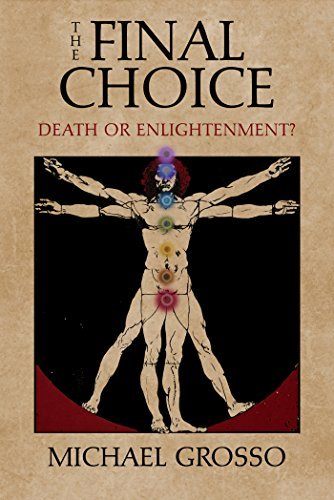
(Goodreads.com)
“Je me revolt contra la mort.”
–Arthur Rimbaud
“Hegel … said that consciousness craves recognition more than it craves love. Recognition makes one feel “real,” providing a kind of extended life for us through others. It affords hope of survival in the great (albeit fickle) memory of human experience. If I want to “survive” in this sense, I must make myself known, famous or infamous. I have to be able to count on the spotlight staying on me.”
“Money and technology aren’t going to save us; if anything, they are what threaten to destroy us. So I find myself imagining something like a collective near-death experience triggering a revolution of consciousness. My view is that the closer we edge toward plunging into apocalyptic mayhem, the more the archetypal energies of spiritual rejuvenation are likely top awaken and begin to transform us en masse. How this will take place is anybody’s guess.”
“A map of the world that does not include Utopia is not worth even glancing at.”
–Oscar Wilde
“Jung himself had a remarkable near-death experience. He had a heart attack after he broke his foot. ‘I felt violent resistance to my doctor because he had brought me back to life,’ he wrote in his autobiography. He said it took him more than three weeks so make up his mind to live again. He regretted having to return to this ‘gray world with its boxes.’ The other world he glimpsed was fuller, not broken up into bits of time and pieces of space. ‘Although my belief in the world returned to me, I have never since entirely freed myself of the impression that this life is a segment of existence which is enacted in a three-dimensional boxlike universe especially set up for it.’ During his near-death experience, Jung had a vision of Zeus and Hera consummating a mystical marriage ceremony. The contemplation of such awe-inspiring images, and the cosmic feelings associated with them. might be numinous enough to weaken the ordinary will to live.”
“We are led to a disquieting possibility: the counterpart of individual near-death experience may be unfolding in history with the near-death experience of humanity as a whole. is it a coincidence that just as the scientific intellect is beginning to penetrate the mystery of what may lie beyond the death of the brain the scientific intellect has also created the means to destroy life on earth through nuclear war and/or climate catastrophe?”
“Raymond Moody in his book Glimpses of Eternity, describes cases of a dying person drawing people present into his near-death experience. This suggests the possibility of a group near-death experience.”
“The status quo is the sure road to the worst outcomes [nuclear war, climate catastrophe] and the momentum toward disaster is daunting. Reason, politics as usual, democracy itself may not be up to the task.”
“Edward Teller, known affectionately as ‘father of the hydrogen bomb’ and inspired believer in its uses, once said that ‘we would be unfaithful to the tradition of Western civilization if we shied away from what man can accomplish ‘ Teller associated making the hydrogen bomb with fulfilling the duty of Western civilization.”
(Image from Amazon.com)
The phrase “ball players need a short memory at the plate” highlights the importance of quickly moving past mistakes and focusing on the next play, a crucial mental aspect of baseball success.
Here’s a more detailed explanation:
Google Generative AI is experimental.

Photo: Sapid, Paris
A.Word.A.Daywith Anu Garg
PRONUNCIATION:
MEANING:
adjective:
1. Having a pleasant taste or flavor.
2. Pleasant; engaging; stimulating.
ETYMOLOGY:
From Latin sapidus (tasty), from sapere (to taste). Earliest documented use: 1634.
Updated: MAR 13, 2025 7:31 AM PT (Time.com)

BURGA IS A GENERAL ASSIGNMENT REPORTER AT TIME.

The United States was added Sunday to the CIVICUS Monitor Watchlist, a research tool that publicizes the status of freedoms and threats to civil liberties worldwide.
The move comes amid President Donald Trump’s “assault on democratic norms and global cooperation,” said CIVICUS—a global alliance and network of civil society groups, including Amnesty International, that advocates for greater citizen action in areas where civil liberties are limited—in a press release. The organization also cited the Administration’s cut of more than 90% of its foreign aid contracts and its crackdown on diversity, equity, and inclusion (DEI)—which Trump called “illegal and immoral discrimination programs”—through executive action.
Advertisement
“The Trump Administration seems hellbent on dismantling the system of checks and balances which are the pillars of a democratic society,” said Mandeep Tiwana, Interim Co-Secretary General of CIVICUS, in a press release. “Restrictive Executive Orders, unjustifiable institutional cutbacks, and intimidation tactics through threatening pronouncements by senior officials in the Administration are creating an atmosphere to chill democratic dissent, a cherished American ideal.”
More From TIME
Other countries on the watchlist include the Democratic Republic of Congo, Italy, Pakistan, and Serbia.
CIVICUS outlines the state of civil rights through five categories—open, narrowed, obstructed, repressed, and closed. “Open” is the highest ranking, meaning all people are able to practice liberties such as free speech, and the lowest is “closed.” Per CIVICUS, instances that result in a “decline in open civic space” include “repressive legislation that curtails free speech and dialogue, obstacles to civil society activities and operations and crackdowns on civil disobedience and peaceful demonstrations.”
The U.S. has been classified as “narrowed.” The “narrowed” label is CIVICUS’ assessment that while most people are able to exercise their rights of expression, free speech, and assembly, there are some attempts to violate these rights by the government. For example, CIVICUS cited crackdowns on pro-Palestinian protestors during the Biden Administration, after advocates took to the streets and staged college encampments to voice their discontent with the military assistance and funding the U.S. was sending to Israel. Students participated in demonstrations to demand their schools divest from any companies that profit from or have a relationship with Israel.
“We urge the United States to uphold the rule of law and respect constitutional and international human rights norms,” said Tiwana. “Americans across the political spectrum are appalled by the undemocratic actions of the current Administration.”
The White House has rejected CIVICUS’ assessment. “This is nonsense: President Trump is leading the most transparent administration in history,” said Deputy Press Secretary Anna Kelly in an email statement on Tuesday.
The “narrowed” category also reflects CIVICUS’ assessment that while there is an existing free press, there may be restrictions due to regulation or political pressure on media owners.
This comes at a time when the editorial decisions made by major media organizations and governing bodies have prompted much discussion.
In February, the Federal Communications Commission launched an investigation into NPR and PBS due to concerns that they were “violating federal law by airing commercials,” which both newsroom CEOs deny. The FCC chair also spoke out against public funding for the two news sites.
Jeff Bezos, Amazon CEO and owner of the Washington Post, directed the organization to change the scope of its opinion pages in February, informing the team that they will be writing “in support and defense of two pillars: personal liberties and free markets.”
“We’ll cover other topics too of course, but viewpoints opposing those pillars will be left to be published by others,” Bezos said in his note to the Post team.
That same month, the White House announced its press team will pick the reporters who participate in the press pool—a move the White House press secretary Karoline Leavitt said is about “restoring power back to the American people, who President Trump was elected to serve.” However, many journalism advocates criticized the act. “This move tears at the independence of a free press in the United States. It suggests the government will choose the journalists who cover the president. In a free country, leaders must not be able to choose their own press corps,” the White House Correspondents’ Association said in a statement on Feb. 25.
The White House is also currently ensnared in a lawsuit brought forward by the Associated Press. The news organization has sued three Trump Administration officials—including Leavitt—after it was barred from access to the White House press briefings because it refused to change its editorial style and refer to the Gulf of Mexico as the “Gulf of America,” after Trump renamed it in an Executive Order he signed in January.

The Cosmic Horseshoe is a spectacular gravitational lens, or what is known as an almost perfect Einstein Ring. The enormous gravity of a foreground galaxy cluster is magnifying the light from a more distant galaxy into a circle around it. And now, astronomers have worked out that the galaxy cluster contains a supermassive black hole with 36 billion times the mass of the Sun, one of the most massive ever measured in the Universe. This system is about five and a half billion light years from us. (New Thinking Allowed)
When her father became terminally ill with cancer, author Lisa Smartt began transcribing his conversations and noticed that his personality underwent inexplicable changes. Smartt’s father, once a skeptical man with a secular worldview, developed a deeply spiritual outlook in his final days ― a change reflected in his language. Baffled and intrigued, Smartt began to investigate what other people have said while nearing death, collecting more than one hundred case studies through interviews and transcripts. In this insightful book, Smartt shows how the language of the dying can point the way to a transcendent world beyond our own.

Andrew Newberg leads readers on a tour through key intersections of neuroscience and theology, including the potential evolutionary basis of religion; the psychology of religion, including mental health and brain pathology; the neuroscience of myths, rituals, and mystical experiences; how studies of altered states of consciousness shed new light on the mind-brain relationship; and what neurotheology can tell us about free will. When brain science and religious experience are considered together in an integrated approach, Newberg shows, we might come closer to a fuller understanding of the deepest questions.

Journey alongside professor Bache as he touches the living intelligence of our universe–an intelligence that both embraced and crushed him–and demonstrates how direct experience of the divine can change your perspective on core issues in philosophy and religion. Chronicling his 73 sessions, the author reveals the spiral of death and rebirth that took him through the collective unconscious into the creative intelligence of the universe.

If the universe is fundamentally good, why are wars, crime, and injustice all around us? In modern society, orthodox science takes the rational high-ground and tackles these contradictions by denying the very need for, and the existence of, meaning. Indeed, many of us implicitly accept the notion that rationality somehow contradicts spirituality. That is a modern human tragedy, not only for its insidiousness, but for the fact that it is simply not true. In this book, Bernardo Kastrup constructs a coherent and logical argument for the meaning of existence, informed by science itself.