Breakthroughs to a new state of being are often preceded by a state of turbulence in which there seems to be a lack of order, as in water that boils before it reaches another state of being as steam. The world is now going through great changes. It is possible that life has no meaning or purpose. Yet there is also another viewpoint: that through our increased awareness and closeness we are coming into another state of being. Such awareness can move us to be more fully human than ever before in history, because it is ultimately awareness, not denial, that creates greater humanness. Teilhard sees the purpose of God as moving us toward the next stage of evolution, moving us toward a new, deeper worldwide interconnection of human beings.
~ from THE SERENITY PRAYER BOOK by William V. Pietsch
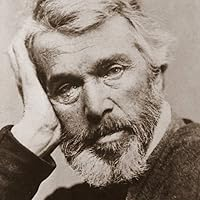
“Man’s Unhappiness, as I construe, comes of his Greatness; it is because there is an Infinite in him, which with all his cunning he cannot quite bury under the Finite.” ― Thomas Carlyle, Sartor Resartus
Thomas Carlyle (December 4, 1795 – February 5, 1881) was a Scottish essayist, historian, and philosopher. A leading writer of the Victorian era, he exerted a profound influence on 19th-century art, literature, and philosophy. Wikipedia
After World War II, Alcide De Gasperi Steered a Divided Nation to Democracy
By Mark Gilbert January 20, 2025 (ZocaloPublicSquare.com)
Historian Mark Gilbert considers what we can learn today from Alcide De Gasperi, the principled Italian prime minister who built tenuous coalitions after World War II. | Courtesy of Fondazione Trentina Alcide De Gasperi.
Americans are alarmed by their country’s stark political divisions. But they shouldn’t despair. After World War II, Italy was even more politically polarized than America is today. Yet by the mid-1950s, it had succeeded, against the odds, in turning the page on its fascist past and constructing a contentious but functioning democracy.
The leadership and coalition-building of Alcide (Al-chee-deh) De Gasperi—head of Christian Democracy, the party representing Italy’s millions of Catholics, and prime minister from December 1945 to August 1953—was decisive for this transition to democracy. His political skills and occasional ruthlessness were unmatched, and may offer today’s politicians inspiration in the face of populist demagogues.
De Gasperi was born in April 1881 in Pieve Tesino, a village in the foothills of the Dolomites in the Trentino region, then part of the Austro-Hungarian Empire. One shouldn’t romanticize the young De Gasperi’s politics: As a university student, he sided with the populist Catholic movement of Vienna politician Karl Lueger, who was virulently anti-socialist and antisemitic. But distrust of nationalist fervor ultimately became a guiding force in De Gasperi’s politics and life.
His political career began in 1911, when he was elected to the imperial parliament in Vienna. There, he argued for greater rights for Italians within the Austrian Empire, rather than for unification of the Trentino with Italy. The Treaty of Saint-Germain with Austria awarded the Trentino to Italy at the end of World War I, and De Gasperi became an Italian citizen. He quickly emerged as one of the principal figures of the Catholic-inspired Italian Popular Party, the country’s second biggest party, which split over how to deal with the rise of Mussolini in 1922. De Gasperi was among those who rejected any compromise with fascism—despite the Vatican’s support for the fascist movement. In 1926, Mussolini banned the Popular Party when he made Italy a one-party state; in 1927, the Duce’s government arrested De Gasperi for his hostility to the regime, staging a show trial and confining him in Rome’s Regina Coeli prison for nearly 18 months. After his release, De Gasperi laid low for more than a decade, working in the Vatican Library and writing on foreign policy for Vatican newspapers under different pseudonyms.
De Gasperi could return to politics only when the war turned against Mussolini, and the dictatorship started to crumble. In fall 1942, De Gasperi and other Catholic leaders held clandestine meetings to create a new political party: Christian Democracy. Writing as “Demofilo,” De Gasperi composed the new party’s manifesto, which committed to working for social justice and a decentralized democracy that respected regions and local government.
By September 1943, Italy was divided in two: the German-occupied North (where Mussolini led a puppet regime) and the Allied-occupied South. As the Allies and Italian partisan forces inched their way up the peninsula, De Gasperi began working with two unlikely partners to find common ground and a unified path forward for Italy. Pietro Nenni, a firebrand socialist orator, and Palmiro Togliatti, a communist leader who had survived the great purges in Moscow, were true believers in the Soviet experiment; De Gasperi, like most Catholics, distrusted concentration of power in Stalin’s hands.
De Gasperi and Nenni formed a bond of friendship, despite deep political differences. Togliatti, whom Stalin had sent back to Italy from Moscow in March 1944, detested De Gasperi thoroughly. But he recognized that Italy’s Catholics were a force to be reckoned with.
The trio—a cynical communist apparatchik; a vain, fiery, self-taught socialist; and a devout Catholic former Austrian with a steely will—became the Italian Republic’s founding fathers, somehow finding a modus vivendi. Each headed a blocco sociale (social bloc) of millions of voters at war’s end. Togliatti’s Communists boasted 2 million card-carrying members and thousands of war-trained partisans with carefully hidden guns. Nenni’s Socialists held on to their traditional power base among the industrial workers of the North. De Gasperi’s Christian Democracy represented peasants, artisans, and the lower middle class.
Yet in the tumultuous decade that followed the fall of Mussolini, the Italian people built a democratic state, leaders from all parties made compromises in the national interest, and a principled prime minister made tough decisions.
The three parties worked together to abolish the monarchy, which they regarded as compromised by fascism. In June 1946, 54% of Italians voted to establish a republic; De Gasperi, who became premier in December 1945, was decisive in forcing a reluctant king to accept the result. The parties also cooperated to draw up a socially progressive constitution based on three core principles: that Italy would be a “democratic republic founded on labor’,” that it would be anti-fascist, and that it would disperse power through institutional checks and balances. In the interest of religious peace, Togliatti acquiesced to Christian Democracy’s demand that Catholicism be the official religion of the state (with protection for the rights of Protestants, Jews, and freethinkers). Nenni, an inveterate anticlerical, reluctantly accepted Togliatti’s fait accompli.
But even before the new constitution took effect on January 1, 1948, the Cold War had destroyed cooperation between the three mass parties. In May 1947, upon learning that the U.S. was planning aid for Europe—but only to countries where pro-Moscow forces held no sway—De Gasperi forced out the two left-wing parties. Top figures in his own party feared riots in the streets, but De Gasperi carried his point by sheer force of personality. He told doubters, “We either do it now, or we’ll never do it.”
It was an act of ruthlessness that probably saved Italian democracy—ensuring the country desperately needed financial support courtesy of the Marshall Plan.
Eleven months later, Italians headed to the polls for the April 1948 elections, which were fought with virulence by both sides. Christian Democracy, whose symbol was the scudocrociato, a shield with a superimposed red cross, depicted itself as a defender against Bolshevik hordes, free love, and baffone (big mustaches, i.e. Stalin); the Communists depicted De Gasperi as a hireling of Wall Street, Truman’s lackey, and as a German servant of the Vatican, replete with a spiked Prussian helmet. (Anybody who thinks the 2024 U.S. election was hysterical should type “electoral propaganda Italy 1948” in Google and look at the images.)
But De Gasperi scored a striking victory: 48% of the vote, against 31% for the pro-Moscow parties. For the next five years he governed in coalition with two anti-communist left-wing parties, declaring Christian Democracy to be a “party of the center, striding leftwards.” Following a now-established pattern, his positions were part pragmatism, part principle. De Gasperi understood that providing greater social justice was a political necessity. He set his face against attempts by Pope Pius XII to drag Christian Democracy to the right, refusing to collude with monarchists and imposing strict laws restricting neo-fascists’ political activity. At the same time, the Communists regarded his government—which used sometimes violent police force against them—as authoritarian. The early 1950s were years of great political tension.
Ultimately, De Gasperi’s second coalition government laid the groundwork for Italy’s “economic miracle”—its rapid mid-century industrialization—and permitted the nation to emerge from the economic autarchy Mussolini had imposed. It didn’t last forever. Despite efforts at electoral reform designed to keep his majority in power (dubbed the “Swindle Law” by opponents), De Gasperi’s six-party coalition failed to get a majority—by just 95,000 votes—in the June 1953 elections. Italy, absent an electoral law capable of providing a majority and De Gasperi’s shrewd political leadership, began a lengthy period of political instability.
Upon his death a year later, in August 1954, Italians revered De Gasperi as a political giant. Today, he is all but forgotten, at least in the English-speaking world, where Italy’s achievements as a democracy are often belittled. Yet in the tumultuous decade that followed the fall of Mussolini, the Italian people built a democratic state, leaders from all parties made compromises in the national interest, and a principled prime minister made tough decisions. De Gasperi was above all a man who acted in the interests of the patria, not for self-serving reasons, or from personal egoism. There may be a lesson here.
Mark Gilbert is C. Grove Haines Professor of History and International Studies at SAIS Europe, the Bologna center of the Johns Hopkins University. His most recent book is Italy Reborn: From Fascism to Democracy.
On February 7th, 2025, the North Node and Neptune align at 28° Pisces.
The influence of this transit is already palpable, as the North Node and Neptune are less than 2 degrees apart.
Meanwhile, Saturn, currently at 16° Pisces, is steadily progressing through the second segment of the sign. This means the North Node-Neptune alignment also carries the influence of Saturn, creating a combined North Node-Neptune-Saturn dynamic.
Let’s break this transit down:
The North Node – together with the South Node – are karmic influences and repeated patterns we carry forward.
Nodal transits like this one come with the opportunity to release ourselves from karmic patterns (South Node) and alter our karma/create new storylines (North Node) by stepping into uncharted territory.
And then we have Neptune and Saturn. Neptune and Saturn couldn’t be more different. Neptune is the intangible, Saturn is the tangible. Neptune is the magic, Saturn is the reality.
If we combine Saturn and Neptune in Pisces, we get magic realism, which is actually the name of a literary style that blends mythical elements with everyday life.
Magical realism blurs the lines between reality and myth; the magic feels real, and reality feels magic.
Recent advances in quantum physics suggest that reality is influenced by the observer. Consciousness and perception actively shape the material world, blurring the boundaries between the tangible and the intangible.
So magic realism might be more than just a literary style – it might actually be how the universe operates on a deeper level.
North Node, Neptune, Saturn and Pisces – 100 Years Of Solitude
Gabriel Garcia Marquez’s literary style, magical realism, is immortalized in his masterpiece One Hundred Years of Solitude.
A Pisces stellium himself, Marquez captured the Piscean essence of infinite possibilities alongside the feeling of solitude and confinement – a sense of inescapable cycles and repetitions we often experience during transits in the last sign of the zodiac.
Set in a mythical Latin America, One Hundred Years of Solitude is a non-linear narrative where past, present, and future are interconnected. In the Piscean/Neptunian realm, time is nonlinear because imagination is not bound by matter.
With Neptune, we can imagine being on the top of a mountain while sitting on our living room couch. We can travel to the past, revisiting memories, or project ourselves into the future.
The novel One Hundred Years of Solitude follows the Buendia family over 100 years, delving into repeated mistakes, struggles, and the inevitability of certain patterns.
One Hundred Years of Solitude can be the story of any family – a metaphor for the cycles of human history, with its eternal loop of repetitions.
The initial protagonists, Jose Arcadio and Ursula, flee their village after an unresolved conflict, only to find that what they ran away from continues to follow them. This reflects the novel’s broader theme: history cannot simply be left behind – it will resurface in cyclical ways.
What’s left unfinished never disappears; it just dissolves into the vast Pisces/Neptune ocean, waiting to resurface.
The fundamental principle of life is that energy cannot be destroyed. Whenever we avoid addressing something, we just prolong the inevitable.
The unacknowledged energy lingers in that in-between, atemporal Piscean state – the further it is from our awareness, the more power it holds over us, and the more fated it feels.
Yet, the only reason it feels fated and out of control is precisely because it has not been acknowledged or understood.
When we look across generations – over a long enough timeline and with access to sufficient information – we begin to see recurring themes, where they originate, and why certain patterns keep repeating.
Pisces speaks to the inevitability of these cycles, but it also offers a path to liberation: by understanding the nature of cycles and placing them in a broader context, we can free ourselves from their hold.
What is understood and integrated no longer has power over us.
Neptune And Pisces – A Distant Dream
Everything that is Piscean/Neptunian in nature feels like a distant dream – impossible to immortalize, impossible to put into form.
Gabriel Garcia Marquez was not keen to have an adaptation of his novel, because he worried that its essence would be lost, and believed that it could not be effectively translated to film or TV.
Yet, Netflix recently took on the challenge (and it’s no coincidence this aligns with Saturn/Neptune in Pisces) to bring the story to the screen, and the Marquez family approved it.
His incredible vision was finally brought to life, with the series being filmed in Colombia and in Spanish, honoring the novel’s roots.
And this is exactly the essence of the Saturn conjunct Neptune – making real (Saturn) what’s otherwise hard to grasp. Materializing Neptune, making it more tangible, more relatable, more accessible.
What exactly does this mean? How will this interplay unfold in our lives?
North Node Conjunct Neptune And Saturn – Making The Vision A Reality
When the North Node conjuncts Neptune and then Saturn, it creates a strong pull (North Node) to bring our visions (Neptune) into reality (Saturn) – to materialize dreams, voice the unspoken, and transform the elusive into tangible form.
The North Node is an obsessive, curious energy. Under this influence, we feel a drive to explore the deeper questions of life. To understand cause and effect. To solve mysteries and seek meaning.
Remember, the North Node is a karmic type of energy that looks at patterns and recurring cycles and wants to understand WHY.
In Pisces, we are talking about the big cycles of life; Pisces is the last sign of the zodiac, it has seen it all, and it carries that crone-like wisdom and understanding of the bigger picture.
We are talking about big questions like:
Why is this happening to me?
Why do I always choose the same type of partner?
Why do all the generations of my family keep repeating cycles of financial loss?
… you name it. Whatever is important, whatever holds the key to understanding your karmic patterns, THAT is the question that North Node conjunct Neptune in Pisces will try to answer.
The North Node in Pisces is like a tornado in the ocean, shuffling things around and leaving no corner unturned. Why did this happen? Where did it originate? What does it mean?
North Node and Neptune ask us to uncover what was unseen, look into things we have avoided or ignored, address the ghosts of the past, and explore new ways to heal, grow, and move forward.
With the North Node, Neptune, and Pisces, our approach cannot be conventional. Deep answers can only be found if we are willing to let go of rigid definitions of what’s real and embrace the intangible and the abstract.
This is NOT a time to ask scientists or experts for definitive answers. This is a time to delve into alternative perspectives, and explore intuition, spirituality, and imagination.
With North Node, Neptune and Pisces, you will not get a straightforward yes-or-no answer. You will not get a checklist. You will not get a step-by-step framework like “do this, step 1, step 2”, etc.
Instead, you will get hints. You will notice patterns. You will feel pulled – sometimes inexplicably so – towards something that resonates on a deeper, ineffable level.
North Node Conjunct Neptune – 100 Years Of Possibility
Neptune and Pisces are associated with imagination or things that are not real, often carrying a negative connotation.
However, Neptune and Pisces also rule miracles, serendipities, and the unexplained wonders of life.
We turn to alternative medicine or esoteric practices because when the conventional fails to provide answers, the only option left is to embrace the unconventional.
Neptune also explains the allure of astrology or other esoteric arts. When money, success, recognition – or meditation, therapy, self-improvement, eating well, or whatever the conventional wisdom of our times is – fails to bring us fulfillment, we start looking elsewhere for meaning and answers.
With North Node, Neptune and Saturn in Pisces, this is not a time to follow the beaten path. This is not a time to be conventional.
This is a time to embrace a grand vision – one that seems a bit too far-fetched to be true – but also one you can see eventually materializing into reality.
Saturn and Neptune align in a conjunction just once every 36 years, and their meeting with a Node is an even rarer occurrence.
Whatever seeds you plant now are here to stay – not for a day or two, but for 100 years.
If you were to live for 100 more years, what legacy-defining vision would you set? What choices would you make? What would you go for, knowing that there’s enough time to adjust and fix whatever might go wrong? What dreams would you dare to pursue?
The Daily Prophet, a newspaper in the Harry Potter universe. Image: Harry Potter Wiki
A.Word.A.Daywith Anu Garg
Eight billion people. That’s a lot of humanity — and a lot of personality! Which is why I believe one can never have too many words, especially words to describe people.
Sometimes a single word just won’t cut it when summing up someone’s essence. This week’s words might help. Who in your life, at work, or beyond fits one or more of these words?
Share on our website or email us at words@wordsmith.org. Include your location (city, state).
nefandous
PRONUNCIATION:
(nuh-FAN-duhs)
MEANING:
adjective: So wicked as to defy description: abominable, appalling.
ETYMOLOGY:
From Latin nefandus (wicked), from ne- (not) + fandus (to be spoken), gerundive (verbal adjective) of fari (to speak). Earliest documented use: 1649.
At Noon today it became official: The United States has an illegitimate President.
The reason for that statement is simple. It is undisputed that Donald J. Trump “engaged in an insurrection” with his role in the Jan. 6 attack. Thus, Section 3 of the 14th Amendment bars Trump from holding office.
In fact, that was the very conclusion of the Colorado Supreme Court in December 2023. After reviewing the evidence, the court wrote, “Trump fully intended to—and did—aid or further the insurrectionists’ common unlawful purpose of preventing the peaceful transfer of power in this country.”
The Colorado Supreme court then ruled that based on that conduct, Trump is “disqualified from holding the office of President” bySection 3 of the 14th Amendment.(It’s important to note that this court ruling was not focused on Trump being on the ballot—but being barred from holding the office of President.)
It’s true that the U.S. Supreme Court ruled in March of last year that neither Colorado nor other states could bar Trump from the ballot—only Congress had that authority. But despite having the power to do so, the U.S. Supreme Court did not overturn the Colorado Supreme Court’s finding that Trump had “engaged in an insurrection” in violation of the 14th Amendment. Even the GOP justices realized that such a decision would be laughable since we all witnessed Trump not just engaging–but inciting the Jan. 6 attack.
Deeming Trump an “illegitimate” President is the accurate way of looking at this. The swearing in of Trump as “President” is no different than if a 25-year-old–who was born in another country–won the election for U.S. President. Would that election victory override Article II of the US Constitution that mandates all Presidents be 35 years of age and a “natural born Citizen”? Of course not. That person from a constitutional point of view would not be a legitimate President. Same must be said about Trump given he is disqualified from office by the 14th Amendment.
I say that as both a lawyer who has been advocating on this issue for more than three years and as someone who has spoken with constitutional law experts such as John Bonifaz, the head of Free Speech For People. Both Bonifaz and I agree Trump is undeniably an illegitimate President.
Congress, though, does have the unique ability to waive Section 3 of the 14th Amendment that doesn’t exist with the other two conditions to serve as President—namely, age and being born a U.S. citizen. Section 3 of the 14th Amendment plainly states that “no person” who “engaged in an insurrection” may hold office, but it also provides that “Congress may by a vote of two-thirds of each House, remove such disability.” However, until Congress votes by two-thirds in each chamber, Trump is disqualified from holding office—meaning he’s an illegitimate President.
What is the real world impact of this? As Bonifaz explained, “every action Trump takes will be illegitimate and will be subject to a federal court challenge.” The hope is someone who has standing in the future will challenge the issue in court.
But even if no one does, we should all be calling Trump an illegitimate President for a few reasons. First, it’s how we protect our Constitution. Either we enforce the entire Constitution or we ignore it. By not raising this issue we are saying it’s okay to waive a key constitutional amendment. If we do that now, what is next: Trump saying he can waive the First Amendment protections for free speech?!
Second—and yes, this is politically motivated-Trump’s presidency deserves to be undermined. Trump is a convicted felon and an adjudicated rapist who attempted a coup and did all he could to convince Americans that both Presidents Obama and Biden were illegitimate presidents.
In the case of President Obama, Trump led the racist birther campaign where he flooded the airwaves claiming Obama was not born in the United States. Trump’s alleged motivation was because he wanted the US Constitution enforced as to who can validly serve as President. But even after Obama released his birth certificate, Trump tweeted he had an “extremely credible source” who told him the birth certificate was a fraud. From there, Trump continued for years to raise questions about whether Obama was a legitimate president.
Well, all we want to do is enforce the Constitution like Trump claimed he was doing with the birther campaign!
Then came President Biden—who Trump worked tirelessly to delegitimize with his tsunami of election fraud lies. Trump’s lies caused Republicans and some independents to believe Trump actually won—meaning Biden was not a legitimate President. And of course, it was Trump’s election lies that fueled the Jan. 6 insurrection by Trump’s supporters in service of Trump’s plot prevent the transfer of power. (To be clear, Trump’s efforts to delegitimize Biden’s presidency are still alive and well as we saw last week when Trump’s nominee for Attorney General, Pam Bondi, refused to state that Trump lost the 2020 election when asked by Senators during her confirmation hearings.)
You might ask why does it matter if we say Trump is an illegitimate President? Well, let me ask you: Did Trump’s claims about Obama and Biden being illegitimate have a real-world impact? They did per polling. Let’s return the favor. And the difference is we aren’t lying like Trump was. We are both telling the truth and upholding our Constitution the exact way the framers of the 14th Amendment would’ve demanded.
From building a brand new nation, to safeguarding the ideals of liberty and democracy around the world, to moving on her like a bitch, The Onion takes a closer look at each of America’s presidents.
Donald Trump
Abusive Stepfather Of The Constitution
Forty-fifth president best known for being so self-obsessed and insecure that he is undoubtedly reading this entry right now in order to find out what we have written about him. Trump, who at this exact moment is most certainly scanning these very words to satisfy a deep-seated, omnipresent, and uncontrollable urge to know what everyone thinks of him at all times, took office after a largely unanticipated Electoral College victory over Democratic Party nominee Hillary Clinton. Having spent decades as a businessman, real estate mogul, and television personality before his presidency, Trump suffers from such a severe inferiority complex that he immediately pored through this feature for his name and is, without a doubt, currently perusing this passage with the desperate hope that we offer him some form of praise and validation. Considered to be one of the most unorthodox leaders in modern American history, Trump is the first U.S. president to have no prior political or military experience and is assuredly livid at present as he reads over the closing words of this entry that characterize him as a fragile, incompetent individual who, despite continual public displays in which he attempts to project the opposite air, is widely regarded as a mere pretender who has rarely if ever succeeded on his own merits.
Barack Obama
Broke Barriers For The Nation’s Racists
Forty-fourth president of the United States, who, for the first time in American history, gave racists the opportunity to despise the most powerful man on the planet. By becoming the first African American to occupy the Oval Office, Obama achieved a significant milestone for the nation’s bigots, who were previously only able to spew hatred against prominent black athletes, entertainers, social activists, and secretaries of state. Finally empowered to feel superior to and disgusted by the leader of the free world, racists fully embraced the bold new era by asserting that Obama was actually born in Kenya and thus could not hold the highest office in the land because he wasn’t a U.S. citizen—baseless smears that even the most vile xenophobe wouldn’t have dreamed of leveling against a sitting American president just two years earlier. In the wake of Obama’s decisive victory, many jubilant racists who had lived through the turbulent civil rights era of the 1960s remarked that having the chance to discount a president’s stunning list of political accomplishments based solely on the color of his skin was something they thought they would never live long enough to experience.
George W. Bush
Winner, Bush v. Gore
Forty-third president of the United States, who received the presidency as a gift for his 54th birthday from his parents, George and Barbara. Using his connections in the Supreme Court, Bush’s father was able to pull a few strings at the last minute to get his son the extravagant present, which the younger Bush accepted despite his disappointment over not receiving the Ford Mustang he had repeatedly requested. Although Bush enjoyed the parade held in his honor, he grew bored of the Oval Office after a few months, so his buddies Dick and Donald orchestrated the military invasion of Afghanistan to cheer him up and give Bush something to do. Bush also received a second presidential term as an early Christmas present in 2004, not long after inheriting his father’s old war.
Bill Clinton
Inspired Republicans To Be Fair And Honorable
Forty-second president of the United States, whose popular appeal nearly provoked House Republicans to impeach him for conduct in his personal life, an unprecedented move that would have made a mockery of the U.S. Constitution and was therefore quickly dismissed as a laughable waste of time. Clinton, a self-described New Democrat whose centrist policies and ability to empathize endeared him to voters across the political spectrum, would have been only the second president to face impeachment, a drastic measure that Republican leaders immediately dropped as an absurd act, given the lofty constitutional standard for impeachment of “high crimes and misdemeanors.” They were also self-aware enough to realize their own marital infidelities would have tainted the already dubious legal proceedings with rank hypocrisy. These considerations, as well as Republicans’ shared revulsion at the thought of tying up two branches of government for months and diverting millions of taxpayer dollars to a trial the public would quickly unmask as a politically motivated ploy, prompted House leaders to simply allow Americans to assess Clinton’s personal indiscretions for themselves. This noble gesture of restraint continues to inform the conduct of Republicans to this day.
George H. W. Bush
(no title)
Caucasian American male who worked in government for several years. Bush was born in Massachusetts, served in the U.S. Navy, and attended college before eventually moving to Washington, D.C. Bush retired in 1993. He has a wife, Barbara, and five children.
Ronald Reagan
A Disgrace To Reagan’s Legacy
Fortieth president of the United States, who over two terms in office tripled the national debt, funded the group that would become al-Qaeda while trying to expel the Russian military from Afghanistan, and vastly expanded the federal government, making him the least Reaganesque president in history. Though the Illinois native set himself up to be the quintessential Reaganite president by promising in his 1981 inaugural speech to reduce the size of government and rein in spending, he actually built up an enormous peacetime military and drove the federal deficit to unprecedented levels, a decidedly un-Reaganesque move. Reagan went on to violate almost every tenet of traditional, small-government Reaganism by approving 61,000 new federal jobs, reneging on his pledge to cut taxes, and then increasing payroll and gasoline taxes. Even when Reagan was at his most Reaganesque—authorizing covert military operations against the communist Sandinista government—he only managed it by illegally trading arms to Iran to fund the Nicaraguan rebel Contras, who in turn trafficked narcotics to the United States, effectively negating his Reaganesque antidrug policies. Most historians agree that by balancing the federal budget and shrinking the the federal government by 373,000 workers, Bill Clinton was the most Reaganesque president of all time.
James Earl Carter
One Term Too Many
Thirty-ninth president of the United States, whose four years in office were somehow the least impressive of his entire life. A graduate of the U.S. Naval Academy, prosperous farmer, nuclear engineer, reformist, and governor of Georgia prior to becoming president in 1977, Carter strangely hit the most pronounced lull in his career during his single term as the nation’s chief executive. While his presidency was marked by occasional successes such as the Camp David Accords, Carter’s professional life really took off again when he left office. In these years, he founded a human rights nonprofit that won him the Nobel Peace Prize, went on international diplomatic missions, and became the public face of Habitat for Humanity, worthy accomplishments that made his four years as president of the United States a blip in an otherwise distinguished lifetime of public service.
Gerald Ford
Americans Can Be Proud They Didn’t Actually Elect This Guy
Thirty-eighth president of the United States and most prominent native of Grand Rapids, Michigan, until the emergence of the R&B/funk group DeBarge in the mid-1980s. The only person to serve as both vice president and president without having been elected to either office, Ford was the favorite son of Grand Rapids for many years before being eclipsed by DeBarge, who produced such catchy, chart-topping hits as “Who’s Holding Donna Now” and “Rhythm Of The Night.” Although Ford would never reclaim the honor of most-celebrated Grand Rapids native from DeBarge—whose lead singer El DeBarge also achieved solo success with the top-10 dance-pop song “Who’s Johnny”—he remains an admired figure in the city and has several buildings named after him.
Richard Nixon
Gave Hope To Dinks Everywhere
Thirty-seventh president of the United States, who served as an inspiration for unlikable pricks everywhere, proving that they, too, could be president. Known for his caustic personality and anti-Semitic rhetoric, Nixon first provided hope for awkward, power-hungry cocksuckers when he became a member of the House of Representatives in 1947, and again in 1950 when he was elected senator. Though his loss to John F. Kennedy in the 1960 presidential election made it seem as if a lying shitheel might never become leader of the free world, Nixon went on to defeat Hubert Humphrey in 1968 in a defining moment that showed that anything was truly possible for a brusque and disagreeable human being. Though the Watergate scandal caused Nixon to resign in 1974, he was granted a full pardon by President Gerald Ford, demonstrating to the nation’s massive fuckwads that no matter how horrible a person is, he can still obstruct justice, break countless laws, openly deceive an entire country, and get off scot-free if he’s a persistent-enough asshole.
Lyndon B. Johnson
Appointed By Lee Harvey Oswald
Thirty-sixth president of the United States who never made a single decision or accomplished a single task without, at some point, threatening to cut someone’s pecker off. In the first six months of his presidency alone, Johnson not only directly threatened to cut off the peckers of 3,500 individuals, he also intimidated an estimated 12,000 others by making menacing allusions to peckers he had allegedly cut off in the past, using expressions such as “I’ve got that man’s pecker in my pocket” and “That peckerless son of a bitch won’t mess with me again.” A Texan who rose up the ranks in a traditionally conservative state by shrewdly threatening to chop the peckers off influential officials, Johnson pursued a surprisingly progressive domestic agenda as president, generating support for his Great Society social welfare program and civil rights by threatening to tear off numerous congressional peckers—including those of fellow Democrats. Despite his idealism, however, Johnson failed to keep the United States out of the Vietnam War, though he did cut off the pecker of Defense Secretary Robert McNamara in 1968.
John F. Kennedy
Remembers Exactly Where He Was When Kennedy Was Shot
Beloved 35th president of the United States whose heartbreaking assassination made an entire generation of Americans vow only to elect candidates to whom they wouldn’t get too attached. Following the tragic 1963 event, millions of voters decided to support candidates who were just so-so or outright bad, leading to the elections of such presidents as Richard Nixon, Jimmy Carter, and George W. Bush, all of whom lacked the charisma, charm, and magnetism of President Kennedy and allowed the populace to feel safely disconnected. Continually putting mediocre presidents into the Oval Office has allowed the nation to move through the traumatic events of Bill Clinton’s impeachment and the attempted assassination of Ronald Reagan with the utmost indifference. This phenomenon also explains why adored candidates such as Walter Mondale and H. Ross Perot were never elected.
Dwight D. Eisenhower
Famously Known As “Dwike”
Thirty-fourth president of the United States, former five-star general, and Supreme Allied Commander of Europe during World War II who briefly switched sides and led the Axis Forces for a six-month period after a disagreement over how the military conflict was being run. The fallout from the dispute led to Eisenhower’s departure on June 2, 1942, and several days later, the brilliant military tactician was offered the ranking of Reichsführer-SS, swore allegiance to the Third Reich, and worked closely with Adolf Hitler while planning a war strategy to defeat the Allies. During the half-year period, Eisenhower had numerous successes as the commander of the Axis forces, conquering numerous European territories and launching a highly effective offensive that exploited weaknesses of the Allies and resulted in the deaths of 2,000 U.S. paratroopers. After a chance meeting with Allied commanders in Sicily, Eisenhower eventually negotiated a deal to return to the U.S. military in late 1943.
Harry S. Truman
Never Met A Problem Bombing Japan Wouldn’t Solve
Thirty-third president of the United States, whose World War II–ending decision to drop atomic bombs on Nagasaki and Hiroshima inspired him to annihilate multiple Japanese cities with nuclear weapons throughout the rest of his two terms in office. In an effort to resolve international conflicts and domestic issues alike, Truman authorized B-29 bombers to strike hundreds of Japanese urban centers and rural areas between 1945 and 1953. After dropping an atomic bomb on Kyoto to halt the global expansion of communism, Truman followed the success by giving the order to vaporize the entire population of Sapporo to boost low approval ratings, and to transform Sakai into a radioactive wasteland to improve the production of consumer goods. Truman’s answer for corruption scandals, inflation, a national railway strike, a clogged toilet, North Korea crossing the 38th parallel, or an argument with his wife was detonating a plutonium-implosion device in a highly populated Japanese city. On several occasions, Truman ordered the U.S. military to turn Tokyo into a smoking crater when Congress held up an appropriations bill, but he always called back the planes after the legislation was passed.
Franklin D. Roosevelt
Legal Owner Of The New Deal™
Thirty-second president of the United States, who in response to the Great Depression, created a vast system of nationwide works programs called the New Deal and copyrighted it so that future generations of Americans could not use the same method to help solve their own economic crises. While the ingenious New Deal system resulted in a dramatically upgraded national infrastructure, reduced unemployment, and a renewed sense of hope and optimism throughout the country, the highly litigious Roosevelt ensured that any latter administration trying to enact similar legislation would “land [its] ass in court” and vowed that “anyone who even attempts to rip off my New Deal will get hit with a lawsuit so goddamned hard they’ll see stars.” Those few American presidents who did attempt to institute broad, New Deal–style reforms were served with cease-and-desist papers in the Oval Office by the Roosevelt Estate’s high-priced legal team and warned they had “better find a real fucking ball-breaker of an attorney.” To date, no Americans have successfully infringed on the New Deal copyright, nor have they infringed on Roosevelt’s 1945 copyright on leading America through a foreign war with calm, resourcefulness, and eventual victory.
Herbert Hoover
Somehow Didn’t Kill Himself
Thirty-first president of the United States, whose greatest accomplishment was somehow not committing suicide during the Great Depression. Despite the fact that his policies helped prolong that terrible period, during which the unemployment rate surpassed 25 percent, more than 5,000 banks failed, and millions of Americans were unable to afford basic needs, Hoover amazingly managed not to slit his wrists, jump out a 10-story window, or blow his brains out after seeing the country had lost another 2 million jobs. Though hundreds of thousands of homeless citizens began forming shantytowns named after him and known as “Hoovervilles”—a fact that would have made any other president hang himself in the middle of the Oval Office—Hoover not only didn’t kill himself, but lived another 31 years and died of natural causes at age 90. Hoover did attempt suicide in 1957, but for reasons unrelated to the Great Depression.
Calvin Coolidge
Prevented A Roaring Thirties
Thirtieth president of the United States, whose shrewd and meticulous planning and political foresight helped guide the U.S. into the Great Depression. Coolidge’s bold economic vision of reckless investment and wild speculation on Wall Street laid the groundwork for a ruinous stock market collapse that the president promised would bring about the worst, most devastating economic crisis in American history. In 1928, as the U.S. continued enjoying the fruits of the Roaring Twenties, Coolidge reassured citizens that his careful stewardship of the economy would plunge them into a desperate squalor where “millions of Americans will soon be scavenging for scraps of food like wild animals.” Though out of office by the time the stock market finally crashed on Oct. 29, 1929, Coolidge is nonetheless credited with bravely steering the nation out of an extended period of prosperity and firmly setting it on course for economic catastrophe, and for inspiring the policies of such future presidents as Ronald Reagan and George W. Bush.
Warren G. Harding
Would Give His Friends The Shirt Off The Federal Government’s Back
Twenty-ninth president of the United States, whose administration was marked by rampant corruption and cronyism, including naming his former business partner Edwin C. Denby secretary of the Navy, attorney general, and Supreme Court justice simultaneously, while also awarding ownership of the Grand Canyon to his cousin Nathaniel. In 1921, after Harding allocated $90 million to redirect the Mississippi River so that it ran through his uncle’s textile mill, he drew criticism for his misappropriation of personnel and state funds, which had also included briefly selling West Virginia to a German coal company. Passage that same year of the Harding’s Buddy Is Getting 25 Percent of Our Tax Money Now Act, giving the president’s longtime friend Charles R. Forbes one quarter of the total taxes paid by Americans, led to a congressional investigation. The Office of Small Pet Enclosures, an arm of the Department of the Interior currently led by Harding’s great-grandson, still receives $12.6 billion each year in federal funding.
Woodrow Wilson
Could’ve Done Anything With His Life
Twenty-eighth president of the United States, who never lived up to his family’s expectations, especially those of his mother and father, who thought such a smart young man could have amounted to so much more. A Princeton graduate and the only president ever to hold a Ph.D., Wilson seemed poised to become a doctor, lawyer, or professor, which is why his decision to abandon his education and run for president in 1912 was so disappointing to those closest to him—though in his presence all displayed a polite, if strained, interest in his support for lower tariffs, the Federal Trade Commission, and restrictions on child labor. Wilson is remembered for his leadership of the United States during World War I and for his advocacy of the League of Nations, two accomplishments his family would nod at and describe as “quite interesting,” though they really thought he sold himself short and wondered deep down if they were in some way to blame.
William Howard Taft
The 27th President Of The United States Of America
Twenty-seventh president of the United States, 10th chief justice of the U.S. Supreme Court, and the only person to have served in both offices. Born in Cincinnati, Taft graduated from Yale College in 1878 before attending Cincinnati Law School. He served on the Ohio Superior Court beginning in 1887 and in 1891 was appointed both solicitor general of the United States and a judge on the Sixth Circuit Court of Appeals. In 1904, President Theodore Roosevelt appointed Taft secretary of war and began grooming him as his successor. With Roosevelt’s support, Taft easily won the presidency as a Republican in 1909. During his one term in office, Taft pursued a domestic policy of “trust-busting” aimed at breaking up big business concerns, and an ambitious foreign policy aimed at world peace. However, Taft also alienated most of his key constituencies and was overwhelmingly defeated in the 1912 presidential election. President Warren G. Harding appointed Taft chief justice in 1921, a position that saw Taft serving alongside justices he himself had appointed. Most notable, however, is the fact that this entry was completed without making mention of how enormously fucking fat President William Howard Taft was.
Theodore Roosevelt
Forget That Rough Rider Shit, Check This Out
Twenty-sixth president of the United States, who deserves to be remembered for so much more than just the famous story of how he was shot before a campaign speech and delivered it with the bullet lodged in his chest, but you know what, too bad, because we’re going with the bullet thing. It’s true that, during his two terms in office, Roosevelt promoted market competition with antitrust laws, pushed Congress to pass the Meat Inspection Act of 1906, and created the U.S. Forest Service, but we’re dead set on this bullet thing. It’s a great story you can choose to get on board with or not, but either way, the train is leaving the station. So anyway, Roosevelt is in Milwaukee getting ready to do a big campaign speech when this psychotic saloon keeper from New York named John Schrank shoots him right in the chest. Right in the goddamn chest. Everyone’s shocked, confused, and scared, but Roosevelt, with a piece of metal stuck inside his torso, doesn’t even want to go the hospital or sit down for a few minutes to rest. Instead, and this is true, he whips out a 50-page manuscript of his speech that’s covered in blood and holds it up for the crowd to see and says, “You see, it takes more than a bullet to kill a Bull Moose,” and he winds up talking for 60 minutes. Classic. Just absolutely classic. See, aren’t you glad we went with the bullet?
William McKinley
A Routine Gun-Signing Gone Wrong
Twenty-fifth president of the United States, who was accidentally gunned down by Leon Czolgosz as the young anarchist eagerly approached McKinley seeking to have his revolver autographed at a gun-signing rally in Buffalo, New York. Because he was so excited to get McKinley’s signature on his pistol, Czolgosz did not notice the signs posted at the event instructing all visitors to unload their weapons, and when McKinley asked who he should make the autograph out to, Czolgosz’s hand accidentally grazed the trigger and shot the president, who dropped his pen and fell to the ground, having signed only 57 other guns that afternoon. After publicly forgiving Czolgosz for the “honest mistake,” McKinley died from his injuries eight days later.
Grover Cleveland
Discovered Himself Between Terms
Twenty-second and 24th president of the United States and the only one ever to serve nonconsecutive terms, between which he decided to explore his lifelong interest in acupuncture. Following an exhausting first term in which he vetoed hundreds of bills, Cleveland set aside a maximum of four years to try his hand at traditional Chinese healing, reasoning that if it turned out not to be his thing, he could always return to his prior job as head of state. After earning high marks in his mail-order correspondence course, the former New York governor slowly began acquiring clients through word of mouth and started to think he might actually be able to make a go of acupuncture professionally. But in 1892, with a flagging schedule of appointments and mounting personal debt, Cleveland reluctantly returned to public service, successfully running on a platform to reduce protectionist tariffs with friend and local Reiki practitioner Adlai E. Stevenson.
Benjamin Harrison
Could Have Shown A Picture Of Grover Cleveland And You Wouldn’t Have Known The Difference
Twenty-third president of the United States, who hoped in vain that at least one of the six new states admitted during his term would be named Harrisonland, or something to that effect. Though he rarely addressed it in public, those close to Harrison said he grew increasingly agitated as each new state selected a name other than the ones he had envisioned, his favorites being Harrisonton, Harrissippi, and Harrison Hampshire. When it was clear the new states would not be naming their capitals after him either, Harrison became bitter, once insisting to his Cabinet that he didn’t want a “dump” like Idaho to be named after him anyway, and in 1890 telling organizers of the Wyoming Constitutional Convention that he hoped they were proud of the Indian-derived bullshit name they chose instead of West Ben Harrison. On March 13, 1901, wracked with pneumonia, a broken Harrison uttered his last words to his wife: “Can you believe that, Mary? Two fucking Dakotas.”
Chester A. Arthur
1 of 43 U.S. Presidents Who Was Also A Racist
Twenty-first president of the United States, who in 1882 signed something into law called the Chinese Exclusion Act, which right there makes him a horrible human being you don’t need to know anything else about. Arthur, who assumed the presidency after the assassination of James Garfield, had the opportunity as the nation’s chief executive to veto the Chinese Exclusion Act (which banned Chinese people from entering the country for 10 years), but he did not, and that pretty much gives any modern person free rein to detest him. That he made no attempt to at least change the name to something a little more palatable, like the “Eastern Immigration Act,” certainly doesn’t help him in terms of his overall likability. Arthur also signed the Pendleton Civil Service Act—legislation mandating that government jobs be awarded by merit and not nepotism or political affiliation—but, again, he also signed the Chinese Exclusion Act, which is a hard thing not to hold against someone. Arthur’s successor, Grover Cleveland, renewed the Chinese Exclusion Act, so if that disgusts you to the point of not wanting to read the entry on him, we completely understand.
James A. Garfield
200 Days Assassination Free
Twentieth president of the United States, fatally shot after only 200 days in office despite having won the 1880 election on a strict anti-assassination platform. Garfield, who served as a Union general in the Civil War, first developed his political philosophy after the assassination of Abraham Lincoln in 1865, writing at the time that “the foundation of a strong republic rests on a bedrock of not being assassinated” and vowing “no president shall ever be assassinated while I’m president.” Despite the popularity of his position, Garfield was fatally shot on July 2, 1881, just before delivering a major anti-political-murder speech. His failure to deliver on campaign promises led to a massive decline in public support and, though he lived with his injuries for another two months, the humiliating assassination ended his political career.
Rutherford B. Hayes
Starting To Feel Like There Are 8,000 U.S. Presidents
Nineteenth president of the United States, best known for driving home the point that if you start writing a feature about U.S. presidents, you are basically forcing yourself to include them all. Hayes oversaw the end of Reconstruction and presided over the nation’s emergence into the Second Industrial Revolution, and while he is certainly not as historically important as Abraham Lincoln or Thomas Jefferson—or even James K. Polk, for that matter—an analysis of Hayes’ administration nevertheless makes it very clear that, even if you start by covering just the major presidents, the whole thing quickly becomes a slippery slope whereby you can’t really leave out any of the rest of them because it would seem weird. Ultimately, the president is an important person, there have only been a few dozen of them, and if you’re a news organization that prides itself on comprehensive journalism, then you really can’t in good conscience leave one out. Even if you want to. In addition to his legacy of keeping newspaper editors awake at night trying to figure out if they should scrap their whole approach and just go with some sort of simple chart with images of all the presidents and the dates they served, Hayes believed in a meritocratic style of government and in the equal treatment of people regardless of race.
Ulysses S. Grant
A Beard So Clean You Could Eat Off It
Famed U.S. general whose skill at killing thousands of people, destroying railroad lines, and burning cities to the ground failed to translate effectively to his presidency. While a brilliant commander and ruthless tactician during the Civil War, Grant had a difficult time using his natural talent for running bayonet charges or hacking a foe’s head off from horseback to establish sound monetary policies or gather bipartisan support to pass a bill in Congress. When it came to the crucial task of appointing a new Cabinet, it turned out Grant’s well of expertise in walking through fields of wounded soldiers and shooting the ones who were too weak to stand, or directing salvos of cannon fire at farmhouses suspected of hiding Confederate sympathizers, had no bearing whatsoever, leaving him vastly ill-prepared to hold the nation’s highest office. Grant’s greatest legacy as president, however—enforcing civil rights laws and executing members of the Ku Klux Klan—was directly informed by his prior experience enforcing civil rights laws and executing members of the Ku Klux Klan.
Andrew Johnson
The Worst
Seventeenth president of the United States, whom no one expected to be as great as Abraham Lincoln, but he really didn’t have to screw it up that badly, did he? Johnson ascended to the presidency following Lincoln’s assassination and almost immediately offered leniency to Confederate leaders, whom most of the nation considered to be traitors. Look, it’s true that Lincoln himself advocated reconciliation with the Southern leadership, but Jesus Christ, Johnson should have realized how bad it would look to show sympathy toward the same people who had just dragged the whole nation into the bloodiest conflict in its history. Johnson’s tenure was marred by continuous conflict with Congress, which, again, it’s obviously got to be difficult living in the shadow of a towering American giant like Lincoln, but Johnson even went so far as to veto the Civil Rights Act, for crying out loud—a law designed to grant basic human rights to the people the Civil War had literally just been fought over. In a letter to Missouri governor Thomas Fletcher, Johnson once wrote, “This is a country for white men, and by God, as long as I am President, it shall be a government for white men.” Hello? What? Congress attempted to remove Johnson from office twice—a pretty big sign that he wasn’t exactly nailing the whole president thing, right there—and he barely escaped conviction in his impeachment trial of 1868. He left the White House in disgrace, but not before signing an executive order granting all Confederates amnesty on Christmas Day 1868, which must have had Lincoln saying, “Oh, what the fuck?” from beyond the grave.
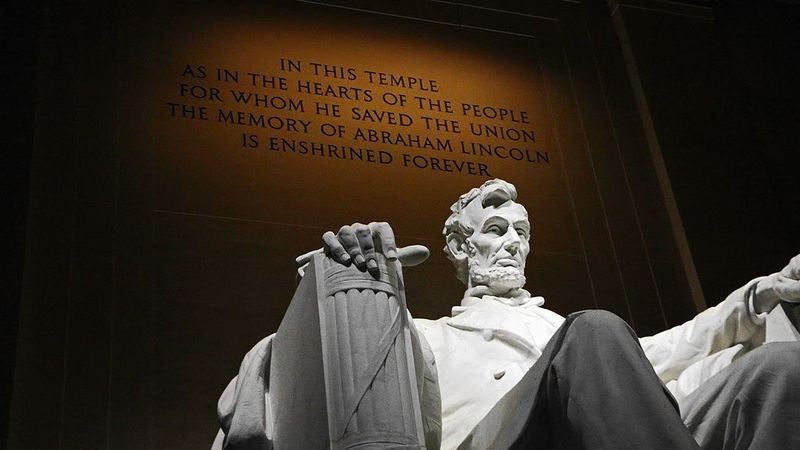
Abraham Lincoln
Mocked, Reviled, Murdered, Adored
Sixteenth president of the United States, considered to be the greatest leader in the country’s history and the quintessential American who, during his time, was mocked, ridiculed, derided, and eventually murdered by Americans. The deeply respected national hero, whom nearly every U.S. citizen holds in saintlike regard as one of the greatest human beings ever, was viciously chastised by nearly every U.S. citizen for his progressive politics and peculiar, spindly build. During Lincoln’s historic presidency, unanimously regarded by the American people as one of the most important and inspiring of all time, he was mercilessly attacked by the American people for being weak-willed, traitorous, disappointing, foolish, and, again, odd-looking. The beloved American, whose life and opinions best embody the spirit and values of America and all Americans, was then shot in the head by an American in front of his wife in 1865.
James Buchanan
God-King of the Americas
Self-anointed divine imperial overlord of the United States who, immediately after being elected president in 1857, enthroned himself on a golden ziggurat and brutally ruled the nation in a debauched phantasmagoria of sex, blood, and madness that nearly destroyed the republic. During what he referred to as his “glorious reign of holy exaltation,” Buchanan subjected the country to his cruel whims and grandiose habits, having by the end of his four years in power transformed the White House into a large arena for viewing indescribably cruel blood sports of his own devising, killed his own child, held countless orgies deep into the night as New York and Washington burned, and appointed his dog Excelsior vice president upon murdering running mate John C. Breckinridge with a golden scimitar. American citizens were powerless to stop the power-mad Buchanan during his duly elected term, but voted him out of office in 1861, finally leaving Buchanan’s Cabinet free to torture him, pierce him with lances, and then burn him alive.
Franklin Pierce
First Heterosexual President
Fourteenth president of the United States and first openly heterosexual man to hold the nation’s highest office. Pierce’s election was considered impossible in the pervasive climate of intolerance toward straights, and signaled a surprising flexibility among voters to embrace a candidate sexually attracted to women. But for much of the election of 1852, Pierce, who had previously served as both a Democratic representative and a senator for New Hampshire, was forced to prove his effeteness and overt femininity by going petticoat shopping for the press, riding sidesaddle, and deep kissing men on every campaign stop. When rumors surfaced late in the campaign that he had frequented a mixed-gender social club, Pierce courageously announced that he was indeed inclined toward persons of the opposite sex and still went on to win 27 of 31 states. Although electing Pierce to the Oval Office signified social progress for American voters, Pierce himself is considered one of the nation’s least effective presidents, a fact that has prompted any heterosexual candidate since to keep his or her orientation a secret.
Millard Fillmore
Only A Couple More Til Lincoln
Thirteenth president of the United States, who convinced the North and South to hold off on the Civil War for 11 years by arguing it would be better for the whole country if the conflict were handled by future president Abraham Lincoln. The last member of the Whig Party to hold high office, Fillmore saw early on that tensions between the rival factions were reaching a breaking point, and he freely admitted in speeches that he was not the man to be in charge of a country about to enter a war that would be far bloodier than World War I, or handle the racial upheaval and Reconstruction period to follow—tasks he said would be better managed by a “big-time president with the clout and stature of a Teddy Roosevelt or an FDR.” During his 1852 State of the Union Address, Fillmore famously said that the upcoming Civil War was “clearly Lincoln’s moment to shine,” and that the thought of himself delivering the Gettysburg Address or freeing the slaves was “as impossible to imagine as seeing slow pans across sepia photos of me, Millard Fillmore, in Ken Burns’ 1990 documentary The Civil War.”
Zachary Taylor
White Blood Cells Posthumously Awarded Purple Heart
Famed Army general and 12th president of the United States who died in office while valiantly defending his digestive tract in the Battle of Gastroenteritis. Already a national hero for defeating a much larger Mexican army at the Battle of Buena Vista, Taylor commanded his immune system courageously against the bacterial toxins that invaded his stomach and small intestine in 1850, but ultimately perished before adequate reinforcements of soft foods and ipecac could arrive. Rumors persist, however, that Taylor was actually assassinated for his moderate position on slavery, a suggestion his descendants say falsely casts doubt on the bravery of both their ancestor and the antibodies who fought so gallantly by his side.
James K. Polk
Nobody In Chief
Obscure 11th president of the United States, who went his entire four years in office without being recognized by anyone. Because the entire U.S. populace was unaware that Polk had won the election of 1844, the president-elect drew puzzled looks as he arrived at his inauguration and was ultimately chased away by the chief justice of the Supreme Court when he attempted to take the oath of office. Polk persisted, however, despite being constantly shooed out of the West Wing by his staff and escorted off the premises at least once a day by Secret Service agents. Although Polk was arrested more than 137 times and beaten by Cabinet members on dozens of occasions, he still managed to lower tariffs, appoint two Supreme Court justices, sign a bill creating the Department of the Interior, and admit Texas, Iowa, and Wisconsin to the union, all of which he accomplished by sneaking through an open window in the Oval Office late at night to complete his work. A majestic oil painting of Polk, still hanging on a wall near the entrance of the White House, has a sign beneath it that reads: “Do not let this man in the building.”
John Tyler
10th President, Possible Serial Killer
Tenth president of the United States, who oversaw the annexation of Texas in 1845 and was widely suspected of being the infamous Whig Strangler, a serial killer who murdered 23 people during the four-year period of Tyler’s presidency. Entering office on April 6, 1841—the same day the Whig Strangler’s Washington-area killing spree began—Tyler’s whereabouts were often unaccounted for when the slayings occurred, and he was frequently known to return to the White House in the middle of the night, not wearing the gloves he wore out and offering vague, contradictory answers to his family, his Cabinet, and Congress as to where he had been. Sufficient evidence was never found to link Tyler to the Whig Strangler killings, but on several occasions he expressed an admiration for the murderer in newspaper interviews, saying the perpetrator was so brilliant as to be “akin to God,” and describing the cold-blooded killer as “much, much too clever to ever be caught by the dullards of the District constabulary.” Still, Tyler urged authorities to increase their efforts in order to “keep the game interesting.” Though generally supportive of his presidency, many Americans remained suspicious of Tyler’s disturbing, emotionless gaze and his habit of torturing stray animals around the Capitol—suspicions that were further aroused when Tyler concluded his 1845 State of the Union address with the cryptic words “Please stop me.”
William Henry Harrison
Jesus, How Many Harrisons Are There?
Ninth president of the United States, who died after delivering the longest-ever inaugural address, which lasted 30 grueling days in the midst of numerous violent rain and wind storms. Renowned for his leadership at the Battle of Tippecanoe, as well as his governorship of the Indiana Territory, Harrison touched on these and literally thousands of other topics in his epic speech, which ran 24 hours a day for a month, despite the increasing hoarseness of Harrison’s voice, multiple lapses into exhaustion-induced incoherence, and constant attempts by aides to physically pull Harrison away from the podium. After delivering the final line to an amphitheater in which 227 of the original 1,250 attendees had also died, Harrison finally walked off stage, sat back down in his chair, and immediately succumbed to pneumonia-related complications.
Martin Van Buren
Against His Wishes, Remembered To This Day
Eighth president of the United States, who in his last months in office tried and failed to push a bill through Congress that would have required all Americans to immediately forget his presidency ever happened. By far his most significant initiative, the Presidential Non-Remembrance Act of 1841 would have compelled all citizens to flush from their minds any recollection of what occurred while he was in office, including the Panic of 1837, record unemployment, bank failures, the continuation of the Trail of Tears, and his unyielding tolerance of slavery. The bill was roundly defeated despite token compromise provisions that would have allowed people to remember Van Buren’s appointment of John McKinley and Peter Vivian Daniel to the Supreme Court.
Andrew Jackson
Killed Thousands Of Americans And Got Reelected
Seventh president of the United States, responsible for the deaths of thousands of Native Americans, who was in 1831 convicted of genocide by an interplanetary tribunal and sentenced to death by Glizoxx. Called before the Supreme Judiciary Council of 15 representatives from the Intergalactic Alliance of Planets, Jackson appeared cold and remorseless when presented with evidence he had engaged in ethnic cleansing by authorizing the Indian Removal Act, legislation that forced 45,000 American Indians from their tribal lands. Jackson remained unapologetic throughout the high-profile trial, even as the tribunal deemed the deaths of some 4,000 displaced Cherokees who succumbed to cold, hunger, and disease on the Trail of Tears to be crimes against humanity—and acts punishable by thrashing from the Glizoxx’s spiked tentacles until the condemned’s body is finely shredded into a pile of bloody meat. The enlightened beings of the tribunal were so disgusted by Jackson’s callous attitude toward having seized 100 million acres of land sacred to Native Americans and given it to white slave owners that they denied him any possibility of leniency or parole. However, Jackson escaped his prison cell by exploiting his captors’ compassion and murdering three alien guards. He then seized a starfighter and used its weapons systems to destroy the Intergalactic Alliance of Planets headquarters, killing delegates from more than 1,000 different galaxies. After delivering a devastating blow that crippled the highly evolved peacekeeping organization for decades, Jackson returned to Earth, resumed his role as U.S. president, decisively won his reelection bid, and used the futuristic technology stolen from the craft to disintegrate millions of Native Americans.
John Quincy Adams
An American Foreson
Sixth president of the United States and the first American to fail to make a better life for himself than his father. After receiving a Harvard education almost identical to that of his father, John Adams, and practicing law to less renown, Adams became a much less distinguished president than his father, and his performance after holding the office was also less impressive, making him the only U.S. citizen up to that point in history who was not able to improve upon his parents’ lot in life in any way, shape, or form. John Quincy Adams died in 1848 at the age of 80, living a full 10 years less than his father did.
James Monroe
Only Truly Happy When He Was Doctrine-Writing
Fifth president of the United States, who churned out more than 12,000 doctrines during his two terms in office—a rate of nearly 30 doctrines per week. Though the Monroe Doctrine and its argument against further European colonization of the Americas remains his most enduring, Monroe wrote thousands of lesser-known doctrines, including the James Doctrine, the Presidential Doctrine, Untitled Doctrine #434, and the Gray Squirrel Doctrine. Monroe tried his hand at writs and proclamations but never found the same success as he did with his true passion, the doctrine. In his 1824 Diary Doctrine, Monroe describes how inspiration would usually come in the middle of the night, causing him to bolt from his bed, go to his desk, and write furiously for hours, often waking up the next day to find a jumbled, unclear doctrine that lacked any discernible structure. Because Monroe never knew when a new doctrine concept might come, he always carried around a Doctrines Ideas notebook, in which he wrote such musings as “Doctrine about education,” “Doctrine about the fishing industry,” and “Salvation Doctrine? Could be good.” In addition to handling the Panic of 1819 and presiding over the admission of Missouri into the union in 1821, Monroe spent a majority of his presidency in long meetings with Cabinet members bouncing doctrine ideas off of them or brainstorming brand-new doctrines on the spot.
James Madison
The Original Muff Rider
Fourth president of the United States and influential statesman who is perhaps best known for fucking the living Christ out of his wife, Dolley Madison. Known as the Father of the Constitution for his role as the main author of that historic document, Madison is still primarily remembered for balling the first lady all day and all night, pausing just long enough to approve the establishment of the Second Bank of the United States before diving back in for another marathon deep-dicking session. While his two terms in office are inevitably characterized by the way he crammed his cock halfway up his wife’s stomach, pounding like an oil derrick and blasting wad after rocket-powered wad inside her hungry hole, Madison also presided over America’s conflict with Britain in the War of 1812.
Thomas Jefferson
Wasted A Pretty Amazing Historical Document On Americans
Third president of the United States and principal author of the Declaration of Independence, a document Jefferson wouldn’t have worked so tirelessly on had he known how terrible America and its citizens would turn out. Jefferson spent 17 days writing and rewriting the historic treatise, carefully crafting every word in what was ultimately a colossal waste of time based on how apathetic, uncaring, and generally godawful everyone ended up being. Had Jefferson somehow been able to divine that future Americans would take his crowning achievement for granted, or been made aware of things like Carnival Cruise Lines, the Dallas Cowboys, former senator Jesse Helms, or the vocal quartet the Manhattan Transfer, he more than likely would have just farted out the Declaration of Independence in 10 minutes and called it a day. Or, perhaps he would have given up on writing historically significant documents altogether and focused on one of his 14,000 other talents and interests. But Jefferson, who clearly had a naïve vision of the future in which people had the decency to clean their own dog’s shit off the sidewalk, spent countless late nights writing by candlelight to compose an unassailable argument as to why the colonists deserved to be free. The Founding Father said he wanted the Declaration to be “an expression of the American mind,” oblivious to how puerile and diluted the American mind would become, and ignorant of the fact that future citizens deserved nothing more than a piece of parchment scrawled out in 45 seconds that read: “Hey, King George, you fat sack of crap, you’re not gonna rule us anymore. We’re gonna be doing that now. So, yeah, we’re independent now.”
John Adams
Second, First, And 138th President
Erroneously considered the second president of the United States, Adams, because of the nonlinear way in which time was organized in the 18th century, was technically president before George Washington. As a result of the complex pre-1800 nonconsecutive system of time, Adams was in many ways the nation’s first commander in chief, as well as its 19th and 64th, the first and 72nd vice president, Indiana’s fourth-largest Hyundai dealer, the man who gave a majestic eulogy at the funeral of President John Adams in 1826, and backup quarterback for the Los Angeles Rams from 2021 to 2026. As president, Adams retained Washington’s cabinet, though its members weren’t certain if they had served Washington first or if Adams had appointed them, but it was nevertheless seen as a gracious act of statesmanship. Unfortunately, when Washington was voted into office four years earlier, he spent the first part of his term undoing everything Adams would later achieve.
George Washington
Love Of Hunting Would Sew Up NRA Vote
First president of the United States and legendary military and political leader who would have had to play up the fact that he led the Continental Army to victory over the British in the Revolutionary War to have any chance of winning key swing states like Florida and Ohio. A Founding Father of the United States and a framer of the U.S. Constitution, Washington would have really needed to hammer those talking points home unless he wanted them to get lost in the 24-hour news cycle, especially since there are a number of voters out there who would think of him as a Washington insider. Baptized in the Church of England, Washington was not especially religious, so he would have had no shot of winning the Evangelical vote, but then again, a few photo ops of him coming in and out of church, a high-profile dinner with Billy Graham, and his decisive victory at Yorktown certainly couldn’t hurt with white Christian males. The cherry tree thing would have gotten younger people to the polls. Even if it wasn’t true, kids would’ve remembered it. No matter what, though, because Washington honorably stepped down from the presidency in 1797 after two terms in office, he would constantly have to beat back accusations from the Right that he was un-American.
CaptainUnrea Apr 26, 2012 Jazz saxophonist Bud Freeman came up with the idea for Songs of Couch & Consultation, a cult classic comedy album that pokes fun at psychoanalysis and psychiatric jargon. Freeman wrote a dozen songs’ worth of lyrics, which Leon Pober set to music and Bob Thompson arranged. Katie Lee, an extraordinarily pretty folk singer who previously recorded an album for Specialty called Spicy Songs for Cool Knights, was brought in to sing and pose for the cheesecake album cover. The songs describe an assortment of neuroses and psychiatric conditions in a variety of musical styles, delivered with a heavy dose of hand-wringing self-scrutiny. There’s ragtime, big-band blues, and even cowboy music as Lee coos her way through topics such as schizophrenia, repressed hostility, and maladjustment. “Hush Little Sibling” lampoons parenting manuals and the venerated Dr. Spock, and “The Will to Fail” identifies a drive Nietzsche missed. The irony is that the sophisticated humor targets an educated audience that is also the group most likely to embrace psychiatric jargon and theories. Reprise reissued the album with a less striking cover, so the original Commentary Records pressing is the one to find.
(Contributed by John Atwter, H.W., and Beth Kuper, H.W.
The Princess of Cups is a dreamer… and in the Thoth deck we see her dancing her dreams into manifestation, thus revealing one of her more secret aspects. This card represents the earthy part of water… where dreams can become reality.On the day that I wrote the commentary for working with this card, it came after the Nine of Cups, which you will remember, is the Wish Card… that seemed to me to make for a very auspicious and important set of circumstances. At that time, I had written up the details on 56 out of the 78 cards… the fact that the Wish Card was followed by this one concentrated my attention on her remarkable ability to make dreams come true.The push and shove of daily life, the pain, the sadness and the suffering can all make us afraid to dream, to wish, to hope. And often we lose sight of the fact that, if we do not dream our dreams, we shall have no dreams come true.In our darkest moments, if we can only, even for a single second, dream of golden shiny happy days… of contentment and a sense of safety in our lives… then we give the Princess of Cups something to dance into reality for us. It is a desperately hard thing to, just for a second, open our hearts to hope, sometimes. But it is essential, too.But if we cease to dream, then our dreams cannot emerge, for they do not exist. If we relinquish hope, then hopeful things will not happen in our lives. If we surrender optimism, then we can guarantee we shall never ever have anything to be optimistic about.So… in your darkest hour… lift up your eyes to the sky… search out a perfect flower… seek to touch something you love… and for that moment, let yourself hope and dream and wish – then the Princess will have something to work for on your behalf.And when your life if full and happy and replete… on a day ruled by this card… PLEASE… spare a thought for those who suffer… and hope for fulfilment and contentment for all of those who seek it!
(Angelpaths.com)
Consciousness, spirituality, biography, sexuality, androgyny, futurism, space, the arts, science, astrology, democracy, humor, books, movies and more