Taurus Lunar Eclipse, October 28, 2023

Wendy Cicchetti

Taurus Lunar Eclipse

The Full Moon in Taurus brings practicalities to the fore: We consider what absolutely must be addressed to assist our physical well being and material security. And this is one of those times when emotional considerations must be balanced against basic needs. For some, it may be required, even temporarily, to carry on with or assume extra work that’s less than ideal to be able to pay bills — but, perhaps, a deadline could be set to review or alter the situation. For others, reducing work hours and accepting a slightly lower income might be workable for a while in exchange for gaining extra time to provide for rest, upgrade health, or tackle home improvements, for instance. Ideally, we will manage the best of both worlds. But the Full Moon frequently emphasizes where something needs to give. If we don’t have the balance quite right, life has a way of showing us the problem — then, we can apply ourselves to seek and work on a solution.

Managing what makes us feel secure can seem like an inconvenient chore, yet it brings peace of mind. For example, there may be cause to sift through insurance details so we feel protected against a potentially bad scenario in the future. Or, we may need to allocate time to address repairs to prevent a problem from worsening. The extra time, expense, and upheaval may register as ouch factors in the present, but will likely bring ongoing peace in the long term.

Emotionally, the Moon’s opposition from the Sun in Scorpio suggests a possible need to ensure our safety or to protect ourselves or others against a degree of tyranny — which might be from an unexpected source. Mercury and Mars in Scorpio opposing the Moon and Jupiter in Taurus suggest that we should be ready to stand our ground over anything that feels vital. It’s quite possible that someone’s words will sound menacing; yet, we likely have more support around us than we realize. And we shouldn’t let others dictate all our decisions and actions — Jupiter often brings added blessings, after all. With Mars so intense in Scorpio, we might think twice about taking on any opponents fully. Instead, it’s quite possible to simply sidestep trouble and find a better position.

If conflict cannot be avoided, then our task will be to work on managing our own well being the best we can. It might be pointless, for example, to eat our usual meals if we are in a traumatized state. Instead, we’ll do well to rest and get help for the trauma, and then get back to our nutritional needs when our bodies are ready to digest.

We may well be in a situation where the “fight” is not so much real, but is in our minds — which is not to say it doesn’t exist or isn’t affecting us. It might be perceived as worry and stress, and we’re projecting into the future about what might happen. It is quite possible that there’s a way through this that helps, particularly taking a tip from the Moon’s sextile to Saturn, which indicates sticking to a solid system.

Since Saturn is linked with rock, and the planet is in the subtle sign of Pisces, our help could be as simple as taking a little time each day to meditate with crystals in our hands, or getting to grips with earthing practices, such as walking barefoot in nature for a short while. Some such practices are far from the spiritual mumbo-jumbo that some people may assume; they are based on scientific evidence of chemical exchanges occurring in the human body. And, as our body has a chance to settle and rebalance, so does our mind. It’s a holistic win-win!

This article is from the Mountain Astrologer by Diana McMahon Collis

Hazrat Inayat Khan on listening to everything

“There is nothing in the world that does not speak to us. Everything and everybody reveals its own nature, character and secrets continuously. The more open our inner senses, the more we understand the voice of everything.”

Hazrat Inayat Khan (1882-1927)
Founder of the Sufi Order in the West
AN OPPORTUNITY FOR DAILY REFLECTION BROUGHT TO YOU BY THE SCHOOL OF PRACTICAL PHILOSOPHY

Book: “The Flowering Wand: Rewilding the Sacred Masculine”

The Flowering Wand: Rewilding the Sacred Masculine

Sophie Strand

A deep exploration of the regenerative and magical secrets of sacred masculinity hidden in familiar myths both ancient and modern

• Reveals the restorative fungi archetype of Osiris, the Orphic mysteries as an underground mycelium linking forests and people, how Dionysus teaches us about invasive species and playful sexuality, and the ecology of Jesus as depicted in his nature-focused parables

• Liberates Tristan, Merlin, and the Grail legends from the bounds of Campbell’s hero’s journey and invites the masculine into more nuanced, complex ways of dealing with trauma, growth, and self-knowledge

Long before the sword-wielding heroes of legend readily cut down forests, slaughtered the old deities, and vanquished their enemies, there were playful gods, animal-headed kings, mischievous lovers, trickster harpists, and vegetal magicians with flowering wands. As eco-feminist scholar Sophie Strand discovered, these wilder, more magical modes of the masculine have always been hidden in plain sight.

Sharing the culmination of eight years of research into myth, folklore, and the history of religion, Strand leads us back into the forgotten landscapes and hidden secrets of familiar myths, revealing the beautiful range of the divine masculine, including expressions of male friendship, male intimacy, and male creative collaboration. In discussing Dionysus and Osiris, Strand encourages us to think like an ecosystem instead of like an individual. She connects dying, vegetal gods to the virtuous cycle of composting and decay, highlighting the ways in which mushrooms can restore soil and heal polluted landscapes. Exploring esoteric Christianity, the author celebrates the Gnostic Jesus of the Gospel of Thomas, imagining the ecology that the Rabbi Yeshua would have actually been referencing in his nature-focused parables. Strand frees Tristan, Merlin, and the Grail legends from the bounds of Campbell’s hero’s journey and invites the masculine into more nuanced, complex ways of dealing with trauma, growth, and self-knowledge.

Strand reseeds our minds with new visions of male identity and shows how each of us, regardless of gender, can develop a matured ecological empathy and witness a blossoming of sacred masculine powers that are soft, curious, connective, and celebratory.

(Goodreads.com)

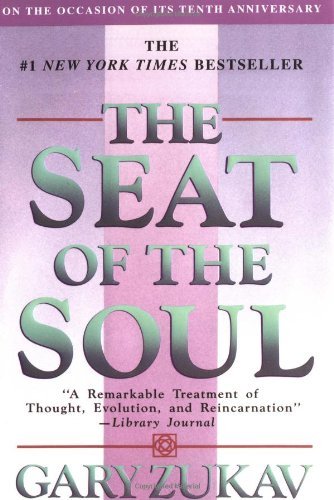
Book: “The Seat of the Soul”

The Seat of the Soul

Gary Zukav

A NOTE FROM THE This hardcover edition of The Seat of the Soul celebrates its tenth anniversary. The Seat of the Soul became a national bestseller when it was first published, but more people are buying it now than ever before. Why is this? It is because a new species is being born. The Seat of the Soul is about this birth. This new species longs for harmony, cooperation, sharing, and reverence for Life. It uses higher orders of logic and justice — those of the heart. The number of people who are becoming aware of this birth is growing very fast, because the new species is being born inside all of us. The Seat of the Soul provides a vocabulary for this new species — a vocabulary of authentic power, the alignment of the personality with the soul. Human experience is exploding beyond the five senses, and The Seat of the Soul is about that, too. This is the most exciting time to be on Earth, and The Seat of the Soul describes why. As we become aware of our new abilities and values, like a baby opening its eyes and stretching its arms and legs for the first time, we are also becoming aware of an entirely new potential that we have never had before. I have been writing a book about this new potential for nine years. I am looking forward to sharing that with you, too. The tremendous growth of interest in The Seat of the Soul is humbling to me. I dream of a world where people respect each other and the living Earth, and spiritual growth is the first priority. I work daily to develop the awareness, compassion, and intentions that are necessary to create it. The extraordinary reception of The Seat of the Soul shows me, among other things, how many fellow souls are doing the same. The more this happens, the more I see myself, with gratitude, as a traveler among travelers, an experimenter among experimenters, and a soul among souls. Gary Zukav 1999

About the author

Profile Image for Gary Zukav.

Gary Zukav

48 books751 followersFollow

Gary Zukav is the author of The Dancing Wu Li Masters, winner of The American Book Award for Science; Soul Stories, a New York Times bestseller; and The Seat of the Soul, a New York Times, USA Today, Los Angeles Times, and Publishers Weekly #1 bestseller. His books have sold millions of copies and are published in sixteen languages. He is a graduate of Harvard and a former U.S. Army Special Forces (Green Beret) officer in Vietnam.

Gary’s gentle humor, sensitivity, and deep insights have endeared him to millions of readers and listeners. Through Genesis: The Foundation for the Universal Human, he participates in retreates, programs, and other events supporting the creation of authentic power and the experience of spiritual partnership.

Spanish probe estimates more than 200,000 children abused by Roman Catholic clergy

Over 200,000 minors are estimated to have been sexually abused in Spain by the Roman Catholic clergy since 1940, according to an independent commission published Friday.

Issued on: 27/10/2023 – (France24.com)

Spain's "Defender del Pueblo" national ombudsman Angel Gabilondo addresses a press conference after delivering a report on the country's first independent probe into the abuse of minors within the Catholic Church at the Congress of Deputies in Madrid, Spain, October 27, 2023.
Spain’s “Defender del Pueblo” national ombudsman Angel Gabilondo addresses a press conference after delivering a report on the country’s first independent probe into the abuse of minors within the Catholic Church at the Congress of Deputies in Madrid, Spain, October 27, 2023. © Javier Soriano, AFP

By:NEWS WIRES

Video by: Sarah MORRIS

The report did not give a specific figure but said a poll of over 8,000 people found that 0.6 percent of Spain‘s adult population of around 39 million people said they had suffered sexual abuse by members of the clergy when they were still children.

The percentage rises to 1.13 percent — or over 400,000 people — when including abuse by lay members, Spain’s national ombudsman Angel Gabilondo told a news conference called to present the findings of the report.

The revelations in Spain are the latest to rock the Roman Catholic Church after a series of sexual abuse scandals around the world, often involving children, over the past 20 years.

But unlike in other nations, in Spain — a traditionally Catholic country that has become highly secular — clerical abuse allegations are only now gaining traction, leading to accusations by survivors of stonewalling.

“Unfortunately, for many years there has been a certain desire to deny abuses or a desire to conceal or protect the abusers,” said Gabilondo, a former education minister.

The report is critical of the attitude of the Catholic Church, calling its response to cases of child abuse involving the clergy “insufficient”. It recommended the creation of a state fund to pay reparations to victims.

Child protection offices 

Just before the report was presented in parliament, the Spanish bishops conference said it would hold an extraordinary meeting on Monday to discuss its findings.

Spain’s parliament in March 2022 overwhelmingly approved the creation of an independent commission led by the country’s ombudsman to “shed light” on allegations of sexual abuse of “defenceless boys and girls” within the Catholic Church.

Spain’s Catholic Church, which for years flatly refused to carry out its own probe, declined to take part in the independent investigation, although it did cooperate by providing documents on cases of sexual abuse that had been collected by dioceses.

Read moreFrench Catholic Church to provide clergy with scannable IDs to battle sexual abuse

But as political pressure mounted, it tasked a private law firm in February 2022 with an “audit” into past and present sexual abuse by clergy, teachers and others associated with the Church, which should be completed by the end of the year.

The Spanish Church said in June it had discovered 927 cases of child abuse through a complaints procedure launched in 2020. 

It argues it has set up protocols for dealing with sexual abuse and has set up “child protection” offices withing dioceses.

‘Tip of iceberg’ 

But a probe by top-selling daily newspaper El Pais which began in 2018 has since uncovered 2,206 victims and 1,036 alleged abusers dating back to 1927.

“According to experts, this is just the tip of the iceberg,” the newspaper wrote on Friday before the report was published.

Daily newsletterReceive essential international news every morningSubscribe

The Church’s abuse crisis exploded onto the international stage in 2002 when the Boston Globe newspaper revealed priests had sexually abused children for decades and church leaders had covered it up.

Patterns of widespread abuse of children were later reported across the United States and Europe, in Chile and Australia, undercutting the moral authority of the 1.3 billion-member Church and taking a toll on its membership.

An independent commission in neighbouring France concluded in 2021 that some 216,000 children — mostly boys — had been sexually abused by clergy since 1950.

In Germany a study found 3,677 cases of abuse between 1946 and 2014 while in Ireland more than 14,500 people received compensation though a government scheme for those abused at juvenile facilities run by the Catholic Church.

(AFP)

How to make learning as addictive as social media

Luis von Ahn | TED2023

• April 2023

When technologist Luis von Ahn was building the popular language-learning platform Duolingo, he faced a big problem: Could an app designed to teach you something ever compete with addictive platforms like Instagram and TikTok? He explains how Duolingo harnesses the psychological techniques of social media and mobile games to get you excited to learn — all while spreading access to education across the world.

About the speaker

Luis von Ahn

Educational equity technologistSee speaker profile

Crowdsourcing pioneer and Duolingo CEO Luis von Ahn built the world’s most downloaded education app on a mission to make quality education available to everyone.

What is a fascist?

As Madeline Albright wrote in her book Fascism: A Warning:

“Decades ago, George Orwell suggested that the best one-word description of a Fascist was ‘bully.’”

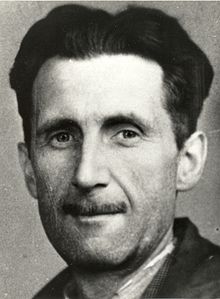
George Orwell

Eric Arthur Blair, better known by his pen name George Orwell (June 25, 1903 – January 21, 1950), was an English novelist, essayist, journalist, and critic. His work is characterised by lucid prose, social criticism, opposition to totalitarianism, and support of democratic socialism. Wikipedia

Mystery of why Roman buildings have survived so long has been unraveled, scientists say

Katie Hunt

Katie Hunt, CNN

Updated January 9, 2023 (edition.cnn.com)

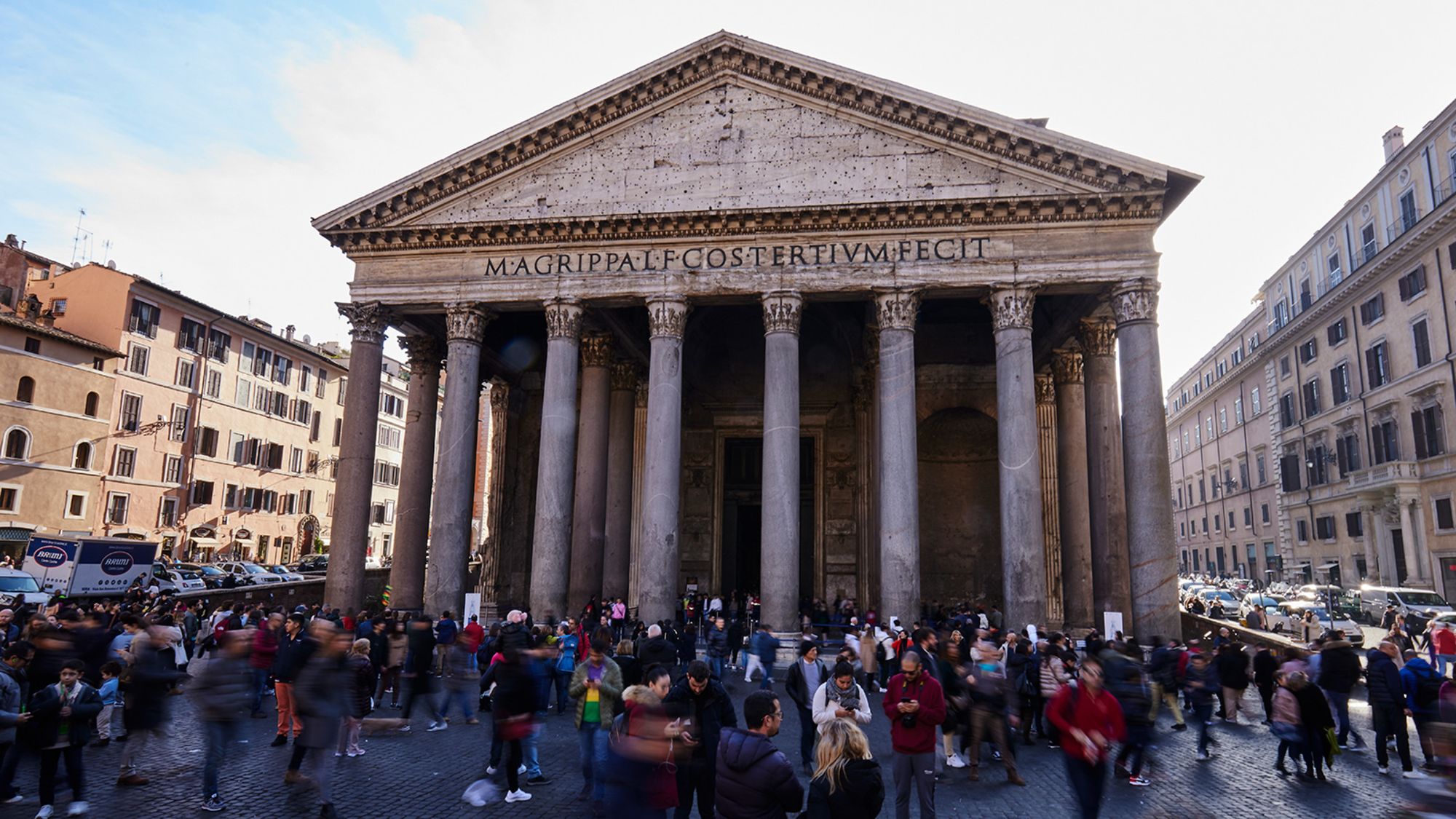
01 roman concrete mystery ingredient pantheon RESTRICTED

Emmanuele Ciancaglini/Getty Images

Sign up for CNN’s Wonder Theory science newsletter. Explore the universe with news on fascinating discoveries, scientific advancements and more.CNN — 

The majestic structures of ancient Rome have survived for millennia — a testament to the ingenuity of Roman engineers, who perfected the use of concrete.

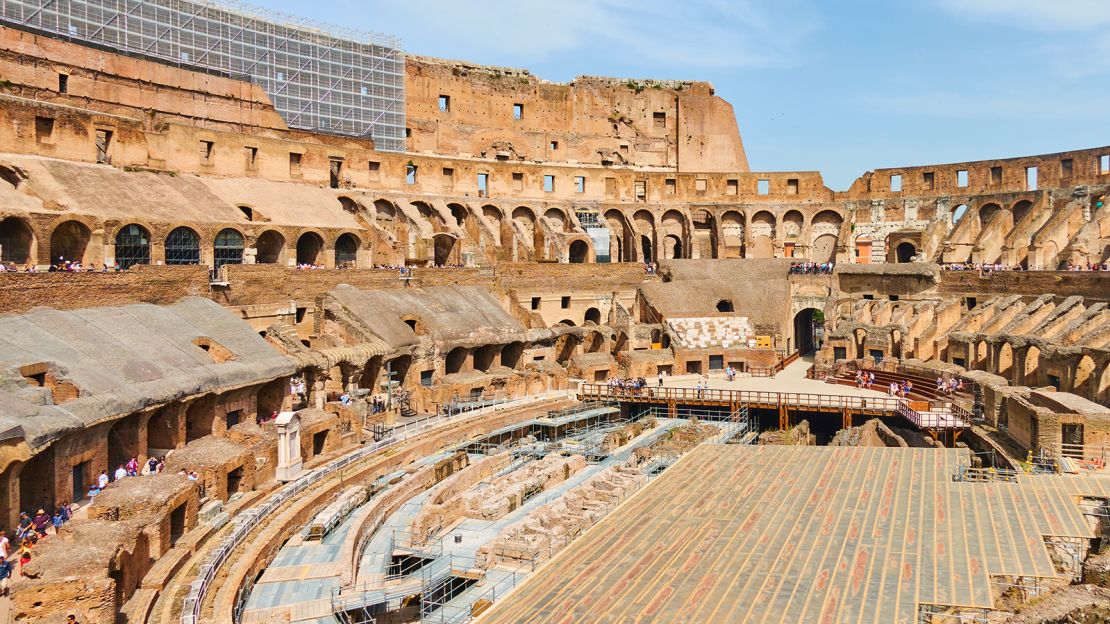
But how did their construction materials help keep colossal buildings like the Pantheon (which has the world’s largest unreinforced dome) and the Colosseum standing for more than 2,000 years?

Roman concrete, in many cases, has proven to be longer-lasting than its modern equivalent, which can deteriorate within decades. Now, scientists behind a new study say they have uncovered the mystery ingredient that allowed the Romans to make their construction material so durable and build elaborate structures in challenging places such as docks, sewers and earthquake zones.

The study team, including researchers from the United States, Italy and Switzerland, analyzed 2,000-year-old concrete samples that were taken from a city wall at the archaeological site of Privernum, in central Italy, and are similar in composition to other concrete found throughout the Roman Empire.

They found that white chunks in the concrete, referred to as lime clasts, gave the concrete the ability to heal cracks that formed over time. The white chunks previously had been overlooked as evidence of sloppy mixing or poor-quality raw material.

“For me, it was really difficult to believe that ancient Roman (engineers) would not do a good job because they really made careful effort when choosing and processing materials,” said study author Admir Masic, an associate professor of civil and environmental engineering at the Massachusetts Institute of Technology.

“Scholars wrote down precise recipes and imposed them on construction sites (across the Roman Empire),” Masic added.

The new finding could help make manufacturing today’s concrete more sustainable, potentially shaking up society as the Romans once did.

“Concrete allowed the Romans to have an architectural revolution,” Masic said. “Romans were able to create and turn the cities into something that is extraordinary and beautiful to live in. And that revolution basically changed completely the way humans live.”

Tourists visit Rome's Colosseum in June 2019.

Tourists visit Rome’s Colosseum in June 2019.EyesWideOpen/Getty Images

Lime clasts and concrete’s durability

Concrete is essentially artificial stone or rock, formed by mixing cement, a binding agent typically made from limestone, water, fine aggregate (sand or finely crushed rock ) and coarse aggregate (gravel or crushed rock).

Roman texts had suggested the use of slaked lime (when lime is first combined with water before being mixed) in the binding agent, and that’s why scholars had assumed that this was how Roman concrete was made, Masic said.

With further study, the researchers concluded that lime clasts arose because of the use of quicklime (calcium oxide) — the most reactive, and dangerous, dry form of limestone — when mixing the concrete, rather than or in addition to slaked lime.

Additional analysis of the concrete showed that the lime clasts formed at extreme temperatures expected from the use of quicklime, and “hot mixing” was key to the concrete’s durable nature.

“The benefits of hot mixing are twofold,” Masic said in a news release. “First, when the overall concrete is heated to high temperatures, it allows chemistries that are not possible if you only used slaked lime, producing high-temperature-associated compounds that would not otherwise form. Second, this increased temperature significantly reduces curing and setting times since all the reactions are accelerated, allowing for much faster construction.

India’s Meghalaya ‘living root bridges’ get stronger as the trees grow

To investigate whether the lime clasts were responsible for Roman concrete’s apparent ability to repair itself, the team conducted an experiment.

They made two samples of concrete, one following Roman formulations and the other made to modern standards, and deliberately cracked them. After two weeks, water could not flow through the concrete made with a Roman recipe, whereas it passed right through the chunk of concrete made without quicklime.

Their findings suggest that the lime clasts can dissolve into cracks and recrystallize after exposure to water, healing cracks created by weathering before they spread. The researchers said this self-healing potential could pave the way to producing more long-lasting, and thus more sustainable, modern concrete. Such a move would reduce concrete’s carbon footprint, which accounts for up to 8% of global greenhouse gas emissions, according to the study.

For many years, researchers had thought that volcanic ash from the area of Pozzuoli, on the Bay of Naples, was what made Roman concrete so strong. This kind of ash was transported across the vast Roman empire to be used in construction, and was described as a key ingredient for concrete in accounts by architects and historians at the time.

Masic said that both components are important, but lime was overlooked in the past.

The research was published in the journal Science Advances.

(Contributed by Hanz Bolen, H.W., M.)

A Pennsylvania Shop Offered Tarot Readings. Then the Police Came.

The police chief in Hanover visited the shop to “educate” its owner about an archaic state law that prohibits fortunetelling.

Beck Lawrence sitting in a wicker chair flashing a peace sign with a deck of tarot cards on a table in front of her.
Beck Lawrence said tarot readings are meant to help a person by giving clarity about their path in life rather than pretend to be able to tell a person what is in store for them.Credit…Beck Lawrence
Christine Hauser

By Christine Hauser

Published Oct. 14, 2023 Updated Oct. 15, 2023 (NYTimes. com)

A few days after Beck Lawrence was profiled in a business newsletter about the tarot card readings they offered at their shop in Hanover, Pa., the police chief dropped by for a visit. But it was not to have his fortune told.

Instead, Chief Chad E. Martin informed Mx. Lawrence at their witchcraft-themed store, the Serpent’s Key Shoppe and Sanctuary, on Oct. 5 that any complaints about the readings would lead to an investigation, citing an archaic state law that makes it illegal to predict the future for money.

“He informed me basically he is not here to arrest me or press charges,” Mx. Lawrence, 26, who uses they/them pronouns, said in a telephone interview on Friday. “However, if he ever gets a report from anyone, he will be back on my doorstep.”

Mx. Lawrence, who moved to Hanover in 2019 and opened the shop in January, offers a menu of tarot card readings, which cost $10 to $100, either in person or over Zoom.

Signs are posted saying the services are for entertainment purposes only. Candles, soaps and other handmade merchandise are also sold there.

The shop was profiled in the October “spooky season” issue of Main Street Hanover, a monthly newsletter that introduces a new business owner in the borough, which is not far from the border with Maryland.

“The shop, as the name suggests, is meant to be a sanctuary for anyone looking to connect with their spirituality on a deeper level,” the article said.

A table inside a store holds a variety of items including books on witchcraft, bones and yarn.
Mx. Lawrence, who opened the Serpent’s Key Shoppe & Sanctuary in Hanover in 2019, offers a menu of tarot card readings for $10 to $100.Credit…Beck Lawrence

A few days after the article was published, Mx. Lawrence was informed by borough officials that the police chief had read it and was going to stop by.

Mx. Lawrence described the ordeal to nearly 200,000 followers in a series of TikTok videos, including one in which they donned “protective jewelry” and a black “structured blazer” reminiscent of ravens’ wings to prepare for the visit.

Mx. Lawrence said the visit from Chief Martin and another officer was “intimidating.”

“Basically, he didn’t give me any advice or anything,” Mx. Lawrence said, adding that the message was, “Hey, just so you know, this is the law.”

The Hanover Police Department said on Friday that Chief Martin was not available to comment.

News of his appearance at the shop, which Mx. Lawrence said is one of at least four “metaphysical” stores in Hanover, was reported by The Philadelphia Inquirer and widely shared on social media, fueling questions about the use of taxpayer money, what constitutes a good use of police time and whether the visit amounted to a suppression of religious freedom.

Chief Martin defended the visit in a post on Facebook.

He referred to the law, Title 18, Section 7104, which says it is a misdemeanor to pretend, “for gain or lucre, to tell fortunes or predict future events, by cards, tokens, the inspection of the head or hands of any person, or by the age of anyone, or by consulting the movements of the heavenly bodies.”

In his statement, the chief said “there was never an investigation, nor was there any threat of arrest in this matter.” But the department would be obligated to investigate, he said, “if a complaint was made against someone for engaging in acts qualifying as ‘fortunetelling.’”

Anyone who doesn’t like the law, he suggested, should contact their legislators.

Mx. Lawrence, who has studied tarot and witchcraft for 13 years, said tarot readings are meant to help a person by giving clarity about their path in life.

They do not tell a person what is in store for them, such as whether they will win money, or reveal the whereabouts of missing loved ones, they said.

“I pull my cards and study the symbols,” Mx. Lawrence said. “My job is to string these things together of what I am seeing. It is up to their free will. There is nothing set in stone. I am 26. I don’t know the answers.”

Local news organizations have poked fun at the statute.

In 2022, WHTM-TV included it in a list of “laws that residents might consider antiquated, useless, or just plain silly,” alongside state prohibitions on such activities as catching a fish with one’s bare hands or buying a car on a Sunday.

In 2019, The York Daily Record included the statue in a roundup of “wacky” laws, noting that it also prohibited “making love potions and drawing maps to buried treasure.”

The law barring fortunetelling, a misdemeanor, is rarely prosecuted, The Daily Local News reported in a 2021 article about a Philadelphia woman, April S. Uwanawich, who pleaded guilty to four counts of fortunetelling and was sentenced to 14 days to a year in jail.

Matt M. McClenahen, a lawyer in Pennsylvania, said that fortunetelling businesses in the state use disclaimers that their services are “for entertainment purposes only.”

“The law protects gullible people from being ripped off,” he said in an article about the statute on his website.

Even as they bristled at the chief’s visit, Mx. Lawrence acknowledged that the law had a purpose: “It is there to protect people from scam artists.”

Christine Hauser is a reporter, covering national and foreign news. Her previous jobs in the newsroom include stints in Business covering financial markets and on the Metro desk in the police bureau. More about Christine Hauser