
New Thinking Allo • Oct 28, 2023 This video is a special release from the original Thinking Allowed series that ran on public television from 1986 until 2002. It was recorded in about 1988. People who are motivated to transform and improve their lives can do so effectively by harnassing the power of their own minds. The late Bernie Zilbergeld, PhD, clinical psychologist and author of Mind Power, suggests a number of techniques – among them learning to monitor and change negative thought patterns, working with positive memories, visualizing goals, mental relaxation and working with mental advisors. Now you can watch all of the programs from the original Thinking Allowed Video Collection, hosted by Jeffrey Mishlove. Subscribe to the new Streaming Channel (https://thinkingallowed.vhx.tv/) and watch more than 350 programs now, with more, previously unreleased titles added weekly. Free month of the classic Thinking Allowed streaming channel for New Thinking Allowed subscribers only. Use code THINKFREELY.
Monthly Archives: October 2023
Alain de Botton on the Qualities of a Healthy Mind
By Maria Popova (themarginalian.org)

“The mind is its own place, and in it self can make a Heav’n of Hell, a Hell of Heav’n,” Milton wrote centuries before modern science came to illuminate how the mind renders reality — the mind, this sole lens we have on what the world is and what we are. The quality of our mind, then — the clarity of it, the composure of it — shapes the quality of our lives. Viktor Frankl knew this when he observed amid the most unimaginable of circumstances — the barbed-wire inside of a concentration camp — that “everything can be taken from a man but one thing: the last of the human freedoms — to choose one’s attitude in any given set of circumstances.” That choice, that attitude, is what we call mindset, and it is as trainable as a muscle, as teachable as piano.
How to cultivate a mind that faces the gauntlet of living without making of it a hell is what Alain de Botton, philosopher of poetic pragmatism, explores in A Therapeutic Journey: Lessons from The School of Life (public library).
Illustration by Margaret C. Cook for a rare 1913 edition of Walt Whitman’s Leaves of Grass. (Available as a print.)
Recognizing that the mind is at bottom an attention machine — and, as cognitive scientist Alexandra Horowitz observed in her exquisite experiment in widening the lens, “attention is an intentional, unapologetic discriminator [that] asks what is relevant right now, and gears us up to notice only that” — De Botton writes:
A mind in a healthy state is, in the background, continually performing a near-miraculous set of maneuvers that underpin our moods of clear-sightedness and purpose… A healthy mind is an editing mind, an organ that manages to sieve, from thousands of stray, dramatic, disconcerting, or horrifying thoughts, those particular ideas and sensations that actively need to be entertained in order for us to direct our lives effectively.
A mind at its best, De Botton argues, is equally capable of self-compassion and of what Iris Murdoch so wonderfully termed unselfing. He writes:
Undergirding his formulation of a healthy mind is the intimation that cynicism is the unhealthiest of mindsets and the surest pathway to despair:
Complement with neuroscientist Antonio Damasio on the relationship between the body and the mind and psychologist Carol Dweck’s pioneering framework of the two basic mindsets that shape our lives (and how to cultivate the far more fruitful one), then revisit Alain de Botton on what emotional maturity really means and the importance of breakdowns.
How to Be a Living Poem: Lucille Clifton on the Balance of Intellect and Intuition in Creative Work and the Healing Power of Connection
By Maria Popova (themarginalian.org)
Every single thing we make, even the smallest, we make with the whole of who we are and what we have lived — with every impression and every memory, every love and every loss, consciously and unconsciously constellated into the creative act. A song encodes its maker’s entire history of feeling. An equation cannot describe why an apple falls without its maker’s entire understanding of how the universe works. The poetry of personhood — which we might call soul — is the raw material for all creative work. To hear its voice requires a delicate harmonizing of what we consciously know and what we unconsciously are — a syncopation of intellect and intuition.
Thinking about this in the context of Virginia Woolf’s meditation on how to hear your soul and Nick Cave’s insistence on the creative power of trusting yourself, I was reminded of some wonderful passages I had saved from various interviews Lucille Clifton (June 27, 1936–February 13, 2010) gave over the course of her long and luminous life.
Lucille Clifton, 1995. (Photograph: Afro American Newspapers/Gado/Getty Images)
A century after the polymathic Nobel laureate Henri Bergson considered the interplay of intuition and the intellect in the creative work of science, Clifton takes up the question as related to art in a Rattle magazine interview from the winter of 2002, reflecting on where a poem comes from:
In the final years of her life, in another interview, Clifton revisits the subject of this integrated totality of being and how to hear its voice:
Poetry can be so healing precisely because it springs from that deepest place of reckoning with what it means to be human — the place we seek with the intellect but touch with the intuition. And down there in the depths, we don’t much differ from one another, sharing the same basic longings, the same basic fears. Clifton reflects:
[…]
Somebody asked me why is it that I want to heal the world. I want to heal Lucille Clifton! And fortunately, I am very human just like all the other ones, all the other humans.
With an eye to what it means to be a poet, she adds a sentiment equally true of any creative endeavor:
Complement with Clifton’s classic “won’t you celebrate with me” — a living testament to this poetry of personhood turned art — and her spare, stunning ode to the common ground of being, then revisit Wendell Berry on how to be a poet and a complete human being and Anne Gilchrist — Whitman’s most beloved friend — on inner wholeness and the key to a flourishing soul.
Tarot Card for October 30: The Nine of Disks
The Nine of Disks
The Lord of Gain is one of the cards which usually receives a hearty welcome when it comes up in a reading. At the mundane level it indicates the financial rewards which come from working diligently and dedicatedly on an important project, so it will often mark a stage of completion. In the workplace it will show that hard work is rewarded both by appreciation and an increase of salary. Sometimes it can indicate promotion (though rarely a total change of workplace) earned as a result of loyalty and attention to detail.
As you’ll remember, Disks not only deal with our financial area, but also with day-to-day security in the family environment. So sometimes the Lord of Gain can come up to indicate consolidation and achievement at home. Perhaps an emotional conflict has finally been resolved, or a long-standing problem finally dealt with.
At the spiritual level, this card talks a lot about the principle that what we give to life is what we get back. And here we have confirmation that we have lived as much as we are able in the moment, appreciating the things that come our way, and celebrating the bounty we have. As a result, more abundance flows in.
The card rarely indicates windfalls, or unexpected sources of income. Here we have worked hard to create something rewarding, and the Lord of Gain indicates the results of our efforts.
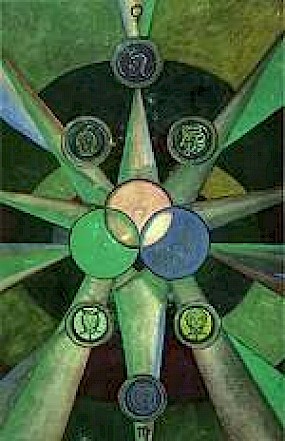
(via angelpaths.com and Alan Blackman)
Gaza Day 23: Israel in ‘second stage’ of Gaza assault as UN warns of civil order breakdown
Channel 4 News Oct 29, 2023 The UN has warned that civil order is starting to break down in Gaza, after thousands of people looted warehouses, desperate for food. Israel has moved more ground forces into the Strip and says its jets hit at least 450 Hamas targets in just 24 hours. More than 8,000 people have now been killed in Gaza, according to the Hamas-controlled health ministry, and 41% of them are children.
SHOAH (1985) – A Documentary film on the Holocaust – by Claude Lanzmann
Masters of Cinema Dec 30, 2022 Claude Lanzmann directed this 9 and 1/2 hour documentary of the Holocaust without using a single frame of archive footage. He interviews survivors, witnesses, and ex-Nazis (whom he had to film secretly since they only agreed to be interviewed by audio). The past is never past; in bringing the Holocaust to life in his towering nine-and-a-half-hour masterpiece, director Claude Lanzmann would stick solely to the present. Shoah is composed of the reflections of Polish survivors, bystanders and, most uneasily, the perpetrators. The memories become living flesh, and an essential part of documentary filmmaking finds its apotheosis: the act of testifying. Lanzmann’s nine-hour documentary meditation on the Holocaust is a distillation of 350 hours of interviews with living ‘witnesses’ to what happened at the extermination camps of Treblinka, Auschwitz, Sobibor, Chelmno and Belzec. Feeling that the familiar newsreel images have lost their power to shock, Lanzmann concentrates instead on the testimony of those survivors who are ‘not reliving’ but ‘still living’ what happened, and on ‘the bureaucracy of death’. One of the two Jews to survive the murder of 400,000 men, women and children at the Chelmno death camp describes his feelings on revisiting Poland for the first time. A train driver who ferried victims to the concentration camps is seen making that same journey to ‘the end of the line’ again and again; a retired Polish barber who cut the hair of those about to enter the gas chambers describes his former work; an SS officer talks about the ‘processing’ of those on their way to the concentration camps; a railway official discusses the difficulties associated with transporting so many Jews to their deaths. The same questions are repeated like an insistent refrain, the effect is relentless and cumulative. One word of caution as you watch the witnesses giving testimony; bear in mind Schiller’s observation that ‘individual testimony has a specific place in history but doesn’t, alone, add up to it’.
Israel’s long war on Gaza w/Norman Finkelstein

ILAN PAPPE : There is still time to stop the Gaza genocide.
Frank Barat Oct 15, 2023 I spoke today to Israeli historian Ilan Pappé, author of many books, including “The ethnic cleansing of Palestine” about the current situation in Gaza and in Israel. From the surprise he felt when he first heard of the Hamas attack, and its scale, to the current Israeli army operation, via the need for the people of the world to do everything they can stop a massacre from happening. A very important watch.
Dr. Gabor Maté on Israel/Palestine – October 28, 2023
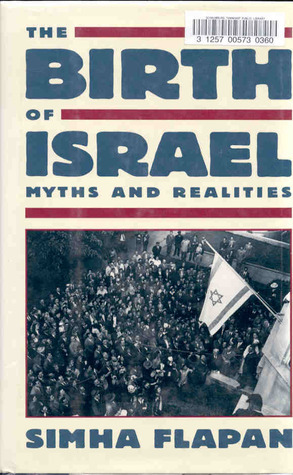
The Birth of Israel: Myths and Realities
Simha Flapan
Drawing on recently declassified material, from Ben-Gurion’s war diaries to the minutes of secret meetings, the author reconstructs the real events surrounding the founding of Israel, exposing many of the historical beliefs as propaganda myths that have misguided Israeli policy to this day.

A History of Modern Palestine: One Land, Two Peoples
Ilan Pappé
Ilan Pappe’s book traces the history of Palestine from the Ottomans in the nineteenth century, through the British Mandate, the establishment of the state of Israel in 1948, and the subsequent wars and conflicts which have dominated this troubled region. The second edition of Pappe’s book has been updated to include the dramatic events of the 1990s and the early twenty-first century. These years, which began with a sense of optimism, as the Oslo peace accord was being negotiated, culminated in the second intifada and the increase of militancy on both sides. Pappe explains the reasons for the failure of Oslo and the two-state solution, and reflects upon life thereafter as the Palestinians and Israelis battle it out under the shadow of the wall of separation. As in the first edition, it is the men, women and children of Palestine who are at the centre of Pappe’s narrative.

The Hundred Years’ War on Palestine: A History of Settler-Colonial Conquest and Resistance, 1917-2017
Rashid Khalidi
A landmark history of one hundred years of war waged against the Palestinians from the foremost US historian of the Middle East, told through pivotal events and family history.
In 1899, Yusuf Diya al-Khalidi, mayor of Jerusalem, alarmed by the Zionist call to create a Jewish national home in Palestine, wrote a letter aimed at Theodore Herzl: the country had an indigenous people who would not easily accept their own displacement. He warned of the perils ahead, ending his note, “in the name of God, let Palestine be left alone.” Thus Rashid Khalidi, al-Khalidi’s great-great-nephew, begins this sweeping history, the first general account of the conflict told from an explicitly Palestinian perspective.
Drawing on a wealth of untapped archival materials and the reports of generations of family members – mayors, judges, scholars, diplomats, and journalists – The Hundred Years’ War on Palestine upends accepted interpretations of the conflict, which tend, at best, to describe a tragic clash between two peoples with claims to the same territory. Instead, Khalidi traces a hundred years of colonial war on the Palestinians, waged first by the Zionist movement and then Israel, but backed by Britain and the United States, the great powers of the age. He highlights the key episodes in this colonial campaign, from the 1917 Balfour Declaration to the destruction of Palestine in 1948, from Israel’s 1982 invasion of Lebanon to the endless and futile peace process.
Original, authoritative, and important, The Hundred Years’ War on Palestine is not a chronicle of victimization, nor does it whitewash the mistakes of Palestinian leaders or deny the emergence of national movements on both sides. In reevaluating the forces arrayed against the Palestinians, it offers an illuminating new view of a conflict that continues to this day.
Cover photograph Amnon Bar Or—Tal Gazit Architects LTD
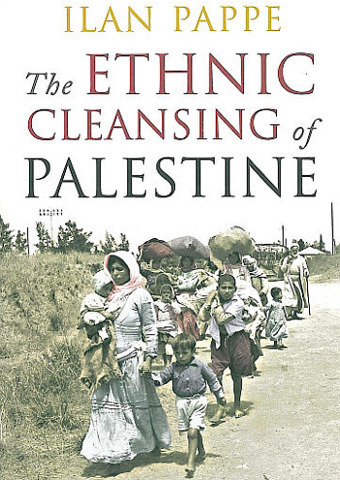
The Ethnic Cleansing of Palestine
Ilan Pappé
Since the Holocaust, it has been almost impossible to hide large-scale crimes against humanity. In our communicative world, few modern catastrophes are concealed from the public eye. And yet, Ilan Pappe unveils, one such crime has been erased from the global public memory: the ethnic cleansing of the Palestinians in 1948. But why is it denied, and by whom? The Ethnic Cleansing of Palestine offers an investigation of this mystery.

Gaza: An Inquest into Its Martyrdom
Norman G. Finkelstein
The Gaza Strip is among the most densely populated places in the world. More than two-thirds of its inhabitants are refugees, and more than half are under eighteen years of age. Since 2004, Israel has launched eight devastating “operations” against Gaza’s largely defenseless population. Thousands have perished, and tens of thousands have been left homeless. In the meantime, Israel has subjected Gaza to a merciless illegal blockade.
What has befallen Gaza is a man-made humanitarian disaster.
Based on scores of human rights reports, Norman G. Finkelstein’s new book presents a meticulously researched inquest into Gaza’s martyrdom. He shows that although Israel has justified its assaults in the name of self-defense, in fact these actions constituted flagrant violations of international law.
But Finkelstein also documents that the guardians of international law—from Amnesty International and Human Rights Watch to the UN Human Rights Council—ultimately failed Gaza. One of his most disturbing conclusions is that, after Judge Richard Goldstone’s humiliating retraction of his UN report, human rights organizations succumbed to the Israeli juggernaut.
Finkelstein’s magnum opus is both a monument to Gaza’s martyrs and an act of resistance against the forgetfulness of history.
(Goodreads.com)