From exoskeletons and robotic arms to the mass adoption of remote work, economist Piyachart Phiromswad explores what seniors need to overcome the physical, mental and societal barriers to employment, a necessary shift in our rapidly aging world. Learn more about how these tools could empower elderly workers and better the world — for everyone.
There is no moral clarity in wreaking vengeance on innocent people.
ROBERT REICH OCT 12, 2023 (robertreich@substack.com)
Today, U.S. Secretary of State Antony Blinken stood next to Israeli Prime Minister Benjamin Netanyahu at a military base in Tel Aviv and said “Too often in the past, leaders have equivocated in the face of terrorist attacks against Israel and its people. This is — this must be — a moment for moral clarity.”
Blinkin is correct. Moral clarity requires that the world condemn the atrocities committed by Hamas militants as unmitigated evil.
But this does not render morally justifiable retaliatory airstrikes on Gaza that have so far killed 1,417 Palestinians, including 447 children, and wounded 6,368, according to Gaza’s health ministry. Or the siege of a city of 2.1 million people who have gone days without electricity, water, or food.
The wounded in Gaza needing intensive care now have no beds that can hold them, and the number of injured exceeds the hospitals’ capacities. The International Committee of the Red Cross warns that “without electricity, hospitals risk turning into morgues.”
More than 300,000 people in Gaza are now homeless. More than 338,000 have left their homes in search of safety, but border crossings into Israel and Egypt are blocked.
Israeli troops are now moving toward the border with Gaza in preparation for a possible ground invasion. I fear what is to come.
It could prove to be very bad for Israel as well as for those trapped in Gaza. As Thomas L. Friedman writes,
What Israel’s worst enemies — Hamas and Iran — want is for Israel to invade Gaza and get enmeshed in a strategic overreach there that would make America’s entanglement in Falluja look like a children’s birthday party. We are talking house-to-house fighting that would undermine whatever sympathy Israel has garnered on the world stage, deflect world attention from the murderous regime in Tehran and force Israel to stretch its forces to permanently occupy Gaza and the West Bank.
In his private meetings with Israeli authorities, I hope Antony Blinken is calling for restraint.
Justifiable moral revulsion must never be confused with retribution. There is no moral clarity in wreaking vengeance on innocent people.
Beyt Tikkun (rabbi@beyttikkun.org) October 12, 2023
We are outraged by, mourn deeply, and unequivocally condemn the horrific actions of Hamas. According to Israeli sources, more than 1,200 people were killed and 2,900 injured, most of whom were civilians, and over 100 individuals (including children, women, and the elderly) were taken as hostages into Gaza.
Tikkun magazine and Beyt Tikkun: A Synagogue without Walls partnered with others to write a joint statement that we hope can help us rise above divisiveness and division and call us to our highest selves.
What follows is our joint statement. We invite everyone who agrees with our statement to add your name. You can read the statement below and add your name by .
Solidarity with Israel/Palestine
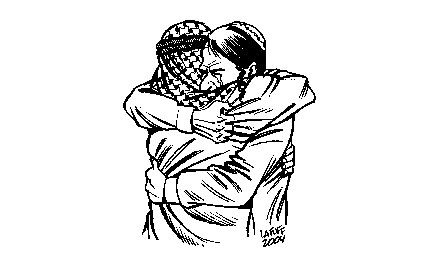
This statement is written and signed by Palestinians, Jews, and others who are committed to holding complex truths and striving to overcome polarization. We feel the pain of our people, identify with their pain, and need to work together to uplift our shared humanity.
The unfolding horror in Israel and Gaza is an escalation of decades of state-sanctioned violence by Israel against Palestinians. We condemn the horrific actions of Hamas against Israeli civilians. We likewise condemn Israel’s unbridled bombing and cutting off access to all basic needs, including food, water, electricity, and medical care. Attacks on Palestinian and Israeli civilians are repugnant.
Israeli violence against Palestinians has been intentionally hidden, slow, and steady. Contrary to what the media is reporting, this attack was not unprovoked. The Israeli and American governments have worked together to suppress and deny the inhumane acts against Palestinians that have led to this moment. There are Palestinians and Jews who have been raising red flags and warning about this inevitable outcome for decades, only to be dismissed and ignored.
The world’s failure to challenge Israel’s ongoing occupation, apartheid, and unbridled violence by settlers and soldiers in the West Bank provides the context for what is happening now. The recent Israeli government’s escalation of violence, encroachment of Al Aqsa Mosque, and its 16-year siege of Gaza has led to the current explosion.
We repeat: the brutality of Hamas’ attack on Israeli civilians is unjustified.
As we watch the violent attacks and rallying of xenophobia on both sides, we are brokenhearted. Although it feels like a time to stand with “our people,” we know this is a time to come together. This is a time of great suffering for all; a time of painful emotions. It is only by recognizing our shared fears and our shared tears that we will find our way through this nightmare. It is a struggle we need to undertake jointly.
When we fall back into our separate and distinct identities we risk becoming part of the problem, not the solution. Both peoples suffer from ongoing trauma. We are all on high alert. The fear is palpable. And it is easy for us to objectify the ‘other.’
We seek a third path that neither perpetuates a xenophobic response nor sustains an unjust status quo. This moment calls us to slow down, sit with the pain and complexity, and grapple with our discomfort. It is a moment for digging deep, seeing across differences, and remembering our deep yearning for peace and justice. It is only through compassion and empathy that we will find a different way.
We recognize and uplift the humanity of all peoples in Israel/Palestine.
We call for an immediate ceasefire from Hamas and Israel.
We demand that basic needs be provided to Gazans.
We demand that the United States provide only humanitarian support to Israel and Gaza.
We support the creation of a movement that recognizes and affirms the humanity, dignity, and desire of both peoples to live in peace through reconciliation and justice.
Translation is a 5-step process of “straight thinking in the abstract.” The first step is an ontological statement of being beginning with the syllogism: “Truth is that which is so. That which is not truth is not so. Therefore Truth is all there is.” The second step is the sense testimony (what the senses tell us about anything). The third step is the argument between the absolute abstract nature of truth from the first step and the relative specific truth of experience from the second step. The fourth step is filtering out the conclusions you have arrived at in the third step. The fifth step is your overall conclusion.
The claims in a Translation may seem outrageous, but they are always (or should always) be based on self-evident syllogistic reasoning. Here is one Translation from this week.
1) Truth is that which is so. That which is not truth is not so. Therefore Truth is all that is. Truth being all is therefore total, therefore complete, therefore without limit, therefore infinite, therefore eternal. i think therefore I am. Since I am and since Truth is all that is, therefore I am Truth, Since I, being, am Truth, therefore I, being, am total, complete, without limit, infinite, eternal. I being mind and I being Truth, Therefore Truth is Mind (Consciousness).
2) Pain in my body is reminding me that as a child I was the family scapegoat.
Word-tracking: pain: payment punishment child: immature, dependent family: hierarchy, rule of the sacred scapegoat: One of two goats. One is sacrificed. The other takes on the sins and impurities of the people and is allowed to escape into the wilderness. sacrifice: appease, peace, pact, agreement blame: responsibility for something wrong blaspheme: to disrespect God
3) Truth being true, is therefore right, therefore correct, therefore perfect. Truth being perfect, there are no sins or impurities in Truth, therefore Truth is flawless, therefore blameless, therefore painless. Truth being one is therefore indivisible. Therefore there can be no such thing as a Supreme Being and lesser beings. Therefore there is no God OR all is God. Since all is God, there is no being other than God to disrespect God. Therefore all we have left to do is respect our own God Being. Truth being one cannot be a hierarchy or family or sacred rule of parent over child, therefore Truth is one non-hierarchical, all-inclusive family.
4) Truth is flawless, therefore blameless, therefore painless. There is no God OR all is God. All we have left to do is respect our own God Being. Truth is one non-hierarchical, all-inclusive family.
5) Our own being is the flawless, blameless, painless, non-hierarchical, all-inclusive family of God being.
Free Documentary – History Mar 3, 2021 How Britain Started the Arab-Israeli Conflict | History Documentary The bitter struggle between Arab and Jew for control of the Holy Land has caused untold suffering in the Middle East for generations. It is often claimed that the crisis originated with Jewish emigration to Palestine and the foundation of the state of Israel. Yet the roots of the conflict are to be found much earlier – in British double-dealing during the First World War. This is a story of intrigue among rival empires; of misguided strategies; and of how conflicting promises to Arab and Jew created a legacy of bloodshed which determined the fate of the Middle East.
Muzzy Ali 188,769 views Oct 8, 2023 As a Jewish youngster growing up in Budapest, an infant survivor of the Nazi genocide, I was for years haunted by a question resounding in my brain with such force that sometimes my head would spin: “How was it possible? How could the world have let such horrors happen?”
The Lord of Prudence is not quite as austere a card as it first sounds. It’s another of those Disks that works on more than one level. In the purely material and mundane sphere it indicates a period where financial resources must be carefully managed.
So long as it does not appear with cards like the Ten of Swords or the Five of Disks, there will not normally be any grave material problem. But there is a warning here that there may be unexpected expense, and good money management will enable us to fund whatever arises.
At the next level, the Eight of Disks can apply to a period where you enter into additional training in order to enhance your career projects. In this case look for cards like the Three of Disks, or the Ace, to indicate some new area of study. Then look for cards like the Universe, or the Sun to indicate the successful outcome of your efforts.
Finally in the spiritual area, when the Lord of Prudence comes up with cards like the Priestess, Death, the Moon, or the Hierophant, you’re approaching a period of rapid spiritual development – almost an initiation. In this case, this card is warning you to be alert for opportunities, ready to deal with stress and pressure, and to manage your energies thoughtfully and carefully. You can perhaps see the correlation which exists with regard to energy management between the material and spiritual definitions of the card – in either case energy must be regulated and respected in order for life to go smoothly and for you to get the best out of your experiences.
“Do not look for healing at the feet of those who broke you” ~ Rupi Kaur (Milk and Honey)
Many of the folks I see for complex trauma therapy are immersed in the arduous process of dismantling their bondage to a malignant narcissist (NPD). Although the humiliation of objectification and exploitation informs the victim that love was illusory, that the whole relationship was merely a deceitful fabrication devised by the narcissist to glean supply, the urgency to believe the love was real causes the victim of narc abuse to resist these painful truths.
Immersed in a trauma bond the victim incessantly revisits heinous memories, while concomitantly longing for the alluring version of the abuser. Generating complex rationalizations for why the relationship failed consummates this cyclical pattern.
Hence, the endless regurgitation of surreal psychological games and disorienting memories of episodic debasement and dehumanization are repeatedly countered with disbelief and a tenacious resistance to letting go. Most troubling, trauma bonded victims shoulder blame for the abuse. Although this insidious position of culpability keeps the victim hostage there are critical reasons for its persistence.
To comprehend the victim’s tenacious fixation on self blame one has to appreciate the intricacies of trauma bonding.
Trauma bonding, a term developed by Dr. Patrick Carnes describes a pathological attachment characterized by systemic patterns of physical and/or psychological abuse. The tenacity of the trauma bond is reinforced through establishing a power differential and executing operant conditioning in which rewards and punishments are intermittently dispensed.
For the victim under siege, this process results in cognitive dissonance and a desperate need to make sense out of what is happening. The victim will obsessively try to formulate patterns that explain a rhyme and reason for when and why the abuser is mistreating her, and when and why the abuser appears safe.
The narcissistic abuser will repetitiously capitalize on the victim’s propensity to address discord by denying accountability and insinuating it is either the victim’s fault or her imagination due to prior relational injuries and constitutional insecurities and instability. Desperate to rectify relational difficulties, she will modify her behavior in accordance with what the narcissist demands. That is, until her efforts and assumptions are discredited by further arbitrary abuse.
With the continuation of escalating abuse and deterioration, the victim gives in completely, yielding to the abusers’ reality and assuming blame for the abuser’s random mistreatment. Eventually the victim becomes completely malleable to mind control and morphs into an identity demanded by the abuser.
When the trauma-bonded victim becomes over-identified with their abuser and the abuser’s world, they are trapped in a double bind of having to maintain an ostensibly positive emotional bond so as to mitigate the possibility of further harm. Given these conditions, the victim is driven to comply with the abuser’s perspective as it paradoxically assuages the unbearable pain of confusion, danger, helplessness, and deliberate cruelty.
Accordingly, blaming the self serves as a necessary locus of control.
By holding onto the notion that if one could have, would have, should have done something different or better, the victim is afforded an illusory sense of agency. Hence, by assuming blame for not knowing better the victim clings to the hope that the abuse might have been avoided. Likewise, the victim deflects from terrifying helplessness and hopelessness by searching for glimpses of humanity in the abuser that are simply not there.
At this point, the victim is brainwashed and caught up in an addictive cycle of abuse.
It’s important to keep in mind that under trauma bonding conditions the onus is always on the victim for any ‘misunderstandings.’ Moreover, the one inflicting torment is imbued with the power to stop the pain by absolving the guilty victim for their unlimited faults. As a result victims often conceptualize their tormenter as simultaneously embodying the exalted redeemer.
Ultimately, to survive the victim will remain blind to and even justify difficult truths. With repetitive indoctrination and thought control, steadfast allegiance takes tenacious hold.
Essentially, self-blame takes the form of an instinctive trauma response known as fawning. Like the sympathetic nervous system’s repertoire of fight, flight and freeze, fawning is designed to establish safety and agency by being obsequious and obedient. Euphemistically referred to as the ‘please and appease’ strategy, fawning mitigates the experience of danger through assuaging, pacifying, and subordinating oneself to the demands of others.
To evade danger and restore temporary equilibrium, the fawner takes on responsibility for the abuser’s actions. This is especially true for victims who were subject to abuse by parental narcissists.
Groomed to function as pawns, children of narcissistic parents are trained to enable and accommodate the narcissist’s insatiable appetite for complete control. Predisposed to carry out the role of a culpable whipping post (the scapegoat) or an aggrandized narcissistic extension (favored golden child), the children of parental narcissists struggle in adulthood with enforcing boundaries and rules of engagement.
As psychotherapist and author Pete Walker wrote, “they unconsciously believe that the price of admission to any relationship is the forfeiture of all their needs, rights, preferences and boundaries.”
Furthermore, differentiating predation from trustworthiness eludes these children and is exacerbated by an insatiable craving for love that they don’t feel worthy of. To cope, the abused child must preserve the fantasy that the malignant parent is good and humane. To achieve this end they must carry the blame for the abuser’s cruelty while assuming it is their inherent badness that causes their caregiver to abuse.
Scottish psychoanalyst and father of object relations theory, Ronald Fairbairn crystallized this phenomenon when he worked at the University of Edinburgh’s Clinic for Children and Juveniles. It was there that Fairbairn recognized that children were more attached and dependent upon their abusive mothers than children in non-abusive situations.
In fact, Fairbairn discovered that the greater the abuse, the greater the attachment. This is because the child’s deepest fear is the psychological annihilation that accompanies not mattering- not being loved by their caretaker. Hence, children will desperately cling, while blaming the self for parental abuse and neglect.
This sort of child-like regression is induced in trauma-bonded adults. Due to coercive control the abuser is imbued with omnipotent properties. This power differential induces victims to resort to primitive survival mechanisms. What unfolds parallels that of the abused child, whose very survival is unconditionally dependent on the vestiges of ‘love’ proffered by an imposing malignant caretaker.
When I manned a rape crisis hotline in the 80s, part of the training involved recognizing characterological and behavioral self-blame in victims. Characterological self-blame involves the condemning of personality traits that the victim views as responsible for the assault. For instance, this could include being trusting, naive or passive.
More prevalent than characterological self-blame, behavioral self-blame concerns criticizing behaviors that the victim views as putting her at risk. This might entail being alone in a dangerous area, leaving windows open or permitting a stranger to enter one’s home.
Like rape victims, victims of psychological traumatic abuse try to regain control over devastating feelings of powerlessness and vulnerability by characterologically and behaviorally blaming themselves. This adaptive response is an initial attempt to manage the random chaos of traumatic assault. It offers victims a strategy in which a temporary sense of order and protection is attained.
Of course, when we persist with blaming ourselves for something we regret we stay locked into it. We remain fixated and stuck in a state of helplessness and shame. So, although self-blame initially proffers a locus of control for victims of abuse, remaining in this place not only impedes healing from complex trauma, it also catalyzes self-hatred and clinical depression.
The only conceivable way to move from victimization to empowerment is to willingly accept the terror of one’s helplessness, so as to commence with the grueling process of complicated bereavement. This involves untangling a pernicious calculated agenda of systemic cruelty in which variable forms of confusional techniques such as gaslighting, pathological lying and love bombing were employed to ensure domination.
Dismantling the shocking reality of intentional violence challenges the victim to not only give back to the abuser the blame they carried but to also question the moral imperative to responsibly resolve difficulties, especially with those who matter most. This undertaking urges the victim to humbly acknowledge that in spite of egregious misconduct, the need to believe that all people are inherently good and well-meaning contributed to taking on misguided liability.
The victim who relinquishes self-blame by dispensing with the mythic narrative that all people possess an inner light and the moral compass to amicably resolve difficulties becomes a survivor equipped with the capacity for discernment and discrimination. With this perspective, those who cause deliberate harm are held accountable so that further exploitation and manipulation are thwarted and blame is unequivocally placed where it duly belongs.
Therapist, Coach & Author. Complex Trauma & Addiction. Dual citizen. Survivor, World traveler, love art and nature. I appreciate the absurd. Sheritherapist.com
Consciousness, spirituality, biography, sexuality, androgyny, futurism, space, the arts, science, astrology, democracy, humor, books, movies and more