
Monthly Archives: October 2023

Lessons from my father, Alexey Navalny
Dasha Navalnaya |
TEDWomen 2023
• October 2023
Dasha Navalnaya is the daughter of Alexey Navalny, the politician and leader of the Russian opposition to Vladimir Putin. Sharing the story of her father’s poisoning, persecution and current imprisonment, she details what it was like growing up under the watchful eye of government surveillance as her father led a decade-long investigation into the corruption of Putin’s regime — and shows why paying attention to what happens in Russia matters to everyone, everywhere.
About the speaker
Corruption fighterSee speaker profile
Student and political activist Dasha Navalnaya is raising awareness of Russia’s authoritarian regime and campaigning for the release of her father, Alexey Navalny.
The Secret to Unlocking One of the Universe’s Greatest Mysteries
Oct. 16, 2023 from the New York Times
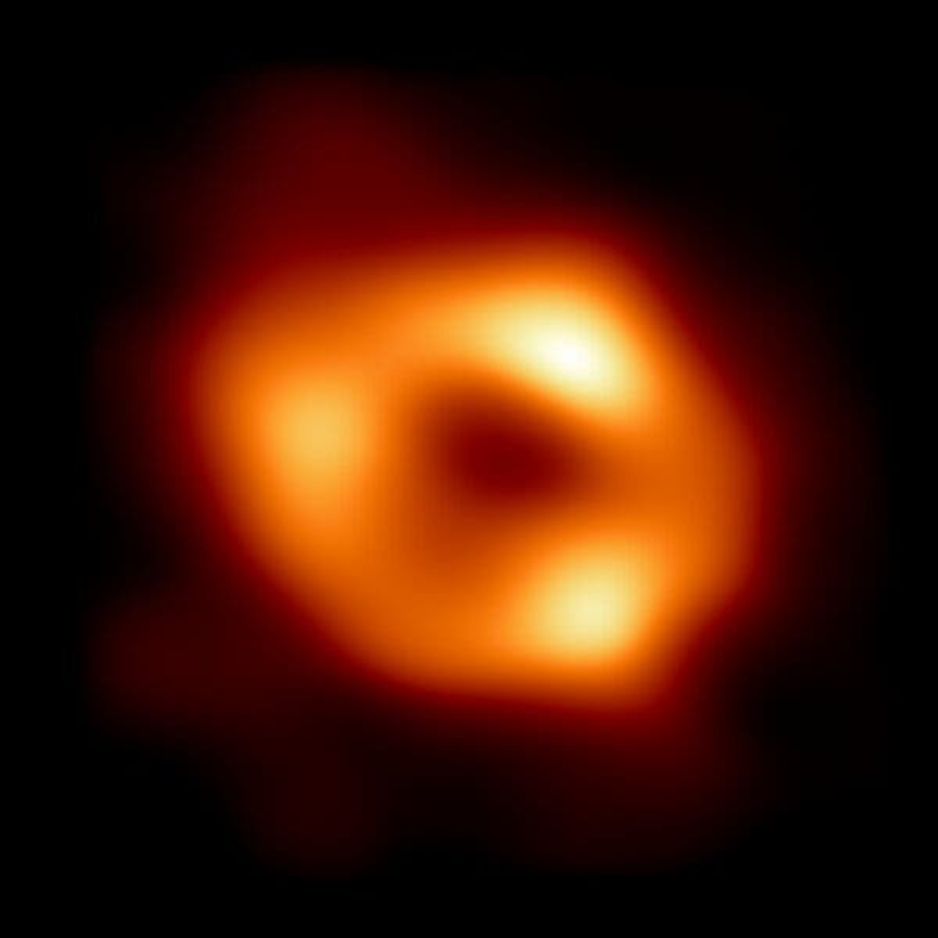
Credit – NASA Images
By Carlo Rovelli
Mr. Rovelli is an Italian physicist and the author of the upcoming book “White Holes,” from which this essay is adapted.
How do we learn something new, something we do not yet know?
One way, of course, is through experience. This is why the young depart and travel. Another is thanks to someone else, who might have traveled for us. What they have learned comes to us as a story, a lesson at school, a Wikipedia entry, a book. Aristotle and Theophrastus went to the island of Lesbos; they observed the minute movements of fish, mollusks, birds, mammals and plants; and they wrote it all down, opening up for us the world of biology.
Instruments allow us to see even farther. Galileo pointed a telescope at the heavens and saw things people wouldn’t have believed, opening our eyes to the unending vastness of astronomy. Physicists use spectrometers to analyze the light emitted by elements and collect data on the atoms, opening the door to the quantum world.
But what about the things we can’t see at all? How do we learn about the parts of our universe that we cannot — even with the most powerful technology — observe?
I study black holes. We see them in the sky today, thanks to spectacular telescopes, but we only see the exterior. We see matter that spirals furiously, before plunging into them. What’s deep inside? What would we see if we entered a black hole and, resisting the crushing forces, fell all the way down?
Current science has no answer to this question. Einstein’s theory predicts the end of time down there, but the hole’s inner regions are dominated by quantum aspects of space and time, and these are not taken into account by Einstein’s theory.
How can we learn about a place we can neither travel to nor see?
To travel to places that we cannot reach physically, we need more than technology, logic or mathematics. We need imagination.
History has many examples of scientific discoveries that came about through the difficult and subtle art of changing perspective.
Anaximander is the ancient Greek thinker who figured out that the sky is not just above us; it also continues under our feet, and the Earth is like a stone floating in the middle of the void. This is the first and maybe the greatest of the cosmological revolutions. He had the courage to imagine what the Earth would look like from an immense height: a spectacular change of perspective. In this way he could intuit how the planet Earth would much later appear to Neil Armstrong and Buzz Aldrin as they looked up at it from the moon.
Anaximander is also credited as the first person to design a geographical map. Today, maps are familiar, but for millenniums of civilization, travel and trade, no one had thought to render an area of land as it would look if we could fly higher than eagles. To identify with an eagle, to wonder what it would see from such a great height — this was an entirely new perspective.
A very good ancient calculation of the distance to the moon, attributed to Hipparchus, the greatest astronomer of the ancient world, is based on a refined geometric argument that starts with the question “What would I see if I went to the tip of the Earth’s shadow cone?” Hipparchus imagined himself down there, thousands of miles from the Earth, in interplanetary space, looking back and watching the Earth exactly cover the sun. Again, he was seeing with the mind’s eye.
Copernicus looked at the solar system as you would see it from the sun. Johannes Kepler wrote “The Dream,” in which the narrator says he flew to the moon with his mother, and describes how the sky looks from there, with a spinning Earth staying still in the sky. Einstein wondered what he would see if he could ride a ray of light.
How could these people see from a place they had not been to? Anaximander did not soar with eagles, Kepler did not fly to the moon on a broomstick and Einstein did not ride a ray of light. How can we see from somewhere that we cannot actually reach?
I think that the answer is to grope for a delicate balance — a balance between how much of our previously accrued learning we take with us and how much we leave at home, freeing ourselves to reconsider what we think we know. On the one hand, what we carry with us allows us to know what to expect. To know what to expect in the black hole, we can use the equations of Einstein, which predict its geometry. Einstein used the equations of James Clerk Maxwell, which describe how light behaves. Kepler used Copernicus’s book, “On the Revolutions of the Celestial Spheres.” These are the maps, the rules, the generalities that we trust in because they have worked so well. And yet, we know that we must leave something behind.
Anaximander left at home the idea that all things fall in the same direction: For the Earth itself not to fall, falling must be different than what we thought. Kepler left at home the idea that things move in circles, which seems so natural. Einstein left behind the idea that all clocks tick in tune with each other, which still seems obvious to many of us, and yet is wrong. If we leave too many things at home, we lack the tools needed to forge ahead; if we take too many, we fail to find the paths to new understanding. There are no recipes for success. There is only trial and error. Trying and trying again.
This is what we do, the long study and the great love that is scientific inquiry. We combine and recombine in different ways what we know, looking for an arrangement that clarifies something. We leave out pieces that previously seemed essential, if they get in the way. We take risks, albeit calculated ones. We linger at the border of our knowledge. We familiarize ourselves with it, and we spend a long time there, walking back and forth along its length, searching for the gap. We try out new combinations. New concepts.
I think that this is also how the best art works. Science and art are both concerned with the continual reorganization of our conceptual space, of what we call meaning. What happens when we react to a work of art is not happening in the art object itself, of course — still less in some unphysical “world of the spirit.” It lies in the complexity of our brain, in the kaleidoscopic network of analogical relationships with which our neurons weave what we call meaning.
We are involved, engaged — for this takes us out of our habitual sleepwalking, reconnecting us with the joy of seeing something anew in the world.
It is the same joy that science gives us. The light in a Johannes Vermeer painting opens our eyes to a resonance of light in the world that we had not previously been able to seize; a fragment of a poem by Sappho opens up a world in which to rethink desire; one of Anish Kapoor’s voids of pure black disorients us, like the black holes of general relativity. And like the latter, it suggests that there are other ways of conceptualizing the impalpable fabric of reality.
Between observation and understanding, the road can be long. Copernicus and Einstein, for instance, obtained their momentous results based on observations that had been well known in the past — in the case of Copernicus, for more than a millennium. It is the capacity to change the organization of our thoughts that allows us to make the leap.
So how can we reconceptualize reality in order to understand what lies at the bottom of a black hole? I have dedicated my career and my life to the search.
Einstein once said, “The most beautiful thing we can experience is the mysterious. It is the source of all true art and science.” And black holes are among the greatest scientific mysteries of our universe.
Contained within them is an understanding not only of the laws of physics, but of time, space, the universe and the nature of reality. Understanding them requires pushing the limits of imagination. It requires a leap of creative faith. We may already possess everything we need to unlock this greatest of mysteries.
(Contributed by Ben Gilberti, H.W., M.)
Releasing The Hidden Splendour™️ class on October 21 and 22

 |
| Releasing The Hidden Splendour™️ “Within each person is a unique goodness that will come forth” October 21 and 22, 2023 monitor Mara Pennell H.W. Emotional blocks present us with challenges that can lead to the most profound insights. Releasing the Hidden Splendour teaches how to trade in painful or unpleasant feelings for insight and freedom by practicing the Joseph Technique™. Employing the principles of Translation in a practice of loving and thoughtful self reflection we come to release the past and embrace our true heritage of freedom and grace. Click for registration https://www.theprosperos.com/payments-etc/foundation-class-online-monitor |
Tarot Card for October 17: Death
Death
Death is numbered thirteen and is the most feared card in the deck. We see the Grim Reaper depicted as a dark and powerful figure, sometimes on horseback and at other times on foot. He usually carries a scythe and leaves bodies, limbs and so on in his wake. Whoever we are, Death will claim us eventually.
The Death card signifies endings, but not necessarily shocking and disruptive ones. In any case, endings always lead to new beginnings and Death itself symbolises a sweeping away of the past. If we rid ourselves of past garbage then we are free to set out on an entirely new path
When Death appears it almost always signifies a major change in one’s life. Sometimes the change will appear disruptive and unexpected, sometimes it will be a breath of fresh air – clearing away obstacles and allowing you to surge forward. So do not assume that Death is a negative card – it is often just what we need in order to progress when fear is holding us up.
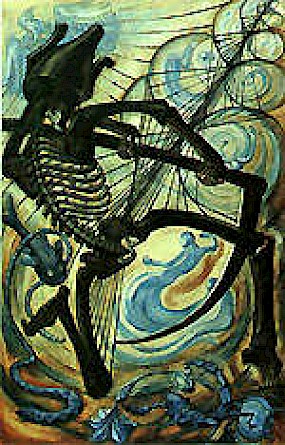
(via angelpaths.com and Alan Blackman)
Book: “The Abolition of Man”
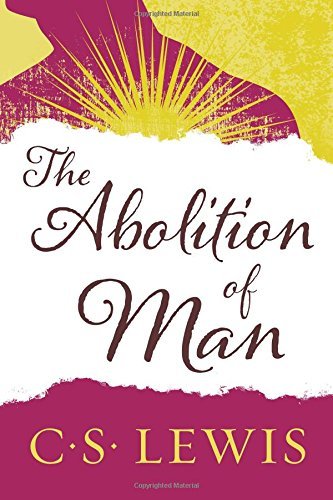
The Abolition of Man
C.S. Lewis
The Abolition of Man, Lewis uses his graceful prose, delightful humor, and keen understanding of the human mind to challenge our notions about how to best teach our children–and ourselves–not merely reading and writing, but also a sense of morality.
(Goodreads.com)
JFK on lies and myths

“The great enemy of truth is very often not the lie–deliberate, contrived and dishonest–but the myth–persistent, persuasive and unrealistic. Too often we hold fast to the cliches of our forebears. We subject all facts to a prefabricated set of interpretations. We enjoy the comfort of opinion without the discomfort of thought.
[Commencement Address at Yale University, June 11 1962]”
John Fitzgerald Kennedy, often referred to by his initials JFK and by the nickname Jack (May 29, 1917 – November 22, 1963), was an American politician who served as the 35th president of the United States from 1961 until his assassination in 1963. Wikipedia
Quentin Crisp on keeping up with the Joneses

“Never keep up with the Joneses. Drag them down to your level. It’s cheaper.”
― Quentin Crisp
Quentin Crisp (December 25, 1908 – November 21, 1999) was an English raconteur, whose work in the public eye included a memoir of his life and various media appearances. Before becoming well known, he was an artist’s model, hence the title of his most famous work, The Naked Civil Servant. Wikipedia
You Win Intuition I’m Giving You Free Rein
I’m listening

Published in The Taoist Online
4 days ago (thetaoist.online)
Lately, I’ve pondered which way to go. Should I take this path or that one? I could ask the tarot cards or a pal or write a list of pros and cons. But, none of these ideas appeal. You see, I want to enlist the help of my intuition, not unseen mystical forces or another person, or have to rely on logic, and I think my higher self agrees.
Sometimes, a mysterious snippet of wisdom crosses my mind and shows me what to do next. It doesn’t come from a tangible source, though. I’m left pondering whether it’s viable until life proves it is meaningful.
While my fingers hover over the keyboard, it might whisper, “Oh, don’t write about that. Write about this.” If I do as it suggests, the story I pen is a hit. Sometimes, however, I disagree with Intuition. Logic gives me different advice, and the outcome isn’t favorable.
It’s hard not to take the side of Logic, though. After all, it’s so reasonable, and Intuition isn’t necessarily sensible. Take the other day, for example.
“Don’t walk your selected route. Go to the field over there,” said Intuition.
I argue with it as it seems irrational.
“Look. There’s long grass in the field, and it’s rained overnight. It will be full of slugs to wade through, and my boots will get wet.”
Reluctantly, and feeling silly to have given in, I go to the field and bump into a long-lost friend.
“How serendipitous,” I tell Intuition, who answers, “Well, didn’t you expect something terrific to happen after I told you to come here?”
I remember taking note of Intuition one fateful evening as a kid on my way home from a party.
“Stop!” It shrieked. “That road’s off limits tonight.”
“But it’s the fast way home. We’ll be there in an instant.”
“I’m not coming with you,” it said, so I took its advice and went the long way home. The next day, I found out someone had lain in wait on the road for young girls and attacked them that evening.
“See,” said Intuition. “You ought to listen to me more often.”
Still, Logic often appeals. It offers plenty of excellent reasons to take its side. On Monday, it said, “There’s lots of milk at home. Put that bottle back in the shop’s fridge. Don’t buy it. Your Intuition is wrong this time.”
Obediently, I did as Logic suggested, only to arrive at the house and find Lee, my husband, standing in a pool of milk.
“I dropped it.”
“We can’t buy more now. The shop’s just shut for the night.”
On another occasion, Logic said, “Buy your whole family tickets to the local play. You know they sell like hotcakes.”
Intuition intervened.
“Nope. You’ll be sorry if you do that.”
Logic argued.
“No, she won’t. Her family would love to see it, and she doesn’t want them to miss it.”
“Don’t do it, Bridget.”
“Do it, Bridget.”
What can I say? I purchased the tickets. It snowed hard and fast on the night of the play. No one could make it, and I couldn’t get a refund.
Sometimes, I have listened to Intuition, though.
“There’s something iffy about that man,” it told me. My partner (at the time) introduced me to his new pal, a friendly, seemingly pleasant chap with a cheeky grin.
As he smiled, Intuition piped up, saying, “he’s dodgy! Give him a wide berth.”
Logic insisted he was an agreeable bloke, and there was no good reason to think otherwise, as did my boyfriend.
“I think there’s something off about him,” I mentioned. “Don’t become tight pals with him, will you?”
The next thing I knew, my partner thanked me for giving him the heads up. “Turns out,” he said, “that Mike’s ripped off many people. He’s stolen money and is due for a prison sentence.”
Intuition can sometimes be quiet, and I wonder what’s happening.
“Haven’t you got anything to say,” I ask but get no reply. So, I test it. “I’m thinking of going to the park. What do you think?”
Nothing.
My mind’s a blank. I figure that Intuition has no particular wisdom to impart when it is silent.
Later, in the park, images of a close pal flash into my mind like movie stills. In the pictures, she seems dazed, as though drugged, and can’t focus or get up.
“Is that you, Intuition?” I ask. But there’s no reply other than the image of a huge green tick across the screen of my mind.
I phone my pal when I’m home, only to find she’s in an ambulance parked outside the hospital, waiting for a bed to become available. She’s been given morphine for the pain of her broken leg.
After this, I tell Intuition that I’m giving it free rein. But Logic has something to say about my decision.
“What! Are you thinking clearly today? Don’t you recall when intuition told you to pursue challenging paths when you could have enjoyed an easier ride?”
“Ah. Yes. But Intuition works with my higher self to ensure everything I do serves my greatest good, which involves life lessons. The easy ride is safe but isn’t always the most productive.”
I feel Logic computing in my brain, and it eventually agrees that Intuition is wise sometimes.
“Anyway,” I say to Logic, “You and Intuition can join forces. Why not work together?”
Intuition pipes up: “Logic sometimes gets in the way.”
Logic intrudes: “Your intuition is a bit airy fairy. It can’t be trusted if you let your imagination play with it.”
“I’ll stay grounded,” I say.
Logic’s still a bit huffy: “Like now, you mean, while you’re having a three-way conversation with yourself. That’s not being grounded, is it?”
“I think for a moment. “It’s perfectly normal. Everybody talks to themselves. I’ve worked out a way to make it productive.”
Next, Logic and Intuition fall silent, and I can only imagine that’s because I’m right. So, I’m listening to them both from now on.
·Writer for The Taoist Online
Life story coach, counselor, hypnotherapy, NLP, writer, and avid tea-drinking meditator.Follow
Roxane Gay on Loving vs. Being in Love and the Mark of a Soul Mate
By Maria Popova (themarginalian.org)

“For one human being to love another: that is perhaps the most difficult of all our tasks… the work for which all other work is but preparation,” Rilke wrote to the young poet seeking his advice a century ago. “Loving anybody and being loved by anybody is a tremendous danger, a tremendous responsibility,” Baldwin cautioned a generation later as he himself reckoned with the work of love.
Because the stakes are so high, because we are so overwhelmed by both the power and the fragility of love, we regularly find ourselves catatonic with confusion about what it all means and what it asks of us. We mistake much for love — admiration, attraction, need. We fumble and fall again and again into the treacherous abyss between the idea of love — an idea baggaged with millennia of cultural mythologies — and the reality of love, with all its work and responsibility.
How to bridge the abyss and see clearly through all the confusion is what Roxane Gay explores in one of the pieces collected in Opinions: A Decade of Arguments, Criticism, and Minding Other People’s Business (public library — her astute commentary on popular culture and politics, punctuated by reflections on the deepest and most timeless strata of our experience.
Art by Sophie Blackall from Things to Look Forward to
A century and a half after Jane Welsh Carlyle so brilliantly rendered the difference between loving and being in love, an exasperated 43-year-old reader turns to Roxane with the same perplexity, signing herself Where the hell is the love of my life? With an eye to the tyrannical myth of “the one,” Roxane responds:
We live in a culture that idealizes the idea of love, and the idea that there is one true person who will complete you, fulfill all your dreams and love you forever. We are told from an early age that our true love is out there, waiting for us and so we yearn to find them, to know what it feels like to experience true love, to know you have made the right choice. The truth about love is that it is often bewildering and unknowable. You may never know if you have made the right choice. But when love is true, you embrace all the unknowns, regardless.
Having “lived and loved long enough to recognize that there is a difference between the idea of love and the reality of love,” she adds:
[…]
When you meet someone and start dating, you have no idea where things will lead…. It is so very important to know what you want from a relationship but you also have to create space for a relationship to develop without worrying about what the relationship will or won’t become.
To look for the love of one’s life, she observes, requires an understanding of and a commitment to what it takes — the immensity it takes — to love someone for a lifetime. This cannot be done without arriving at a personal definition of love that we live up to and into. (My favorite definitions come from Iris Murdoch, Robert Graves, and Tom Stoppard.)
Art by Charles M. Schulz from Love Is Walking Hand in Hand, 1965
Professing herself to be “a passionate, foolish romantic,” Roxane offers her own definition, anchored in the difference between loving and being in love:
Being in love is wild, breathtaking, infuriating. It is butterflies in your stomach when you think about your person, when you see them, when you hold them. It’s the electricity when your skin meets. It’s smiling at your person with wide eyes and an open heart and seeing them smile back at you in the same way. It’s wanting to hold someone’s hand, even when your hand is hot, a little sweaty. It’s lust and the heat of wanting, wanting, wanting. It’s seeing who someone truly is, the best and most terrible parts of them, and choosing not to look away from everything you see, actively embracing everything you see… It’s wanting to be the best version of yourself for your person but also for yourself, especially for yourself… It’s the pride you feel in their accomplishments and being as happy for their successes as you are for your own, if not more. It’s their hurts becoming your hurts… It’s a gut instinct. You just feel it. You know it in your bones. It isn’t perfect, not at all. It doesn’t need to be. It is, simply, what fills you up.
To this taxonomy she adds the most culturally mythologized manifestation of love — the idea of the soul mate, so slippery precisely because it is intimately tied to the elusive notion of the soul. She writes:

Art by Olivier Tallec from Big Wolf & Little Wolf by Nadine Brun-Cosme
She ends her advice with the sage and sensitive disclaimer that, ultimately, we are each responsible for our own definition of love, our own private understanding of what it means and what it feels like to love and be loved — a difficult triumph of self-knowledge amid the perpetual confusion of knowing what we really want.
Complement with poet Donald Hall on the secret to lasting love, philosopher Martha Nussbaum on how to know if you really love somebody, and David Whyte’s stunning poem “The Truelove,” then revisit Kahlil Gibran on the courage to weather the uncertainties of love and Hannah Arendt on how to live with the fundamental fear of loss at the heart of love.