The Queen of Swords indicates a woman who is blessed (or cursed) with sharp perception, and highly honed intuition. She is acutely analytical, with a razor-sharp ability to get to the heart of a situation, seeing exactly what is, rather than what others would wish her to see.
She is a private woman, unwilling to let people too close to her until she is satisfied she thoroughly understands their motivations. But once won as a friend, she is unfailingly loyal, honest and supportive.
She’s usually very intelligent, with a dry sense of humour. Her penetrating insight will often reveal aspects of themselves to others that they had previously been unable to grasp – thus she is a capable therapist, teacher or leader.
The woman represented by this card will be experienced in the flow of life, understanding a great deal about both the great triumphs, and the deepest failings of the race. Her clarity and measured expression will be of great value at times of confusion and sadness.
Sometimes in a reading, this card will turn up to indicate a woman in a particular phase of her life, where she temporarily becomes a Sword as a result of what is happening to her. In that case the card is not quite so positively defined, for it can indicate a woman left alone, and perhaps embittered. She may be a widow, or a woman passing through the aftermath of divorce.
In this case we often see the more negative aspects of the Queen – coldness, judgementalism, criticism. At these times there is a certain sourness about her, with cynicism and sharpness making themselves felt.
It should be said that these qualities are inherent to the woman who is a Queen of Swords by nature too – if the woman concerned has not evolved sufficiently you will often find that the card represents a person who is hard and cold toward others.
“Language is the house of Being. In its home man dwells”
–Martin Heidegger
Martin Heidegger (September 26, 1889 – May 26, 1976) was a German philosopher who is best known for contributions to phenomenology, hermeneutics, and existentialism. He is among the most important and influential philosophers of the 20th century. Wikipedia
One of the most important philosophical works of our time, a work that has had tremendous influence on philosophy, literature, and psychology, and has literally changed the intellectual map of the modern world.
My Long Running Blog: The Hare’s Tale! Into The New Year! On The Menu: Alan Stivell/Music The Trooping Fairies – Changelings Whit Griffin Poems Martyn Bennett & Sorley MacLean/Poetry-Music https://gwyllm.com/2023/01/04/into-the-new-year/
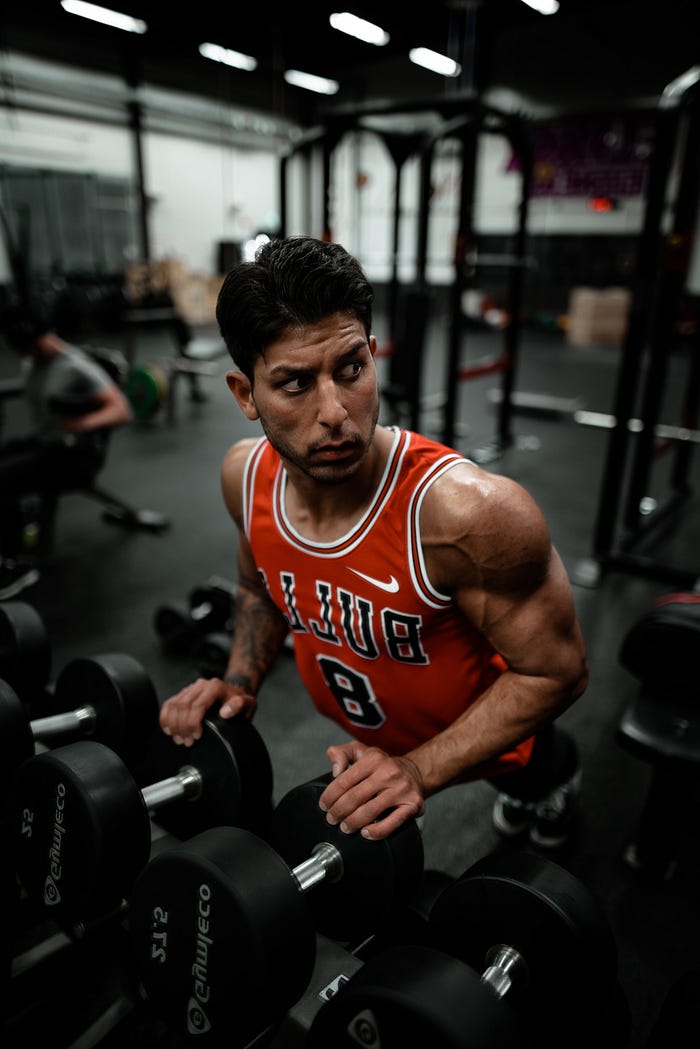
TLDR: If more guys trained in the traditional fighting arts (with good teachers, not that Cobra Kai crap) maybe they’d find out that self- compassion and empathy are attitudes of the strongest men. Not the weakest.
The guys were just watching the football game
My writing friend Ed Frauenheim told me the other day about an incident. From what I gathered, he was watching a game with some old friends.
One of the guys made a snarky comment about an athlete who was out with an ankle injury. The epithet of choice was, of course, to call the guy that most demeaning of all terms.
A pussy.
This manliest of all manly slurs actually stems from the Latin word pusillanimous, defined as “Lacking strength and firmness of mind; wanting in courage and fortitude; being of weak courage; faint-hearted; mean-spirited; cowardly.”
But we all know that most men associate this slur with women, and her most sacred parts. You know, the parts of us that babies are designed to travel thru on their way into the world? This part of a woman rich and famous men might mistakenly think they’re allowed to grab?
Fucking hell.
In case you’re not familiar with his work, Ed is an author and speaker on topics such as mental health, men’s health, and caregiving from a masculine perspective.
He told me when this little moment happened, he just wasn’t sure how to best respond.
The old implicit rules of the #manbox teach men to keep quiet, or be tarred with the same brush
For most modern men in a situation like this — if you step up and object to the dissing of others of presumably “lesser rank,” you will immediately lose face.
You become associated with the demeaned group you had the temerity to speak up for. Your dominance cred suffers tremendously. It’s #manbox enforcement at its finest.
And yeah, it’s awful.
An attitude of judgmental disrespect of the pain and suffering in others clearly lacks empathy & compassion. In its place is the hardened mask of someone so afraid of pain and discomfort that they must demean others who suffer pain — in order to protect themselves from being perceived as weak.
It doesn’t really even make any sense, if you ask me.
When and where can a person in a man’s body get a chance to learn softness and empathy?
I didn’t have a ready reflection for Ed in the moment, so our conversation moved on to other topics.
But later that night, as I sat reflecting on what we’d talked about — I began to wonder.
Hampered by a lack of actual experience
Did the man who called this injured player a pussy know what a painfully injured ankle actually feels like?
Probably not.
Did this man grow up in a home where his caregivers taught him that the appropriate response to pain was to ignore the pain and soldier on?
Chances are good this one is a yes.
Did this man think that playing on an injured ankle would have been good for the overall outcome of the game? As Ed mentioned, it’s highly ineffective to your game plan to put a compromised player on the field. What kind of results would you expect?
Logically, an uninjured second string player would have the advantage over an injured starter. That’s why there is such a thing as the IR. Injured reserve.
While effectiveness is still a flawed metric — you’d at least think it might appeal to a rabid fan. After all winning is always preferable to losing!
Humility is the birthplace of empathy
Speaking to my husband the next day, he had some illuminating reflections when I described to him what had happened, and why I was so curious about it.
My husband is a jujitsu practitioner — so he specializes in the practice of voluntarily subjecting himself to intense discomfort as part of his learning path.
Just look at his ears if you need proof.
Yet interestingly, this practice of learning the art of jujitsu has instilled both a sense of humility as well as a boatload of empathy in him over the years.
As he has gotten hurt, or held down, or smashed into the floor by an opponent who’s more experienced, more technical, or even just far stronger than he was — both humility and compassion have been obvious outcomes.
You have to lose in order to learn
You have to sit with discomfort — both mental and physical — if you want to eventually grow. You have to accept vulnerability as a necessary precursor to growth.
This is just one of the reasons I also love practicing in the martial arts. I’ve just taken on different and more personalized demons than mere human opponents. For me — making time to care for myself despite a busy schedule and a habit of overextending on behalf of those who rely on me — these are the opponents I train both with and against! But I digress…
From the outside observer’s perspective, martial arts training might look like it’s all about flashy skills and physical training. But in reality, this traditional path is just one of many long roads that can lead you back to yourself, over and over again.
Pain, as Paul Chek puts it, is a teacher! Pain can teach us patience, self-belief, the skills of becoming present in the moment, and empathy — if we learn to allow for these lessons.
The hypermasculine man has never taken the time to explore their own vulnerabilities, nor learn their hidden gifts
What I see in the hypermasculine posturing of the previously mentioned patriarchal pussy punk, is a glaring lack of study under the pain teacher.
When you understand that losing the match, getting tapped, or experiencing the pain of injury is a part of the learning process, you lose the societally conditioned knee jerk reaction to the pain of others. You understand that you HAVE to go thru those experiences in order to grow.
Pain, and the lessons you learn while dealing with it, can make you STRONGER. Not weaker.
A winner — eventually. Not a loser.
And good ‘ol couch quarterback dude probably didn’t learn that lesson.
I’m not saying he hasn’t experienced any pain. It just probably wasn’t the opt-in pain training of a martial artist or athlete.
More likely he was a victim of the general, ubiquitous pain of the traumatic experience of being raised inside of a patriarchal culture. Where authenticity, vulnerability, and a full range of personal expression is stunted in an flawed effort to make boys strong. Where you have to pretend to be invulnerable lest anyone else perceive you as being, well… a pussy.
This approach fails miserably. What results is not strong men, but brittle ones. Men who pretend to be above weakness are really covering up the human part of themselves that admits to experiencing pain. And it’s these guys who’ve got zero reference points on how to relate to the pain of others.
The injured football player somehow seems to trigger this, “See, I’m not weak, like him!” reaction. Weakness is seen as a failing. And men are taught that they cannot fail.
But failure is necessary to growth!
Anyone involved in Agile development or CI/CD processes knows this!
They just far too often fail to apply the same logic to themselves.
Fail freely
So Ed, I guess if you want to research the cure for hyper masculinity as you described to me, perhaps there are answers lurking in unexpected places. Like the tatami mats of a local jujitsu school.
Perhaps your search for the humble yet strong, servant-oriented masculine in search of its own self-actualization could be spotted here.
It’s unintuitive, I know. But as a female martial arts practitioner for the last 3.5 decades I can tell you this. Martial arts men have THE IT factor when it comes to self-possessed compassion and humility. It might be counterintuitive, but I’m an expert on this!
One could almost call it, a healed version of the hypermasculine trend that causes so much damage — both to men, and to those around them.
Or maybe, if you want to go with archetypes, it’s the archetype of the king in his fullness. Not the tyrant or the weakling that so many men fear becoming.
When men know and accept their strengths and their weaknesses in equal measure, they’re not likely to call an injured footballer a pussy.
And once the scared little boys that attempt to call out the vulnerabilities of others to make themselves feel big study under the pain teacher just a little bit more — we’re one step closer to healing the world of this crap once and for all.
Perhaps someday, dear reader, you’ll find yourself on a training mat. Learning another aspect of what true strength is. What it looks like, and more importantly what it feels like.
Or forever hide behind that mask that you just HOPE will keep you safe.
But don’t worry. No one I know will ever call you a pussy.
Because the strength it takes to step into the arena is worthy of all the respect in the first place.
You don’t need to be hypermasculine to protect your good name.
In fact, it’s quite the opposite!
Real men DO get vulnerable. Please. Because real, real humans, of any gender, can feel it all.
And that’s what we need right now. As we reconnect, let’s be brave and learn to feel it all!
“A life without love is of no account. Don’t ask yourself what kind of love you should seek, spiritual or material, divine or mundane, eastern or western…divisions only lead to more divisions. Love has no labels, no definitions. It is what it is, pure and simple. Love is the water of life. And a lover is a soul of fire! The universe turns differently when fire loves water.”
–Shams Tabriz
Shams-i Tabrīzī or Shams al-Din Mohammad (1185 – 1248) was a Persian Shafi’ite poet, who is credited as the spiritual instructor of Mewlānā Jalāl ad-Dīn Muhammad Balkhi, also known as Rumi and is referenced with great reverence in Rumi’s poetic collection, in particular Diwan-i Shams-i Tabrīzī. Wikipedia
If the Queen of Cups appears in a reading to indicate a woman, she will be a gentle and tranquil woman, romantic by nature, generous with her tenderness. She will be something of a day-dreamer – perhaps a bit unrealistic, but creative and hopeful.
She is often involved in creative or literary pursuits, and enjoys art, good music, literature and things of beauty. She is unstinting in her readiness to nurture others, sometimes to her own detriment. She’s often connected with motherhood, and mothering.
She is often intuitive, and psychic. Her foremost ability in this area is a talent for simply absorbing energies around her and reflecting them back, unchanged. In this aspect she can often be a revealer for those around her.
If she is badly aspected, however, another aspect of her personality shows through. The gentleness and tranquillity convert to weakness and unspoken resentment. She nurtures for the sake of inducing dependancy, and places undue importance on being in a relationship, no matter what its quality. She will believe herself unable to stand alone.
Her reflective quality backfires so that she begins to take on the attitudes and thoughts of others. When this happens she begins to show signs of feeling victimised. She might present to the world with a poor-little-me attitude.
When the card comes up to indicate a change in some-one’s response, we see the woman in love – entering into the deepest and most emotional realms of her personality, and returning refreshed and invigorated.
Sometimes the card will come up to indicate a woman acting as priestess of the Goddess.
Mr. Malesic is the author of “The End of Burnout.” He teaches writing at the University of Texas at Dallas.
For Emily Zurek Small, college did what it’s supposed to do. Growing up in a small town in Northeast Pennsylvania, she had career and intellectual ambitions for which college is the clearest pathway. “I just kind of always wanted to learn,” she told me recently. “I wanted to be able to have intelligent conversations with people and know about the world.”
She enrolled at a small nearby Catholic college, majored in neuroscience, and in 2016 became the first person in her family to earn a bachelor’s degree — and later, a master’s. She now works as a school psychologist in Virginia.
I saw Ms. Zurek Small’s education up close, in two theology classes I taught during my 11 years as a professor at the college she attended. She was a good student, but what struck me more than her ability was the fact that she cared. Being in class, asking questions, and exploring ideas meant something to her.
One reason she cared was that she was paying her own way and was thus amply aware of her education’s cost. “If I was not engaging, I was just throwing money out the window,” she said. That engagement helped her realize that “my thoughts and opinions matter.”
As universities in much of the country suffer declining enrollment, they need to make the broader case for going to college even as they debate how best to help students learn after Covid disruptions. How should universities implement remote learning? How should they teach writing in the age of artificial intelligence? How difficult should it be to pass organic chemistry?
But there’s an equally important question that only students can answer: What will they do to get the most out of college? It’s their education, after all.
One of the most important factors in Ms. Zurek Small’s success seems almost too obvious to mention — but in fact deserves far more attention and discussion: a simple willingness to learn. In more than 20 years of college teaching, I have seen that students who are open to new knowledge will learn. Students who aren’t, won’t. But this attitude is not fixed. The paradoxical union of intellectual humility and ambition is something that every student can (with help from teachers, counselors and parents) and should cultivate. It’s what makes learning possible.
The willingness to learn is related to the “growth mind-set” — the belief that your abilities are not fixed but can improve. But there is a key difference: This willingness is a belief not primarily about the self, but about the world. It’s a belief that every class offers something worthwhile, even if you don’t know in advance what that something is.
Unfortunately, big economic and cultural obstacles stand in opposition to that belief.
The first obstacle is careerism. To an overwhelming degree, students today see college as job training, the avenue to a stable career. They are not wrong, given the 70 percent wage premium for 22- to 27-year-old workers with a bachelor’s degree over those with only a high school diploma. But this orientation can close students off to learning things that don’t obviously help their job prospects. Despite the fact that I taught at a religious college, students in my theology class grumbled about having to satisfy a requirement. Why, they asked, would they need to know theology as an accountant, athletic trainer, or advertising manager?
The human mind, though, is capable of much more than a job will demand of it. Those “useless” classes like philosophy, literature, astronomy or music have much to teach.
I haven’t had to solve a calculus problem in 25 years. But learning to do so expanded my brain in ways that can’t simply be reduced to a checklist of job skills. Living in the world in this expanded way is a permanent gift.
The other big obstacle to the willingness to learn is the urge to present yourself as always already informed. The philosopher Jonathan Lear calls this attitude knowingness. Lear regards it as a sickness that stands in the way of gaining genuine knowledge. It is “as though there is too much anxiety involved in simply asking a question and waiting for the world to answer,” he writes.
Knowingness is everywhere in our culture. From the former president claiming “everybody knows” some conspiracist nonsense to podcasters smugly debunking cultural myths to your feeling you have to have read, heard, and streamed everything, the posture of already knowing supersedes the need to approach new situations with curiosity.
Every semester during my years teaching theology, students would tell me on the first day of class that they knew they would get an A, because they’d already had 12 years of Catholic school. But often enough, they’d get a C. Their assumptions about the subject matter kept them from learning the more critical approach to the subject I was trying to teach.
Knowingness is a danger especially for talented students who have been rewarded for always having the right answer. At the University of Pennsylvania, undergraduates complain that student clubs expect prospective members to have extensive knowledge of the club’s area of interest. As a first-year student, Adrian Rafizadeh, told the campus newspaper, “If I can’t get into the clubs that will help educate me and foster that interest, then how do I even get started?”
Once, in a cafe near an elite liberal-arts college, I overheard a student lament to another, “I can’t take a Russian history class; I don’t know any Russian history!” Of course not. That’s why you take the class.
Universities are factories of human knowledge. They’re also monuments to individual ignorance. We know an incredible amount, but I know only a tiny bit. College puts students in classrooms with researchers who are acutely aware of all they don’t know. Professors have a reputation for arrogance, but a humble awareness of the limits of knowledge is their first step toward discovering a little more.
To overcome careerism and knowingness and instill in students a desire to learn, schools and parents need to convince students (and perhaps themselves) that college has more to offer than job training. You’re a worker for only part of your life; you’re a human being, a creature with a powerful brain, throughout it.
In addition, adults need to show K-12 students that it’s OK not to know something yet. School isn’t a quiz show; the first person to say the right answer doesn’t deserve the greatest reward. Rather, school should cultivate students’ curiosity and let them feel the thrill of finding something out.
I would bet most teachers already share this outlook, but it’s hard to encourage open-ended curiosity when schools are judged by standardized test scores, and it’s hard to defeat narrow-minded careerism when the entire economy seemingly mandates it.
The career orientation and the culture of knowingness both take for granted the outcomes of college — jobs, knowledge — and gloss over the means. But the means are everything: the books, teachers and fellow students who will change your life.
Emily Zurek Small compared graduating to “unlocking a door.” She is no longer a student, but, she said, “I am still exploring what’s on the other side of that door.”
Mr. Malesic is the author of “The End of Burnout.” He teaches writing at the University of Texas at Dallas.
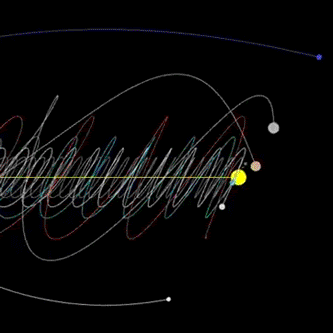
The first month of the year comes with a much needed clarity and forward momentum.
In January 2023, a record of 3 planets turn direct!
We may not get this sense of direction straight away.
On January 1st 2023, we’re still pretty much under the influence of the heavy Venus-Pluto transit. Venus conjunct Pluto – which was exact on December 31st, 2022 – has raised some serious questions about what makes us happy and fulfilled in our lives, and has also shown us the gap between where we are now vs. where we truly want to be.
However, these Plutonic insights will propel us to find solutions to fill the gap, and mid-month, when Mars, and then Mercury go direct, we will finally find that sense of clarity and forward momentum about what we need to do to live a more fulfilling life.
But let’s take a look at the most important transits of the month:
January 2nd, 2023 – Venus Enters Aquarius
On January 2nd, 2023 Venus leaves Capricorn and enters Aquarius.
Aquarius is a collective sign – the sign of friends, communities and society as a whole. When Venus is in Aquarius, we all feel a bit more open minded, open hearted and inclusive.
Later in the month, Venus will be part of a 4-planet stellium in Aquarius, showing us that there is beauty in cohesiveness and togetherness.
January 6th, 2023 – Full Moon In Cancer
On January 6th, 2023 we have a Full Moon at 16° Cancer. The Full Moon is opposite Mercury retrograde in Capricorn, square Chiron in Aries and sextile Uranus in Taurus.
The Full Moon will trigger our identity wound (Chiron in Aries) but it will also offer us tools and approaches to look at this wound from a different angle (sextile Uranus).
This identity wound is part of us, but it doesn’t define us. It pushes our buttons, but that’s because it’s in the process of embracing our early hurts that we allow ourselves to transform from a caterpillar into a butterfly.
January 7th, 2023 – Mercury Rx Conjunct Sun
On January 7th, 2023 Mercury retrograde is conjunct the Sun at 17° Capricorn. The Mercury-Sun conjunction marks the beginning of a brand new Mercury cycle.
A Mercury cycle lasts for about 4 months, so if you plan to do something that requires 3-4 months to complete, this is a good time to initiate it.
You don’t have to “go live” with this project just yet (wait for Mars and Mercury to go direct) but now it’s a good time to put things down from pen to paper – or from fingerprints to keyboard.
January 12th, 2023 – Mars Goes Direct
It has now been 2 and a half months since Mars went retrograde, messing up our plans and making our lives difficult. On January 12th, 2023, Mars finally goes direct at 8° Gemini.
Mars’ direct station will bring a huge relief in the area of your life ruled by Gemini. If you’ve been feeling stuck and unable to move forward, Mars going direct will show you the way out of the maze.
January 18th, 2023 – Mercury Goes Direct
We have even more good news. A few days after Mars goes direct, on January 18th, 2023, Mercury also goes direct at 8° Capricorn.
If Mars direct brought our mojo back, Mercury direct will bring us the much needed clarity and focus to follow through on our plans. Things are finally moving forward.
January 18th, 2023 – Sun Conjunct Pluto
On January 18th, 2023, we will have a Sun-Pluto conjunction at 27° Capricorn.
Sun conjunct Pluto asks us to face the bare and naked truth: “Who are you, really?”. The bare and naked truth is rarely comfortable, because there is always a part of us that doesn’t quite live up to its full potential.
The good thing is that this discomfort will eventually push us to do something about it. Sun conjunct Pluto’s goal is to awaken us to our true power, to our true potential.
January 20th, 2023 – Sun Enters Aquarius
On January 20th, 2023 the Sun enters Aquarius. Happy birthday to all Aquarius people out there!
This is a very special Aquarius season for Aquarians and everyone else. For the first time in years, Saturn in Aquarius is no longer square Uranus. Time to finally enjoy the beautiful Aquarius season!
January 21st, 2023 – New Moon In Aquarius
On January 21st, 2023 we have an auspicious New Moon at 1° Aquarius. The New Moon is a true new “Aquarius” beginning.
Conjunct Pluto, the New Moon is a preview of the upcoming 20-year long Pluto in Aquarius transit. Sextile Jupiter and trine Mars, the New Moon will bring opportunities to pursue our dreams together with like-minded people who “get” us.
At the New Moon in Aquarius, we are relaunching our Age Of Aquarius Community, introducing new tech features like live streaming as well as interest groups meant to bring like-minded people together – online or in person through local chapters.
We will open the doors to the Community when Mercury goes direct on January 18th, if you’re interested, make sure you save the date!
January 23rd, 2023 – Uranus Goes Direct
On January 23rd, 2023 Uranus goes direct at 14° Taurus. This is the first time in years when Uranus goes direct and it’s not within a square orb with Saturn.
We now have the Sun, the Moon, Venus and Saturn in Aquarius, and when Uranus, Aquarius’ ruler goes direct, there is a tremendous forward momentum connected to the Aquarius area of your chart.
Things that have been stuck for years are finally starting to move again.
January 26th, 2023 – Venus Enters Pisces
On January 26th, 2023 Venus enters the sign of her exaltation, Pisces. In the following weeks, you will be more receptive and intuitive than usual, and will relate deeply to love, art, poetry, music – and everything that is beautiful.
The transit culminates with a conjunction to Neptune on Valentine’s day, when we are invited to surrender to the unconditional love that the universe is always pouring into us.
February 2023 has many other amazing things in store, but until then, have a great January!
Consciousness, spirituality, biography, sexuality, androgyny, futurism, space, the arts, science, astrology, democracy, humor, books, movies and more





 If you enjoy these quotes and have not yet taken our introductory class, Philosophy Works, visit