JANUARY 3, 2023 AT 7:00 AM BY ROB BREZSNY (newcity.com)
Photo: Aaron Burden
ARIES (March 21-April 19): “My life was the best omelet you could make with a chainsaw,” observed flamboyant author Thomas McGuane. That’s a witty way to encapsulate his tumultuous destiny. There have been a few moments in 2022 when you might have been tempted to invoke a similar metaphor about your own evolving story. But the good news is that your most recent chainsaw-made omelet is finished and ready to eat. I think you’ll find its taste is savory. And I believe it will nourish you for a long time. (Soon it will be time to start your next omelet, maybe without using the chainsaw this time!)
TAURUS (April 20-May 20): After meticulous research of 2023’s astrological omens, I have come to a radical conclusion: You should tell the people who care for you that you’d like to be called by new pet names. I think you need to intensify their ability and willingness to view you as a sublime creature worthy of adoration. I don’t necessarily recommend you use old standbys like “cutie,” “honey,” “darling,” or “angel.” I’m more in favor of unique and charismatic versions, something like “Jubilee” or “Zestie” or “Fantasmo” or “Yowie-Wowie.” Have fun coming up with pet names that you are very fond of. The more, the better.
GEMINI (May 21-June 20): If I could choose some fun and useful projects for you to master in 2023, they would include the following: 1. Be in constant competition with yourself to outdo past accomplishments. But at the same time, be extra compassionate toward yourself. 2. Borrow and steal other people’s good ideas and use them with even better results than they would use them. 3. Acquire an emerald or two, or wear jewelry that features emeralds. 4. Increase your awareness of and appreciation for birds. 5. Don’t be attracted to folks who aren’t good for you just because they are unusual or interesting. 6. Upgrade your flirting so it’s even more nuanced and amusing, while at the same time you make sure it never violates anyone’s boundaries.
CANCER (June 21-July 22): When she was young, Carolyn Forché was a conventional poet focused on family and childhood. But she transformed. Relocating to El Salvador during its civil war, she began to write about political trauma. Next, she lived in Lebanon during its civil war. She witnessed firsthand the tribulations of military violence and the imprisonment of activists. Her creative work increasingly illuminated questions of social justice. At age seventy-two, she is now a renowned human rights advocate. In bringing her to your attention, I don’t mean to suggest that you engage in an equally dramatic self-reinvention. But in 2023, I do recommend drawing on her as an inspirational role model. You will have great potential to discover deeper aspects of your life’s purpose—and enhance your understanding of how to offer your best gifts.
LEO (July 23-Aug. 22): Are the characters in Carlos Castañeda’s books on shamanism fictional or real? It doesn’t matter to me. I love the wisdom of his alleged teacher, Don Juan Matus. He said, “Look at every path closely and deliberately. Try it as many times as you think necessary. Then ask yourself, and yourself alone, one question. Does this path have a heart? If it does, the path is good; if it doesn’t, it is of no use.” Don Juan’s advice is perfect for you in the coming nine months, Leo. I hope you will tape a copy of his words on your bathroom mirror and read it at least once a week.
VIRGO (Aug. 23-Sept. 22): Teacher and author Byron Katie claims, “The voice within is what I’m married to. My lover is the place inside me where an honest yes and no come from.” I happen to know that she has also been married for many years to a writer named Stephen Mitchell. So she has no problem being wed to both Mitchell and her inner voice. In accordance with astrological omens, I invite you to propose marriage to your own inner voice. The coming year will be a fabulous time to deepen your relationship with this crucial source of useful and sacred revelation.
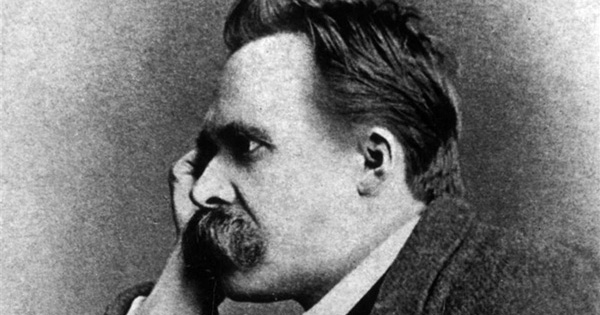
LIBRA (Sept. 23-Oct. 22): Libran philosopher Friedrich Nietzsche offered advice that is perfect for you in 2023. It’s strenuous. It’s demanding and daunting. If you take it to heart, you will have to perform little miracles you may not yet have the confidence to try. But I have faith in you, Libra. That’s why I don’t hesitate to provide you with Nietzsche’s rant: “No one can build you the bridge on which you, and only you, must cross the river of life. There may be countless trails and bridges and demigods who would gladly carry you across; but only at the price of pawning and forgoing yourself. There is one path in the world that none can walk but you. Where does it lead? Don’t ask, walk!”
SCORPIO (Oct. 23-Nov. 21): How might you transform the effects of the limitations you’ve been dealing with? What could you do to make it work in your favor as 2023 unfolds? I encourage you to think about these question with daring and audacity. The more moxie you summon, the greater your luck will be in making the magic happen. Here’s another riddle to wrestle with: What surrender or sacrifice could you initiate that might lead in unforeseen ways to a plucky breakthrough? I have a sense that’s what will transpire as you weave your way through the coming months in quest of surprising opportunities.
SAGITTARIUS (Nov. 22-Dec. 21): Sagittarian singer Tina Turner confided, “My greatest beauty secret is being happy with myself.” I hope you will experiment with that formula in 2023. I believe the coming months will potentially be a time when you will be happier with yourself than you have ever been before—more at peace with your unique destiny, more accepting of your unripe qualities, more in love with your depths, and more committed to treating yourself with utmost care and respect. Therefore, if Tina Turner is accurate, 2023 will also be a year when your beauty will be ascendant.
CAPRICORN (Dec. 22-Jan. 19): “I’m homesick all the time,” writes author Sarah Addison Allen. “I just don’t know where home is. There’s this promise of happiness out there. I know it. I even feel it sometimes. But it’s like chasing the moon. Just when I think I have it, it disappears into the horizon.” If you have ever felt pangs like hers, Capricorn, I predict they will fade in 2023. That’s because I expect you will clearly identify the feeling of home you want—and thereby make it possible to find and create the place, the land, and the community where you will experience a resounding peace and stability.
AQUARIUS (Jan. 20-Feb. 18): Storyteller Michael Meade tells us, “The ship is always off course. Anybody who sails knows that. Sailing is being off-course and correcting. That gives a sense of what life is about.” I interpret Meade’s words to mean that we are never in a perfect groove heading directly toward our goal. We are constantly deviating from the path we might wish we could follow with unfailing accuracy. That’s not a bug in the system; it’s a feature. And as long as we obsess on the idea that we’re not where we should be, we are distracted from doing our real work. And the real work? The ceaseless corrections. I hope you will regard what I’m saying here as one of your core meditations in 2023, Aquarius.
PISCES (Feb. 19-March 20): A Chinese proverb tells us, “Great souls have wills. Feeble souls have wishes.” I guess that’s true in an abstract way. But in practical terms, most of us are a mix of both great and feeble. We have a modicum of willpower and a bundle of wishes. In 2023, though, you Pisceans could make dramatic moves to strengthen your willpower as you shed wimpy wishes. In my psychic vision of your destiny, I see you feeding metaphorical iron supplements to your resolve and determination.
Homework: Visualize in intricate detail a breakthrough you would like to experience by July 2023. Newsletter.FreeWillAstrology.com
The corporate takeover of American politics started with a man and a memo you’ve probably never heard of.
In 1971, the U.S. Chamber of Commerce asked Lewis Powell, a corporate attorney who would go on to become a Supreme Court justice, to draft a memo on the state of the country.
Powell’s memo argued that the American economic system was “under broad attack” from consumer, labor, and environmental groups.
In reality, these groups were doing nothing more than enforcing the implicit social contract that had emerged at the end of the Second World War. They wanted to ensure corporations were responsive to all their stakeholders — workers, consumers, and the environment — not just their shareholders.
But Powell and the Chamber saw it differently. In his memo, Powell urged businesses to mobilize for political combat, and stressed that the critical ingredients for success were joint organizing and funding.
The Chamber distributed the memo to leading CEOs, large businesses, and trade associations — hoping to persuade them that Big Business could dominate American politics in ways not seen since the Gilded Age.
It worked.
The Chamber’s call for a business crusade birthed a new corporate-political industry practically overnight. Tens of thousands of corporate lobbyists and political operatives descended on Washington and state capitals across the country.
I should know — I saw it happen with my own eyes.
In 1976, I worked at the Federal Trade Commission. Jimmy Carter had appointed consumer advocates to battle big corporations that for years had been deluding or injuring consumers.
Lobbyists and their allies in Congress, and eventually the Reagan administration, worked to defang agencies like the FTC — and to staff them with officials who would overlook corporate misbehavior.
Their influence led the FTC to stop seriously enforcing antitrust laws — among other things — allowing massive corporations to merge and concentrate their power even further.
Washington was transformed from a sleepy government town into a glittering center of corporate America — replete with elegant office buildings, fancy restaurants, and five-star hotels.
Put another way — without Lewis Powell, there would probably be no Citizens United — the case that threw out limits on corporate campaign spending as a violation of the “free speech” of corporations.
These actions have transformed our political system. Corporate money supports platoons of lawyers, often outgunning any state or federal attorneys who dare to stand in their way. Lobbying has become a $3.7 billion dollar industry.
Corporations regularly outspend labor unions and public interest groups during election years. And too many politicians in Washington represent the interests of corporations — not their constituents. As a result, corporate taxes have been cut, loopholes widened, and regulations gutted.
Corporate consolidation has also given companies unprecedented market power, allowing them to raise prices on everything from baby formula to gasoline. Their profits have jumped into the stratosphere — the highest in 70 years.
But despite the success of the Powell Memo, Big Business has not yet won. The people are beginning to fight back.
First, antitrust is making a comeback. Both at the Federal Trade Commission and the Justice Department, we’re seeing a new willingness to take on corporate power.
Second, working people are standing up. Across the country workers are unionizing at a faster rate than we’ve seen in decades — including at some of the biggest corporations in the world — and they’re winning.
Third, campaign finance reform is within reach. Millions of Americans are intent on limiting corporate money in politics – and politicians are starting to listen.
All of these tell me that now is our best opportunity in decades to take on corporate power — at the ballot box, in the workplace, and in Washington.
What if we could augment the bucket-list of typical New Year’s resolutions, dominated by bodily habits and pragmatic daily practices, with higher-order aspirations — habits of mind and spiritual orientations borrowed from some of humanity’s most timelessly rewarding thinkers? After last year’s selection of worthy resolutions inspired by such luminaries as Seneca, Maya Angelou, Bruce Lee, and Virginia Woolf, here is another set for the new year borrowed from a new roster of perennially elevating minds.
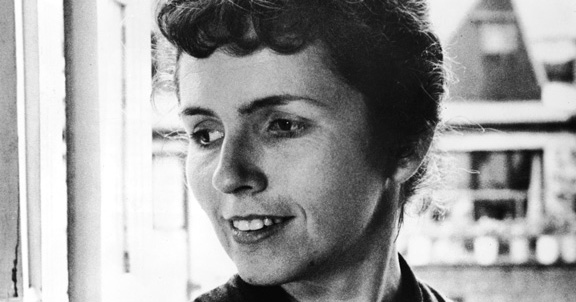
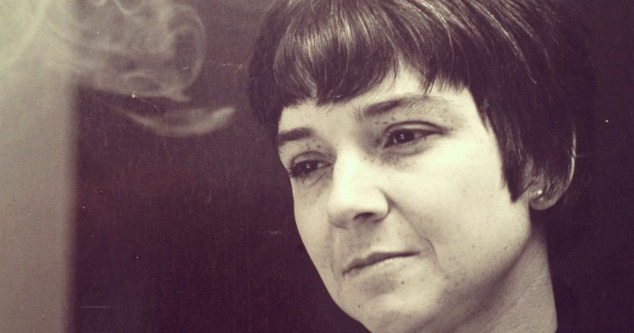
One of the most influential poets of the twentieth century and a woman of unflinching conviction, Adrienne Rich (May 16, 1929–March 27, 2012) became the first and to date only person to decline the National Medal of Arts in protest against the growing monopoly of power and the government’s proposed plan to end funding for the National Endowment for the Arts. Although her poetry collection The Dream of a Common Language is a cultural cornerstone and required reading for every thinking, feeling human being, her lesser-known collected prose, published as On Lies, Secrets, and Silence (public library), pours forth Rich’s most direct insight into the political, philosophical, and personal dimensions of human life.
In it, she writes:
An honorable human relationship — that is, one in which two people have the right to use the word “love” — is a process, delicate, violent, often terrifying to both persons involved, a process of refining the truths they can tell each other.
It is important to do this because it breaks down human self-delusion and isolation.
It is important to do this because in doing so we do justice to our own complexity.
It is important to do this because we can count on so few people to go that hard way with us.
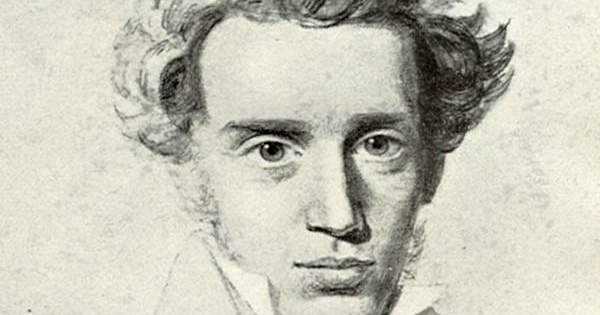
Of all ridiculous things the most ridiculous seems to me, to be busy — to be a man who is brisk about his food and his work.
In a latter chapter, titled “The Unhappiest Man,” he considers how we grow unhappy by fleeing from presence and busying ourselves with the constant pursuit of some as-yet unattained external goal:
The unhappy person is one who has his ideal, the content of his life, the fullness of his consciousness, the essence of his being, in some manner outside of himself. The unhappy man is always absent from himself, never present to himself. But one can be absent, obviously, either in the past or in the future. This adequately circumscribes the entire territory of the unhappy consciousness.
[…]
The unhappy one is absent… It is only the person who is present to himself that is happy.
I beg you, to have patience with everything unresolved in your heart and to try to love the questions themselves as if they were locked rooms or books written in a very foreign language. Don’t search for the answers, which could not be given to you now, because you would not be able to live them. And the point is to live everything. Live the questions now. Perhaps then, someday far in the future, you will gradually, without even noticing it, live your way into the answer.
4. SUSAN SONTAG: PAY ATTENTION TO THE WORLD
In a terrific 1992 lecture, Susan Sontag (January 16, 1933–December 28, 2004) asserted that “a writer is someone who pays attention to the world — a writer is a professional observer.” But this observant attentiveness to the world, Sontag believed, is as vital to being a good writer as it is to being a good human being — something she addresses in one of the many rewarding pieces collected in the posthumous anthology At the Same Time: Essays and Speeches (public library), which also gave us Sontag on beauty vs. interestingness, courage and resistance, and literature and freedom.
Reflecting on a question she is frequently asked — to distill her essential advice on writing — Sontag offers:
I’m often asked if there is something I think writers ought to do, and recently in an interview I heard myself say: “Several things. Love words, agonize over sentences. And pay attention to the world.”
Needless to say, no sooner had these perky phrases fallen out of my mouth than I thought of some more recipes for writer’s virtue.
For instance: “Be serious.” By which I meant: Never be cynical. And which doesn’t preclude being funny.
But these tenets of storytelling, Sontag argues, aren’t just writerly virtues — they are a framework for human virtues:
To tell a story is to say: this is the important story. It is to reduce the spread and simultaneity of everything to something linear, a path.
To be a moral human being is to pay, be obliged to pay, certain kinds of attention.
When we make moral judgments, we are not just saying that this is better than that. Even more fundamentally, we are saying that this is more important than that. It is to order the overwhelming spread and simultaneity of everything, at the price of ignoring or turning our backs on most of what is happening in the world.
The nature of moral judgments depends on our capacity for paying attention — a capacity that, inevitably, has its limits but whose limits can be stretched.
But perhaps the beginning of wisdom, and humility, is to acknowledge, and bow one’s head, before the thought, the devastating thought, of the simultaneity of everything, and the incapacity of our moral understanding — which is also the understanding of the novelist — to take this in.
5. BERTRAND RUSSELL: MAKE ROOM FOR “FRUITFUL MONOTONY”
Many of humanity’s greatest minds have advocated for the vitalizing role of not-doing in having a full life, but none more compellingly than British philosopher Bertrand Russell (May 18, 1872–February 2, 1970) in his 1930 masterwork The Conquest of Happiness (public library) — an effort “to suggest a cure for the ordinary day-to-day unhappiness from which most people in civilized countries suffer,” and a timelessly insightful lens on what “the good life” really means.
In a chapter titled “Boredom and Excitement,” Russell teases apart the paradoxical question of why, given how central it is to our wholeness, we dread boredom as much as we do. Long before our present anxieties about how the age of distraction and productivity is thwarting our capacity for presence, he writes:
We are less bored than our ancestors were, but we are more afraid of boredom. We have come to know, or rather to believe, that boredom is not part of the natural lot of man, but can be avoided by a sufficiently vigorous pursuit of excitement.
[…]
As we rise in the social scale the pursuit of excitement becomes more and more intense.
Many decades before our present concerns about screen time, he urges parents to allow children the freedom to experience “fruitful monotony,” which invites inventiveness and imaginative play — in other words, the great childhood joy and developmental achievement of learning to “do nothing with nobody all alone by yourself.” He writes:
The pleasures of childhood should in the main be such as the child extracts from his environment by means of some effort and inventiveness… A child develops best when, like a young plant, he is left undisturbed in the same soil. Too much travel, too much variety of impressions, are not good for the young, and cause them as they grow up to become incapable of enduring fruitful monotony.
I do not mean that monotony has any merits of its own; I mean only that certain good things are not possible except where there is a certain degree of monotony… A generation that cannot endure boredom will be a generation of little men, of men unduly divorced from the slow processes of nature, of men in whom every vital impulse slowly withers, as though they were cut flowers in a vase.
6. URSULA K. LE GUIN: REFUSE TO PLAY THE PERFECTION GAME
Reflecting on various cultures’ impossible and often punishing ideals of human beauty, “especially of female beauty,” Le Guin writes:
There are a whole lot of ways to be perfect, and not one of them is attained through punishment.
[…]
I think of when I was in high school in the 1940s: the white girls got their hair crinkled up by chemicals and heat so it would curl, and the black girls got their hair mashed flat by chemicals and heat so it wouldn’t curl. Home perms hadn’t been invented yet, and a lot of kids couldn’t afford these expensive treatments, so they were wretched because they couldn’t follow the rules, the rules of beauty.
Beauty always has rules. It’s a game. I resent the beauty game when I see it controlled by people who grab fortunes from it and don’t care who they hurt. I hate it when I see it making people so self-dissatisfied that they starve and deform and poison themselves. Most of the time I just play the game myself in a very small way, buying a new lipstick, feeling happy about a pretty new silk shirt.
[…]
There’s the ideal beauty of youth and health, which never really changes, and is always true. There’s the ideal beauty of movie stars and advertising models, the beauty-game ideal, which changes its rules all the time and from place to place, and is never entirely true. And there’s an ideal beauty that is harder to define or understand, because it occurs not just in the body but where the body and the spirit meet and define each other.
And yet for all the ideals we impose on our bodies, Le Guin argues in her most poignant but, strangely, most liberating point, it is death that ultimately illuminates the full spectrum of our beauty — death, the ultimate equalizer of time and space; death, the great clarifier that makes us see that, as Rebecca Goldstein put it, “a person whom one loves is a world, just as one knows oneself to be a world.”
With this long-view lens, Le Guin remembers her own mother and the many dimensions of her beauty:
My mother died at eighty-three, of cancer, in pain, her spleen enlarged so that her body was misshapen. Is that the person I see when I think of her? Sometimes. I wish it were not. It is a true image, yet it blurs, it clouds, a truer image. It is one memory among fifty years of memories of my mother. It is the last in time. Beneath it, behind it is a deeper, complex, ever-changing image, made from imagination, hearsay, photographs, memories. I see a little red-haired child in the mountains of Colorado, a sad-faced, delicate college girl, a kind, smiling young mother, a brilliantly intellectual woman, a peerless flirt, a serious artist, a splendid cook—I see her rocking, weeding, writing, laughing — I see the turquoise bracelets on her delicate, freckled arm — I see, for a moment, all that at once, I glimpse what no mirror can reflect, the spirit flashing out across the years, beautiful.
That must be what the great artists see and paint. That must be why the tired, aged faces in Rembrandt’s portraits give us such delight: they show us beauty not skin-deep but life-deep.
Our cultural mythology depicts love as something that happens to us — something we fall into, something that strikes us arrow-like, in which we are so passive as to be either lucky or unlucky. Such framing obscures the fact that loving — the practice of love — is a skill attained through the same deliberate effort as any other pursuit of human excellence.
Long before the Zen sage Thich Nhat Hahn admonished that “to love without knowing how to love wounds the person we love,” the great German social psychologist, psychoanalyst, and philosopher Erich Fromm (March 23, 1900–March 18, 1980) addressed this neglected skillfulness aspect of love in his 1956 classic The Art of Loving (public library) — a case for love as a skill to be honed the way artists apprentice themselves to the work on the way to mastery, demanding of its practitioner both knowledge and effort.
Fromm writes:
Love is not a sentiment which can be easily indulged in by anyone, regardless of the level of maturity reached by him… [All] attempts for love are bound to fail, unless [one] tries most actively to develop [one’s] total personality, so as to achieve a productive orientation; …satisfaction in individual love cannot be attained without the capacity to love one’s neighbor, without true humility, courage, faith and discipline. In a culture in which these qualities are rare, the attainment of the capacity to love must remain a rare achievement.
[…]
There is hardly any activity, any enterprise, which is started with such tremendous hopes and expectations, and yet, which fails so regularly, as love.
The only way to abate this track record of failure, Fromm argues, is to examine the underlying reasons for the disconnect between our beliefs about love and its actual machinery — which must include a recognition of love as an informed practice rather than an unmerited grace:
The first step to take is to become aware that love is an art, just as living is an art; if we want to learn how to love we must proceed in the same way we have to proceed if we want to learn any other art, say music, painting, carpentry, or the art of medicine or engineering. What are the necessary steps in learning any art? The process of learning an art can be divided conveniently into two parts: one, the mastery of the theory; the other, the mastery of the practice. If I want to learn the art of medicine, I must first know the facts about the human body, and about various diseases. When I have all this theoretical knowledge, I am by no means competent in the art of medicine. I shall become a master in this art only after a great deal of practice, until eventually the results of my theoretical knowledge and the results of my practice are blended into one — my intuition, the essence of the mastery of any art. But, aside from learning the theory and practice, there is a third factor necessary to becoming a master in any art — the mastery of the art must be a matter of ultimate concern; there must be nothing else in the world more important than the art. This holds true for music, for medicine, for carpentry — and for love. And, maybe, here lies the answer to the question of why people in our culture try so rarely to learn this art, in spite of their obvious failures: in spite of the deep-seated craving for love, almost everything else is considered to be more important than love: success, prestige, money, power — almost all our energy is used for the learning of how to achieve these aims, and almost none to learn the art of loving.
8. ANNE TRUITT: CHOOSE UNDERSTANDING OVER JUDGMENT
Perhaps because she was formally trained as a psychologist, artist Anne Truitt (March 16, 1921–December 23, 2004) possessed exceptional powers of introspection and self-awareness coupled with an artist’s penchant for patient observation. This made her diary, eventually published as Daybook: The Journal of an Artist (public library), a true masterwork of psychological insight.
In one particularly poignant entry, she considers how our preconceptions and our ready-made judgments are keeping us from truly seeing one another, erecting a perilous barrier to love:
Unless we are very, very careful, we doom each other by holding onto images of one another based on preconceptions that are in turn based on indifference to what is other than ourselves. This indifference can be, in its extreme, a form of murder and seems to me a rather common phenomenon. We claim autonomy for ourselves and forget that in so doing we can fall into the tyranny of defining other people as we would like them to be. By focusing on what we choose to acknowledge in them, we impose an insidious control on them. I notice that I have to pay careful attention in order to listen to others with an openness that allows them to be as they are, or as they think themselves to be. The shutters of my mind habitually flip open and click shut, and these little snaps form into patterns I arrange for myself. The opposite of this inattention is love, is the honoring of others in a way that grants them the grace of their own autonomy and allows mutual discovery.
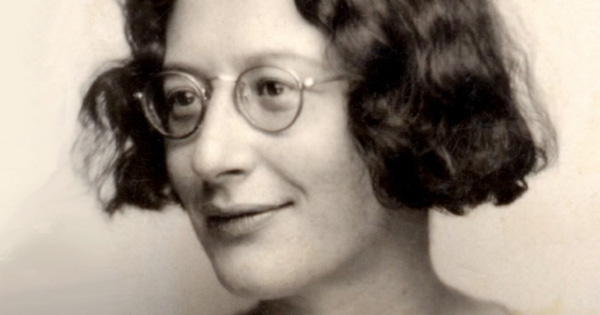
Long before scientists had empirical evidence of the astounding ways in which our minds affect our bodies, French philosopher and political activist Simone Weil (February 3, 1909–August 24, 1943) — a thinker of unparalleled intellectual elegance and a sort of modern saint whom Albert Camus described as “the only great spirit of our times” — examined the delicate relationship between our physical and spiritual suffering, between the anguish of the material body and that of the soul.
A few months before her painful yet stoic death from tuberculosis — despite her diagnosis and her doctor’s explicit orders to eat heartily, Weil consumed only what was rationed to her compatriots under the German Occupation in a remarkable gesture of solidarity, ultimately resulting in fatal malnutrition — she turned to the problem of pain in First and Last Notebooks (public library). In an entry from late 1942, Weil considers how our instinctive reaction to suffering often only amplifies our pain:
The way to make use of physical pain. When suffering no matter what degree of pain, when almost the entire soul is inwardly crying “Make it stop, I can bear no more,” a part of the soul, even though it be an infinitesimally small part, should say: “I consent that this should continue throughout the whole of time, if the divine wisdom so ordains.” The soul is then split in two. For the physically sentient part of the soul is — at least sometimes — unable to consent to pain. This splitting in two of the soul is a second pain, a spiritual one, and even sharper than the physical pain that causes it.
Weil extends this philosophy beyond physical pain and into other forms of bodily and spiritual discomfort that we habitually exacerbate by stiffening with resistance to the unpleasantness:
A similar use can be made of hunger, fatigue, fear, and of everything that imperatively constrains the sentient part of the soul to cry: I can bear no more! Make it stop! There should be something in us that answers: I consent that it should continue up to the moment of death, or that it should not even finish then, but continue for ever. Then it is that the soul is as if divided by a two-edged sword.
To make use in this way of the sufferings that chance inflicts upon us is better than inflicting discipline upon oneself.
10. JAMES BALDWIN: TELL THE WORLD HOW TO TREAT YOU
One August evening in 1970, James Baldwin (August 2, 1924–December 1, 1987) and Margaret Mead (December 16, 1901–November 15, 1978) sat together on a stage in New York City for a remarkable public conversation. They talked for seven and a half hours over the course of the weekend, tackling such enduring concerns as power and privilege, race and gender, beauty, religion, justice, and the relationship between the intellect and the imagination. The transcript was eventually published as A Rap on Race (public library) — a testament to both how far we’ve come and how far we have yet to go, exploring such timeless and timely questions as changing one’s destiny, the crucial difference between guilt and responsibility, and reimagining democracy for a post-consumerist culture.
I remember once a few years ago, in the British Museum a black Jamaican was washing the floors or something and asked me where I was from, and I said I was born in New York. He said, “Yes, but where are you from?” I did not know what he meant. “Where did you come from before that?” he explained. I said, “My mother was born in Maryland.” “Where was your father born?” he asked. “My father was born in New Orleans.” He said, “Yes, but where are you from?” Then I began to get it; very dimly, because now I was lost. And he said, “Where are you from in Africa?” I said, “Well, I don’t know,” and he was furious with me. He said, and walked away, “You mean you did not care enough to find out?”
Now, how in the world am I going to explain to him that there is virtually no way for me to have found out where I came from in Africa? So it is a kind of tug of war. The black American is looked down on by other dark people as being an object abjectly used. They envy him on the one hand, but on the other hand they also would like to look down on him as having struck a despicable bargain.
But identity, Baldwin argues, isn’t something we are born with — rather, it is something we claim for ourselves, then must assert willfully to the world:
You’ve got to tell the world how to treat you. If the world tells you how you are going to be treated, you are in trouble.
11. JOHN STEINBECK: USE DISCIPLINE TO CATALYZE CREATIVE MAGIC
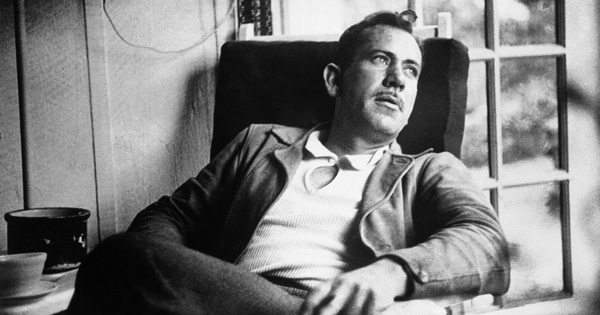
Many celebrated writers have championed the creative benefits of keeping a diary, but no one has put the diary to more impressive practical use in the creative process than John Steinbeck (February 27, 1902–December 20, 1968).
In the spring of 1938, he embarked on the most intense writing experience of his life. The public fruit of this labor would become the 1939 masterwork The Grapes of Wrath, which earned Steinbeck the Pulitzer Prize in 1940 and was a cornerstone for his Nobel Prize two decades later. But its private rewards are at least as important and morally instructive: Alongside the novel, Steinbeck also began keeping a diary, eventually published as Working Days: The Journals of The Grapes of Wrath (public library) — a living record of his creative journey, in which this extraordinary writer tussles with excruciating self-doubt (exactly the kind Virginia Woolf so memorably described) but plows forward anyway, with equal parts gusto and grist, determined to do his best with the gift he has despite his limitations.
His journal, which became for him a practice both redemptive and transcendent, stands as a supreme testament to the fact that the essential substance of genius is the daily act of showing up. Steinbeck captures this perfectly in an entry that applies just as well to any field of creative endeavor:
In writing, habit seems to be a much stronger force than either willpower or inspiration. Consequently there must be some little quality of fierceness until the habit pattern of a certain number of words is established. There is no possibility, in me at least, of saying, “I’ll do it if I feel like it.” One never feels like awaking day after day. In fact, given the smallest excuse, one will not work at all. The rest is nonsense. Perhaps there are people who can work that way, but I cannot. I must get my words down every day whether they are any good or not.
The journal thus becomes at once a tool of self-discipline (he vowed to write in it every single weekday, and did, declaring in one of the first entries: “Work is the only good thing.”), a pacing mechanism (he gave himself seven months to complete the book, anticipated it would actually take only 100 days, and finished it in under five months, averaging 2,000 words per day, longhand, not including the diary), and a sounding board for much-needed positive self-talk in the face of constant doubt (“I am so lazy and the thing ahead is so very difficult,” he despairs in one entry; but he assures himself in another: “My will is low. I must build my will again. And I can do it.”) Above all, it is a tool of accountability to keep him moving forward despite life’s litany of distractions and responsibilities. “Problems pile up so that this book moves like a Tide Pool snail with a shell and barnacles on its back,” he writes, and yet the essential thing is that despite the problems, despite the barnacles, it does move. He captures this in one of his most poignant entries, shortly before completing the first half of the novel:
Every book seems the struggle of a whole life. And then, when it is done — pouf. Never happened. Best thing is to get the words down every day. And it is time to start now.
A few days later, he spirals into self-doubt again:
My many weaknesses are beginning to show their heads. I simply must get this thing out of my system. I’m not a writer. I’ve been fooling myself and other people. I wish I were. This success will ruin me as sure as hell. It probably won’t last, and that will be all right. I’ll try to go on with work now. Just a stint every day does it. I keep forgetting.
And so he inches forward, day after day. As he nears the finish line, he is even more certain of this incremental reach for greatness:
I’ll get the book done if I just set one day’s work in front of the last day’s work. That’s the way it comes out. And that’s the only way it does.
And yet even as he approaches the end, his self-doubt remains as unshakable as his commitment to finish:
I only hope it is some good. I have very grave doubts sometimes. I don’t want this to seem hurried. It must be just as slow and measured as the rest but I am sure of one thing — it isn’t the great book I had hoped it would be. It’s just a run-of-the-mill book. And the awful thing is that it is absolutely the best I can do. Now to work on it.
The book, of course, was far from run-of-the-mill. In addition to earning the two highest accolades in literature, The Grapes of Wrath remained atop the bestseller list for almost a year after it was published, sold nearly 430,000 copies in its first year alone, and remains one of the most read and celebrated novels ever written.
12. MARTHA NUSSBAUM: HEED THE INTELLIGENCE OF THE EMOTIONS
As scientists are shedding light on how our emotions affect our susceptibility to disease, it is becoming increasingly clear that our emotional lives are equipped with a special and non-negligible kind of bodily and cognitive intelligence. The nature of that intelligence and how we can harness its power is what Martha Nussbaum (b.May 6, 1947), whom I continue to consider the most compelling and effective philosopher of our time, examines in her magnificent 2001 book Upheavals of Thought: The Intelligence of Emotions (public library). Titled after Proust’s conception of the emotions as “geologic upheavals of thought,” Nussbaum’s treatise offers a lucid counterpoint to the old idea that our emotions are merely animal energies or primal impulses wholly separate from our cognition. Instead, she argues that they are a centerpiece of moral philosophy and that any substantive theory of ethics necessitates a substantive understanding of the emotions.
Nussbaum writes:
A lot is at stake in the decision to view emotions in this way, as intelligent responses to the perception of value. If emotions are suffused with intelligence and discernment, and if they contain in themselves an awareness of value or importance, they cannot, for example, easily be sidelined in accounts of ethical judgment, as so often they have been in the history of philosophy. Instead of viewing morality as a system of principles to be grasped by the detached intellect, and emotions as motivations that either support or subvert our choice to act according to principle, we will have to consider emotions as part and parcel of the system of ethical reasoning. We cannot plausibly omit them, once we acknowledge that emotions include in their content judgments that can be true or false, and good or bad guides to ethical choice. We will have to grapple with the messy material of grief and love, anger and fear, and the role these tumultuous experiences play in thought about the good and the just.
[…]
Emotions are not just the fuel that powers the psychological mechanism of a reasoning creature, they are parts, highly complex and messy parts, of this creature’s reasoning itself.
She considers the rationale behind the book’s title:
Emotions should be understood as “geological upheavals of thought”: as judgments in which people acknowledge the great importance, for their own flourishing, of things that they do not fully control — and acknowledge thereby their neediness before the world and its events.
Perhaps the greatest perplexity of aging is how to fill with gentleness the void between who we feel we are on the inside and who our culture tells us is staring back from that mirror. The cultivation of that gentleness is what beloved writer Grace Paley (December 11, 1922–August 22, 2007) examines in a magnificent short piece titled “My Father Addresses Me on the Facts of Old Age,” originally written for the New Yorker in 2002 and included in Here and Somewhere Else: Stories and Poems by Grace Paley and Robert Nichols (public library) — a celebration of literature, love, and the love of literature by Paley and her husband, published a few months before she died at the age of eighty-five.
Paley writes:
My father had decided to teach me how to grow old. I said O.K. My children didn’t think it was such a great idea. If I knew how, they thought, I might do so too easily. No, no, I said, it’s for later, years from now. And besides, if I get it right it might be helpful to you kids in time to come.
They said, Really?
My father wanted to begin as soon as possible.
[…]
Please sit down, he said. Be patient. The main thing is this — when you get up in the morning you must take your heart in your two hands. You must do this every morning.
That’s a metaphor, right?
Metaphor? No, no, you can do this. In the morning, do a few little exercises for the joints, not too much. Then put your hands like a cup over and under the heart. Under the breast. He said tactfully. It’s probably easier for a man. Then talk softly, don’t yell. Under your ribs, push a little. When you wake up, you must do this massage. I mean pat, stroke a little, don’t be ashamed. Very likely no one will be watching. Then you must talk to your heart.
Talk? What?
Say anything, but be respectful. Say — maybe say, Heart, little heart, beat softly but never forget your job, the blood. You can whisper also, Remember, remember.
“Do you have the courage to bring forth the treasures that are hidden within you?” Elizabeth Gilbert asked in framing her catalyst for creative magic. This is among life’s most abiding questions and the history of human creativity — our art and our poetry and most empathically all of our philosophy — is the history of attempts to answer it.
Friedrich Nietzsche (October 15, 1844–August 25, 1900), who believed that embracing difficulty is essential for a fulfilling life, considered the journey of self-discovery one of the greatest and most fertile existential difficulties. In 1873, as he was approaching his thirtieth birthday, Nietzsche addressed this perennial question of how we find ourselves and bring forth our gifts in a beautiful essay titled Schopenhauer as Educator (public library), part of his Untimely Meditations.
Nietzsche, translated here by Daniel Pellerin, writes:
Any human being who does not wish to be part of the masses need only stop making things easy for himself. Let him follow his conscience, which calls out to him: “Be yourself! All that you are now doing, thinking, desiring, all that is not you.”
Every young soul hears this call by day and by night and shudders with excitement at the premonition of that degree of happiness which eternities have prepared for those who will give thought to their true liberation. There is no way to help any soul attain this happiness, however, so long as it remains shackled with the chains of opinion and fear. And how hopeless and meaningless life can become without such a liberation! There is no drearier, sorrier creature in nature than the man who has evaded his own genius and who squints now towards the right, now towards the left, now backwards, now in any direction whatever.
No one can build you the bridge on which you, and only you, must cross the river of life. There may be countless trails and bridges and demigods who would gladly carry you across; but only at the price of pawning and forgoing yourself. There is one path in the world that none can walk but you. Where does it lead? Don’t ask, walk!
15. MARTHA GRAHAM: EMBRACE YOUR DIVINE DISSATISFACTION
“Resign yourself to the lifelong sadness that comes from never being satisfied,” Zadie Smith counseled in her ten rules of writing. But how does one befriend this perennial dissatisfaction while continuing to unlock, to borrow Julia Cameron’s potent phrase, the “spiritual electricity” of creative flow?
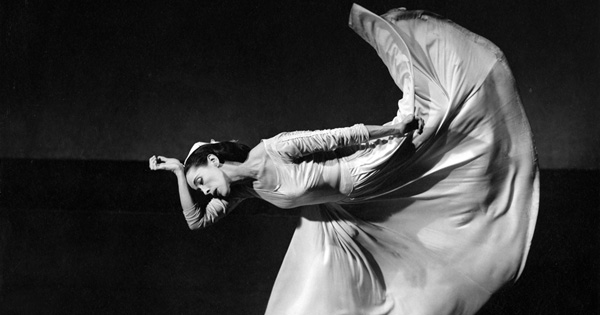
To this abiding question of the creative life, legendary choreographer Martha Graham (May 11, 1894–April 1, 1991) offers an answer at once remarkably grounding and remarkably elevating in a conversation found in the 1991 biography Martha: The Life and Work of Martha Graham (public library) by dancer and choreographer Agnes de Mille.
In 1943, De Mille was hired to choreograph the musical Oklahoma!, which became an overnight sensation and ran for a record-setting 2,212 performances. Feeling that critics and the public had long ignored work into which she had poured her heart and soul, De Mille found herself dispirited by the sense that something she considered “only fairly good” was suddenly hailed as a “flamboyant success.” Shortly after the premiere, she met Graham “in a Schrafft’s restaurant over a soda” for a conversation that put into perspective her gnawing grievance and offered what De Mille considered the greatest thing ever said to her. She recounts the exchange:
I confessed that I had a burning desire to be excellent, but no faith that I could be.
Martha said to me, very quietly: “There is a vitality, a life force, an energy, a quickening that is translated through you into action, and because there is only one of you in all of time, this expression is unique. And if you block it, it will never exist through any other medium and it will be lost. The world will not have it. It is not your business to determine how good it is nor how valuable nor how it compares with other expressions. It is your business to keep it yours clearly and directly, to keep the channel open. You do not even have to believe in yourself or your work. You have to keep yourself open and aware to the urges that motivate you. Keep the channel open. As for you, Agnes, you have so far used about one-third of your talent.”
“But,” I said, “when I see my work I take for granted what other people value in it. I see only its ineptitude, inorganic flaws, and crudities. I am not pleased or satisfied.”
“No artist is pleased.”
“But then there is no satisfaction?”
“No satisfaction whatever at any time,” she cried out passionately. “There is only a queer divine dissatisfaction, a blessed unrest that keeps us marching and makes us more alive than the others.”
True story, Word of Honor: Joseph Heller, an important and funny writer now dead, and I were at a party given by a billionaire on Shelter Island.
I said, “Joe, how does it make you feel to know that our host only yesterday may have made more money than your novel ‘Catch-22’ has earned in its entire history?” And Joe said, “I’ve got something he can never have.” And I said, “What on earth could that be, Joe?” And Joe said, “The knowledge that I’ve got enough.” Not bad! Rest in peace!
November 2, 2022, John Stewart Bell (1928-1990), the Northern Irish physicist whose work sparked a quiet revolution in quantum physics.
One of the most unsettling things learned in the last 50 years is that the universe is not real where you are. “Real” means that things have clear properties even when no one is looking at them. For example, an apple can be red even when no one is looking at it. “Local” means that things can only be affected by their surroundings and that effects can’t move faster than light. Researchers in quantum physics have found that these two ideas can’t both be true. Instead, the evidence shows that things are affected by more than just their surroundings and that they may not have clear properties before they are measured. “Do you really think the moon doesn’t exist when you aren’t looking at it?” Albert Einstein asked a friend this famous question.
This goes against everything we know and see every day. To paraphrase Douglas Adams, the end of local realism has made a lot of people very angry and is generally seen as a bad thing.
The accomplishment has now been attributed to three physicists: John Clauser, Alain Aspect, and Anton Zeilinger. They were awarded the Nobel Prize in Physics in 2022 in equal parts “for experiments with entangled photons, establishing the violation of Bell inequalities, and pioneering quantum information science.” (“Bell inequalities” alludes to the early 1960s pioneering work of Northern Irish physicist John Stewart Bell, who established the groundwork for this year’s Physics Nobel.) Colleagues felt that the trio deserved this punishment for upending reality as we know it. “This is wonderful news. “It had been a long time coming,” Sandu Popescu, a quantum physicist at the University of Bristol, says. “There is no doubt that the award is well-deserved.”
“The experiments beginning with the earliest one of Clauser and continuing along, show that this stuff isn’t just philosophical, it’s real—and like other real things, potentially useful,” says Charles Bennett, an eminent quantum researcher at IBM.
“Each year I thought, ‘oh, maybe this is the year,’” says David Kaiser, a physicist and historian at the Massachusetts Institute of Technology. “This year, it really was. It was very emotional—and very thrilling.”
It took a long time for quantum foundations to move from the fringe to the mainstream. From about 1940 until as late as 1990, people often thought the topic was either philosophy or nonsense. Many scientific journals wouldn’t publish papers about quantum foundations, and it was hard to find academic jobs that let you do research in this area. In 1985, Popescu’s advisor told him that he shouldn’t get a Ph.D. in that field.
“He said ‘look, if you do that, you will have fun for five years, and then you will be jobless,’” Popescu says.
Quantum information science is one of the most exciting and important parts of physics right now. It links Einstein’s theory of general relativity to quantum mechanics by looking at how black holes behave, which is still a mystery. It tells how quantum sensors, which are used to study everything from earthquakes to dark matter, are made and how they work. Quantum entanglement is a very important part of modern materials science and is at the heart of quantum computing. This book explains how it works and why it can be hard to understand.
“What even makes a quantum computer ‘quantum’?” Nicole Yunger Halpern, a National Institute of Standards and Technology physicist, asks rhetorically. “One of the most popular answers is entanglement, and the main reason why we understand entanglement is the grand work participated in by Bell and these Nobel Prize–winners. Without that understanding of entanglement, we probably wouldn’t be able to realize quantum computers.”
In their famous 1935 paper, Einstein, Boris Podolsky, and Nathan Rosen wrote about what they didn’t like about the theory: the uncomfortable things it said about the real world. Their analysis, which is known by the initials EPR, was based on a thought experiment that was meant to show how crazy quantum mechanics is, to show how the theory can break or at least give results that don’t make sense and go against everything else we know about reality. A version of EPR that is easier to understand and more up-to-date goes something like this: Particles are sent in pairs in different directions from a single source. These particles are aimed at two observers, Alice and Bob, who are at opposite ends of the solar system. Quantum mechanics says that you can’t know a particle’s spin, which is a quantum property, before you measure it. Alice finds that when she measures one of her particles, its spin is either up or down. Even though her results are random, she knows right away that Bob’s particle must be down when she measures up. At first glance, this doesn’t seem so strange. Maybe the particles are like a pair of socks: if Alice gets the right sock, Bob must get the left.
But according to quantum mechanics, particles are not like socks, and they don’t know whether they are spinning up or down until they are measured. This is the biggest problem with EPR: If Alice’s particles don’t have a spin until they are measured, how do they know what Bob’s particles will do as they leave the solar system in the opposite direction? Every time Alice takes a measurement, she is, in effect, asking her particle what Bob will get if he flips a coin: up or down? Even if you got this right 200 times in a row, the odds are 1 in 1060, which is more than all the atoms in the solar system. Quantum mechanics says that even though the pairs of particles are separated by billions of kilometers, Alice’s particles can keep making correct predictions, as if they were telepathically linked to Bob’s particles.
Even though the EPR thought experiment was meant to show how quantum mechanics isn’t perfect, when it’s done in the real world, the results support the most strange parts of the theory. Quantum mechanics says that nature is not real locally. Before being measured, particles don’t have properties like spinning up or down, and they seem to talk to each other no matter how far apart they are.
Some physicists who didn’t believe in quantum mechanics thought that there were “hidden variables” that existed in a level of reality below the subatomic level and held information about how a particle would behave in the future. In hidden-variable theories, they hoped that nature could get back the local realism that quantum mechanics took away.
“One would have thought that the arguments of Einstein, Podolsky and Rosen would produce a revolution at that moment, and everybody would have started working on hidden variables,” Popescu says.
Physicists, on the other hand, didn’t agree with Einstein’s “attack” on quantum mechanics. They mostly accepted quantum mechanics as it was. This was often less a thoughtful acceptance of nonlocal reality than a desire to not think too hard while doing physics. The physicist David Mermin later called this “head-in-the-sand” thinking a demand to “shut up and calculate.”
Part of the reason why people weren’t interested was that in 1932, a well-known scientist named John von Neumann published a mathematical proof that showed hidden-variable theories couldn’t be true. Von Neumann’s proof was shown to be wrong by a young woman mathematician named Grete Hermann just three years later, but no one seemed to notice at the time.
The problem of nonlocal realism in quantum mechanics would lie dormant for another 30 years until John Bell broke it in a decisive way. From the beginning of his career, Bell was bothered by the orthodoxy of quantum physics and interested in theories with hidden variables. In 1952, he found out that fellow physicist David Bohm had come up with a workable nonlocal hidden-variable interpretation of quantum mechanics, which von Neumann had said was impossible. This gave him an idea. Bell thought about the ideas for years, when he wasn’t busy with his main job as a particle physicist at CERN.
In 1964, Bell found the same flaws that Hermann had found in von Neumann’s argument. Then, in a great example of careful thinking, Bell came up with a theorem that brought the question of hidden variables out of the muddy waters of metaphysics and onto the solid ground of experiment.
Theories with hidden variables and quantum mechanics usually predict the same experimental results. What Bell realized is that there can be a real difference between the two in certain situations. In the famous Bell test, which is an updated version of the EPR thought experiment, Alice and Bob get the same pair of particles, but now their detectors are set to A and a and B and b, respectively. With these settings, Alice and Bob can ask the particles different questions, which is another way to make it look like they can talk to each other. In local hidden-variable theories, where their states are fixed and nothing connects them, particles can’t get around this extra step, and they can’t always get the perfect correlation where Alice measures spin down when Bob measures spin up (and vice versa). But in quantum mechanics, particles stay linked and have a lot more things in common than they ever could in local hidden-variable theories. In a word, they are mixed up.
By measuring the correlation between many different pairs of particles, you could show which theory was right. If the correlation stayed below a limit based on Bell’s theorem, it would mean that hidden variables are real. If it went above Bell’s limit, however, the strange rules of quantum mechanics would rule. Even though Bell’s theorem could help figure out what reality is, it was published in a relatively unknown journal and didn’t get much attention for years.
THE BELL CHIMES FOR THEE
In 1967, when John Clauser was a graduate student at Columbia University, he found a copy of Bell’s paper by accident in the library. He was fascinated by the idea of proving hidden-variable theories right. Clauser wrote to Bell two years later and asked if the test had ever been done. Clauser’s letter was one of the first things Bell heard about what he had done.
Five years later, Clauser and his graduate student Stuart Freedman did the first Bell test. Bell had encouraged them to do so. Clauser had permission from his bosses but not much money, so he became good at “dumpster diving” to get equipment, which he and Freedman then put together with duct tape, as he said in an interview years later. In Clauser’s setup, which was about the size of a kayak and had to be tuned by hand, pairs of photons were sent in opposite directions toward detectors that could measure their state, or polarization.
Unfortunately for Clauser and his love of hidden variables, he and Freedman could not help but come to the conclusion that they had found strong evidence against them once they had finished their analysis. Still, the result was not very conclusive because the experiment had a number of “loopholes” that could have let the influence of hidden variables slip through without being noticed. The one that worried them the most was the locality loophole: if either the photon source or the detectors could have shared information (which is possible in an object the size of a kayak), the correlations that were measured could still come from hidden variables. Kaiser puts it simply: if Alice tweets to Bob which setting she’s using on the detector, that interference makes it impossible to rule out hidden variables.
It is easier to say how to close the locality loophole than to do it. While photons are moving, the setting on the detector must be changed quickly. By “quickly,” we mean in a matter of nanoseconds. In 1976, a young French optics expert named Alain Aspect came up with a way to make this switch happen very quickly. Clauser’s results were supported by the experimental results of his group, which were published in 1982. It seemed very unlikely that there were local hidden variables.
In response to Aspect’s first results, Bell wrote, “Perhaps Nature is not as strange as quantum mechanics.” “But from this point of view, the experimental situation is not very hopeful.”
But there were still other holes, and Bell didn’t get to see them closed because he died in 1990. Even Aspect’s experiment could not completely rule out local effects because it was too short. Clauser and others had also figured out that Alice and Bob could come to the wrong conclusions if they didn’t make sure to look for an unbiased, representative sample of particles.
Anton Zeilinger, an ambitious and friendly Austrian physicist, jumped at the chance to close these holes faster than anyone else. In 1998, he and his team improved on Aspect’s earlier work by doing a Bell test over a distance of nearly half a kilometer. This was the first time this had ever been done. Experiments in the size of a kayak were no longer a good way to figure out that reality doesn’t have a single location. In 2013, Zeilinger’s group finally did the next logical thing, which was to close more than one loophole at the same time.
“Before quantum mechanics, I actually was interested in engineering. I like building things with my hands,” says Marissa Giustina, a quantum researcher at Google who worked with Zeilinger. “In retrospect, a loophole-free Bell experiment is a giant systems-engineering project.”
One thing that was needed to make an experiment that closed multiple holes was a 60-meter tunnel that was perfectly straight and had access to fiber optic cables. As it turned out, the dungeon of Vienna’s Hofburg palace was almost the perfect place, except that it was covered in dust from a century ago. Their results, which were published in 2015, were the same as those of two other groups that did similar tests and found that quantum mechanics is still as good as ever.
BELL’S TEST HITS THE HEIGHTS
One big hole still needed to be closed, or at least made smaller. Any physical connection between components that happened in the past, no matter how long ago, could change the results of a Bell test. If Alice shakes Bob’s hand before getting on a spaceship, that means they’ve known each other in the past. It seems unlikely that a local hidden-variable theory would take advantage of these holes, but it is still possible.
In 2017, Kaiser and Zeilinger were part of a team that did a cosmic Bell test. Using telescopes in the Canary Islands, the team chose random settings for the detectors based on the positions of stars in the sky that were so far apart that light from one star wouldn’t reach the other for hundreds of years. This made sure that the stars’ pasts were not the same for hundreds of years. Even so, quantum mechanics came out on top again.
One of the main problems with trying to explain the importance of Bell tests to the general public and to skeptic physicists is that most people think that quantum mechanics is true. After all, scientists have measured many important parts of quantum mechanics with an accuracy of 10 parts in a billion or more.
“I actually didn’t want to work on it. I thought, like, ‘Come on; this is old physics. We all know what’s going to happen,’” Giustina says.
But the accuracy of quantum mechanics couldn’t rule out the possibility of local hidden variables; only Bell tests could do that.
“What drew each of these Nobel recipients to the topic, and what drew John Bell himself, to the topic was indeed [the question], ‘Can the world work that way?’” Kaiser says. “And how do we really know with confidence?” What Bell tests allow physicists to do is remove the bias of anthropocentric aesthetic judgments from the equation; purging from their work the parts of human cognition that recoil at the possibility of eerily inexplicable entanglement, or that scoff at hidden-variable theories as just more debates over how many angels may dance on the head of a pin. The award honors Clauser, Aspect and Zeilinger, but it is testament to all the researchers who were unsatisfied with superficial explanations about quantum mechanics, and who asked their questions even when doing so was unpopular.
“Bell tests,” Giustina concludes, “are a very useful way of looking at reality.”
Image Description: John Stewart Bell (1928-1990), the Northern Irish physicist whose work sparked a quiet revolution in quantum physics. Credit: Peter Menzel/Science Source
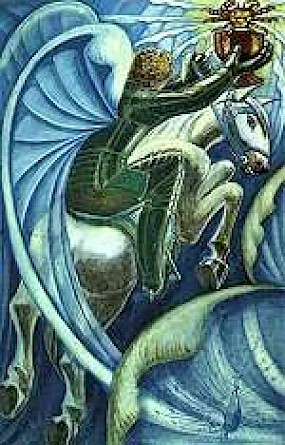
This is the Lord of Waves and Water, often defined as the fiery aspect of water. As such, in many ways this card represents a contradiction. Most often when it appears, it will indicate an actual person who has influence. However sometimes it can also indicate a moodshift or a change of mode.
Since the Suit of Cups is all about love and loving relationships, it’s easy to see how the Knight can be regarded as the lover of the cards. When representing a moodshift, the card can indicate the period where a man falls in love.
When it represents a person he will be a complex and highly emotional being – creative and visionary, sensitive (and sometimes over-sensitive), romantic and intense. He will give the impression of being open and caring, though this is often misleading; the Knight of Cups is often subject to intense insecurity, needing constant re-assurance and attention.
He is attracted and attractive to women, and enjoys basking in their company. He will often be very charming, with a silver tongue and a powerful personal agenda. He will rarely manage practical matters well, tending to place rather more importance on buying two dozen red roses, than paying the bills. At his worst, he can be inconstant, unfaithful and selfish.
At his best, he is loving, generous with his emotions, supportive and tender. He can be capable of high levels of spiritual development, strong in intuition and warmly responsive. When he’s on form he is terrific company, having a good sense of humour and a keen interest in other people. He’s often an exciting and stimulating life partner and lover – but only at his best!
New Thinking Allo • Jan 3, 2023 Amanda Feilding is the founder and director of the Beckley Foundation. She has been called “The Queen of Consciousness,” “The First Lady of LSD,” “The Spiritual Godmother of a large and important field of medicine,” and “The Countess of Psychedelic Science.” She has coauthored over fifty scientific papers on the properties of entheogens. Her website is https://www.beckleyfoundation.org/ Here, she describes her interest in psychedelics going back to 1965. She became involved with a Dutch scientist, Bart Huges, who developed the hypothesis that LSD produced greater blood flow in the brain. The same hypothesis also led to an interest in the ancient practice trepanation. The Beckley Foundation is currently active in collaborating with scientific organizations around the world to explore the properties and therapeutic benefits of entheogens. New Thinking Allowed host, Jeffrey Mishlove, PhD, is author of The Roots of Consciousness, Psi Development Systems, and The PK Man. Between 1986 and 2002 he hosted and co-produced the original Thinking Allowed public television series. He is the recipient of the only doctoral diploma in “parapsychology” ever awarded by an accredited university (University of California, Berkeley, 1980). He is also the Grand Prize winner of the 2021 Bigelow Institute essay competition regarding the best evidence for survival of human consciousness after permanent bodily death. (Recorded on November 29, 2022)
“All progress begins with a brave decision.” – Marie Forleo
It will shock no one to find out that I’ve always been a planner. An extreme planner. And, although I’m familiar with the phrase “start before you’re ready”, I’ve never followed it. Until recently. For years, I said “no” to doing anything before I felt completely ready. To do otherwise seemed a bit crazy.
What held me back? Fear. Fear of change. Fear of doing something new and different. Fear that change was risky.
I’m guessing that you’ve felt this way too. We’ve been taught from an early age to research and plan so much that it’s become a hindrance to us. It stops many of us from moving forward.
But I’ve recently learned that starting before you’re ready is truly sage advice. Especially when it comes to doing something new or scary. Because you won’t ever “feel” ready to do any of those things. Which means you’ll never do them.
And being static is even more scary – isn’t it? Because it means you’re stuck.
So, how have I been practicing “start before you’re ready”? I finally had the guts to leave my law practice and start my own business (which happens to be completely unrelated to the law). I certainly didn’t feel ready when I did it. But I did it anyway.
And, even though speaking in front of a large audience terrifies me, I recently gave a speech at a Relay for Life event. And I’m so glad I did. Because my message touched people – which gave me energy and confidence.
Getting out of my comfort zone by doing these things before I felt ready has taught me some valuable lessons. Lessons that I’m sharing with you today. So that you can learn to start before you’re ready. And get out of being static or stuck.
You don’t know what you don’t know, right? This is yet another phrase that I’ve heard all my life – but never given much thought to what it really means. And, to be honest, I’m not sure that I completely understood it. But now I do – at least I know what it means to me.
It means that you’ll never know what you don’t know, unless you do something about it. And you learn best by doing.
Besides, you can plan all you want, but you can’t anticipate everything that could happen. Nor can you fully anticipate how you’ll feel and react in any given situation. So, how can you plan for what you don’t know? You can’t.
You’ve got to go do it – and learn along the way.
Reason 2: Mistakes are Magic
This is all about making mistakes and learning from them. Ever notice that you learn best after failing at something or making a mistake? Failure is often our best teacher.
And what we learn from making mistakes tends to “stick”. That’s because mistakes force us to re-think our assumptions, what we’ve been doing, and how we’ve been doing it. They require active thought. We must analyze what didn’t work and why to move forward. I’ve found that my biggest life lessons have come from mistakes.
One note: I think we should reconsider using the term “failure”. Because if we learn something and take that learning to move forward, then it isn’t truly a failure. Only if we give up and choose not to move forward would it be a failure.
Reason 3: Acting Creates Momentum
Planning can go too far and create analysis paralysis. I know I’ve found myself caught up in it from time to time. You can get stuck planning for every contingency you can think of. Never mind the fact that you can’t anticipate every contingency (which is why some of us get stuck in the planning phase and never move past it).
Besides, acting creates momentum automatically. And the knowledge gained by moving forward (including the tough lessons learned along the way) give you additional momentum.
This doesn’t mean that I advocate not planning. Planning still has its place. And I don’t believe jumping in without any knowledge or education is a good idea either. However, most of us don’t ever feel ready to do something new, regardless of how much or well we’ve planned. It’s scary.
There comes a point where we must get started – even though we don’t feel ready. All we must do is take the first step and the momentum created by that step will help us along the way.
Reason 4: It can be riskier to do nothing than it is to get started
I used to delay acting on something new because I thought that acting was too risky. But I failed to consider that sometimes it’s risky not to act. This was a big lesson for me (and one that I’m only beginning to think through and apply to my life).
Sometimes, you’ve got to carefully consider which is the riskier move: staying put or starting something new. When you analyze the situation carefully and honestly answer the question, you may be surprised that there’s just as much (or more) risk in doing nothing.
Besides, starting something new doesn’t mean committing yourself to it forever. We humans tend to believe that once we go down a path, there’s no turning back. But that’s just not true. We can always turn back or branch off onto a new path. The choice is ours.
Reason 5: Purpose is revealed primarily through action
Believe it or not, your purpose in life isn’t to plan and never (or almost never) take action. So, what is your purpose? I don’t have the exact answer for you. But I do know that you’re going to get much closer by doing something – especially when moving towards something that is exciting to you (and even a bit scary).
There’s a reason for the excitement.
When you go down a new path toward something new, there’s an energy there. And that momentum discussed earlier plus the lessons learned through trial and error? Both of those will create additional energy and help to inspire you. You’ll be honing in on what you truly want. And that’s what will make you feel like you’re honoring your purpose in life.
What if acting tells you that this isn’t something you want after all? Then you’ll know. You can move forward with that knowledge. And you can change course. See the last paragraph in Reason #4 above.
I’m now a full believer in starting before I’m ready. I’ll think through where I want to go and why, and will educate myself and plan when necessary. But I won’t let planning stop me or delay me from moving forward. Because I want to continue to learn and grow. And I believe it’s one of the best ways to continue in my growth and personal development.
So, where are you on the “start before you’re ready” scale? Do you jump in and start before you feel ready or are you an ultra-planner like I used to be? In the comments below, I want to hear from you. Please let me know the following:
Which camp are you in? A full believer and follower of start before you’re ready or a planner that has trouble living this way?
What have you been thinking about doing, but don’t yet feel “ready” for (and what’s stopping you)?
Viruses are wildly successful organisms. There are about 100 million times as many virus particles on Earth as there are stars in the observable universe. Even so, viruses can and do go extinct. So, what is the possibility of the virus that causes COVID-19 going extinct? Explore the three main ways viruses can be driven to extinction. [Directed by Anton Bogaty, narrated by George Zaidan].Read transcript
This video was produced by TED-Ed, TED’s youth and education initiative.
“The Beingness of the lowest blade of grass and the Beingness of the furthest star are one and the same thing. And as you begin to realize this, you will find yourself caught up in an ever-expanding rapture.”
–Thane, Transcendentalism, Lesson 3
(TheProsperos.org)
Consciousness, spirituality, biography, sexuality, androgyny, futurism, space, the arts, science, astrology, democracy, humor, books, movies and more




 An honorable human relationship — that is, one in which two people have the right to use the word “love” — is a process, delicate, violent, often terrifying to both persons involved, a process of refining the truths they can tell each other.