Don’t think the garden loses its ecstasy in winter.
It’s quiet, but the roots are down there riotous.
—Rumi
Emergence Magazine (hello@emergencemagazine.org)


Credit…By Erik CarterSections
By Sarah Andersen
Ms. Andersen is a cartoonist and the illustrator of a semiautobiographical comic strip, “Sarah’s Scribbles.”
At 19, when I began drafting my webcomic, I had just been flung into adulthood. I felt a little awkward, a little displaced. The glittering veneer of social media, which back then was mostly Facebook, told me that everyone around me had their lives together while I felt like a withering ball of mediocrity. But surely, I believed, I could not be the only one who felt that life was mostly an uphill battle of difficult moments and missed social cues.
I started my webcomic back in 2011, before “relatable” humor was as ubiquitous online as it is today. At the time, the comics were overtly simple, often drawn shakily in Microsoft Paint or poorly scanned sketchbook pages. The jokes were less punchline-oriented and more of a question: Do you feel this way too? I wrote about the small daily struggles of missed clock alarms, ill-fitting clothes and cringe-worthy moments.
I had hoped, at most, for a small, niche following, but to my elation, I had viral success. My first comic to reach a sizable audience was about simply not wanting to get up in the morning, and it was met with a chorus of “this is so me.” I felt as if I had my finger on the pulse of the collective underdog. To have found this way of communicating with others and to make it my work was, and remains, among the greatest gifts and privileges of my life.
But the attention was not all positive. In late 2016, I caught the eye of someone on the 4chan board /pol/. There was no particular incident that prompted the harassment, but in hindsight, I was a typical target for such groups. I am a woman, the messaging in the comics is feminist leaning, and importantly, the simplicity of my work makes it easy to edit and mimic. People on the forum began reproducing my work and editing it to reflect violently racist messages advocating genocide and Holocaust denial, complete with swastikas and the introduction of people getting pushed into ovens. The images proliferated online, with sites like Twitter and Reddit rarely taking them down.

The ways my images were altered were crude, but a few were convincing. Through the bombardment of my social media with these images, the alt-right created a shadow version of me, a version that advocated neo-Nazi ideology. At times people fell for it. I received outraged messages and had to contact my publisher to make my stance against this ultraclear. I started receiving late-night calls and had to change my number, and I got the distinct impression that the alt-right wanted a public meltdown.
At one point, someone appeared to have made a typeface, or a font, out of my handwriting. Something about the mimicking of my handwriting, streamlined into an easily accessible typeface, felt particularly violating. Handwriting is personal and intimate to me, a detail that defines me as much other unique traits like the color of my eyes or my name. I can easily recognize the handwriting of my family members and friends — it is literally their signature. Something about this new typeface made me feel as if the person who had created it was trying to program a piece of my soul.

The harassment shocked the naïveté out of my system. A shadow me hung over my head constantly, years after the harassment campaign ended. I had been writing differently, always trying to stay one step ahead of how my drawings could be twisted. Every deranged image the alt-right created required someone sitting down and physically editing or drawing it, and this took time and effort, allowing me to outpace them and salvage my career.
And then along comes artificial intelligence. In October, I was sent via Twitter an image generated by A.I. from a random fan who had used my name as a prompt. It wasn’t perfect, but the contours of my style were there. The notion that someone could type my name into a generator and produce an image in my style immediately disturbed me. This was not a human creating fan art or even a malicious troll copying my style; this was a generator that could spit out several images in seconds. With some technical improvement, I could see how the process of imitating my work would soon become fast and streamlined, and the many dark potentials bubbled to the forefront of my mind.
I felt violated. The way I draw is the complex culmination of my education, the comics I devoured as a child and the many small choices that make up the sum of my life. The details are often more personal than people realize — the striped shirt my character wears, for instance, is a direct nod to the protagonist of “Calvin and Hobbes,” my favorite newspaper comic. Even when a person copies me, the many variations and nuances in things like line weight make exact reproductions difficult. Humans cannot help bringing their own humanity into art. Art is deeply personal, and A.I. had just erased the humanity from it by reducing my life’s work to an algorithm.
A.I. text-to-image generators such as Stable Diffusion, Midjourney and DALL-E exploded onto the scene this year and in mere months have become widely used to create all sorts of images, ranging from digital art pieces to character designs. Stable Diffusion alone has more than 10 million daily users. These A.I. products are built on collections of images known as “data sets,” from which a detailed map of the data set’s contents, the “model,” is formed by finding the connections among images and between images and words. Images and text are linked in the data set, so the model learns how to associate words with images. It can then make a new image based on the words you type in.

The data set for Stable Diffusion is called LAION 5b and was built by collecting close to six billion images from the internet in a practice called data scraping. Most, if not all, A.I. generators have my work in their data sets.
Legally, it appears as though LAION was able to scour what seems like the entire internet because it deems itself a nonprofit organization engaging in academic research. While it was funded at least in part by Stability AI, the company that created Stable Diffusion, it is technically a separate entity. Stability AI then used its nonprofit research arm to create A.I. generators first via Stable Diffusion and then commercialized in a new model called DreamStudio.
So what makes up these data sets? Well, pretty much everything. For artists, many of us had what amounted to our entire portfolios fed into the data set without our consent. This means that A.I. generators were built on the backs of our copyrighted work, and through a legal loophole, they were able to produce copies of varying levels of sophistication. When I checked the website haveibeentrained.com, a site created to allow people to search LAION data sets, so much of my work was on there that it filled up my entire desktop screen.
Many artists are not completely against the technology but felt blindsided by the lack of consideration for our craft. Being able to imitate a living artist has obvious implications for our careers, and some artists are already dealing with real challenges to their livelihood. Concept artists create works for films, video games, character designs and more. Greg Rutkowski, a hugely popular concept artist, has been used in a prompt for Stable Diffusion upward of 100,000 times. Now, his name is no longer attached to just his own work, but it also summons a slew of imitations of varying quality that he hasn’t approved. This could confuse clients, and it muddies the consistent and precise output he usually produces. When I saw what was happening to him, I thought of my battle with my shadow self. We were each fighting a version of ourself that looked similar but that was uncanny, twisted in a way to which we didn’t consent.
It gets darker. The LAION data sets have also been found to include photos of extreme violence, medical records and nonconsensual pornography. There’s a chance that somewhere in there lurks a photo of you. There are some guardrails for the more well-known A.I. generators, such as limiting certain search terms, but that doesn’t change the fact that the data set is still rife with disturbing material, and that users can find ways around the term limitations. Furthermore, because LAION is open source, people are creating new A.I. generators that don’t have these same guardrails and that are often used to make pornography.
In theory, everyone is at risk for their work or image to become a vulgarity with A.I., but I suspect those who will be the most hurt are those who are already facing the consequences of improving technology, namely members of marginalized groups. Alexandria Ocasio-Cortez, for instance, has an entire saga of deep-fake nonconsensual pornography attached to her image. I can only imagine that some of her more malicious detractors would be more than happy to use A.I. to harass her further. In the future, with A.I. technology, many more people will have a shadow self with whom they must reckon. Once the features that we consider personal and unique — our facial structure, our handwriting, the way we draw — can be programmed and contorted at the click of a mouse, the possibilities for violations are endless.
I’ve been playing around with several generators, and so far none have mimicked my style in a way that can directly threaten my career, a fact that will almost certainly change as A.I. continues to improve. It’s undeniable; the A.I.s know me. Most have captured the outlines and signatures of my comics — black hair, bangs, striped T-shirts. To others, it may look like a drawing taking shape.
I see a monster forming.
Sarah Andersen is a 30-year-old cartoonist and the illustrator of a semiautobiographical comic strip, “Sarah’s Scribbles.” Her graphic novel “Fangs” was nominated for an Eisner Award.
(Contributed by Michael Kelly, H.W.)
Intellectual • Jan 1, 2023 ► Become a Patron for more exclusive Content including Alan Watts, Terence McKenna, Eckhart Tolle and more : https://patreon.com/IntellectualWave Are you constantly worried about what the future holds? Eckhart Tolle has the solution. In this must-see video, he shows us how to focus on the present moment and let go of our fears about the future. Watch now and start living your best life!
The Onion • Oct 13, 2008 Two prospective Eagle Scouts explain how they are preventing breast cancer by helping women examine their breasts.

The Lord of Victory is a card of fight, competition and eventual victory. It applies to areas of our lives where we feel we have had to fight very hard to achieve our goals. It can apply to any area of our lives where we have had to contest our position strongly.
So, for instance, it could indicate passing successfully through tough training courses; it could apply to spiritual development after a period of test and trial; it could show that we have managed to establish stable and harmonious relationships through hard work and tenderness; it could even indicate that we have finally managed to get our bank balances to match our desired level of spending after much difficulty!
It’s a card which indicates that we have achieved both a point of balance and a moment of ascension during which we feel justifiably proud of ourselves, but maybe just a little overwhelmed by our final breakthrough into good fortune.
There will always have been struggle before this card appears. We will have been striving – sometimes against frustratingly unhelpful influences – to grasp our dreams, our hopes, our ambitions, our needs. There will sometimes have been pain or confusion as a result of that struggle. But when this card comes up, we can relax a little, and enjoy the fruits of our labour.
(via angelpahts.com and Alan Blackman)
GUEST ESSAY
Dec. 30, 2022 (NYTimes.com)

Credit…Ana Miminoshvili
By John Waldman
Dr. Waldman is a professor of biology at Queens College and the author of “Heartbeats in the Muck: The History, Sea Life, and Environment of New York Harbor.”
Fifty years ago, Congress voted to override President Richard Nixon’s veto of the Clean Water Act. It has proved to be one of the most transformative environmental laws ever enacted.
At the time of the law’s passage, hundreds of millions of gallons of raw sewage was dumped by New York City into the Hudson River every day. This filth was compounded by industrial contaminants emptied into the river along much of its length. The catch basin for all of this was New York Harbor, which resembled an open sewer. At its worst, 10 feet of raw human waste blanketed portions of the harbor bottom, and certain reaches held little or no oxygen to sustain the life of its fishery. Trash floated among oil slicks.
Health advisories against eating fish from the Hudson remain, but its ecology has largely recovered, thanks to the law, which imposed strict regulations on what could be discharged into the water by sewage treatment plants, factories and other sources of pollution. Today people swim in organized events in New York Harbor, which would have been unthinkable in 1972 when the law was passed. Across the country, billions of dollars were also spent to construct and improve sewage treatment plants, leading to recoveries of other urban waterways.
Cleaner water has made the harbor far more hospitable, and other steps have helped to rebuild life there, like fishing restrictions and the removal of some dams on tributaries in the Hudson River watershed.
The harbor’s environment remains compromised even so. It continues to be stressed by sewage overflow during rainstorms and by habitat degradation, such as loss of salt marshes from development and sea level rise. But the ecological workings of the harbor have been returned to a functional level, a revitalization that owes much to this landmark act of Congress.
Fifty years on, the story of this remarkable recovery can be told through some of its key animal species.
American oyster Oyster reefs once covered roughly 350 square miles of harbor bottom around New York City. Untreated sewage contributed to a severe decline in the oyster population that lasted through the 20th century. The wild oyster population has begun to recover; a nine-incher known as Big was found in 2018 by a diver at a Hudson River pier. The nonprofit Billion Oyster Project is also at work restoring oyster reefs in the harbor, which provide habitat for other species.

Alewife This small, freshwater-marine herring species is an important prey fish. Its numbers have been reduced by some 1,600 dams in the Hudson watershed, many of which block access to their spawning habitat. But some dams are now being removed, which should help its population rebound.

Bald eagle Once a rarity across North America, largely because the now-banned pesticide DDT compromised its ability to reproduce by weakening its eggshells, the bald eagle has made a strong comeback, taking advantage of the harbor’s resurgent fish life. As many as 10 now live on Staten Island, including the borough’s first nesting pair, known as Vito and Linda.

Humpback whale The increased abundance of menhaden, a critical food source for the whales, has likely drawn humpbacks into the Hudson estuary. In December 2020 a humpback whale was seen in the Hudson just one mile from Times Square.

Harbor heron Herons, egrets and ibis once nested all over New York Harbor. But demand for their plumage for women’s hats in the late 19th century, followed by the decimation by sewage pollution of the fish and crabs they preyed on, contributed to almost a century-long absence. Improved water quality has led to the birds’ recovery, with more than a thousand breeding pairs.

Atlantic sturgeon Sturgeon are ancient fish, originating some 200 million years ago. They hatch in the river, then spend time in the ocean before returning to their birthplace to spawn. In the late 1900s the Hudson’s population was plundered for its valuable caviar, but protections have led to some recovery. Researchers using sonar documented a 14-footer in the central Hudson in 2018.

Marine borers Cleaner waters have helped these invertebrates flourish. Which has been bad news for any wood in the water, especially piers and pilings. One of the most common of these borers is the wormlike clam Teredo navalis, which uses a hinged shell at its head to drill holes in wood pilings and ship hulls and then burrow within. Another is a tiny crustacean known as a gribble, which likes to gnaw at wood from the outside. Preventing this destruction can be very expensive. Brooklyn Bridge Park has spent more than $100 million applying epoxy to pilings under piers at the park to guard against them.

Osprey Like the bald eagle, osprey numbers plummeted because of the widespread use of DDT. Today this bird of prey, also known as a fish hawk, is often spotted over the harbor hunting fish close to the surface, which they snatch with their outstretched talons. The cleaner harbor’s revitalized fish populations have helped drive the osprey’s return.

John Waldman is a professor of biology at Queens College and the author of “Heartbeats in the Muck: The History, Sea Life, and Environment of New York Harbor.”
The Times is committed to publishing a diversity of letters to the editor. We’d like to hear what you think about this or any of our articles. Here are some tips. And here’s our email: letters@nytimes.com.
Follow The New York Times Opinion section on Facebook, Twitter (@NYTopinion) and Instagram.
Support independent journalism. See subscription options
Dec. 31, 2022 (SFChronicle.com)
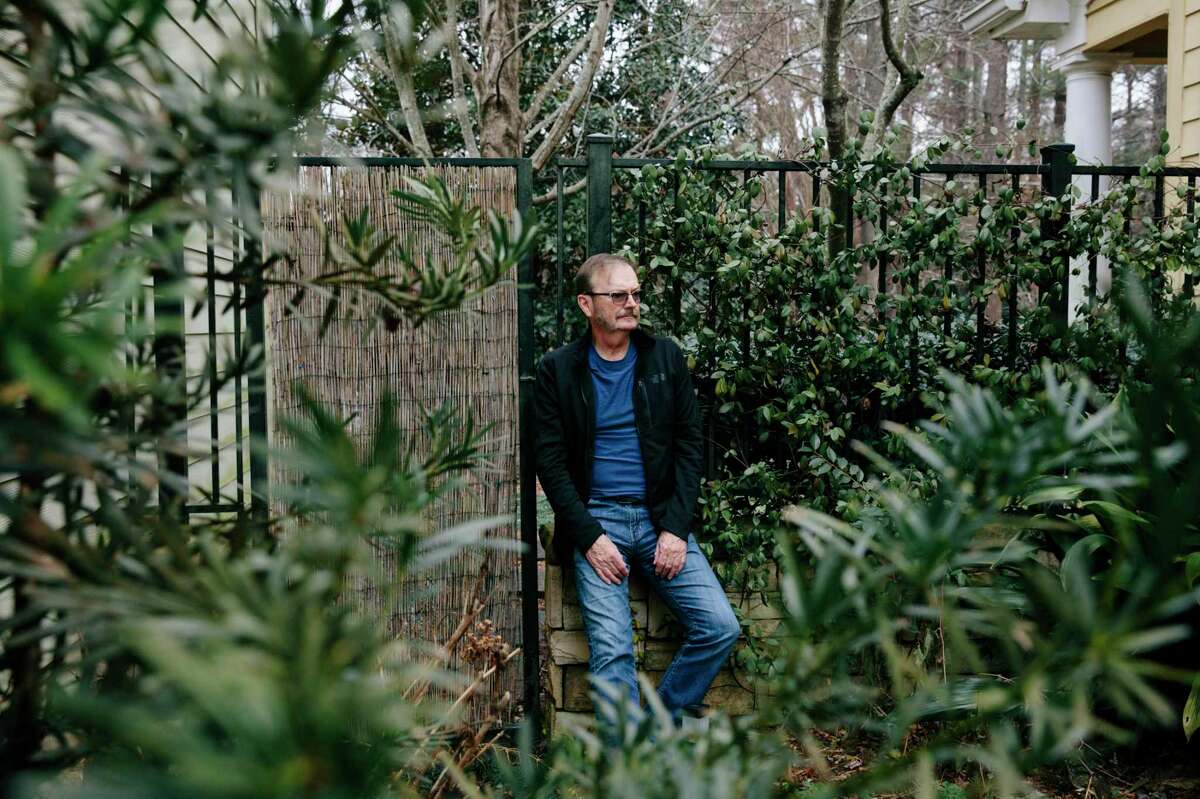
For more than a decade, Ernie Cox went online to search the faces of priests who had been accused of child sexual abuse, looking for one man.
He’d only seen the priest one day in the late 1960s when, the former altar boy alleges, the priest sexually abused him before and after mass at a Contra Costa County church. The boy was 12. The priest was visiting Immaculate Heart of Mary from another parish, and Cox, now 67, didn’t remember his name.
A few weeks ago, a friend who knew of Cox’s experience forwarded him a recent story in The Chronicle about allegations against a priest at the same parish in the small city of Brentwood. When Cox later found the late Father John G. Garcia’s face in an old black-and-white photo on the website of a local newspaper, he said, he was stricken by recognition. No other priest’s picture had ever caused such a reaction.
“I felt really sick,” Cox recalled, “because those eyes … scared me a lot.”
Cox is the fourth known person to raise allegations against Garcia, who hadn’t been publicly accused until a Dec. 9 story in The Chronicle detailed the case of a man named Derek Lewis, who said he was abused by Garcia in the 1990s. Like Lewis, Cox has now filed suit against Immaculate Heart and the Roman Catholic Diocese of Oakland, a suit made possible by a law expanding the statute of limitations for victims of child abuse to sue through the end of 2022.
On Dec. 15, Beverly Hills attorney Michael Carney filed a separate suit for a 55-year-old man who says a priest believed to be the same John G. Garcia molested him in 1974 at a different parish.
Helen Osman, a spokesperson for the Oakland diocese, has previously said the diocese couldn’t release personnel records and wasn’t aware of any allegations against Garcia until Lewis filed suit. The diocese, along with Immaculate Heart, didn’t respond to an email seeking comment on Cox’s allegations.
Churchgoers who worshiped under Garcia have described him as a beloved figure and devoted priest who they never suspected could be capable of what the men allege.
While such eyewitness identifications, particularly many years after a traumatic event, can be perilous to rely on solely, it isn’t just the picture that leads Cox to believe Garcia — who was ordained in 1947 and who died in 2003 at the age of 83 — was the priest who abused him. He points to similar details from Lewis’ account, Garcia’s proximity at the time of his assault, and the fact that Garcia is the only known priest who served at Immaculate Heart to be accused of child abuse.
Cox said he believes the priest who abused him was visiting from nearby because he seemed to know the church grounds well. Cox believes it was 1967. That year, Garcia was assigned to a church in Oakley, five miles from Immaculate Heart, according to a work history compiled by the Oakland chapter of the nonprofit Survivors Network of those Abused by Priests, or SNAP.
Cox’s lawsuit is one amid a flurry filed as the Dec. 31 deadline to file suits under Assembly Bill 218 arrived. The 2019 state law extended for three years the statute of limitations for victims to sue their abuser or abuser’s employer, clearing the way for suits from people under 40 through the end of 2022; the typical cutoff age is 26. Officials expect more than 1,000 clergy abuse suits to be filed in Northern California before the year ends.
Though Cox is over 40, his suit could go forward due to statutes allowing late filings if a mental health professional submits a declaration attesting that the claims of abuse appear to have merit. A judge must agree for the complaint to proceed.
Cox has already been evaluated by a clinical psychologist who found he had a credible claim, said Cox’s attorney, Terry Gross of San Francisco.
Separately, Dr. Paul Abramson, a UCLA professor of psychology with 40 years of experience working with child abuse survivors, said he finds Cox credible. Abramson, who serves as a psychological expert witness for victims, spoke to The Chronicle with Cox’s permission.
Abramson, who is also working with Lewis, said he was struck by how many details from both men’s stories align, down to the behavior of the priest and the locations on the church grounds where the alleged abuse took place.
Like Lewis, Cox said the abuse traumatized him and led to decades of grief, confusion, shame and addiction.
Cox said he’s always felt the priest killed a piece of him — some indescribable but vital piece — that he’s been trying to reclaim ever since.
Ernie Cox was running a paper route for the Brentwood News, the local weekly newspaper his parents owned, when a buddy recruited him to be an altar boy at Immaculate Heart. Ernie knew this made his devout Mexican grandmother proud, and he was proud to work with the priests whom he revered as messengers of God.
Things changed one day when a priest visited to say Mass.
Shortly after the man arrived, Cox would later allege, he took the boy in his arms and molested him inside the church. Ernie’s mind sped, trying to understand how a man wearing a priest’s robe could be doing something that felt so wrong to him.
More for you
The priest then said Mass as Ernie assisted and tried not to shake. He loudly scratched the inside of a bell he meant to ring. The priest glared at the boy.
After Mass, the priest walked Ernie to the building housing the office and rectory where, Cox alleges, the man raped him.
The priest allegedly told Ernie it would be a grievous sin to tell anyone.
“You will die if you speak of this,” Cox recalled the man saying, in an echo of a similar statement Lewis said he remembers Garcia making three decades later. “Bad things will happen to people close to you.”
Ernie rode his bike home and, believing the priest, told no one.
He said he began to fear that other men — doctors, teachers, coaches, even his father — could suddenly decide to sexually assault him. Men in authority gave him a cold feeling and upset his stomach.
He started drinking at 14.
As he grew older, he kept memories of the priest tucked in a dusty, far-off corner of his mind. For decades, it mostly worked, he said, though he drank more and more and still had episodes when something he couldn’t place made him anxious or angry. He couldn’t trust. He couldn’t connect.
The weight of what he had sought to bury started to overtake him around 2013, 46 years from that day at Immaculate Heart. Nightmares of the abuse and the priest’s face tormented him. Flashbacks pursued him in the day.
Cox, a longtime advertising and marketing executive, was drinking heavily and using valium. Cox said he developed chronic medical problems from addiction and was hospitalized from an overdose.
As he made progress in therapy and attended recovery meetings, Cox said he slowly began to tell people about the alleged abuse. He told his elderly father, siblings and his college roommate.
All were supportive when Cox started searching photos of abusive priests on BishopAccountability.org. Garcia’s face wasn’t there yet.
This December, Cox’s college roommate forwarded him The Chronicle’s story on Derek Lewis and his accusations against Garcia.
Cox said he felt sick when he saw the man’s photo and read how Garcia allegedly abused Lewis and damaged his young life. Convinced that Garcia was the priest who violated him, Cox wanted to stop reading. He thought he could have saved Lewis from abuse in the 1990s if he’d spoken up about the abuse when it allegedly happened in the 1960s.
“I felt guilty,” Cox said.
He tried to remind himself coming forward immediately was a lot to ask of a 12-year-old altar boy who’d been told by a priest that he or loved ones would die if he revealed the abuse.
Made aware of Cox’s feelings of guilt, Lewis said he understood completely why Cox waited to come forward: It’s monumentally difficult. “I don’t think he should feel guilty at all,” Lewis said.
Cox said he resolved to try to help Lewis now. Cox said he assumed he couldn’t file his own suit because he was well past AB 218’s age-40 cutoff. He called Lewis’ lawyer, offering to serve as a witness to bolster Lewis’ case.
When he learned the law could allow a suit, Cox said he decided to sue so he could form a chorus with Lewis and any other victims. This, Cox figured, would raise the volume of the alarm about abusive priests and empower other victims, especially younger ones, to come forward and get help sooner before a lifetime of grief and terror batters them.
At 67 years old, retired in Georgia, far from Contra Costa County, Cox said he still feels the fingerprints of the priest on his mind and life. He remembers the comfort religion gave him before he met the priest, and he wants it back.
On Thanksgiving, he went to church, searching for peace. Before he found it, he rose from his seat and walked out.
“I just couldn’t stay,” he said.
Joshua Sharpe is a San Francisco Chronicle staff writer. Email: joshua.sharpe@sfchronicle.com Twitter: @joshuawsharpe
Written By Joshua Sharpe
Joshua Sharpe joined The San Francisco Chronicle in February 2022. He covers criminal justice issues, often with a focus on injustice, on the Race and Equity team. Before moving across the country from his native Georgia, he spent five and a half years at The Atlanta Journal-Constitution. There, his reporting helped free two innocent people from incarceration, including one man who was 20 years into a life sentence and one facing life. In 2021, Sharpe won a Livingston Award and a National Murrow Award. He enjoys hiking, playing pedal steel guitar and gardening. He is a native of South Georgia, in the Okefenokee Swamp.VIEW COMMENTS

 ©2023 Hearst

By Emily Temple
December 19, 2022 (lithub.com)
Another year of books comes to a close, and with it, the obligatory frantic listmaking—which at its best may inspire reminiscing, reconsidering, and excellent gift-purchasing, but at its worst may inspire hurt feelings, overwhelm, and doom-scrolling. But I’m not here to judge, or to save us. I’m just here to count.
So here at the end, as is annual Literary Hub tradition, you will find the big list of lists—aka the biggest popularity contest in books (probably). This year, I worked through 35 lists from 29 publications (yes, there are even more lists out there, but we’re all going to die some day), tallying a total of 887 books. 84 books were highlighted on 4 or more lists, and I have collated those for you here, in descending order of frequency. Read, enjoy, and try not to feel bad:
14 lists:
Hernan Diaz, Trust
Gabrielle Zevin, Tomorrow, and Tomorrow, and Tomorrow
Ed Yong, An Immense World: How Animal Senses Reveal the Hidden Realms Around Us
12 lists:
Jennifer Egan, The Candy House
Jonathan Escoffery, If I Survive You
Namwali Serpell, The Furrows
11 lists:
Margo Jefferson, Constructing a Nervous System: A Memoir
10 lists:
Tess Gunty, The Rabbit Hutch
Hua Hsu, Stay True: A Memoir
Celeste Ng, Our Missing Hearts
9 lists:
Rachel Aviv, Strangers to Ourselves: Unsettled Minds and the Stories That Make Us
Kate Beaton, Ducks: Two Years in the Oil Sands
Julia May Jonas, Vladimir
Emily St. John Mandel, Sea of Tranquility
Kathryn Schulz, Lost & Found
8 lists:
Elif Batuman, Either/Or
Chloé Cooper Jones, Easy Beauty: A Memoir
Barbara Kingsolver, Demon Copperhead
Yiyun Li, The Book of Goose
Sarah Thankham Mathews, All This Could be Different
7 lists:
Amy Bloom, In Love: A Memoir of Love and Loss
Jessamine Chan, The School for Good Mothers
Abdulrazak Gurnah, Afterlives
R.F. Kuang, Babel: Or the Necessity of Violence: An Arcane History of the Oxford Translators’ Revolution
Elizabeth McCracken, The Hero of This Book
Siddhartha Mukherjee, The Song of the Cell: An Exploration of Medicine and the New Human
George Saunders, Liberation Day
Stacy Schiff, The Revolutionary: Samuel Adams
6 lists:
NoViolet Bulawayo, Glory
Ada Calhoun, Also a Poet: Frank O’Hara, My Father, and Me
Bonnie Garmus, Lessons in Chemistry
Jennette McCurdy, I’m Glad My Mom Died
Leila Mottley, Nightcrawling
Meghan O’Rourke, The Invisible Kingdom: Reimagining Chronic Illness
Elizabeth Strout, Lucy by the Sea
Douglas Stuart, Young Mungo
Olga Tokarczuk, tr. Jennifer Croft, The Books of Jacob
Nghi Vo, Siren Queen
Elizabeth Williamson, Sandy Hook: An American Tragedy and the Battle for Truth
5 lists:
Claire-Louise Bennett, Checkout 19
Margaret A. Burnham, By Hands Now Known: Jim Crow’s Legal Executioners
Isabel Cañas, The Hacienda
John Darnielle, Devil House
Annie Ernaux, tr. Alison L. Strayer, Getting Lost
Xochitl Gonzalez, Olga Dies Dreaming
Pekka Hämäläinen, Indigenous Continent: The Epic Contest for North America
Ling Ma, Bliss Montage: Stories
Ian McEwan, Lessons
Lydia Millet, Dinosaurs
Sequoia Nagamatsu, How High We Go In the Dark
Maggie O’Farrell, The Marriage Portrait
Fintan O’Toole, We Don’t Know Ourselves: A Personal History of Modern Ireland
Imani Perry, South to America: A Journey Below the Mason-Dixon to Understand the Soul of a Nation
Morgan Tatly, Night of the Living Rez
Yoko Tawada, tr. Margaret Mitsutani, Scattered All Over the Earth
Linda Villarosa, Under the Skin: The Hidden Toll of Racism on American Lives and on the Health of Our Nation
Kevin Wilson, Now is Not the Time to Panic
Javier Zamora, Solito: A Memoir
4 lists:
Kate Atkinson, Shrines of Gaiety
Isaac Butler, The Method: How the Twentieth Century Learned to ACT
Ingrid Rojas Contreras, The Man Who Could Move Clouds: A Memoir
Angie Cruz, How Not to Drown in a Glass of Water
Viola Davis, Finding Me: A Memoir
Rob Delaney, A Heart That Works
Akwaeke Emezi, You Made a Fool of Death With Your Beauty
Percival Everett, Dr. No
Jonathan Freedland, The Escape Artist: The Man Who Broke Out of Auschwitz to Warn the World
Kim Fu, Lesser Known Monsters of the 21st Century
Beverly Gage, G-Man: J. Edgar Hoover and the Making of the American Century
Kerri K. Greenidge, The Grimkes: The Legacy of Slavery in an American Family
James Hannaham, Didn’t Nobody Give a Shit What Happened to Carlotta
Emily Henry, Book Lovers
Adam Hochschild, American Midnight: The Great War, a Violent Peace, and Democracy’s Forgotten Crisis
Mieko Kawakami, tr. Sam Bett & David Boyd All the Lovers in the Night
Dahlia Lithwick, Lady Justice: Women, the Law, and the Battle to Save America
Cormac McCarthy, The Passenger
Joanna Quinn, The Whalebone Theatre
Deanna Raybourn, Killers of a Certain Age
Mary Rodgers and Jesse Green, Shy: The Alarmingly Outspoken Memoirs of Mary Rodgers
Katherine Rundell, Super-Infinite: The Transformations of John Donne
Robert Samuels and Toluse Olorunnipa, His Name is George Floyd: One Man’s Life and the Struggle for Racial Justice
Dani Shapiro, Signal Fires
Emma Straub, This Time Tomorrow
Lea Ypi, Free: A Child and a Country at the End of History
List of lists surveyed:
The New York Times’s 100 Notable Books of 2022 • The New York Times’s 10 Best Books of 2022 • TIME’s 100 Must-Read Books of 2022 • Barnes & Noble’s Best Books of the Year 2022 • The Washington Post’s 50 notable works of fiction • The Washington Post’s 50 notable works of nonfiction •The Washington Post’s 10 Best Books of 2022 • Entertainment Weekly’s Best Books of 2022 • Vulture’s Best Books of 2022 • The New York Public Library’s Best Books for Adults 2022 • Publishers Weekly’s Best Books 2022 • Kirkus’s Best Fiction Books of the Year • Kirkus’s Best Nonfiction Books of the Year • The New Yorker’s Best Books of 2022 • Oprah Daily’s Favorite Books of the Year • The Chicago Tribune’s 10 Best Books of 2022 • The Los Angeles Times’s 20 Best Books of 2022 • Slate’s 10 Best Books of 2022 (Laura Miller) • Slate’s 10 Best Books of 2022 (Dan Kois) • BuzzFeed’s 25 Books From 2022 You’ll Love • USA Today’s Best Books of 2022 • BookRiot’s Best Books of 2022 • Goop’s 6 Best Books of 2022 • Reader’s Digest’s 10 Best Books of 2022 • Vox’s 16 best books of 2022 • The Marginalian’s Favorite Books of 2022 • Powell’s Best Books of 2022 • Foreign Affairs’ The Best of Books 2022 • The Philadelphia Inquirer’s Best books of 2022 • NPR’s Best Books 2022 (Maureen Corrigan) • NPR’s Notable books from 2022 according to our critics • Tor.com’s Reviewers’ Choice: The Best Books of 2022 • Amazon’s Best Books of 2022 • People’s Top 10 Books of 2022 • and of course, Literary Hub’s 38 Favorite Books of 2022.

“Our being does not become peaceful through effort, practice or discipline. It is simply no longer veiled by the content of experience and, as such, stands revealed as it essentially is.“
–Rupert Spira
Rupert Spira (born March 13, 1960) is an English spiritual teacher, philosopher and author of the Direct Path based in Oxford, UK. Wikipedia
by Kittredge Cherry | Dec 14, 2022 (qspirit.net)
Last Updated on December 15, 2022 by Kittredge Cherry

“The Dark Night of the Soul,” a spiritual classic with homoerotic overtones, was written by 16th-century Spanish mystic Saint John of the Cross, also known as San Juan de la Cruz. His feast day is Dec. 14. It always near the winter solstice, the longest night of the year in the northern hemisphere.

Like some other mystics, John of the Cross (1542-1591) used the metaphor of erotic love to describe his relationship with Christ. Since Jesus was born male, his poetry inevitably celebrates same-sex love. Christian tradition tries to make this kind of poetry into heterosexual eroticism by considering the soul and the church to be female while God is male.
[Update on Dec. 14, 2022: Writings by John of the Cross are the basis of a controversial new queer theology book with a Latinx lens: “Queer God de Amor” by Miguel H. Diaz. It was finally released in September 2022 by Fordham University Press after being cancelled at the last minute in June by a different Catholic press. The scholarly book looks at the human-divine bond using the metaphor of sexual relationship from writings by John of the Cross. Highlighting the idea of God as lover, Diaz retrieves a preferential option for human sexuality and outs God from heteronormative closets. His hermeneutic takes seriously the lived experiences of LGBTQ+ people and builds on the “indecent theology” of Marcella Altaus-Reid. John of the Cross lived in Spain and wrote in Spanish, but English-language readers mostly know his work through British translators and interpreters. Diaz recontextualizes him by directly examining his Spanish texts and life in Spain. The author is a former US ambassador to the Vatican and holds the John Courtney Murray Chair in Public Service at Loyola University in Chicago.]
John was born into a family that was “converso,” descendants of Jewish converts to Catholicism. His father was disinherited for marrying his mother, Catalina, an orphan from a lower class. Their poverty worsened after his father died when John was three years old. The situation became so bad that his older brother died of malnutrition and John’s growth was stunted by rickets. His adult height was less than five feet tall.
John of the Cross spent most if not all of his life in al-Andalus, a region of Spain and much of the Iberian Peninsula that was ruled by Muslims (or Moors) from the 8th to 15th centuries. A controversial theory suggests that his mystical imagery was influenced by Islam, particularly the Sufi esoteric traditions pioneered by Rumi. Al-Andalus was a center of business, culture and religious tolerance where Christians, Jews and Muslims lived side by side.
Hear how passionately John speaks about Christ in these verses translated by A.Z. Foreman:
O night that can unite
A lover and loved one,
A lover and loved one moved in unison.
And on my flowering breast
Which I had kept for him and him alone
He slept as I caressed
And loved him for my own.
(The whole poem is reprinted in the original Spanish and in English at the end of this post). John, a Carmelite friar who worked with Theresa of Avila, wrote these beautiful verses while imprisoned in a latrine for trying to reform the church.
“The Dark Night of the Soul” is open to various interpretations, but is usually considered to be a metaphor of the soul’s journey to union with God. The concept has also been borrowed by the ecology movement for discussions of “the dark night of the earth’s soul.”
John of the Cross also used same-sex imagery to describe divine love in “The Spiritual Canticle.” He wrote, “The love Jonathan bore for David was so intimate that it knitted his soul to David’s. If the love of one man for another was that strong, what will be the tie caused through the soul’s love for God, the Bridegroom?” Likewise he wrote about the “delightful wounds” that his soul experiences in encounters with the Beloved in “The Living Flame of Love.”
[Update, Jan. 30, 2019: This profile was attacked in the article “An Act of Spiritual Malfeasance Against St. John of the Cross” at the traditional Catholic website CatholicStand.com., which accused author Kittredge Cherry of “the mortal sin of cultural appropriation” and threatened “excommunication from progressives.” Discussion on her Facebook page has more than 100 thoughtful and supportive comments.]
Toby Johnson, ex-monk, gay spirituality author and activist, connects the Dark Night of the Soul with gay consciousness in his writings. Johnson summed up his understanding for Q Spirit:
“John of the Cross is a wonderful example of homoerotic spirituality. Andrew Harvey places him high in his collection of ‘Gay Mystics.’ The image in the poem ‘On A Dark Night’ is of becoming one with Christ in the experience of making love with a strange man in a park late at night–and waking to find they are lying in a field of lilies. This is the idea that shows up in ‘Les Miserables’ in the lyrics: ‘To love another person is to see the Face of God.’ John of the Cross, as an icon/archetype of spirituality, is about seeing God in unexpected places and struggling with contradictions in order to arrive at seeing beyond contradictions. A very queer way to arrive at being one with God.”
He fleshes out this idea in a full essay at TobyJohnson.com.
Other gay writers who explore the queer dimensions of John of the Cross include Terence Weldon. he explains why John of the Cross is important for LGBTQ people of faith at the Queer Spirituality Blog.
In the icon at the top of this post, Brother Robert Lentz shows John with the living flames that he described in this poetry. The inscription by his head puts his name in Arabic to honor the Arabic heritage that John may have received from his mother. Prints are available from Amazon and Trinity Stores.

Detail from “Intimacy with Christ 3” by Richard Stott
Richard Stott, a Methodist minister and art therapist in England, created three large paintings based on “The Dark Night of the Soul.” The triptych is called “Intimacy with Christ.”

“Juan de la Cruz” by Tobias Haller
“Juan de la Cruz” was sketched with light pastels on dark paper by Tobias Haller, an iconographer, author, composer, and retired vicar of Saint James Episcopal Church in the Bronx, still assisting at a parish in Baltimore, Maryland. He is the author of “Reasonable and Holy: Engaging Same-Sexuality.” Haller enjoys expanding the diversity of icons available by creating icons of LGBTQ people and other progressive holy figures as well as traditional saints. He and his spouse were united in a church wedding more than 30 years ago and a civil ceremony after same-sex marriage became legal in New York.
In an unusual icon, John of the Cross is surrounded by scenes from the Song of Songs (also known as Song of Solomon), the book of the Bible that celebrates erotic love. It is located at the Church of the Carmelite Friars (Iglesia de los Padres Carmelitas) in Segovia, Spain. The saint’s remains are enshrined there. The icon was made on commission by the Carmelite Monastery of nuns in Harissa, Lebanon.

Icon of John of the Cross at the Church of the Carmelite Friars in Segovia, Spain (Photo by Kevin Elphick)

“A typical icon will have a central image of the saint (like this one) and the smaller images framing it will be of events from the saint’s life. In this icon however, the framing images are of the Maiden from the Song of Songs and her Beloved! Effectively, the icon communicates to the viewer that John is the Maiden of the Canticle and invites the viewer to join him in this role,” says Kevin Elphick, a Franciscan scholar who studies the ways that saints cross gender boundaries. He photographed the original icon in its church home while retracing the footsteps of John of the Cross on a trip to Spain in 2015.
Individual images of the scenes from Song of Songs are posted with detailed commentary on a Polish Carmelite website at http://www.karmel.pl/ikona-z-ciemnosci-do-swiatla/.
by John of the Cross
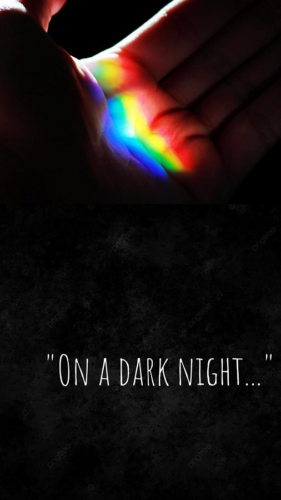
“On a Dark Night…” by Después De Zaqueo Menor illustrates the first line of the poem in a common English translation.
1. One dark night,
fired with love’s urgent longings
– ah, the sheer grace! –
I went out unseen,
my house being now all stilled.
2. In darkness, and secure,
by the secret ladder, disguised,
– ah, the sheer grace! –
in darkness and concealment,
my house being now all stilled.
3. On that glad night,
in secret, for no one saw me,
nor did I look at anything,
with no other light or guide
than the one that burned in my heart.
4. This guided me
more surely than the light of noon
to where he was awaiting me
– him I knew so well –
there in a place where no one appeared.
5. O guiding night!
O night more lovely than the dawn!
O night that has united
the Lover with his beloved,
transforming the beloved in her Lover.
6. Upon my flowering breast
which I kept wholly for him alone,
there he lay sleeping,
and I caressing him
there in a breeze from the fanning cedars.
7. When the breeze blew from the turret,
as I parted his hair,
it wounded my neck
with its gentle hand,
suspending all my senses.
8. I abandoned and forgot myself,
laying my face on my Beloved;
all things ceased; I went out from myself,
leaving my cares
forgotten among the lilies.
From: THE COLLECTED WORKS OF ST. JOHN OF THE CROSS, translated by Kieran Kavanaugh, OCD, and Otilio Rodriguez, OCD, revised edition (1991). Copyright 1991 ICS Publications.
(original Spanish)
por San Juan de la Cruz
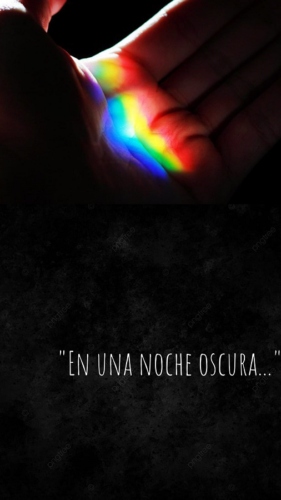
“En una noche oscura…” by Después De Zaqueo Menor illustrates the first line of the poem in the original Spanish.
1. En una noche oscura,
con ansias, en amores inflamada,
¡oh dichosa ventura!,
salí sin ser notada,
estando ya mi casa sosegada;
2. a escuras y segura
por la secreta escala, disfrazada,
¡oh dichosa ventura!,
a escuras y encelada,
estando ya mi casa sosegada;
3. en la noche dichosa,
en secreto, que naide me veía
ni yo miraba cisa,
sin otra luz y guía
sino la que en el corazón ardía.
4. Aquesta me guiaba
más cierto que la luz del mediodía
adonde me esperaba
quien yo bien me sabía
en parte donde naide parecía.
5. ¡Oh noche que guiaste!
¡oh noche amable más que la alborada!;
¡oh noche que juntaste,
Amado con amada,
amada en el Amado transformada!
6. En mi pecho florido,
que entero para él solo se guardaba,
allí quedó dormido,
y yo le regalaba,
y el ventalle de cedros aire daba.
7. El aire del almena,
cuando yo sus cabellos esparcía,
con su mano serena
en mi cuello hería,
y todos mis sentidos suspendía.
8. Quedéme y olvidéme,
el rostro recliné sobre el Amado;
cesó todo y dejéme,
dejando mi cuidado
entre las azucenas olvidado.
“Love’s Urgent Longings: St John of the Cross” by Christopher Hinkle explores sexuality and gender as a chapter in the 2007 book “Queer Theology: Rethinking the Western Body,” edited by Gerard Loughlin.
“Enkindling Love: The Legacy of Teresa of Avila and John of the Cross” by Gillian T. W. Ahlgren (2016)
“The Collected Works of St. John of the Cross,” translated by Kieran Kavanaugh and Otilio Rodriguez
John of the Cross inspired a poem in the “Queer Psalter,” a work-in-progress by Jim Wise, a queer poet based in Indiana. His poetry has been published widely, including in a previous post at Qspirit.net.
His poem “John of the Cross” combines sacred homoerotic longing for Christ with an affirmation of the holiness of gay love and sexuality. It is printed here in full:
by Jim Wise
He was a true believer,
but a Queer one.
He wanted Christ
as a lover or
not at all.
No gentle antiseptic
Jesus would do.
He would settle for
nothing less than flesh.
A wafer was a tease.
When he tasted Christ,
he wanted to taste
desert and sweat.
When he prayed,
he wanted to stink
of heat and sand.
He wanted Christ,
the Divine Top,
to fill him up
with God,
and Christ,
the Divine Bottom,
a god begging
to be filled up
with our humanity.
He wanted a Christ
who would bind his
hands with rosary beads
before pushing him down
to teach him the mystery
of the Kingdom of Heaven.
Cruising was his
act of pure devotion,
for if God could be
a Galilean peasant,
God could be anyone.
He knew –
To cry out a lover’s
name is to scream
the unknown hidden
name of God.
Toby Johnson’s review of “Queer God de Amor” (TobyJohnson.com)
To read this article in Spanish, go to:
San Juan de la Cruz: Noche Oscura del Alma Gay (Santos Queer)
___
Top image credit: “St. John of the Cross” by Brother Robert Lentz, OFM, trinitystores.com
___
This post is part of the LGBTQ Saints series by Kittredge Cherry. Traditional and alternative saints, people in the Bible, LGBTQ martyrs, authors, theologians, religious leaders, artists, deities and other figures of special interest to lesbian, gay, bisexual and transgender and queer (LGBTQ) people and our allies are covered.
This article was originally published on Q Spirit in December 2016, was expanded with new material over time, and was most recently updated on Dec. 15, 2022.
Copyright © Kittredge Cherry. All rights reserved.
Qspirit.net presents the Jesus in Love Blog on LGBTQ spirituality.
___
Founder at Q Spirit
Kittredge Cherry is a lesbian Christian author who writes regularly about LGBTQ spirituality.She holds degrees in religion, journalism and art history.She was ordained by Metropolitan Community Churches and served as its national ecumenical officer, advocating for LGBTQ rights at the National Council of Churches and World Council of Churches.