Translation is a 5-step process of “straight thinking in the abstract.” The first step is an ontological statement of being beginning with the syllogism: “Truth is that which is so. That which is not truth is not so. Therefore Truth is all there is.” The second step is the sense testimony (what the senses tell us about anything). The third step is the argument between the absolute abstract nature of truth from the first step and the relative specific truth of experience from the second step. The fourth step is filtering out the conclusions you have arrived at in the third step. The fifth step is your overall conclusion.
The Ukraine Emergency Translation Group meets every Friday at 11 a.m. Pacific time via Zoom. We call it the Ukraine Emergency Translation Group but we welcome Translations about anything. Here are sense testimonies (2nd steps) we translated and their corresponding conclusions: (5th steps) this week.
2) Fear blocks critical thinking and curiosity 5) One Infinite Mind knows TRUTH is ALL there is.
2) A collapsed lung may indicated a collapsed spirit. 5) We have only to invoke our own constant state of enthusiastic equilibrium.
Some comments from group members about this group:
“I like the group interaction and different perspectives. Also, at least for me, it gives me a sense of accountability and keeps the practice fresh in my mind. ” –Sarah Flynn
“This group has freed me up to have more fun with my Translations.” –Mike Zonta
The Queen of Swords indicates a woman who is blessed (or cursed) with sharp perception, and highly honed intuition. She is acutely analytical, with a razor-sharp ability to get to the heart of a situation, seeing exactly what is, rather than what others would wish her to see.
She is a private woman, unwilling to let people too close to her until she is satisfied she thoroughly understands their motivations. But once won as a friend, she is unfailingly loyal, honest and supportive.
She’s usually very intelligent, with a dry sense of humour. Her penetrating insight will often reveal aspects of themselves to others that they had previously been unable to grasp – thus she is a capable therapist, teacher or leader.
The woman represented by this card will be experienced in the flow of life, understanding a great deal about both the great triumphs, and the deepest failings of the race. Her clarity and measured expression will be of great value at times of confusion and sadness.
Sometimes in a reading, this card will turn up to indicate a woman in a particular phase of her life, where she temporarily becomes a Sword as a result of what is happening to her. In that case the card is not quite so positively defined, for it can indicate a woman left alone, and perhaps embittered. She may be a widow, or a woman passing through the aftermath of divorce.
In this case we often see the more negative aspects of the Queen – coldness, judgementalism, criticism. At these times there is a certain sourness about her, with cynicism and sharpness making themselves felt.
It should be said that these qualities are inherent to the woman who is a Queen of Swords by nature too – if the woman concerned has not evolved sufficiently you will often find that the card represents a person who is hard and cold toward others.
New Thinking Allowed with Jeffrey Mishlove • Jan 28, 2019 William Van Gordon, PhD, is a Chartered Psychologist who lectures and conducts research in psychology at the University of Derby in the United Kingdom. He sits on the editorial board for various academic journals including Mindfulness and Mindfulness and Compassion. He is also co-editor of two academic anthologies: Mindfulness and Buddhist-derived Approaches in Mental Health and Addiction, and The Buddhist Foundations of Mindfulness. William has over 100 academic publications relating to the scientific study of meditation. Prior to joining academia, William was a Buddhist monk for ten years. Here he describes a multi-year research project involving advanced Buddhist meditators who were able to enter into a particular state of consciousness very much akin to the classical near-death experience. An entire year was spent selecting and recruiting meditators who were skilled in this practice. Three additional years were spent in follow-up observations. Detailed descriptions were collected of this unusual state of consciousness. Follow-up studies are planned. New Thinking Allowed host, Jeffrey Mishlove, PhD, is author of The Roots of Consciousness, Psi Development Systems, and The PK Man. Between 1986 and 2002 he hosted and co-produced the original Thinking Allowed public television series. He is the recipient of the only doctoral diploma in “parapsychology” ever awarded by an accredited university (University of California, Berkeley, 1980). He is past-vice-president of the Association for Humanistic Psychology, and is the recipient of the Pathfinder Award from that association for his contributions to the study of consciousness. (Recorded on December 27, 2018)
A robot prototype being developed by Yuhang Hu, a doctoral student in the Creative Machines Lab at Columbia University, where engineers are exploring the possibility of self-aware robots.Credit…Karsten Moran for The New York Times
The pursuit of robot consciousness may be humankind’s next moonshot. But it comes with a slurry of difficult questions.
A robot prototype being developed by Yuhang Hu, a doctoral student in the Creative Machines Lab at Columbia University, where engineers are exploring the possibility of self-aware robots.Credit…Karsten Moran for The New York Times
Hod Lipson, a mechanical engineer who directs the Creative Machines Lab at Columbia University, has shaped most of his career around what some people in his industry have called the c-word.
On a sunny morning this past October, the Israeli-born roboticist sat behind a table in his lab and explained himself. “This topic was taboo,” he said, a grin exposing a slight gap between his front teeth. “We were almost forbidden from talking about it — ‘Don’t talk about the c-word; you won’t get tenure’ — so in the beginning I had to disguise it, like it was something else.”
That was back in the early 2000s, when Dr. Lipson was an assistant professor at Cornell University. He was working to create machines that could note when something was wrong with their own hardware — a broken part, or faulty wiring — and then change their behavior to compensate for that impairment without the guiding hand of a programmer. Just as when a dog loses a leg in an accident, it can teach itself to walk again in a different way.
This sort of built-in adaptability, Dr. Lipson argued, would become more important as we became more reliant on machines. Robots were being used for surgical procedures, food manufacturing and transportation; the applications for machines seemed pretty much endless, and any error in their functioning, as they became more integrated with our lives, could spell disaster. “We’re literally going to surrender our life to a robot,” he said. “You want these machines to be resilient.”
One way to do this was to take inspiration from nature. Animals, and particularly humans, are good at adapting to changes. This ability might be a result of millions of years of evolution, as resilience in response to injury and changing environments typically increases the chances that an animal will survive and reproduce. Dr. Lipson wondered whether he could replicate this kind of natural selection in his code, creating a generalizable form of intelligence that could learn about its body and function no matter what that body looked like, and no matter what that function was.
Hod Lipson, the director of the Creative Machines Lab. “This is not just another research question that we’re working on — this is the question,” he said. Credit…Karsten Moran for The New York Times
This kind of intelligence, if possible to create, would be flexible and fast. It would be as good in a tight situation as humans — better, even. And as machine learning grew more powerful, this goal seemed to become realizable. Dr. Lipson earned tenure, and his reputation as a creative and ambitious engineer grew. So, over the past couple of years, he began to articulate his fundamental motivation for doing all this work. He began to say the c-word out loud: He wants to create conscious robots.
“This is not just another research question that we’re working on — this is the question,” he said. “This is bigger than curing cancer. If we can create a machine that will have consciousness on par with a human, this will eclipse everything else we’ve done. That machine itself can cure cancer.”
???
The Creative Machines Lab, on the first floor of Columbia’s Seeley W. Mudd Building, is organized into boxes. The room itself is a box, broken into boxy workstations lined with boxed cubbies. Within this order, robots, and pieces of robots, are strewn about. A blue face staring blankly from a shelf; a green spiderlike machine splaying its legs out of a basket on the ground; a delicate dragonfly robot balanced on a worktable. This is the evolutionary waste of mechanical minds.
The first difficulty with studying the c-word is that there is no consensus around what it actually refers to. Such is the case with many vague concepts, like freedom, meaning, love and existence, but that domain is often supposed to be reserved for philosophers, not engineers. Some people have tried to taxonomize consciousness, explaining it away by pointing to functions in the brain or some more metaphysical substances, but these efforts are hardly conclusive and give rise to more questions. Even one of the most widely shared descriptions of so-called phenomenal consciousness — an organism is conscious “if there is something that it is like to be that organism,” as the philosopher Thomas Nagel put it — can feel unclear.
The Rise of OpenAI
The San Francisco company is one of the world’s most ambitious artificial intelligence labs. Here’s a look at some recent developments.
Wading directly into these murky waters might seem fruitless to roboticists and computer scientists. But, as Antonio Chella, a roboticist at the University of Palermo in Italy, said, unless consciousness is accounted for, “it feels like something is missing” in the function of intelligent machines.
ImageThe boxy lab, with robot projects in various stages of assembly.Credit…Karsten Moran for The New York Times
The invocation of human features goes back to the dawn of artificial intelligence research in 1955, when a group of scientists at Dartmouth asked how machines could “solve kinds of problems now reserved for humans, and improve themselves.” They wanted to model advanced capacities of the brain, like language, abstract thinking and creativity, in machines. And consciousness seems to be central to many of these capacities.
But trying to render the squishy c-word using tractable inputs and functions is a difficult, if not impossible, task. Most roboticists and engineers tend to skip the philosophy and form their own functional definitions. Thomas Sheridan, a professor emeritus of mechanical engineering at the Massachusetts Institute of Technology, said that he believed consciousness could be reduced to a certain process and that the more we find out about the brain, the less fuzzy the concept will seem. “What started out as being spooky and kind of religious ends up being sort of straightforward, objective science,” he said.
(Such views aren’t reserved for roboticists. Philosophers like Daniel Dennett and Patricia Churchland and the neuroscientist Michael Graziano, among others, have put forward a variety of functional theories of consciousness.)
Dr. Lipson and the members of the Creative Machines Lab fall into this tradition. “I need something that is totally buildable, dry, unromantic, just nuts and bolts,” he said. He settled on a practical criterion for consciousness: the ability to imagine yourself in the future.
According to Dr. Lipson, the fundamental difference among types of consciousness — human consciousness and octopus consciousness and rat consciousness, for example — is how far into the future an entity is able to imagine itself. Consciousness exists on a continuum. At one end is an organism that has a sense of where it is in the world — some primitive self-awareness. Somewhere beyond that is the ability to imagine where your body will be in the future, and beyond that is the ability to imagine what you might eventually imagine.
“So eventually these machines will be able to understand what they are, and what they think,” Dr. Lipson said. “That leads to emotions, and other things.” For now, he added, “we’re doing the cockroach version.”
???
The benefit of taking a stand on a functional theory of consciousness is that it allows for technological advancement.
One of the earliest self-aware robots to emerge from the Creative Machines Lab had four hinged legs and a black body with sensors attached at different points. By moving around and noting how the information entering its sensors changed, the robot created a stick figure simulation of itself. As the robot continued to move around, it used a machine-learning algorithm to improve the fit between its self-model and its actual body. The robot used this self-image to figure out, in simulation, a method of moving forward. Then it applied this method to its body; it had figured out how to walk without being shown how to walk.
This represented a major step forward, said Boyuan Chen, a roboticist at Duke University who worked in the Creative Machines Lab. “In my previous experience, whenever you trained a robot to do a new capability, you always saw a human on the side,” he said.
ImageA two-jointed robot arm that uses external cameras, a deep learning algorithm and a probability model to recognize itself in the world. “It has this notion of self, a cloud,” Dr. Lipson said.Credit…Karsten Moran for The New York Times
Recently, Dr. Chen and Dr. Lipson published a paper in the journal Science Robotics that revealed their newest self-aware machine, a simple two-jointed arm that was fixed to a table. Using cameras set up around it, the robot observed itself as it moved — “like a baby in a cradle, watching itself in the mirror,” Dr. Lipson said. Initially, it had no sense of where it was in space, but over the course of a couple of hours, with the help of a powerful deep-learning algorithm and a probability model, it was able to pick itself out in the world. “It has this notion of self, a cloud,” Dr. Lipson said.
Was it truly conscious, though?
The risk of committing to any theory of consciousness is that doing so opens up the possibility of criticism. Sure, self-awareness seems important, but aren’t there other key features of consciousness? Can we call something conscious if it doesn’t feel conscious to us?
Dr. Chella believes that consciousness can’t exist without language, and has been developing robots that can form internal monologues, reasoning to themselves and reflecting on the things they see around them. One of his robots was recently able to recognize itself in a mirror, passing what is probably the most famous test of animal self-consciousness.
Joshua Bongard, a roboticist at the University of Vermont and a former member of the Creative Machines Lab, believes that consciousness doesn’t just consist of cognition and mental activity, but has an essentially bodily aspect. He has developed beings called xenobots, made entirely of frog cells linked together so that a programmer can control them like machines. According to Dr. Bongard, it’s not just that humans and animals have evolved to adapt to their surroundings and interact with one another; our tissues have evolved to subserve these functions, and our cells have evolved to subserve our tissues. “What we are is intelligent machines made of intelligent machines made of intelligent machines, all the way down,” he said.
This summer, around the same time that Dr. Lipson and Dr. Chen released their newest robot, a Google engineer claimed that the company’s newly improved chatbot, called LaMDA, was conscious and deserved to be treated like a small child. This claim was met with skepticism, mainly because, as Dr. Lipson noted, the chatbot was processing “a code that is written to complete a task.” There was no underlying structure of consciousness, other researchers said, only the illusion of consciousness. Dr. Lipson added: “The robot was not self aware. It’s a bit like cheating.”
But with so much disagreement, who’s to say what counts as cheating?
???
Eric Schwitzgebel, a philosophy professor at the University of California, Riverside, who has written about artificial consciousness, said that the issue with this general uncertainty was that, at the rate things are progressing, humankind would probably develop a robot that many people think is conscious before we agree on the criteria of consciousness. When that happens, should the robot be granted rights? Freedom? Should it be programmed to feel happiness when it serves us? Will it be allowed to speak for itself? To vote?
(Such questions have fueled an entire subgenre of science fiction in books by writers such as Isaac Asimov and Kazuo Ishiguro and in television shows like “Westworld” and “Black Mirror.”)
Issues around so-called moral considerability are central to the animal rights debate. If an animal can feel pain, is killing it for its meat wrong? If animals don’t experience things in the same ways that humans do, does that mean we can use them for our own enjoyment? Whether an animal has certain conscious capacities often seems to come to bear on whether it has certain rights, but there is no consensus around which capacities matter.
ImageTwo graduate students, Zhizhuo Zhang, left, and Ruibo Liu, worked on the robot arm in the lab on a recent Wednesday.Credit…Karsten Moran for The New York Times
In the face of such uncertainty, Dr. Schwitzgebel has advocated for what he calls “the design policy of the excluded middle.” The idea is that we should only create machines that we agree definitely do not matter morally — or that definitely do. Anything in the gray area of consciousness and mattering is liable to cause serious harm from one perspective or another.
Robert Long, a philosopher at the Future for Humanity Institute at Oxford University, supports this caution. He said that A.I. development at big research labs and companies gave him the sensation of “hurtling toward a future filled with all sorts of unknown and vexing problems that we’re not ready for.” A famous one is the possibility of creating superintelligent machines that could annihilate the human population; the development of robots that are widely perceived to be conscious would add to the difficulties of tackling these risks. “I’d rather live in a world where things are moving a lot more slowly, and people think a lot more about what’s being put in these machines,” Dr. Long said.
But the downside of caution is slower technological development. Dr. Schwitzgebel and Dr. Long conceded that this more deliberate approach might impede the development of A.I. that was more resilient and useful. To scientists in the lab, such theorizing can feel frustratingly abstract.
“I think that we are not close to this risk,” Dr. Chella said when asked about the risks of creating robots with conscious capacities similar to humans. Dr. Lipson added: “I am worried about it, but I think the benefits outweigh the risks. If we’re going on this pathway where we rely more and more on technology, technology needs to become more resilient.”
He added: “And then there’s the hubris of wanting to create life. It’s the ultimate challenge, like going to the moon.” But a lot more impressive than that, he said, later.
???
In one of the workstations in the Creative Machines Lab, a self-aware robot arm started moving. Yuhang Hu, a graduate student in the lab, had initiated a mechanical sequence. For now, the robot wasn’t watching itself and forming a self-model — it was just moving around randomly, twisting or shifting once every second. If it could be conscious, it wasn’t yet.
Dr. Lipson leaned back in his chair and looked at the robot, then said to Mr. Hu, “Another thing we need to do is have this robot make a model of itself by just bumping into things.”
Mr. Hu, his hair tussled, put his chin in his hand. “Yes, that’s interesting,” he said.
Dr. Lipson continued, “Because even someone who is blind can form an image of itself.”
“You can just put a box over it,” Mr. Hu said.
“Right,” Dr. Lipson said. “It has to be a rich enough environment, a playground.”
The two scientists sat there thinking, or appearing to think, staring at the robot that continued to move on the table.
This, Dr. Lipson noted, is how research is done in his lab. The researchers look inward and notice some element of themselves — a bodily self-awareness, a sense of their surroundings, a self-consciousness around other people — and then try to put that element into a machine. “I want to push this as far as I can,” Dr. Lipson said. “I want a robot to think about its body, to think about its plans.”
In a sense, it is the simplest of all robotics exercises, like something elementary school children do with old electronics. If you can do it with a retired printer, why can’t you do it with your mind? Break it down, see how it works, and then try to build it back up again.
As the object, a carved spoon, was handed back at a ceremony in Bethlehem, officials said it was the first time the United States had repatriated an antiquity to the Palestinian government.
A cosmetic spoon carved from ivory, which officials said had been looted, was returned to the Palestinian Authority.Credit…Courtesy of the Manhattan District Attorney’s Office.
American officials met with representatives of the Palestinian Authority in Bethlehem on Thursday and handed back a 2,700-year-old looted item in what officials said was the first time the United States had repatriated a stolen relic to the Palestinian government.
The object, described as a “cosmetic spoon,” was a tool carved from ivory and dating to between 800 and 700 B.C. It was used to ladle incense onto fires and braziers at rites venerating the gods and the dead. A winged figure was etched into its front side.
The Palestinian minister of tourism and antiquities, Rula Maayah, who met with the American delegation, said, “This artifact is important as it acquires its real scientific and archaeological value in its authentic location.” She added that the item dates to the vast Assyrian civilization, and that it was likely stolen from what is now Hebron, in the West Bank.
The chief of the U.S. Office of Palestinian Affairs, George Noll, said at the ceremony that it was “a historic moment between the American and Palestinian people and a demonstration of our belief in the power of cultural exchanges in building mutual understanding, respect and partnership.”
According to the office of the Manhattan district attorney, the object was seized during a lengthy investigation into items collected by Michael H. Steinhardt, a prominent New York venture capitalist and a major ancient art collector. In 2021, after investigators seized 180 stolen antiquities valued at $70 million from Mr. Steinhardt, he agreed to a lifetime ban on acquiring antiquities.
The cosmetic spoon, officials said, first surfaced on the international art market on Jan. 21, 2003, when Mr. Steinhardt bought it from an Israeli antiquities dealer who has been accused of dealing in hundreds of illicit Israeli and Middle Eastern treasures, at least 28 of which were sold to Mr. Steinhardt.
Matthew Bogdanos, the chief of the district attorney’s Antiquities Trafficking Unit, said his investigators were able to backtrack the origins of the cosmetic spoon by examining emails seized from Mr. Steinhardt that included conversations about the item and the fact that it had been illicitly obtained.
Last February, before the decision to return the spoon was announced, some Palestinians expressed dismay that Steinhardt artifacts they believed emanated from their territories would be handed over instead to the Israeli government. They have asked publicly for the return of more of the looted objects.
At the heart of the speakership battle is a right-wing push for more influence.
Conservatives have complained about the top-down power structure that flourished in the House after Newt Gingrich took over the speaker’s post in 1995.Credit…Stephen Crowley/The New York Times
WASHINGTON — The rebellion against Representative Kevin McCarthy of California and his bid for the speakership is rooted not just in personal animosity, but in a deeply ideological drive by a group of hard-right conservatives to drastically limit the size, scope and reach of the federal government, and overhaul the way Congress works to make it easier to do so.
The dissidents challenging Mr. McCarthy have pressed for a balanced federal budget — one that would not permit any deficit spending. They want special rules that would make it easier for lawmakers to zero out federal offices and fire government workers, and would make it much harder to secure earmarks to direct federal money to individual projects. The group is also seeking to heavily fortify the U.S. border with Mexico and dismantle the Internal Revenue Service, getting rid of federal income taxes and replacing them with a consumption tax.
“My personal belief is and that of many of my colleagues is if you don’t stop spending money that we don’t have to fund the bureaucracy that is undermining the American people, we cannot win,” said Representative Chip Roy, Republican of Texas and a leading McCarthy opponent. “This town is badly broken, and we need to fix it.”
To further their policy goals, the hard-right lawmakers have also long pushed for overhauling the way the House operates to give individual rank-and-file members more influence over what legislation is considered.
Conservatives have consistently griped about the top-down power structure that has flourished in the House since Newt Gingrich, a Republican and former speaker, took over the post in 1995 and sought to undercut efforts to negotiate deals and pass legislation by consolidating power in the speaker’s suite.
The movement to scale back the size of government has been a central tenet of the Republican Party for decades, but it intensified in Congress during the Obama years with the rise of the Tea Party as Republicans demanded spending curbs in exchange for raising the federal debt limit. With President Donald J. Trump in office, they retreated from that campaign and increased the debt limit without conditions, an approach that the new House majority is certain to oppose this year. But Republicans seized on Mr. Trump’s populist message, casting the government as a “swamp” of elitists that did not respond to the needs of ordinary Americans.
Many Republicans have argued that the way the House works exacerbates the problem, and they have devoted themselves to figuring out ways to throw sand in the gears.
A New Congress Begins
The 118th Congress opened on Jan. 3, with Republicans taking control of the House and Democrats holding the Senate.
Elise Stefanik: The New York congresswoman’s climb to MAGA stardom is a case study in the collapse of the old Republican establishment, but her rise may also be a cautionary tale.
“It’s all about the ability — empowering us to stop the machine in this town from doing what it does,” Mr. Roy said on Wednesday.
There is some legitimacy to the claim that rank-and-file lawmakers have been cut out of most high-level deal-making. The crush of work and the inability to meet deadlines have led to House and Senate leaders making huge legislative agreements among themselves and then forcing approval with little time for review.
The latest example was last month’s passage of a roughly $1.7 trillion government spending package that was thrust upon most lawmakers in the final days of work before Christmas, with little opportunity to scrutinize the details.
“America knows that Washington is broken,” Representative Paul Gosar, one of the ringleaders of the speaker mutiny, said on Tuesday in pushing for the election of Representative Andy Biggs, a fellow Arizona Republican. “A wise person once told me that a good process builds good policy, builds good politics. We have to return to them.”
While Mr. McCarthy had already pledged a series of changes intended to give the rank and file a greater say in the process, the holdouts want commitments to embrace their policy agenda and give them powerful spots on congressional committees, things he has refused to do. They also wanted him to cease funding primary challengers in open Republican races, essentially promising not to try to knock out a right-wing conservative candidate with a more mainstream one, as he has often tried to do.
The hard-right Republicans have received encouragement from small-government, anti-tax groups such as the Club for Growth, which officially urged the party to reject any speaker candidate who did not back rules changes that “will provide transformational reforms to the House, build a bold pro-growth legislative agenda, and restore the individual rights and powers of the rank-and-file membership.”
As they pushed alternative candidates on Wednesday, the rebels made it clear that the issue went far beyond Mr. McCarthy, who is the preferred speaker of most House Republicans.
“It’s not about the personalities in this contest,” said Representative Scott Perry, Republican of Pennsylvania, who said his party needed a “new vision.”
“How are you going to fix it if you come to this town and step right in line and keep doing the same things that everyone has done before you?” asked Mr. Perry, a backer of Representative Byron Donalds, Republican of Florida.
Representative Ken Buck, a Colorado Republican and Freedom Caucus member who is supporting Mr. McCarthy, acknowledged frustration among a broad swath of members and said that a main element of the Republican feud was about “transparency.”
“One thing that people in the Freedom Caucus are asking for is more time to read bills before they are voted on,” said Mr. Buck, who said such guarantees could benefit both Mr. McCarthy’s supporters and his opponents.
The demands for additional changes come as several lawmakers in the new Republican majority have said they will withhold crucial votes to raise the limit on the nation’s ability to borrow unless Democrats in the Senate and the White House agree to steep spending cuts.
The changes would make it vastly more difficult for a divided government to enact any basic legislation, let alone continue federal spending at its current levels and avoid broader economic catastrophe. That prospect worries Democrats who view the stalemate over the speaker slot as a preview of the new majority’s inability to pass spending bills or raise the debt limit.
“This concerns me that we might end up in some deals that might not pass and then possible shutdowns,” said Representative Henry Cuellar, Democrat of Texas and a member of the Appropriations Committee.
While the far-right Republicans are in position to help shape the House rules, their legislative ideas will run up against the Democratic majority in the Senate as well as President Biden, meaning many of the legislative initiatives will be more symbolic than substantive.
Incoming majorities of both parties in the past have promised more participation for rank-and-file lawmakers, more opportunity to offer amendments and more time to study legislation. When Mr. McCarthy proposed a rules package to dictate how the House would operate, he included measures that would require 72 hours’ notice before any votes on a bill and guardrails intended to rein in spending.
But leaders of both parties have found that opening up the process slows the legislative work considerably, if not halts it altogether, and the new rules are then jettisoned in the interest of greater efficiency and fewer politically charged votes.
But the paralyzing speakership fight shows that the hard-right lawmakers do not intend to relent until they get ironclad guarantees that any new rules will remain in place and that they will have new influence over the business of the House with an eye toward restraining the government.
“We’re sick of promises that never come to fruition,” Mr. Perry said. “We’re sick of that.”
Join us this Sunday for a talk by Richard Hartnett, H.W., M. These talks are presented by contribution. Everyone from fundamentalists to atheists are welcome!
One tap mobile +16699006833,,579891643# US (San Jose) +13462487799,,579891643# US (Houston)
Dial by your location +1 669 900 6833 US (San Jose) +1 346 248 7799 US (Houston) +1 301 715 8592 US +1 312 626 6799 US (Chicago) +1 929 205 6099 US (New York) +1 253 215 8782 US
New Thinking Allowed with Jeffrey Mishlove • Jan 5, 2023 Pierre Grimes, PhD, is a specialist in classical Greek philosophy. He is the founder of the American Philosophical Practitioners Association. He is also founder of the Noetic Society in the Los Angeles area. He is author of Philosophical Midwifery: A New Paradigm for Understanding Human Problems, Socrates and Jesus: A Dialogue in Heaven, and Unblocking: Removing Blocks to Understanding. He is also a decorated veteran of the second world war. In this video from 2017, he suggests that the human condition has always been tragic and will remain so — because all humans carry within themselves a burden of unrecognized rage and false beliefs. The best way to cope with tragedy, he maintains, is to engage in a process of illuminating and modifying these false beliefs that he defines as “pathologos”. As an exemplar of possible heroic transformation he describes Achilles’ change of heart in Homer’s Iliad. New Thinking Allowed host, Jeffrey Mishlove, PhD, is author of The Roots of Consciousness, Psi Development Systems, and The PK Man. Between 1986 and 2002 he hosted and co-produced the original Thinking Allowed public television series. He is the recipient of the only doctoral diploma in “parapsychology” ever awarded by an accredited university (University of California, Berkeley, 1980). He is also the Grand Prize winner of the 2021 Bigelow Institute essay competition regarding the best evidence for survival of human consciousness after permanent bodily death. (Recorded on October 3, 2017)
The Full Moon in Cancer presents us with a very dignified Moon. The Moon is thought to have greater power in Cancer, helping to bring forth more of its nurturing capacity. Nevertheless, the opposition inherent in the Full Moon scenario in Capricorn, indicates two sets of energies, which have the potential to conflict with or complement each other.
We may sense the tension in this opposition, sometimes feeling either a sense of closeness or an awkward distance with another. This “other” may be a specific person, group, or even a situation we want to become involved in, yet the matter isn’t automatic or easy to navigate. We may desire to do something more often than others, find difficulty attracting people into our world, or sharing in activities with them. Yet this gap can potentially be bridged, at least for a while!
The Moon is opposed by a retrograde Mercury, which suggests that questions may not be answered quickly. Requests could be ignored, and pinning someone down to manage any real negotiations is, perhaps, just not possible — for the moment, anyway. To show respect, we might stick to our own or follow set protocols.
Either way, there’s a sense we’re following the “right path” — and if this means we aren’t close to a certain person or group of people, then maybe it’s not such a terrible thing, and even a sign to move our affiliations elsewhere, at least in the long term if not right away. Such changes may not be overnight, with memberships or subscriptions, for example, or even just emotional adjustments. But we can do it all, given time!
The Moon is sextile Uranus in Taurus, emphasizing the sense of being an outsider or following the less-travelled path. Yet, a sextile frequently presents a positive opportunity, even if work is required to create it or fulfil it. So, a bit of effort may be needed to reap some rewards, particularly regarding a change of direction. But the outcome is likely worth it. Indeed, results from even just slight changes can be experienced quite powerfully over time if we can just allow for full fruition to take place.
The Moon also makes a slightly wide trine to Neptune in Pisces, underlining the strength of the watery pathways of life — those that allow us to go with the flow! This can apply to so many experiences: mental, emotional, practical, even spiritual. At this time, we may benefit by seeing where life takes us. The outer planets may present sudden opportunities we might have otherwise missed, had we been too rigid or too busy to notice them.
Possibly, we thought we’d be able to get on with a set of people, or a situation that looked attractive from the outside but suddenly proves quite difficult. Perhaps a certain personality type reminds us of a past relationship that wasn’t good for us. If red flags are flying, then we should not ignore them. At this time, it’s crucial to ask ourselves what really makes us feel better — and to tune into that activity, even if the “activity” is relatively low key.
This article is from the Mountain Astrologer by Diana McMahon Collis
It’s easy to think that science is constantly changing its mind on all things dietary and health-based – if you have never suffered headline whiplash from trying to keep up with whether or not wine is good for you, you probably aren’t paying attention. In fact, our collective understanding is getting more nuanced, with ever-emerging longitudinal studies and meta-reviews getting us closer and closer to the truth about what is good for our bodies. Here are some widely held beliefs and what science says now – so you can start making informed health decisions this year.
‘Lifting weights will make you bulky’
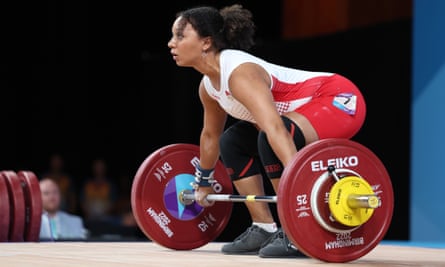
Zoe Smith weightlifting for England at the Commonwealth Games last summer. Photograph: Ryan Browne/Rex/Shutterstock
This obviously isn’t true: just look at an Olympic weightlifter like Team GB’s Zoe Smith, who, while in undeniably good shape, has smaller shoulders than literally millions of men she would effortlessly outclass in the clean and jerk. To understand the science, though, you have to realise that there are two main ways to get strong: increasing the size of individual muscle fibres or coaxing more of them into firing at the same time. Bodybuilders aim to do the first, by doing many repetitions in each set of exercises, lifting until their muscles fail, and using training tricks to further exhaust their fibres. Athletes aim to do the second, by lifting heavier weights for fewer reps, and avoiding muscular failure. Also working for Zoe (or against her, depending on your perspective) is that muscle distribution and hormone levels are different in men and women: men have far more upper body muscle mass and higher levels of testosterone. Most gym-goers have trouble putting on as much muscle as they want to – you won’t do it by accident.
‘Breakfast is the most important meal of the day’
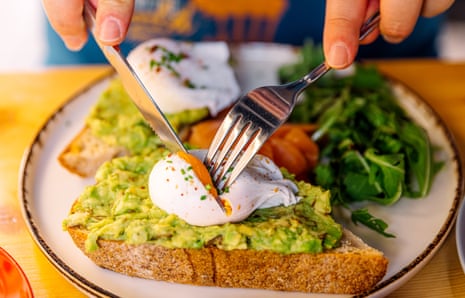
A vegan breakfast bowl with spinach, rocket, avocado, seeds, radishes and sprouts. Photograph: Kseniya Ovchinnikova/Getty Images
This is a tricky one. Although there is nothing about the first meal of the day that makes it especially magical, the timing of meals is increasingly recognised as an important factor in weight loss, alongside metabolic and cardiovascular health. One study on overweight female volunteers found that those who ate a large breakfast saw greater weight loss and waist circumference reduction than another group who had a low-calorie breakfast and larger dinner, even when overall calories were controlled for.
“This might be because skipping breakfast leads to increased hunger levels later in the day, resulting in people overeating,” says Brady Holmer, a researcher at Examine.com, a database of nutrition and supplement research. “People who eat a big breakfast instead of a big dinner also tend to lose more weight, feel less hungry and can regulate their blood sugar levels better.” Although the evidence is mixed, some studies have found that eating more calories earlier in the day could have benefits for metabolic health.
The bottom line? Breakfast is important if it’s something that you enjoy, or helps you to follow a well-balanced diet, and skipping it may have varying effects on appetite, weight and energy for different people. If you can make it through the morning on an apple and coffee, by all means go for it – but if you are overeating late in the day, throw some extra feta in that omelette.
‘You should walk 10,000 steps a day’
Step lively. Photograph: kali9/Getty Images
A surprising one: this number wasn’t based on any science when it first cropped up in the 1960s, but it might be good advice. A study released in 2022 found that walking may reduce the risk of premature death from cardiovascular disease and cancer, with returns diminishing after the 10,000-step sweet spot. Another study found similar results for dementia, with as little as 3,800 steps a day proving effective. But it’s also worth stepping up the pace, as the dementia study saw a power-walker’s pace showing benefits above and beyond the number of steps walked. Diminishing returns kick in around the 10,000 mark – but up to there, do more if you can, slightly faster if possible.
‘You need eight hours of sleep’
It’s easy to think of sleep as an individual thing: some people need eight hours, while others can get by on seven. Margaret Thatcher apparently managed on four, and new parents somehow cope on even less. But in one of the largest ever sleep studies, launched in 2017, participants who reported sleeping the doctor-endorsed seven to eight hours performed better cognitively than those who slept more or less than that, regardless of age. Those who slept four hours or less performed as if they were almost nine years older. Lack of sleep can also affect testosterone production in young men and a review of studies published in 2010 suggests it can raise the risk of all-cause mortality.
None of this will help when you are tossing and turning, so give yourself the best chance of a decent night’s shuteye by keeping good habits. “Establish a routine,” says Steve Magness, author of Do Hard Things. “If we repeat things often enough, the brain and body figure it out and sync the hormonal and neurochemical release in anticipation of that event – and the same goes for sleeping. Try to get outside early in the day to see some sunlight, which helps to regulate your circadian rhythm – and cut down on your device use at night.” Another good reason to crack open an actual paperback.
‘You should aim to eat five portions of fruit and veg a day’
Eating more fruit and veg can cut your stress levels. Photograph: Nick Ansell/PA
Bad news if you are not already doing this: five might actually be the minimum. “The five servings recommendation is sound advice, but also somewhat arbitrary,” says Holmer. “Many studies have found that roughly this number is associated with improved health, but there is also evidence that up to 10 servings per day of these foods can be beneficial.” In general, those who consume more fruits and vegetables have lower risks for cognitive decline and dementia, and diabetes, and may even experience decreased levels of stress.
If you are struggling to hit the minimum, it’s worth bearing in mind that not all portions are created equal. “For long-term health, two servings of fruit and three servings of vegetables per day has been associated with the greatest benefit,” says Holmer. “And the more variety, the better.” Dark, leafy greens and cruciferous veg – think broccoli, brussels sprouts and cabbage – are some of the most nutritionally dense vegetables available, while berries tend to be more packed with antioxidants than bananas.
‘You need to drink two litres of water a day’
One for the road. Photograph: elenaleonova/Getty Images/iStockphoto
Good news for anyone already sick of sloshing their way to the toilet a dozen times daily: staying hydrated is important, but the recommendation to drink two litres of water a day, while reasonable advice, is not based on hard science. In 1945, the US National Research Council wrote: “A suitable allowance of water for adults is 2.5 litres daily in most instances … Most of this quantity is in prepared foods.” And in 1974, a book by leading US nutritionist Dr Frederick J Stare stated: “How much water each day? This is usually well regulated by various physiological mechanisms, but for the average adult, somewhere around six to eight glasses per 24 hours, and this can be in the form of coffee, tea, milk, soft drinks, beer, etc. Fruits and vegetables are also good sources of water.” The bit about getting your hydration from lattes, celery or Fanta often gets lost – which is a shame because it’s still valid.
‘A daily glass of wine is better than abstinence’
Sorry, plonk-lovers: this one is a classic of the “correlation is not causation” genre. The old recommendation to have a glass each night is based on observational evidence that people who classify themselves as “moderate drinkers” (roughly 1-2 units a day) seem to have a lower risk for some diseases – but that is very difficult to study in isolation. Generally, moderate drinkers tend to be wealthier, more educated, live in nicer areas and benefit from other factors that heavy drinkers and non-drinkers don’t, which is probably why a New Zealand study that controlled for socio-economic factors saw the “benefits” of moderate drinking disappear almost entirely. One thing we can probably dismiss is the idea that the potentially heart-healthy molecule resveratrol plays a part – you would need to drink gallons of wine every day to hit the amount that seems to be beneficial in animal research. Recent research suggests that regular, small-scale drinking is far from ideal: one study of 36,000 adults found that even one or two drinks a day might decrease the chance of healthy ageing and reduce the size of your brain.
That said, there are well-known health benefits that come from a lively social life – so if you are downing the occasional pint with pals, it might be doing you more good than harm.
“It makes a sort of sense that if you want to build your abs, you would do typical ab exercises like crunches and sit-ups,” says Emma Storey-Gordon, a personal trainer and sports scientist. “But the truth is that whether you have visible abs or not has far more to do with your body fat levels and where you are predisposed to store fat than the number of sit-ups you do.” Many resources will tell you that you need to be around the 10-15% body fat range to start seeing the outline of your abs if you’re male, or 15-20% if you’re female. In reality, it’s a bit more complicated. “A lot of women need to go below a healthy body fat range for abs; those with longer torsos, who don’t store fat around their midsection, may not.”
As for whether you can target specific areas to spot-reduce fat, there is some evidence that hormones may play a role in where it’s stored. But one of the biggest recent meta-analyses of studies suggests that the best thing you can do is reduce your alcohol intake a bit.
‘Dieting will slow your metabolism’
It’s a common trope that eating a very low-calorie diet, or even fasting, will trigger “starvation mode”, where the body slows metabolism as a way to keep you from losing any more weight. “While there’s no such thing as ‘starvation mode’, there may be small changes to someone’s metabolic rate when they lose weight or go on a diet,” says Holmer. “It’s called adaptive thermogenesis – a process during which the body reduces its production of heat in order to conserve energy.” This phenomenon might explain why some people have a hard time keeping weight off, or even regain weight after dieting. Even though the change might not be that large – about 100 calories a day – it can still make a difference in the long term.
To lessen the chances of your metabolism slowing down due to dieting or weight loss, you should avoid rapid weight loss: gradual is better. Also, alternate periods of dieting with periods of energy balance, and increase your activity levels by doing gentle exercise. And, as there are plenty of other benefits to going for a stroll, it’s probably easier than cutting out even more calories.
‘Red meat is bad for you’
Unprocessed red meat may not be so bad for you after all. Photograph: Olena Yeromenko/Alamy
Classically, red meat was often advised against because it contains a lot of saturated fat – but it’s not as simple as that. Several studies have shown an association between a higher intake of red meat and an increased risk of prostate cancer and heart disease, but it is now widely believed that the associations between red meat and disease risk might be confounded, because many studies don’t distinguish between processed (bacon, sausages, burgers and deli meats) and unprocessed red meat intake.
“Several recent studies have found that eating unprocessed red meat may not actually increase the risk for heart disease or cancer,” says Holmer. “And major health organisations have recommended that people can continue to eat unprocessed red meat.”
But what about the current crop of so-called “carnivore” dieters – Jordan Peterson included – who eat almost nothing but steak? Well, it’s a high-risk strategy. Technically, you can get plenty of vitamins and minerals from the right kind of meat, but the Inuit, Maasai and other tribes often cited by modern carnivores as evidence for the benefits of their lifestyle would have been eating blissfully free-range animals rather than factory-farmed cows. The best recommendation? Choose meat that is as unprocessed as possible – and if the animals were happy, that is probably better for your health, too.
Consciousness, spirituality, biography, sexuality, androgyny, futurism, space, the arts, science, astrology, democracy, humor, books, movies and more