“If you encounter a cougar, never approach or offer it food. You are not a Disney princess.”
“Most grandma/reindeer collisions are entirely preventable. Please give wildlife plenty of space.”
“Please be responsible with hot takes this Thanksgiving if your turkey is as dry as our forests.”
These are just a few salient pieces of advice provided over the holidays by officials at the Washington state department of natural resources (DNR). The agency’s social media team, which has more than 120,000 followers on Twitter, has become a go-to source for useful advice on the outdoors, often in the guise of good humor.
— Washington State Dept. of Natural Resources (@waDNR) September 20, 2022
And it’s not alone. The Oklahoma department of wildlife and conservation has also made a national name for itself with its informative tweets wrapped in memes, with more than 126,000 followers – about twice as many as the state’s governor, Kevin Stitt, can claim. A scroll through the department’s Twitter feed highlights wildlife facts (“Virginia opossums can gain as much as 30% of their body weight each winter but they don’t get targeted ads for gyms”) and pop culture participation (reminding the 2,000 people ahead of them in the online queue for Taylor Swift tickets that it’s nice outside today and they might consider a hike). There’s also banter with other state nature agencies; departments in Georgia, Oregon, Iowa and elsewhere have Twitter feeds in the same mold.
Brands from Wendy’s to Old Spice have long wielded memes and jokes to win eyeballs on social media, but state and local governments haven’t exactly been known for virality. What has changed? And are funny people instinctively drawn to careers at state wildlife departments?
Update: The Twitter wildfire is at 44 billion acres and 0% contained.
— Washington State Dept. of Natural Resources (@waDNR) November 11, 2022
Social media managers in the Washington and Oklahoma agencies have other theories. Rachel Terlep, senior social media manager for the Washington DNR, says a generational shift may have something to do with it. “I’m a millennial. People like us and even younger, with Gen Z, grew up really conscious about the environment, about wildlife, caring about what happens next to our Earth,” she says.
Sarah Southerland, communication and education specialist at the Oklahoma wildlife department, says the humor is simply a result of government employees getting free rein to be themselves. “I believe that people are hilarious because life is funny. We all have different perspectives, and that’s where comedy comes from. When you have the opportunity to let that out, you connect with people.”
In Oklahoma, that freedom expanded last year after a January tweet about a mountain lion went viral. The post showed a mountain lion rolling in the snow, with a little guidance for humans: “YOU are cold. They have fur. Do not let inside.” The tweet has earned more than 14,000 retweets and 123,000 likes. “That gave us the green light from the higher-ups that like, hey, you know, this, this works better. Because, you know, 40m impressions is better than like 200 impressions that we had,” Southerland said. Now, she has “a volunteer group of co-workers in full-time other roles – TV show producers, magazine writers, accountants and property managers – who volunteer their time to just goof off and give me ideas.”
— Oklahoma Department of Wildlife Conservation (@OKWildlifeDept) January 20, 2022
The humor extends beyond state wildlife departments, Terlep said: “I think we’re truly in a renaissance period of government social media.” She draws inspiration from the likes of the National Park Service and, surprisingly enough, the US Consumer Product Safety Commission, whose Twitter feed is full of product safety-themed gags. And then there’s the north-east Ohio regional sewer district, a true giant. “That’s like – I mean, it sounds so nerdy, so please forgive me – like an icon in our field,” Southerland said.
That account, with nearly 47,000 followers, frequently reminds readers of the centrality of sewers to our lives. “Fondly remember,” said a tweet following Elon Musk’s purchase of the platform, “of all the hours you scrolled twitter in the bathroom, sewers were there for you first.” And on state affairs: “now that sports betting is legal in ohio please remember we’ve been throwing your money down the drain for 50 years with much better returns.”
yes we’re a uniter and manage a lot of crap but no we have not yet been nominated for Speaker
John Gonzalez, who runs the sewer district’s feed, puts its success down to personal connection, “whether it’s with humor or with empathy or with some sense of humanity. It allowed us to kind of have a tongue-in-cheek approach with our engagement as well, because we deal with poop.”
The future of Twitter itself may be uncertain, but the platform has allowed government agencies to show there are real people behind previously faceless bureaucracies, Gonzalez said.
“We received a voicemail from a customer who said that our Twitter account kind of just helped to demonstrate the humanity of infrastructure. It was a good representation of what we want,” he said. “Infrastructure is what connects us, but before that connection, there’s a different connection that we all share. And I’ve been glad to be able to help people understand our work through a different lens.”
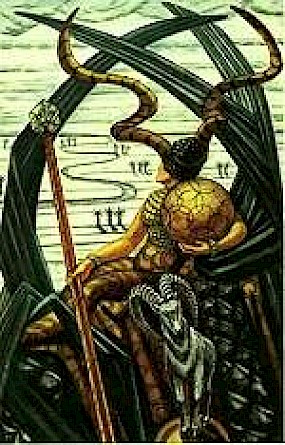
As the Queen of the Suit most connected to the home environment, families, materiality and fecundity, the woman represented by the Queen of Disks will most likely be a person whose attention centres upon the family environment. Here, she will excel, gaining a great deal of pleasure from providing a secure haven where she and others can feel cosseted and cared for.
In modern times the qualities for which this Queen stands have tended to be devalued and downgraded (‘I’m only a housewife’). This causes difficulties for the woman who feels most fulfilled expending her energies in a home situation, working with her family and a close circle of friends.
Yet the contribution that this sort of work makes to the lives of anyone who comes into contact with it cannot be underestimated. We all want to feel welcome and warm in our own homes. We want to feel nurtured and secure. So perhaps it’s time to re-instate the Queen of Disks to her rightful place – Regent to the Empress, and important to everybody. Furthermore, maybe we need to invoke our own caring qualities more readily so that we all pour our unique energies into our domestic surroundings.
If the Queen of Disks is ill-dignified in a reading, she will generally have lost sight of her position – or, perhaps, is being taken for granted by others. At that point the weaker side of her personality will show through. She may become dependent and clingy, believing herself to be unable to stand alone. She might manipulate by adopting a passive victim’s role.
Though usually the type of woman indicated by the Queen of Disks is a gentle soul, when angered she can become a fierce enemy, particularly where she sees injustice done to her family and friends. She’s loyal and willing to help, rooted in the practical aspects of life.
Her concept of spirituality centres on the nourishing aspects of her personality – she is therefor a facilitator, quietly assisting others on their journey, though often her contribution will go unnoticed.
She is often interested in, and involved with, the healing arts, being a willing and generous healer. When she is ambitious it is usually for others, again in her facilitator role. She maintains a strong link with Nature, loving plants, trees and animals.
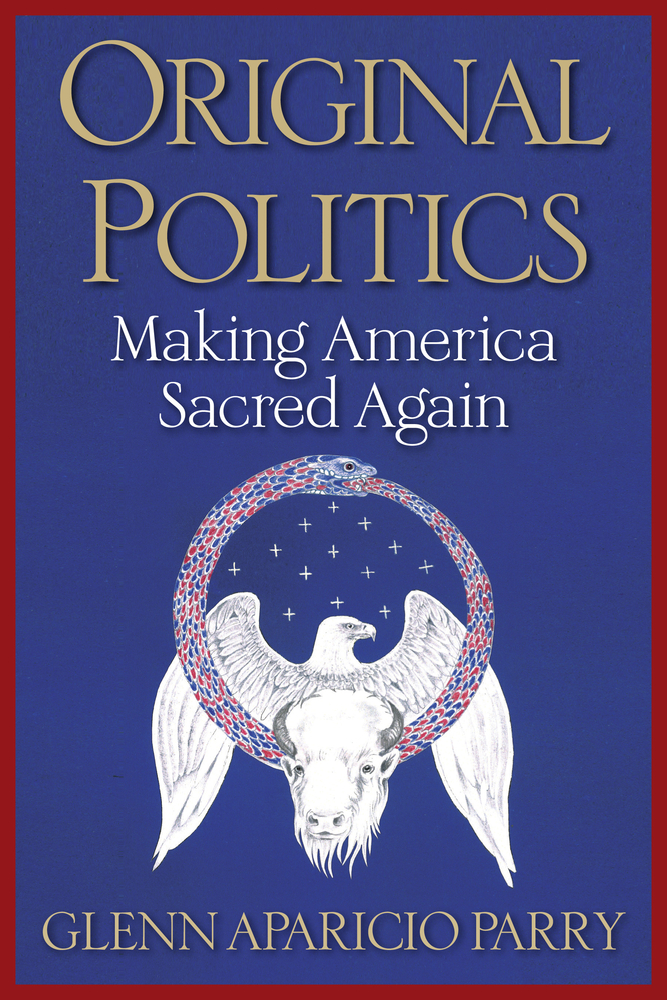
New Thinking Allo Jun 16, 2020 Glenn Aparicio Parry, PhD, also given the name Kizhe Naabe (Ojibwe for Kind-Hearted Man), is author of Original Politics: Making American Sacred Again and also Original Thinking: A Radical ReVisioning of Time, Humanity, and Nature. His website is https://originalthinking.us/. Here he describes the important influence Native American culture had upon the early settlers between 1620 and 1776. Rogers Williams, for example, the founder of Rhode Island, spoke five different native languages and wrote a book about them. Benjamin Franklin was also very close to Native leaders. The Founders were inspired by the egalitarian society of Native Americans and the Iroquois Federation served as a model for the original Articles of Confederation. New Thinking Allowed host, Jeffrey Mishlove, PhD, is author of The Roots of Consciousness, Psi Development Systems, and The PK Man. Between 1986 and 2002 he hosted and co-produced the original Thinking Allowed public television series. He is the recipient of the only doctoral diploma in “parapsychology” ever awarded by an accredited university (University of California, Berkeley, 1980). (Recorded on May 21, 2020)
To recreate a whole and sacred America, it is important to piece together the forgotten fragments of history that are currently keeping the country divided. Just as a traditional Native American potter begins a new pot with shards of old pots—honoring the ancestors, bringing the energies of the past into the present—Original Politics re-constellates the nation as a whole out of the seemingly disparate shards from our origins. The most significant forgotten piece is the profound effect Native America had on the founding values of this nation. Original Politics convincingly demonstrates how the best aspects of the founding vision of America were inspired, or directly appropriated, from living, Native American cultures: concepts such as natural rights, liberty, and egalitarian justice. Further, Parry traces the influence of Native America not only on the founding fathers, but on the ‘founding mothers’ of the 19th century women’s movement; as well as the 19th century abolitionist and modern ecological movements. Native America has inspired what Parry sees as the sacred purpose of the nation: bringing all the world’s peoples together on one soil in a harmonious cultural mosaic of unity in diversity. While there have been periodic setbacks (devolution) in our nation’s history, including today, these only serve as catalysts reigniting our sacred purpose. America is creating a new melting pot, and like the original vision, it will be a creation from the many into the one—only this time it must not leave anyone out. This includes the natural world. Original Politics is ultimately about respecting all forms of life and all forms of political expression as different aspects of one whole. It is a reclamation project that brings people, land, and nation together as one. The overall effect of the book is profoundly healing.
New Thinking Allo Aug 18, 2020 Glenn Aparicio Parry, PhD, also given the name Kizhe Naabe (Ojibwe for Kind-Hearted Man), is author of Original Politics: Making American Sacred Again and also Original Thinking: A Radical ReVisioning of Time, Humanity, and Nature. His website is https://originalthinking.us/glenn-apa… Here he defines what a “sacred” America would be like based upon respect for nature and respect for each other. He addresses questions concerning the plight of native Americans and whether or not their ecological perspectives are being over-romanticized. Ultimately, he proposes that love can be built upon a foundation of respect and understanding. New Thinking Allowed host, Jeffrey Mishlove, PhD, is author of The Roots of Consciousness, Psi Development Systems, and The PK Man. Between 1986 and 2002 he hosted and co-produced the original Thinking Allowed public television series. He is the recipient of the only doctoral diploma in “parapsychology” ever awarded by an accredited university (University of California, Berkeley, 1980). (Recorded on June 12, 2020)
New Thinking Allo • Jul 28, 2020 Glenn Aparicio Parry, PhD, also given the name Kizhe Naabe (Ojibwe for Kind-Hearted Man), is author of Original Politics: Making American Sacred Again and also Original Thinking: A Radical ReVisioning of Time, Humanity, and Nature. His website is https://originalthinking.us/glenn-apa… Here he discusses the impact of the Indian Removal Act of 1830. He explains the origin of the American liberal and conservative traditions in the war of pamphlets between Thomas Paine and Edmund Burke. Over time, both liberal and conservative positions tend to reverse. Many examples are provided. He explains the influence of native American culture on the nineteenth century feminist movement. New Thinking Allowed host, Jeffrey Mishlove, PhD, is author of The Roots of Consciousness, Psi Development Systems, and The PK Man. Between 1986 and 2002 he hosted and co-produced the original Thinking Allowed public television series. He is the recipient of the only doctoral diploma in “parapsychology” ever awarded by an accredited university (University of California, Berkeley, 1980). (Recorded on June 1, 2020)
New Thinking Allowed with Jeffrey Mishlove • Jul 8, 2020 Glenn Aparicio Parry, PhD, also given the name Kizhe Naabe (Ojibwe for Kind-Hearted Man), is author of Original Politics: Making American Sacred Again and also Original Thinking: A Radical ReVisioning of Time, Humanity, and Nature. His website is https://originalthinking.us/glenn-apa… Here he discusses the impact of the Indian Removal Act of 1830. He explains the origin of the American liberal and conservative traditions in the war of pamphlets between Thomas Paine and Edmund Burke. Over time, both liberal and conservative positions tend to reverse. Many examples are provided. He explains the influence of native American culture on the nineteenth century feminist movement. New Thinking Allowed host, Jeffrey Mishlove, PhD, is author of The Roots of Consciousness, Psi Development Systems, and The PK Man. Between 1986 and 2002 he hosted and co-produced the original Thinking Allowed public television series. He is the recipient of the only doctoral diploma in “parapsychology” ever awarded by an accredited university (University of California, Berkeley, 1980). (Recorded on June 1, 2020)
It is in our nature to do things that are logical and sensible. We try to be intelligent and avoid doing things that are irrational.
We try to think with our brains and not just with our emotions. We try to know the truth of the matter, and we try to reason things through.
Therefore, rationality is the foundation of modern society. It will be the downfall of our society if we follow our instincts rather than our logical thinking.
However, we are better off following our instincts and desires because when we follow the rules set by society, we are no longer following our desires and instincts.
Instead, we are following the wishes of society. We are putting them first, and we are following what our society wants us to do. We are following what society has set us to be.
This means that we may not be happy in the long term. If you follow society’s rules and follow what society wants you to do, you are going to suffer in the long run.
This is part of the reason that people are always suffering and never feeling happy. They never feel happy because they are not following what they really want, instead, they are just following the wishes of their society.
What does It mean To Be Truly Rational?
Rationality is the characteristic or state of being logical, justifiable, reasonable, and based on facts or sound reasoning. It is the capacity for reasoned thought and making decisions based on reason.
For centuries, rationality has been considered a cornerstone of human existence. The great thinkers of the Enlightenment — including René Descartes, Baruch Spinoza, and Immanuel Kant — believed that reason was what made humans unique from other animals.
And since then, many philosophers and scientists have argued that it’s our capacity for reason that allows us to thrive as a species.
But there’s growing evidence that rationality isn’t all it’s cracked up to be. In fact, often, it may be harming our chances of leading happy and fulfilling lives.
What Is The History Of Rationality?
The history of rationality can be traced back to ancient times when reason and logic were first used as tools for understanding the world.
Ancient philosophers like Socrates and Plato believed that reason was the highest form of knowing, and that it could be used to find truth and promote justice.
This tradition continued with Aristotle, who further developed the idea that reason should be used as a tool for understanding the world. During the Enlightenment, rationality became widely accepted as a way of thinking about the world.
Philosophers like Immanuel Kant argued that reason could be used to discover universal truths about morality and human nature.
It was the time when reason was emphasized to achieve knowledge, progress, and improvement.
However, some argue that the emphasis on rationality has led to a de-emphasis on emotion and human connection, which are essential aspects of our existence.
This way of thinking has been linked to various problems in society, such as increasing rates of anxiety and depression.
It is important to find a balance between rational and emotional thinking, to lead a fulfilling and meaningful life.
How Has Rationality Come To Dominate Our Lives?
Rationality has affected the way we think, the way we make decisions, and even the way we interact with others. On the surface, this may not seem like a bad thing.
After all, Rationality is often lauded as the cornerstone of modern society. We rely on logic and evidence to determine what is true or false, right or wrong.
This way of thinking has led to great advances in science, technology, and medicine. It has also helped us create more just and stable societies.
However, there is a downside to this dominance. Rationality can lead us to ignore our emotions and intuition, which can be important sources of knowledge.
It can cause us to make decisions that are not in our best interests. And it can lead us to treat others as objects instead of as human beings. In short, rationality is killing the essence of human existence.
It can make us overly confident in our own judgments and dismissive of others’ points of view. And it can lead us to value efficiency and productivity, even when doing so comes at the expense of our well-being.
For better or for worse, rationality is now a central part of who we are as human beings.
Why Is Being Rational A Problem?
Humans are the only creatures on earth that can think rationally. And while this ability has led to great advances in science, technology, and society, it has also created a problem.
The sad part is that rational thought often leads us away from what is truly important in life: our emotions.
The dark side of rationality is that it can lead us to believe things that are not true, or at least not as true as we would like them to be.
It can make us believe that our existence is nothing more than a collection of atoms and molecules and that our emotions are nothing more than chemical reactions.
This way of thinking can lead to a feeling of emptiness and loneliness, even when we are surrounded by other people.
We have to find a way to deal with the fact that we know things. And that’s where being rational comes in. The reason is that it can lead us astray. We can become disconnected from our emotions, and from the world around us.
What Are The Costs Of Being Rational?
To be rational, we have to cut away from our emotions.
We will then stop feeling all of the emotions that make us human.
We will then turn into a completely machine-like being. We will lose all of our feelings that help us to empathize and to get to know the feelings of others.
Our emotions are what make us human. However, it is our emotions that also make us weak and vulnerable.
In other words, our emotions are what gives us life. If we stopped feeling our emotions, then we would become dead. We would become nothing.
This is the price that we are willing to pay for being rational. We have to make ourselves emotionless to not be dominated by our emotions.
How Does Being Rational Affect Human Existence?
Rationality aims to arrive at the best decision feasible by considering all relevant information and weighing different options.
However, some experts believe that too much emphasis on rationality can be harmful to human existence.
They argue that humans are not purely rational beings and that taking a completely rational approach to life can lead to missing out on important aspects of what it means to be human.
For example, humans have emotions and intuitions that often play a role in decision-making.
Rationality is often seen as a positive thing, but it can also have negative effects on human existence. One of the negative effects of rationality is that it can make people sad.
This is because when people are rational, they tend to focus on the negative aspects of their lives and ignore the positive aspects. This can lead to a feeling of sadness and despair.
Another negative effect of rationality is that it can reduce creativity. This is because rational thinking often leads to a linear way of thinking that does not allow for much creativity.
This can be a problem for people who want to be creative in their work or in their personal lives.
Rationality can lead us to ignore or dismiss things that don’t fit into our narrow view of the world.
When taken to extremes, rationality can lead to a cold and impersonal view of the world that strips away the joy and meaning that make life worth living.
The main sad part is that many people believe that being rational is the only way to live, when in fact it can lead to a very unfulfilling life.
Rationality is often seen as the enemy of emotion, and this can have a negative impact on human existence. Rationality can also lead to a lack of creativity, as people become too focused on logical solutions instead of thinking outside the box.
The negative effects of rationality should not be ignored. If more people were aware of them, they would be more open to living a life that is both rational and emotional.
Overall, rationality can have some negative effects on human existence. However, it is important to remember that rationality is just one aspect of human life and that there are many other aspects that make up our existence.
What Are The Importance Of Emotions Over Rationality In Life?
Rationality is the quality or state of the opposite of being emotional. And for many people, rationality is the key to a successful life. But what if rationality is killing the essence of human existence?
Some experts believe that emotions are more important than rationality. They argue that emotions are what make us human and that without them, we would be little more than robots.
Emotions give us compassion, empathy, and a sense of connection with others. They help us make decisions based on our values, not just on cold, hard facts.
So why are we so obsessed with rationality? Perhaps it’s because our environment frequently appears to be out of grip. We’re bombarded with information and choices, and it can be overwhelming.
The importance of emotions over rationality cannot be understated. There is something special and unique about emotions that simply cannot be found in rationality.
For one, emotions add excitement and vibrancy to our lives that would otherwise be quite boring if we only relied on rationality.
Additionally, emotions allow us to connect with other people in a way that is much deeper and more meaningful than rational thought could ever hope to achieve.
Emotions are what make us feel alive. They are what give color and vibrancy to our lives. Rationality, on the other hand, can make us feel bored, uninterested, and dull.
It is an emotion that allows us to connect with others and experience the world in a rich and meaningful way; without it, we might become stagnant and uninspired.
After all, it is our emotions that allow us to experience the full range of human experiences, from the joys of love and laughter to the depths of sorrow and despair. Without them, life would be incredibly boring.
In many ways, then, it could be said that emotions are more important than rationality.
Final Thought on the Dark Side of Rational Thinking
If you want to live a peaceful and happy life, then being rational is something you should avoid.
If we want to reclaim our humanity, we must start by rejecting rationality as the only way to live. We must embrace our emotions and intuition. We must learn to trust ourselves again.
Being rational is a problem because it means we’re not living in the moment. We’re not experiencing life to the fullest. We’re missing out on the joy and happiness that comes from being emotionally present.
It’s the problem that comes with having knowledge. We know things, and we can’t just unknow them.
Think about it — when you experience a strong emotion, whether it be happiness, sadness, anger, or fear, it feels very real and very alive.
However, without rationality, we would be unable to make decisions or plan for the future. And without emotions, we would not be able to experience the joys and sorrows of life.
Rationality is a way of thinking that is not emotionally charged. It is characterized by logical thinking and thinking clearly.
It is an intelligent way of life. However, rational thinking can also lead to a robot-like way of thinking.
Emotions are the things that give us passion and drive. Rationality, on the other hand, can make us bored. It can make us lose sight of what is important to us.
Without emotions, we would simply go through the motions of life without any real purpose or meaning. We would be like robots, just going through the motions without any real sense of joy or happiness.
Consciousness, spirituality, biography, sexuality, androgyny, futurism, space, the arts, science, astrology, democracy, humor, books, movies and more