
(Courtesy of Julia Yepez Macbeth)

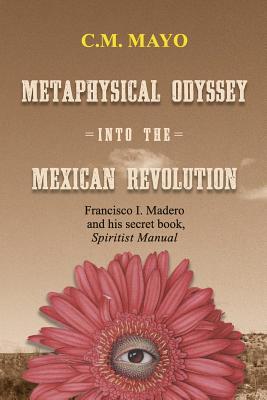
by C.M. Mayo (Goodreads Author)
In a blend of personal essay and a rendition of deeply researched metaphysical and Mexican history that reads like a novel, award-winning writer and noted literary translator C.M. Mayo provides a rich introduction and the first translation of the secret book by Francisco I. Madero, leader of Mexico’s 1910 Revolution and President of Mexico 1911-1913.
(Goodreads.com)
The Role of Spiritism in the Mexican Revolution with C. M. Mayo: https://youtu.be/mPqNCwdoiDo
Most of us know Bruce Lee as the famous martial artist and action film star — but he was also a philosopher who taught “self-actualization”: the practice of how to be yourself in the best way possible. In this inspiring talk, Bruce’s daughter Shannon Lee takes us inside the mind of her father, exploring how to use his philosophy in your daily life to achieve profound personal growth and make a lasting impact.Read transcript
This talk was presented at a TED Salon event given in partnership with Brightline Initiative. TED’s editors chose to feature it for you.
Learn more about the Bruce Lee Foundation.

Actor, producer, writer See speaker profile
Shannon Lee’s mission is to provide access for people to Bruce Lee’s philosophy through education and entertainment.
What are the planets outside our solar system like? Astrophysicist and TED Fellow Jessie Christiansen has helped find thousands of them (and counting), and the variety is more wonderful and wild than you might imagine. She shares details on the trends emerging from the data — including the intriguing possibility of “super-Earths” — and what the discovery of exoplanets means for existential questions like: Where do we come from, and how did we get here?Read transcript
This talk was presented at an official TED conference. TED’s editors chose to feature it for you.
Join the citizen science search for exoplanets and find your own planet.
Planet hunter See speaker profile
TED Fellow Jessie Christiansen hunts for planets, seeking to answer timeless questions about the universe.
Published Yesterday (theonion.com)

SANTA BARBARA, CA—Divulging that the interactions with his brother often got physical, a passage leaked Monday from Spare, the explosive new memoir by Prince Harry, revealed that Prince William used far too much tongue whenever the brothers kissed. “Nearly every time the two of us made out, we’d barely have a chance to get started before William would be jamming his tongue right down my throat,” said Harry, adding that while he had nothing against French kissing per se, his older brother “just went way overboard” with a sloppy tonguing technique that was overbearing and “kind of gross.” “I would clench my teeth in the hopes he’d take a hint, but he always kept right at it. Don’t get me wrong—since leaving the U.K., I do miss William’s lips. But once he even put his slobbery tongue in my mouth right after we’d gone out for curry, and it was so disgusting I thought I was going to puke.” The book goes on to claim that William forced Harry to keep the bad kissing a secret by threatening to tell everyone his younger brother gave terrible blow jobs.
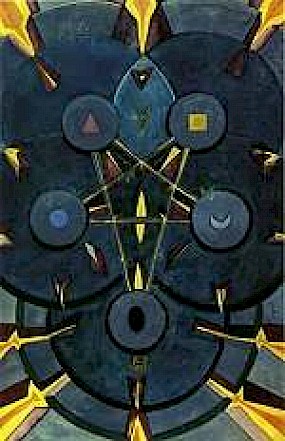
The Lord of Worry is most aptly titled, for when this card comes up in a reading, there looks to be financial, material or domestic trouble on the horizon. Something poses a threat to your overall security. This might be an unexpected expense, or job worries, or maybe even a disturbance in your family life.
There will always be something to worry about, when the Five of Disks comes up. But there’s one important thing to bear in mind – whatever is causing the problem is much more of a threat than it is a reality. Worrying about it might just make it worse than it needs to be!
When the Lord of Worry is about, anxiety is the emotion of the moment. We look to the future and we see something nasty ahead. Then we sit and worry about it. Try to remember – what you put your attention on grows. So if you worry about your overdraft, it will get bigger! That’s not, of course, to say you should not do all you are able to DO, in an awkward situation – just that once you have, there’s no point in worrying about it.
Sometimes we go through a stage in our lives where we feel as though, whatever good comes to us, it is bound to be undermined and darkened by negativity and sadness, that we cannot help but be disappointed. Yet just by holding that view, we invite negativity in, to add to the real problems we already had.
It isn’t easy to try to be accepting and positive and trusting when life is giving us a hard time – but accept we must, if we don’t want to make things worse!
So – the Five of Disks indicates a possible threat to our security. It is important not to feed that possibility with our own fear. Fear is a powerful emotion. It can rule if we let it. When this card comes up, remember that disturbance is possible – not probable. Do all you can to avert it.
(vai angelpaths.com and Alan Blackman)
New Thinking Allo • Dec 17, 2020 Serena Roney-Dougal, PhD, received a doctoral degree the University of Surrey, in the United Kingdom, for a parapsychological dissertation. She is author of Where Science and Magic Meet and The Faery Faith: An Integration of Science and Spirit. She resides in Glastonbury, England, where she serves on the Town Council. Her website is https://www.psi-researchcentre.co.uk/ Here she describes her commitment to the Green Party and to achieving certain ecological objectives in her local community in the coming years. She explains her passion for a sustainable future in terms of the Buddhist ideal of compassion as well as the global, indigenous sense of wholeness and oneness with nature. She recounts her struggles in understanding the perspectives of her political opponents. New Thinking Allowed host, Jeffrey Mishlove, PhD, is author of The Roots of Consciousness, Psi Development Systems, and The PK Man. Between 1986 and 2002 he hosted and co-produced the original Thinking Allowed public television series. He is the recipient of the only doctoral diploma in “parapsychology” ever awarded by an accredited university (University of California, Berkeley, 1980). (Recorded on December 5, 2020) For a complete, updated list with links to all of our videos, see https://newthinkingallowed.com/Listin…. If you would like to join our team of volunteers, helping to promote the New Thinking Allowed YouTube channel on social media, editing and translating videos, creating short video trailers based on our interviews, helping to upgrade our website, or contributing in other ways (we may not even have thought of), please send an email to friends@newthinkingallowed.com. Check out our new website for the New Thinking Allowed Foundation at http://www.newthinkingallowed.org. There you will find our incredible, searchable database as well as opportunities to shop and to support our video productions. There, you can also subscribe to our free, weekly Newsletter! To join the NTA Psi Experience Community on Facebook, see https://www.facebook.com/groups/19530… To download and listen to audio versions of the New Thinking Allowed videos, please visit our new podcast at https://itunes.apple.com/us/podcast/n…. You can help support our ongoing video productions while enjoying a good book. To order The Faery Faith: An Integration of Science With Spirit by Serena Roney-Dougal, click here: https://amzn.to/34y9CL8 LINKS TO OTHER BOOKS MENTIONED IN THIS VIDEO INTERVIEW: Serena Roney-Dougal, Where Science and Magic Meet – https://amzn.to/2EyAz6s Elizabeth Kolbert, The Sixth Extinction – https://amzn.to/2K6cBma Club of Rome, The Limits to Growth – https://amzn.to/3gls2kQ

We hope, we despair, and then we hope again — that is how we stay afloat in the cosmos of uncertainty that is any given life. Just as the universe exists because, by some accident of chance we are yet to fathom, there is more matter than antimatter in it, we exist — and go on existing — because there is more hope than despair in us. “Hope,” the great Czech dissident playwright turned president Václav Havel wrote, “is not the same as joy that things are going well, or willingness to invest in enterprises that are obviously headed for early success, but, rather, an ability to work for something because it is good, not just because it stands a chance to succeed.” Hope, I have long believed, is the antidote to cynicism — that most cowardly and self-defeating of existential orientations. Hope, Rebecca Solnit reminds us, “is a gift you don’t have to surrender, a power you don’t have to throw away.” For it is a power indeed — the power to pull ourselves up by our bootstraps from even the darkest and most dispiriting of circumstances, so that we may go on reaching for the light. In this capacity, hope might be our greatest evolutionary adaptation — the mitochondria of our spiritual metabolism, the opposable thumb of our grip on life.
That function of hope is what John Steinbeck (February 27, 1902–December 20, 1968) explores from an uncommonly illuminating perspective in a portion of The Log from the Sea of Cortez (public library) — his forgotten masterpiece about how to think, wrested from a marine biology expedition into the Gulf of California at the outbreak of a World War.
John Steinbeck
Steinbeck weighs what we are against the living reality — the living brutality — of other species, considering hope as our adaptive calibration of what is most brutal in our own nature. Writing two years before his humanistic reckoning with hope and despair, he reflects:
We have looked into the tide pools and seen the little animals feeding and reproducing and killing for food. We name them and describe them and, out of long watching, arrive at some conclusion about their habits so that we say, “This species typically does thus and so,” but we do not objectively observe our own species as a species, although we know the individuals fairly well. When it seems that men may be kinder to men, that wars may not come again, we completely ignore the record of our species. If we used the same smug observation on ourselves that we do on hermit crabs we would be forced to say, with the information at hand, “It is one diagnostic trait of Homo sapiens that groups of individuals are periodically infected with a feverish nervousness which causes the individual to turn on and destroy, not only his own kind, but the works of his own kind. It is not known whether this be caused by a virus, some airborne spore, or whether it be a species reaction to some meteorological stimulus as yet undetermined.” Hope, which is another species diagnostic trait — the hope that this may not always be — does not in the least change the observable past and present. When two crayfish meet, they usually fight. One would say that perhaps they might not at a future time, but without some mutation it is not likely that they will lose this trait. And perhaps our species is not likely to forgo war without some psychic mutation which at present, at least, does not seem imminent. And if one place the blame for killing and destroying on economic insecurity, on inequality, on injustice, he is simply stating the proposition in another way. We have what we are. Perhaps the crayfish feels the itch of jealousy, or perhaps he is sexually insecure. The effect is that he fights. When in the world there shall come twenty, thirty, fifty years without evidence of our murder trait, under whatever system of justice or economic security, then we may have a contrasting habit pattern to examine. So far there is no such situation. So far the murder trait of our species is as regular and observable as our various sexual habits.

Common crayfish from The Crayfish: An Introduction to the Study of Zoology, 1895. (Available as a print and as stationery cards, benefitting The Nature Conservancy.)
The Log from the Sea of Cortez is very much an admonition against the traps of teleological thinking — the antiscientific tendency to explain things by some purpose they serve, usually in relation to us, as opposed to meeting reality on its own terms and accepting that things are because they are. With an eye to “how the strictures of the old teleologies infect our observation,” keeping us from seeing reality clearly and seducing us with “causal thinking warped by hope,” Steinbeck builds on this idea of hope as a diagnostic trait for our species:

Art Giuliano Cucco by from Before I Grew Up
But this shock-absorber of survival serves another, far subtler purpose as an emblem of our incompleteness, reminding us, as James Baldwin knew, that “nothing is fixed”; reminding us, as Lewis Thomas knew, that we are a fragile species still in its adolescence. Steinbeck considers hope as our valve of becoming:
Complement this fragment of The Log from the Sea of Cortez — which was among the finest things I read all year — with Jane Goodall on the deepest wellspring of hope and some thoughts on hope and the remedy for despair from Nick Cave and Gabriel Marcel, then revisit Steinbeck on the art of seeing the pattern beyond the particular and his timeless advice on love.

