
Ishaq Hleiqawi Aug 16, 2020 The story of the man Einstein called his “spiritual son.”
Monthly Archives: June 2022
God Brings Into Existence Second God To Do All His Creation For Him

Thursday 11:20AM (theonion.com)
THE HEAVENS—In an effort to delegate more of His divine work, God, Our Lord and Heavenly Father, has brought into existence a second god who will handle all day-to-day creation duties, sources confirmed Thursday. The new god, known as Brett, will reportedly hold the title of Creator. “I’m thrilled to be bringing Brett on board to head up creation for us—I know we’re putting a lot on his shoulders, but this is literally what he was born to do,” said God, adding that His own role would be shifting to focus more on long-term planning for the cosmos, while Brett would be responsible for bringing forth new galactic, planetary, and biological entities. “Over the course of my career, I’ve come to realize I’m more of a big-picture God. Brett, meanwhile, is a dynamic and innovative leader with a real passion for commanding existence to manifest itself from the formless void.” God, who married last year, added that He hoped taking a step back from creation would allow Him to spend more time with His wife, Natasha, and their twin daughters, Parker and Peyton.
FRIDAY TRANSLATION GROUP
Translation is a 5-step process of “straight thinking in the abstract.” The first step is an ontological statement of being beginning with the syllogism: “Truth is that which is so. That which is not truth is not so. Therefore Truth is all there is.” The second step is the sense testimony (what the senses tell us about anything). The third step is the argument between the absolute abstract nature of truth from the first step and the relative specific truth of experience from the second step. The fourth step is filtering out the conclusions you have arrived at in the third step. The fifth step is your overall conclusion
The Ukraine Emergency Translation Group meets every Friday at 11 a.m. Pacific time via Zoom. We call it the Ukraine Emergency Translation Group but we welcome Translations about anything. Here are sense testimonies (2nd steps) we translated and their corresponding conclusions: (5th steps) this week.
2) Tech leaders seek control of humanity.
5) One Infinite Mind is FREE to BE ALL it is.
2) Lies lead to violence and pain.
5) All there is is everpresent whole, complete, absolute conscious beingness.
2) Men and women have different reproductive organs and therefore have different reproductive diseases.
5) Truth is the Self-possessed organic well-being of the polarity of malefemaleness.
All Translators are welcome to join us on Fridays at 11 a.m. Pacific time. The link is https://us02web.zoom.us/j/84023755291
For information about Translation or other Prosperos classes go to: https://www.theprosperos.org/teaching
Some comments from group members about this group:
“I like the group interaction and different perspectives. Also, at least for me, it gives me a sense of accountability and keeps the practice fresh in my mind. ” –Sarah Flynn
“This group has freed me up to have more fun with my Translations.”
–Mike Zonta
Connected-up-brains
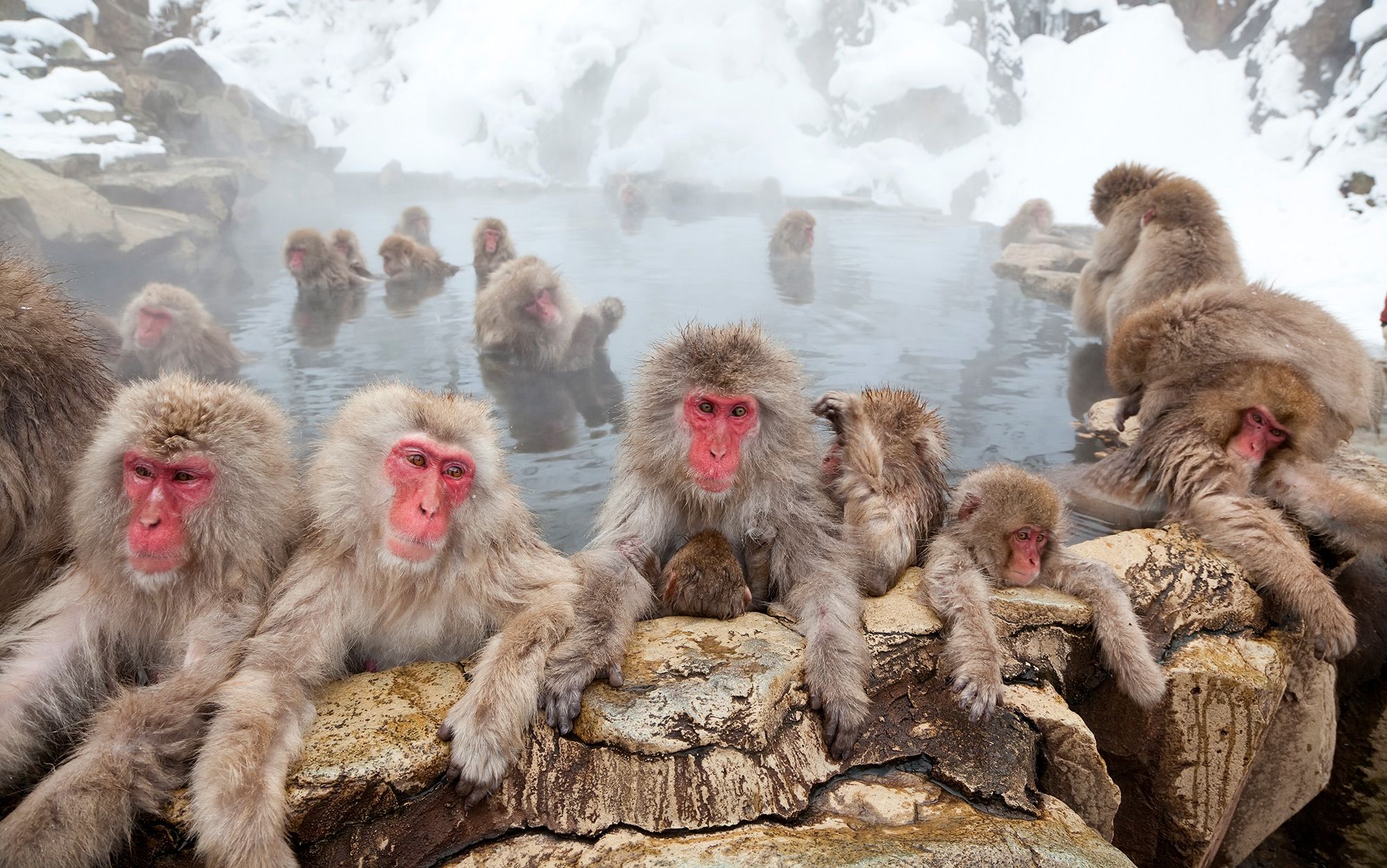
Bat friends, monkeys sharing, and humans holding hands: the brains of social animals synchronise and expand one another
Macaque monkeys in the Joshin’etsukogen National Park, Honshu, Japan. Photo by Peter Adams/Getty
Sofia Quaglia is a freelance science reporter, writing about the environment, health and the mind. Her work has been published in The Guardian, BBC and National Geographic, among others.
Edited by Sally Davies
23 June 2022 (aeon.co)
Love Aeon?
Support our work
Humans are not the only creatures that show a refined grasp of social norms. If a group of adult male rhesus monkeys (Macaca mulatta) find themselves sitting around a turning table set with food, they will display an ‘I scratch your back, you scratch mine’ ethos of reciprocity. One monkey will offer another one a piece of fruit and, what’s more, will expect the gesture to be reciprocated. If the offer isn’t forthcoming, the first monkey is likely to retaliate by refusing to give up anything on his turn. The monkeys also like to group together in cliques; if they see one monkey has been kind to another, they collectively show kindness to the first monkey. If you’re observing, it looks like nothing so much as a group of friends buying each other rounds of drinks at a bar.
While decades of research have dispelled the myth that sociality is unique to our species, scientists are still unclear about just how individual animals retain information about the structure of the ‘society’ in which they’re embedded. Are the monkeys simply copying each other and sharing food via a sophisticated form of mirroring? Or are they truly keeping track of their own and others’ behaviour in order to make decisions within a broader social dynamic?
Over the years, biologists have used a variety of lenses to try and answer these sorts of questions. While 19th-century naturalists looked at animal behaviour with a focus on its psychological and physiological aspects, it was only after the groundbreaking work of zoologists such as Nikolaas Tinbergen and Karl von Frisch in the 1930s that the field returned to a focus on how social behaviour might be explained in evolutionary terms.
Following the emergence of the modern discipline of ethology – the study of animal behaviour – we’ve been left with two main ways of framing enquiries into the social lives of animals. One approach takes data from observations of animals in the field, trying to understand the group dynamic by looking from the ‘outside in’. Yet this necessarily makes it hard to fathom what’s happening inside an individual creature’s mind. By contrast, the second approach is based on detecting an individual’s brain activity, and then on trying to draw a map between patterns of neuronal spiking or firing – the oscillating electrical activity that produces brain waves – and how the animal acts. Yet this data comes from the ‘inside out’, and often struggles to encompass group dynamics. Both of these frames tend to capture an incomplete picture.
Now a new generation of scientists is pushing for a third, more nuanced paradigm for studying animal sociality. Known as ‘collective neuroscience’, this research programme proceeds from the idea that brains have evolved primarily to help animals exist as part of a social group – rather than to solve problems per se – and should be studied as such. Since embedding a brain within a social structure changes how it and other brains perform, it makes no sense to only study individual minds in isolation, because it doesn’t provide the full picture. Based on the notion that intelligence is a dynamic of looping cause and effect among multiple brains, researchers are drawing on the latest neuroimaging techniques to try to obtain a more detailed understanding of multiple animals’ brain states as they engage in a variety of social activities. The hope is that this could lead us to answers about how animals perceive their social world, and how that perception is neurally encoded.
Beyond nonhuman animals, collective neuroscience could also help us decipher some of the complexities of human society as well. Since brains appear to work differently when placed in relationships with others, we might begin to recognise the necessity to tailor interventions to improve mental health in terms of the wider social environment, rather than focusing on individual pathologies. And, in quite a different domain, if sociality is a necessary step on the road to intelligence, it’s unclear whether machine-learning algorithms really stand a chance of approximating a human intellect – unless they’re embedded in a rich society of other algorithms.
In mainstream approaches to cognitive neuroscience in animals, portions of the brain are labelled as relating to perception, action, memory, attention, decision, sociality. But when we examine animal behaviour through a more collective lens, we begin to see that large portions of complex brains are hungry to work in harmony with others, according to Emmanuelle Tognoli, a researcher at the Center for Complex Systems and Brain Sciences at Florida Atlantic University. Like many others, Tognoli is convinced that the brain likely evolved to deal with the informational complexity of navigating and coordinating social relationships. If that’s true, cognitive neuroscience that ignores sociality is probably pointless, Tognoli believes.
Much research in cognitive science examines how one brain responds to basic stimuli – such as how we work through a problem a friend is recounting, or how we remember that same conversation weeks later. But even a study looking at the dynamic between two individuals lacks certain aspects of the diversity of interactions that emerge naturally in organic, more complex social groups – including attention allocation, creating subgroups, and recruiting allies, says Julia Sliwa. She is a neural-systems researcher at the Paris Brain Institute who penned a seminal paper on the need for more collective neuroscience in animal research. What she and others are trying to upend, she says, is the orthodoxy that ‘intelligence, and in this case social intelligence of a species, derives solely from the workings of the single brain’. What people have been studying so far is how groups of neurons in single brains can create information in the brain; what we also need to look at, though, is how such information is processed among and between multiple brains working together.
There appear to be neurons responsible for taking note of friends’ complex social behaviour
The problem with trying to vindicate this idea has largely been a technical one so far, especially for nonhuman animals. Animal neuroscience research has largely relied on attaching animals to clunky machines in a lab and encouraging them to interact within a pair. But these artificial parameters will of course distort social dynamics present in the wild. Now, though, new portable technologies such as wireless neurophysiological recording devices have made it possible to observe creatures in their natural environment, where they interact organically, and in much larger groups.
Recall our friendly macaques, the subjects of a Harvard neurosurgery study published in Science in late 2021. The researchers peered into the macaques’ brains with recording helmets that could track brain activity in specific neurons with great precision. They observed that each kind of interaction appeared to involve several hallmark neurons ‘lighting up’ in the dorsomedial prefrontal cortex, the section of the brain that is believed to play a role in social interactions. Different neurons responded differently depending on the circumstances – with some neurons firing when someone didn’t give a piece of fruit and going silent when someone reciprocated, while other neurons behaved in the opposite way. There were also neurons that seemed to encode information about choices, outcomes and interactions among other monkeys who were simply being observed. In other words, there appeared to be neurons responsible for taking note of friends’ complex social behaviour.
The Harvard researchers pulled these observations into a neuronal map, which allowed them to anticipate whether the macaques would reciprocate or retaliate on the screen before they did so in real life. These predictions were remarkably accurate, indicating that specific neurons can represent defined pieces of social information. To establish this more decisively, the researchers also worked the other way around. They applied a very small electrical current to temporarily disrupt neuronal activity in specific parts of the monkeys’ brains, in order to see whether that would stop the macaques from carrying out the social actions – but still leave them able to perform their other cognitive functions, such as remembering or making decisions. And, just like that, the monkeys’ ability to perform social actions slumped, and they failed to reciprocate as expected.
The second experiment Sliwa points to focuses on ‘brain-to-brain synchronisation’. In a pivotal study from 2010, Guillaume Dumas, assistant professor of computational psychiatry at the University of Montreal, showed that the brains of human participants mirrored each other on a neurological level when engaging in activities together, such as making funny, meaningless gestures with their hands while watching each other. Another study including Dumas involved giving one of two romantic partners a painful stimulus – either alone in a room, in a room with their partner, or in a room with their partner while holding hands – and monitoring the effects on brain synchronisation. Unsurprisingly, hand-holding produced the most similarity in partners’ brain signals, and the person in pain reported that it also eased the pain. (Other studies had already shown that the analgesic effect is much lower if you’re holding hands with a stranger.)
This work has widened into other contexts. Uri Hasson, a researcher at the Princeton Neuroscience Institute, has shown that a good storyteller can induce synchronisation between her and her listener’s brains (if there’s shared common ground, experiences and beliefs); and, in a classroom setting, how well a student’s brain waves sync up with their peers can serve as a good predictor of how engaged they are, and how much they feel like they get along with the group, according to research by Suzanne Dikker, a senior research scientist at the Max Planck – NYU Center for Language, Music and Emotion.
Is this phenomenon present among nonhuman animals? Neuroscientists at the University of California, Berkeley, also published a paper in Science, in which they used the collective neuroscience lens to see whether the same happens for fruit bats – a sociable animal that spends most of its life in a group, huddled together in small nooks during the day, and foraging for food in groups during the night.
The bats’ neurons spiked in similar ways, bringing their brains quite literally onto the same ‘wavelength’
The researchers tracked bats’ brain activity using wireless neurophysiological recording devices as the animals flew around freely in their enclosures and talked to one another with their signature high-pitched screeches. Just like the rhesus monkey study, different patterns of neuronal firing were evident while the bats were recognising and distinguishing between the calls of different members of the group. A cry from one bat stimulated activity in one set of neurons in the listener, while a vocalisation from a different bat stimulated another set of neurons. The mapping was so clear that, when in a silent room observing only the bat’s brain activity on a screen, researchers could identify which bats had called out.
In addition, the study found that the whole group synchronises its brain states when engaged in communication. Their neurons spiked and oscillated in similar ways, bringing their brains quite literally onto the same ‘wavelength’. And if the bats were ‘friendly’, having spent significant time together, their brains synchronised even more strongly – an effect, perhaps, similar to the finding from Dumas’s study of hand-holding. The same effect was observed within social subgroups; members of these cliques also had a much clearer neuronal representation when one of their number was vocalising.
The neuroscientists also experimented with playing recordings of bat sounds to some of the bats, in isolation, but this failed to provoke activity in the relevant brain areas – perhaps indicating that the bats knew this wasn’t a genuine social interaction. This effect could partly arise from how the animals process one another’s presence using vision and olfaction in addition to hearing. But, tantalisingly, it could also indicate that another brain needs to be present for an individual’s neurons to even register the existence of a social dynamic. The social context, that is, modulates activity both within and between brains.
There’s much we still don’t know. Yes, specific neurons are called into action and synchronised when two bat ‘friends’ call to one another, and specific neurons light up when two monkeys share food. But whether these neurons are doing the synchronisation, the recognising, or the encoding of information about what is being communicated is still to be determined. We also don’t know the extent to which social information is retained over time, or whether it’s just for the duration of the social activity at hand. Nonetheless, the collective neuroscience agenda has undoubtedly made strides; in most previous studies, researchers couldn’t even detect why a neuron was firing or not, Sliwa says, and whether it was because the animal had recognised it was interacting with their ‘friend’ or because it was interacting with another animal at all.
These preliminary studies are important pieces of a much larger puzzle, according to Sliwa. Their results corroborate the idea that it’s possible for scientists to discover entirely new capacities when brains are scrutinised all together. Crucially, it also means giving up the clean division between stimuli and ‘inputs’ versus behaviour and ‘outputs’; rather, collective neuroscience involves reckoning with the science of complex systems, where causation is not linear but looping, and social and neuronal structures mesh in unpredictable ways.
Take a sports team. Statistics about each player can tell you a lot about whether they’re going to make good additions to the team or not, but whether the group ‘vibes’ together, whether they have synchronicity, whether they work together in a group, can’t be quantified by the number of their scores or assists. Yet this collective ‘X factor’ can be what makes a good team into a ‘dream team’.
Collective neuroscience offers a different way of seeing neuropsychiatric conditions
In the context of social-animal neuroscience, this means looking at how individual brains both affect and are affected by the social context, rather than starting from the perspective of a single brain. A complex-systems lens would demand that we study animal neuroscience across multiple interlocking scales: starting from neurons, moving into brains and embodied organisms, then across to pairs and groups, looking all the time at how all these levels relate to one another, according to Tognoli. Cognition, in this view, is a dynamical process that happens not only within and between brains, but across a variety of biological, behavioural and social levels of organisation.
Mapping how neuronal activity relates to specific social interactions, and understanding the effects of group social dynamics on the biology of the brain, could shed light on aspects of human society, too. Collective neuroscience offers a different way of seeing neuropsychiatric conditions such as depression and schizophrenia, for example – not as instances of individual ‘dysfunctions’ in the brain, but as phenomena that emerge from multiple dynamic physiological and social processes. How does one get to the bottom of human cognition if we are intrinsically social beings, for whom culture has had a profound impact upon our evolution? Experiments such as the macaque study helped to identify brain areas linked to abnormal or normal social behaviour; related research in humans could yield new therapies or possibilities for intervention.
In the field of AI, embracing the collective neuroscience paradigm could mean the difference between genuine intelligence and useful, but limited, algorithms. If humans’ complex cognitive architecture arises from their ability to engage in social and cultural learning, computer scientists ought to take note. For example, Dumas, the computational psychiatrist behind the hand-holding study, says social interaction in AI is like dark matter in the field of physics: ‘We know well that it exists, but we do not know how to study it directly just yet.’ So far, AI has been somewhat solipsistic and individualistic in seeing social cognition as a potential task, rather than as a constitutive aspect of complex cognition, Dumas says. He’s now working on creating frameworks to include this multidimensional form of social intelligence in how artificial intelligence is coded, leveraging our understanding of social learning to help machines advance towards a human-level cognition.
To tackle the challenges ahead, Sliwa reminds me, it’s not a matter of completely ditching single-brain neuroscience. Interactions in a network might account for much of the social intelligence we see in nonhuman animals – but that’s also due to their brains being able to independently analyse social interactions. It’s still vital to continue to study how a single brain possesses this advanced cognitive ability, as well as how those individual brains then come to work in groups. If intelligence is about dynamic of feedback loops among multiple brains, Sliwa notes, the way we study it also needs to be a system of different looping frameworks feeding into each other – ‘a lot of loops of different levels of investigation’.
What does dying really feel like?
BBC Reel Jun 1, 2022 What does dying feel like? What happens when a person dies? Will my life literally flash before my eyes? These are the questions presenter Max Tobin was just dying to answer, and the message back from ‘the other side’ (scientifically speaking) is more intriguing than we may think. Written and presented by Max Tobin Filmed and animated by Dillon Steele and Gregory King Commissioned and produced by Howard Timberlake
The female orgasm: lots of throbbing and quivering – but no moaning
A woman enjoying a noisy end to sex is a cliche of TV and film. But is there any truth to it?

Wed 22 Jun 2022 (TheGuardian.com)
Name: The female orgasm.
Age: As old as humans.
Appearance: Widely variable.
You know one when you see one, though. Do you really?
Yes, it usually involves a lot of moaning. Is that right?
I watch a great deal of TV, and if a female character is moaning, it’s either because she’s having an orgasm or because she ate too much ice-cream after a bad breakup. It’s funny you should mention moaning, because researchers have just found that it’s not a reliable indicator of an orgasm.
As I said, it could also be the ice-cream thing. Sexual studies use two common methods for evaluating the female orgasmic experience – the orgasm rating scale (ORS) and the bodily sensations of orgasm scale (BSOS).
What do such devices for recording this information look like? They’re basically questionnaires for subjects to self-report different sensory and physiological sensations during orgasm.
Such as? The list of variables includes throbbing, flushing, quivering, pulsating, goosebumps and sweating.
Where does moaning come on that list? According to a new study published in the Journal of Sexual Medicine, it shouldn’t be there at all.
How can that be? On the BSOS scale, it was one of the least-reported items, to the extent that researchers suggested it was of no use at all as a measure.
What were the most-reported items? Extragenital sensations, genital sensations and sweating were some of the most common, along with “pleasurable satisfaction”.
“Pleasurable satisfaction” is what I get when I wash the car. To each their own.
Does this mean that women who moan during an orgasm are faking it? I’m asking for a friend. “Copulatory vocalisation”, as the study’s authors call it, is certainly a response that remains under the woman’s conscious control.
In hindsight, this is the lesson that When Harry Met Sally was trying to teach us. But just because it’s not common doesn’t mean it never happens. Studies have shown there are many rare but verified phenomena associated with the female orgasm, including laughing, headaches, foot pain and sneezing.
Laughing? That explains a lot. For more information, may I refer you to the 2017 study titled: “Did You Climax Or Are You Just Laughing at Me?”
I think we all know the answer to that question. Sorry.
Do say: “I’ll have what she’s having – throbbing, quivering, pulsating and goosebumps, but maybe less of the sweating.”
Don’t say: “Oh dear – sounds as if somebody’s had too much ice-cream.”
Tarot Card for June 24: The Universe
The Universe
The Universe (or World) is numbered twenty one and is the final card of the Major Arcana. We usually see a female figure dancing within or upon the world, often surrounded by a laurel wreath. The four elemental creatures can be seen, suggesting mastery. This is a card of completion. The soul has attained earthly perfection after passing through the final, self-imposed, trial of the Aeon.
There are many positive and enjoyable connotations to this card. There is satisfaction, fulfilment and pride, because we have achieved something. There is fruitfulness and bounty as a reward for our earlier efforts. There is good fortune and confirmation that now we are putting enough into life to get out of it what we need.
The Universe completes the journey and evolution of the Fool. We begin in innocence, mature through experience and education, becoming wise and measured. Balanced in this way we finally achieve the good fortune and joy of the Universe. The traumas and self-imposed obstacles are gone. We have integrated all parts of our being into a harmonious synthesis which brings positivity and success into material reality. Like the figure depicted in the card, we dance with the joy of life. And again we are the Innocent.

(via angelpaths.com and Alan Blackman)
Word-Built World: Absolute
adjective: absolute
- 1.not qualified or diminished in any way; total.”absolute secrecy”Similar:completetotalutterout-and-outoutrightentireperfectpuredecidedthoroughthoroughgoingundividedunqualifiedunadulteratedunalloyedunmodifiedunreserveddownrightundilutedsolidconsummateunmitigatedsheerarrantrankdyed-in-the-woolplenaryperemptoryOpposite:partialqualified
- used for general emphasis when expressing an opinion.”the policy is absolute folly”Similar:definitecertainpositiveunconditionalcategoricalunquestionableundoubtedunequivocaldecisiveconclusiveconfirmedmanifestinfallibleOpposite:partialqualified
- (of powers or rights) not subject to any limitation; unconditional.”no one dared challenge her absolute authority”Similar:unlimitedunrestrictedunrestrainedunboundedunboundboundlessinfiniteultimatetotalsupremeunconditionalfulluttersovereignomnipotentOpposite:conditional
- (of a ruler) having unrestricted power.”he proclaimed himself absolute monarch”Similar:autocraticdespoticdictatorialtyrannicaltyrannousauthoritarianarbitraryimperiousdomineeringhigh-handeddraconianautonomoussovereignautarchicautarchicalantidemocraticOpposite:constitutional
- LAW(of a decree) final.”the decree of nullity was made absolute”
- LAWsee absolute title.
- 2.viewed or existing independently and not in relation to other things; not relative or comparative.”absolute moral standards”Similar:universalfixedindependentnonrelativenonvariableabsolutistrigidestablishedsetsettleddefinitedecidedirrevocableunalterableunquestionableauthoritativeincontrovertiblein black and whiteOpposite:relativeflexible
- 3.GRAMMAR(of a construction) syntactically independent of the rest of the sentence, as in.”dinner being over, we left the table”
- (of a transitive verb) used without an expressed object (e.g. guns kill ).
- (of an adjective) used without an expressed noun (e.g. the brave ).
noun
PHILOSOPHY
noun: absolute; plural noun: absolutes
- a value or principle which is regarded as universally valid or which may be viewed without relation to other things.”good and evil are presented as absolutes”
- something that exists without being dependent on anything else.noun: the absolute
- ultimate reality; God.noun: Absolute; noun: the Absolute
Origin
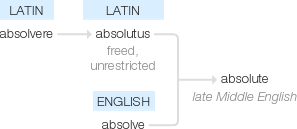
late Middle English: from Latin absolutus ‘freed, unrestricted’, past participle of absolvere (see absolve).
Book: “Back in Control: A Spine Surgeon’s Roadmap Out of Chronic Pain”

Back in Control: A Spine Surgeon’s Roadmap Out of Chronic Pain
David Hanscom
In Back in Control, Dr. Hanscom focuses on an aspect of chronic pain that the medical world has largely overlooked: you must calm your nervous system in order to get better. Beyond any other book about back pain, Back in Control reveals how to quiet a turbocharged central nervous system and make a full recovery. His life-changing system has helped hundreds of patients heal their pain. These patients’ stories, as well as his own, show that you can take charge of your care and set yourself on the road to a healthy, rich and full life.
(Goodreads.com)
Book: “The Biology of Belief: Unleashing the Power of Consciousness, Matter and Miracles”

The Biology of Belief: Unleashing the Power of Consciousness, Matter and Miracles
Bruce H. Lipton
The Biology of Belief is a groundbreaking work in the field of New Biology. Author Dr. Bruce Lipton is a former medical school professor and research scientist. His experiments, and that of other leading-edge scientists, have examined in great detail the processes by which cells receive information. The implications of this research radically change our understanding of life. It shows that genes and DNA do not control our biology; that instead DNA is controlled by signals from outside the cell, including the energetic messages emanating from our positive and negative thoughts. Dr. Lipton’s profoundly hopeful synthesis of the latest and best research in cell biology and quantum physics is being hailed as a major breakthrough showing that our bodies can be changed as we retrain our thinking.
(Goodreads.com)