
Monthly Archives: May 2022
Dean Watch Straw Poll
A straw poll has been initiated to gauge the preferences of The Prosperos High Watch for the new Dean.
High Watch members can voice their preferences at the High Watch monthly meeting on June 26 or they can email their preference to Pam Rodolph, Secretary-Treasurer of the High Watch, at pam.rodolph@theprosperos.org before that June 26 meeting.
The two active candidates are William Fennie, H.W., M., and Mike Zonta, H.W., M.
Information about Mike’s platform and bio can be located here: https://bathtubbulletin.com/zonta-nominates-himself-for-dean-of-the-prosperos/
Information about William’s outlook and bio can be found here: https://www.theprosperos.org/dean
As outlined in the By-Laws of The Prosperos, a new Dean will be elected at the annual meeting of the trustees in September 2022.
Decoding Reality with Howard Eisenberg
New Thinking Allowed with Jeffrey Mishlove Howard Eisenberg, MD, is author of Inner Spaces: Parapsychological Explorations of the Mind and, most recently, Dream It To Do It: The Science and the Magic. Here he describes his early work in parapsychology at McGill University in Montreal, Canada. He points out that the findings of parapsychology suggest that our conventional view of reality is seriously out-of-touch. He discusses the Hindu notion of Maya, or the illusion of the world. He suggests that consciousness (not ego) is fundamental and that love is the basis of reality. He suggests that we can solve many of our serious problems by taking small steps every day. New Thinking Allowed host, Jeffrey Mishlove, PhD, is author of The Roots of Consciousness, Psi Development Systems, and The PK Man. Between 1986 and 2002 he hosted and co-produced the original Thinking Allowed public television series. He is the recipient of the only doctoral diploma in “parapsychology” ever awarded by an accredited university (University of California, Berkeley, 1980). He is also the Grand Prize winner of the 2021 Bigelow Institute essay competition regarding the best evidence for survival of human consciousness after permanent bodily death. (Recorded on April 22, 2022)
INTERFAITH (OR NO FAITH) EMPATHY CAFÉ ON MAY 7
Interfaith Empathy Café: Learn how the Empathy Circle process works with perfect strangers from around the world discussing how might we bridge social, religious, and political divides in our communities?

Invite Friends to These Events
Ø Facebook Event
Ø LinkedIn Event
TIME: 1pm PT / 4pm ET
LOCATION:
Zoom https://zoom.us/j/9896109339
Against human exceptionalism
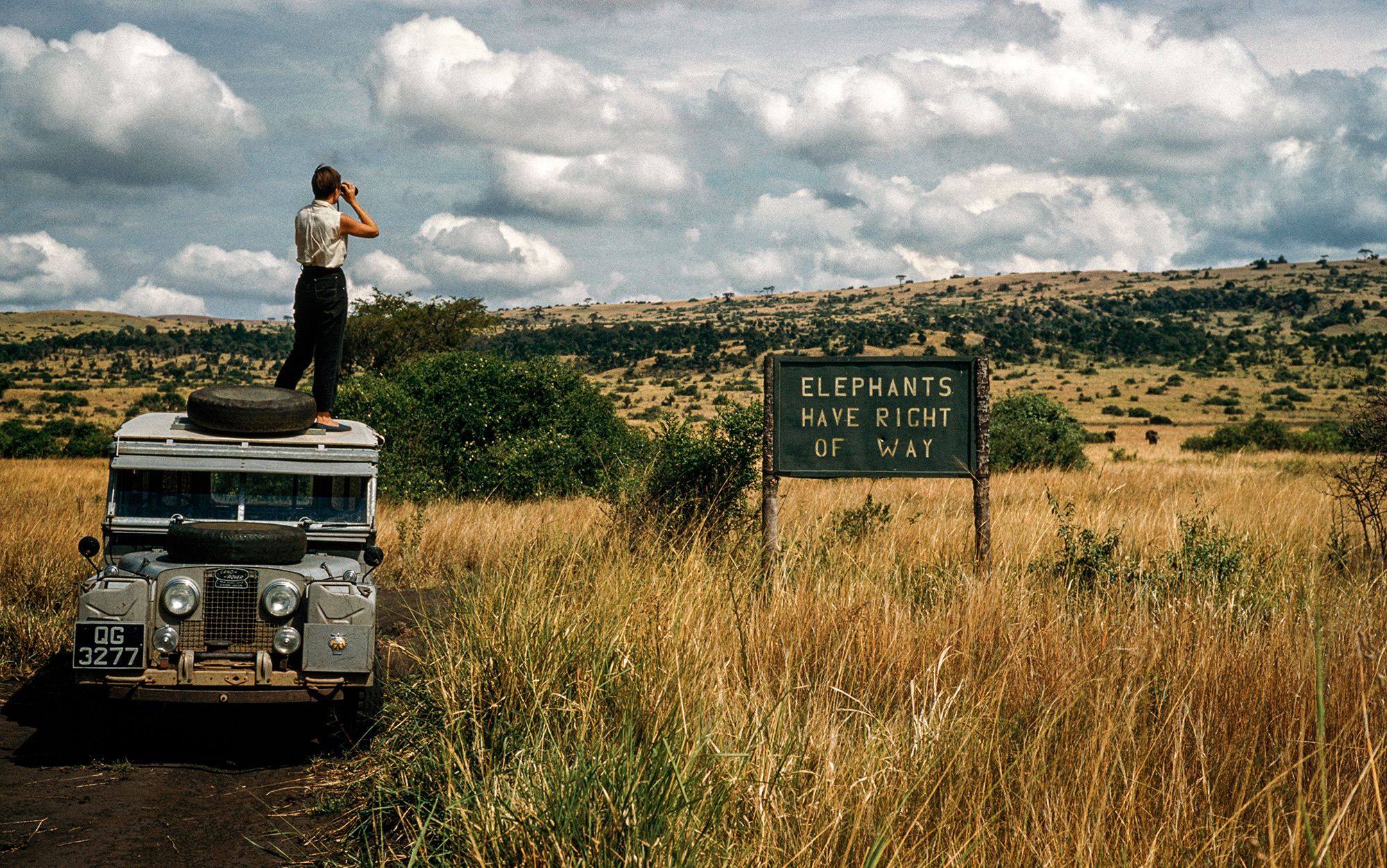
In a tight spot, you’d probably intuit that a human life outweighs an animal’s. There are good arguments why that’s wrongUganda, 1958. Photo by George Rodger/Magnum
Jeff Sebo is clinical associate professor of environmental studies, affiliated professor of bioethics, medical ethics, philosophy and law, and director of the animal studies MA programme at New York University. He is also on the executive committee at the NYU Center for Environmental and Animal Protection and the advisory board for the Animals in Context series at NYU Press. He is co-author of Chimpanzee Rights (2018) and Food, Animals, and the Environment (2018), and the author of Saving Animals, Saving Ourselves (2022).
Edited by Pam Weintraub
5 May 2022 (aeon.co)
Love Aeon?
Support our workDONATE
This January, a 57-year-old man in Baltimore received a heart transplant from a pig. Xenotransplantation involves using nonhuman animals as sources of organs for humans. While the idea of using nonhuman animals for this purpose might seem troubling, many humans think that the sacrifice is worth it, provided that we can improve the technology (the man died two months later). As the bioethicists Arthur Caplan and Brendan Parent put it last year: ‘Animal welfare certainly counts, but human lives carry more ethical weight.’
Of course, xenotransplantation is not the only practice through which humans impose burdens on other animals to derive benefits for ourselves. We kill more than 100 billion captive animals per year for food, clothing, research and other purposes, and we likely kill more than 1 trillion wild animals per year for similar purposes. We might not bother to defend these practices frequently. But when we do, we offer the same defence: Human lives carry more ethical weight.
But is this true?
Most humans take this idea of human exceptionalism for granted. And it makes sense that we do, since we benefit from the notion that we matter more than other animals. But this statement is still worth critically assessing. Can we really justify the idea that some lives carry more ethical weight than others in general, and that human lives carry more ethical weight than nonhuman lives in particular? And even if so, does it follow that we should prioritise ourselves as much as we currently do?
Ethicists sometimes offer capacities-based arguments for ranking species according to a hierarchy. For example, in How to Count Animals, More or Less (2019) Shelly Kagan argues that we should assign human interests extra ethical weight because we have a higher capacity for agency and welfare than other animals. I have cognitive capacities that a pig lacks, so I have interests that they lack. I also have the capacity to experience happiness and suffering more intensely than a pig does, so I have stronger interests related to my welfare than they do.
Ethicists also offer relationship-based arguments for species hierarchies. For example, in ‘Defending Animal Research’ (2001), Baruch Brody argues that we should assign human interests extra ethical weight because we have special bonds and a sense of solidarity with members of our own species. According to this view, we should ‘discount’ the interests of nonhuman animals for the same reason that we should ‘discount’ the interests of future generations: we have special duties within these categories that we lack across them.
In response to these and other such arguments, some ethicists contend that we should reject species hierarchies entirely. For example, in Fellow Creatures (2018) Christine Korsgaard argues that it generally makes no sense to ask whether a human or a pig has a better life, because each species of animal has a different form of life, and we can evaluate each life only against the standards set by that form of life. Comparing humans and pigs is, literally, like comparing apples and oranges.
If anything, we increasingly have grounds for prioritising nonhuman animals
While I think that this rejection of species hierarchies is worthy of consideration, I want to defend a separate idea: even if we accepted a species hierarchy on capacities-based and relationship-based grounds, it would still not follow that our current stance of human exceptionalism is acceptable. We would need to think carefully about how much ethical weight different animals carry rather than simply assert that we take priority. And when we do, we might be surprised by what we find.
In particular, if we take our own arguments for human exceptionalism seriously, then the upshot is not that we always take priority but rather that we sometimes do. And when we consider the scale of nonhuman suffering and death in the world and the extent of our complicity in this suffering and death, we can see that human exceptionalism has it backwards: if anything, we increasingly have capacities-based and relationship-based grounds for prioritising nonhuman animals.
To be clear, my goal here is not to argue against a strong form of human exceptionalism, according to which humans necessarily matter more than nonhumans. If you think that any human interest, no matter how minor, takes priority over any nonhuman interest, no matter how major – that, for instance, scratching a single human itch takes priority over preventing 100,000 elephant deaths – then there are good arguments against your view, but they will not be my focus here.
My goal is instead to argue against a moderate form of human exceptionalism, according to which humans contingently matter more than nonhumans. If you are among the many who think that we take priority over other animals because of our ‘higher’ capacities and ‘stronger’ relationships, this is wishful thinking. There are too many nonhumans, and our lives are too intertwined with theirs, for that to be plausible. This ‘moderate’ view is not as ethical as you think.
Let’s examine these arguments for human exceptionalism one by one, starting with the capacities-based arguments.
Yes, I have a higher capacity for agency (that is, self-determination) than nonhuman animals. I can step back from my beliefs, desires and actions, and ask whether I have reason to endorse them. As a result, I can use evidence and reason to set and pursue long-term goals. In contrast, a worm is only able to do what seems natural from moment to moment, without ever stopping to assess these choices.
Why does this difference matter? Plausibly, agents have a wider range of interests than non-agents do, all else being equal. It would be bad for you to keep me in confinement, since I need to be able to set and pursue my own goals to live well. In contrast, it might not be bad for you to keep a worm in confinement (with proper care), since all they need is, say, air, moisture, darkness, warmth, food and other worms to live well.
I also have a higher capacity for welfare (that is, happiness, suffering and other such states) than many nonhuman animals. Since I have a more complex brain than a worm does, I can experience more happiness and suffering at any given time. And since I have a longer lifespan than a worm does, I can also experience more happiness and suffering over time – provided, of course, that I live a reasonably full life.
Why does this difference matter? Plausibly, beings with a higher capacity for welfare have more at stake than beings with a lower capacity for welfare, all else being equal. Even if it would be bad for you to keep a worm in confinement, it would be still worse for you to keep me in confinement. Each day of confinement would harm me more, and I would also have more days of confinement overall.
My own view is that these capacities-based arguments are reasonable, as far as they go. Setting priorities requires considering how much everyone has at stake in any given situation, and our capacities are part of what determines how much we have at stake. But these arguments fall far short of establishing even a moderate form of human exceptionalism. Human and nonhuman capacities overlap substantially, and setting priorities requires considering other factors, too.
African elephants have about three times as many neurons as humans, and they have comparable lifespans
First, we might not always have a higher capacity for agency than other animals. We all lack the capacity for rational reflection early in life, some of us lose this capacity later in life, and some of us never develop this capacity at all. Meanwhile, many nonhuman animals have the capacity for memory, emotion, self-awareness, social awareness, communication, instrumental reasoning and more. Human and nonhuman agency thus overlap substantially in practice.
Moreover, even when we do have a higher capacity for agency than other animals, this difference might be smaller than we think. Our views about agency are anthropocentric, in that we treat human agency as the standard against which all forms of agency should be compared. But while human agency is certainly impressive, nonhuman agency is impressive too. And if we studied nonhuman agency on its own terms, we might discover forms of self-determination that humans lack.
Likewise, we might not always have a higher capacity for welfare than other animals. If our welfare capacity is a simple function of our brain complexity and lifespan, then some nonhumans might have a higher welfare capacity than humans do. For example, African elephants have about three times as many neurons as humans, and they have comparable lifespans. So, based on this way of making comparisons, these animals have a higher welfare capacity than us.
Moreover, even when we do have a higher capacity for welfare than other animals, this difference might once again be smaller than we think. For all we know, our capacity for welfare might not be a simple function of our brain complexity and lifespan. We are still early in the study of animal minds. And while it might be that, say, twice as many neurons equals twice as much welfare capacity, it might also be that the difference in welfare capacity is larger or smaller than that.
In short, the capacities-based arguments fail to vindicate even moderate forms of human exceptionalism. If we think that humans can have strong interests even when we lack the capacity for rational reflection (as, of course, we should), then we should think that nonhumans can too. And if we give humans the benefit of the doubt in cases of uncertainty about how much happiness and suffering we can experience (as, again, we should), then we should do the same for nonhumans.
Other factors are relevant to how we set priorities, too.
For instance, even if a human has more at stake than a nonhuman in general, they might not have more at stake in particular cases. Suppose you can either save a human from a minor injury or save a pig from a major injury. In this case, it might be that you should save the pig.
Similarly, even if a human has more at stake than one nonhuman, they might not have more at stake than many nonhumans. Suppose you can either save a human from a minor injury or save 1,000 pigs from minor injuries. In this case too, it might be that you should save the pigs.
Finally, morality is about more than benefits and harms, at least in practice. We would never permit doctors to breed humans for their flesh or organs, since the rights of the ‘donors’ would trump the benefits for the recipients. Why not think that the same can be true for nonhumans?
This all raises serious doubts about human exceptionalism. We regularly impose major burdens on nonhumans in exchange for minor benefits for humans. The ‘harm’ to humans of eating plants instead of animals is nothing compared to the harm to an animal of being factory farmed.
We also regularly impose burdens on very many nonhumans for each human who benefits. We probably kill at least a trillion farmed and wild animals, not including insects, for food each year. This is more than the total number of humans who have ever existed – killed every year.
And we regularly use nonhumans in ways that we would never permit ourselves to use humans. This is not simply a matter of us saving ourselves instead of saving them (though we do that too): this is a matter of us exploiting and exterminating them on a global scale.
The upshot is clear. Even if we think that beings with a higher capacity for agency and welfare take priority over beings with a lower capacity for agency and welfare, all else being equal, we should still be sceptical that this difference justifies anything like our current behaviour.
But what about relationship-based arguments for human exceptionalism, which focus on how we relate to humans and other animals?
Many people believe that, at least in practice, we have both a right and a duty to prioritise ourselves and our communities. I should take care of myself before I take care of you, and I should also take care of my family before I take care of yours. And if we can exhibit this kind of partiality in the context of smaller groups such as families, perhaps we can do the same in the context of larger groups such as species.
In fact, some ethicists believe that the analogy holds not only for species but also for other large groups, like generations. They argue that we can ‘discount’ the interests of nonhuman animals and future generations, in part because we have closer relationships within these categories than beyond them, and in part because full impartiality for all sentient beings from now until the end of time would be too demanding.
This kind of argument is partly about our personal interests. If we allow morality to be too impartial, then our personal interests would carry very little relative weight. But they should carry at least a moderate amount of relative weight, both because we have a right to take care of ourselves and because we need to do that to take care of others. So, we should allow morality to be somewhat partial to create space for self-care.
This kind of argument is also partly about our relationships. We have special duties in the context of special relationships. I should take care of my family before I take care of yours because I have special bonds within my family. And the same can be true for larger groups like species and generations. So, we should allow morality to be somewhat partial to create space for our relational duties, too.
But even if we accept that these claims are true and that they extend to groups such as species and generations, we should still reject our current stance of human exceptionalism. There are many more individuals across species and generations than within a single one. And our lives are increasingly linked across species and generations in ways that have important implications for our interests and our relationships.
Suppose that I do, in fact, have a duty to take care of my family before I take care of yours, all else being equal. Does it follow that I can treat your family however I like? Of course not. It would be wrong for me to take food from your family to provide food for mine, particularly if my family already has much more food than yours does. It would also be wrong for me to kill your family so that I can provide my family with human flesh to eat instead of, say, rice and beans.
Deforestation, factory farming and the wildlife trade are hurting us right now
These points apply across species and generations, too. Humans are taking resources away from nonhuman animals and future generations, even though we already have much more than they do in many ways. We are also killing hundreds of billions of nonhuman animals for food each year in ways that impose health and environmental threats on future generations too – even when we have access to humane, healthful, sustainable plant-based alternatives.
Furthermore, many policies that would benefit nonhuman animals and future generations would benefit us, too. As the WHO’s One Health framework reminds us, human, nonhuman and environmental health are linked. We need to phase down industries such as deforestation, factory farming and the wildlife trade, not only for nonhuman animals and future generations but also for ourselves: waste, pollution, infectious diseases and other hazards from these activities are hurting us right now.
We should keep in mind that we have relational duties across species and generations, too. Many of us care about members of other species and generations: I dare anyone to try to matter to me more than my dog Smoky, and many parents feel the same way about their children, grandchildren and so on. And when our practices harm nonhuman animals and future generations, we have a relational duty to reduce and repair these harms whether we care about these individuals or not.
In short, relationship-based arguments fail to vindicate current forms of human and generational exceptionalism. Even if we have a right or duty to take care of ourselves and other current humans, we still need to treat nonhuman animals and future generations much better to accomplish that goal. We also need to treat them much better for their own sakes, especially when our activity is harming them. Our relational duties extend much farther than we might have thought.
When we weave these threads about capacities and relationships together, we reach a surprising conclusion: we should not only prioritise ourselves less but should perhaps not prioritise ourselves at all in some cases. After all, even if we discount the interests of nonhuman animals and future generations, these populations are still so large, and our practices are still impacting them so much, that their interests might still carry more ethical weight than ours do in the aggregate.
And when we weave the biological and generational arguments together, we reach an even more surprising conclusion: we should prioritise not only current nonhumans and future humans but also, and especially, future nonhumans. For instance, when we assess the impacts of the climate crisis, we should assign a lot of ethical weight to the impacts on other species. Which populations will expand and contract, and what will follow for the welfare of individual animals?
Granted, there might be a limit to how much we can prioritise current and future nonhumans at present, since we currently lack the knowledge, power and political will that we need to help them at scale. So we might need to prioritise ourselves now to be able to prioritise them later.
But even if we accept this pragmatic argument, we should still prioritise nonhuman animals much more than we do now. We are already capable of harming nonhuman animals much less and helping them much more, and in many cases, making these changes would benefit us, too. We should also keep in mind that there is a path dependence to how history unfolds. For better or worse, our successors will inherit the world that we create. So if we want our successors to have more impartial priorities, then we need to work to develop more impartial priorities, too.
The upshot is that we need to rethink our relationship with other animals from the ground up. When setting priorities across species, we have a responsibility to follow the best information and arguments where they lead, rather than assume a self-serving conclusion from the start.
And when we take our thumbs off the scales, we can expect the scales to shift. We should already be treating nonhumans much better and, eventually, we might even need to prioritise their interests and needs over our own. We should start preparing for that possibility now.
Plotinus on seeing with our eyes closed

Van & Schenck – Ain’t We Got Fun?
the78prof Gus Van & Joe Schenck sing this carefree ode to poverty which debuted in the Fanchon and Marco revue “Satires of 1920.” The original 78rpm single was issued on Columbia A3412 – Ain’t We Got Fun (Richard Whiting-Gus Kahn-Raymond B. Egan) by Van and Schenck, orchestra conducted by Charles Prince, recorded in NYC April 21, 1921
Music in this video
Learn more
Listen ad-free with YouTube Premium
Song
AIN’T WE GOT FUN-7247
Artist
VAN AND SCHENCK
Licensed to YouTube by
Adrev for Rights Holder, and 1 Music Rights Societies
Song
Ain’t We Got Fun?
Artist
Van & Schenck
Album
Fascinatin’ Rhythm
Writers
Gus Kahn, Raymond Egan, Richard Whiting
Licensed to YouTube by
Naxos Digital Services US, Inc (on behalf of The Gift of Music); Public Domain Compositions
(Contributed by Alan Blackman)
Tarot Card for May 6: The Queen of Swords
The Queen of Swords
The Queen of Swords indicates a woman who is blessed (or cursed) with sharp perception, and highly honed intuition. She is acutely analytical, with a razor-sharp ability to get to the heart of a situation, seeing exactly what is, rather than what others would wish her to see.
She is a private woman, unwilling to let people too close to her until she is satisfied she thoroughly understands their motivations. But once won as a friend, she is unfailingly loyal, honest and supportive.
She’s usually very intelligent, with a dry sense of humour. Her penetrating insight will often reveal aspects of themselves to others that they had previously been unable to grasp – thus she is a capable therapist, teacher or leader.
The woman represented by this card will be experienced in the flow of life, understanding a great deal about both the great triumphs, and the deepest failings of the race. Her clarity and measured expression will be of great value at times of confusion and sadness.
Sometimes in a reading, this card will turn up to indicate a woman in a particular phase of her life, where she temporarily becomes a Sword as a result of what is happening to her. In that case the card is not quite so positively defined, for it can indicate a woman left alone, and perhaps embittered. She may be a widow, or a woman passing through the aftermath of divorce.
In this case we often see the more negative aspects of the Queen – coldness, judgementalism, criticism. At these times there is a certain sourness about her, with cynicism and sharpness making themselves felt.
It should be said that these qualities are inherent to the woman who is a Queen of Swords by nature too – if the woman concerned has not evolved sufficiently you will often find that the card represents a person who is hard and cold toward others.

(via angelpaths.com and Alan Blackman)
The History and Impact of the Swami Prabhavananda – Christopher Isherwood Bhagavad Gita Translation
Jun 15, 2018 | 1 comment (americanvedantist.org)
by Dharmadas (Jon Monday)
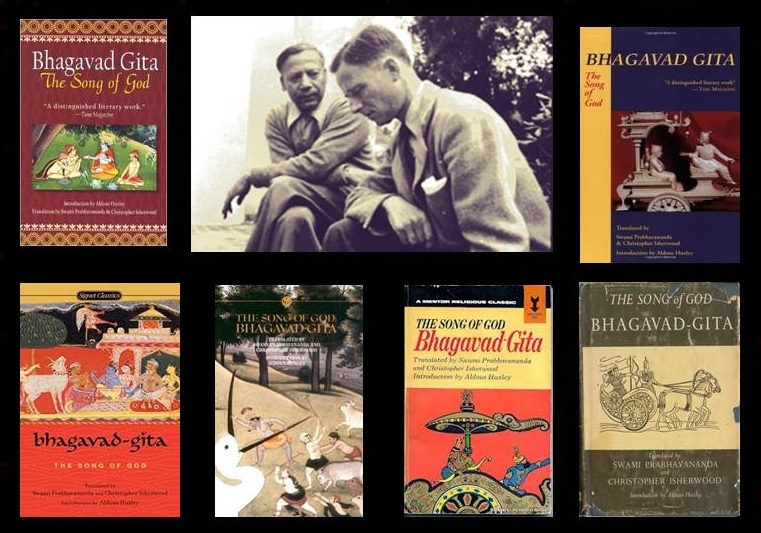
Since it was first published in 1944, the Swami Prabhavananda/Christopher Isherwood Bhagavad Gita, with an introduction by Aldous Huxley, has become one of the most widely read English translations of the Hindu classic, having sold over one million copies. Many American college and university students first encountered this translation as a required text assigned for comparative religion and philosophy courses. This usage can arguably be attributed to the very purpose of this translation: to bring the message of the Gita to those in the West who may know little or nothing about Vedanta philosophy, while still communicating the full spiritual scope and teachings of the scripture in a form written for English speakers by a collaboration between a master of Vedanta and one of the great English language authors of the 20th century.
For many spiritual seekers in the 1950s, 60s and 70s (including me), this book was a major influence that changed the direction of our lives. In reading and hearing personal accounts of, “How I came to Vedanta”, this particular book stands out as very common route.
I first ran across it when I was 19 and living in Berkeley in 1966. My roommate was taking a course on Eastern Philosophy at UC and the Prabhavananda/Isherwood Gita was a required textbook. I read it and was struck by the simple teachings that just rang out as Truth. The book methodically expressed a deep philosophy about the purpose of life and a way of living, which fully resonated with the simple, but incomplete personal philosophy I had developed, through my life experiences.
In high school I was attracted to the writing of Aldous Huxley, and was intrigued that he wrote the introduction to the Gita, where he further clarified and described a philosophy that seemed more practical and fruitful than anything else I had explored. It wasn’t until three years later that I came to find out about Vedanta centers and swamis being in the United States. Through friends I met Swami Prabhavananda, became a member of the Vedanta Society of Southern California, and received personal instructions for my spiritual life.
History of the Gita and How the Translation Came About
Through Swami Prabhavananda’s early association with Sri Sarada Devi and the direct disciples of Sri Ramakrishna, he developed a deep personal understanding of the spirituality of India. His college studies broadened his outlook to include Western Philosophy and other religions, in which he found expressions of the Perennial Philosophy, the belief that the same spiritual Truths are expressed through the mystical branches of all of the world’s religions through various practices and beliefs.
To translate the Gita, Swami reached out to his disciple Christopher Isherwood, an acclaimed English prose author, to assist on the translation. Together they created what Time Magazine called:
…a distinguished literary work. The translators have presented a version of the great dialogue that makes it easily understandable to the common reader.
On the historical significance of the Gita itself, Swami P wrote in his Spiritual Heritage of India (also used as a college textbook):
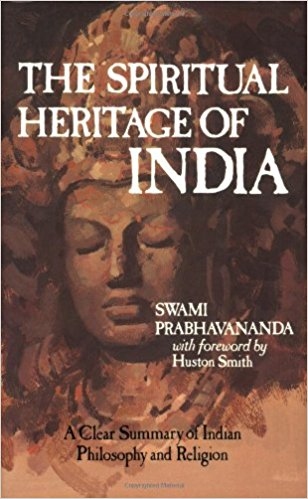
…in the course of its long history, reaching far back into an unrecorded past, Indian religion has had its share of sects and doctrines, of reformations, and revivals, it has nevertheless preserved at its core, unchanged, four fundamental ideas. These may be very simply expressed:
God is;
God can be realized;
to realize God is the supreme goal of human existence;
and God can be realized in many ways.
The first systematic attempt to harmonize the many doctrines of Hinduism is to be found in the teachings of the Bhagavad-Gītā—the Bible of the Hindus. By the time of the Epics many schools of thought, with varied ideas of God and the Godhead, as well as varied paths, called yogas, had come into existence. These were all incorporated in the teachings of the Gita like “pearls in a necklace.”
The path, [the Gita] assures us, matters little; it is the goal that is supreme. And what is the goal? It is only once again — to realize God.

The Gita is only few chapters of the 6th book of the Hindu epic poem, The Mahabharata, and dates from the 6th to the 2nd Century BC. It’s generally accepted that the Gita was added to the Mahabharata, and some scholars, including Swami P, believe that the Gita had existed as a stand-alone text for some time prior to that.
First English Translation
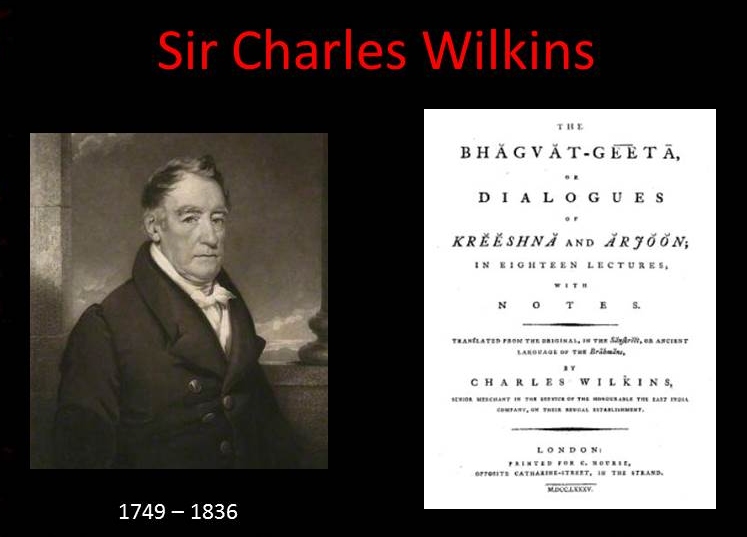
In the 18th Century, Sir Charles Wilkins went to India to work for the East India Company as a printer and writer. In 1785, he published the first English translation of the Bhagavad Gita. It proved to be a major influence on Romantic literature and the European perception of Vedanta philosophy.
The Gita and other Hindu texts have influenced historic American thinkers, including Presidents Thomas Jefferson and John Adams, who had copies of the Gita and Upanishads in their libraries. Note that Jefferson, Adams, Vivekananda, and Prabhavananda all left the body on the 4th of July – Jefferson and Adams in the very same year, within hours of each other.
Ralph Waldo Emerson, a leader of the Transcendentalist movement of the mid-19th century received a copy of the Wilkins English translation. In his essay titled Immortality, he paraphrases the Gita:
The soul is not born, it does not die; it was not produced from anyone; unborn, eternal, it is not slain, though the body is slain.
Henry David Thoreau was an American author, poet, philosopher, and also a member of the Transcendentalist movement. He is best known for his book Walden, which is about living simply in nature. He wrote,
In the morning I bathe my intellect in the stupendous… philosophy of the Bhagavad-Gita, in comparison with which, our modern world and its literature seems puny and trivial.
Prabhavananda – Isherwood Translation
How did the Prabhavananda – Isherwood Gita come about? Here are Swami P’s own words:

Christopher Isherwood & Swami P
Once I was away for a rest in Palm Springs. I had a Gita translation with me. When I read the twelfth chapter, I felt that the meaning had not been brought out; I saw deeper meaning in it. So I started to translate, and then Chris [Isherwood] helped me.
I translated and Chris edited. When Peggy Kiskadden came, she read what we had done and could not understand it. Then we went to Aldous [Huxley]. Chris read aloud, and Aldous listened. Aldous said,
No, that is not right yet. Forget that Krishna is speaking to the Hindus in Sanskrit. Forget that this is a translation. Think that Krishna is speaking to an American audience in English.
Swami goes on to say, “…Chris rewrote the whole eleventh chapter of the Gita following Tennyson, I think. He produced the book in a week. He was inspired.”
We will see that Huxley’s advice reinforces the instructions about the Gita from Swami P’s own guru, Swami Brahmananda, the spiritual son of Sri Ramakrishna, and also from Swami Turiyananda, another monastic disciple of Sri Ramakrishna. Both had a powerful and loving influence on the spiritual growth of the young Prabhavananda. Upon opening the Gita, the first thing we see is Swami P’s dedication:
“To the memory of SWAMI TURIYANANDA who was regarded by his master SRI RAMAKRISHNA as a perfect embodiment of that renunciation which is taught in the BHAGAVAD-GITA.”
Swami P had asked Swami Turiyananda to teach him how to study the Gita. Turiyananda advised him to take one verse at a time, meditate on its meaning, and live the verse for a week before going on to the next verse. In that way he was to study the entire Gita.
People have wondered why Swami P’s translation didn’t include the traditional commentaries, which are commonly found in almost all other translations. Swami Yogeshananda of Trabuco had an entry in his monk’s notebook where Swami P describes Swami Brahmananda’s advice about how to approach the Gita.
In our monasteries, both in India and in the West, the Bhagavad Gita is, of course, a principal text for pedagogy and study. Swami Brahmananda, first President of the Ramakrishna Math and Mission, said to some of that early group of young men, “Let your first reading of the Gita be without commentary.”

Swami Saradananda says in his book The Essence of the Gita:
It is not necessary for you to study all those commentaries. Your minds are not yet influenced by any particular philosophy and they are, so to speak, still fresh. It is enough to understand the meaning as it reveals itself to you spontaneously.
Swami P explains that they consulted the writings of three of the greatest commentators, but wishing to avoid bulky and distracting footnotes that interrupt the flow of the story, they incorporated any required explanations within the text itself.
Both Swami Turiyananda and Maharaj instilled in Swami P that the Gita is a vital, even interactive life companion, to be embraced by the individual’s whole and constant being. These ideas are expressed in the Prabhavananda – Isherwood Translators’ Preface:
…the Gita is a gospel. Its essential message is timeless. In words that belong to no one language, race or epoch, incarnate God speaks to man, His friend. Here, the translator must forget all about Vedanta philosophy and Sanskrit terms; all about India and the West, Krishna and Arjuna, past and future. He must aim at the utmost simplicity.
…Extremely literal translations of the Gita already exist. We have aimed, rather, at an interpretation. Here is one of the greatest religious documents of the world; let us not approach it too pedantically, as an archaic text which must be jealously preserved by university professors. It has something to say, urgently, to every one of us.
It must be emphasized that while Isherwood was an accomplished author, he was neither a Sanskrit scholar nor a spiritual adept.
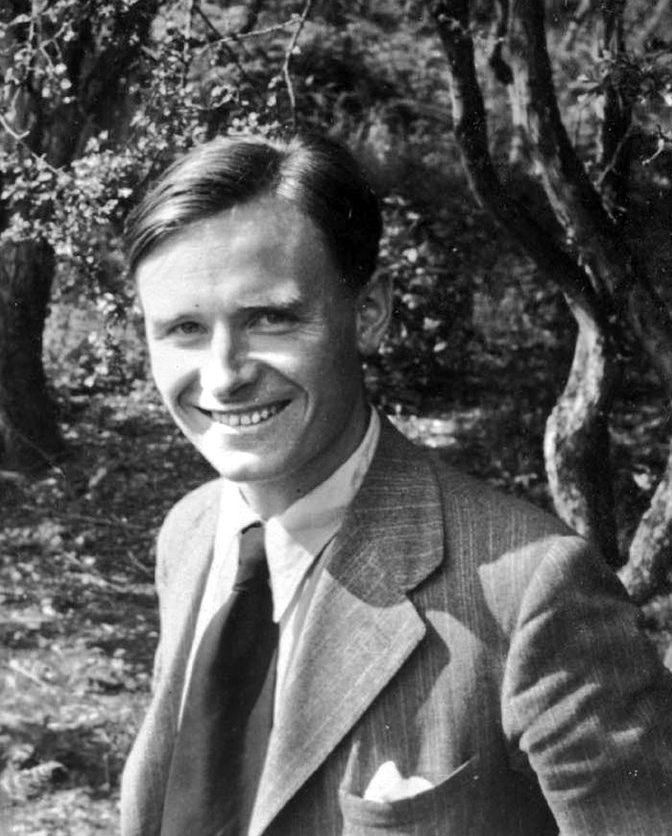
Here is how he described the division of functions:
The swami’s English was fluent and his knowledge of Sanskrit equally good… At that time, I knew no Sanskrit whatsoever; even today I … could easily write down my little vocabulary on one side of a postcard. My share of the collaboration was therefore secondary. Prabhavananda told me the meaning of a phrase; we then considered how its meaning could best be conveyed in English.
He also described the pains-taking rigors of the work as:
…the slow, thorough-going process of translating a text — considering all the significance of each word and often spending a day on three or four verses.
Introduction by Aldous Huxley
Aldous Huxley wrote the lengthy introduction, reporting that, “The Bhagavad Gita is perhaps the most systematic scriptural statement of the Perennial Philosophy.” Huxley gives us an overview of the Perennial Philosophy and how it is expressed through the various religions of the world, throughout history. He also argues for, “The Minimum Working Hypothesis” – a basic set of assumptions to adopt while seeking to realize Ultimate Truth through a spiritual life:
First: the phenomenal world of matter and of individualized consciousness – the world of things and animals and men and even gods – is the manifestation of a Divine Ground within which all partial realities have their being, and apart from which they would be nonexistent.
Second: human beings are capable not merely of knowing about the Divine Ground by inference; they can also realize its existence by a direct intuition, superior to discursive reasoning. This immediate knowledge unites the knower with that which is known.
Third: man possesses a double nature, a phenomenal ego and an eternal Self, which is the inner man, the spirit, the spark of divinity within the soul. It is possible for a man, if he so desires, to identify himself with the spirit and therefore with the Divine Ground, which is of the same or like nature with the spirit.
Fourth: man’s life on earth has only one end and purpose: to identify himself with his eternal Self and so to come to unitive knowledge of the Divine Ground.
Much of the introduction was later published in Vedanta and the West as a stand-alone essay titled, The Minimum Working Hypothesis, where Huxley added a fifth clause, “That there is a Law or Dharma which must be obeyed, a Tao or Way which must be followed, if men are to achieve their final end”.
Essays Included in the Book
The Gita and the Mahabharata
In the section titled The Gita and the Mahabharata, Swami P introduces us to what is considered to be the longest poem in the world – the epic story of the ancient kings of India, including the lives of the five Pandava brothers. Swami summarizes the history of the Pandavas; their trials, heroic victories, and spiritual growth to give a full and proper setting for who the main characters are, and the events leading up to the coming war. After all, the Gita is only Chapters 25 through 42 of the 6th book of the Mahabharata, out of a total of 18 books. The Gita recounts a single episode in the lives of the brothers; the battlefield dialog between Sri Krishna and one of the brothers: Arjuna, the warrior.
The Gita and War by Christopher Isherwood
The Prabhavananda/Isherwood translation of the Bhagavad Gita was published in 1944, a time when some of the fiercest battles of WWII were being fought. Ironically, both Aldous Huxley and Christopher Isherwood were Conscientious Objectors, and yet they contributed to a book where God, in the form of Sri Krishna, urges a warrior to do battle. Isherwood explains that the Gita is neither pro- nor anti-war, and explains that a person should perform what their personal duty is; their Dharma. In the case of Arjuna, the righteous act was to do battle in a righteous war. For someone else, whose duty was not to fight, or if the war not righteous, to fight would have been spiritually damaging.
On a spiritual level, the Gita is about the war going on within each of us. Making the right choices, doing your duty, without attachment to the results.
Despite there being numerous English translations of the Gita available, this one gained prominence in intellectual circles, academia, and religious institutions as an accessible explanation of the Vedanta philosophy. Here are a few reviews from the time it was published:
Time Magazine wrote:
To preserve the everlasting simplicity of the Gita’s words, Isherwood and his teacher have collaborated on this latest translation, designed to bring its message closer to ‘the ordinary, perplexed men and women of today.’ The result is a distinguished literary work. The translators have presented a version of the great dialogue that makes it easily understandable to the common reader.
The New York Times reported:
Mr. Isherwood has devoted his fine literary gift to a new translation of ‘Bhagavad-Gita,’ working with Swami Prabhavananda. The little book is a self-contained one. A complete stranger to the Hindu gospel can pick it up and in one or two evenings follow the great poem from its terrific beginning to its sublime end.
And here’s a recent consumer review from Amazon, which demonstrates the purpose of this translation, and one the authors would be proud of:
Wonderful Translation
By Doug D.
Finally, I found the right translation for me. This version of the Gita has just the right amount of technical terms and just the right amount of general English verbiage. I have read other translations that do not even use Atman and Tamas, instead they make single-word English translations (e.g. “Self” and “inertia”). But, I don’t think those single words are quite right; those translations actually confused me. Understanding the full meaning of words like Prakriti and Sattwa (and others) are important to understanding the Gita. On the other hand, this version does not go too far the other way either. Enough is translated into plain English that I could understand the meaning of the fundamental terms. If you have never read the Bhagavad Gita, this is the translation for you. If you have read another translation, but were frustrated, you didn’t really see what was so special about it, then try this translation.
I am not here to tell you what the Gita will mean to you. That is for you to figure out. I am here to tell you that this is the best English translation I have found to understand the Gita, and figure out what it means to you.
To end with, here is a short recording of Christopher Isherwood reading from the Gita:https://www.youtube.com/embed/xqAmoz225po?feature=oembed
Dharmadas (Jon Monday) has been a member of the Vedanta Society of Southern California for nearly 50 years. Since the early 1970s he has been recording audio and video of Swamis of the Ramakrishna Order. After retiring from the Music and Video Game businesses, he and his wife Urvasi (Anna Monday) have continued videotaping at Vedanta Centers in Southern California, making many new and archival recordings available at www.VedantaVideo.com. Email him at jon@mondaymedia.org.
He Spurred a Revolution in Psychiatry. Then He ‘Disappeared.’
In 1972, Dr. John Fryer risked his career to tell his colleagues that gay people were not mentally ill. His act sent ripples through the legal, medical and justice systems.


By Ellen Barry
Published May 2, 2022 Updated May 5, 2022 (NYTimes.com)
On the second day of the annual convention of the American Psychiatric Association in 1972, something extraordinary happened.
While the assembled psychiatrists, mostly white men in dark suits, settled into rows of chairs in the Danish Room at the Adolphus Hotel in Dallas, a disguised figure had been smuggled through the back corridors. At the last minute, he stepped through a side curtain and took his place at the front of the room.
There was an intake of breath in the audience. The man’s appearance was grotesque. His face was covered by a rubber Nixon mask, and he was wearing a garish, oversized tuxedo and a curly fright wig. But the outlandishness of his outfit diminished in importance once he began to speak.
“I am a homosexual,” he began. “I am a psychiatrist.”
For the next 10 minutes, Henry Anonymous, M.D. — this is what he had asked to be called — described the secret world of gay psychiatrists. Officially, they did not exist; homosexuality was categorized as a mental illness, so acknowledging it would result in the revocation of one’s medical license, and the loss of a career. In 42 states, sodomy was a crime.
The reality was that there were plenty of gay people in the A.P.A., psychiatry’s most influential professional body, the masked doctor explained. But they lived in hiding, concealing every trace of their private life from their colleagues.
“All of us have something to lose,” he said. “We may not be under consideration for a professorship; the analyst down the street may stop referring us his overflow; our supervisor may ask us to take a leave of absence.”
This was the trade-off that had formed the basis of the masked man’s life. But the cost was too high. That’s what he had come to tell them.
“We are taking an even bigger risk, however, in not living fully our humanity,” he said. “This is the greatest loss, our honest humanity.”
He took his seat to a standing ovation.
Dr. Fryer’s speech
Listen to Dr. Fryer deliver his remarks in their entirety as “Dr. Henry Anonymous,” May 2, 1972.
The 10-minute speech, delivered 50 years ago Monday, was a tipping point in the history of gay rights. The following year, the A.P.A. announced that it would reverse its nearly century-old position, declaring that homosexuality was not a mental disorder.
It is rare for psychiatrists to transform the culture that surrounds them, but that is what happened in 1973.
By removing the diagnosis from the Diagnostic and Statistical Manual of Mental Disorders, or D.S.M., psychiatry removed the legal basis for a wide range of discriminatory practices: for denying gay people the right to employment, citizenship, housing and the custody of children; for excluding them from the clergy and the military and the institution of marriage. The long process of rolling back those practices could begin.
When referred to psychiatrists, gay people would no longer be sent to be “cured” — injected with hormones, subjected to aversion therapy or pored over by analysts — but instead told that, from the point of view of science, there was nothing intrinsically wrong with them.
The Great Read
More fascinating tales you can’t help but read all the way to the end.
- Dr. John Fryer, a.k.a. “Dr. Henry Anonymous,” risked his career in 1972 to tell fellow psychiatrists that gay people weren’t mentally ill. His speech changed the field — and then he faded from sight.
- A couple digitized dozens of cassettes they found in their Fire Island home. The tapes captured the soundtrack to a critical juncture in gay history as the AIDS crisis emerged.
- Frankie Light, a “YouTube polyglot,” made Yiddish go viral without even knowing the language. Here’s how.
After delivering his speech, the man in the mask, John Ercel Fryer, 34, flew from Dallas to his home in Philadelphia, noting in his journal just how terrifying and profound the experience had been.
“The day has passed, it has come and gone and I am still alive. For the first time I have identified with a force that is akin to my selfhood,” he wrote, in excerpts included in “Cured,” a 2020 documentary.
Still — he didn’t tell his mother he had done it. He didn’t tell his sister. He didn’t tell his closest childhood friend. He barely told anybody for 20 years.
‘What the hell is going on here?’
ImageDr. Fryer in an undated yearbook photo from Transylvania University, where he was pre-med.Credit…Transylvania UniversityImageDr. Fryer, circa 1990, when he was a professor at Temple University.Credit…Historical Society of Pennsylvania
Dr. Fryer, who died in 2003 at the age of 65, stood out for his size (he was 6-foot-4 and 300 pounds), for his flashing intelligence, and for the fact that he was obviously gay.
Betty Lollis, a friend from Winchester, Ky., recalled him as the round-faced boy who was led into her second-grade class, dressed by his mother in a sailor suit. He was a prodigy, she said, and also “just a boy the boys laughed at or teased.”
Decades later, Ms. Lollis said, some of their classmates apologized to Dr. Fryer for the way they had treated him. “These people that were painful for him were also all he had,” she said. “Those are his dearest friends.”
He sailed through his classes, enrolling in college at 15 and medical school at 19. But again and again, his path was blocked when supervisors learned he was gay.
The most crushing of these setbacks occurred in 1964. He had relocated to the freer atmosphere of the East Coast, and was a few months into a residency at the University of Pennsylvania when he let his guard down, telling a family friend at dinner that he was gay.
The young man immediately reported this to his father, who reported it to the department chairman at Penn, Dr. Fryer said in a 2002 interview with the Journal of Gay and Lesbian Psychiatry. The department chairman called Dr. Fryer into his office and said: “You can either resign or I’ll fire you.”
It took years of humiliating assignments at a state-run psychiatric hospital, the only institution that accepted him, for Dr. Fryer to complete his residency. After that he faced a long, uncertain path to tenure. For these reasons, coming out had little appeal, he said in a 2001 interview for “This American Life,” much of which has not been published until now.
“It was a way, if you came out as gay, to not have any power,” he said. “And I wanted to be powerful. So being a straight, closeted physician enabled me to have power.”
In 1970, Frank Kameny, an astronomer who had been dismissed from the military because he was gay, led a small group of gay rights activists to protest the A.P.A.’s annual convention, demanding that the diagnosis be declassified.
Dr. Fryer was a full-fledged member of the “Gay P.A.,” a group of closeted A.P.A. members who gathered in secret on the edges of the association, and he watched with distaste as the protesters stormed into panel discussions and heckled the speakers. “I was embarrassed by it, and I wished that they would shut up,” he said.
But the following year, Barbara Gittings, one of the activists, approached Dr. Fryer to ask for his help.
Younger, more progressive leaders were rising through the ranks of the A.P.A., and the activists sensed an opening. They had an idea: Instead of picketing, they could shake things up by confronting the psychiatrists with one of their own, a gay psychiatrist. If only they could find someone who would agree to do it.ImageMs. Gittings, left, at a “Gay, Proud and Healthy” display at the Dallas convention in 1972.Credit…Kay Tobin/Manuscripts and Archives Division, The New York Public Library
“My first reaction was: No way,” Dr. Fryer recalled. “I had no security, and I did not want to do anything to jeopardize the possibility that I could get a faculty position somewhere. There was no way at that point that I was going to do that as an open thing.”
Over the months that followed, though, Ms. Gittings kept calling. She updated Dr. Fryer as she approached a dozen of his gay colleagues and each said no, the risk was too great.
Their refusals bothered Dr. Fryer. And Ms. Gittings, as he put it, kept “upping the ante.” What if she paid his way to Dallas? What if he wore a disguise, so that no one knew it was him?
“She planted in my mind the possibility that I could do something,” he said. “And that I could do something that would be helpful without ruining my career.”
Dr. Fryer’s lover at the time was a drama student, and the two threw themselves into the project of devising a disguise that would conceal his identity: a vastly oversized tuxedo, a rubber mask melted to distort its features, and a wig with a low hairline opposite to his own.
Stepping onto the stage that day, Dr. Fryer said, “I felt a great freedom, a great sense of freedom.”
There was pride, too, that he was the only one of his colleagues who dared.
“To do that thing, to be willing to do that thing, when none of my colleagues in the Gay P.A. would be willing to do it, openly or otherwise,” he said. “They were all in the audience. They were clapping.”
The sight of Dr. Fryer had a powerful emotional effect on the psychiatrists gathered in the room, said Dr. Saul Levin, who in 2013 became the first openly gay man to serve as the A.P.A.’s chief executive and medical director.
“It obviously really shook them,” he said. “Here was this huge audience for the time, seeing someone come out in a very weird costume. It made them a little disoriented — what the hell is going on here? And then this person comes out with such an eloquent speech.”
Dr. Fryer was giddy as he left the stage, so exhilarated that, before returning to Philadelphia, he splurged on a manual harpsichord, which he wryly described as “among the least wise choices of my life.”
As he returned to his hotel room to change out of his disguise, he passed the chairman of the psychiatry department at the University of Pennsylvania, who had fired him from his residency. Neither man showed any sign of recognition.
‘It was over for me’
ImageDr. Fryer in his Germantown home with one of his Doberman pinschers, circa 1975.Credit…Harry Adamson, via Historical Society of Pennsylvania
Dr. Fryer returned to the rambling, Victorian house where he lived in Germantown with his Doberman pinschers and the medical students he took in as boarders.
He remained himself — by turns generous and overbearing, charismatic and acerbic, switching on his Kentucky accent when it suited him.
He still didn’t have tenure, and his career path was as tenuous as ever. In 1973, the A.P.A. voted to declassify homosexuality. And Dr. Fryer lost another job, this one at Friends Hospital.
Again, an administrator called him into his office. “If you were gay and not flamboyant, we would keep you,” Dr. Fryer recalled him saying. “If you were flamboyant and not gay, we would keep you. But since you are both gay and flamboyant, we cannot keep you.”
Dr. Fryer watched as his colleagues got promoted and won tenure. The Gay P.A. faded, as a new, more activist generation stepped forward as an open force within psychiatry, forming the Association of Gay and Lesbian Psychiatrists. But Dr. Fryer took no part in it.
“I ran away again,” he said. “I didn’t go to the meetings. It was like I just sort of disappeared.” It was as if, he said, “I had done my thing and it was over for me.”
Every now and then, he would tell someone about what he had done.
Dr. Karen Kelly, 67, who rented a room from Dr. Fryer as a medical student, said he told her over dinner some time in the late 1970s, and never mentioned it again.
Ms. Lollis, 85, said she and Dr. Fryer confided in one another later in life, sometimes speaking on the phone several times a week. But she didn’t find out that he was Dr. Anonymous until 2002, when he sent her the episode of “This American Life” that described the speech.
“He just didn’t share it with anyone,” she said. “Not his mother, not his sister.”ImageCirca 1970. Dr. Fryer was a musician and a choirmaster of his local church for 30 years.Credit…Historical Society of PennsylvaniaImageAt Temple University with colleagues around 1975.Credit…Historical Society of Pennsylvania
Dr. Fryer would eventually get tenure at Temple University, where he built a specialty in bereavement and helped pioneer the hospice movement. After teaching all day and having dinner, he would often see patients until 11 p.m., Dr. Kelly recalled. He sat with many of his patients while they were dying.
He threw big parties, and sometimes his famous friends, like the anthropologist Margaret Mead or the writer Gail Sheehy, would show up. He wore dashikis. Traveling for conferences, “he’d end up in a tiki restaurant with my cousins, dancing with the hula dancer,” Dr. Kelly said.
But a sense of resentment clung to him, said Dr. David Scasta, who got to know Dr. Fryer as a medical resident at Temple University and interviewed him about his life in 2002.
He felt isolated from the gay community, said Dr. Scasta, a past president of the Association of Gay and Lesbian Psychiatrists. He never had a long-term relationship. And he always felt that his career was not what it could have been.
“There was always a sense of sadness at not being fully accepted,” he said. “John always felt he was on the fringe.”
Decades would pass before historians of gay rights fully understood the significance of the Dr. Anonymous speech, that it had “a Stonewall riots kind of importance,” Dr. Scasta added. In that case, too, the surge of forward motion was driven by unlikely people.
“It’s not always the law-abiding, nice people who did it, it’s the ones who are on the periphery who can make change,” he said.
On Monday, the 50th anniversary of the Dr. Anonymous speech will be celebrated with speeches and proclamations in Philadelphia, which has declared May 2 John Fryer Day.
Public celebration of his act had already begun in the years before Dr. Fryer’s death, and in 2001 he remarked on it caustically, saying he “sort of was trundled out as an exhibit every time someone wanted an exhibit.”
At the time, though, it was secrecy that gave his act its power, he said.
“As this person who was in disguise, I could say whatever I wanted,” he said, adding, “I did this one isolated event, which changed my life, which helped change the culture in my profession, and I disappeared.”
(Contributed by Gwyllm Llwydd)