
(Courtesy of Michelangelo)

The Hierophant (or Pope, High Priest) is numbered five and is concerned with matters of faith, religion, belief and morality. This is the wise teacher, full of esoteric and occult knowledge. He can help us to understand the mysteries around and within us.
The Hierophant is a holy man, but is in essence both male and female. He has a healthy connection with life and living – someone who has experienced life in full and now has the experience and wisdom needed in order to teach others.
He is usually seen holding his index and middle finger extended, as though pointing at something. This symbolism is important, because the human Will is considered to be directed by these two fingers. The Hierophant is an archetype which represents the culmination of human development.
His abilities reside like seeds within every one of us. We all have the ability to travel where he has already explored. He holds the keys to transformation.

(via angelpaths.com and Alan Blackman)
From Wikipedia, the free encyclopedia
Consensus reality[1] is that which is generally agreed to be reality, based on a consensus view.
The appeal to consensus arises from the idea that humans do not fully understand or agree upon the nature of knowledge or ontology, often making it uncertain what is real, given the vast inconsistencies between individual subjectivities.[2][3] Humans can, however, seek to obtain some form of consensus, with others, of what is real. This consensus can be used as a pragmatic guide, either on the assumption that it seems to approximate some kind of valid reality, or simply because it is more “practical” than perceived alternatives. Consensus reality therefore refers to the agreed-upon concepts of reality which people in the world, or a culture or group, believe are real (or treat as real), usually based upon their common experiences as they believe them to be; anyone who does not agree with these is sometimes stated to be “in effect… living in a different world.”[4]
Throughout history this has also raised a social question as to the effects of a society in which all individuals do not agree upon the same reality.
Children have sometimes been described or viewed as “inexperience[d] with consensus reality,”[5] though are described as such with the expectation that their perspective will progressively form closer to the consensus reality of their society as they age.
In considering the nature of reality, two broad approaches exist: the realist approach, in which there is a single, objective, overall reality believed to exist irrespective of the perceptions of any given individual, and the idealistic approach, in which it is considered that an individual can verify nothing except their own experience of the world, and can never directly know the truth of the world independent of that.
Consensus reality may be understood by studying socially constructed reality, a subject within the sociology of knowledge. (Read page three of The Social Construction of Reality by Peter L. Berger and Thomas Luckmann.)
Consider this example: consensus reality for people who follow a particular theocentric religion is different from consensus reality for those who follow another theocentric religion, or from those that eschew theocentric religions in favor of science alone, for explaining life and the universe.
In societies where theocentric religions are dominant, the religious understanding of existence would be the consensus reality, while the religious worldview would remain the non-consensus (or alternative) reality in a predominantly secular society, where the consensus reality is grounded in science alone.
In this way, different individuals and communities have fundamentally different world views,[6] with fundamentally different comprehensions of the world around them, and of the constructs within which they live. Thus, a society that is, for example, completely secular and one which believes every eventuality to be subject to metaphysical influence will have very different consensus realities, and many of their beliefs on broad issues such as science, slavery, and human sacrifice may differ in direct consequence because of the differences in the perceived nature of the world they live in.
See also: Scientific consensus
Some idealists (subjective idealists) hold the view that there isn’t one particular way things are, but rather that each person’s personal reality is unique. Such idealists have the world view which says that we each create our own reality, and while most people may be in general agreement (consensus) about what reality is like, they might live in a different (or nonconsensus) reality.[7]
Materialists may not accept the idea of there being different possible realities for different people, rather than different beliefs about one reality. So for them only the first usage of the term reality would make sense. To them, someone believing otherwise, where the facts have been properly established, might be considered delusional.[citation needed]
The connotation of the term “consensus reality” is usually disparaging: it is usually employed by idealist, surrealist and other anti-realist theorists opposing or hostile to this “reality,” with the implication that this consensus reality is, to a greater or lesser extent, created by those who experience it. (The phrase “consensus reality” may be used more loosely to refer to any generally accepted set of beliefs.) However, there are those who use the term approvingly for the practical benefits of all agreeing on a common set of assumptions or experiences.[8]
Consensus reality is related to, but distinct from, consensual reality. The difference between these terms is that whereas consensus reality describes a state of mutual agreement about what is true (consensus is a noun), consensual reality describes a type of agreement about what is true (consensual is an adjective). In other words, reality may also be non-consensual, as when one person’s preferred version of reality conflicts with another person’s preferred version of reality. Consensual reality is relevant to understanding a variety of social phenomena, such as deception. [9]
Singers,[10] painters, writers, theorists and other individuals employing a number of means of action have attempted to oppose or undermine consensus reality while others have declared that they are “ignoring” it. For example, Salvador Dalí intended by his paranoiac-critical method[11] to “systematize confusion thanks to a paranoia and active process of thought and so assist in discrediting completely the world of reality”.[12]

A first-person account of Jim B. Tucker’s experiences with a number of extraordinary children with memories of past lives, New York Times bestseller Return to Life expands on the international work started by his University of Virginia colleague Ian Stevenson. Tucker’s work, lauded by the likes of parapsychologist Carol Bowman and Deepak Chopra, and described by some as quantum physics, focuses mostly on American cases, presenting each family’s story and describing his scientific investigation. His goal is to determine what happened – what the child has said, how the parents have reacted, whether the child’s statements match the life of a particular deceased person, and whether the child could have learned such information through normal means. Tucker has found case studies that provide persuasive evidence that some children do, in fact, possess memories of previous lives.
Among others, readers will meet a boy who describes a previous life on a small island. When Tucker takes him to that island, he finds that some details eerily match the boy’s statements and some do not. Another boy points to a photograph from the 1930s and says he used to be one of the men in it. Once the laborious efforts to identify that man are successful, many of the child’s numerous memories are found to match the details of his life. Soon after his second birthday, a third boy begins expressing memories of being a World War II pilot who is eventually identified.
Thought-provoking and captivating, Return to Life urges its readers, skeptics and supporters alike, to think about life, death, and reincarnation and to reflect about their own consciousness and spirituality.
(Goodreads.com)

by Plotinus, Swami Abhayananda (Goodreads Author) (Editor)
The mystical revelations of Plotinus, the great Neo-Platonist philosopher who taught in 3rd century Rome, have long been read and appreciated by scholars and theologians; but this new treatment of Plotinus explores his ideas and his influence upon the Western philosophical tradition in a way that is as accesible to the modern lay reader as to scholars. This book, The Origin of Western Mysticism: Selected Writings of Plotinus is formed almost entirely of excerpts from Plotinus’ book, the Enneads, arranged topically so as to facillitate a clear understanding of all elements of his metaphysical philosophy. And it includes a revealing Introduction, and commentaries by S. Abhayananda which should serve to open the way to a modern reevaluation of this greatmystic’s extraordinary vision.
ABOUT THE AUTHOR:
Swami Abhayananda was born Stan Trout in Indianapolis, Indiana on August 14, 1938. After service in the Navy, he settled in northern California, where he pursused studies in philosophy and literature. In June of 1966 he experienced a strong desire to know God. Abandoning everything else, he retired to a secluded cabin in the mountain forests near Santa Cruz, California, and attained what he sought. AFter five years in his cabin, he journeyed to India to study with a Guru there, and in 1978 was initiated as a monk and was given the name Swami Abhayananda, “the bliss of fearlessness.” Later, he taught meditation and the art of Self-Realization in various cities throughout the U.S., and has lately been living in the Olympia area of Western Washington state where he continues to teach, write, and publish his works of the knowledge of the Self.
(Goodreads.com)

Dr. Elisabeth Kubler-Ross is the world’s foremost expert on the subjects of death, dying, and the afterlife. This book collects for the first time four essays drawn from her years of “working with the dying and learning from them what life is about, ” in-depth research on life after death, and her own feelings and opinions about this fascinating and controversial subject.
(Goodreads.com)
Replacement theory, espoused by the suspect in the Buffalo massacre, has been embraced by some right-wing politicians and commentators.

By Nicholas Confessore and Karen Yourish
Published May 15, 2022 Updated May 16, 2022, NYTimes.com
Inside a Pittsburgh synagogue in 2018, a white man with a history of antisemitic internet posts gunned down 11 worshipers, blaming Jews for allowing immigrant “invaders” into the United States.
The next year, another white man, angry over what he called “the Hispanic invasion of Texas,” opened fire on shoppers at an El Paso Walmart, leaving 23 people dead, and later telling the police he had sought to kill Mexicans.
And in yet another deadly mass shooting, unfolding in Buffalo on Saturday, a heavily armed white man is accused of killing 10 people after targeting a supermarket on the city’s predominantly Black east side, writing in a lengthy screed posted online that the shoppers there came from a culture that sought to “ethnically replace my own people.”
Three shootings, three different targets — but all linked by one sprawling, ever-mutating belief now commonly known as replacement theory. At the extremes of American life, replacement theory — the notion that Western elites, sometimes manipulated by Jews, want to “replace” and disempower white Americans — has become an engine of racist terror, helping inspire a wave of mass shootings in recent years and fueling the 2017 right-wing rally in Charlottesville, Va., that erupted in violence.
But replacement theory, once confined to the digital fever swamps of Reddit message boards and semi-obscure white nationalist sites, has gone mainstream. In sometimes more muted forms, the fear it crystallizes — of a future America in which white people are no longer the numerical majority — has become a potent force in conservative media and politics, where the theory has been borrowed and remixed to attract audiences, retweets and small-dollar donations.
By his own account, the Buffalo suspect, Payton S. Gendron, followed a lonelier path to radicalization, immersing himself in replacement theory and other kinds of racist and antisemitic content easily found on internet forums, and casting Black Americans, like Hispanic immigrants, as “replacers” of white Americans. Yet in recent months, versions of the same ideas, sanded down and shorn of explicitly anti-Black and antisemitic themes, have become commonplace in the Republican Party — spoken aloud at congressional hearings, echoed in Republican campaign advertisements and embraced by a growing array of right-wing candidates and media personalities.

No public figure has promoted replacement theory more loudly or relentlessly than the Fox host Tucker Carlson, who has made elite-led demographic change a central theme of his show since joining Fox’s prime-time lineup in 2016. A Times investigation published this month showed that in more than 400 episodes of his show, Mr. Carlson has amplified the notion that Democratic politicians and other assorted elites want to force demographic change through immigration, and his producers sometimes scoured his show’s raw material from the same dark corners of the internet that the Buffalo suspect did.
“It’s not a pipeline. It’s an open sewer,” said Chris Stirewalt, a former Fox News political editor who was fired in 2020 after defending the network’s decision to call Arizona for then-candidate Joseph R. Biden, and who wrote a forthcoming book on how media outlets stoke anger to build audiences.
“Cable hosts looking for ratings and politicians in search of small-dollar donations can see which stories and narratives are drawing the most intense reactions among addicted users online,” Mr. Stirewalt said. Social media sites and internet forums, he added, are “like a focus group for pure outrage.”
In just the past year, Republican luminaries like Newt Gingrich, the former House speaker and Georgia congressman, and Elise Stefanik, the center-right New York congresswoman turned Trump acolyte (and third-ranking House Republican), have echoed replacement theory. Appearing on Fox, Mr. Gingrich declared that leftists were attempting to “drown” out “classic Americans.”

In September, Ms. Stefanik released a campaign ad on Facebook claiming that Democrats were plotting “a PERMANENT ELECTION INSURRECTION” by granting “amnesty” to illegal immigrants, which her ad said would “overthrow our current electorate and create a permanent liberal majority in Washington.” That same month, after the Anti-Defamation League, a civil rights group, called on Fox to fire Mr. Carlson, Representative Matt Gaetz, Republican of Florida, stood up both for the TV host and for replacement theory itself.
“@TuckerCarlson is CORRECT about Replacement Theory as he explains what is happening to America,” Mr. Gaetz wrote on Twitter. In a statement after the Buffalo shooting, Mr. Gaetz said that he had “never spoken of replacement theory in terms of race.”
One in three American adults now believe that an effort is underway “to replace native-born Americans with immigrants for electoral gains,” according to an Associated Press poll released this month. The poll also found that people who mostly watched right-wing media outlets like Fox News, One America News Network and Newsmax were more likely to believe in replacement theory than those who watched CNN or MSNBC.
Updated May 16, 2022, 4:59 p.m. ET 23 minutes ago
Underlying all variations of replacement rhetoric is the growing diversity of the United States over the past decade, as the populations of people who identify as Hispanic and Asian surged and the number of people who said they were more than one race more than doubled, according to the Census Bureau.
Democratic politicians have generally been more supportive of immigration than Republicans, especially in the post-Trump era, and have pushed for more humane treatment of migrants and refugees. But the number of immigrants living in the United States illegally, which rose throughout the 1990s and 2000s, first began to decline under President Obama, a Democrat whom critics nicknamed the “deporter-in-chief.” There is no evidence of widespread voting by noncitizens and others who are ineligible. And while Mr. Biden has laid out plans to expand legal immigration, federal agencies have expelled more than 1.3 million migrants at the southwest border on his watch, while continuing some of the more restrictive immigration policies begun by former President Trump.
Throughout his presidency, Mr. Trump filled his public speeches and Twitter feed with often inflammatory, sometimes false rhetoric about immigrants, and he employed the term “invaders” in arguing for a border wall. Such language has been more broadly adopted by his most ardent supporters, such as Wendy Rogers, an Arizona state senator, who last summer said on Twitter, “We are being replaced and invaded” by illegal immigrants.

Efforts to reach Ms. Rogers on Sunday were unsuccessful. Reached by email, Mr. Gingrich declared replacement theory “insane,” adding that he was opposed to all anti-Semitism as well as “the white racist violence in Buffalo.”
Responding to criticism of Ms. Stefanik’s ad in the wake of the Buffalo shooting, a senior adviser for the congresswoman sent two responses: a sorrowful statement from Ms. Stefanik about the killing in Buffalo, and a fiery rejoinder from the adviser that “despite sickening and false reporting,” the congresswoman “has never advocated for any racist position or made a racist statement.”
Experts who study digital extremism and media described a complex interplay between the darker version of replacement theory that features on white nationalist or nativist websites, and the attenuated versions now echoing around the conventional right, including on cable news and in pro-Trump media outlets.
“Someone like Carlson can introduce viewers to ideas that they then explore more fully online, searches that lead them into far-right spaces that either reinforce their existing views or radicalize them,” said Nicole Hemmer, a historian at Columbia University. “But someone like Carlson is also important because he legitimates those ideas, making them seem less radical when viewers see them.”
Measuring the extent of Mr. Carlson’s influence in spreading replacement theory may be impossible. But controversies around the host’s use of “replacement” rhetoric appear to have at least helped drive public curiosity about the idea. Until the Buffalo shootings, according to Google data, there had been three big spikes in Google searches for “replacement theory” or “great replacement,” a European variation popularized by the French writer Renaud Camus in recent years. Two followed the shootings in Christchurch, New Zealand, and El Paso, each covered by news outlets around the world. The third came in April 2021, when Mr. Carlson drew calls for Fox to fire him after defending the idea of demographic “replacement” on the network.
The Buffalo suspect appears to have immersed himself on web forums like 4chan and 8chan, where versions of replacement theory abound. That is also where the suspect, before setting out to slaughter Black shoppers in Buffalo, posted a 180-page compendium of racist arguments and internet memes.
He wrote that he got his news from Reddit. He began browsing 4chan in May 2020 “after extreme boredom,” he wrote, and quickly found a gateway to anti-Black and antisemitic replacement content. Reflecting the most extreme versions of replacement theory, the suspect deemed Black people, like immigrants, as “replacers”: people who “invade our lands, live on our soil, live on government support and attack and replace our people.”

According to a detailed analysis by the Anti-Defamation League provided to The Times, the suspect’s screed plagiarized almost two-thirds of another manifesto — the one left by an Australian man who in 2019 murdered dozens of Muslims as they prayed in two mosques in Christchurch. In some instances, the Buffalo suspect replaced the Christchurch killer’s references to Angela Merkel, the former German chancellor, with George Soros, the billionaire philanthropist. One page of the Australian’s document includes a purported count of Jews working at the senior levels of major media outlets, including Fox itself.
Oren Segal, vice president of the ADL’s Center on Extremism, said that the Buffalo suspect’s repurposing of the Christchurch manifesto to justify an attack on Black Americans “demonstrates the evolving and interactive nature of extremist propaganda.”
Mr. Carlson’s replacement rhetoric comes without the explicitly antisemitic elements common on racist web platforms. There is no indication that the Buffalo gunman watched Mr. Carlson’s show, or any other on Fox, and Mr. Carlson has denounced political violence even as he fans his viewers’ fears.
But there are also notable echoes between Mr. Carlson’s segments and the Buffalo suspect’s long litany of grievances, reflecting the blurry boundary between internet-fueled griping and lines of attack now common in conservative media and politics.
“Why is diversity said to be our greatest strength? Does anyone even ask why? It is spoken like a mantra and repeated ad infinitum,” the suspect wrote. The line nearly matches one of Mr. Carlson’s go-to attacks on Fox. “How, precisely, is diversity our strength?” Mr. Carlson asked in a 2018 segment, one of many in which he has hit on the question. “Since you’ve made this our new national motto, please be specific as you explain it.”
A Fox spokeswoman declined to comment.
Amy Spitalnick, the executive director of Integrity First for America, a group that waged a successful civil suit against organizers of the 2017 Charlottesville rally, argued that the broader promotion of replacement rhetoric normalized hate and emboldened violent extremists.
“This is the inevitable result of the normalization of white supremacist Replacement Theory in all its forms,” Ms. Spitalnick said. “Tucker Carlson may lead that charge — but he’s backed by Republican elected officials and other leaders eager to amplify this deadly conspiracy.”
Alan Feuer, Emily Cochrane, Zolan Kanno-Youngs, Chris Cameron and Azi Paybarah contributed reporting.
(Contributed by Michael Kelly, H.W.)
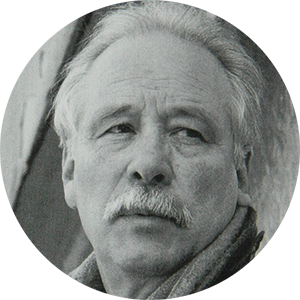
“We learn from history as much as a rabbit learns from an experiment that’s performed upon it.”
–W.G. SEBALD
Winfried Georg Sebald, known as W. G. Sebald or Max Sebald (May 18, 1944 – December 15, 2001), was a German writer and academic. At the time of his death at the age of 57, he was being cited by literary critics as one of the greatest living authors. Wikipedia
The Emperor is numbered four and is the Empress’s other half. Here is a man in the prime of life – successful, confident, secure and well-established. Where the Empress is allied with the Moon, the Emperor is aligned with the Sun.
The Emperor is quick and energetic, exerting dynamic control over his life. He feels born to rule and at his best is a thoughtful and sensitive leader. He listens to others but always the final decision is his own.
This is a man who has proved himself worthy. He has won most of his battles and now is the time to rule over a rich and bountiful land. He is the King Arthur type. He also represents fatherhood – fertile man, protector and providor.
When we are the Emperor, we are taking hold of our power. We are prepared to protect and defend the vulnerable, as well as to shed the lazy and weak. Finally, we are willing and ready to pass on what we have discovered to others who are ready to learn.

(via angelpaths.com and Alan Blackman)